
Laundry Room Ideas 2027: What’s In and What’s Out

The laundry room ideas for 2027 are warm wood cabinets, earthy colors, stone-look floors, hidden appliances, built-in drying racks, and multi-use counters. What’s going out is the all-white room, head-to-toe farmhouse styling, loose baskets on the floor, and open shelves that show every detergent bottle. The shift comes down to one idea: laundry spaces now need to match the rest of the home and work harder every day.
This guide by Floor Land explains each trend, why it is gaining or losing ground, and how to use it in a full laundry room or a small closet. You will also find practical material choices that can handle water, heat, and daily use.
Laundry Room Trends for Upcoming Years
This table sums up the main changes, and the sections below explain each one. Treat it as a guide to the direction of design rather than a strict rulebook, because a look you love and maintain well will still serve you.
| What’s in | What’s out |
| Warm wood and warm white cabinets | Stark, all-white rooms |
| Sage, navy, and broad red accents | Head-to-toe farmhouse styling |
| Hidden machines behind matching panels | Machines left as the room’s focal point |
| Pull-out hampers and tall cabinets | Loose baskets on the floor |
| Built-in drying racks and rods | Bulky drying racks left out all week |
| Closed storage with a few open shelves | Open shelves on every wall |
| Layered task and ambient lighting | A single ceiling light |
What’s In for the Laundry Room: Colors, Materials, and Finishes
Laundry rooms are moving away from a purely utilitarian look. The strongest finishes bring warmth and character, but they still need to handle splashes, steam, and regular cleaning.
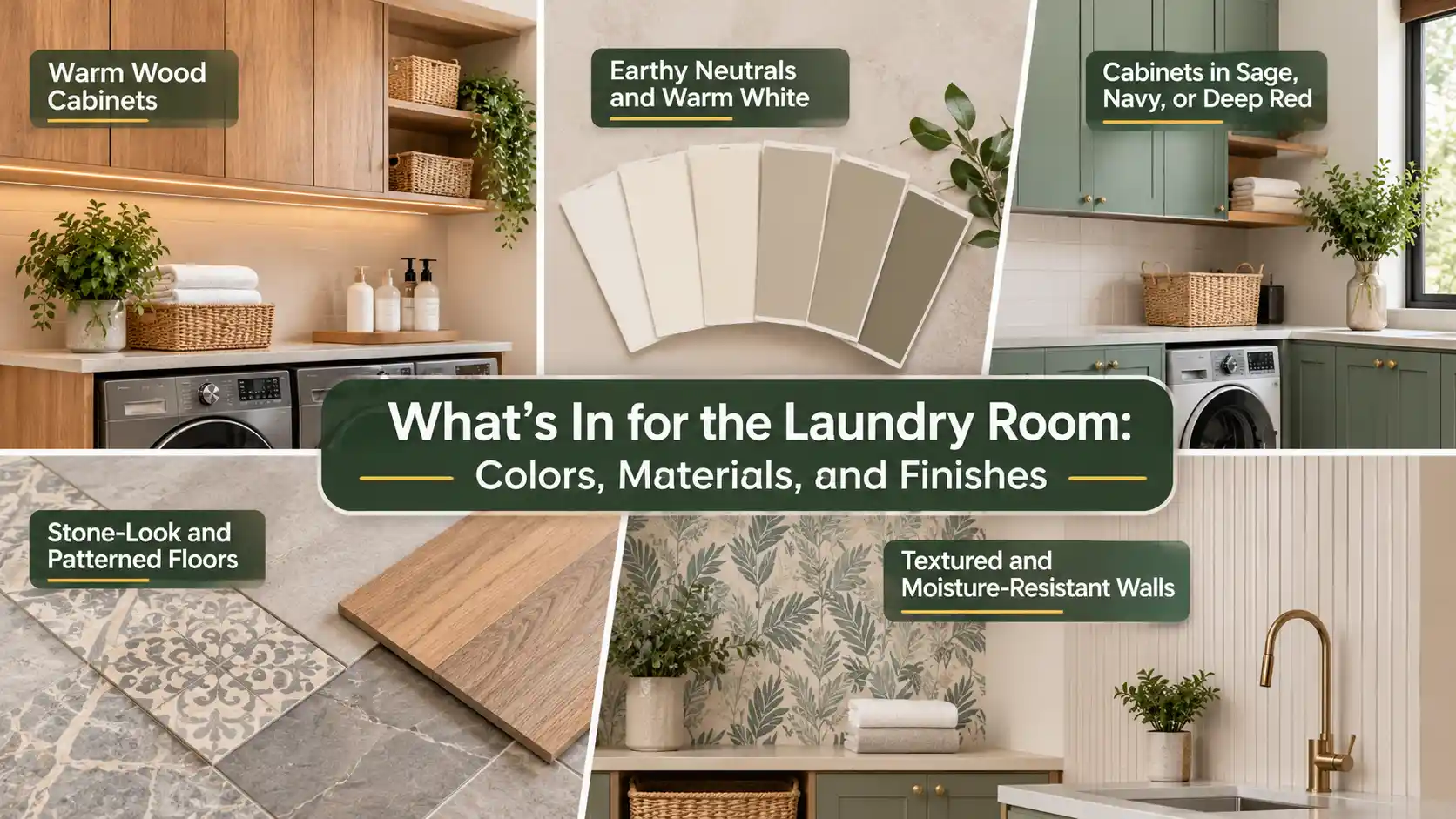
1. Warm Wood Cabinets
Natural wood is returning to laundry rooms, following a similar shift in kitchens. Oak and walnut tones soften a room full of hard surfaces and white appliances, and they help the space feel connected to the rest of the home.
Solid wood needs some care in this setting. Keep unsealed timber away from sinks and hoses, and choose moisture-resistant cabinet boards and finishes for the base units. In a small closet, a single wood-look shelf or counter can bring the same warmth without the cost of full cabinetry.
2. Earthy Neutrals and Warm White
Designers aren’t abandoning light colors, but they are warming them up. Warm white, mushroom, putty, and sandy beige feel softer than stark white and are less likely to make a windowless room look clinical.
These shades work especially well in small spaces because they keep the room bright without the harsh contrast of pure white. Test the paint in your actual lighting, as a warm neutral can look quite different under cool bulbs. Choose an eggshell or gloss finish on cabinets so that splashes wipe away easily.
3. Cabinets in Sage, Navy, or Deep Red
Color remains a confident choice for a room you use often but don’t spend hours in. Sage green, navy, and rich red all appeared among the most-saved new laundry photos on Houzz between December 2025 and March 2026. That doesn’t prove what every homeowner will choose, but it does show which looks are catching people’s attention.
Darker cabinets look best with good lighting and a lighter counter or wall. If you’re nervous about committing, paint only the lower cabinets, or use the color inside a closet where you can close the doors on it.
4. Stone-Look and Patterned Floors
The floor is one of the easiest places to add character, and natural stone looks are among the materials being tipped for 2027. Real stone is beautiful but needs more upkeep, so many homeowners prefer a stone-effect surface. A stone-finish SPC floor gives you a similar look with a waterproof core.
Patterned and geometric tiles are also gaining ground, and the busy surface can help hide everyday marks. For a lower-cost update,vinyl flooring offers plenty of patterns, but check the product’s water rating. Whichever you choose, protect the room’s edges, as water can still reach the subfloor around a waterproof plank.
5. Textured and Moisture-Resistant Walls
Walls are getting more attention too. Wallpaper is often liked, especially bold botanical patterns, and it can give a small laundry area real personality. Keep it away from direct splashes and choose a product made for humid rooms. Floor Land’s wallpaper range can be a starting point for a dry feature wall.
Around the sink and machines, practical surfaces make more sense. PVC wall panels clean easily and suit moisture-prone rooms, while PVC skirting protects the base of the wall from regular mopping. Fix any existing damp before you cover a wall, since panels won’t solve the cause.
What’s In for the Laundry Room: Layouts and Storage
The most useful ideas are about hiding clutter and making each step of the laundry routine easier. Think through the full sequence of sorting, washing, drying, folding, and putting away before you choose any cabinets.
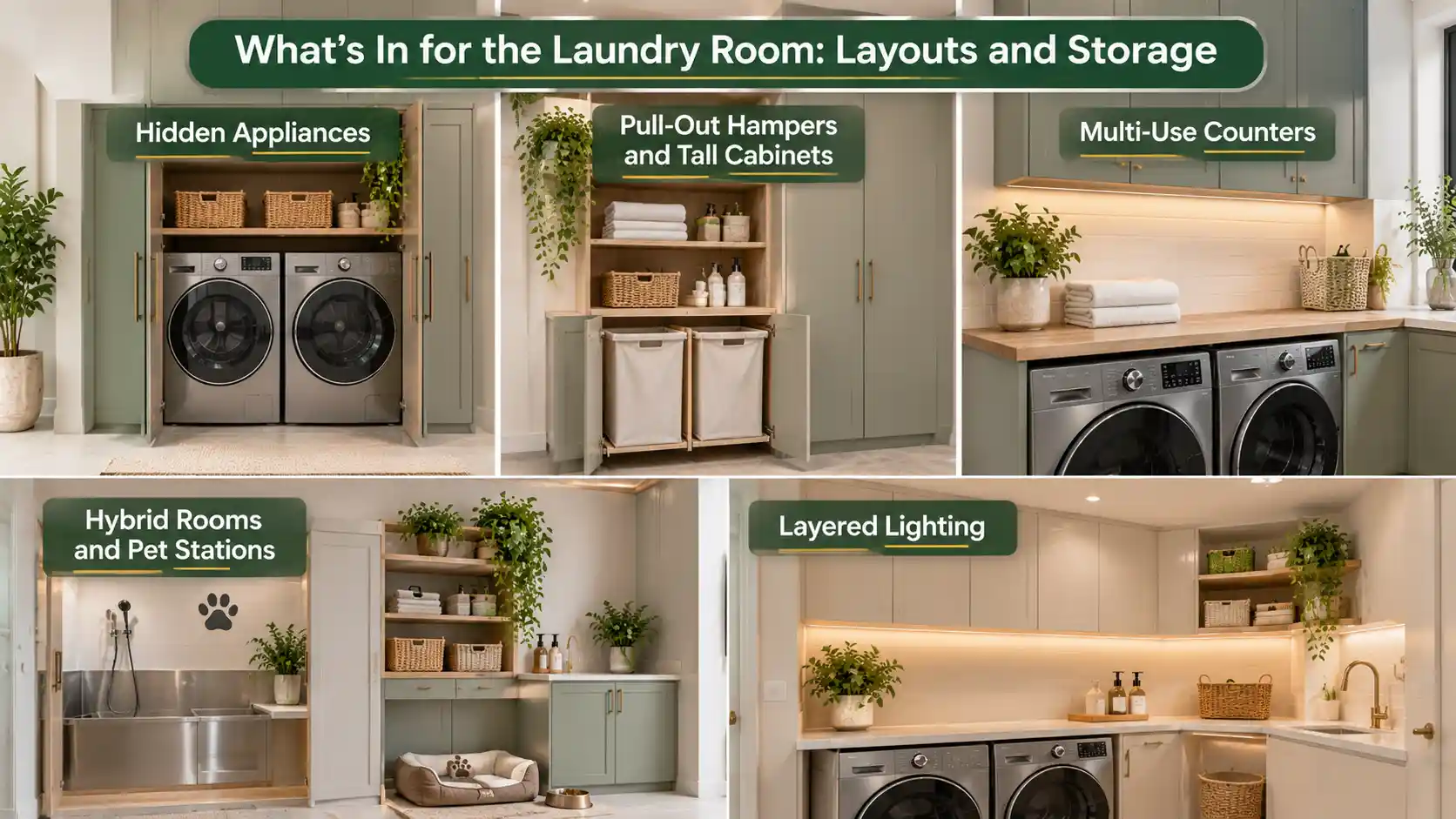
1. Hidden Appliances
Hidden machines are one of the clearest trends, with designers tucking washers and dryers behind cabinets with matching panels. Appliance towers are particularly useful in compact homes because they stack the machines in one tall unit and leave room for storage above or beside them.
This look only works if the machines can breathe and you can still service them. Check the manual for its door, vent, and clearance requirements before building anything. In a rental or on a tight budget, a floor-length curtain is a simpler alternative, and you can even hang curtains without a rod if you can’t drill.
2. Pull-Out Hampers and Tall Cabinets
Pull-out hampers are replacing loose baskets because they give dirty clothes a fixed place to go. Two or three bins inside a base cabinet also let the household sort lights, darks, and delicates as they go, which saves time on wash day.
Tall cabinets deal with everything else. They can hold the ironing board, vacuum, spare baskets, and bulk detergent behind one door, which keeps the room calm. Keep daily supplies within easy reach and put occasional items higher up.
3. Multi-Use Counters
Counters are becoming more flexible, handling folding, ironing, and even some home office tasks. This makes sense in smaller homes, where a surface that does only one job can be hard to justify. For example, the counter serves as both a folding surface and extra kitchen prep space.
For a useful folding surface, run the counter across front-loading machines or beside a stacked pair. Choose a water-resistant, easy-to-wipe surface, and leave enough knee or basket space below. If you don’t have room for a fixed counter, a fold-down shelf or rolling cart can do the same job.
4. Hybrid Rooms and Pet Stations
Laundry rooms are increasingly doing more than one job. Designers are combining them with drop zones, recycling areas, and pet care spaces, plus mudroom, laundry, and pet-washing rooms.
A pet station makes the most sense when the room has a floor drain or a nearby exit, and you have an animal that needs regular washing. It’s less useful for a small apartment. In that case, a simpler hybrid might be a tall cabinet for cleaning equipment beside the machines. Decide what the room needs to do each week before you add a feature because it looks good.
5. Layered Lighting
A single overhead light rarely shows you stains, sorting labels, or the back of a cabinet. Better laundry rooms pair ambient lighting with task lighting over the counter, sink, and machines, and under-cabinet strips are often the simplest way to do that.
Lighting also makes a small closet easier to use. Designer Libby Baker Speight suggests LED tape around the door trim or inside the door, or a small rechargeable lamp on a shelf. If you plan to work with fixed wiring in a damp area, have a qualified electrician choose suitable fittings and install them.
What’s In: Machines and Drying
Appliance choices are changing as well, especially for homes short on space. The right machine can remove the need for a second appliance or an outside vent, which affects the whole layout.

1. All-in-One and Heat Pump Machines
All-in-one machines wash and dry in a single drum, and retailers are promoting them for apartments and other tight spaces. Their main appeal is simple: you don’t have to move wet clothes from one machine to another. The trade-off is that you can’t wash one load while drying another, so a busy household may still prefer two machines.
Ventless heat pump dryers are another strong option where an outdoor vent isn’t practical. They collect water in a tank or send it to a drain, so plan for that before you install one. Drying cycles can also take longer, which is worth considering if you do several loads a day.
2. Built-In Drying Systems
Drying is moving into the cabinetry. Popular examples include pull-out racks that disappear when not in use, wall-mounted racks that fold flat, and long rods above the counter. Each solves the same problem: keeping delicate clothes off the floor and out of the way.
Choose the system based on what you dry most. A rod suits shirts on hangers, a flat rack suits knits, and a pulley airer can manage sheets and towels. Indoor drying adds moisture to the air, so check the humidity with a small meter. The EPA advises keeping it below 60%, ideally between 30% and 50%.
What’s Out for the Laundry Room For 2027
These looks aren’t wrong, and you don’t need to tear out anything that still works well. But they’re losing ground because they feel dated, create more work, or don’t suit how people use the room. Each entry below includes a practical replacement.
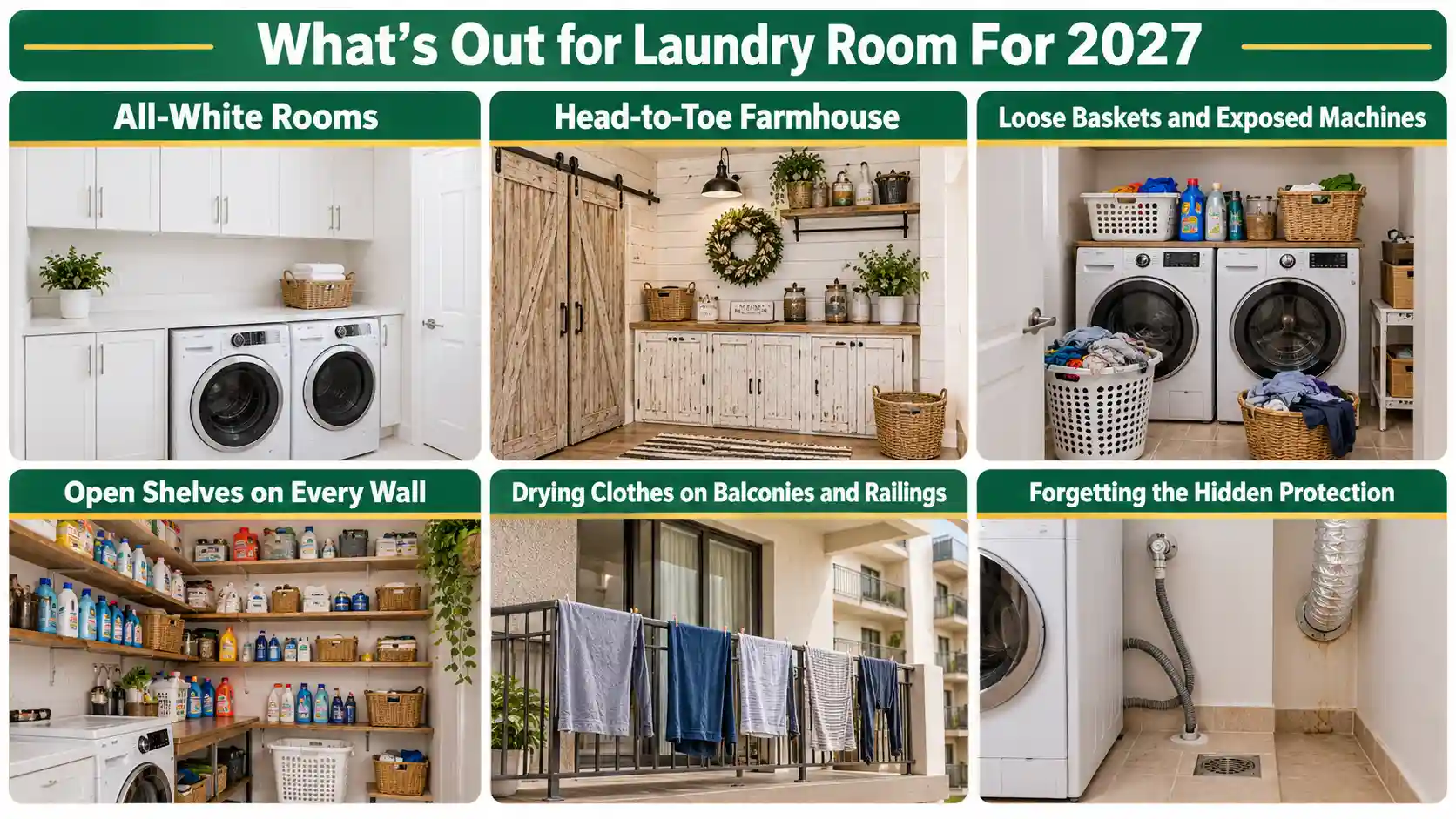
1. All-White Rooms
The all-white laundry room is losing favor because it can feel cold and clinical, particularly in a windowless space. It also shows scuffs and marks quickly on walls and cabinets. Designers have made a similar move away from all-white kitchens.
You can warm up a white room without starting over. Repaint in a warm white or soft neutral, swap cool bulbs for warmer ones, and add a wood shelf or woven basket. Keeping your white cabinets is fine if they’re in good condition, as the surrounding finishes can do most of the work.
2. Head-to-Toe Farmhouse
Farmhouse style isn’t disappearing, but its most formulaic version is fading. Wall-to-wall shiplap, sliding barn doors, distressed furniture, and word signs now tend to date a room quickly. A barn door can also leave gaps that let out more noise and take up wall space when open.
Keep what you like about the style and refine the rest. A deep sink, natural wood, and simple Shaker cabinets still look good when used with restraint. Replace laundry-themed signs with plain artwork, and limit paneling to one wall or the lower part of the room.
3. Loose Baskets and Exposed Machines
Machines standing in the open, surrounded by baskets and bottles, are the look most homeowners want to leave behind. This setup makes even a tidy room look busy, and in an open-plan home it brings the chore into the living space.
You don’t always need new cabinets to fix this. A simple base unit, a door or curtain, and two or three lidded containers can clean up the view. Before you buy storage,clear out what you no longer use, as many laundry areas are full of half-used products.
4. Open Shelves on Every Wall
Open shelving looks clean in photographs, but it’s hard to keep tidy in a working laundry room. Lint and dust settle on everything, and every bottle stays on show. Enthusiasm for replacing upper cabinets with open shelves appears to be cooling more generally as well.
A better balance is mostly closed storage with one short open shelf. Use that shelf for items you reach for daily or for a small plant or artwork. Everything else, particularly detergent and cleaning products, can sit behind doors, and products should stay out of children’s reach.
5. Drying Clothes on Balconies and Railings
Hanging washing outside isn’t just a design issue in some places. Dubai Municipality has listed hanging laundry on a balcony or window as balcony misuse, and fines can apply elsewhere in the UAE. Many apartment communities have similar rules about visible laundry.
Move drying indoors with a fold-down rack, ceiling airer, or dryer, and use a fan or dehumidifier to keep moisture down. Check your building or community rules if you still want to use the balcony. A discreet indoor setup avoids the question altogether.
6. Forgetting the Hidden Protection
The least visible mistake can be the most costly. A beautiful laundry room still needs a plan for leaks, airflow, and lint, and these details are harder to add once the cabinets are in place.
Fit a drain pan, especially on an upper floor, and replace hoses every 3 to 5 years with braided stainless steel. Keep the shutoff valves easy to reach. Clean your dryer as the manufacturer instructs, since NFPA says failure to clean is the leading cause of home dryer fires.
How to Use These Laundry Trends in a Small Space
You don’t need a dedicated room to use most of these ideas. Small homes benefit from them most, because a closet or kitchen corner has no spare space for clutter.
Start with the changes that deliver the most value: conceal the machines, fit one tall storage unit, and add a fold-down drying rack. Next, update the visible finishes with a warmer paint color or a new floor. SPC can go over old tile if the surface is clean, level, and dry, with the grout lines filled, which can avoid the mess of removing tile.
If you rent, focus on items you can take with you, such as a rolling cart, freestanding shelves, and a tension-mounted curtain. Get written permission from your landlord before you change plumbing, drill into tile, or install fixed cabinets.
Final Words
Laundry rooms in 2027 are becoming warmer, calmer, and more useful. Warm wood, earthy colors, hidden machines, and built-in drying suit how people live now, while stark white rooms, formulaic farmhouse details, and visible clutter are fading. You don’t need to follow every trend or rebuild the space. Start with the problem you notice most, whether that means better storage, a water-resistant floor, or more room to dry clothes. Then choose finishes that match the rest of your home and can handle daily use. A laundry room that works well and suits your home will stay current for years.
Frequently Asked Questions
What color is best for a laundry room?
Warm white, mushroom, and soft beige are safe choices that feel brighter and warmer than stark white. For more personality, sage green and navy both work well on cabinets, especially when paired with good lighting.
Are all-white laundry rooms out of style?
All-white laundry rooms are losing favor because they can feel cold and show marks easily. You can modernize one without replacing everything by adding warmer paint, wood accents, and warmer lighting.
What is the best flooring for a modern laundry room?
SPC, suitable vinyl, and porcelain tile are strong choices because they handle moisture better than laminate or carpet. Stone-look and patterned designs can give the room a current look while also helping to hide everyday marks.
Are all-in-one washer dryers worth it?
They’re worth considering if you’re short on space or don’t have an outdoor vent, as one machine handles both washing and drying. They suit smaller households best because you can’t wash one load while drying another, and drying cycles can take longer.