
Best Flooring for Kitchen: 10 Durable Options Compared
For many kitchens, LVT, SPC, and porcelain tile are among the most practical choices. But they are not the only options. Ceramic tile, engineered wood, laminate, natural stone, sheet vinyl, cork and concrete can also work in the right circumstances.
Kitchen floors face frequent foot traffic, food spills, water, grease, stains, dropped cookware, and regular cleaning. The flooring needs to suit these conditions while also fitting the space’s style and budget. The best choice depends on what you value most. You may want maximum durability, better comfort underfoot, easy maintenance, a natural wood appearance, strong moisture resistance, or a particular design.
This blog post by Floor Land compares 10 kitchen flooring options to help you decide which one makes the most sense for your space.
What Should You Look for in Kitchen Flooring?
efore comparing materials, consider the conditions your kitchen floor has to handle.
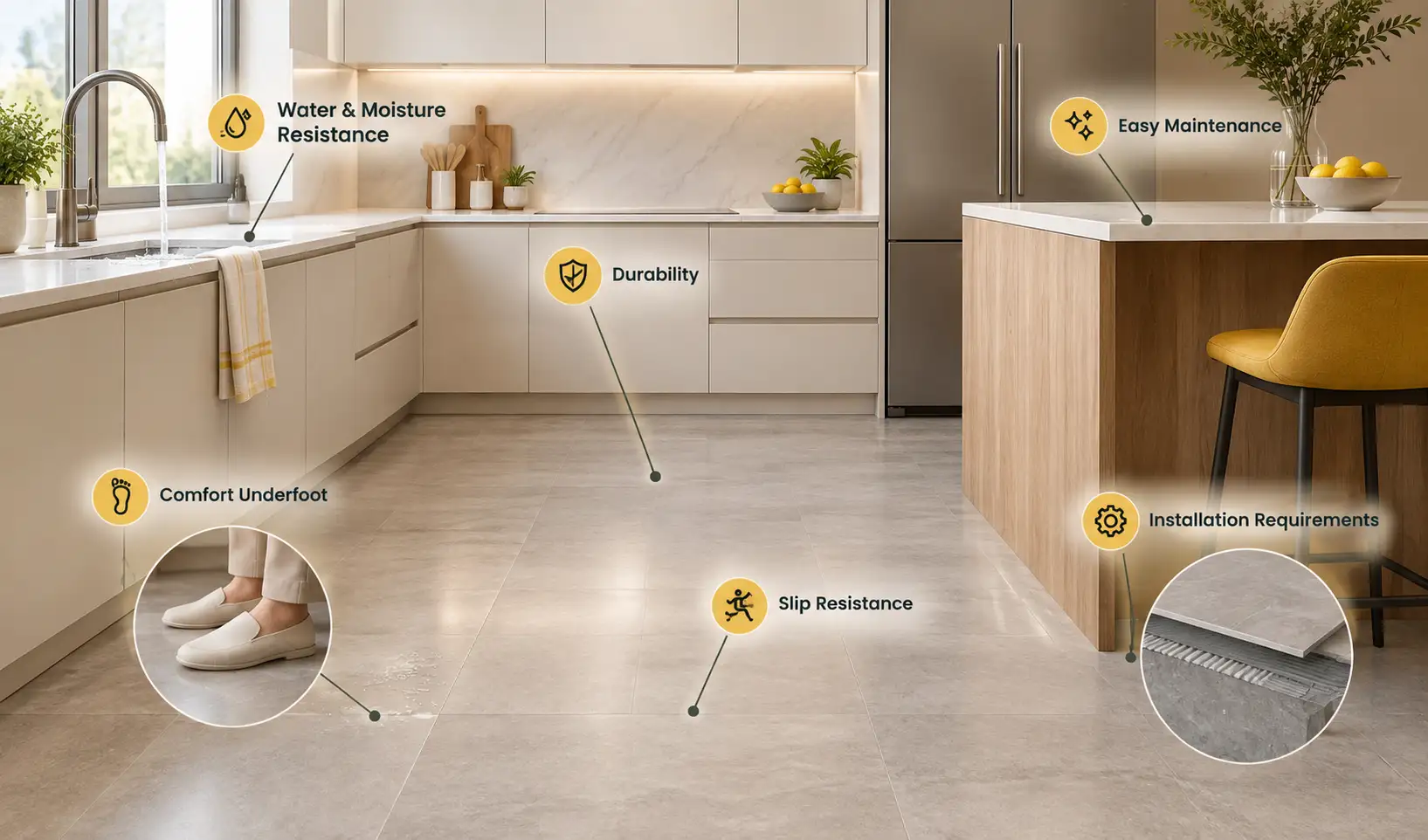
Water and Moisture Resistance
Kitchens are exposed to water around sinks, dishwashers, refrigerators, and cooking areas. Spills are also unavoidable. A suitable kitchen floor should tolerate normal moisture exposure without easily swelling, staining, or deteriorating.
Remember that a water-resistant flooring product does not necessarily mean the entire installation is waterproof. Joints, edges, subfloor conditions and installation methods also affect moisture performance.
Durability
Kitchen floors receive frequent use. Chairs move across the surface, appliances can be heavy, and cookware can occasionally fall. Look for flooring that can handle the expected level of foot traffic and resist everyday scratches, stains, and wear.
Easy Maintenance
Kitchen floors need frequent cleaning. Grease, food particles, and spilled drinks should be easy to remove. Low-maintenance surfaces can save considerable time over the life of the floor.
Comfort Underfoot
If you spend several hours cooking or preparing food, comfort becomes important. Hard materials such as porcelain and ceramic are extremely durable but can feel unforgiving underfoot. Resilient flooring such as LVT Floors can provide a softer feel.
Slip Resistance
Water and grease can create slippery conditions. A kitchen floor should therefore be assessed for its slip-resistance characteristics, not just its appearance.
Installation Requirements
The condition of the existing subfloor can affect which flooring products are suitable. An uneven, damp or damaged subfloor may need preparation before the new flooring can be installed correctly.
What Is the Best Flooring for a Kitchen?
There is no single material that is best for every kitchen. For a balanced combination of comfort, appearance, durability, and easy maintenance, LVT and SPC Floors are strong choices. For maximum hardness and long-term durability, porcelain tile is another excellent option.
Here is a quick comparison:
| Flooring Type | Moisture Resistance | Comfort | Maintenance | Approx. Cost ($/sq. ft.) | Best For |
| LVT | Excellent* | Excellent | Easy | $2–$7 | Best overall |
| SPC | Excellent* | Good | Easy | $3–$8 | Busy kitchens |
| Porcelain Tile | Excellent | Low | Easy | $3–$15 | Maximum durability |
| Ceramic Tile | Excellent | Low | Easy | $2–$10 | Traditional kitchens |
| Engineered Wood | Product dependent | Excellent | Moderate | $4–$12 | Natural wood appearance |
| Laminate | Product dependent | Good | Moderate | $1.50–$6 | Budget wood look |
| Natural Stone | Excellent | Low | Higher | $5–$20+ | Luxury kitchens |
| Sheet Vinyl | Excellent* | Good | Very Easy | $1–$5 | Seamless flooring |
| Cork | Good* | Excellent | Moderate | $3–$8 | Comfortable kitchens |
| Concrete | Excellent | Low | Moderate | $3–$10 | Modern interiors |
Performance depends on the particular product, installation, and subfloor conditions. Now let’s look at each option in more detail.
10 Best Flooring Options for Kitchens Explained
Every great kitchen starts from the ground up. Uncover ten standout flooring choices, balancing spill resistance, heavy traffic durability, and bold aesthetics to elevate your home’s busiest space.
1. LVT Flooring- Best Overall
Luxury Vinyl Tile, or LVT, is one of the most versatile options for modern kitchens. It can reproduce the appearance of timber, stone, and other materials while providing a softer and warmer feel than traditional tile.
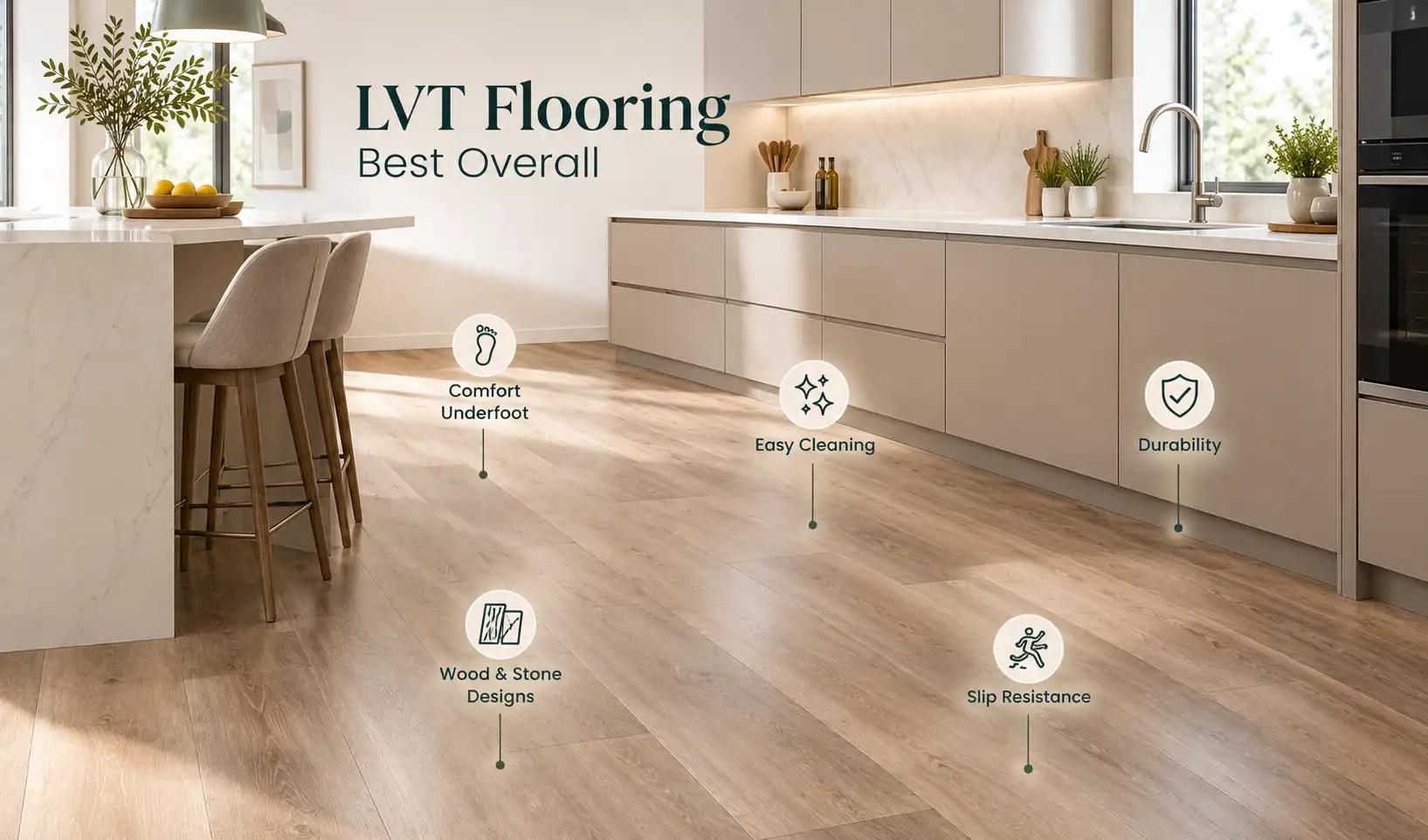
Quality LVT offers good resistance to everyday moisture, stains, and wear. Its smooth surface also makes routine cleaning relatively straightforward.
Top Features:
- Comfortable underfoot
- Wide range of wood and stone designs
- Easy to clean
- Good everyday durability
- Quieter than many hard floors
- Suitable for modern interiors
- Available in different colors and patterns
The exact performance depends on the product. Check the manufacturer’s specifications for moisture resistance, wear layer, installation method, and recommended applications.
2. SPC Flooring – Best for Busy Kitchens
SPC stands for Stone Plastic Composite. It is a rigid-core flooring system designed to provide a stable and durable surface. SPC can be particularly useful in kitchens with frequent daily activity. Its rigid construction can also help provide a firm feel underfoot.
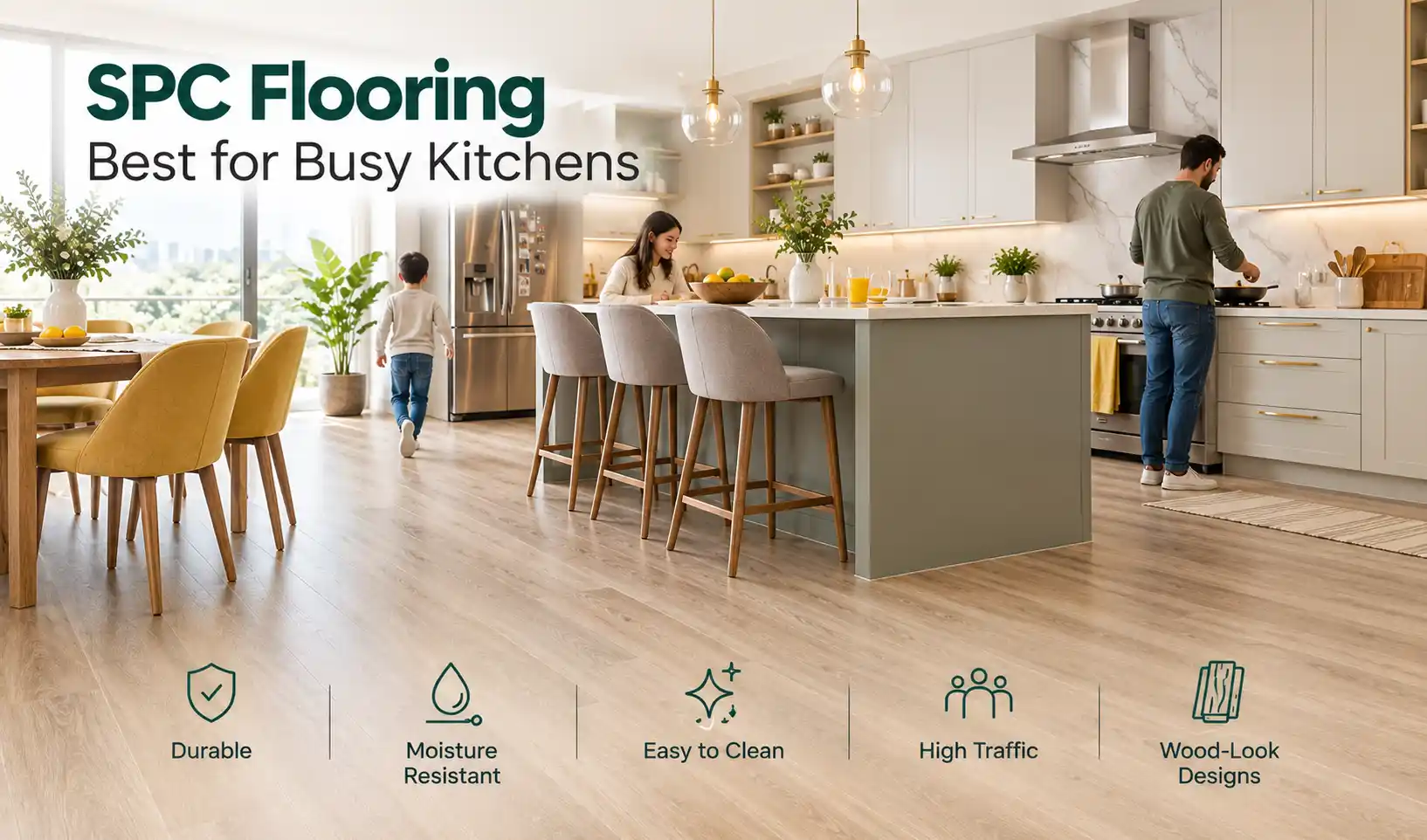
Many SPC products imitate natural wood, allowing you to create a timber-inspired appearance without installing traditional hardwood.
Advantages of SPC
- Rigid construction
- Strong wear resistance
- Good resistance to everyday moisture
- Easy surface cleaning
- Wide range of designs
- Wood-look options
- Suitable for high-traffic areas
However, product quality varies. Look at the thickness, wear layer, locking system, warranty, and installation requirements rather than choosing solely because a product is labeled “SPC.” This flooring is best for busy family kitchens and high-traffic areas where durability and easy maintenance matter.
3. Porcelain Tile – Best for Durability
Porcelain tile is one of the most established kitchen flooring materials. It is dense, hard, and highly resistant to moisture. Properly selected porcelain can withstand substantial everyday use and comes in a wide variety of designs.
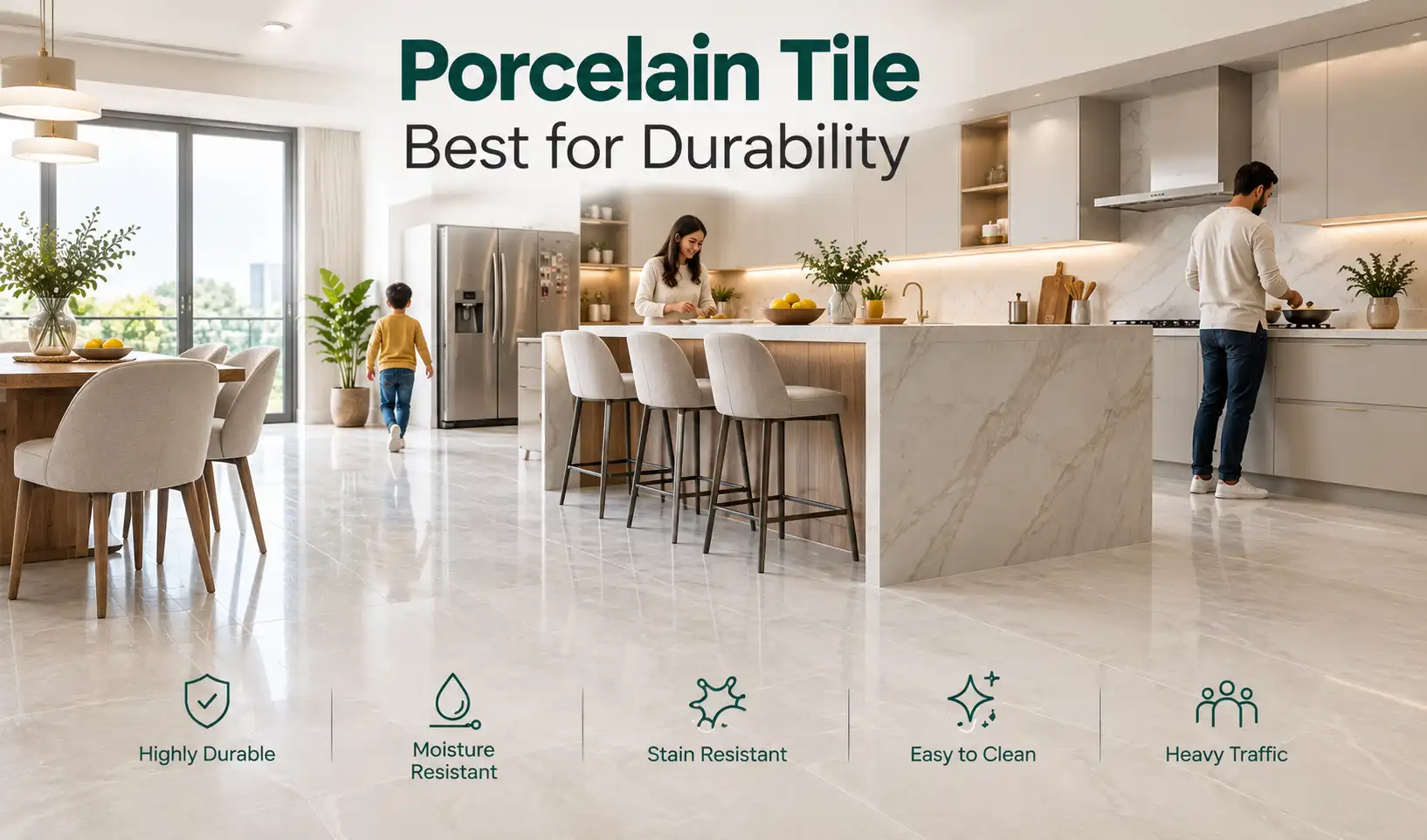
You can find porcelain tiles that imitate marble, stone, concrete and timber, as well as plain and patterned options.
Why Porcelain Tiles for Kitchen
- Very low water absorption
- Excellent durability
- Resistant to everyday stains
- Easy to clean
- Suitable for heavy traffic
- Large variety of styles
- Long service potential
The main disadvantage is its hardness. Porcelain can be uncomfortable when standing for long periods, and grout lines require cleaning.
4. Ceramic Tile – Best Traditional Option
Ceramic tile is another established kitchen flooring choice. It offers many of the practical benefits associated with tiled flooring, including easy cleaning, moisture resistance, and a broad range of colors and designs.
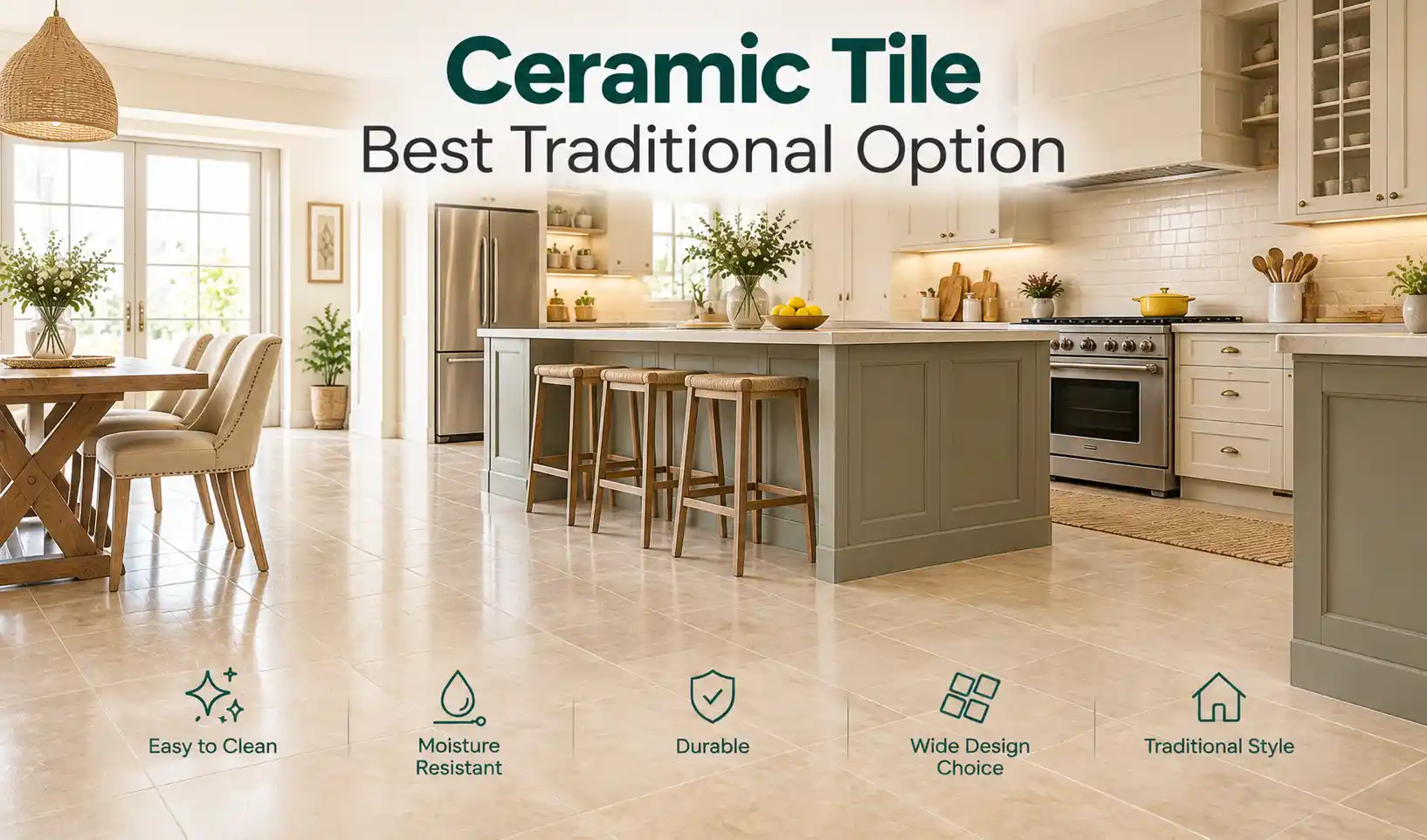
However, ceramic flooring products vary considerably. Always select a tile specifically intended for floor use and check its technical specifications.
Why Choose Ceramic Tile
- Easy to clean
- Good moisture resistance
- Wide design selection
- Durable when correctly selected
- Suitable for traditional and modern interiors
- Available at different price points
Like porcelain, ceramic is hard underfoot. Grout can also require regular cleaning. Homeowners who want a traditional tiled kitchen floor with plenty of design choices.
5. Engineered Wood Flooring – Best Natural Wood Appearance
Engineered wood can bring genuine timber character into a kitchen.It consists of multiple layers with a real wood surface, giving it a more authentic appearance than wood-effect alternatives.
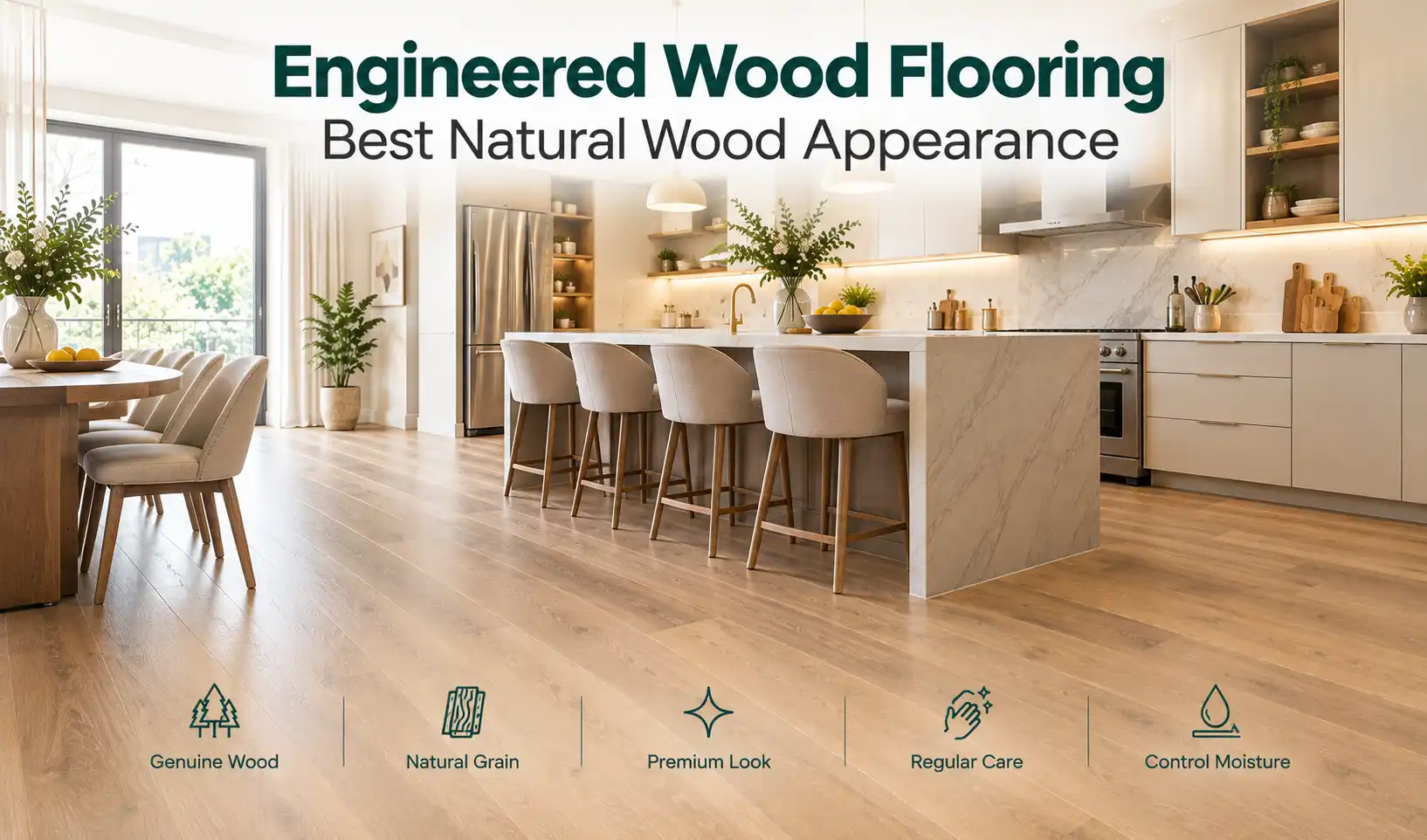
However, wood is naturally more sensitive to prolonged moisture than tile or suitable resilient flooring. Leaks, standing water and repeated moisture exposure can cause problems, so installation and maintenance need to be taken seriously.
Consider Engineered Wood If:
- You want genuine wood
- Natural grain is important
- You prefer a premium interior
- You are prepared for regular care
- Moisture can be controlled
6. Laminate Flooring – Best Budget Wood Look
Laminate flooring is popular because it can create a convincing wood appearance without the cost of some natural timber floors. Modern laminate can reproduce different wood colours, grain patterns and finishes.
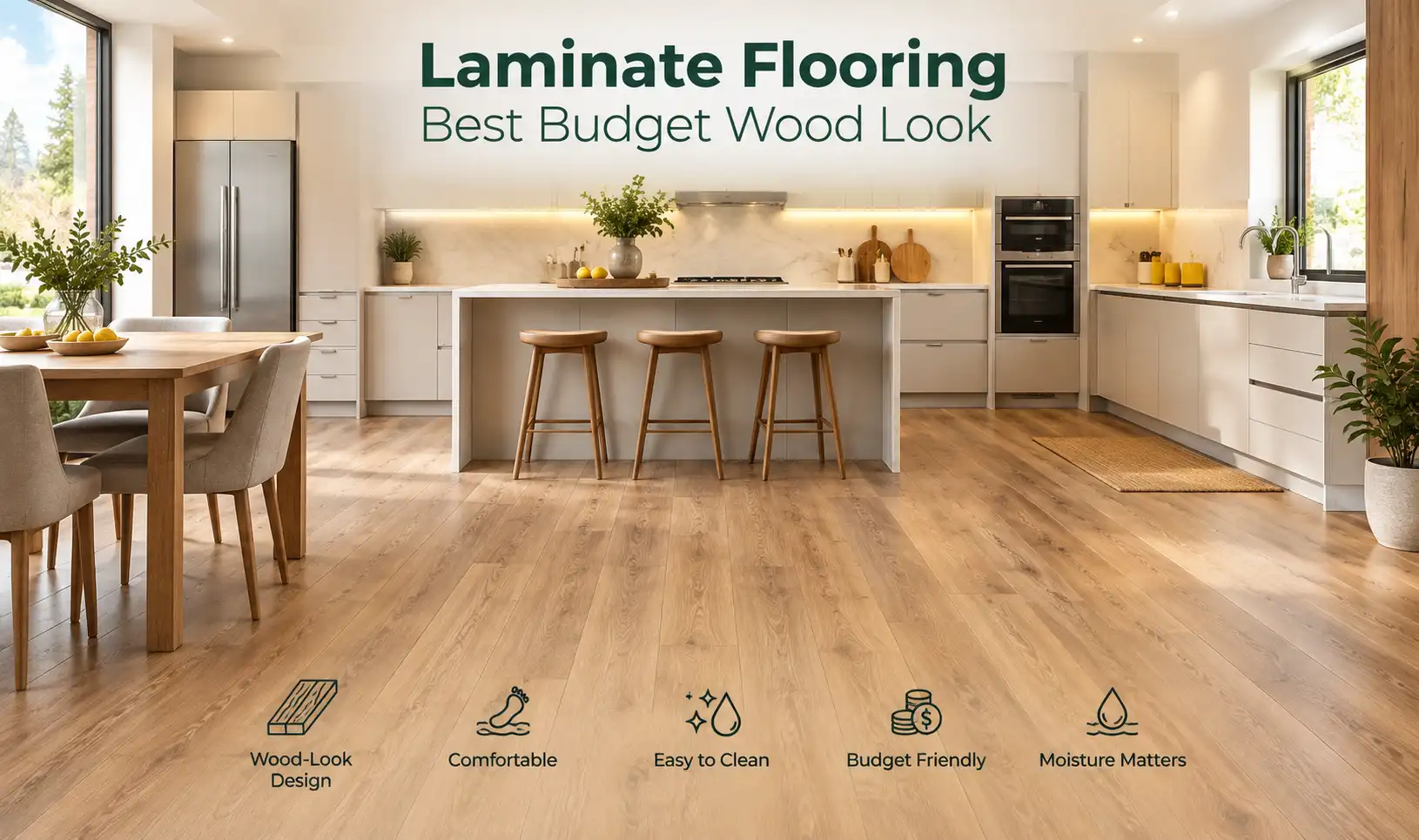
The major consideration in a kitchen is moisture. Not all laminate flooring is designed for wet or moisture-prone environments.
Advantages of Laminate
- Attractive wood-look designs
- Comfortable compared with tile
- Generally easy to clean
- Available at different price levels
- Can create continuity between rooms
Before installing laminate in a kitchen, check whether the specific product is approved for that application and follow its moisture and installation requirements.
7. Natural Stone – Best Luxury Option
Natural stone can give a kitchen a distinctive and high-end appearance. Popular choices include marble, granite, slate, and limestone. Each has different levels of porosity, hardness, and maintenance requirements. Some natural stones need periodic sealing to reduce staining and moisture absorption.
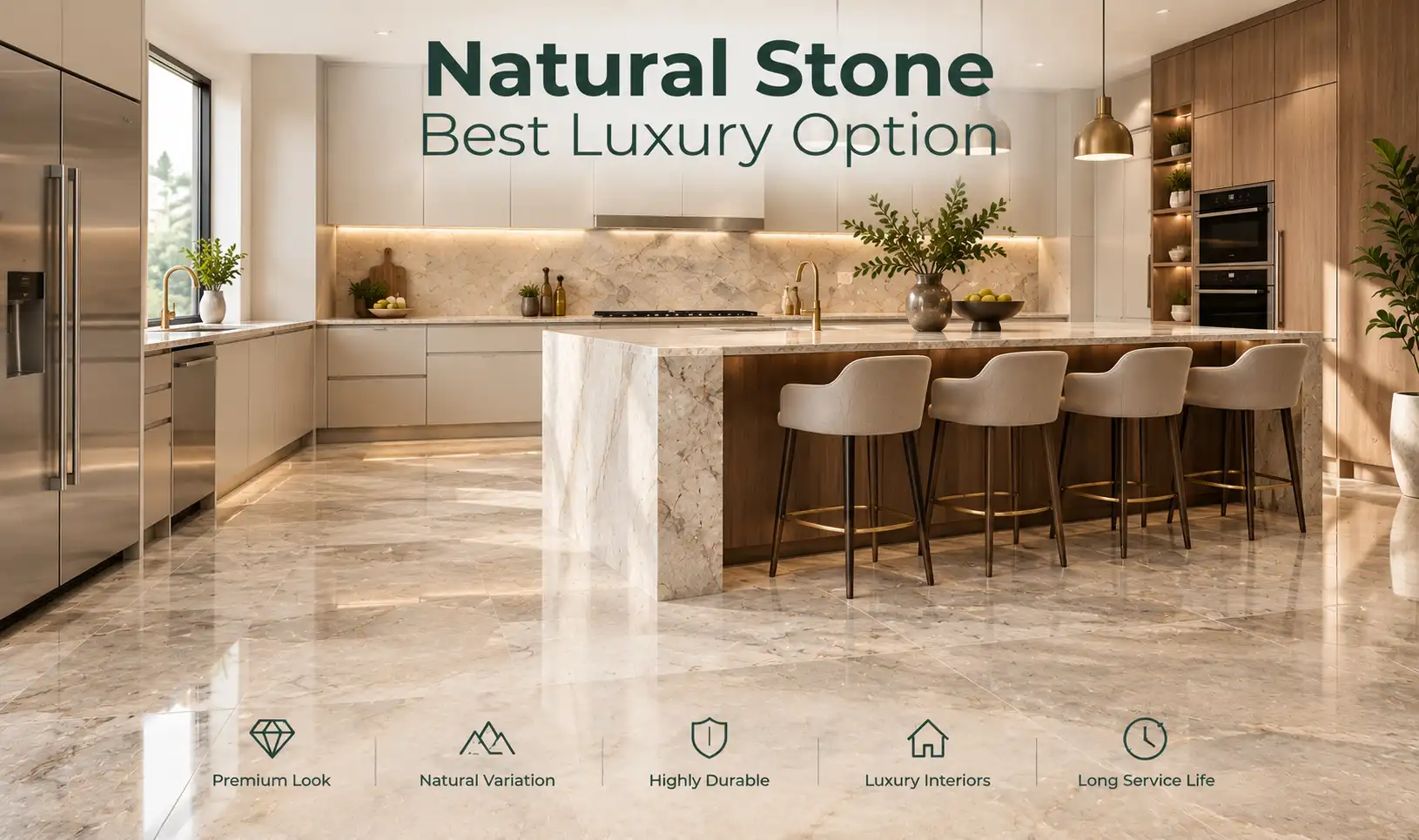
Benefits of Natural Stone
- Premium appearance
- Natural variation
- Excellent durability
- Suitable for luxury interiors
- Can have a long service life with appropriate care
The trade-off is maintenance. Select stone based on its porosity, finish, and intended application.
8. Sheet Vinyl – Best for Seamless Moisture Protection
Sheet vinyl differs from LVT and vinyl plank flooring because it comes in large, continuous sheets. With fewer seams across the floor, fewer areas can allow spilled liquid to penetrate the surface. This can make sheet vinyl a practical choice for kitchens where moisture management is important. It is also soft underfoot and easy to clean.
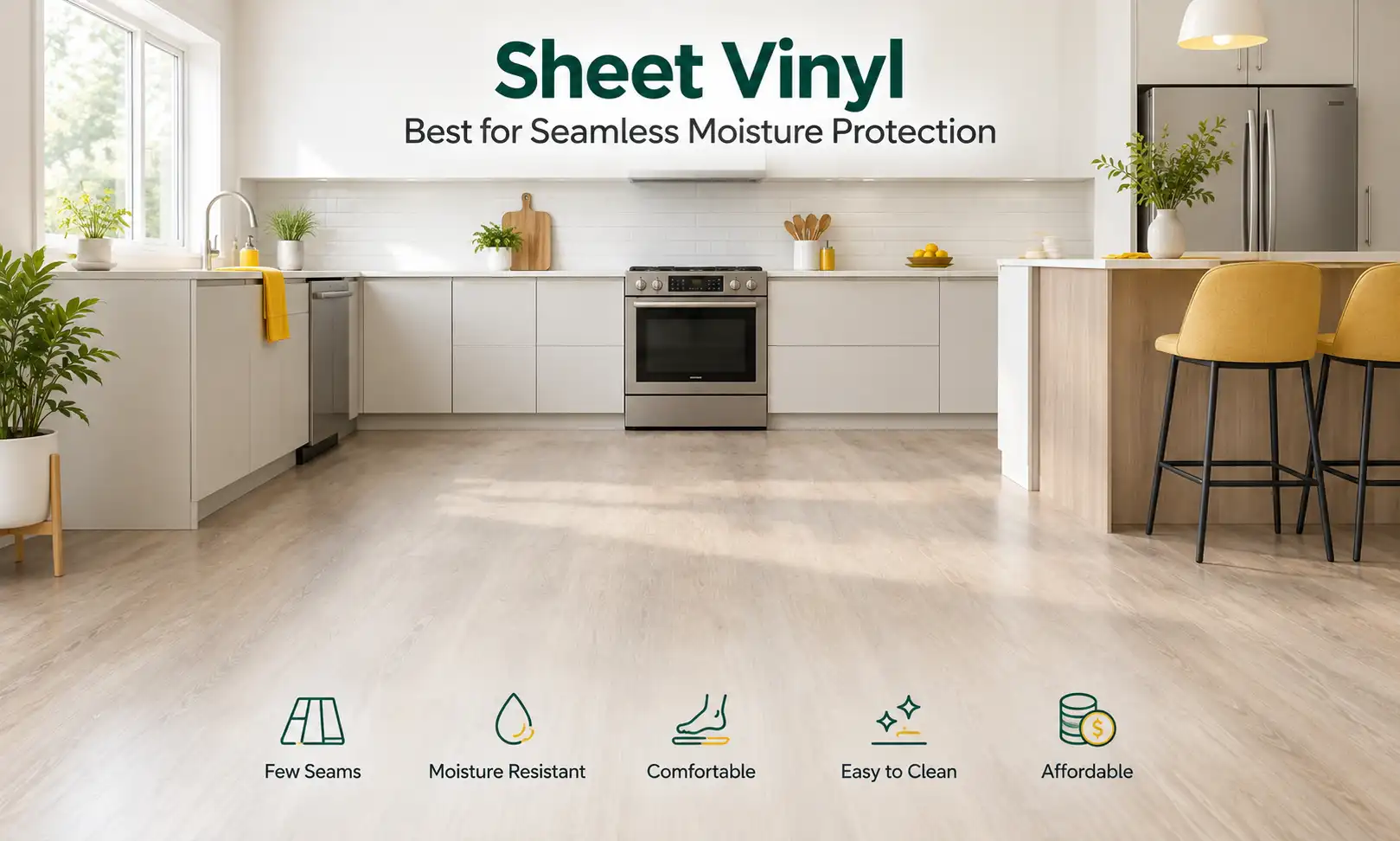
Advantages of Sheet Vinyl
- Few seams
- Comfortable underfoot
- Easy to clean
- Available in many patterns
- Generally affordable
- Good everyday moisture resistance
Installation quality is particularly important. Poorly finished seams or edges can compromise the floor’s moisture performance.
9. Cork Flooring – Best for Comfort
Cork is less common than tile or vinyl, but it offers a distinctive combination of softness, warmth, and natural appearance. Its slightly resilient surface can make standing more comfortable than on hard tile.
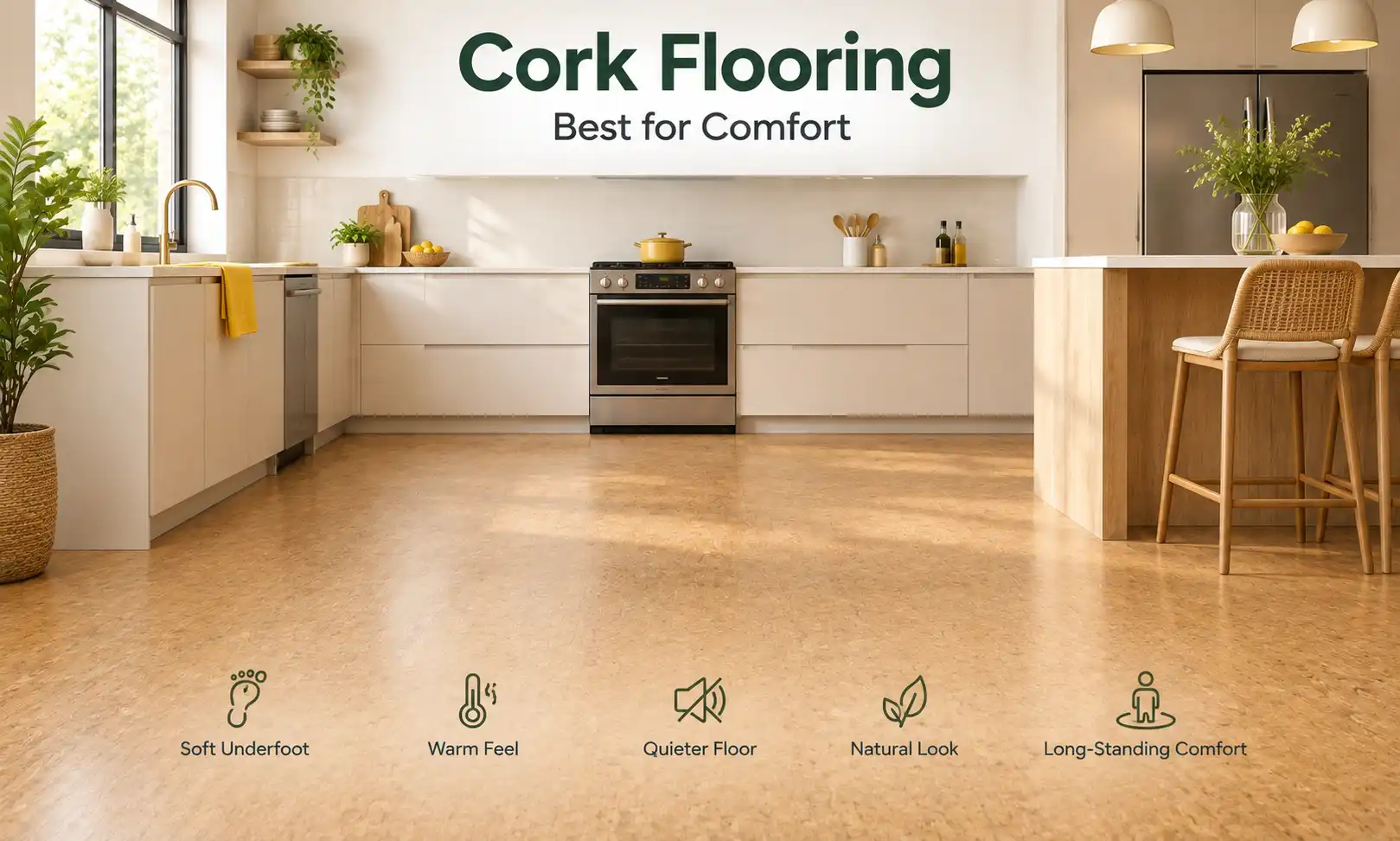
Cork does require proper finishing and care. Excess moisture and standing water can be problematic, so it isn’t the first choice for every kitchen.
Advantages of Cork
- Soft underfoot
- Naturally warm feel
- Quieter than many hard floors
- Distinctive appearance
- Can be comfortable for long cooking sessions
The surface finish and maintenance routine matter considerably.
10. Concrete Flooring – Best for Modern Kitchens
Concrete flooring can create a clean, minimalist or industrial appearance. It is extremely hard and can withstand heavy use. Polished, sealed, or finished concrete can also be designed to suit contemporary interiors.

However, concrete is unforgiving underfoot and can feel cold. Consider surface cracking, staining, and finishing before installation.
Advantages of Concrete
- Highly durable
- Modern appearance
- Suitable for heavy traffic
- Easy to maintain when properly finished
- Works well with minimalist interiors
Its appearance is very different from wood or traditional tile, so it works best when the flooring is intentionally integrated into the overall design.
What Kitchen Flooring Should You Avoid?
There isn’t a universal list of flooring materials that should never be installed in a kitchen. Instead, focus on product suitability and installation conditions.
Be cautious with:
- Flooring that is not rated for kitchen use
- Materials that are highly porous without suitable protection
- Standard laminate that is not designed for moisture-prone areas
- Very slippery polished surfaces
- Poor-quality products with inadequate wear resistance
- Flooring installed over an unsuitable or damp subfloor
The material is only part of the equation. Poor installation can reduce the performance of even a high-quality product.
How to Choose the Right Kitchen Flooring?
Selecting kitchen flooring requires finding the sweet spot between high-traffic durability, water resistance, and design. Evaluate these practical factors to discover a floor that seamlessly fits your daily routine and home aesthetic.
1. Assess Your Kitchen Traffic
A busy family kitchen needs a more durable surface than a rarely used kitchenette. Think about how many people use the space each day and whether chairs, pets, children or heavy appliances will place additional demands on the floor.
2. Consider Moisture
Look at where water is most likely to reach the floor. Areas around sinks, dishwashers and refrigerators deserve particular attention.
3. Decide How Much Comfort You Need
If you spend hours preparing meals, comfort may be more important than you initially expect. This is where LVT, cork, and other resilient flooring can have an advantage over hard tile.
4. Think About Maintenance
Consider how often you’re willing to clean and maintain the floor. Some materials require sealing or more specialized care, while others need little more than routine sweeping and mopping.
5. Match the Flooring to Your Interior
Flooring should work with your cabinets, countertops, walls and appliances. Wood-look flooring can make a kitchen feel warmer, while large-format porcelain can create a cleaner contemporary appearance.
6. Check the Product Specifications
Don’t choose flooring simply because it is advertised as “waterproof” or “heavy duty.” Check the actual product information, including:
- Wear layer
- Water-resistance rating
- Thickness
- Surface finish
- Installation method
- Warranty
- Recommended applications
- Cleaning requirements
7. Inspect the Subfloor
The existing floor needs to be suitable for the new material. Uneven areas may require leveling. Moisture problems should be resolved before installation. A good flooring product cannot compensate for a badly prepared subfloor.
Final Words
The best kitchen flooring is not necessarily the most expensive material or the hardest surface. For many homes, LVT and SPC provide an excellent balance of comfort, durability, maintenance and design flexibility. Porcelain and ceramic remain strong choices when you prefer tile and want a highly durable surface.
Engineered wood, laminate, natural stone, sheet vinyl, cork and concrete each have their own advantages, but they also come with specific considerations. Before choosing, look beyond the appearance. Consider moisture, traffic, comfort, cleaning, installation, and the condition of your existing floor.
A kitchen floor should not simply look good when it is newly installed. It should continue to perform well after years of cooking, cleaning, spills, and everyday use.
Frequently Asked Questions
Porcelain tile and properly specified rigid flooring such as SPC can offer excellent durability. The actual performance depends on the product specification and installation.
Yes. Quality LVT can be a practical choice because it is comfortable, easy to maintain and available in many designs. Always check the manufacturer’s specifications before installation.
Not necessarily. SPC has a rigid core and can provide a firmer, more stable feel, while LVT is often chosen for its comfort. The better option depends on the specific product and your priorities.
Porcelain generally has lower water absorption and higher density than standard ceramic tile. However, properly selected ceramic floor tile can also suit kitchens.
Some modern laminate products are designed for moisture-prone areas, but standard laminate should not be assumed to be waterproof. Always check the manufacturer’s specifications.
LVT, SPC, sheet vinyl, and porcelain tile are generally easy to maintain. Grout lines on tiled floors can require additional cleaning.
Engineered wood can be used in some kitchens, but it requires greater care around standing water and leaks than materials such as porcelain or suitable vinyl flooring.
LVT and cork are among the more comfortable options for prolonged standing. Their resilient surfaces are generally more forgiving than porcelain, ceramic or concrete.
Suitable LVT, SPC and sheet vinyl products can offer strong moisture resistance, while porcelain tile is inherently highly resistant to water absorption. The complete installation must still be considered, including joints, edges and subfloor conditions.