
10 Best Materials for Extra Long Shower Curtain
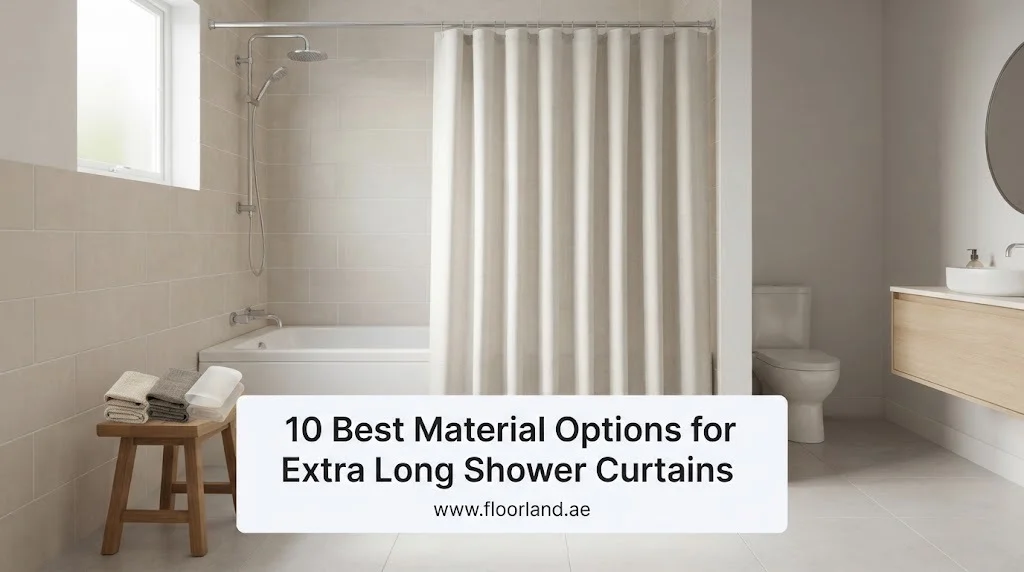
The best materials for most extra long shower curtain is a medium-weight polyester, because it resists water, dries quickly, barely shrinks, and stays light enough for an 84 to 108 inch drop. If you want a softer, more natural look, choose pre-washed cotton, linen, or hemp and pair it with a PEVA liner of the same length. For a fully waterproof custom curtain with no liner, PEVA or EVA is the safer modern choice over traditional PVC vinyl.
Extra length changes how a material behaves. A 96-inch curtain uses about one third more fabric than a standard 72-inch one. That means more weight on the rod, a larger surface that needs to dry, and more room for shrinkage to ruin your fit. This guide by Floor Land compares every common material with those extra-long challenges in mind, so you can pick one that looks good on day one and still hangs right after a year of washing.
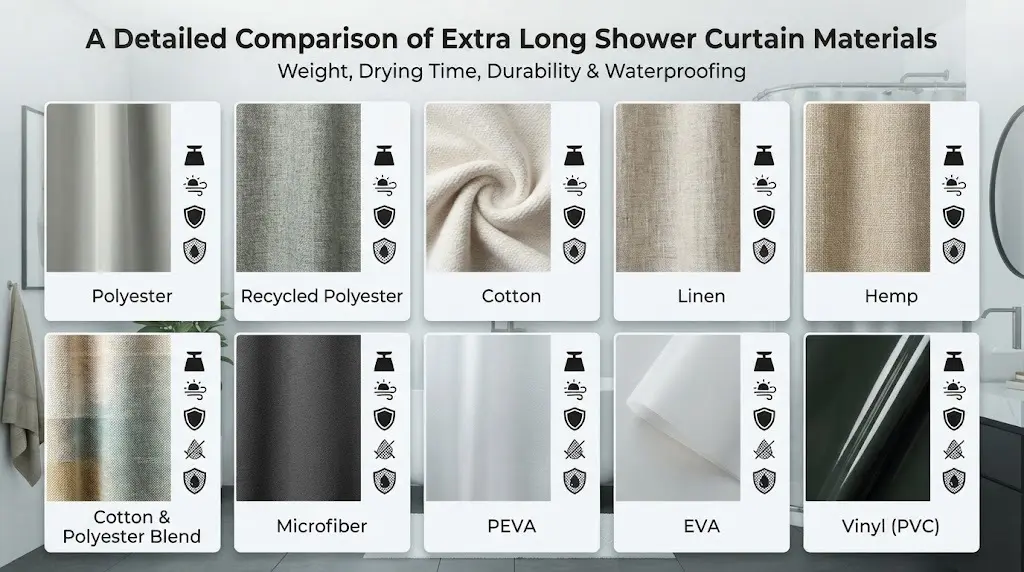
A Detailed Comparison of Extra Long Shower Curtain Materials
Explore a comprehensive, side-by-side breakdown of the best synthetic and natural fabrics for extra-long shower curtains. You will have an evaluation of key factors like weight, drying time, durability, and waterproofing.
1. Polyester
Polyester is the most common shower curtain fabric, and it earns that spot on extra long curtains. It is naturally water resistant, holds printed designs well, and hardly shrinks in the wash. Its lightweight keeps long curtains from straining the rod, and it dries quickly between showers.
- Affordable, durable, quick-drying, wrinkle-resistant, wrinkle resistant and machine washable.
- Less breathable than natural fibers and can feel less premium. Lower quality versions may look thin at long lengths.
- Look for a tighter weave or a weighted hem. Thin polyester can billow inward at 96 inches, while a weighted hem keeps it hanging straight.
- Best for Family bathrooms, rentals, and anyone who wants a long curtain with minimal upkeep.
2. Recycled Polyester
Recycled polyester is made mostly from post-consumer plastic bottles. It performs almost exactly like virgin polyester, with the same quick drying and low shrinkage. It is a sensible choice if you want polyester performance with a smaller environmental footprint. Look for the Global Recycled Standard (GRS) label to confirm the recycled content.
- Same practical benefits as polyester with less reliance on new plastic.
- Usually costs a little more, and like all synthetics, it can shed microfibers in the wash. A microfiber-catching laundry bag helps.
- Eco-minded shoppers who still want an easy-care curtain.
3. Cotton
Cotton gives a bathroom a calm, hotel-style feel. Waffle weave and matelassé cotton are especially popular on extra long curtains because the texture looks rich from top to bottom. The trade-off is that cotton absorbs water, dries slowly, and can grow mildew if the bathroom stays damp.
- Soft, breathable, natural, and easy to style.
- Needs a liner, can shrink, wrinkles easily, and gets heavy when wet.
- Choose pre-shrunk cotton and allow for some shrinkage when you measure. Hang it fully spread out after each shower so the long hem can dry.
- Guest bathrooms and main bathrooms with an exhaust fan or a window.
4. Linen
Linen is made from flax fibers. It is strong, breathable, and drapes beautifully, which makes it a favorite for tall, designer-style bathrooms. Many people find linen handles a humid room better than cotton because it releases moisture faster. It also softens with every wash.
- Very durable, breathable, elegant texture, and long lifespan.
- Higher price, natural wrinkles, and possible shrinkage if not pre-washed. Needs a liner.
- Choose stonewashed or pre-washed linen. Unwashed linen can lose several inches at 96 inches long.
- Statement bathrooms, high ceilings, and minimalist or natural decor.
5. Hemp
Hemp is one of the strongest natural fibers and grows with relatively little water. It feels a bit like linen and is often described as resisting mildew better than cotton. Hemp curtains are less common, but they are a solid choice for an extra-long curtain that needs to last for years.
- Very strong, long-lasting, and a low-impact crop.
- Fewer color and size options, a slightly coarse feel at first, and a higher cost. These drapes also require a liner.
- Eco-focused homes that want durability over pattern variety.
6. Cotton and Polyester Blends
Blends combine the soft look of cotton with the quick drying and low shrinkage of polyester. They are a good option if you want a natural feel without the heavy care routine of pure cotton. These drapes are best for buyers who like cotton but want an easier extra long curtain.
7. Microfiber
Microfiber is a very fine polyester fabric. It feels smooth, resists water well, and stays light, which suits long curtains. It can attract lint and may not look as natural as cotton or linen. Choose microfiber if you want a soft, fabric-look curtain that still dries fast.
8. PEVA: The Modern Waterproof Choice
PEVA (polyethylene vinyl acetate) is a chlorine-free plastic and the most popular alternative to PVC vinyl. It is fully waterproof, lightweight, and usually has little or no strong plastic smell. It is the go-to material for extra-long liners because it is cheap, easy to wipe, and easy to trim.
- Pros: Waterproof, affordable, light, and easy to cut to length with scissors.
- Cons: Less durable than fabric and usually replaced more often. Limited decorative appeal on its own.
- Extra long tip: Choose a heavier gauge PEVA liner with magnets or a weighted hem so it does not cling to you during a shower.
- Best for: Liners behind fabric curtains, kids’ bathrooms, and budget setups.
9. EVA: A Cleaner Plastic Alternative
EVA (ethylene vinyl acetate) is closely related to PEVA and shares most of its benefits. It is waterproof, PVC-free, and lightweight. Some brands market EVA as a lower-odor option. In everyday use, PEVA and EVA perform very similarly. These drapes work exceptionally well for the people who want a waterproof curtain or liner without PVC.
10. Vinyl (PVC)
Traditional vinyl curtains are made from PVC. They are fully waterproof and very cheap. However, new PVC curtains often have a strong chemical smell from volatile organic compounds (VOCs) released into the air. For this reason, many households and hotels have moved away from PVC, choosing PEVA, EVA, or fabric instead.
- Pros: Lowest cost and completely waterproof.
- Cons: Possible VOC off-gassing, poor recyclability, can crack or tear over time, and a dated look.
- Best for: Short-term use only, if at all. PEVA is usually the better buy for the same price range.
Why Material Matters More on Extra Long Shower Curtains
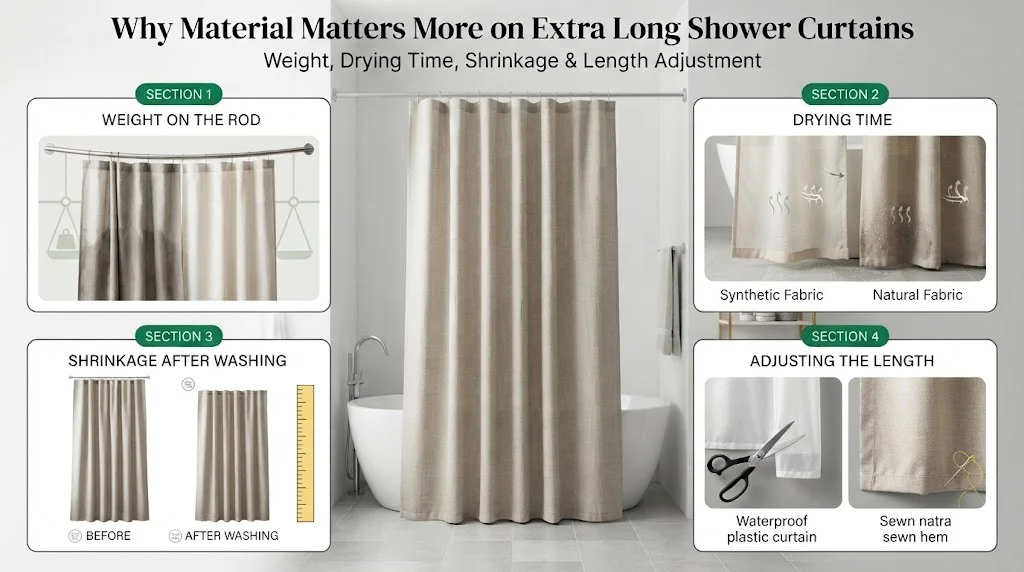
Most buying guides treat material as a style choice. On a standard curtain, that is mostly true. On an extra-long curtain, the material also determines whether it hangs straight, stays dry, and keeps its length. Here are the four factors that matter most.
1. Weight on the Rod
A longer shower sheer curtain carries more fabric, and fabric gets heavier when it is wet. Heavy cotton waffle weaves and thick linens can pull a tension rod down over time, especially when the rod is mounted high near the ceiling. Lightweight polyester and PEVA put far less strain on the rod. If you love a heavier fabric, plan for a wall-mounted rod with fixed brackets.
2. Drying Time
More fabric means more surface area holding moisture after every shower. The bottom 12 inches of a floor-length curtain dries last because it sits closest to the wet floor or tub edge. Materials that dry slowly, like standard cotton, are more likely to develop mildew along the hem. Quick-dry fabrics reduce that risk.
3. Shrinkage After Washing
This is the factor almost nobody mentions. Natural fibers can shrink a few percent in the first wash. A 3 percent shrink on a 72-inch curtain loses about 2 inches. On a 96-inch curtain, it loses closer to 3 inches, which can turn a floor-grazing curtain into one that hangs awkwardly above the floor. Buy pre-washed or pre-shrunk cotton and linen, or wash the curtain once before hemming it.
4. Ability to Adjust the Length
Extra-long curtains often need trimming because ceiling heights vary. PEVA and vinyl can be cut with sharp scissors and will not fray. Polyester, cotton, and linen need a proper hem, either sewn or made with iron-on hem tape. Knowing this before you buy can save you a trip to the tailor.
Extra Long Shower Curtain Sizes and How to Pick the Right Length
Standard shower curtains measure 72 by 72 inches. Extra long options are usually sold in the lengths below. Width is commonly 72 inches, with extra-wide versions for walk-in showers and curved rods.
| Length | Best For | Typical Rod Height |
| 84 inches | Rods raised slightly above standard height | About 86 to 88 inches from the floor |
| 90 inches | 8-foot ceilings with the rod near the ceiling | About 92 to 94 inches from the floor |
| 96 inches | 9-foot ceilings or tall walk-in showers | About 98 to 100 inches from the floor |
| 108 inches | Ceilings of 10 feet or higher | About 110 to 112 inches from the floor |
A Simple Formula for the Perfect Length
Use this formula to work out the length you need:
Curtain length = rod height from the floor minus ring or hook drop minus floor clearance
Ring drop is the distance from the top of the rod to the top of the curtain. It is usually 1.5 to 2.5 inches. Floor clearance is the gap you want at the bottom, typically 0.5 to 1 inch, so the hem does not soak up water from the floor.
Example: Your rod sits 94 inches from the floor. Your rings drop 2 inches, and you want 1 inch of clearance. 94 minus 2 minus 1 equals 91 inches. A 90-inch curtain is your best match. If you choose cotton or linen, buy a size up and hem it after the first wash.
What to Check Before You Buy Shower Curtains
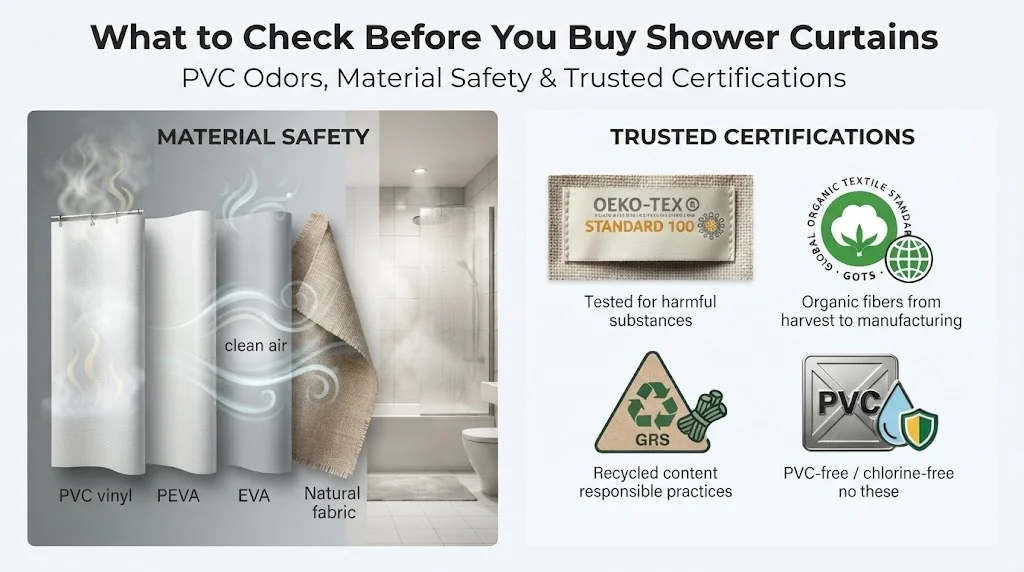
Shower curtains sit in a warm, steamy room where chemicals can release more easily into the air. Here is what to look for.
Avoid Strong-Smelling PVC
That sharp new plastic smell from a PVC curtain signals VOCs being released. PEVA, EVA, and natural fabrics are better choices if you have children, pets, allergies, or a small bathroom with limited ventilation. If you do buy plastic, airing it out before hanging helps reduce the initial smell.
Look for Trusted Certifications
- OEKO-TEX Standard 100: The finished fabric has been tested for a long list of harmful substances.
- GOTS: Confirms organic cotton or other organic fibers and responsible processing.
- GRS: Verifies the recycled content in recycled polyester.
- PVC-free or chlorine-free: Useful labels on plastic liners and curtains.
How to Choose the Best Material in 5 Steps
To choose the best material for extra long shower curtains, follow the steps mentioned below:
- Measure first. Use the formula above to find your exact length. Decide whether you need a standard 72-inch width or an extra-wide curtain.
- Check your ventilation. A bathroom with a strong fan or window can handle cotton or linen. A windowless, humid bathroom does better with polyester or hemp.
- Decide on a liner or no liner. If you want one layer only, choose PEVA or EVA. If you want a fabric look, plan for a matching length liner.
- Consider your rod. Heavy cotton or linen needs a sturdy, wall-mounted rod. Tension rods work best with polyester and PEVA.
- Think about care. If you will not wash the curtain every few weeks, choose polyester. If you enjoy a softer, natural fabric, accept a little more upkeep.
Care & Lifespan of Extra Long Shower Curtain Materials
Long curtains collect more soap residue and moisture along the hem, so regular cleaning matters. Always follow the care label first. The table below gives a practical guide.
| Material | How to Clean | How Often | Typical Lifespan |
| Polyester | Gentle machine wash, warm water, hang dry | Every 2 to 4 weeks | 2 to 3 years or more |
| Cotton | Machine wash cool or warm, tumble low or line dry | Every 2 to 4 weeks | 1 to 3 years |
| Linen / Hemp | Gentle wash, mild detergent, line dry | Every 3 to 4 weeks | 3 years or more |
| PEVA / EVA liner | Wipe weekly or gentle cold wash, air dry | Weekly wipe | 6 to 12 months |
| PVC vinyl | Wipe with mild soap or diluted vinegar | Weekly wipe | 6 to 12 months |
Care Tips That Help Long Curtains Last
- Close the curtain fully after each shower so the whole length can dry instead of bunching up.
- Run the exhaust fan for 15 to 20 minutes after showering, or open a window.
- Add half a cup of white vinegar to the rinse cycle to cut soap residue and odor.
- Skip high heat in the dryer for natural fibers. It speeds up shrinkage and can affect your length.
- Wash a couple of old towels with plastic liners. They act as gentle scrubbers.
- Check the bottom 12 inches often. Mildew on extra-long curtains usually starts at the hem.
Final Thoughts
The right material for an extra long shower curtain does more than match your decor. It decides how well the curtain hangs, how quickly it dries, and whether it keeps its length after washing. Polyester is the safest all-round pick. Linen, cotton and hemp bring a richer, natural look when paired with a matching liner and a sturdy rod. PEVA and EVA are the smart waterproof options for anyone who wants a simple, single-layer setup.
Measure carefully, plan for shrinkage with natural fabrics, and match your liner to your curtain length. Do that, and your extra-long curtain will make the room feel taller and stay fresh for years.
Frequently Asked Questions
What is the best material for an extra long shower curtain?
For most people, polyester is the best choice. It is light, water-resistant, quick-drying, quick drying and hardly shrinks, which helps an 84 to 108 inch curtain keep its length. Choose linen or cotton if you want a natural look, and pair it with a matching PEVA liner.
Do extra long fabric shower curtains need a liner?
Yes, in most cases. Cotton, linen, and hemp absorb water and need a liner. Polyester is water resistant and can sometimes be used alone, but a liner protects it and helps it last longer.
Is PEVA better than vinyl for a long shower curtain?
Usually yes. PEVA is waterproof like vinyl but is PVC-free and typically has much less chemical smell. It is also lightweight, which suits long curtains, and you can trim it with scissors.
How do I stop my extra-long curtain from shrinking?
Buy pre-washed or pre-shrunk natural fabrics, wash in cool or warm water, and avoid high-heat drying. Synthetic materials like polyester and PEVA barely shrink at all.
Can I use window curtains as an extra long shower curtain?
You can, as long as the fabric is machine washable and you hang a waterproof liner of the same length behind it. Window panels come in long lengths like 96 and 108 inches, which makes them a handy option for very tall ceilings.
What length shower curtain do I need for a 9 foot ceiling?
A 96-inch curtain usually works well when the rod is mounted close to a 9-foot ceiling. Use the formula in this guide to confirm the exact length based on your rod height and ring drop.
Which material resists mold best?
Quick-dry polyester and PEVA resist mold best because they hold very little moisture. Among natural fibers, linen and hemp usually handle damp conditions better than cotton. Good ventilation matters just as much as material.
How long does an extra long shower curtain last?
Fabric curtains usually last one to three years or longer with good care, and linen or hemp can last even longer. Replace plastic liners every six to twelve months.