
20+ False Ceiling Designs for Every Room, Style & Budget
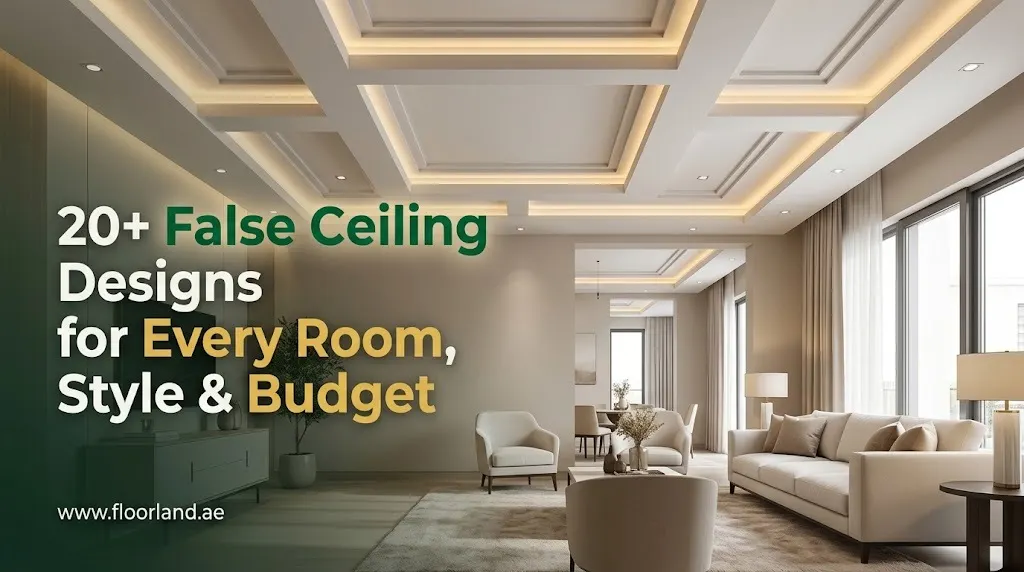
The best false ceiling design depends on three things: your room’s height, how you use the room, and your budget. Simple peripheral and floating-panel ceilings suit most homes and budgets. Layered, tray, and coffered designs work best in large living rooms with good height. Kitchens and bathrooms need moisture-resistant PVC, aluminum, or green gypsum boards, while wooden slats add warmth to any space. For most homes, gypsum board offers the best balance of finish, durability, and cost.
This guide by Floor Land covers 22 false ceiling designs grouped by style, plus room-wise recommendations, a material comparison, lighting advice, cost factors, and the mistakes that cost homeowners the most money. Whether you’re renovating one bedroom or planning a whole house, you’ll find a design that fits how you actually live.
Before You Pick a Design: Three Questions to Answer First
A ceiling design that looks perfect in a photo can feel heavy and cramped in your room. Answering these three questions first will save you from an expensive redo.
- How much height can you spare? Every false ceiling needs a drop from the original slab. A basic framed ceiling takes around 4 inches, and a ceiling with cove lighting usually needs 6 to 8 inches. As a general rule, try to keep the finished ceiling at least 8.5 feet (about 2.6 m) from the floor. If your room is already under 9.5 feet, stick to peripheral or edge-only designs and avoid full multi-layer ceilings.
- What happens in this room? A bedroom needs soft, indirect light. A kitchen needs bright, shadow-free task lighting and a surface that handles grease and steam. A home theater needs sound control. Design for the function first and the style second.
- What else is going into the ceiling? Plan for air-conditioning ducts, fan hooks, speakers, smoke detectors, and wiring before choosing a design. The ceiling should support these services, not fight them.
Category 1: Simple and Minimal False Ceiling Designs
Minimal ceilings suit modern homes, rentals being upgraded, and rooms with limited height. They cost the least, install the fastest, and rarely look dated. Simplicity in a ceiling still requires precision: clean lines and good lighting carry the whole design.
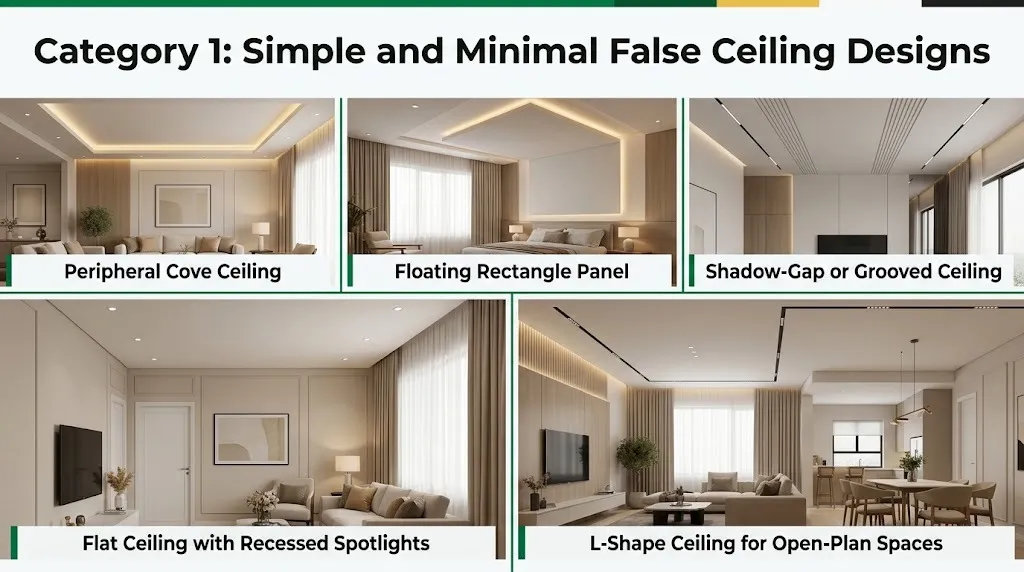
1. Peripheral Cove Ceiling
A peripheral ceiling drops only around the room’s edges. It is usually 1.5 to 2 feet wide, leaving the center at its original height. A hidden LED strip sits inside the edge to wash the upper ceiling with light.
This is the most practical design for rooms with average height because you lose height only where people don’t walk. It works in bedrooms, living rooms, and even small studies. The one thing to watch is the cove depth. If the cove is too shallow, you’ll see a line of LED dots instead of a smooth glow.
2. Floating Rectangle Panel
Picture a flat panel that seems to hover beneath the ceiling, with light spilling out from the gap all around it. That’s the floating panel. The panel is usually centered over the bed or sofa, anchoring the furniture below.
It gives a bedroom a calm, hotel-like feel without heavy layers. Keep the panel slightly smaller than the rug or bed beneath it so the proportions feel right.
3. Shadow-Gap or Grooved Ceiling
This design keeps the ceiling flat and adds thin recessed grooves, often 1-2 inches wide. Slim linear lights or a simple dark shadow line sit inside the grooves. It suits people who want a modern, architectural look but dislike visible layers. Grooves can run parallel across a living room, outline a dining zone, or form a rectangle in a bedroom.
This design depends heavily on skilled finishing. Uneven groove edges become very obvious once the lights are on, so hire an installer with a portfolio of this specific work.
4. Flat Ceiling with Recessed Spotlights
Sometimes the best design is almost no design at all. A completely flat false ceiling hides wiring, pipes, and uneven slabs, and recessed spotlights provide light.
This is the right choice for rented homes, compact apartments, and anyone who wants their walls and furniture to be the focus. It’s also the easiest ceiling to repaint and repair. Keep the spotlight grid even, roughly 3 to 4 feet apart, so the light falls evenly without bright patches.
5. L-Shape Ceiling for Open-Plan Spaces
Open living-dining layouts often feel like one large, undefined box. An L-shaped false ceiling wraps around one corner of the room and visually separates the sitting area from the dining area, without any walls.
Use it to highlight the zone you care about most. Many homeowners run the L above the sofa and TV wall, then use a separate pendant light over the dining table to define the second zone.
Category 2: Layered and Sculpted Ceiling Designs
Layered ceilings bring depth, drama, and a sense of luxury. They need more height and budget than minimal designs, so they work best in living rooms, halls, and large master bedrooms with ceilings above 10 feet.
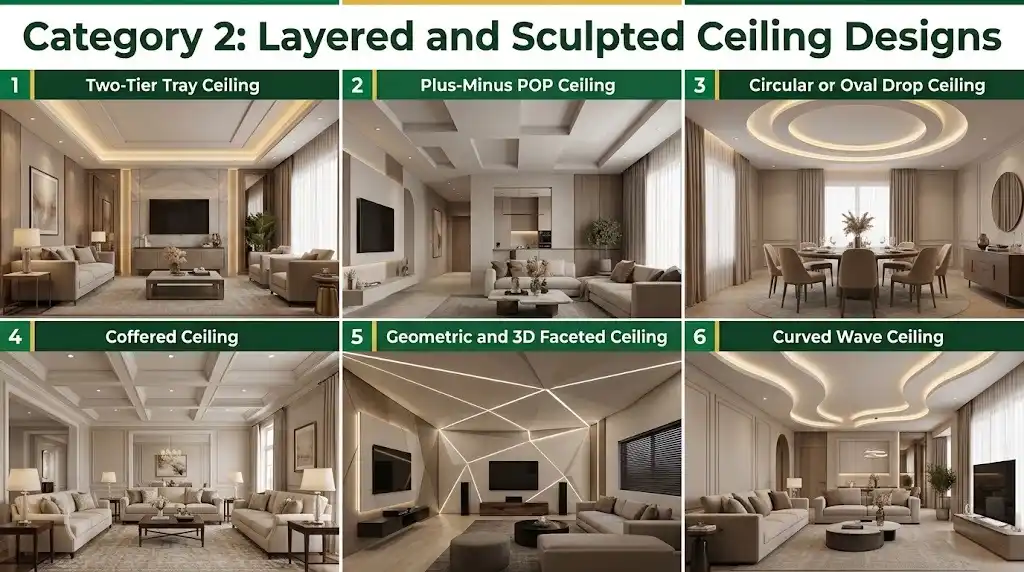
6. Two-Tier Tray Ceiling
A tray ceiling steps up in two levels toward the center, like an inverted tray. Each step can hold its own cove light, so you can switch between bright and soft moods.
Ideal if: you have a large living room and want a classic upgrade that suits both modern and traditional furniture. Two tiers usually look more refined than three. Going beyond that often makes the ceiling feel heavy, especially in rooms under 11 feet.
7. Plus-Minus POP Ceiling
The name describes how this design works: “plus” areas project down from the ceiling, and “minus” areas recess up into it. The combination creates sharp shadows and patterns.
POP (Plaster of Paris) is the usual material because installers can shape it on site into almost any pattern. The downside is that POP needs skilled labor, takes several days to dry, and creates more dust than board-based ceilings. If you choose this style, keep the pattern consistent with the rest of your room. A busy plus-minus ceiling clashes with a heavily patterned floor or wallpaper.
8. Circular or Oval Drop Ceiling
A round ceiling feature softens a room full of straight lines and boxy furniture. It works especially well over a round dining table, a central chandelier, or a circular carpet.
Size it to match what sits below. A circle that’s slightly larger than the dining table looks intentional, while an oversized circle looks disconnected. Gypsum can form gentle curves, but POP handles tighter circles and ovals more smoothly.
9. Coffered Ceiling
A coffered ceiling uses a grid of beams to form sunken square or rectangular panels. It has roots in classical architecture and instantly adds a formal, upscale feel.
How is it different from a tray ceiling? A tray ceiling creates one large central recess. A coffered ceiling repeats many small recesses across the entire surface. Coffers suit large formal living rooms, libraries, and study rooms with high ceilings. In a small room, the grid can make the ceiling feel lower and busier.
10. Geometric and 3D Faceted Ceiling
Hexagons, triangles, angled planes, and folded shapes turn the ceiling into a sculpture. Hidden LED strips along the edges sharpen the shapes after dark.
This style fits bold, contemporary interiors, entertainment rooms, and commercial spaces like cafés. Choose one geometric idea and repeat it rather than mixing several shapes. Also keep the walls and furniture calmer, so the ceiling doesn’t compete with everything else.
11. Curved Wave Ceiling
A wave ceiling uses flowing, organic curves instead of straight edges. The curve can run along one side of the room or across the full ceiling, often with a light strip following its line.
It feels relaxed and modern, which suits living rooms, reception areas, and spaces inspired by nature. Wave ceilings require skilled installers and precise framing. Ask to see completed curved projects before hiring anyone.
Category 3: Natural Material Ceiling Designs
Natural materials bring warmth and texture that painted ceilings can’t match. Wood, cane, and bamboo designs fit the current shift toward calm, nature-inspired interiors. They need more care, so choose your material based on your climate and the room’s humidity.
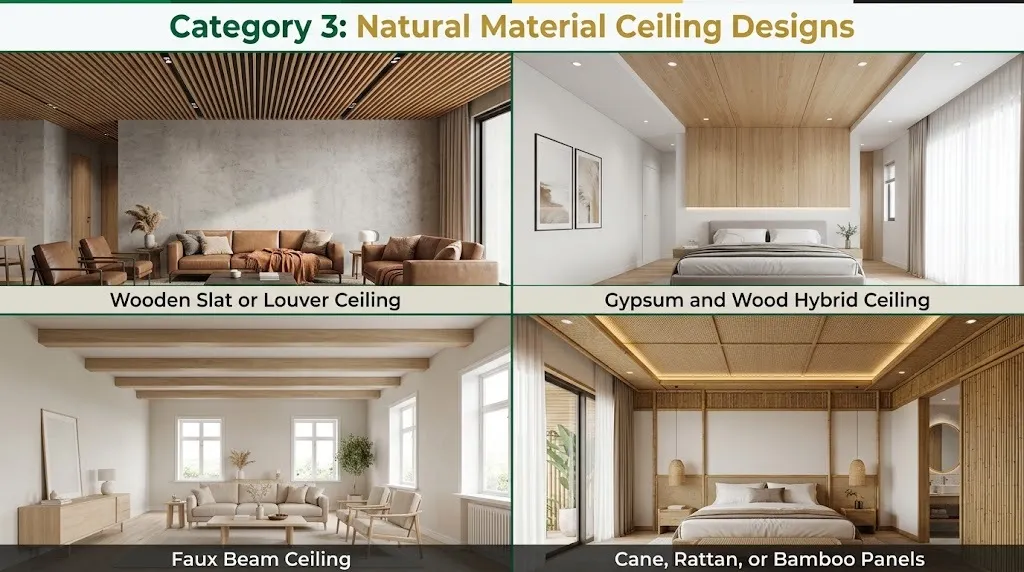
12. Wooden Slat or Louver Ceiling
Long, evenly spaced wooden slats run across the ceiling and add instant warmth and rhythm. The gaps between slats can hide lights, speakers, or AC vents.
Solid wood looks beautiful but costs more and can warp in humid areas. WPC (wood-plastic composite) louvers offer a similar look with better resistance to moisture and termites. Running the slats along the length of the room makes a narrow space feel longer.
13. Gypsum and Wood Hybrid Ceiling
You don’t need to cover a whole room in wood to get its warmth. A hybrid ceiling keeps most of the surface in white gypsum and adds a single wooden panel or strip in one key area.
Common placements include a wood strip above the TV wall, a panel over the bed, or a wooden band above the dining table. This approach costs much less than a full wooden ceiling and keeps the room bright.
14. Faux Beam Ceiling
Lightweight faux beams, made from hollow wood, gypsum, or polyurethane, mimic the look of exposed structural beams. They suit farmhouse, rustic, and Scandinavian interiors.
Faux beams look most convincing when they run in the same direction as the room’s natural structure and match the scale of the space. Avoid very thin beams in large rooms, as they look decorative rather than structural.
15. Cane, Rattan, or Bamboo Panels
Woven cane and bamboo panels add a handmade, earthy texture. They work well in recessed sections of a gypsum ceiling, where you can softly light the weave from above.
These materials suit bedrooms, verandas, and boho or tropical-style interiors. They need protection from moisture and pests, so ask your supplier for treated material.
Category 4: Statement and Luxury Ceiling Designs
Statement ceilings become a room’s focal point. They suit homeowners who want something guests will remember, but they work best when the rest of the room stays simple.
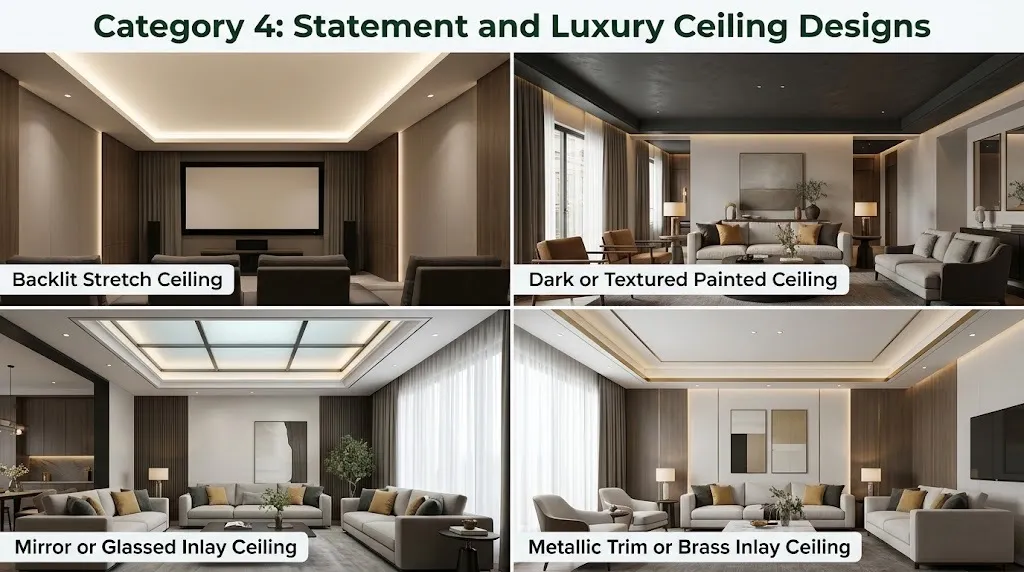
16. Backlit Stretch Ceiling
A stretch ceiling uses a thin PVC membrane pulled tight over a frame, creating a perfectly smooth surface. When lit from behind, the membrane glows evenly, and printed versions can show a sky, clouds, or custom artwork.
Stretch ceilings install quickly, resist moisture, and hide uneven slabs well. They do have limitations: sharp objects can puncture the membrane, and repairs need a specialist. They’re popular in kids’ rooms, home theaters, and bathrooms.
17. Mirror or Glass Inlay Ceiling
A mirror or frosted glass panel set into the ceiling reflects light and makes a room feel taller. Frosted glass with lights behind it creates a soft, skylight-like effect in windowless rooms.
Use a safety-backed mirror or tempered glass, and secure it to a sturdy frame. Keep mirror panels away from directly above the bed, which many people find uncomfortable to sleep under.
18. Dark or Textured Painted Ceiling
Painting the ceiling a deep color like charcoal, navy, or forest green can make a room feel cozy and intimate. Textured finishes like lime plaster or microcement add depth even in lighter shades.
This is one of the most affordable ways to create drama, since it relies more on paint than structure. Dark ceilings work best in rooms with good height or plenty of natural light. In a low, dim room, they can feel heavy.
19. Metallic Trim or Brass Inlay Ceiling
Thin metal strips in brass, gold, or black set into a gypsum ceiling add refined, luxurious detail. They can outline a tray, trace a geometric pattern, or frame a chandelier.
Restraint matters here. One or two metallic lines look elegant, while too many look flashy. Match the metal finish to your light fixtures or door handles for a cohesive look.
Category 5: Functional Ceilings for Specific Spaces
Some rooms need ceilings that work first and look good second. These designs solve problems like moisture, noise, and maintenance.
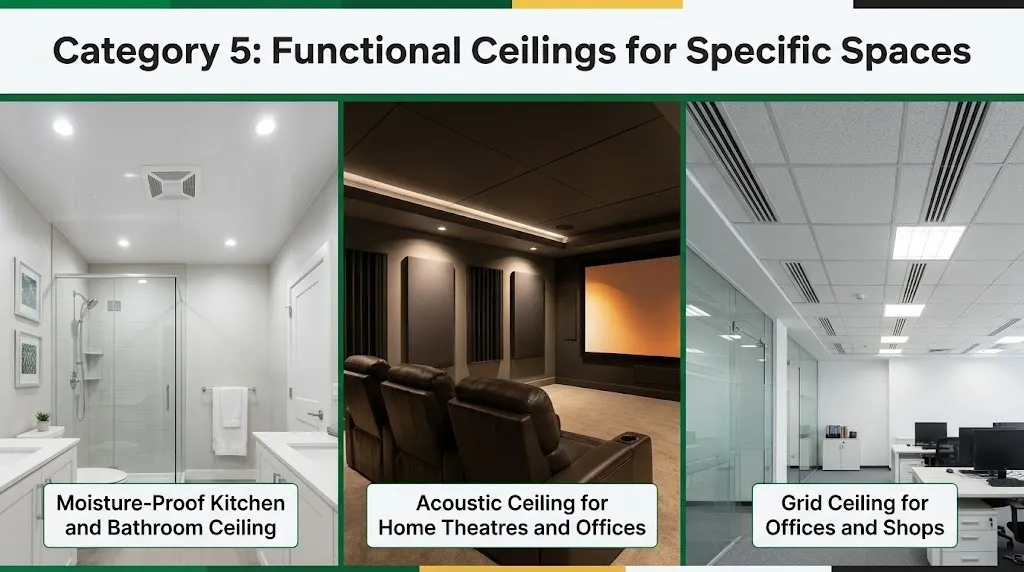
20. Moisture-Proof Kitchen and Bathroom Ceiling
Regular gypsum and POP absorb moisture and can sag, stain, or grow mould in kitchens and bathrooms. Use moisture-resistant (green) gypsum board, PVC panels, or aluminum panels instead.
For kitchens, keep the design flat and simple so grease doesn’t collect in grooves, and use bright, neutral lights for cooking. For bathrooms, PVC and aluminum are the safest options because you can wipe them clean. Always plan an exhaust fan opening before installation.
21. Acoustic Ceiling for Home Theatres and Offices
Acoustic ceilings use materials like perforated gypsum, mineral fiber, or fabric-wrapped panels to absorb sound. They reduce echo and keep noise from traveling between rooms.
If you work from home, take video calls, or have a home theatre, an acoustic ceiling makes a noticeable difference. Combine it with soft furnishings like rugs and curtains for the best results.
22. Grid Ceiling for Offices and Shops
A grid ceiling uses a metal frame holding removable tiles, usually 2 by 2 feet (600 by 600 mm). It’s the standard choice for offices, clinics, and shops.
The biggest advantage is access. You can lift any tile to reach wiring, AC ducts, or plumbing without breaking the ceiling. It looks too commercial for most living spaces, but it’s ideal for a home office annex, a basement, or a utility area.
False Ceiling Ideas—Room-by-Room Guide
Each room has its own needs, so a design that works in one space can fail in another. This section matches the designs above to specific rooms and adds practical tips for each.
- Living room and hall. This is where you can afford the most drama. A two-tier tray (#6), coffered ceiling (#9), or gypsum-wood hybrid (#13) works well in large spaces. Light the TV wall area with softer, indirect light to avoid screen glare.
- Bedroom. Calm, indirect lighting matters more than complex shapes here. A floating panel (#2) or peripheral cove (#1) with warm light helps you wind down. Avoid placing bright spotlights directly above the bed, where they shine into your eyes.
- Kitchen. Choose a flat moisture-resistant ceiling (#20) with bright, even lighting over the counters. Skip deep grooves and decorative recesses that trap grease.
- Bathroom. Use PVC or aluminum panels (#20) and moisture-rated light fittings. A small backlit stretch panel (#16) can add a spa-like touch.
- Dining area. A circular drop (#8) or rectangular recess centered above the table frames the chandelier. Hang the pendant around 30 to 34 inches above the tabletop.
- Kids’ room. Fun designs like a printed sky stretch ceiling (#16) or soft colorful cove lighting work well. Choose a design that can grow with the child, as themed ceilings quickly feel too young.
- Small rooms or low ceilings. Use the peripheral cove (#1), shadow grooves (#3), or a flat ceiling with spotlights (#4). Keep the center at full height and use light colors to make the room feel taller.
Choosing the Right Material
The material affects how your ceiling looks, how long it lasts, and how much it costs. This comparison covers the most common options so you can match the material to your room.
| Material | Relative Cost | Moisture Resistance | Best For | Key Limitation |
| Gypsum board | Medium | Low (green boards: good) | Most living rooms and bedrooms | Regular boards sag in wet areas |
| POP | Low to medium | Low | Curves, detailed patterns | Slow drying, messy, needs skilled labor |
| PVC panels | Low | Excellent | Bathrooms, kitchens, balconies | Can look cheap and warp near heat |
| Wood / WPC | High (WPC: medium) | Low (WPC: good) | Accent ceilings, living rooms | Solid wood needs care in humidity |
| Aluminum/metal | Medium to high | Excellent | Kitchens, bathrooms, commercial spaces | Can look cold in living areas |
| Mineral fibre | Low to medium | Moderate | Offices, shops | Looks too commercial for homes |
| Stretch membrane | Medium to high | Excellent | Statement ceilings, kids’ rooms | Easily punctured, needs specialist repair |
For most homes, gypsum board offers the best overall value. It installs faster than POP, gives a smooth factory finish, and has good fire resistance. Use POP only where you need tight curves or detailed shapes.
Lighting Your False Ceiling
Lighting does more to make or break a false ceiling than the design itself. A plain ceiling with good lighting looks better than an elaborate ceiling with harsh, uneven lights.
- Layer your lighting. Combine three types: ambient light (cover strips or panels) for general glow, task light (spotlights or profile lights) for working and cooking, and accent light (pendants or wall washers) for decoration. Put each layer on a separate switch or dimmer.
- Choose the right color temperature. Warm white (2700K to 3000K) suits bedrooms and living rooms. Neutral white (3500K to 4000K) suits kitchens, studies, and bathrooms. Mixing color temperatures within one room usually looks messy.
- Avoid visible LED dots. Regular LED strips show a dotted line when they sit too close to the surface they light. Use COB (chip-on-board) strips, which give a continuous line of light, or make the cove deep enough to hide the strip.
- Check light quality. Look for lights with a CRI (color rendering index) of 90 or higher. They show skin tones, food, and fabrics in true color.
- Plan your ceiling fan carefully. Fix the fan hook directly to the concrete slab, never to the false ceiling frame. Use a down rod long enough to bring the blades below the false ceiling, while keeping them at least 7 feet above the floor for safety.
What Affects the Cost of a False Ceiling
False ceiling prices vary widely by city, material brand, and installer. Instead of relying on a single price, understand what drives the cost, so you can compare quotes fairly.
- Area and shape. Most installers price per square foot. Curves, circles, and multiple levels cost more than flat sections because they need more framing and labor.
- Material. PVC and basic POP sit at the lower end. Gypsum falls in the middle. Wood, stretch membranes, and metal trims cost the most.
- Lighting. The ceiling quote often excludes lights, LED strips, drivers, and electrical work. These can add a significant amount to the total, especially in layered designs.
- Finishing. Ask whether the quote includes joint taping, putty, primer, and final paint. A low quote that skips finishing often ends up costing more.
- Budget-friendly picks: flat ceiling with spotlights (#4), peripheral cove (#1), and PVC panels for wet areas (#20).
Common Mistakes to Avoid While Choosing the False Ceiling For Your Space
Most false ceiling problems come from planning mistakes, not poor materials. These are the issues that most often lead to costly repairs or regret.
Dropping the ceiling too low. A heavy multi-layer ceiling in a 9-foot room makes it feel cramped. Measure your height before you choose a design.
Hanging the fan from the false ceiling. The frame isn’t built to carry a moving load. A fan fixed to it can wobble, crack the ceiling, or fall.
Forgetting access panels. AC units, junction boxes, and plumbing joints need maintenance. Without access panels, every repair means cutting into the ceiling.
Using regular gypsum in wet areas. Steam and leaks cause regular boards to sag and stain within months.
Installing before final service planning. Finalize AC, wiring, speakers, and smoke detector positions first. Changing them after installation is expensive.
Copying a photo without considering your room. A design shot in a 14-foot villa won’t look the same in a 9.5-foot apartment.
Final Thoughts
The best false ceiling isn’t the most complex one. It’s the one that respects your room’s height, fits how you use the space, and brings light where you need it. Start with the function, choose a material that handles your room’s conditions, and plan your lighting before you finalize the design.
Shortlist two or three designs from this guide and discuss them with an experienced installer. A small investment in good planning will give you a ceiling you’ll enjoy for years.
Frequently Asked Questions
Which false ceiling is best for a low-height room?
A peripheral cove ceiling or a flat ceiling with shadow grooves works best. Both keep the room’s center at full height while hiding wiring and adding light.
Is gypsum better than POP?
For most homes, yes. Gypsum installs faster, creates less mess, and gives a smoother, more consistent finish. POP is better for intricate curves and detailed shapes.
How long does a false ceiling last?
A well-installed gypsum ceiling can last 15 to 20 years or more. Its lifespan depends on the installation quality and whether it’s protected from leaks.
Does a false ceiling keep a room cooler?
It can help, especially in top-floor rooms. The air gap between the slab and the false ceiling reduces heat transfer from a hot roof and reduces the space your AC has to cool.
Can I install a false ceiling in a rented home?
Yes, but get written permission from the owner first. A flat ceiling with spotlights or a simple peripheral design is the most practical choice for rentals.
What color should a false ceiling be?
White or off-white suits most rooms because it reflects light and makes the room feel taller. Darker shades work as an accent in rooms with good height.