
How to Clean a Carpet: Hand, Baking Soda & Machine Methods

To clean the carpet, vacuum first, treat any stains, apply a cleaning solution, then rinse and dry the fibers completely. That sequence is the fastest way to clean a carpet at home, and skipping a step is usually why a carpet looks dull again within days. For everyday dirt, vacuuming and light spot cleaning are often enough.
For ground-in grime, pet accidents, or a carpet that has not been washed in over a year, you need a deeper method: hand cleaning with a mild solution, baking soda for odor control, or a carpet-cleaning machine for full extraction. This guide by Floor Land walks through each method, explains which one fits your situation, and covers the mistakes that damage fibers or leave a residue behind.
Which Cleaning Method Do You Need?
Use this table to match your situation to the right method before reading the full instructions below.
| Cleaning need | Recommended method | Best for |
| Regular cleaning | Vacuuming | Everyday dirt and dust |
| Small stains | Spot cleaning | Fresh spills |
| Light cleaning | Hand cleaning | Small areas or rugs |
| Odor control | Baking soda | Mild, everyday odors |
| Deep cleaning | Carpet-cleaning machine | Larger or heavily soiled areas |
| Stubborn or old problems | Professional cleaning | Deep stains, odors, or water damage |
How to Clean a Carpet – The Full Process
Whether you plan to clean by hand or with a machine, the underlying process stays the same. These eight steps cover the full job from start to finish.
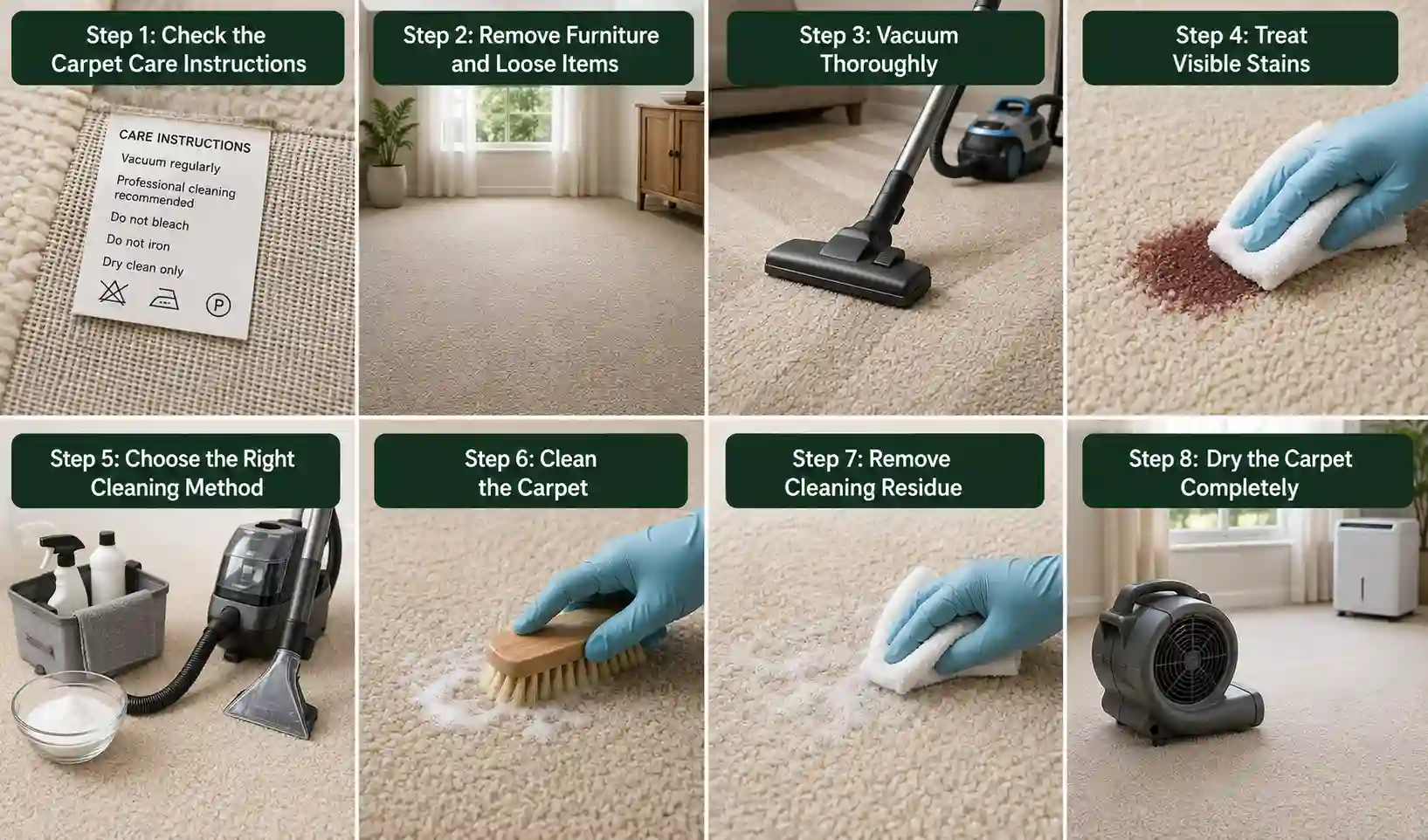
Step 1: Check the Carpet Care Instructions
Look at the manufacturer’s label or care tag before you apply anything to the carpet. Carpets are made from different fibers, and some react poorly to water, heat, or specific cleaning agents. A wool wall-to-wall carpet, for instance, can shrink or discolor if treated the same way as a synthetic one. If you cannot find a care tag, test any solution on a hidden corner first, such as inside a closet or under furniture, and wait a few minutes to check for color change or damage.
Step 2: Remove Furniture and Loose Items
Clear the room as much as you reasonably can. Moving chairs, small tables, and rugs out of the way gives you room to vacuum and clean in straight, even passes instead of working around obstacles. If you can’t move furniture, slip small squares of foil or plastic under the legs so wet carpet doesn’t stain the wood or transfer rust from metal feet.
Step 3: Vacuum Thoroughly
Vacuum before you introduce any liquid. Wet dirt turns to mud and works its way deeper into the fibers, making the job harder. Go over the carpet slowly in overlapping passes, and go over high-traffic areas twice. A thorough vacuum removes loose dirt, dust, and pet hair, so the cleaning solution you apply afterward only has to deal with what is actually embedded in the fibers.
Step 4: Treat Visible Stains
Deal with stains before cleaning the whole carpet or carpet tile. Blot fresh spills with a clean, dry cloth to lift as much liquid as possible before it sets. For stains that have already dried, dampen the area with a small amount of cleaning solution and blot from the outer edge toward the center to avoid spreading the stain.
Step 5: Choose the Right Cleaning Method
Not every carpet needs the same approach:
- Hand cleaning suits small areas, light soiling, and rugs you can work section by section.
- Cleaning without a machine works well for routine refreshes and odor control using household ingredients.
- Machine cleaning is better for larger rooms, heavier soiling, or carpet that has not been deep cleaned in a while.
- Professional cleaning is the right call for old stains, water damage, or carpet that stays dirty after you have tried the steps above.
Step 6: Clean the Carpet
Apply your chosen solution in small sections rather than soaking the whole carpet at once. Work the solution into the fibers with a soft brush or cloth using gentle, circular motions, and move on once an area looks clean instead of scrubbing longer than necessary. Aggressive scrubbing frays fibers and can push dirt deeper instead of lifting it out.
Step 7: Remove Cleaning Residue
Rinse the treated area with a cloth dampened in plain water, then blot until the cloth stops picking up soap or foam. Leftover detergent stays sticky even after the carpet dries, and sticky fibers attract new dirt faster than clean ones. This is one of the most commonly skipped steps, and it is usually why a recently cleaned carpet looks dirty again within a week or two.
Step 8: Dry the Carpet Completely
Open windows, run fans, or use a dehumidifier to move air across the carpet until it is completely dry, not just dry to the touch on the surface. Damp carpet backing and padding can develop mold, mildew, or a musty smell within a day or two in humid conditions. Avoid walking on the carpet or replacing furniture until it is fully dry, which typically takes four to eight hours depending on airflow and humidity.
How to Clean a Carpet Without a Machine
You do not need a carpet-cleaning machine to get a sisal carpet genuinely clean. Cleaning a carpet without a machine works well for routine maintenance, smaller rooms, and situations where you want more control over how much moisture goes into the fibers.
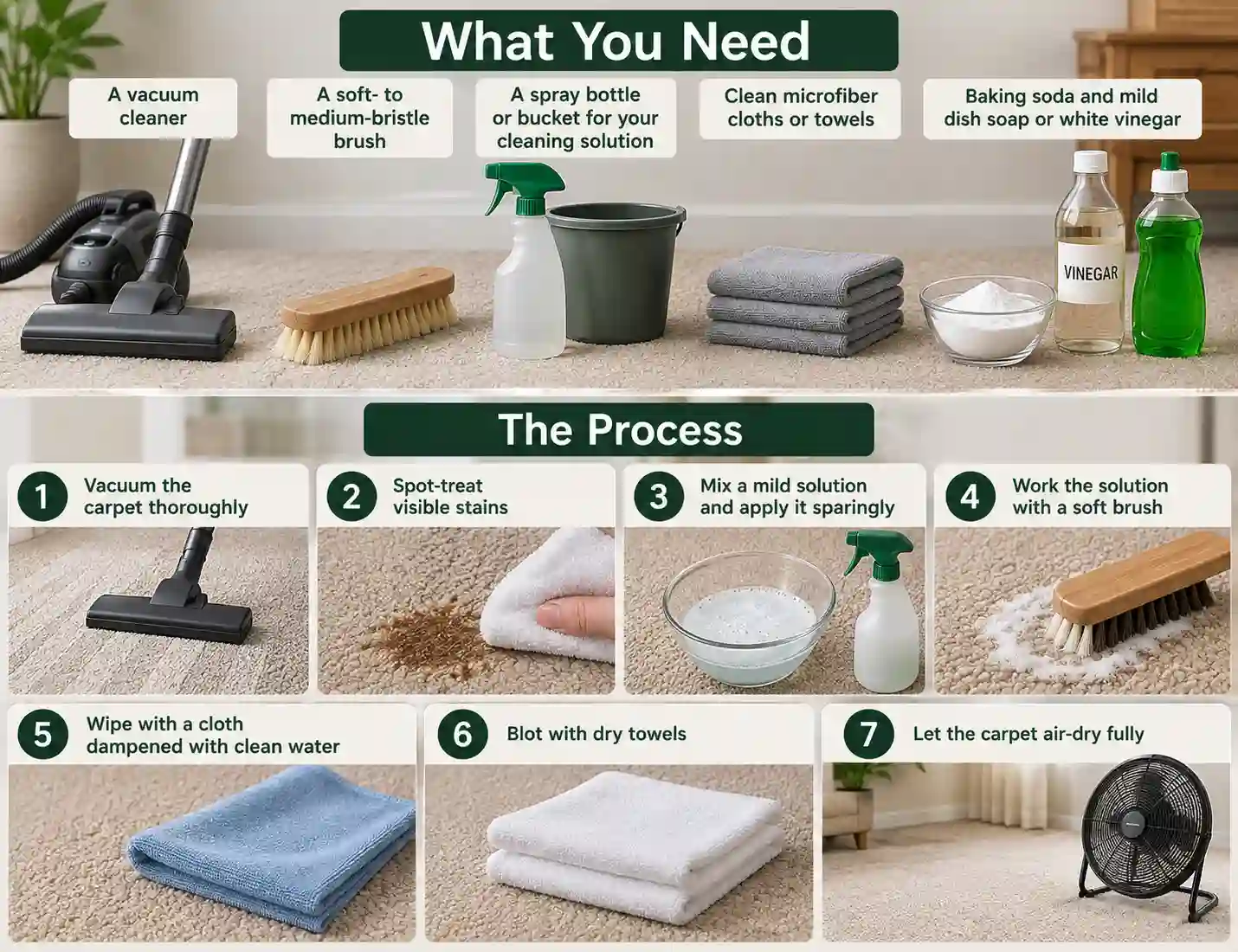
What You Need
- A vacuum cleaner
- A soft- to medium-bristle brush
- A spray bottle or bucket for your cleaning solution
- Clean microfiber cloths or towels
- Baking soda and mild dish soap or white vinegar
The Process
- Vacuum the entire carpet thoroughly, including edges and under furniture where dust collects.
- Spot-treat any visible stains by blotting rather than rubbing.
- Mix a mild solution, such as a small amount of dish soap in warm water, and apply it sparingly with a cloth or spray bottle.
- Work the solution into the carpet in small sections using a soft brush, moving in gentle circles.
- Wipe the area with a cloth dampened with clean water to lift the solution back out.
- Blot with dry towels to absorb as much moisture as possible.
- Let the carpet air-dry fully before walking on it or replacing furniture.
Manual cleaning has limits. It refreshes the surface and upper fibers well, but it cannot pull moisture and embedded dirt out of the carpet the way a machine’s suction and extraction can. For heavily soiled carpet or carpet that has gone years without a deep clean, hand methods alone may not fully restore it.
How to Clean a Carpet by Hand
Cleaning a carpet by hand is really about controlling two things: how much moisture you use and how gently you work the fibers. Both matter more than which specific product you choose.
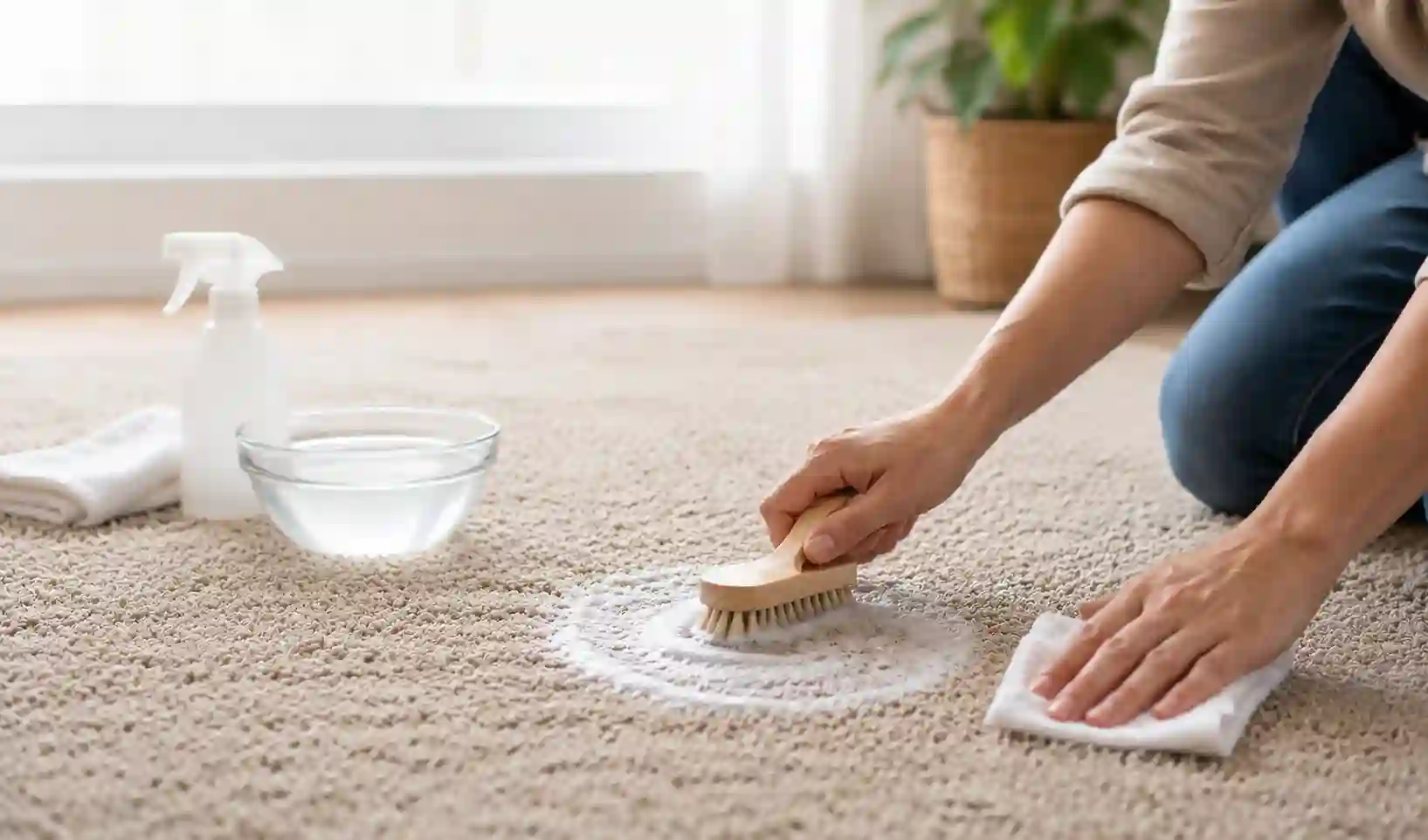
- Use a damp cloth or lightly moistened brush rather than pouring liquid directly onto the carpet.
- Work in small sections, roughly two to three square feet at a time, so no area sits wet for long.
- Move in gentle circular motions instead of scrubbing back and forth, which can fray fibers.
- Rinse and blot each section before moving to the next, so cleaning solution does not dry into the carpet.
- Give the room extra time to dry, since hand cleaning tends to leave slightly more surface moisture than a machine with strong suction.
This approach works best for small areas, rugs, stairs, and spot cleaning rather than an entire large room, simply because of the time and physical effort involved.
How to Clean Carpet With Baking Soda
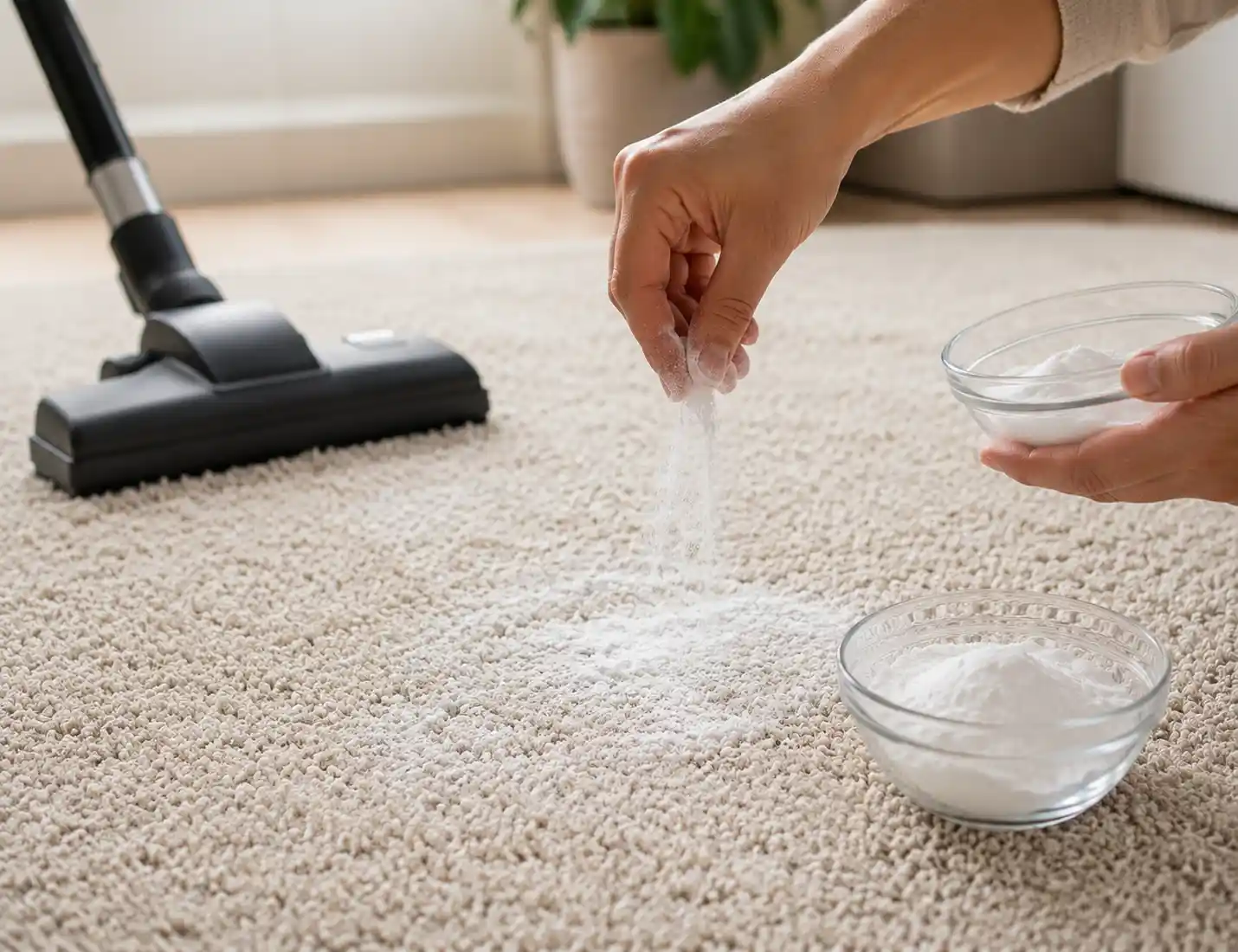
Baking soda is genuinely useful for carpet care, but it is not a stain remover on its own, and it should not be treated as one. Its real strength is absorbing odor and loosening surface dirt so a vacuum can pick it up more easily.
What Baking Soda Can Do
- Absorb everyday odors from foot traffic, pets, and general use.
- Loosen light, dry dirt sitting on top of the fibers.
- Freshen a carpet between deeper cleaning sessions.
How to Apply It
Sprinkle a light, even layer of baking soda over the carpet or the specific odor-prone area. Let it sit for at least 15 minutes for a light refresh, or several hours to overnight for stronger odors. Vacuum it up thoroughly afterward, going over the area more than once to make sure none is left sitting in the fibers, since leftover powder can clump when it later gets damp.
What It Cannot Do
Baking soda does not lift set-in stains, dissolve grease, or replace an actual cleaning solution. If you are dealing with a visible stain rather than an odor, treat it with a stain-specific method first and use baking soda afterward for freshness, not as a substitute.
How to Clean a Carpet by Hand With Vinegar
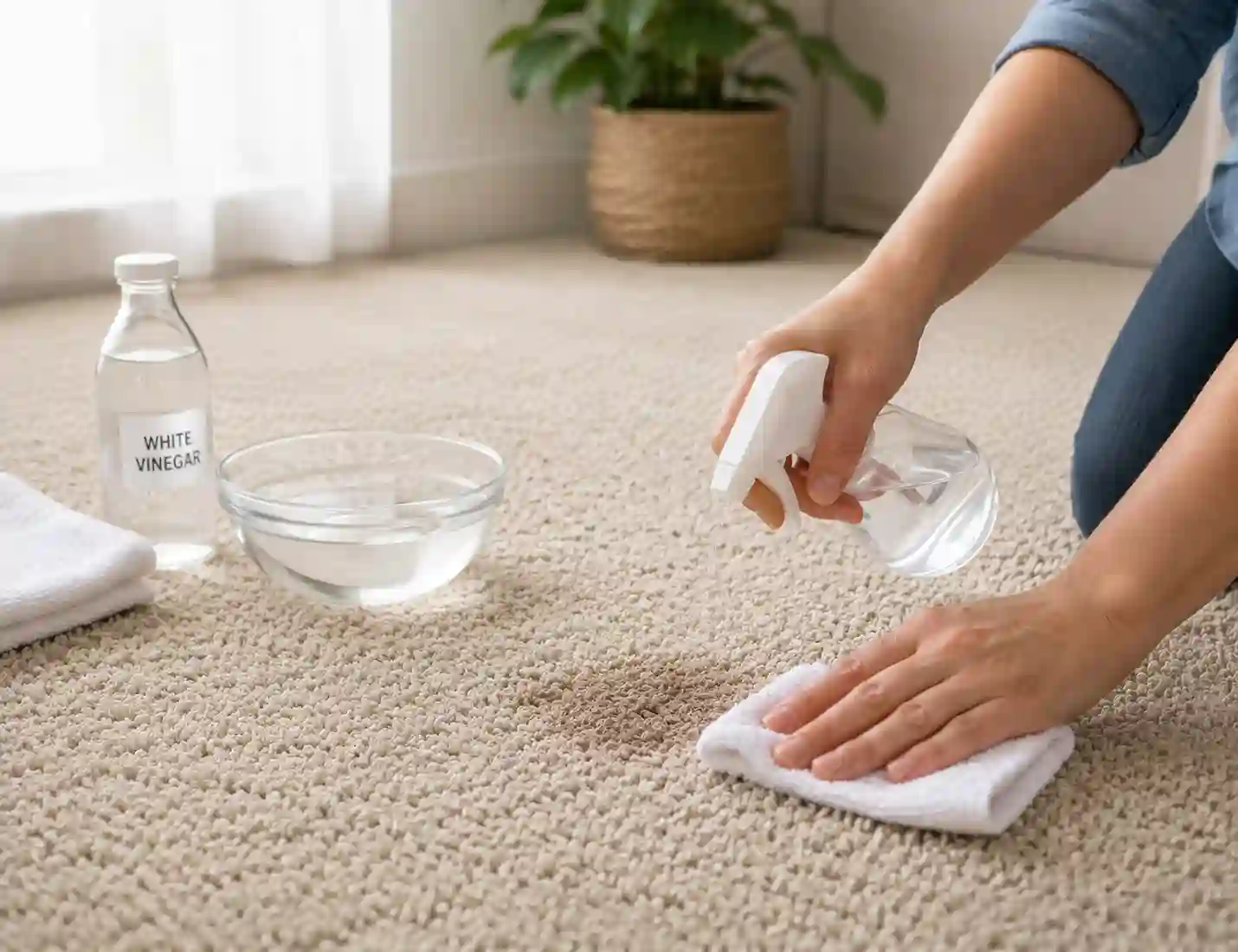
Diluted white vinegar is a reasonable household option for light stains and general freshening because it is mild, inexpensive, and breaks down some everyday grime. It is not a universal fix, and it will not suit every carpet.
Dilution and Application
Mix roughly one part white vinegar with two to three parts warm water. Apply it sparingly with a spray bottle or a dampened cloth rather than pouring it directly onto the carpet, since vinegar works on contact and does not need to soak in.
Blotting and Rinsing
Blot the treated area with a clean cloth, working from the outside of the spot inward. For sensitive fibers, follow up by wiping the area with a cloth dampened in plain water to rinse away any residue, then blot again with a dry towel.
Patch Test First
Carpet fibers, dyes, and backing materials vary widely, and vinegar can dull color or affect certain wool or specialty fibers. Test the diluted solution on a hidden patch of carpet and wait several minutes before treating a visible area. Never combine vinegar with bleach or other cleaning chemicals, since the mix can produce dangerous fumes. Always dry the area fully afterward to avoid a lingering vinegar smell.
How to Clean a Carpet Stain
Most stains respond to the same basic sequence: blot, identify the stain; choose an appropriate solution; treat; rinse if needed; then dry.
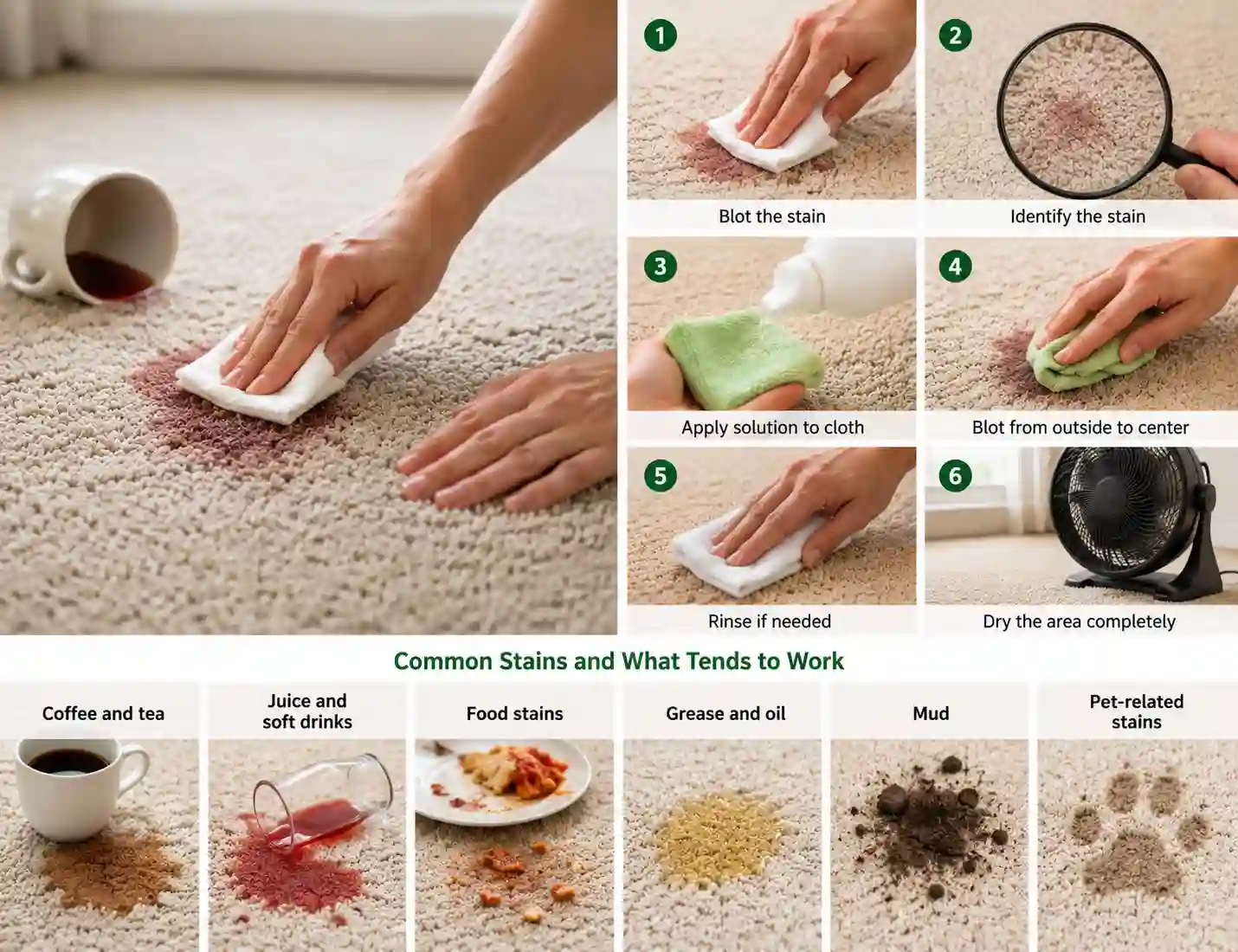
- Blot the stain immediately with a dry cloth to remove as much of the spill as possible before it sets.
- Identify what caused the stain, since the right solution depends on whether it is a drink, food, grease, or something else.
- Apply a small amount of an appropriate cleaning solution to a cloth, not directly onto the carpet.
- Blot from the outer edge of the stain toward the center to avoid spreading it.
- Rinse with a cloth dampened with plain water if any soap or solution residue remains.
- Dry the area completely, using a fan if needed to speed up airflow.
Avoid rubbing or scrubbing a stain aggressively. It feels productive, but it usually pushes the stain deeper into the padding and can fray the surface fibers, leaving a rough patch even after the stain is gone.
Common Stains and What Tends to Work
- Coffee and tea: blot with a mild dish soap solution, then rinse.
- Juice and soft drinks: blot promptly, since sugar in these stains can attract dirt if left untreated.
- Food stains: scrape off any solid residue first, then treat the remaining mark.
- Grease and oil: dish soap is effective because it is designed to break down fats.
- Mud: let it dry fully, then vacuum before treating whatever mark remains.
- Pet-related stains: treat promptly and thoroughly, since residue left in the padding can cause recurring odor.
How to Deep Clean Carpet at Home
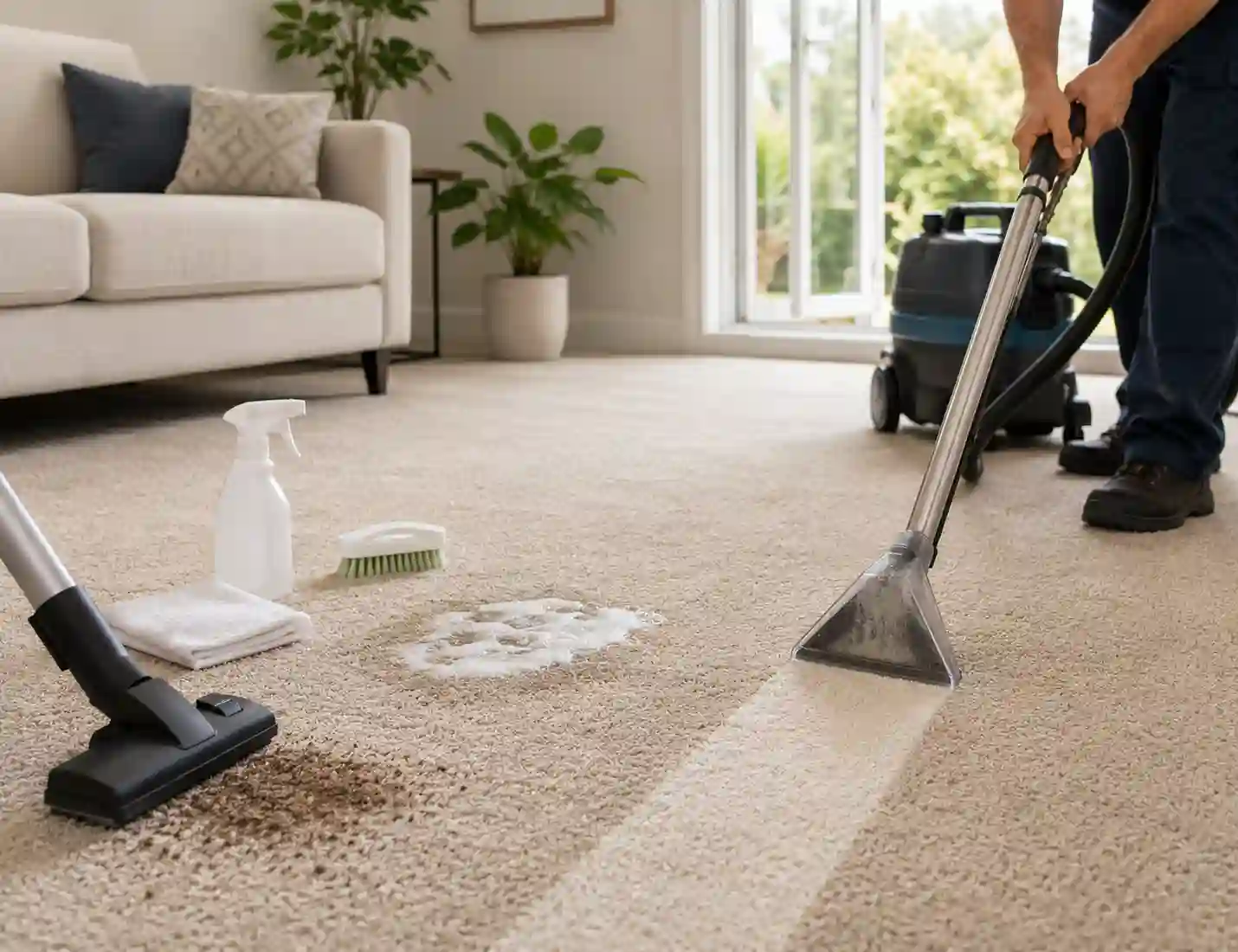
Deep cleaning goes further than routine vacuuming or spot treatment. It targets dirt, oils, and residue that have worked their way into the base of the fibers, not just the surface.
When You Need It
Consider a deep clean when the carpet looks dull despite regular vacuuming, when odors persist after spot cleaning, when it has been roughly six months to a year since the last deep clean, or before and after a major life event like moving or a long illness in the household.
The Process
- Vacuum thoroughly to remove all loose dirt and debris.
- Pre-treat any visible stains individually before cleaning the whole carpet.
- Apply your chosen cleaning solution evenly, working in manageable sections.
- Agitate gently with a brush to work the solution into the fibers.
- Extract or rinse out the solution, either by hand with damp cloths or with a machine’s suction.
- Dry the carpet completely with good airflow before walking on it.
Resist the urge to use more water or solution than the steps call for. Excess moisture takes far longer to dry and raises the risk of mold or mildew forming in the padding underneath, which is a much bigger problem than the original dirt.
How to Deep Clean Carpet With a Machine
A carpet-cleaning machine sprays a water and solution mixture into the fibers, agitates it, then extracts the moisture back out with suction. Used correctly, it reaches deeper into the pile than hand cleaning can.
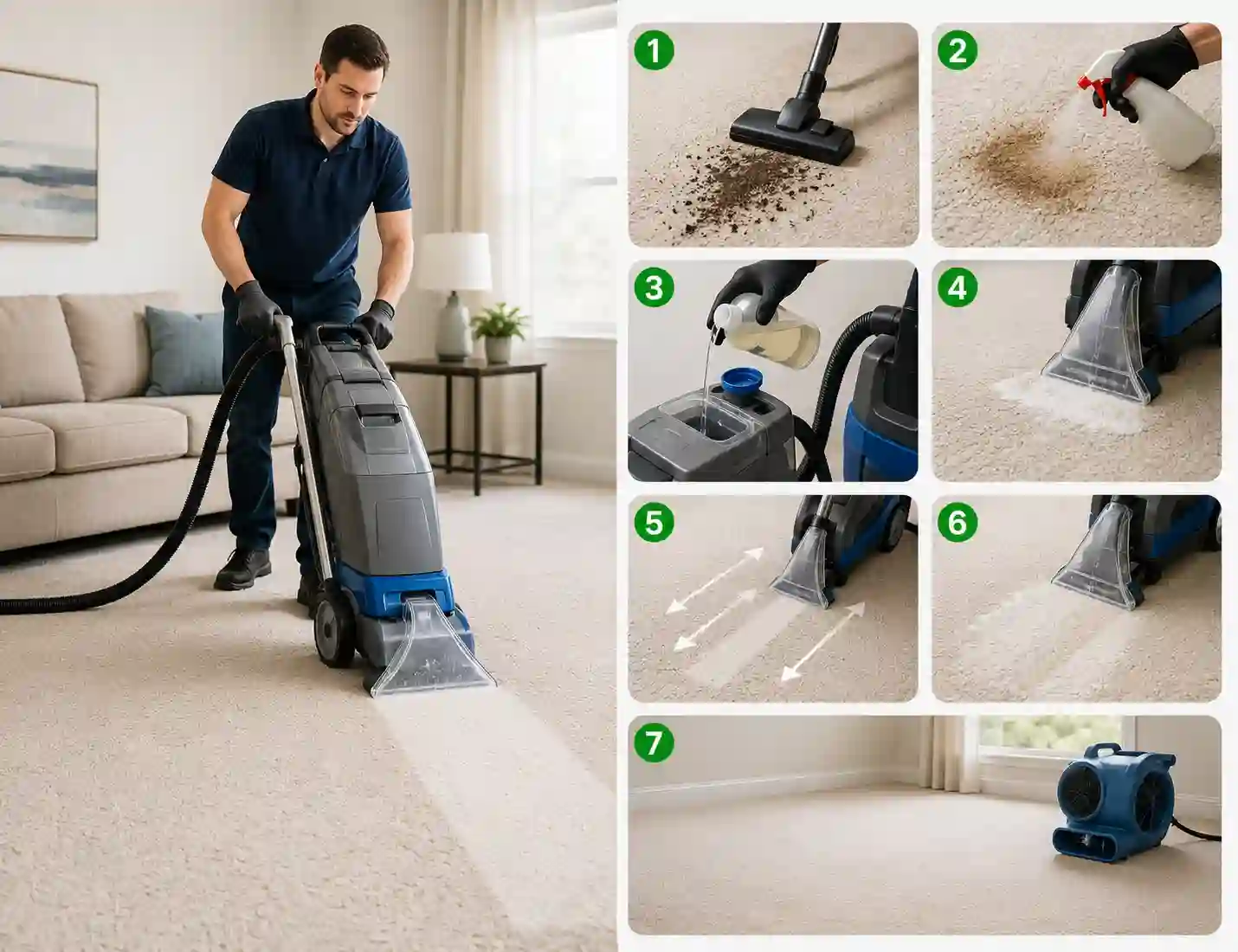
- Vacuum the carpet first to remove loose dirt so the machine is not working through debris.
- Pre-treat any stubborn stains before running the machine over the whole area.
- Fill the machine with the manufacturer-recommended cleaning solution, diluted correctly. More concentrated is not more effective, and it leaves more residue behind.
- Avoid over-wetting by not going over the same section repeatedly during the wash pass.
- Make slow, controlled, overlapping passes so no strip of carpet gets missed.
- Run a final pass or two with plain water only, in extraction mode, to pull out as much leftover solution as possible.
- Leave the carpet to dry completely, using fans or open windows to speed up airflow.
Machine cleaning suits larger rooms, heavier soiling, and carpet that has gone a long time between deep cleans, since it can extract more moisture and dirt than manual methods in less time. It is not automatically better for small stains or delicate carpet, where the added moisture and mechanical action are not necessary.
What Not to Do When Cleaning Carpet
A handful of common mistakes account for most carpet damage and disappointing results.
- Scrubbing stains aggressively, which frays fibers and can push the stain deeper into the padding.
- Using too much water, which soaks the backing and padding and takes far longer to dry.
- Using too much detergent, since excess soap leaves a sticky film that attracts dirt after drying.
- Skipping vacuuming before wet cleaning, which turns dry dirt into mud that works into the fibers.
- Mixing cleaning chemicals, especially vinegar with bleach, which can create hazardous fumes.
- Using a product not meant for carpet, since some cleaners are formulated for hard surfaces and can discolor fibers.
- Ignoring the carpet manufacturer’s care instructions, which exist because fiber types react differently to heat, moisture, and chemicals.
- Walking on the carpet before it dries, which pushes dirt back into damp fibers and can flatten the pile.
- Failing to remove cleaning residue, which is one of the main reasons a carpet looks dirty again soon after cleaning.
Carpet Types and Cleaning Considerations
Cleaning methods should account for what the carpet is actually made of, since fibers behave differently under moisture, heat, and chemical exposure.
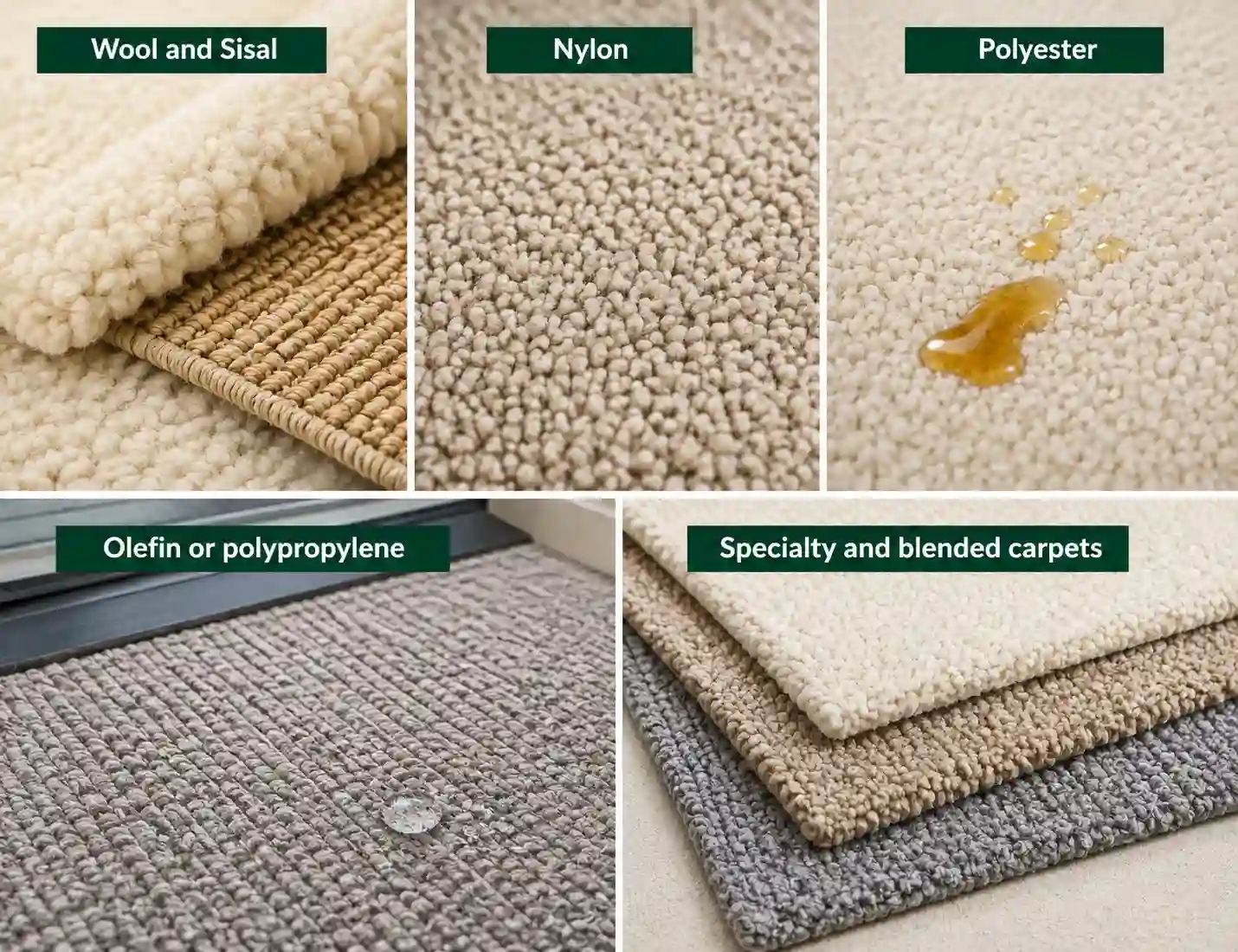
- Wool and Sisal: durable but sensitive to heat and strong alkaline cleaners; mild solutions and lower moisture generally work better.
- Nylon: resilient and generally tolerant of common cleaning solutions, though color-safe testing is still worthwhile.
- Polyester: resists water-based staining well but can hold onto oily or greasy stains more stubbornly.
- Olefin or polypropylene: resists moisture and staining well, often used in high-traffic or outdoor-adjacent areas.
- Specialty and blended carpets: may combine fibers with different sensitivities, so a patch test matters even more.
None of this replaces the manufacturer’s care instructions. When general guidance and the care label disagree, follow the label, since it reflects the specific backing, dye, and fiber treatment used for that carpet.
How Often Should You Clean a Carpet?
There is no single schedule that fits every household, since the right frequency depends on how the carpet actually gets used.
- Vacuum high-traffic areas two to three times a week, and the rest of the carpet at least weekly.
- Spot-clean spills and stains as soon as they happen, rather than waiting.
- Do a routine, lighter clean every few months if you have pets, children, or heavy foot traffic.
- Deep clean roughly once or twice a year for typical households, and more often for high-traffic homes.
Homes with allergy sufferers, pets, or young children generally need more frequent cleaning than a low-traffic guest room. Indoor humidity and local dust levels also play a role, so treat these numbers as a starting point rather than a strict rule.
When Should You Hire a Professional Carpet Cleaner?
DIY methods handle most everyday carpet care well, but certain situations call for professional equipment and expertise.
- Large areas of heavy soiling that home methods have not been able to fully lift.
- Deep or old stains that have set into the padding, not just the surface fibers.
- Persistent odors that return even after cleaning and drying.
- Water damage, where moisture may have reached the padding or subfloor.
- Delicate or high-value carpets, such as wool or specialty weaves, where the wrong product could cause lasting damage.
- Stains that keep reappearing after cleaning, which often means residue is trapped deeper than a home method can reach.
- Carpet that still looks or smells dirty after a thorough home cleaning.
Professional equipment generally applies stronger extraction and higher water temperatures than home machines, which helps in these harder cases. If your situation matches any of the points above, it is worth getting a professional assessment rather than repeating the same DIY steps with diminishing results.
Final Takeaway
Clean carpet comes down to a handful of habits done consistently: vacuum before you introduce any liquid, treat stains carefully instead of scrubbing them, match the cleaning method to the size and condition of the area, and avoid excess moisture at every stage. Rinse out cleaning residue so the carpet does not attract dirt right back, and give it enough time and airflow to dry completely. Baking soda and vinegar both have a real place in a home routine, but they work best as part of that full sequence rather than as a stand-alone fix. If a carpet stays dirty, smelly, or damp despite following these steps, that’s when calling in a professional makes more sense than repeating the same process.
Frequently Asked Questions
Vacuum high-traffic areas a few times a week and the rest at least weekly. Plan for a deeper clean every few months if you have pets or kids, and a full deep clean once or twice a year for most households.
Yes. Vacuuming, spot treatment, and a hand-applied cleaning solution can refresh a carpet effectively, especially for smaller areas or routine maintenance. A machine still extracts more embedded dirt and moisture for larger or heavily soiled areas.
Vacuum first, treat any stains, apply a mild cleaning solution in small sections, rinse out the residue, and dry the carpet completely. The specific method, hand cleaning or machine cleaning, depends on the size of the area and how soiled it is.
Yes, for odor control and loosening light surface dirt. It is not a substitute for an actual stain treatment, so use it alongside a proper cleaning solution rather than instead of one.
Diluted white vinegar is safe for many carpets when used sparingly and patch-tested first. It is not suitable for every fiber type, and it should never be combined with bleach or other cleaning chemicals.
Apply the solution with a cloth or spray bottle rather than pouring it on, work in small sections, and blot out moisture as you go instead of letting it sit. This keeps the padding underneath from soaking through.
Most carpets dry within four to eight hours with good airflow from fans or open windows. Humid conditions, thick padding, or excess moisture during cleaning can extend that significantly.
Yes, provided the paint is sound and fully cured. Check adhesion with a tape test, degloss any sheen, and use a primer suited to the paint’s porosity. Painted texture cannot be soaked off, so if it needs to go, it has to be sanded and skimmed.
This usually means cleaning residue was left behind, which attracts new dirt as it dries, or that the dirt was embedded deeper than the cleaning method reached. Rinsing thoroughly and drying fully both help prevent this.
A small amount of mild dish soap diluted in warm water works for many everyday stains, particularly grease. Use it sparingly and rinse well, since soap residue left in the fibers attracts dirt.
Not automatically. For routine maintenance and everyday stains, DIY methods work well. Professional cleaning is the better option for old or recurring stains, persistent odors, water damage, or delicate carpets where a mistake could cause lasting damage.