
How to Remove Pet Hair from Carpet? Carpet Rake, Rubber Tools & Vacuum
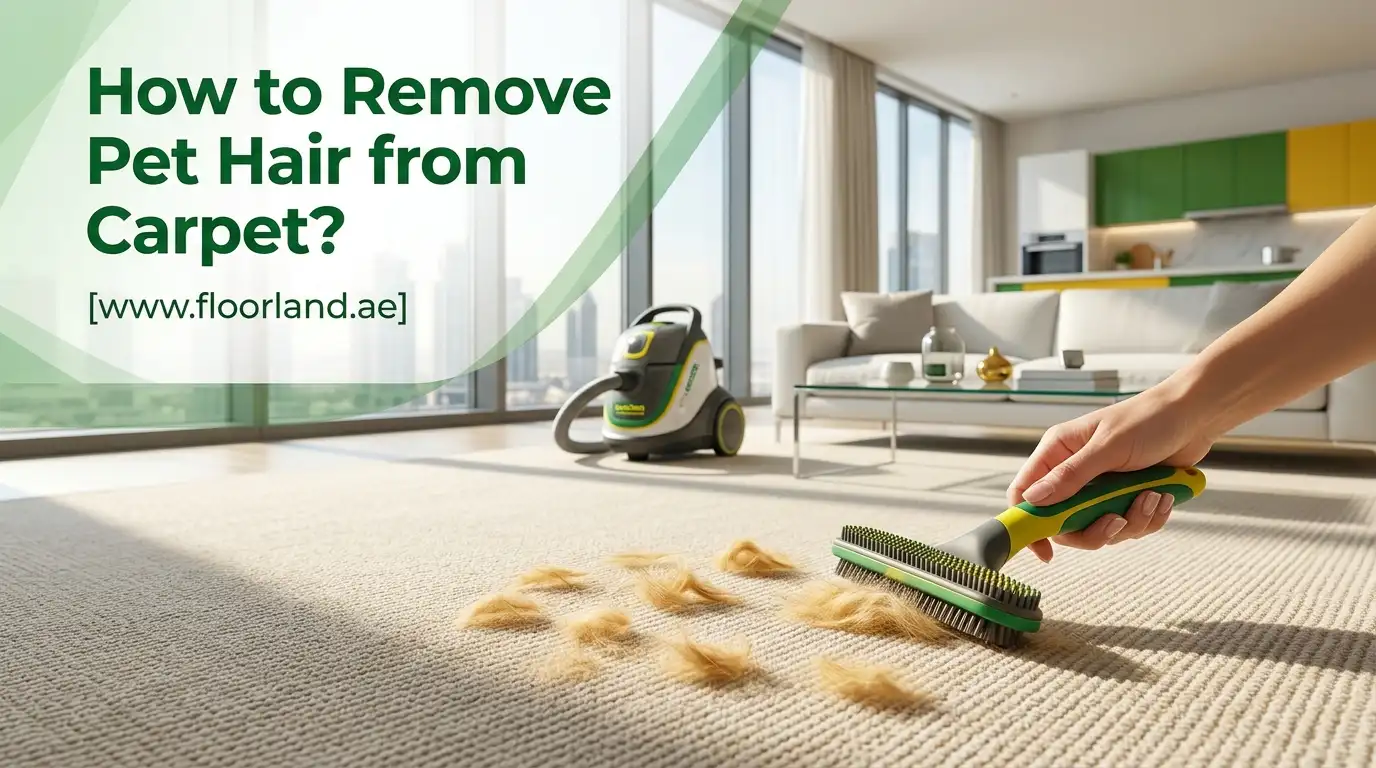
The easiest way to remove pet hair from carpet is to loosen the hair first, then lift and vacuum it away. For light buildup, run a rubber glove, rubber squeegee, or slightly damp microfiber cloth over the wall-to-wall carpet to gather loose hair. If the hair is deeply embedded, use a carpet rake or pet-hair removal brush to pull it toward the surface before vacuuming. Move the vacuum slowly and make several passes in different directions for better results. Avoid soaking the carpet, as excess moisture can push hair deeper into the fibers.
Regular vacuuming, combined with brushing your pet, helps prevent heavy hair buildup. The right approach also depends on your carpet’s fiber type and how much pet hair has accumulated. In this blog post by Floor Land, you’ll find a step-by-step process, no-vacuum options, and realistic notes on what each method can do.
Best Pet Hair Removal Methods
| Method | Best for | Vacuum needed? | Carpet safety |
| Carpet rake | Embedded pet hair, high-pile carpet | No | Depends on carpet type — avoid on loop pile |
| Rubber gloves | Small areas, stairs, edges | No | Generally gentle |
| Rubber squeegee | Larger open areas | No | Use light pressure |
| Lint roller | Surface hair, low-pile carpet | No | Best for light buildup |
| Pet hair remover tool or scraper | Stubborn, matted hair | No | Check carpet care instructions first |
| Baking soda | Loosening hair, reducing odor | Usually yes | Fine on most synthetics; use sparingly on wool |
| Vacuum with pet attachment | Regular maintenance | Yes | Depends on brush bar and pile height |
Treat this as a starting point, not a rule. Carpet construction varies, and the manufacturer’s care guide always overrides general advice.
The Most Effective Way to Remove Pet Hair from Carpet
Removing pet hair works best when you loosen the fibers before vacuuming. Trying to vacuum heavily embedded hair in one go can leave hair behind and place unnecessary strain on the vacuum. Follow the steps below to remove surface hair and hair trapped deeper in the best-quality carpet pile.
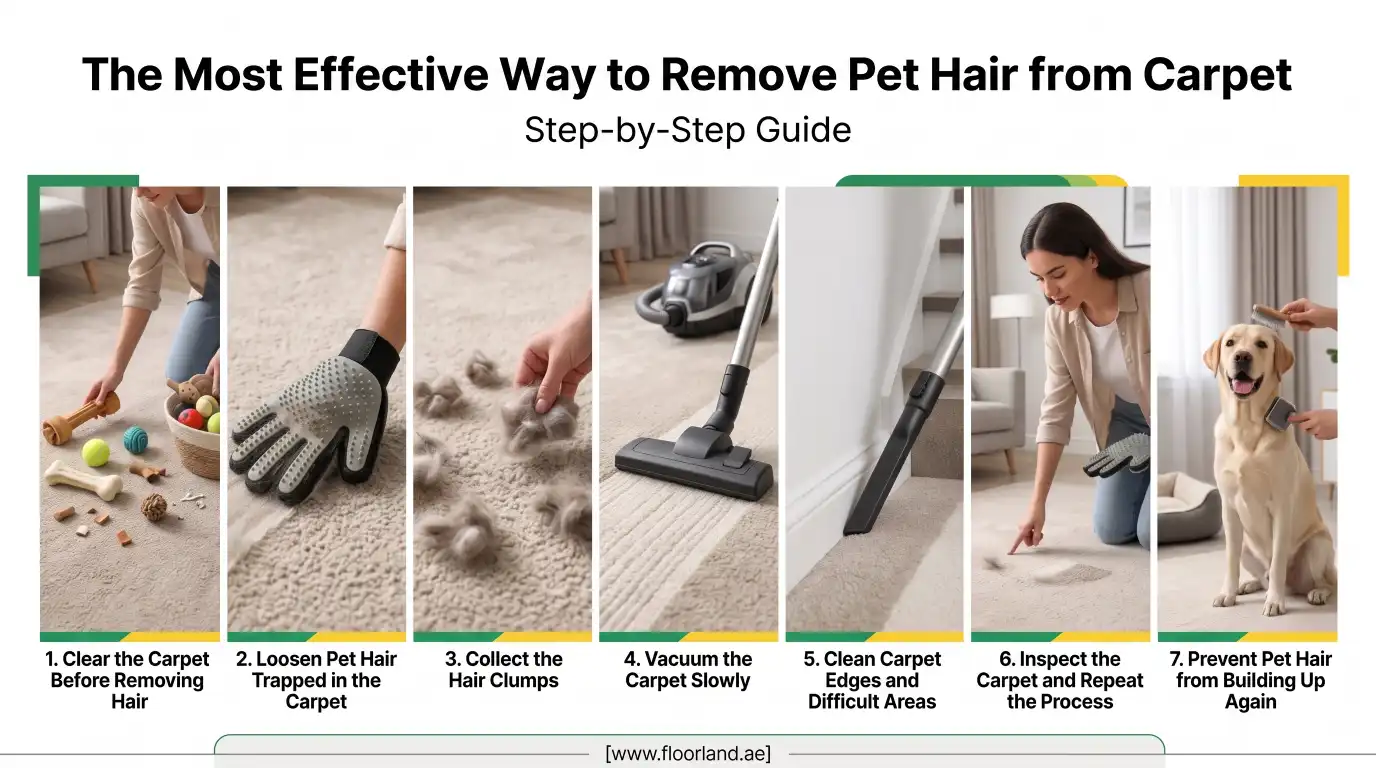
1. Clear the Carpet Before Removing Hair
Start by removing toys, pet accessories, small objects, and loose debris from the carpet. Move lightweight custom furniture where practical so you can reach the areas underneath and around it. Do not begin raking or scraping immediately if the carpet contains sand, grit or other hard particles. Dragging debris through the pile can work it deeper into the fibers and increase abrasion.
Use your hands or a small brush to pick up larger pieces of debris first. Once the carpet is reasonably clear, you can work on the embedded pet hair without mixing it with unnecessary dirt.
2. Loosen Pet Hair Trapped in the Carpet
The next step is to bring embedded hair toward the surface. A rubber squeegee, rubber glove, or carpet rake can work well. The reason is that a rubber surface creates friction against the carpet pile.
Using a Rubber Squeegee
Hold the squeegee at a low angle and pull it across the carpet in short strokes. Work in one direction rather than repeatedly scrubbing the same area. As you pull, trapped hair should collect into small rolls or clumps. Gather these as you work instead of pushing them around the room.
Using Rubber Gloves
Put on a clean, dry rubber glove and run your hand across the carpet in short strokes. Slightly dampening the glove can help collect loose hair, but avoid making the carpet wet. This method is particularly useful around furniture, corners, and smaller sections where a squeegee or rake is difficult to use.
Using a Carpet Rake
For dense or long-pile carpet or carpet tile, a carpet rake can help separate and lift hair from between the fibers. Pull it gently through the pile rather than forcing it down into the carpet. Use extra care with delicate or looped carpets. Aggressive raking can disturb the pile or catch individual loops.
3. Collect the Hair Clumps
Once the hair has been loosened, gather the visible clumps before vacuuming. You can pick them up by hand, use a dustpan and brush, or collect them with a suitable lint-removal tool. This step matters because a large amount of loose pet hair can quickly fill a vacuum’s dust container or clog its filter. Removing the bulk of the hair first lets the vacuum handle the smaller strands that remain in the pile.
Do not simply push the hair into another section of the room. Collect it and dispose of it before moving on.
4. Vacuum the Carpet Slowly
After removing the larger hair clumps, vacuum the carpet thoroughly. Use the appropriate setting for your indoor or outdoor carpet type and make sure the vacuum’s brush or beater bar is suitable for the flooring.
Move the vacuum slowly rather than making quick passes. Start in one direction and then vacuum across the same area from another direction. Changing direction helps expose hair that may be lying between or underneath the carpet fibers.
Check the dust container or bag during cleaning, particularly if the carpet contains a large amount of pet hair. Empty it when required rather than continuing with a restricted airflow system.
Also inspect the vacuum filter and brush roll after cleaning. Pet hair can wrap around rotating brushes and reduce their effectiveness. Follow the manufacturer’s instructions when cleaning or removing hair from these components.
5. Clean Carpet Edges and Difficult Areas
Pet hair often accumulates where a standard vacuum head cannot reach properly. Check the perimeter of the room, corners, areas beside skirting boards, and spaces beneath furniture.
Skirting Boards and Corners
Use a crevice attachment or a rubber-gloved hand to collect hair along the edges. Pull the hair away from the edge first, then vacuum it up.
Under Sofa Edges
Hair can become trapped beneath custom sofa edges and other furniture. Move furniture when it is safe and practical to do so. For areas that cannot be reached with the main vacuum head, use an appropriate narrow attachment.
Stairs
Stair carpet requires particular attention because repeated foot traffic can press pet hair into the carpet. Work on one tread at a time with a suitable brush, rake, or vacuum attachment. Avoid pulling aggressively across stair carpet, especially if it has a looped construction.
6. Inspect the Carpet and Repeat the Process
After the first cleaning, look across the carpet from different angles. Run your hand gently over areas where hair was heavily embedded and check whether additional strands are still coming loose.
If you can still see or lift substantial amounts of hair, repeat the loosening and vacuuming stages. Do not judge the result only by appearance. Dark or light carpet can make remaining hair difficult to see, while hair buried below the visible surface may become noticeable again after people or pets walk over it.
Carpets with months of accumulated pet hair may require several cleaning sessions rather than one intensive treatment.
7. Prevent Pet Hair from Building Up Again
Removing existing hair is only part of the problem. Regular maintenance reduces how much hair becomes embedded in the carpet. Vacuum high-traffic areas regularly, and pay extra attention to rooms where your pet spends most of its time. Grooming your pet according to its coat type can also reduce the amount of loose hair entering the home.
Wash or clean pet bedding regularly, because bedding can collect large quantities of shed hair before it reaches the carpet. The most effective routine is simple: groom the pet, remove loose hair regularly, loosen embedded hair when necessary, and vacuum thoroughly. This prevents heavy buildup and makes each subsequent cleaning session easier.
Why Pet Hair Clings So Stubbornly
Dog and cat hair is not smooth. Each strand has a scaled outer surface that catches on carpet yarn. Short coats produce stiff hairs that work point-first into the pile every time someone walks over them. Static adds a second layer of grip, which is why hair clings more noticeably to synthetic carpet in dry winter air.
That combination explains why friction beats suction on embedded hair. A rubber tool builds a static charge and drags strands upward against the direction they were pushed in, while a vacuum pulls air across the top of the pile and struggles to reach anything below it.
Home Remedies for Removing Pet Hair from Carpet
Household methods have a genuine place, but they are not equal, and none of them dissolve hair.
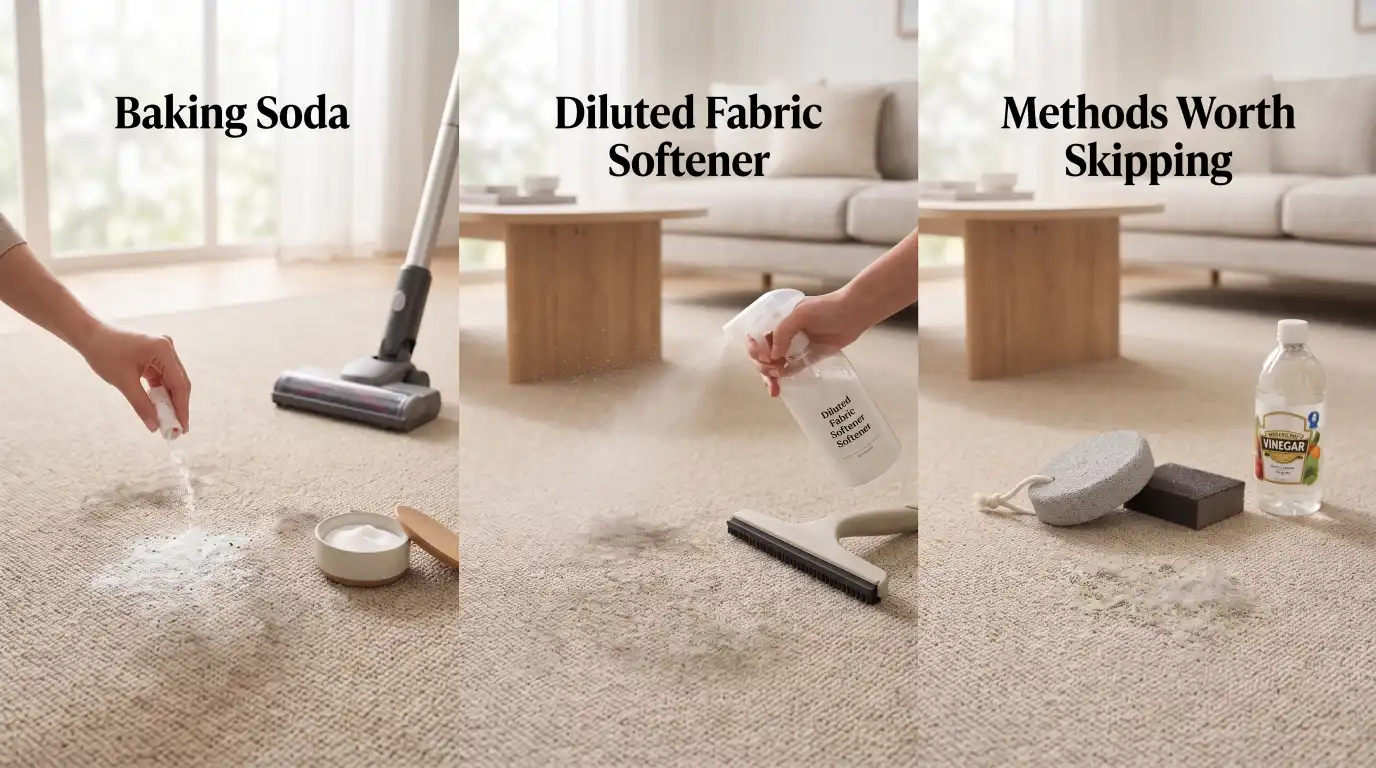
1. Baking soda
Baking soda absorbs odor and adds a little slip that helps hair release from the fibers. Sprinkle it lightly and evenly, leave it fifteen to thirty minutes, then vacuum thoroughly. Treat it as a deodorizing step that mildly assists removal, not a removal method in itself.
Avoid thick piles of powder, which sink into the backing and are hard to extract, and don’t leave it on wool overnight. Vacuuming afterward is essential, so baking soda offers little without a vacuum.
2. Diluted Fabric Softener
A light mist of heavily diluted softener, roughly one part softener to thirty parts water, cuts static so hair releases more easily. Mist the air just above the carpet rather than spraying the fibers; let it dry fully, then rake or vacuum.
Test an out-of-sight patch first. Softener can leave a residue that attracts soil, and on wool it can dull the finish. Never soak the sisal carpet, because damp backing dries slowly. If your home runs dry in winter, a humidifier solves the same static problem without putting anything on the fibers.
3. Methods Worth Skipping
A barely damp microfibre cloth is fine for a rug, but pumice stones and abrasive blocks, though they do lift hair, abrade the fibers and can leave a worn patch on anything other than tough, flat, low-pile carpet. Vinegar has no effect on hair.
How to Use a Carpet Rake for Pet Hair
A carpet rake is a long-handled tool with firm nylon or crimped-rubber bristles that reach past the tips of the pile and comb hair upward. It is the most effective non-powered option for embedded hair, for one reason: the bristles reach below the level a vacuum can.
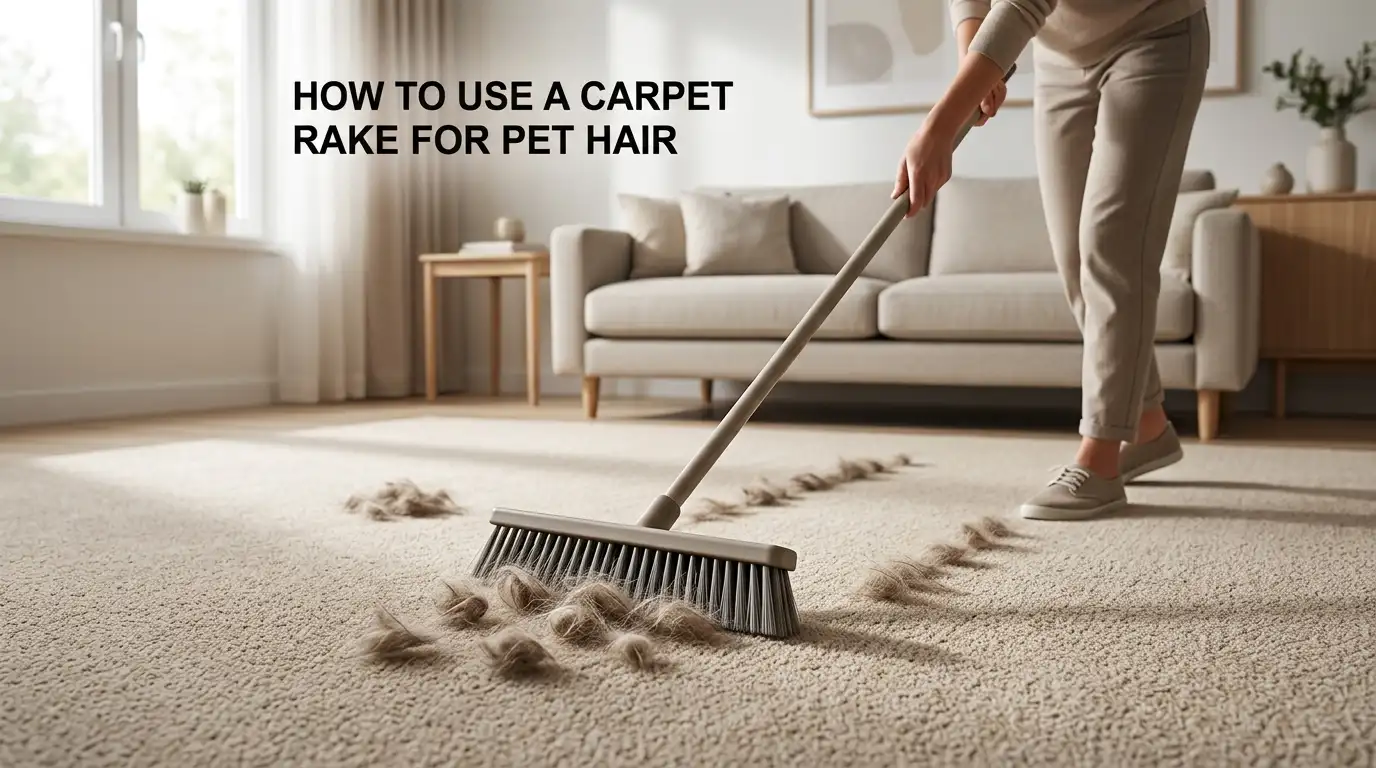
- Start in a corner and work in one direction across the room.
- Pull toward yourself in short strokes rather than long sweeps.
- Use moderate pressure. If the pile bends sideways instead of lifting, you are pressing too hard.
- Gather the loosened hair every few strokes so it does not redistribute.
- Finish with a light pass in the opposite direction to settle the pile.
A rake is not right for every floor. Loop-pile carpets, including Berber and twist constructions, can catch on the bristles and pull into a run or a permanently fuzzy patch. Delicate wool, sisal, and seagrass also fall outside safe use. Check the care guide first and test where furniture hides the result.
Choosing Between Pet Hair Remover Tools
| Tool | Reach into pile | Speed over large areas | Main limitation |
| Rubber gloves | Moderate | Slow | Tiring in big rooms |
| Rubber squeegee | Moderate to deep | Good | Awkward on stairs |
| Carpet rake | Deepest | Very good | Unsafe on loop pile |
| Pet hair scraper | Deep | Moderate | Easy to overuse and wear the pile |
| Lint roller | Surface only | Poor | Ongoing refill cost |
| Pet hair brush | Moderate | Moderate | Needs frequent clearing |
| Vacuum pet attachment | Deep with a motorized brush bar | Excellent | Requires a capable machine |
If you buy one thing, a carpet rake gives the best result on cut-pile carpet. A firm rubber squeegee is the safer all-rounder in a home with mixed carpet constructions.
How to Prevent Pet Hair from Building Up in Carpet
Prevention takes less work than removal, though no routine eliminates shedding.
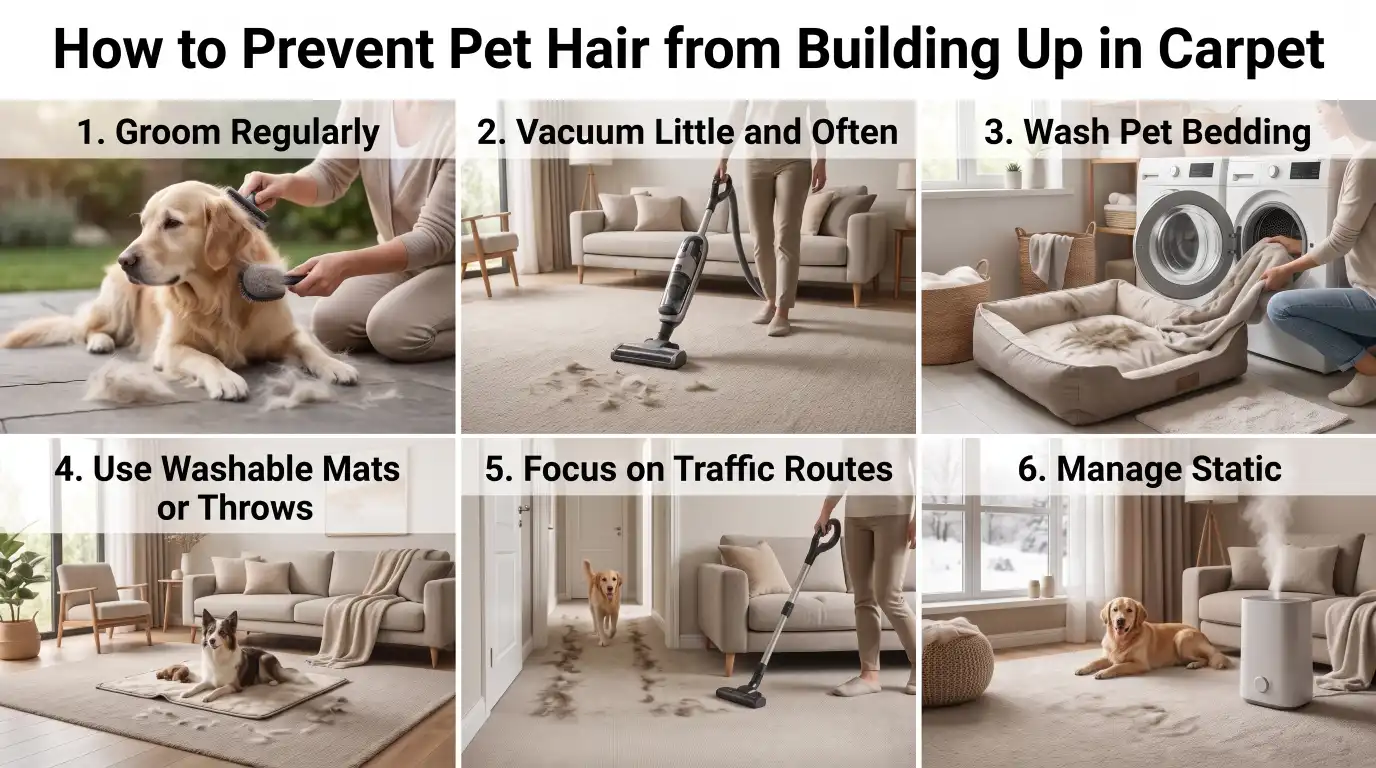
- Groom regularly. Brushing your dog or cat a few times a week, outdoors or on a hard floor, removes loose hair before it reaches the carpet. This makes more difference than any tool.
- Vacuum little and often. Two short sessions a week beat one long one, because hair that has not been trodden in comes up easily.
- Wash pet bedding. Beds and blankets act as reservoirs that shed hair back into the room.
- Use washable mats or throws in favorite sleeping spots and on the sofa.
- Concentrate on traffic routes. Hallways, doorways, and the floor in front of the sofa embed hair fastest.
- Manage static by keeping indoor humidity reasonable in winter.
No carpet is pet-hair-proof. Some constructions simply release hair more readily than others.
How to Remove Dog Hair from Carpet Without a Vacuum
Plenty of homes have no vacuum, or have one that cannot cope with pet hair. These methods all work unplugged.
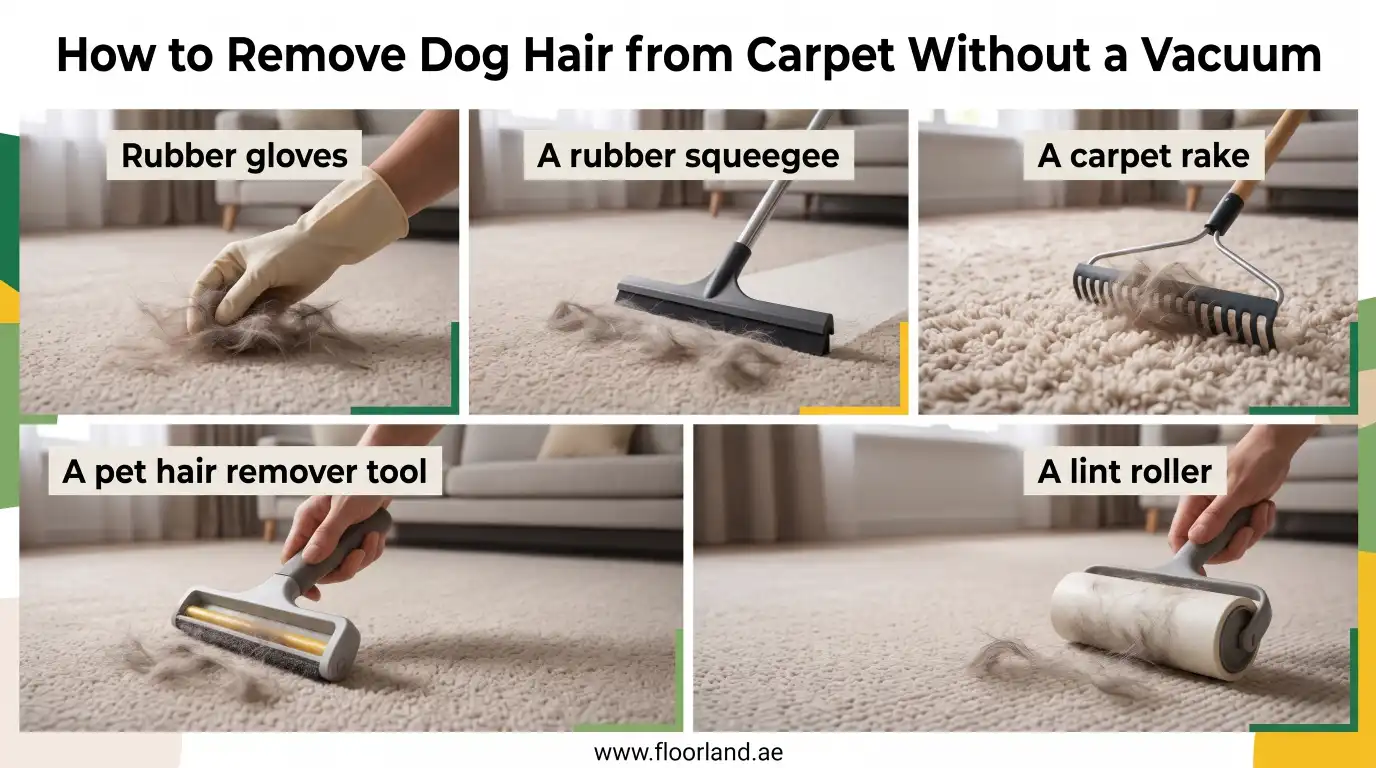
- Rubber gloves are the most underrated tool available. Run a gloved palm firmly across the carpet in one direction, and hair gathers into a rope you can lift straight out. Dampening the glove slightly increases the grab on short, fine hair. Gloves suit stairs, corners, and small rooms, and they stay safe on almost any carpet because nothing rigid can snag the fibers.
- A rubber squeegee covers ground faster. Hold it at a shallow angle and pull it toward you in overlapping strips. Clear the blade every few passes. Firm-bladed window squeegees beat soft silicone kitchen versions.
- A carpet rake is the strongest option for deeply embedded hair and the best choice for thick or high-pile carpet, though it demands more care.
- A pet hair remover tool is a rigid scraper with a fine-toothed edge. It targets matted hair. These work well, but they are the easiest tools to overuse.
- A lint roller only handles what sits on top, which makes it useful for a quick tidy on low-pile carpet and useless against trodden-in hair. A stiff-bristled carpet brush reaches further and doubles up for upholstery.
For light surface hair, reach for a lint roller or a gloved hand. For embedded hair, use a rake, scraper, or squeegee. Nothing that touches only the fiber tips will reach hair at the base.
How to Get Dog Hair Out of Carpet in a Car
Car carpet is short, dense, and set into awkward shapes, making it one of the hardest surfaces to clear.
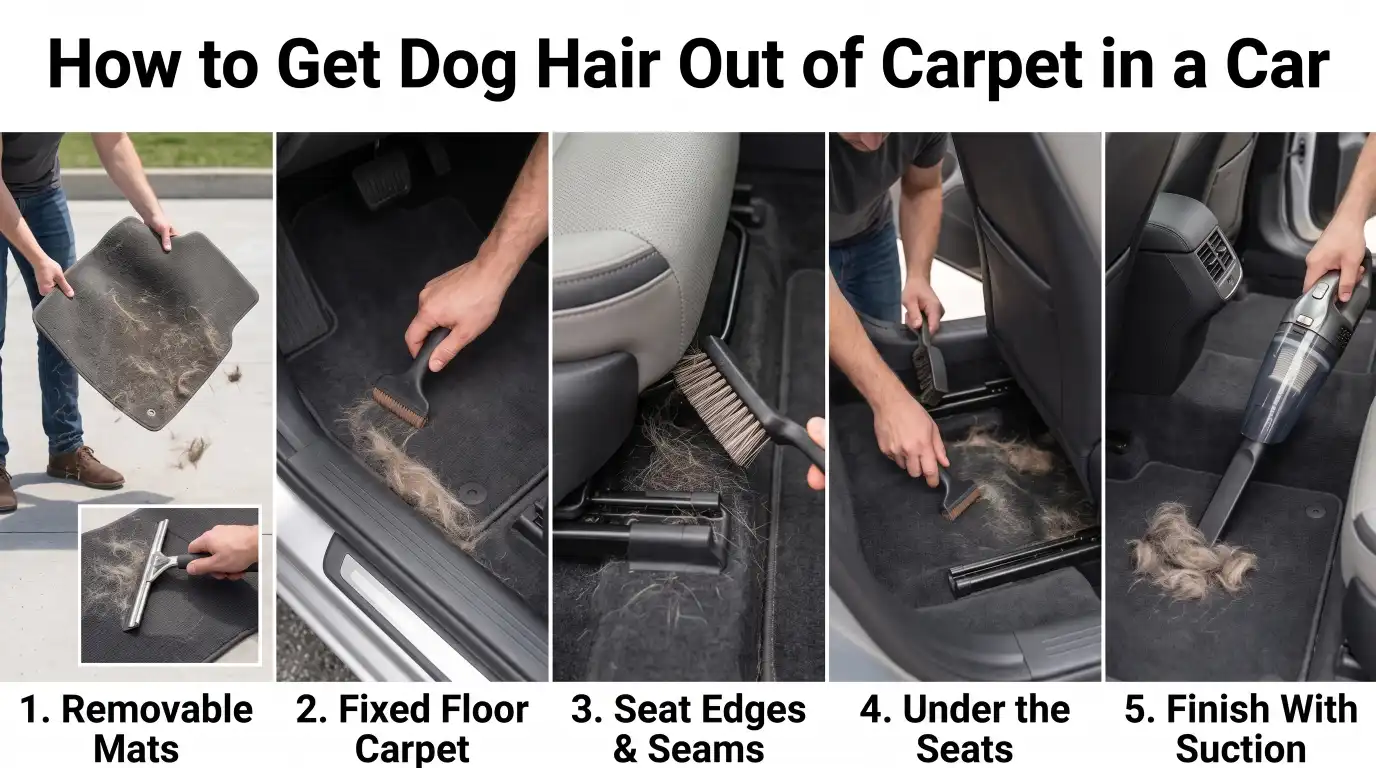
- Removable mats: take them out, shake them hard, then work them over with a squeegee or gloved hand on a hard surface.
- Fixed floor carpet: a small rubber pet hair tool suits the confined space better than a full-size rake. Pull in short strokes toward the door opening so hair collects where you can reach it.
- Seat edges and seams: the gaps beside the seat rails hold the most hair. A stiff detailing brush loosens it, and compressed air or a hairdryer on cool blows it into the open.
- Under the seats: slide the seats fully forward and back to reach both halves of the floor. This is the step most people skip.
- Finish with suction if you can. A crevice tool collects what you have loosened. Without a vacuum, sweep the hair onto the mats, lift them out, and shake them off.
The best way to get dog hair out of a car is to loosen it with a rubber tool first, then collect it, the same order that works indoors.
How to Remove Dog Hair from Clothes
To remove dog hair from clothes, use lint rollers, damp rubber gloves and a clothes brush.
- Lint rollers remain the quickest fix for a jacket or trousers on the way out of the door.
- Damp rubber gloves cost nothing and work well on coats, upholstery and dog beds.
- A clothes brush used in one direction, following the weave, suits wool and tailored fabrics.
- Washing precautions: shake garments outdoors first and clean the lint trap regularly. Fifteen minutes in a tumble dryer on a no-heat air cycle before washing shifts a lot of hair into the filter. Do not overload the machine, since clothes need room to move for hair to release.
When Should You Hire a Professional Carpet Cleaner?
Professional help makes sense once the problem moves beyond what surface tools reach:
- Hair has built up over months or years and repeated raking barely helps.
- Hair sits at the base of a deep pile, where domestic equipment cannot generate enough lift.
- Large carpeted areas make manual methods impractical.
- Odor lingers after cleaning, which usually points to dander, oils, or accidents in the backing rather than hair on the surface.
- The carpet is wool, silk-blend, sisal, or an antique rug, where the wrong tool causes lasting damage.
- Getting a result would mean brushing hard enough to risk the pile.
Commercial extraction equipment reaches depths domestic tools cannot, and a professional can tell you what your specific carpet will tolerate. Professional cleaning does not stop shedding, so a routine still matters afterward.
Final Words
Pet hair becomes difficult to remove when it settles into the carpet and gets pressed deeper by regular foot traffic. The most practical approach is to deal with it before that happens: loosen embedded hair with a suitable rubber tool or carpet rake, collect the larger clumps, and then vacuum what remains. Choosing the right tool for the carpet construction is as important as the cleaning method, especially for loop-pile, wool, and natural-fiber carpets.
For ongoing maintenance, frequent light cleaning is more effective than waiting until the carpet is heavily covered. Regular pet grooming, clean bedding, and focused cleaning of high-traffic areas can significantly reduce the amount of hair that reaches the carpet. If hair has accumulated deeply or the carpet is too delicate for aggressive tools, professional cleaning is the safer option. The goal is not to find one tool that removes every strand, but to use the right method before pet hair becomes a deeper carpet problem.
Frequently Asked Questions
Put on a rubber washing-up glove and run your hand firmly across the carpet in one direction. Hair gathers into a rope you can lift out. It costs nothing and stays safe on nearly any carpet. For larger rooms, a rubber squeegee does the same job faster.
Use friction. A rubber squeegee, a rubber glove, or a carpet rake pulls embedded hair upward into clumps you can pick up by hand. Work in short strokes toward yourself and gather the hair every few passes. A lint roller handles surface hair but will not reach anything trodden in.
Partly. It absorbs odor and slightly loosens hair’s grip on the fibers, which makes vacuuming more effective. It does not remove hair on its own, and you still need a vacuum to lift the powder afterward. Use a light sprinkle rather than a thick layer that settles into the backing.
It can, on the wrong carpet. Rakes work well on cut-pile and high-pile carpet, but the bristles can catch loops on Berber or twist constructions and leave a fuzzy or pulled surface. Delicate wool and natural fibers need caution too. Check the care guide and use moderate pressure.
A carpet rake reaches deepest on cut-pile and high-pile carpet. On low-pile or loop-pile carpet, a firm rubber squeegee or a lightly used pet hair scraper is the safer choice. Follow either with a vacuum pass if you have one, because loosened hair still needs collecting.
Take out the removable mats, shake them, and work them over with a squeegee or rubber glove. For the fixed carpet, use a small rubber pet hair tool, slide the seats forward and back to reach underneath, and loosen hair around the seat rails with a stiff brush.
Yes, and they are one of the most effective free options. The rubber creates friction and static that drags hair out of the pile. Dry gloves suit longer hair, while a lightly dampened glove grips short fur better. They work especially well on stairs, corners, and furniture edges.
Usually because the hair sits below the reach of the airflow, or because the machine is restricted. Check for a wrapped brush bar, a full bin, a clogged filter, or a blocked hose. Then slow down, because several slow passes in different directions lift far more than one fast sweep.
For a shedding dog or cat, run a quick pass over the main traffic areas two or three times a week, with a deeper session using a rake or squeegee every couple of weeks. Frequency beats intensity, because hair that has not been walked in comes out easily.
When repeated raking and vacuuming stops improving things, when odor lingers after cleaning, or when the carpet is delicate enough that the necessary tools would risk the pile. Large areas and years of buildup also justify it, though professional cleaning does not replace a regular routine.