
How To Remove Stains From Laminate Flooring?
Laminate flooring is a popular choice for modern homes because it is durable, affordable, and has a hardwood-style finish. This flooring is designed to withstand day-to-day use, but accidents, spills, and stains do happen. How you clean can be the difference between a clean floor and permanent damage.
Luckily, with the right products and simple techniques, many common stains can be removed. In this guide, we will walk through safe ways to clean laminate stains of any type and common cleaning pitfalls to avoid. It also provides easy maintenance advice to keep laminate flooring looking clean, beautiful, and like new for years to come.
Quick Answer: How to Remove Stains From Laminate Floor
Blot stains immediately with a microfiber cloth and warm water or a pH-neutral laminate cleaner. For tough stains, use white vinegar diluted 1:3 with water or a little isopropyl alcohol for ink, grease, or scuff marks. Wipe the floor gently and dry it immediately. Avoid excess water, bleach, steam mops, or abrasive cleaners.
Cleaning Supplies You’ll Need
While it may require specialized tools, most laminate stains can be treated with common household devices. Items and actions (what they do), whether they are safe on laminate, and how to use them without damaging them.
| Item | Purpose | Safe for Laminate? | Notes |
|---|---|---|---|
| Microfiber cloth | Blotting spills and wiping stains | Yes | Traps grit so it won't scratch the wear layer. Keep several on hand. |
| Microfiber mop | Routine cleaning and drying | Yes | Flat mops apply little water. Wring until barely damp. |
| Warm water | First thing to try on most stains | Yes | Use sparingly. Never pour it directly on the floor. |
| pH-neutral cleaner | Everyday cleaning and light stains | Yes | The manufacturer's default. Won't strip the finish or leave the film. |
| White vinegar (diluted) | Grease, coffee, hard-water marks | Yes, diluted | Mix about 1 part vinegar to 3 parts water. Never use it neat. |
| Isopropyl alcohol | Ink, marker, grease, shoe scuffs | Yes, spot use | 70–90% on a cloth, not poured. Evaporates fast, low moisture. |
| Acetone (nail polish remover) | Nail polish, some paints, tough adhesive | Spot use only | Last resort. Dab briefly, wipe off fast, never let it sit. |
| Plastic scraper | Lifting dried gum, wax, paint, mud | Yes | Plastic or an old bank card. Never use metal—it gouges the surface. |
| Baking soda paste | Mild lifting for organic stains, rust | Use with care | Make a soft paste; wipe gently, don't grind. It's a mild abrasive. |
| Paper towels | Absorbs liquid spills fast | Yes | Blot, don't rub. Rubbing spreads the stain. |
| Cotton swabs | Precise treatment of small marks | Yes | Ideal for applying alcohol or acetone to a tiny spot only. |
| Ice pack | Hardening gum and candle wax | Yes | Freeze the deposit so it snaps off cleanly. |
Remove Different Types of Stains from Laminate Flooring
This is the core of the guide. Each common stain is treated by its own method. Always begin with the least harsh method and then move up only if the stain will not budge.
1. How to Remove Food Stains From Laminate Flooring
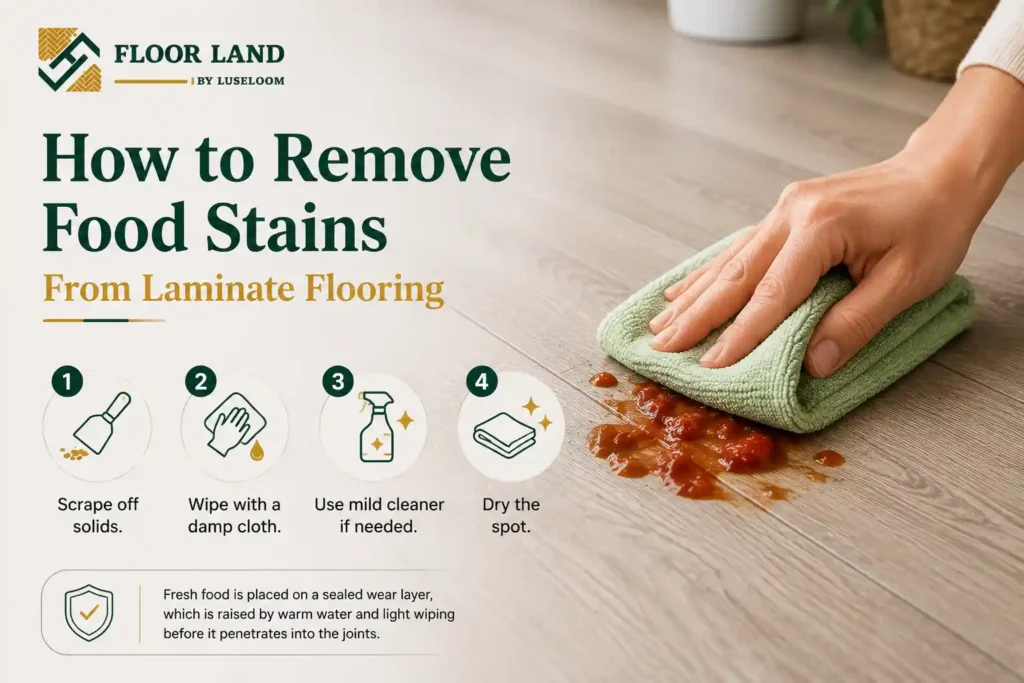
he most frequent stains on laminate floors are sauces, dried food, ketchup, and greasy residue. These are typically the easiest to clean when discovered early, before they dry in the seams.
- First, scrape off solids.
- Use a plastic scraper at a low angle to remove dried food.
- This way, you can easily remove the bulk dried accumulation without abrasion.
- Wipe down the residue with a microfiber cloth. The cloth should be dampened with warm water.
- If necessary, add mild cleaner. If the food is greasy or has been dyed, pour a pH-neutral cleaner over it or a small amount of diluted vinegar.
- Use a dry cloth to buff off excess moisture on the surface or in the seams.
2. How to Remove Coffee Stains From Laminate Flooring
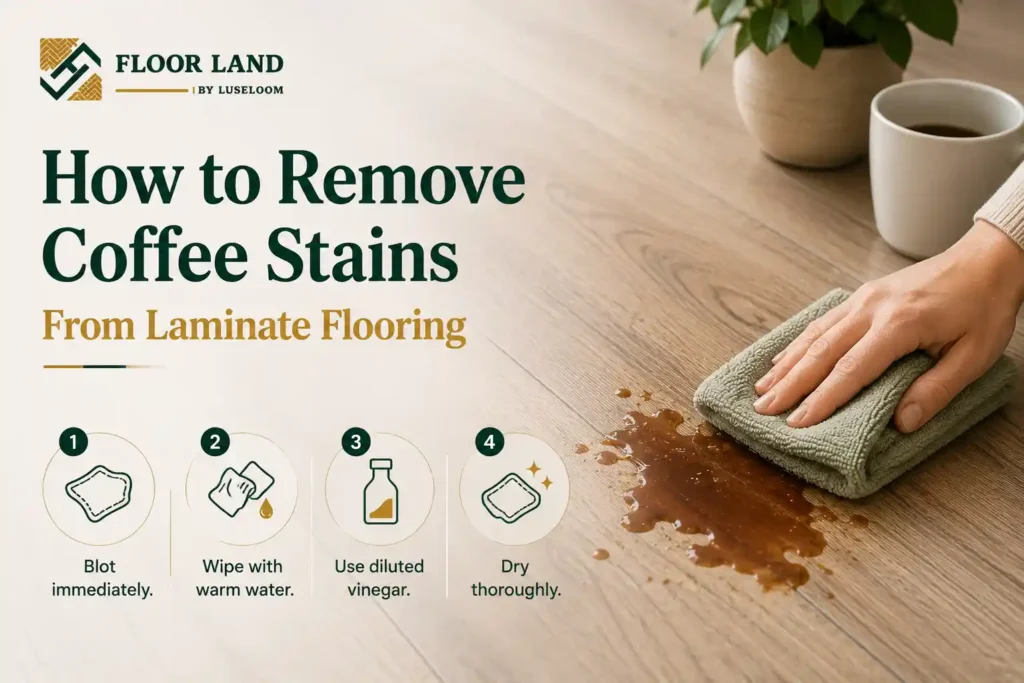
Clean the coffee stains quickly when they are fresh. If you don’t do so, it will penetrate deep into the seams.
- Blot immediately. Use a dry cloth to soak up the spilt liquid before it spreads around the joints.
- Use warm water to wipe. Most new coffee can be removed with a damp microfiber cloth.
- Use diluted vinegar to remove leftover stains.
- Make a solution of 1 part white vinegar to 3 parts water, apply it to the cloth, then wipe away the mark.
- Leave the flooring to dry thoroughly. You can speed up the drying process by opening all the windows and turning on the fans.
Diluted vinegar has a mild acidity and will dissolve the tannins.
3. How to Remove Tea Stains From Laminate Flooring
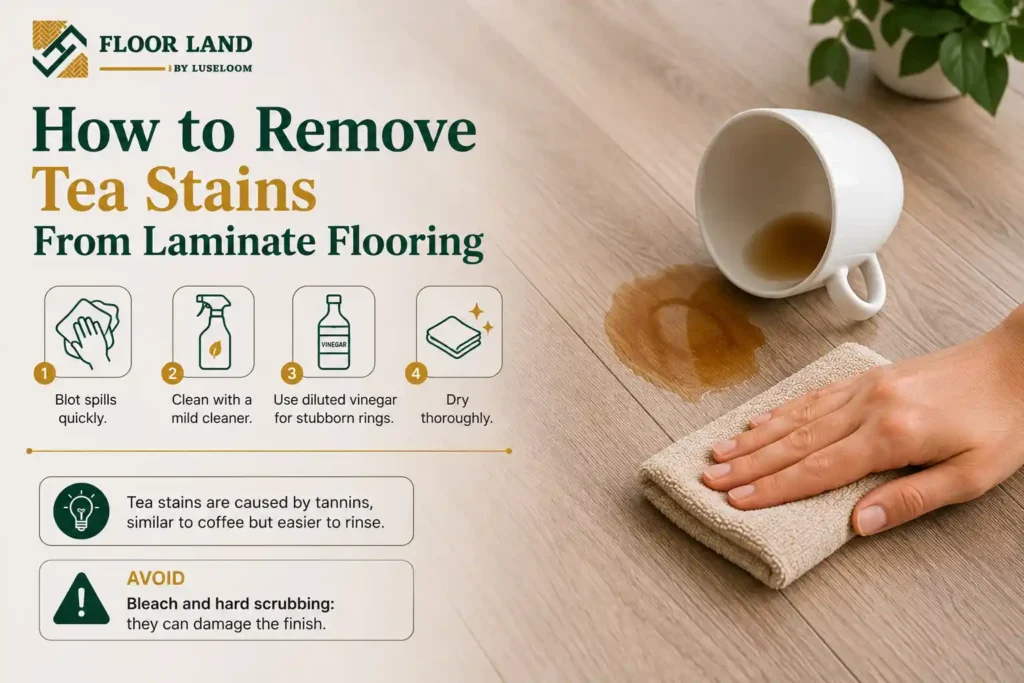
Tea acts and tastes like coffee, but may be lighter. If you have spilt tea accidentally over the laminate floors, you can easily clean it by following the steps mentioned below:
- Quickly blot up spills. You can use a dry microfiber cloth for this.
- Clean with a mild cleaner. Most tea marks can be removed with a pH-neutral cleaner on a damp cloth.
- Use diluted vinegar to remove stubborn tea stains. Apply it, leave it on for a minute before removing.
- Once the stains are completely gone, let your flooring dry quickly.
4. How to Remove Wine Stains From Laminate Flooring
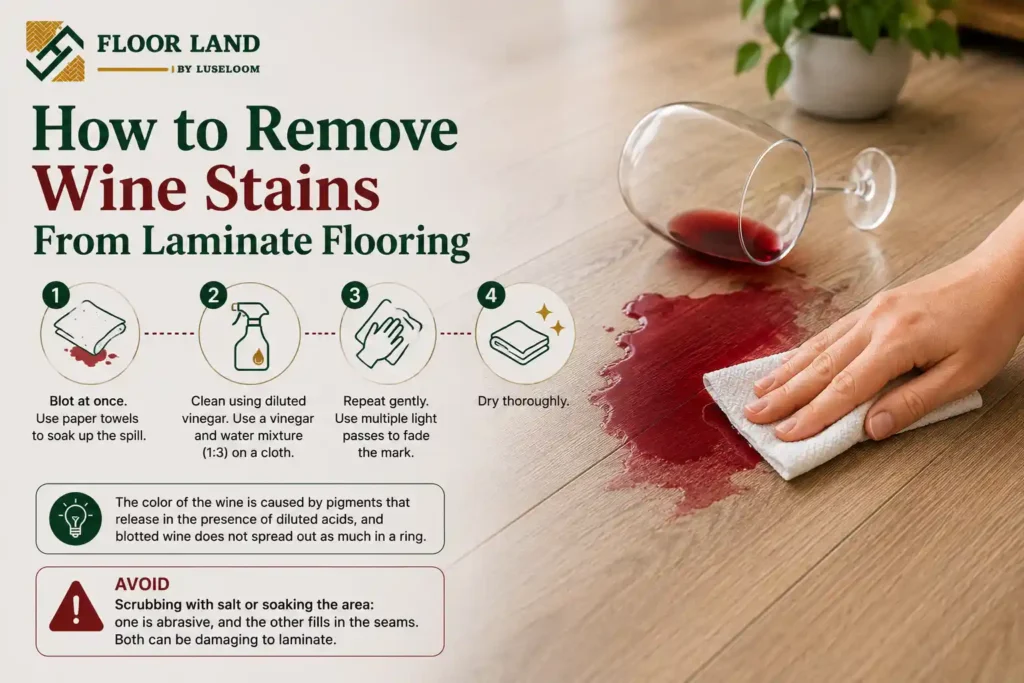
Red wine stains can easily be removed from sealed laminate. Act quickly and don’t let the stains dry.
- Use paper towels to soak up the spill. Blot until you observe minimal transfer. Don’t wipe outward.
- Clean the floor using diluted vinegar. The pigment residue can be lifted off using a vinegar-and-water mixture applied to a cloth, at a 1:3 ratio.
- Repeat this process gently. Use multiple light passes to fade the mark.
- Do not use a hard scrub as it can damage the laminate layer.
- Once the stain disappears from the flooring, ensure it is completely dry.
5. How to Remove Oil and Grease Stains From Laminate Flooring
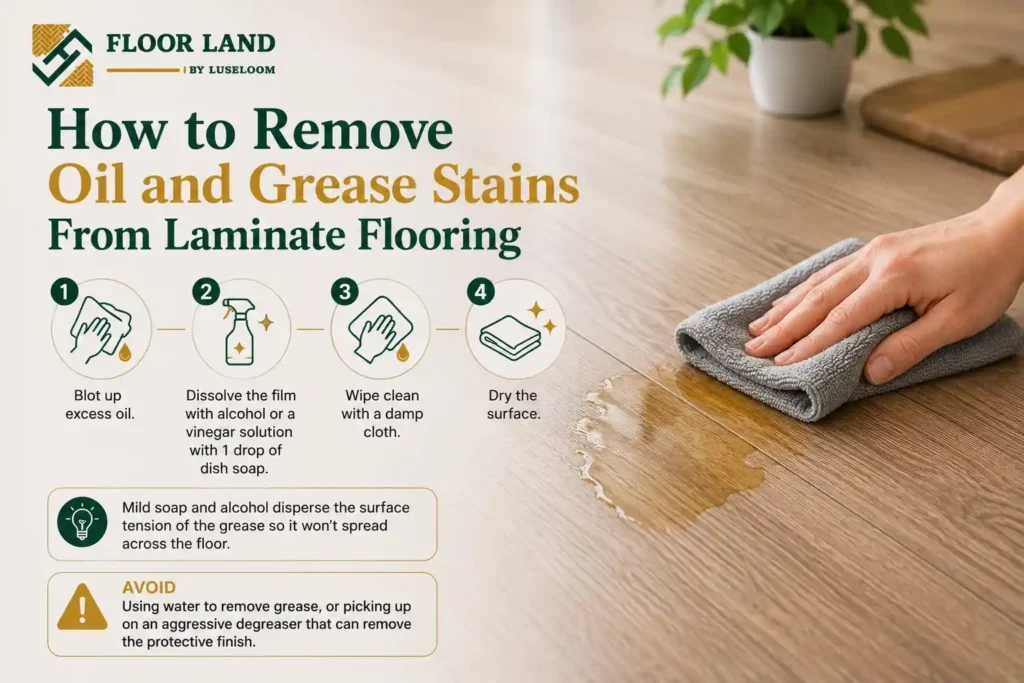
Have you installed laminate flooring in the kitchen? Then spilling cooking oil, butter, and greasy fingerprints can be a daily problem. These stains cannot be removed with water alone.
- Blot up excess oil. Use a dry paper towel to lift as much as possible.
- Now take a spray bottle. Add a small amount of isopropyl alcohol and a diluted vinegar solution with 1 drop of dish soap.
- Mix these ingredients thoroughly until a homogeneous mixture forms.
- Spray the mixture over the stain and wipe with a damp cloth.
- You can repeat the process several times until the stain disappears.
- Don’t forget to dry the floor before using it again.
6. How to Remove Ink Stains From Laminate Flooring
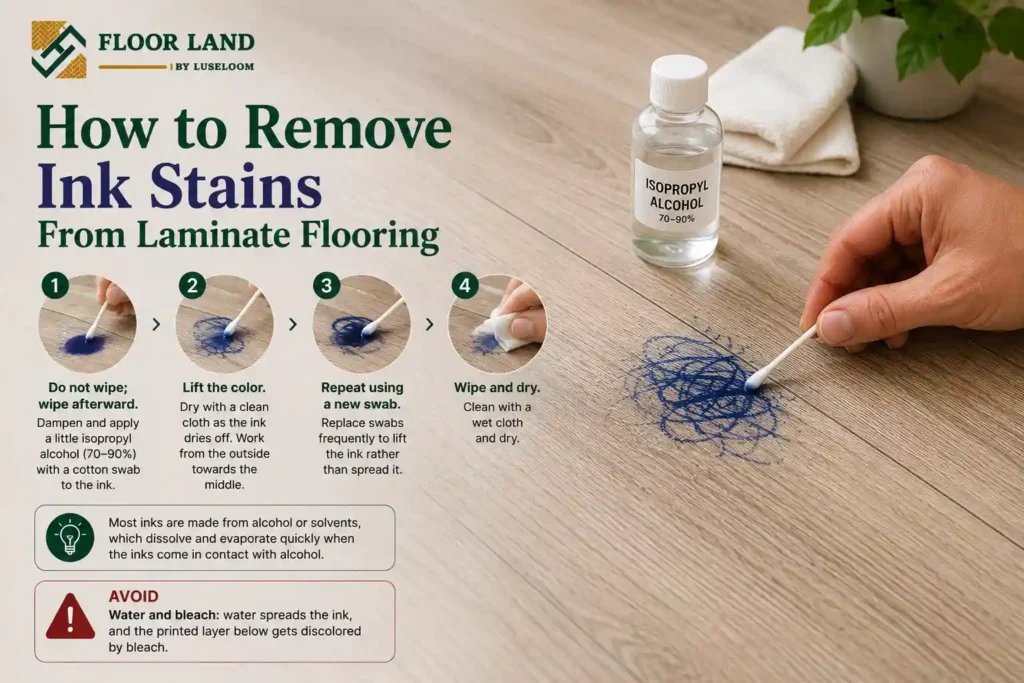
The ink on the laminate flooring can easily be cleaned. Unfortunately, if you have dropped waterproof ink, it will be difficult to clean up.
- You need a cotton swab and isopropyl alcohol (70–90%). Dip the cotton swab into alcohol and apply it to the ink stains.
- Once you observe that the ink stain has disappeared, you can clean it with a microfiber cloth. Do the work going from the outside towards the middle of the mark.
- Replace swabs frequently to raise the ink rather than spread it.
7. How to Remove Marker Stains From Laminate Flooring
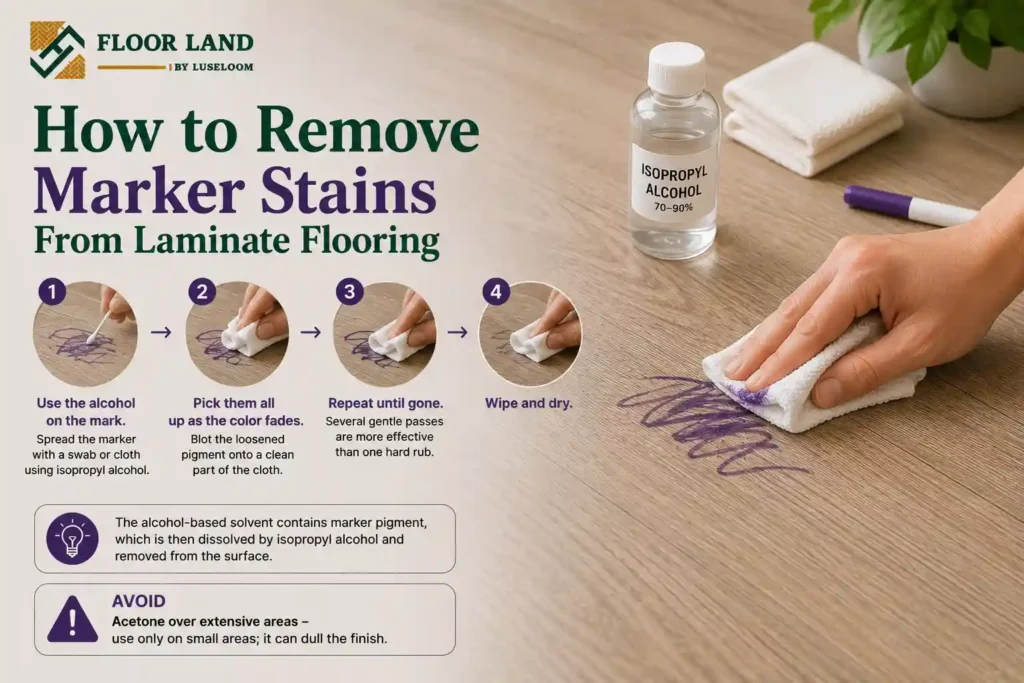
The permanent marker sounds like a bad idea, but it works just like ink. Removing whiteboard marker stains is easier than the permanent ones.
- You can use alcohol on the marker stains. Spread the isopropyl alcohol over the marker mark using a cotton swab or microfiber cloth.
- Gently rub the stain inward. This way the mark will not spread.
- Perform this step until the stain fades. Blot the loosened pigment onto a clean part of the cloth.
- Several gentle passes are more effective than one hard rub.
- When you see that the stain has vanished, let your flooring dry completely.
8. How to Remove Crayon Marks From Laminate Flooring
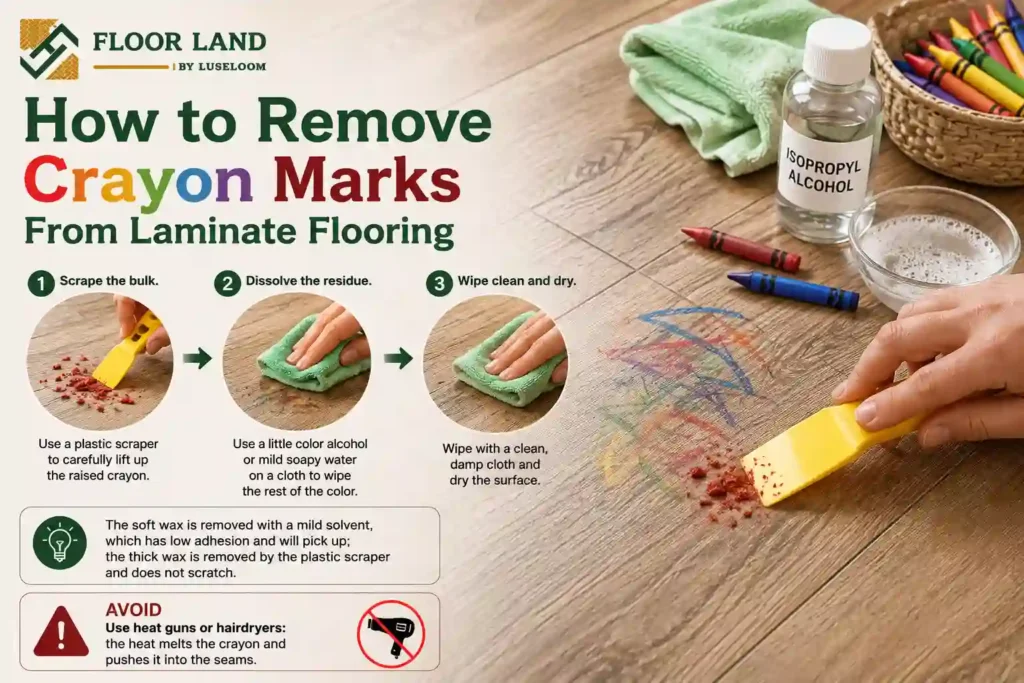
Crayon is a soft, pigmented wax. You can easily clean it by following the technique given below:
- Start the cleaning by scraping the bulk crayon.
- To scrape the crayon, use a plastic scraper and carefully lift the raised crayon.
- To clean the leftover stain, you can use mild alcohol or soapy water.
- Dip the clean microfiber cloth into this solution and gently rub the crayon stains.
9. How to Remove Paint Stains From Laminate Flooring
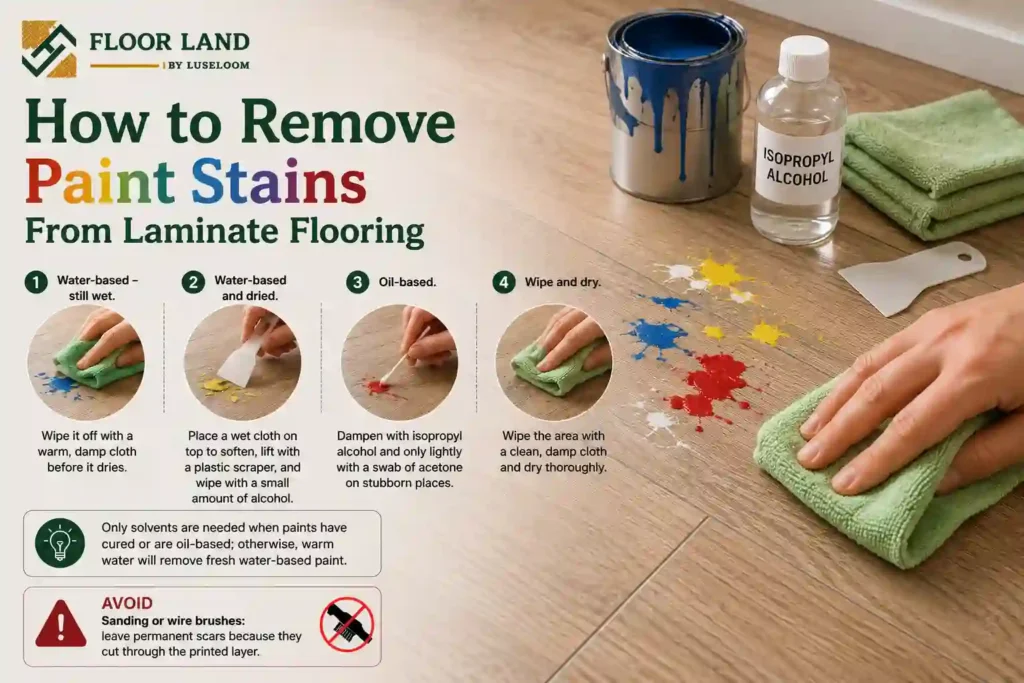
There are different types of paints available these days. The cleaning method for each paint stain will vary depending on its composition. Water-based paint (latex, acrylic) is much easier to remove than oil-based. Make sure to determine the type of stain first.
- If you are dealing with water-based paint that is still wet, then blot it with the cloth. For the remaining stains, dampen a clean cloth with warm water and gently rub the stained area.
- To remove dry water-based paint, place a damp cloth over it. Leave it for a few minutes to soften it. Now you can use a plastic scraper to lift the paint. If the stain is still left, use a mild alcohol over it. This way, all the stains will be gone from the floor.
- To remove oil-based paint from laminate flooring, you will need diluted isopropyl alcohol. Apply it in very small amounts over the stubborn stains.
- The last step is to completely dry the flooring. You can double the floor drying speed by turning on the fans and opening all the windows.
Important note: Only use the alcohol when you encounter oil-based paint and stubborn stains.
10. How to Remove Nail Polish Stains From Laminate Flooring
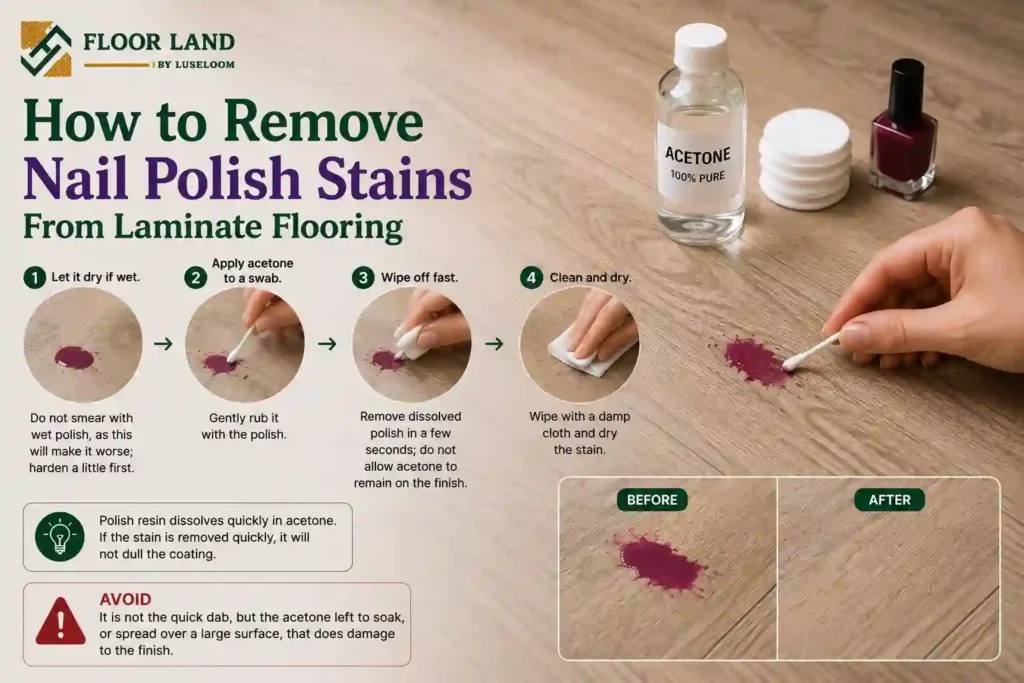
Cleaning the nail polish stains requires spot treatment. If you do not treat it promptly, it will become very difficult to remove.
- When the nail polish accidentally spills on the floors, let it sit for a few minutes. You have to wait until it’s a little bit dry.
- Apply acetone to a cotton swab. Gently rub it on the nail polish stain.
- Wipe off fast. Remove dissolved polish in a few seconds.
- Do not allow acetone to remain on the finish. If you do so, then there will be a high chance of floor fading.
- Clean the stained area with a damp cloth.
- Do not leave your floor wet for an extended period.
- Turn on all the fans to accelerate the drying of the floor.
Polish resin dissolves quickly in acetone. If the stain is removed quickly, it will not dull the coating.
11. How to Remove Shoe Scuffs and Heel Marks From Laminate Flooring
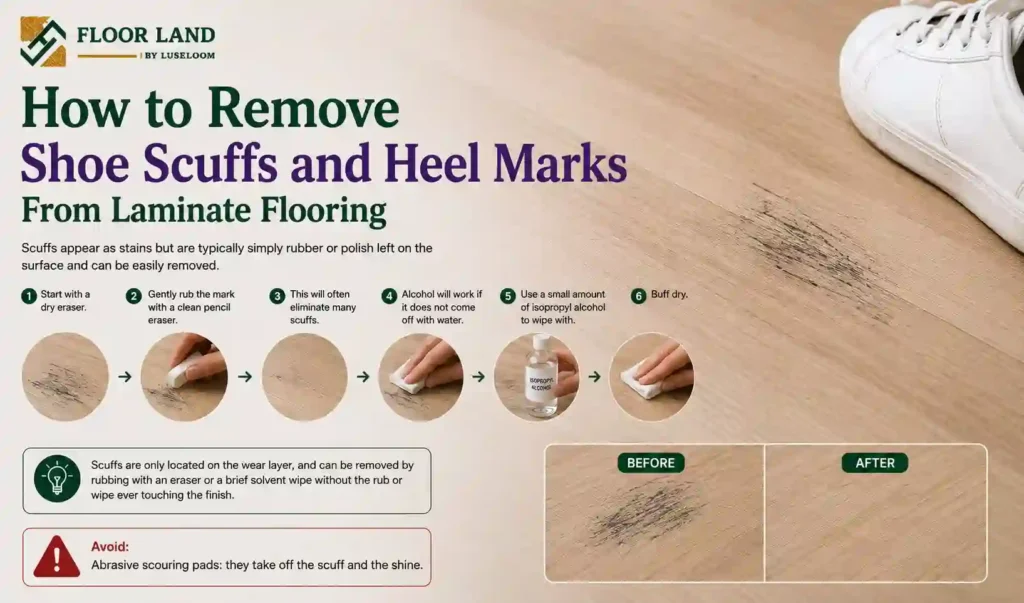
Scuffs are not actually stains. These are basically the rubber or polish left on the flooring surfaces. Luckily, you can easily clean them by using simple materials and techniques:
- Start the cleaning process by using dry erasers.
- You need to gently rub the scuff marks with a clean eraser.
- This way, maximum scuff will be removed from the flooring.
- Clean the leftover scuff with a damp cloth.
- If any scuff remains, apply a small amount of isopropyl alcohol to it.
- Wipe the stained area with a dry microfiber cloth.
- Wind up the cleaning process by buff-drying the flooring.
Scuffs are located only on the wear layer and can be removed by rubbing with an eraser. For stubborn stains, use a dilute solvent wipe, ensuring the eraser or solvent never touches the finish.
12. How to Remove Pet Urine Stains From Laminate Flooring
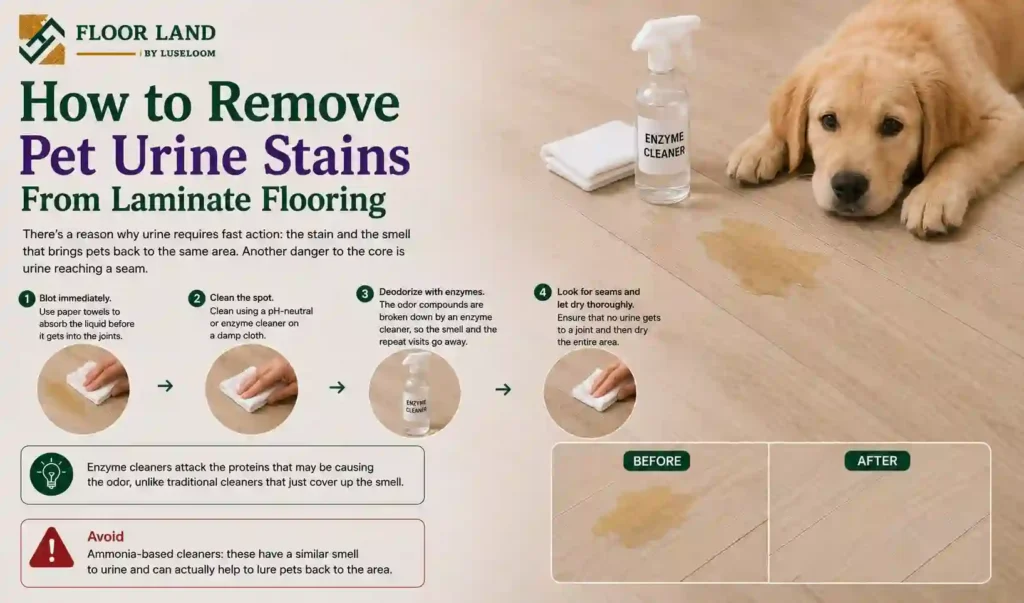
Clean the pet urine from the laminate floor as quickly as possible. If you delay the cleaning, then the stain and smell attract your pet to the same area. Another danger to the core is urine reaching a seam.
- The very thing is to blot the stained areas. For blotting, use paper towels. They absorb the maximum liquid before reaching the seams.
- After blotting the areas, the next step is to clean the spots. The best cleaner for this is one with neutral pH. Alternatively, you can use an enzyme cleaner.
- Apply the cleaner over the cloth and rub gently over the stain.
- The enzyme cleaner breaks down the odor compound.
- Do not forget to check the seams. If the urine gets there, then clean it as well.
Enzyme cleaners attack the proteins that may be causing the odor, unlike traditional cleaners that just cover up the smell.
13. How to Remove Mud and Dirt From Laminate Flooring
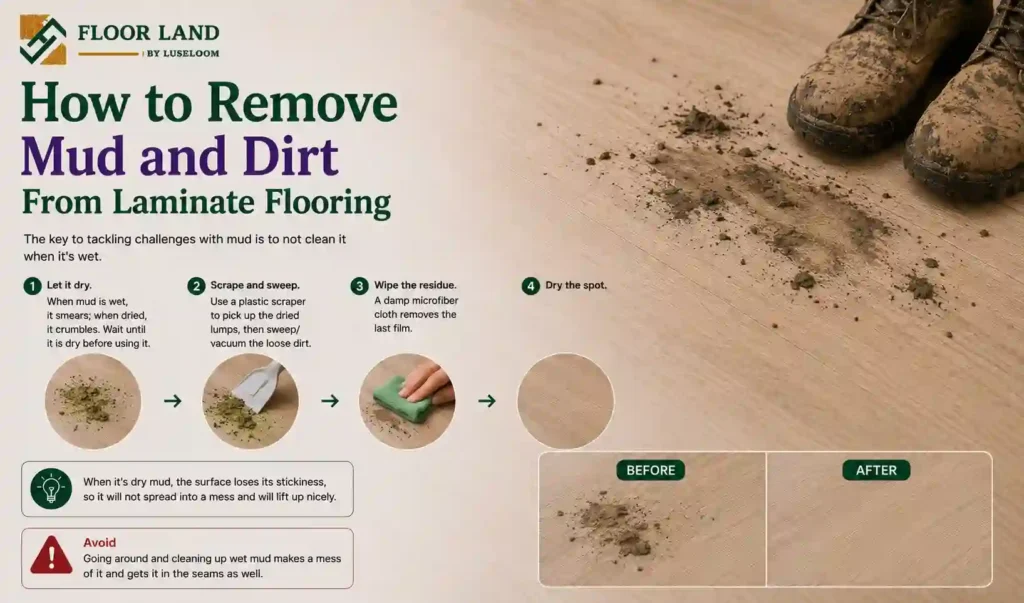
Mud and dirt stains on laminate flooring are common in high-traffic spaces. The best practice for dealing with these stains is to let them dry before cleaning.
- Let the mud stain dry. When mud is wet, it smears; when it’s dry, it crumbles. Wait until it is dry before using it.
- Now use a plastic scraper to scrape the dried mud lumps off the floor.
- To collect the loose dirt, sweep the area or vacuum it.
- If any mud residue remains, you can use a damp cloth to gently rub the area. This way you will get a completely clean floor.
- If the floor feels wet, then clean it with a dry cloth.
14. How to Remove Blood Stains From Laminate Flooring
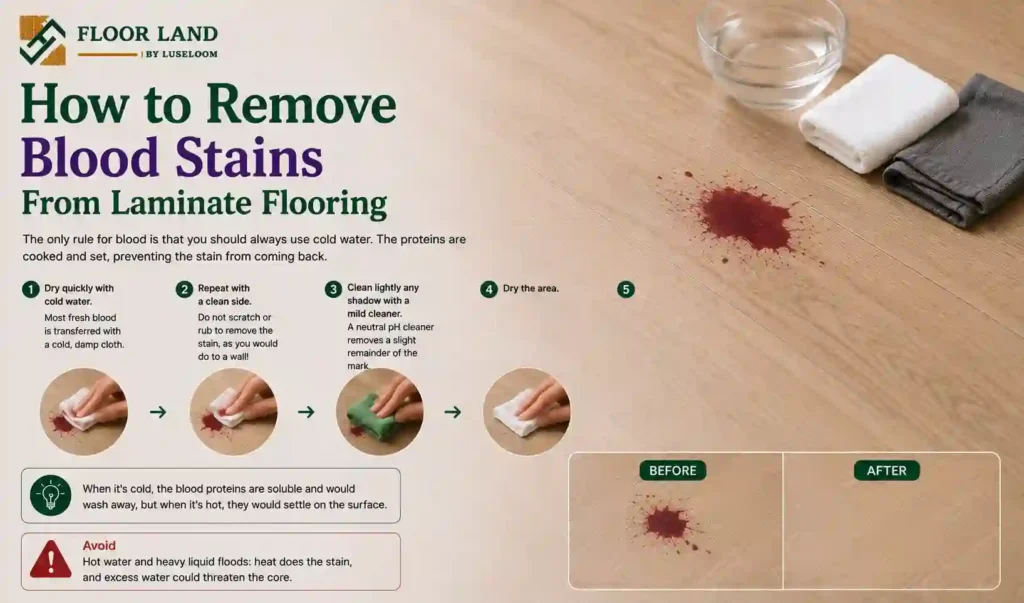
To clean the bloodstains on the laminate flooring, you need to act smartly. Avoid using warm water, as it can worsen the situation.
- The most appropriate way to clean the blood from the floor is to use cold water.
- Apply this water over the cloth and dab it over the fresh blood. This way, the maximum amount of blood will be transferred to the cloth.
- Do not harshly scrub the area to remove the stains.
- If you notice any stains remaining, you can clean them with a mild pH-neutral cleaner.
- Leaving the floor wet is not good practice; make sure to dry it properly.
When it’s cold, the blood proteins are soluble and would wash away. But when you use warm water for the cleaning, they settle on the surface.
15. How to Remove Water Marks and Haze From Laminate Flooring
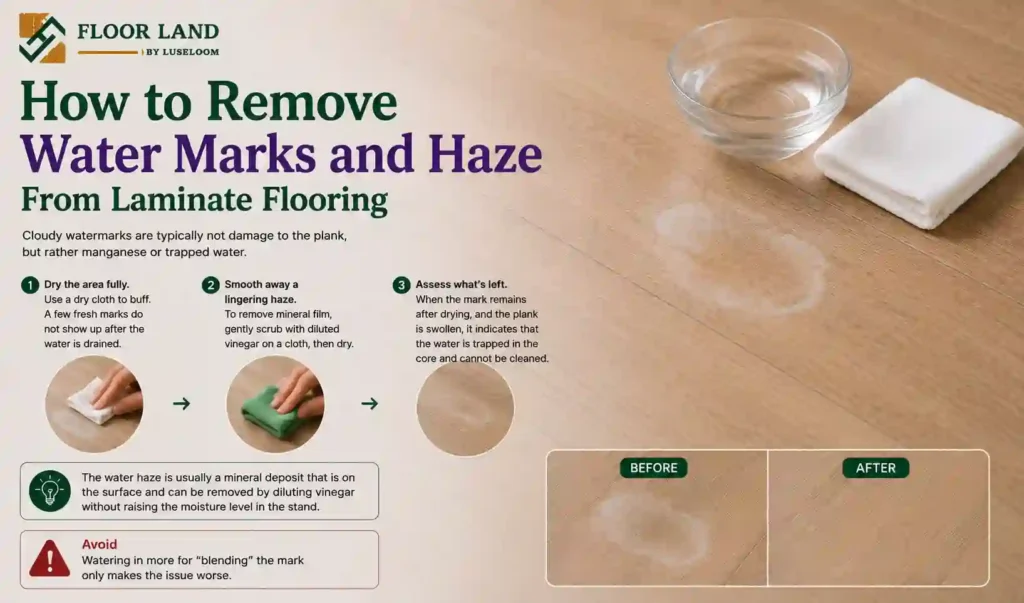
Cloudy watermarks are not damage to the floor plank, but rather manganese or trapped water.
- Before cleaning the watermarks, make sure that the floor is completely dry.
- Take a dry piece of cloth to buff the floors. Sometimes, A few fresh marks do not show up after the water is drained
- To treat such stains, you will need diluted vinegar. Dip the clean cloth in vinegar and rub the stained area.
- Now dry the area with a soft towel or cloth.
- If you observe that the white haze remains and the plank is swollen, it means there is a high chance that water is trapped in the flooring core and cannot be cleaned.
16. How to Remove Rust Stains From Laminate Flooring
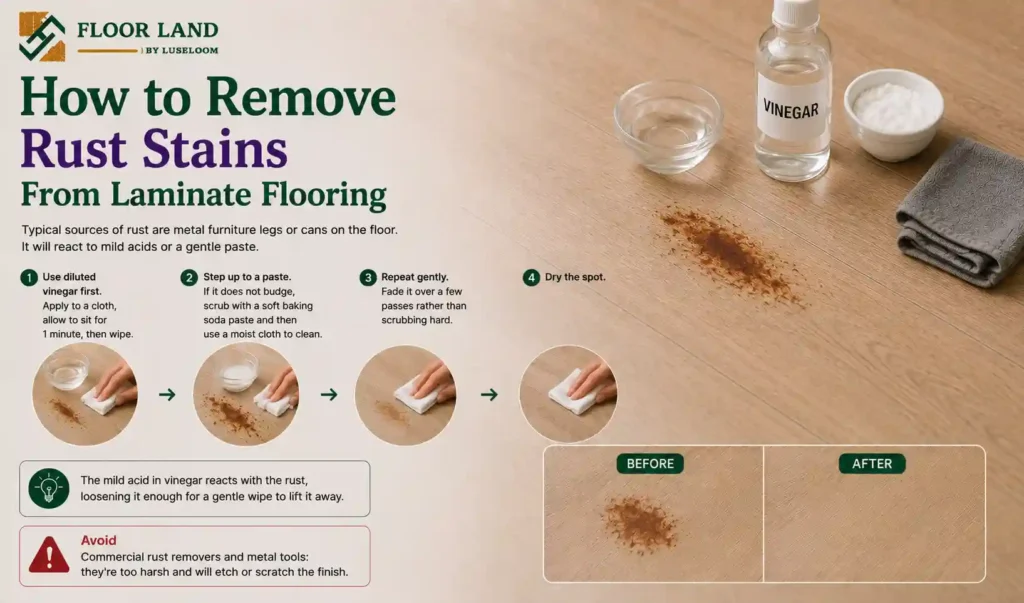
Typical sources of rust are metal furniture legs or cans on the floor. To clean these odd stains from the flooring, follow the steps:
- To treat the rust stains on the laminate flooring, you will require a clean cloth, vinegar and baking soda.
- Start the cleaning process by applying diluted vinegar to the stains using a clean cloth.
- Leave the vinegar over the stains for 1-2 minutes.
- Wipe the stained area with a soft sponge or cloth.
- Some mild stains will disappear with this process.
- If the stains do not budge, scrub them with baking soda paste (baking soda & water)
- Avoid harsh scrubbing and excess pressure.
The mild acid in vinegar reacts with the rust. It loosens the rust particles enough for a gentle wipe to lift it away.
17. How to Remove Adhesive and Sticker Residue From Laminate Flooring
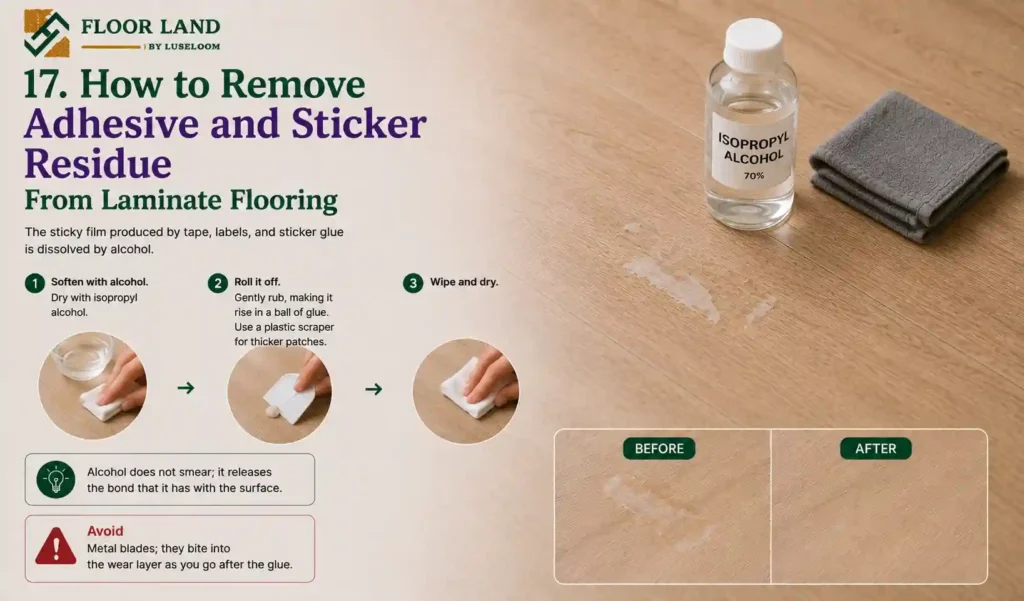
The sticky film produced by tape, labels, and sticker glue can be easily dissolved with alcohol.
- Use dilute isopropyl alcohol over the sticky film.
- Rub the area in circular motions to form a round ball of glue.
- Use a plastic scraper to remove the thicker glue patches.
- Now wipe the area with a clean cloth to get a clean floor.
18. How to Remove Wax Stains From Laminate Flooring
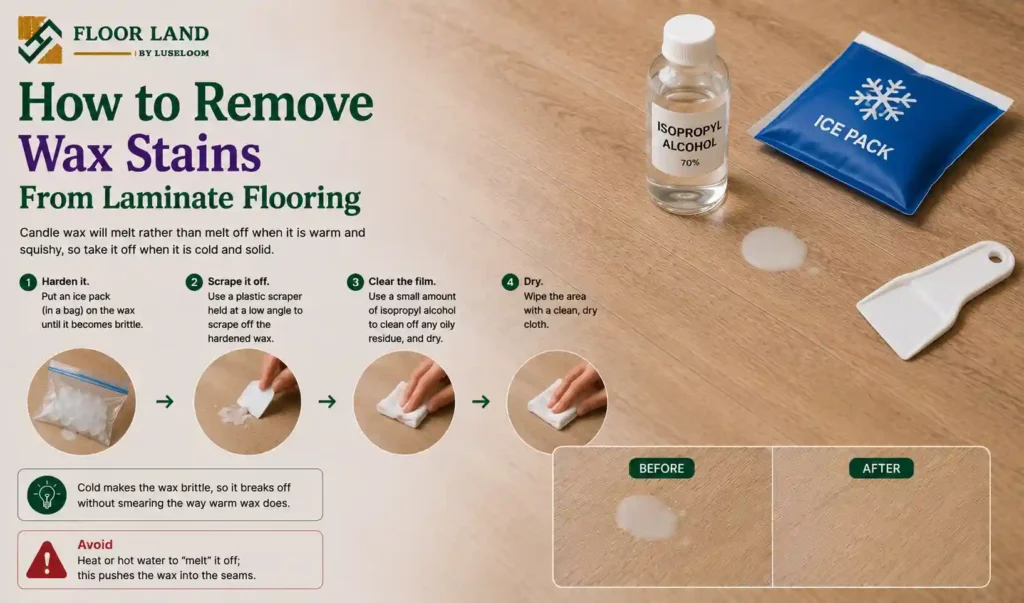
You need to follow the same approach as for mud and nail paint stains when removing wax stains. Give the stains some time to harden before cleaning.
- If you observe the wax is still sticky, place an ice pack over it. Remove the ice pack when the stain is brittle.
- Keep the scarper at a low angle to scrape off the hardened wax.
- When the maximum wax is removed, apply isopropyl alcohol to clean off any oily residue.
- Once the stain is fully removed, wipe the area and let it dry under the fan.
Cold from ice makes the wax brittle, so it breaks off without smearing, unlike warm wax.
19. How to Remove Chewing Gum From Laminate Flooring
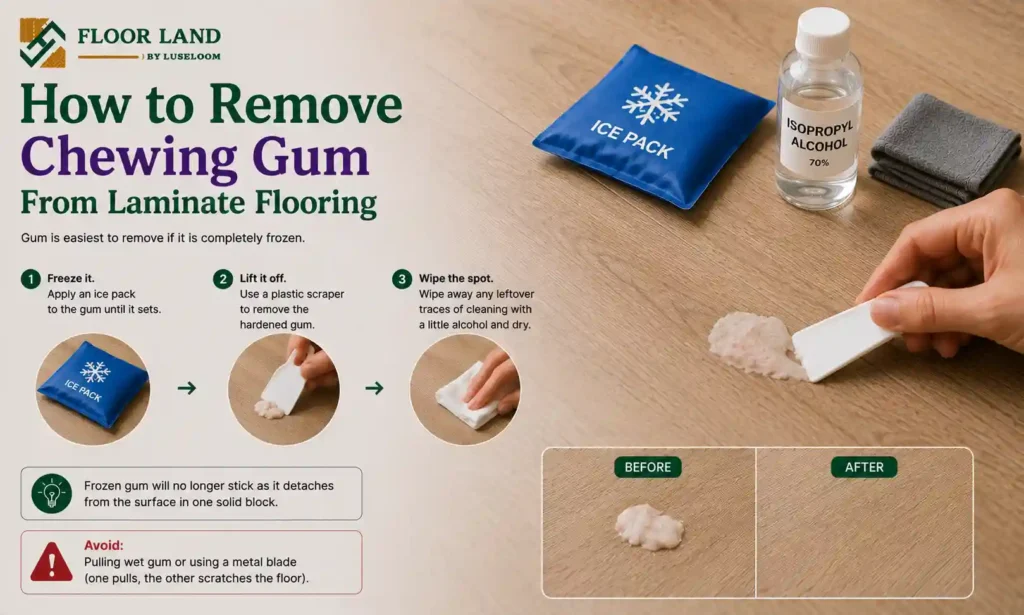
Removing the chewing gum from the laminate flooring is very easy and quick. For proper cleaning, follow the steps below:
- The very first step is to freeze the gum by putting the ice pack over it.
- Once the gum is completely frozen, use a rubber spatula to lift it off.
- Now, wipe off the stain area to remove any remaining traces.
- For thorough cleaning, you can also apply a very dilute alcohol solution to the area.
- Let the flooring dry completely.
Frozen gum will no longer stick, as it detaches from the surface in a single solid ice block.
How to Remove Stubborn Stains Without Damaging Laminate
If a stain can’t be removed, the urge to scrub more or use stronger solutions is strong. That’s how laminate is destroyed. Flooring experts rely on patience, not on force. This is how to remove tough stains without harming the floor.
Use a Layered Approach
Use the mildest product first, then the next (if needed), and so on: warm water, pH-neutral cleaner, diluted vinegar, isopropyl alcohol, and very dilute acetone (in a small amount).
Give It Dwell Time
Apply the cleaner and let it sit for 1 or 2 minutes, and then wipe. Dwell time allows the solution to really sink in and work on the stain, without scrubbing. If the stain is dry, lay a damp cloth over the area for several minutes to loosen it.
Lift, Don’t Scrub
Scrape back and forth and then lift up the loosened stain. The process of scrubbing can embed pigments into micro-scratches and cause the finish to deteriorate. If it gradually fades after each light stroke, continue working gently, but remember: repetition is better than pressure.
Dry immediately
As soon as the stain comes up, dry it with a clean cloth. Laminate isn’t designed to withstand prolonged exposure to moisture. It can only withstand a limited amount.
When to Stop
When a stain is left for weeks and penetrates the joint lines, it could already be in the core of the fibreboard beneath the printed layer. That’s a place no surface cleaner can get to. If you have some deep old stains that are not going to be removed, accept them and do not over-aggressively attempt to remove them, or they may damage the surrounding planks. A smaller job than resurfacing a scratched floor is replacing a plank.
Common Mistakes That Permanently Damage Laminate
Most broken laminate is not caused by the stain; it’s caused by the cleanup. These are the ways that can cause permanent or irremediable damage and how to prevent it.
| Mistake | Why It Causes Damage | Safer Alternative |
|---|---|---|
| Steam mops | Forces hot vapour into seams; swells the core and lifts edges. | Damp microfiber mop, wrung nearly dry. |
| Steel wool | Scratches through the wear layer instantly. | Microfiber cloth or plastic scraper. |
| Excess water | Reaches the fibreboard core and causes swelling. | Barely-damp cloth; dry immediately. |
| Bleach | Discolours the printed design layer and dulls the finish. | Diluted vinegar or pH-neutral cleaner. |
| Ammonia | Breaks down the protective coating over time. | pH-neutral cleaner. |
| Abrasive powders | Grind fine scratches into the surface. | Baking soda paste used gently, if at all. |
| Harsh brushes | Wear and dull the finish. | Soft cloth, wiping in one direction. |
| Soaking stains | Prolonged moisture penetrates the joints. | Short dwell time with a damp cloth only. |
| Wax polish | Builds a cloudy film laminate can't absorb. | Residue-free pH-neutral cleaner. |
| Oil soaps | Leave a dulling, streaky residue. | pH-neutral, residue-free formula. |
How to Prevent Future Stains
Stains that are not settled yet are very easy to clean. Some easy tips can help you maintain laminate and minimize cleaning.
- Wipe spills immediately. When spills are fresh, they can easily be removed by a gentle wipe. When they are allowed to dry, they will penetrate the seams, making them much more difficult to remove.
- Use entrance mats. Mainly, stains on the flooring are caused by shoes. A mat at each door will keep grit, water and mud from being tracked into the building.
- Attach felt pads to objects in the house. Felt pads under legs stop furniture from scuffing and scratching the wear layer.
- Manage pets. Keep water bowls on a waterproof mat, keep nails short, and clean up accidents quickly. Edge swelling is often caused by standing water.
- Regularly dust and sweep. The grit feels like sandpaper when walking on it. Regular dry dusting or vacuuming with a soft-head attachment does not damage the finish.
- Control humidity. Air with high or low humidity causes planks to expand and contract. It creates openings where spills can get trapped. Maintain an even indoor climate.
Conclusion
The secret to cleaning laminate at Floor Land comes down to one principle: gentle and fast beats harsh and late. Blot the spill with warm water or a pH-neutral cleaner, escalate only if you must, and dry the floor straight away. Match the cleaning method to the stain: cold water for blood, cold treatment for gum and wax, alcohol for ink and grease, and diluted vinegar for coffee, tea, and wine.
Use sparingly and do not use steam, bleach, ammonia, or abrasives. These are the things that can damage the flooring finish. If a stain refuses to come out, repeated gentle passes are much more effective than brute force.
Prevention is the easiest way. Wipe up spills as soon as they occur, use mats and felt pads, control humidity, and follow a simple weekly routine. Be gentle with your laminate, and it will look new for years to come.
Frequently Asked Questions
Does vinegar harm laminate?
Not when it’s diluted. A 1:3 vinegar-to-water solution is one of the most handy home remedies that is safe to use to clean. Never apply undiluted vinegar to the floor, and always dilute vinegar – it is a highly acidic solution and will dull the finish over time.
Will baking soda damage laminate?
It may be ground into it, as it is a mild abrasive. As a soft paste and gently wiped, it can be used for organic stains and light rust. Do not use a dusting hose to scrub.
Is it safe to use bleach on laminate?
No. The bleach will cause the layer of print to fade and the protective coating to become yellow, and the damage will be permanent. Instead, use diluted vinegar or a neutral cleaner.
Will acetone damage laminate?
Last resort stain remover only for stains such as nail polish. Dab it on, wipe it in, and never spread or leave it in place since it can dull the finish.
Can laminate stains become permanent?
Yes. Permanent stains occur when stains are allowed to dry or when those stains work their way in through open seams. The most important factor in stain removal is prompt action.
Will steam mops remove stains on laminate?
They shouldn’t be used at all. The hot steam penetrates the seams, expands the fibreboard core, and raises the edge of the planks, one of the worst things one can do to laminate.
What is the best way to clean laminate of pet urine odors?
Wipe up the liquid, clean using a pH-neutral or enzyme cleaner, and treat the odor so that pets are not tempted to return. Inspect seams and dry thoroughly; urine that gets to a joint will cause swelling of the core.
How often should laminate flooring be cleaned?
A few times a week, dry-dust or vacuum, and once a week, damp-mop with a nearly dry mop. Most of all, clean spills as soon as they occur instead of putting them off to cleaning day.
Which is the safest laminate floor cleaner?
A product that is pH neutral and most manufacturers suggest using since it does not remove the finish or leave a film. Many stains can be cleaned with just warm water on a wrung-out cloth.
Is laminate the same as vinyl, hardwood, or tile for cleaning?
Laminate cannot be refinished or cleaned with harsh chemicals; hardwood can be refinished, and tile can be harshly cleaned. Vinyl is waterproof and is able to withstand a lot more water. The laminate board core is the most water-sensitive of the group, so limit water use and dry after watering.