
WPC vs SPC Waterproof Flooring: Key Differences & Best Uses
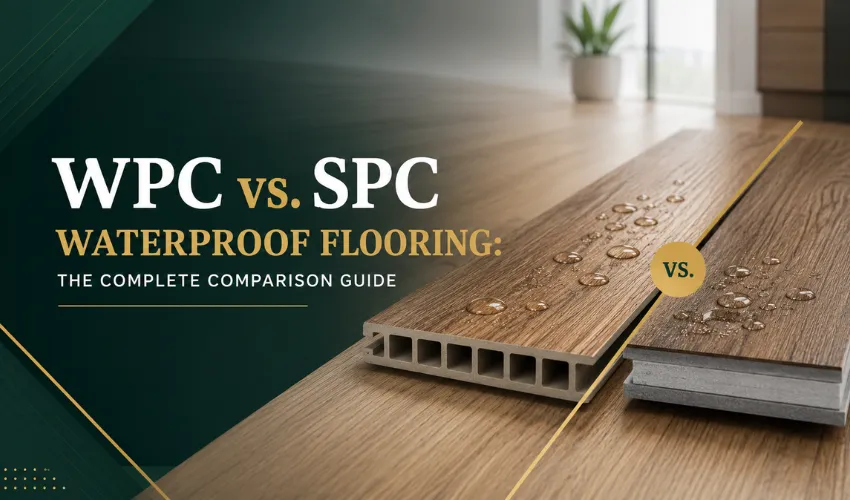
Choosing between WPC and SPC waterproof flooring depends on how you use the space. WPC flooring features a wood-plastic composite core that feels softer underfoot and provides better sound insulation, making it suitable for bedrooms and living areas. SPC flooring uses a stone-plastic composite core that offers higher density, stronger impact resistance, and better stability in areas with heavy foot traffic.
Both options handle moisture well, but SPC performs better against temperature changes and commercial use. This comparison guide by Floor Land explains the key differences in construction, durability, comfort, maintenance, and ideal applications to help you select the right waterproof flooring for your home or office.
Quick Comparison Table
Before going into detail about each category, here is the short version.
| Feature | WPC Flooring | SPC Flooring |
|---|---|---|
| Core material | Wood polymer composite with foaming agent | Stone (limestone) polymer composite, no foam |
| Typical thickness | 5.5mm to 8mm | 4mm to 6.5mm |
| Waterproof | Yes, 100% | Yes, 100% |
| Comfort underfoot | Softer, warmer | Firmer, cooler |
| Sound absorption | Better on its own | Needs underlayment for best results |
| Dent and impact resistance | Good | Excellent |
| Dimensional stability | Good | Excellent, minimal expansion |
| Best for | Bedrooms, living rooms, moderate traffic homes | Kitchens, entryways, commercial spaces, heavy traffic |
| Typical price range | Mid to upper mid range | Budget to mid range |
What Is WPC Flooring?
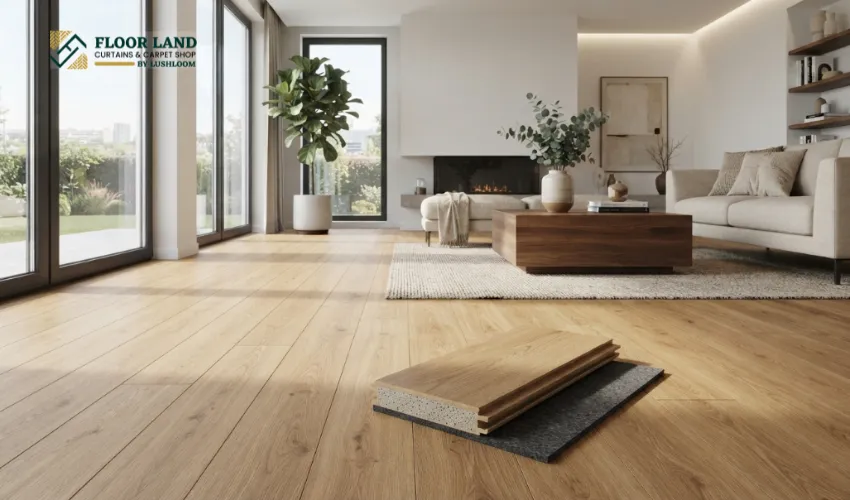
WPC is an acronym for Wood-Plastic Composite or sometimes written as “WPC”. This is a type of rigid-core luxury vinyl flooring that consists of a core layer containing PVC resin, plasticizers, and wood fillers (e.g., wood flour or bamboo powder).
A foaming agent is added to the product during manufacturing. This results in small air pockets within the core, making WPC flooring planks softer and “springier” than other rigid vinyl floors. It’s that foamed structure that also makes WPC warm underfoot and naturally sound-dampening.
The top layer is a printed pattern that mimics wood grain, stone texture, or tile patterns, and the bottom layer is the actual core, which may also include a UV coat. The end product is a floor that feels like hardwood, but acts like carpet.
Unlike engineered hardwood floors, WPC has been around longer and has established itself as the original comfortable and waterproof option.
What is SPC Flooring?
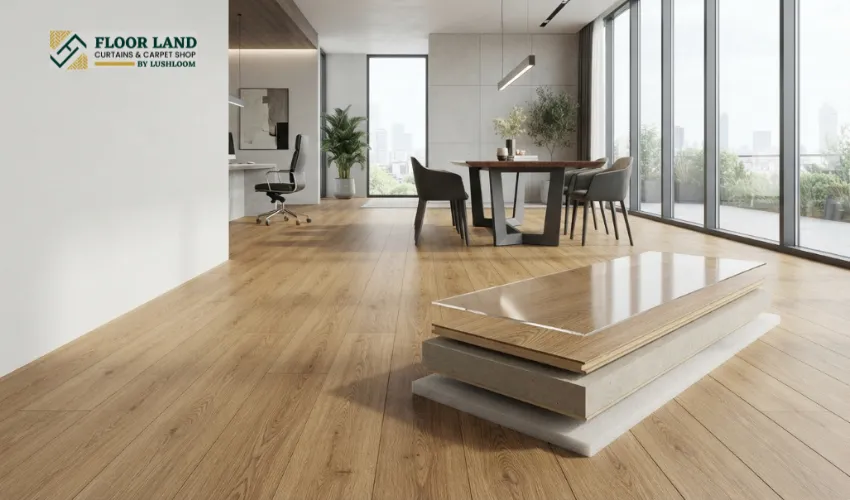
SPC is an acronym for “Stone Polymer Composite” or “Stone Plastic Composite”. It is composed of PVC resin, calcium carbonate (limestone powder), and stabilizers, and is pressed into a rigid, solid slab without the use of a foaming agent.
Unlike WPC planks, SPC planks are solid and therefore heavier and harder than their WPC counterparts of the same thickness. It’s that density that allows SPC to be so dent-, gouge-, and wear-resistant as a commercial floor.
Like WPC, SPC flooring types have a layered structure: a rigid core, a printed design layer, a wear layer, and typically a layer with a UV-curing finish. Several SPC products are available with a foam or cork backing for additional softness and sound absorption, which are sacrificed in the hard core.
SPC was the result of WPC’s problems with the softer products that commercial buyers had, namely dents from rolling carts, furniture legs, stiletto heels, etc.
Construction and Core Composition
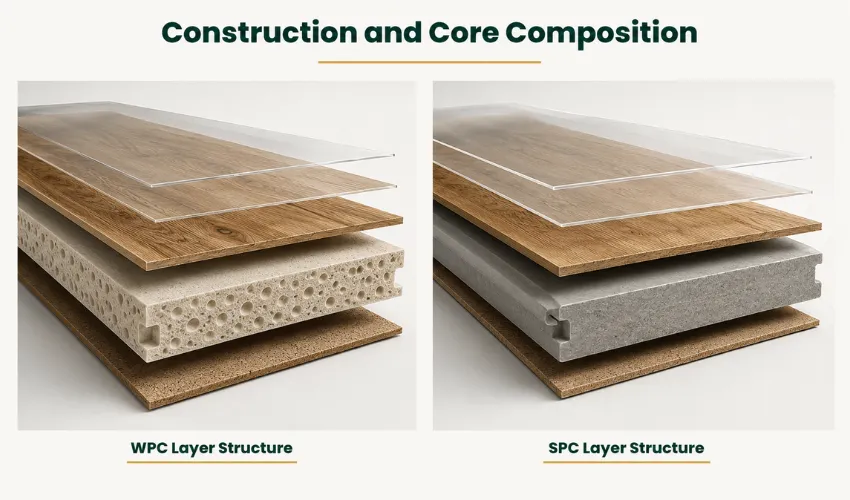
The bottom floor has a similar layered construction, with the top floor being the opposite. These two products act differently on the same subfloor, and an understanding of the layers can help explain why.
WPC Layer Structure
- Deep Coating: Provides a more durable finish that will not wear out as quickly as other coatings.
- Wear layer: clear vinyl layer (usually 8-20 mil) that is resistant to scuffs and stains.
- Color layer: the blue or gray color to create a wood grain or stone texture design for the print.
- WPC core: a material used for the core that is made of wood polymer composite, containing air holes for cushioning
- Extra comfort and noise reduction: attached pad (optional), cork, foam, or IXPE backing
SPC Layer Structure
- UV coating: The protective function is the same as that of WPC.
- Wear layer: usually 12 – 30 mil, and generally thicker on commercial-grade products than on WPC.
- Printing technology: same as WPC in high-definition printing technology
- Densified (rigid) SPC core formed with dense limestone and PVC without the use of a foaming agent.
- Thin foam or cork layer to provide sound and comfort (optional): Attached pad
The density difference is large. There are stones in place of the air pockets in foamed WPC, resulting in a higher weight per square foot for SPC cores versus WPC cores of comparable thickness.
WPC vs. SPC Flooring Comparison
Here are categories categorized in detail. This is where the buying decision is taken, hence our focus on what changes in real use.
1. Durability
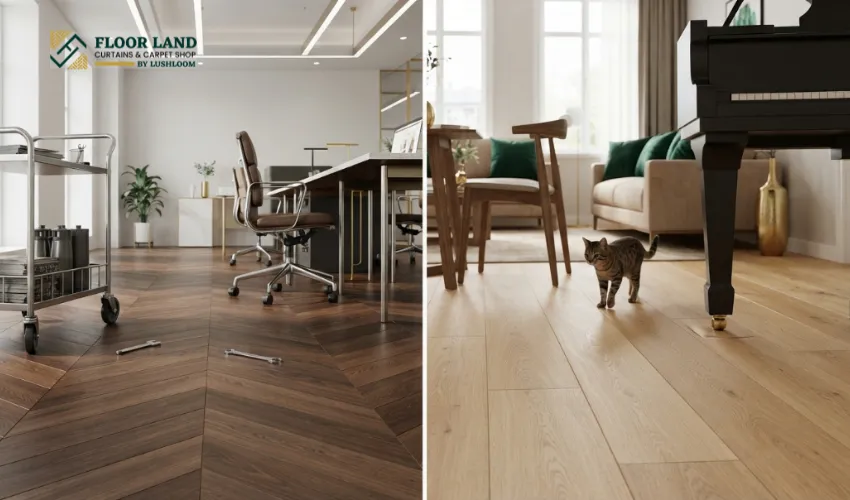
SPC always has the edge on sheer toughness. It has a dense stone core that will resist denting from heavy furniture, rolling office chairs, dropped items, and other applications that require a hard surface. A dense stone core resists denting from heavy furniture, rolling office chairs, dropped objects, and other applications that require a hard surface better than any foamed-core product.
WPC is very resistant to domestic applications. It will take the everyday abuse of normal foot traffic, pets, etc., and spills. It’s just easier to get a dent in it under a point load, such as a piano leg without a protective pad.
SPC is practically always the default for commercial specification. It has a more suitable wear rating and impact resistance for retail, hospitality, and office applications.
2. Waterproof Performance
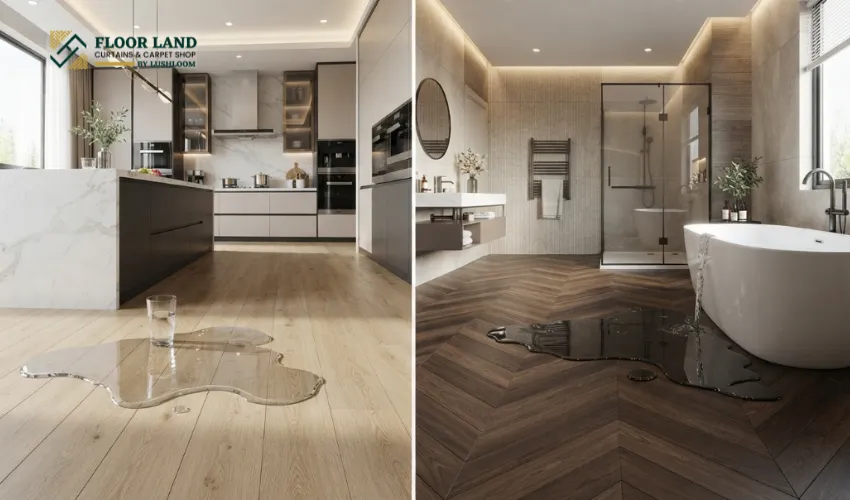
The core of both floors is 100% waterproof. Neither will swell, warp, or delaminate from standing water, spills, or humidity, which is the whole point of rigid core vinyl.
It isn’t about the core, it’s about the seams. Some installers believe that SPC is slightly better at keeping water out of the joints during extended flooding, as SPC planks lie flatter and fit with tighter tolerances. In normal, non-technical applications, this distinction is generally not relevant.
None of the floors is an alternative to correct waterproofing in wet rooms such as shower surrounds. There are also some types of standing water that can still be cleaned up quickly, and as long as they are installed properly, both floors are acceptable for kitchens, bathrooms, laundry rooms, and basements.
3. Scratch and Dent Resistance
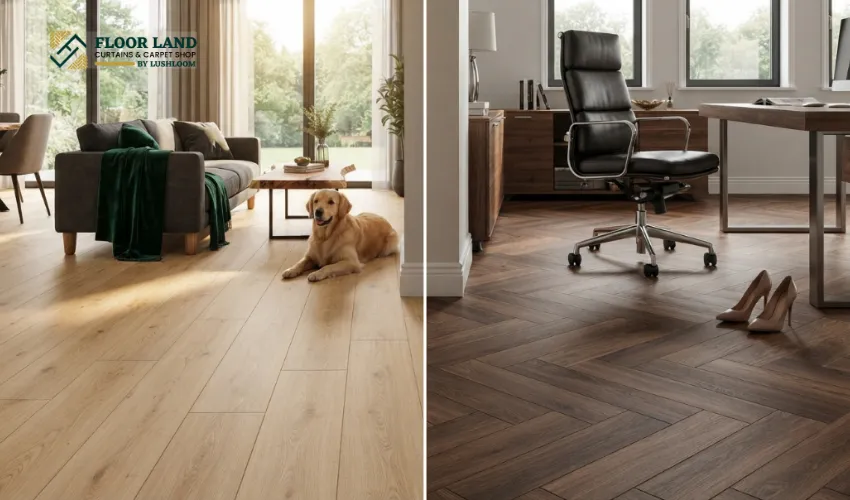
The resistance to scratches is more related to the wear layer than the core. As far as surface scratches from claws or grit, a 20 mil wear layer on WPC will perform better than a 12 mil wear layer on SPC.
Dent resistance is a different matter, and SPC takes the victory every time. The hard, stone-like interior will not crush as it does under a large, sharp point load, like a stiletto heel or the legs of a piece of furniture without a floor protector.
SPC’s core density is a practical benefit for homes with dogs, heavy furniture, or frequent rearranging. Both of these are considered scratch-resistant flooring materials.
4. Comfort Underfoot
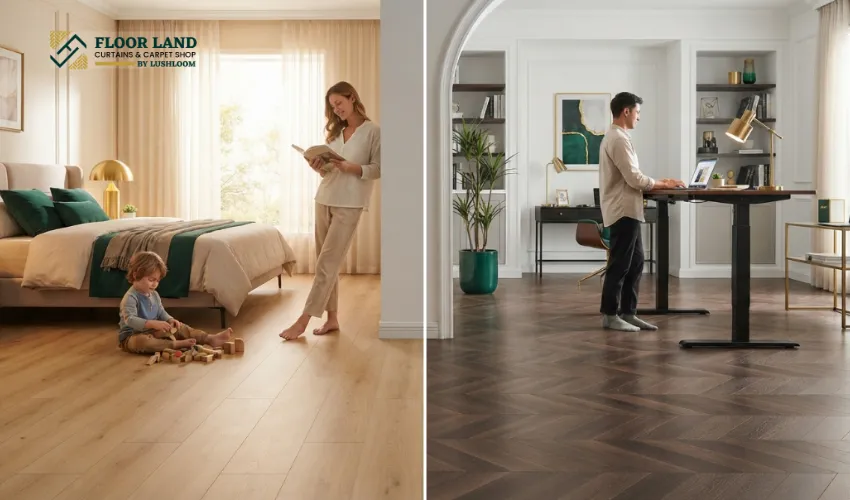
It’s WPC’s biggest victory. The foamed center absorbs impact, reducing strain on the legs and feet when standing for long periods, such as while cooking or working at a standing desk.
SPC will hold its shape, and it may feel cool in less warm rooms. An underlayment pad will make it more comfortable, but will not completely eliminate the gap between the underlayment and WPC’s cushioning.
For bedrooms, nurseries, or any room where persons may be barefoot, WPC is typically a more comfortable option.
5. Sound Insulation
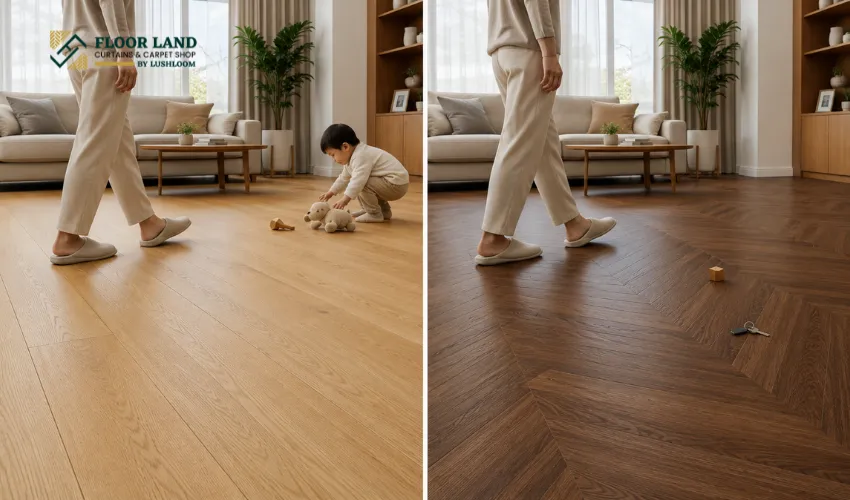
Due to its foamed structure, WPC has a higher impact sound absorption coefficient. Duller and quieter sound than SPC when footsteps and dropped objects are heard.
Denser and stiffer, SPC conducts more sound unless used with an acoustic underlayment. Many multi-story buildings and condos have a minimum Impact Insulation Class (IIC) requirement, and SPC is almost always required to be installed under an additional layer of underlayment to meet the requirement.
When comparing SPC to WPC on a like-for-like basis, take into account the cost of underlayment if the apartment is on the upper level of a building or if there are rooms below.
6. Heat and Temperature Stability
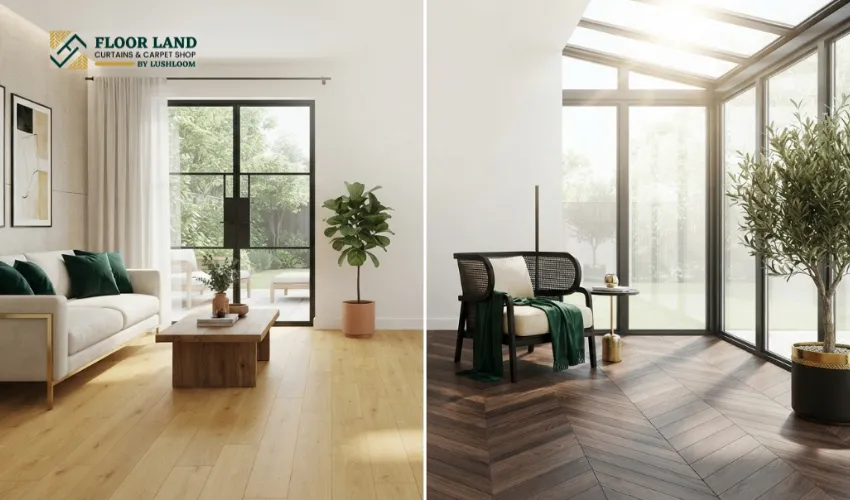
SPC has an advantage. Its tight core is resistant to expansion and contraction with temperature changes, so it is a good option for sunrooms, garages, or regions with substantial temperature fluctuations.
Due to its foamed structure, WPC can expand a little more than SPC in high heat, but quality WPC products can also function well in normal indoor temperature ranges.
Both products should not be applied above radiant heat systems that have a maximum surface temperature of, for example, 27°C to 29°C (80°F to 85°F). Be sure to strictly follow each product’s radiant-heat-compatible guidelines prior to installation.
7. Wear Layer
The top layer, which is clear and protects both floors, is called the wear layer, and it is rated in mils (thousandths of an inch). The actual number is more important than the core type for scratch and stain resistance.
| Wear Layer Thickness | Best Suited For |
|---|---|
| 6 to 8 mil | Light residential use, low traffic rooms |
| 12 mil | Standard residential use, moderate traffic |
| 20 mil | High traffic residential, homes with pets |
| 22 to 30 mil | Light commercial and heavy residential use |
| 30+ mil | Full commercial specification |
Be sure to compare this spec directly, as the thicker the wear layer for the WPC or SPC the better it performs compared to having a thinner wear layer on the other.
8. Installation Process
WPC and SPC are both attached to the subfloor with a floating click-lock mechanism, where the planks do not require glue or nails to attach and float above the subfloor. This makes both good for DIY installation, and larger rooms work better, as does cutting around fixtures, with professional experience.
WPC is slightly easier to cut than traditional wood, as the foamed core is softer, which can help DIY installers with just a simple utility knife or score and snap tool. Sharper blades are needed, and more force is applied to the dense core of the SPC.
SPC planks are easier to install and will lay flatter right off the bat, as the planks have a rigid core and do not have the same flex as soft-core planks over an imperfect subfloor. If the subfloor prep is rushed, WPC can show off a bit more if there are minor imperfections in the subfloor.
| Installation Factor | WPC | SPC |
|---|---|---|
| Installation method | Floating click lock | Floating click lock |
| DIY friendliness | Easier to cut and handle | Requires more effort to cut |
| Acclimation needed | Usually 24 to 48 hours | Usually 24 to 48 hours |
| Underlayment required | Often built in or optional | Recommended for sound and comfort |
| Subfloor flatness tolerance | Moderate | High, lays very flat |
9. Subfloor Requirements
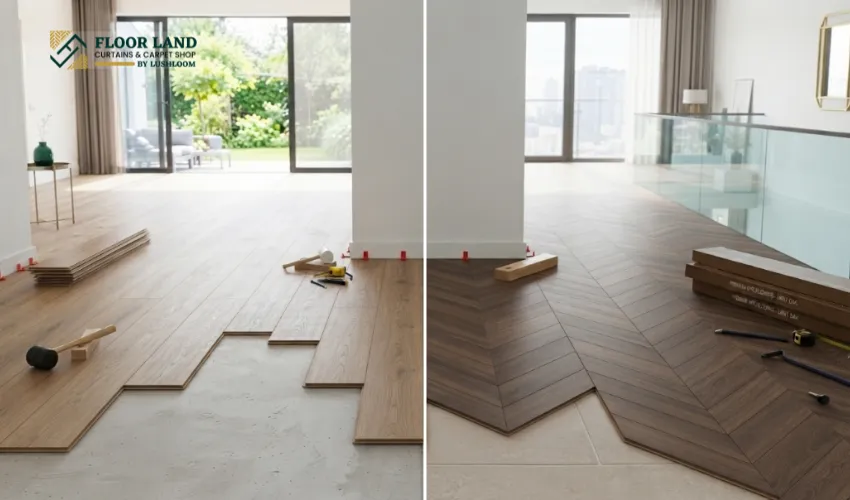
Before installation, both floors require a clean, dry and reasonably flat subfloor. Most manufacturers specify a flatness tolerance of up to 3mm over a distance of 2 meters, although some may have different tolerances.
Concrete subfloors should be tested for moisture prior to the installation, although both floors are waterproof. Even if enough moisture is removed from under the planks, a mold or odor problem will persist over time if it is not addressed at the subfloor level.
Typically, both floors can be installed over existing hard surface floors such as tile or vinyl, provided the surface is flat, stable, and firmly adherent. The first carpet you should remove is always the most important.
10. Maintenance
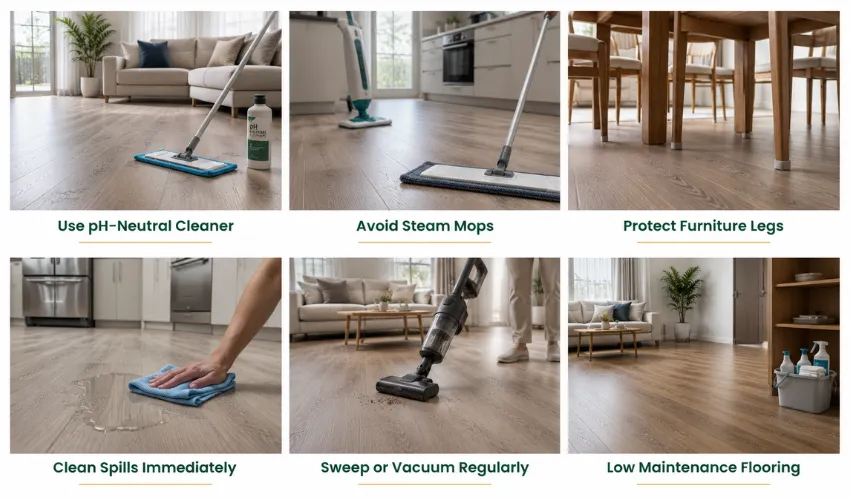
Rigid core vinyl has maintenance requirements that are almost the same for both of its floors, which is one of the greatest benefits of vinyl over hardwood or laminate floors.
- Use a pH-neutral cleaner for vinyl or LVT flooring for damp mopping.
- Do not use steam mops, as this can compromise the wear layer and cause issues with the click-lock seams over time.
- Ensure that furniture legs do not dent the floor by using felt pads under the legs, particularly with SPC.
- Both floors are waterproof, but still be sure to clean them up quickly if there is a spill so they don’t become slip hazards.
- Don’t use abrasive cleaners, wax, or polish as they will remove the finish.
- Ensure regular sweeping or vacuuming for cleaning vinyl planks and SPC, which will remove grit that may scratch the wear layer.
Unlike solid hardwood or engineered hardwood, neither floor requires refinishing, sealing, and waxing during its useful life, and this reduces long-term maintenance costs.
11. Lifespan
Properly installed and used in a normal home, both WPC and SPC floors have a lifespan of 15 to 25 years. With heavier usage, commercial-grade products can achieve a longer service life because they have thicker wear layers.
| Flooring Type | Residential Lifespan | Commercial Lifespan |
|---|---|---|
| WPC Flooring | 15 to 20 years | 8 to 12 years (light commercial) |
| SPC Flooring | 20 to 25 years | 10 to 15 years (moderate commercial) |
These ranges are intended as a guideline and do not guarantee a lifespan, as actual life is heavily dependent on the thickness of the wear layer, installation, and servicing practices.
12. Cost Comparison
Because less raw material is used per plank in production and scaling up production is efficient, SPC is generally the more cost-effective choice. The additional foaming process and usually thicker core cause this WPC to be more expensive.
| Cost Factor | WPC Flooring | SPC Flooring |
|---|---|---|
| Material cost | Mid to upper mid range | Budget to mid range |
| Installation cost (DIY) | Slightly lower due to easier cutting | Slightly higher due to denser core |
| Installation cost (professional) | Comparable to SPC | Comparable to WPC |
| Underlayment add-on | Often unnecessary | Frequently recommended, adds cost |
| Long-term maintenance cost | Low | Low |
Always ask if underlayment, trim, and transition strips are covered when comparing quotes. Once a project is fully specified, a WPC is often on par with SPC’s added underlayment when considering the price.
13. Pros and Cons
Below is the comparison table between WPC and SPC floors pros and cons:
WPC Flooring Pros and Cons
| Cost Factor | WPC Flooring | SPC Flooring |
|---|---|---|
| Material cost | Mid to upper mid range | Budget to mid range |
| Installation cost (DIY) | Slightly lower due to easier cutting | Slightly higher due to denser core |
| Installation cost (professional) | Comparable to SPC | Comparable to WPC |
| Underlayment add-on | Often unnecessary | Frequently recommended, adds cost |
| Long-term maintenance cost | Low | Low |
SPC Flooring Pros and Cons
Check the pros and cons of SPC floors to choose the best option for your place:
| Pros | Cons |
|---|---|
| Excellent dent and impact resistance | Feels harder and cooler underfoot |
| Superior dimensional stability | Transmits more sound without underlayment |
| Lower average cost | Harder to cut during installation |
| Ideal for commercial and high-traffic areas | Underlayment often needed for comfort and quiet |
Common Buying Mistakes
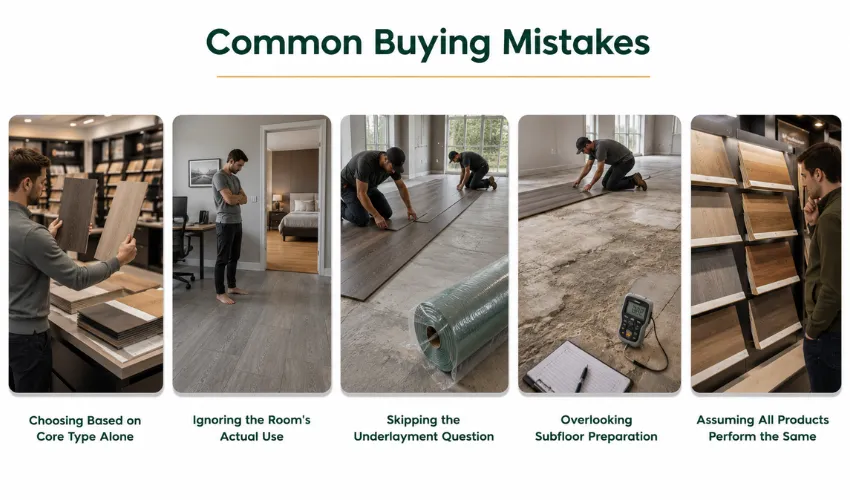
Here are some typical errors that people make when purchasing WPC or SPC.
Choosing Based on Core Type Alone
It is important to consider wear layer thickness of the WPC or SPC. Any thin layer of wear on either product will be worn and scratched more rapidly than a superior wear surface on the other.
Ignoring the Room’s Actual Use
A buyer may choose SPC for a good deal on an office that he/she uses quietly, but may find the product’s texture too hard and cold. Use the room’s purpose, rather than its cost, to determine the type of flooring you need.
Skipping the Underlayment Question
Many SPC quotes seem more affordable when no underlayment for sound or comfort is included. Before looking at the final price, always ask if the underlayment will be included and/or recommended.
Overlooking Subfloor Prep
The two are forgiving compared to hardwood, but rough-and-ready leveling and moisture testing are still the No. 1 source of problems, such as seam separation and uneven wear.
Assuming All Products with the Same Label Perform the Same
There are significant differences in wear layer, core density, and certifications even among WPCs or SPCs of different brands. Don’t assume the acronym; always read the spec sheet.
How to Choose Between WPC and SPC Flooring
Begin with the use of the room. SPC is more popular in high-traffic areas, entryways, and commercial spaces, while WPC is more popular in bedrooms, living rooms, and other spaces where comfort is a key factor.
Next, think about who will be using the area. WPC will be desirable for households with older people, young children, or individuals who must stand for extended periods. SPC’s dent resistance may be preferable for households that have large pets or heavy furniture.
Factor in budget.
When cost is the main consideration and comfort is secondary, SPC generally is the more cost-effective option, particularly when the space is extensive.
Finally, look at the wear layer, warranty, and certifications for the actual product and not the overall core type. These details alone can make two SPC products from two different brands very different. Choose the flooring that suits your renovation project.
Final Thoughts
WPC and SPC are not necessarily the more superior products. They are designed for different purposes, and the suitable type will be determined by the area and how it will be utilized.
If comfort, warmth, and quiet are most important, and moderate traffic is a priority, then it is worth the extra cost to have WPC. Here’s the floor that has the closest feel to hardwood without sacrificing waterproofing.
A durable surface that can withstand heavy foot traffic over the years is a safer bet than SPC. It’s designed to endure and continue to operate, making it the most popular choice for commercial specification.
Many homes are using both! Bedrooms and living rooms should have WPC; kitchens, entryways, and basements should have SPC. That affects comfort and durability in each room, a balance that is often optimal across the entire property.
Frequently Asked Questions
Is WPC or SPC better for waterproofing?
Both are fully waterproof with a core. They do not swell or warp when exposed to water, and this property is not a determining factor in distinguishing them from other materials.
Which is more durable, WPC or SPC?
SPC material is dense, providing good dent and impact resistance. WPC remains very durable in normal residential applications but shows reduced resistance to concentrated point loads.
Is SPC flooring more affordable than WPC?
Yes, in most cases. Because it requires less raw material and is quicker to produce, SPC is usually less expensive per square foot than other flooring types, although the cost of SPC varies by brand and wear layer thickness.
Is it possible to have WPC or SPC flooring in a bathroom?
Yes, they are both good for bathrooms as they are waterproof. Ensure seams and edges are sealed to the floor to the fixtures such as faucets and tubs.
Do you need an underlayment for the SPC floor?
This is often recommended, particularly for sound insulation and comfort. Some SPC products include an attached pad that decreases the necessity for an underlayment.
Is WPC flooring good for homes with dogs?
It is well suited for everyday use by paws, but is less resistant to denting than SPC from large dogs’ nails and heavy furniture.
How long does WPC or SPC flooring last?
They are both typically installed and maintained for 15-25 years in residential applications, depending on the thickness of the wear layer and traffic volume.
Can I install WPC or SPC flooring over tile?
Yes, typically, but only if the tile is level, flat, and has no large cracks or height variations. Always follow the manufacturer’s installation instructions.
Which is quieter to walk on, WPC or SPC?
The foamed core of WPC absorbs impact sound, making it naturally less noisy than other products. If used with an acoustic underlayment, SPC will transmit more sound.
Is SPC or WPC better for commercial spaces?
Overall, SPC is the preferred material for commercial applications due to its dent resistance, dimensional stability, and high foot-traffic performance.