
How To Fix Blinds String Quickly: Easy DIY Repair Guide & Professional Tips

Is your blind string tangled or broken, and now you are thinking of replacing the whole blind? But you can easily fix this problem with a few basic tools, the right repair method, and a replacement cord. For the perfect fix, analyze the exact cause: whether the string is snapped, stuck, or frayed, then untangle, rethread, or replace it using the correct tools. After that, test the blinds to ensure they operate smoothly.
In this blog post by floorland.ae, we will explain how to quickly fix a blind string in detail and share some useful tips to keep it in good condition in the future. So, let’s get started.
Tools and Equipment Required for Blind String Fix

Before directly jumping to the point “How to Repair Blind String?”, you must know the tools and equipment required for this process. Once you have collected all these tools, the fixing process will become easy and hassle-free.
| Tool | Purpose |
|---|---|
| New Cord | A new cord is required to replace the damaged one. |
| Knife or Scissors | Used to cut the damaged blind cord and trim the new cord to the correct length for the blind. |
| Screwdriver | Used to remove the headrail or unscrew the entire head bar. |
| Threader | Helps guide the new cord through the blind mechanism and slats. |
| Measuring Tape | Measures the replacement cord to match the exact size required for the blind. |
| Lighter | Seals the cut ends of the cord to prevent fraying. |
Additional Notes
- Always pick a blind cord made of nylon or polyester, as they are long-lasting and durable. These materials withstand the friction better than fabric cords.
- When using the utility knife, you must wear hand protection. Otherwise, it is best to use scissors to cut the blind string.
Fix the Blind Strings Quickly with Easy Steps
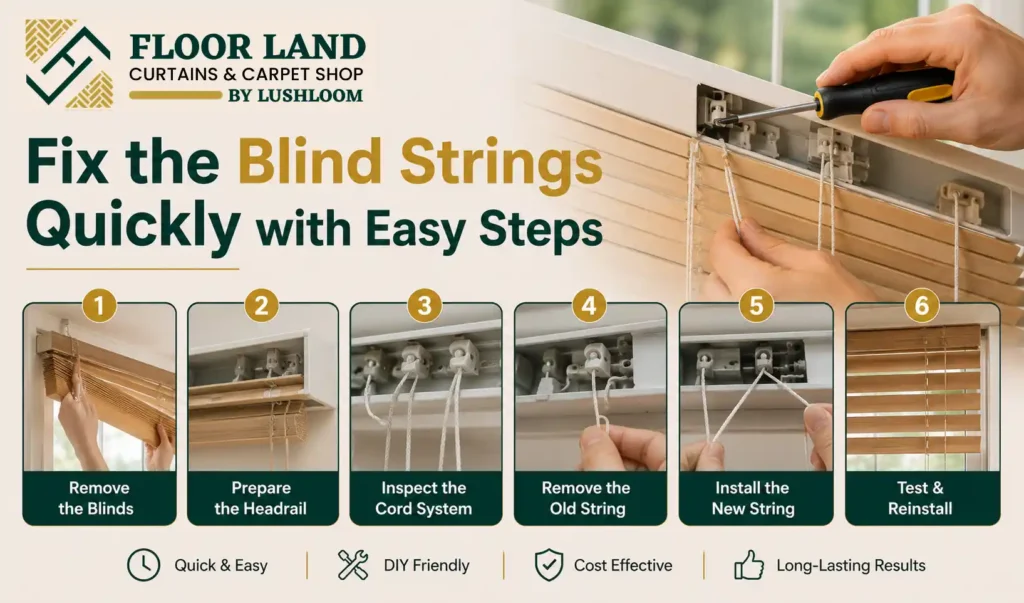
Once you have collected all the tools and equipment at the place. Now it’s time to deal with the real problem. Before starting to fix the blind cord:
Remove the blinds from the wall. You can do it yourself or take help from any professional.
- First of all, raise or roll the blinds. The main purpose is to clear the window space.
- Now remove the decorative top cover or valance by unclipping it forward.
- If there are child-safety tensioners or chain guides, you need to unscrew all the wall anchors that hold them.
- Locate the brackets on the left and right of the top rails.
- The next step is to release the lock by prying open the bracket doors. You can also press the spring tabs.
- Make sure to support the blind’s weight with one hand while tilting the rail forward.
- Lastly, pull the headrail straight out of the bracket onto a flat surface, and you are done with removing the blinds from the wall.
You can fix the string of both manual and hybrid window blinds by following the steps below. For your clarification, some hybrid window curtains also have a cord for manual operation.
1. Preparation

If you have hybrid blinds, then the very first step is to remove the battery or unplug it. For safety reasons, it is best to seek assistance from a professional or someone who has done this before.
- Take a flathead screwdriver. Now you have to carefully unscrew the head bar.
- Carefully take the blinds to the workstation with enough light for proper inspection.
- Now here is the main step. Properly check the cord system and pulley that is present inside the header bar.
- You can take a picture of the cord system and pulley that will be very helpful
2. Determine the Main Problem

To determine the string problem, follow the steps below:
- First, open the header bar carefully.
- If your workstation lacks sufficient light, you can use a flashlight.
- Now you will need the micro screwdrivers to help open the caps.
- You need to be very careful while locating where the string passes through the locking cams.
3. How to Remove the Damaged Blind String
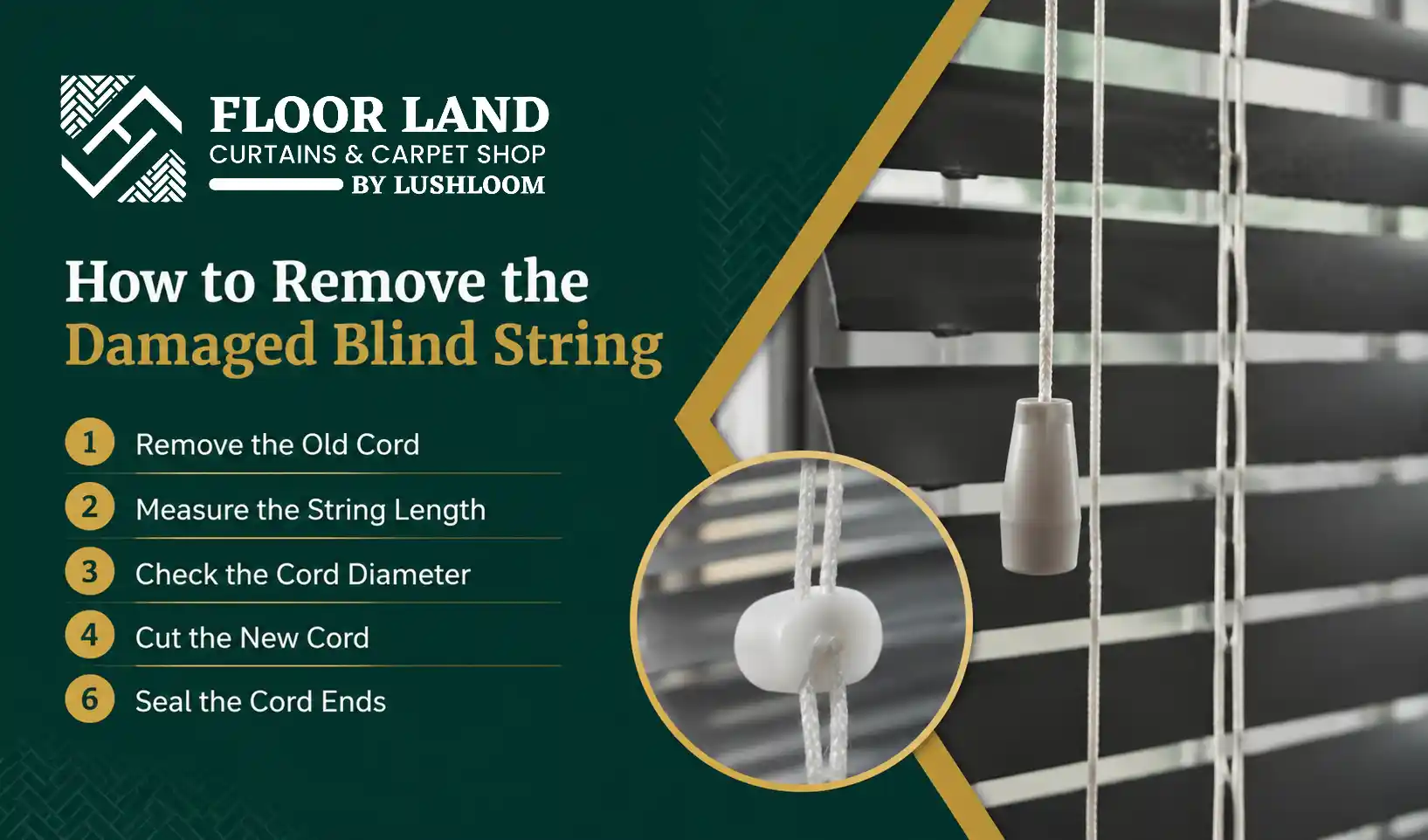
The third step is to carefully remove the damaged blind string.
- Carefully remove the cord from the pulley.
- Measure the old string with a tape measure. Use this measurement to cut the new cord.
- Keep in mind to measure the cord diameter with digital calipers.
- This step is very beneficial for passing the cord through the system easily.
- Now heat seal the edges with a lighter to prevent the new blind cord from fraying.
Want to get a snag-free finish for the blinds with a ferule? Slip it on and carefully crimp it with a ferrule crimper
4. Restring the String
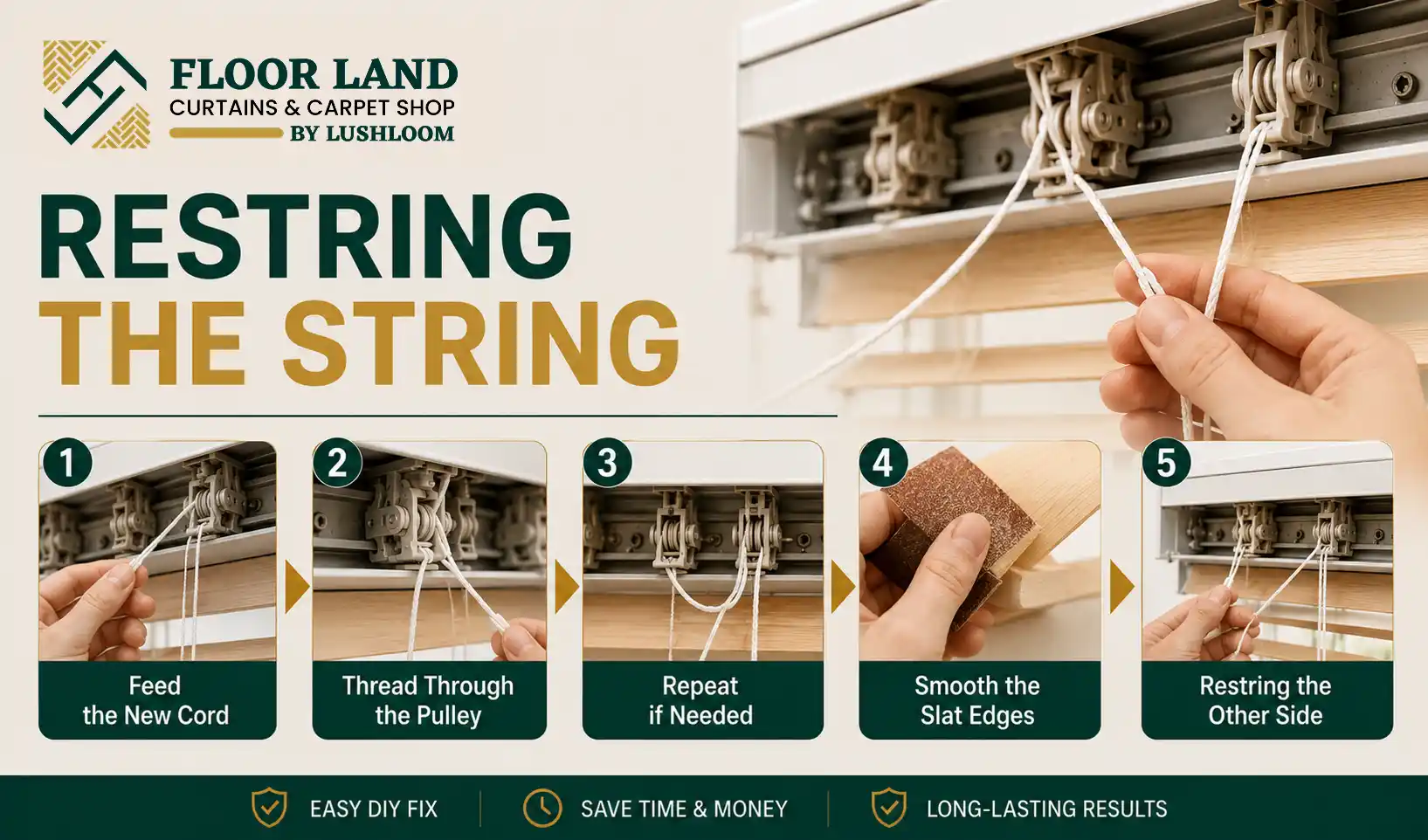
The fourth step is to re-string the blinds. Check the easy steps to do it:
- To feed the new string throughout the blind, you can use flexible threaders.
- If you are unable to feed the string through the blinds properly, you have to repeat the process.
- Now you need to thread the cord through the pulley and system. For this process, you can use the needle-nose pliers.
- For the slats with burr, you must use a Dremel with a sanding setting. It will smooth out the edges completely. Always wear eye protection while sanding.
- Make sure to keep the slats of the other line stable when restring the other side.
5. Finalize the Look and Final Checks

Now you are completely done fixing the blinds’ strings that were not working. To finalize the look, do the final checks.
- Now carefully pull the cord and test whether it works properly.
- Use a tension gauge to adjust the blind mechanism. This way, the blinds move smoothly with the same pulling force each time.
- For the nylon and polyester cord, use the overhand stopper knot for a secure joint. For blinds with ferrules, use a ferrule crimper to fasten the metal sleeves.
- Mount the headrail carefully and test the blind functionality.
- If you still feel resistance, you need to recheck the whole system.
How to Fix Blinds Strings That Won’t Close
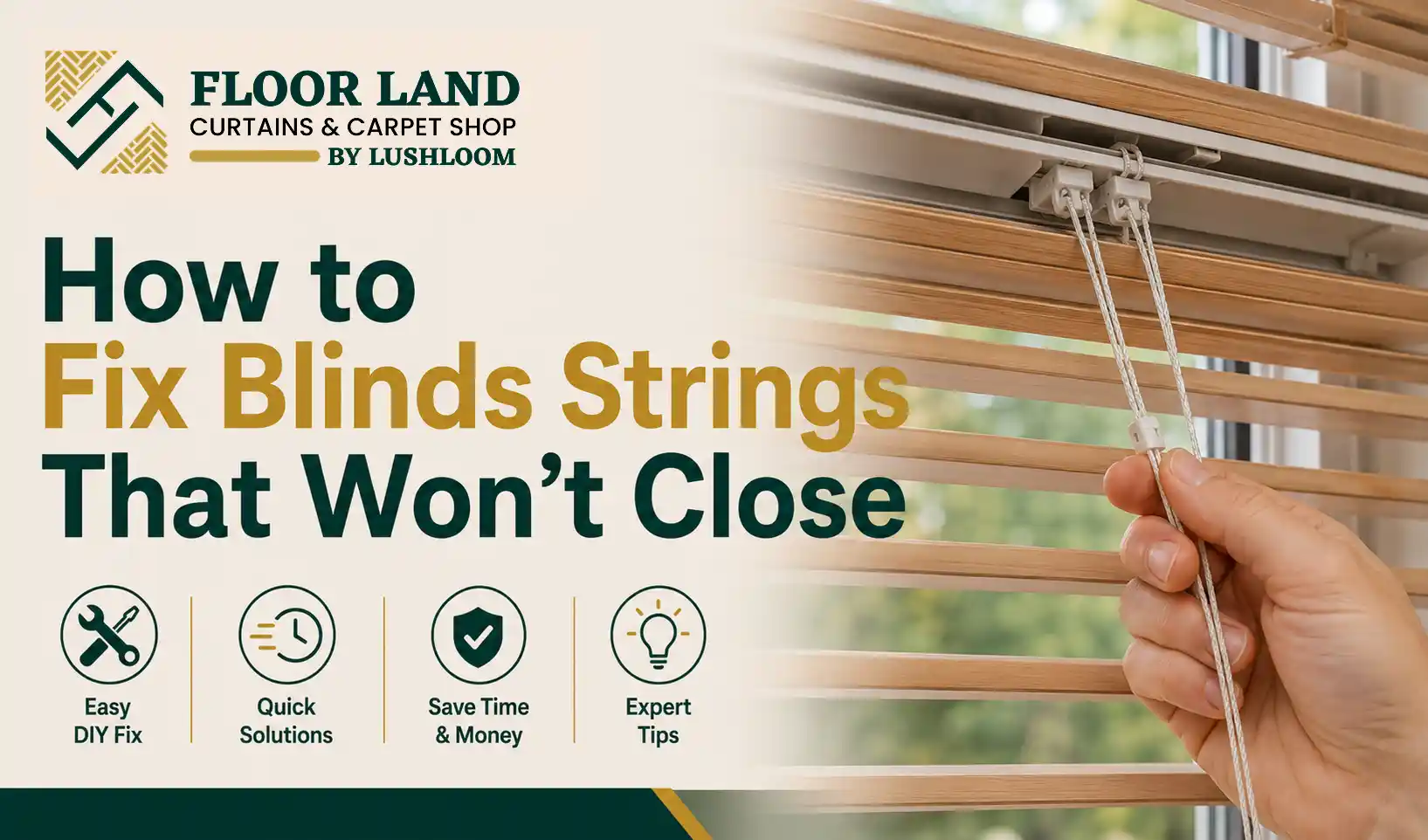
Sometimes the string of the blinds is unable to close. But the solution to this problem is very quick and effortless.
- Check for tangled strings: Carefully check the knots and twisted cord. If you see any tangle or knot, untangle it. Make sure to gently pull them without too much pressure.
- Fully Raise the Blinds: To inspect the string more easily, raise the blinds fully.
- Reset the String Lock: To release the stuck cord lock, you can pull the string towards the center of the blinds.
- Inspect the Headrail: Carefully check inside the top rail for any tangled cords or dirt. If you see any, then remove the debris that might be blocking the mechanism.
- Check for the Damaged String: If you see a frayed or broken string, then replace it with a new one. Knots can be a major hindrance to the smooth operation of the blinds.
- Test the Blind: Once you have followed the above-mentioned steps, lower and raise the blinds for a while. If they are still not closing properly, the cord lock or tilt mechanism may need to be replaced.
How to Fix Blinds String to Open & Close
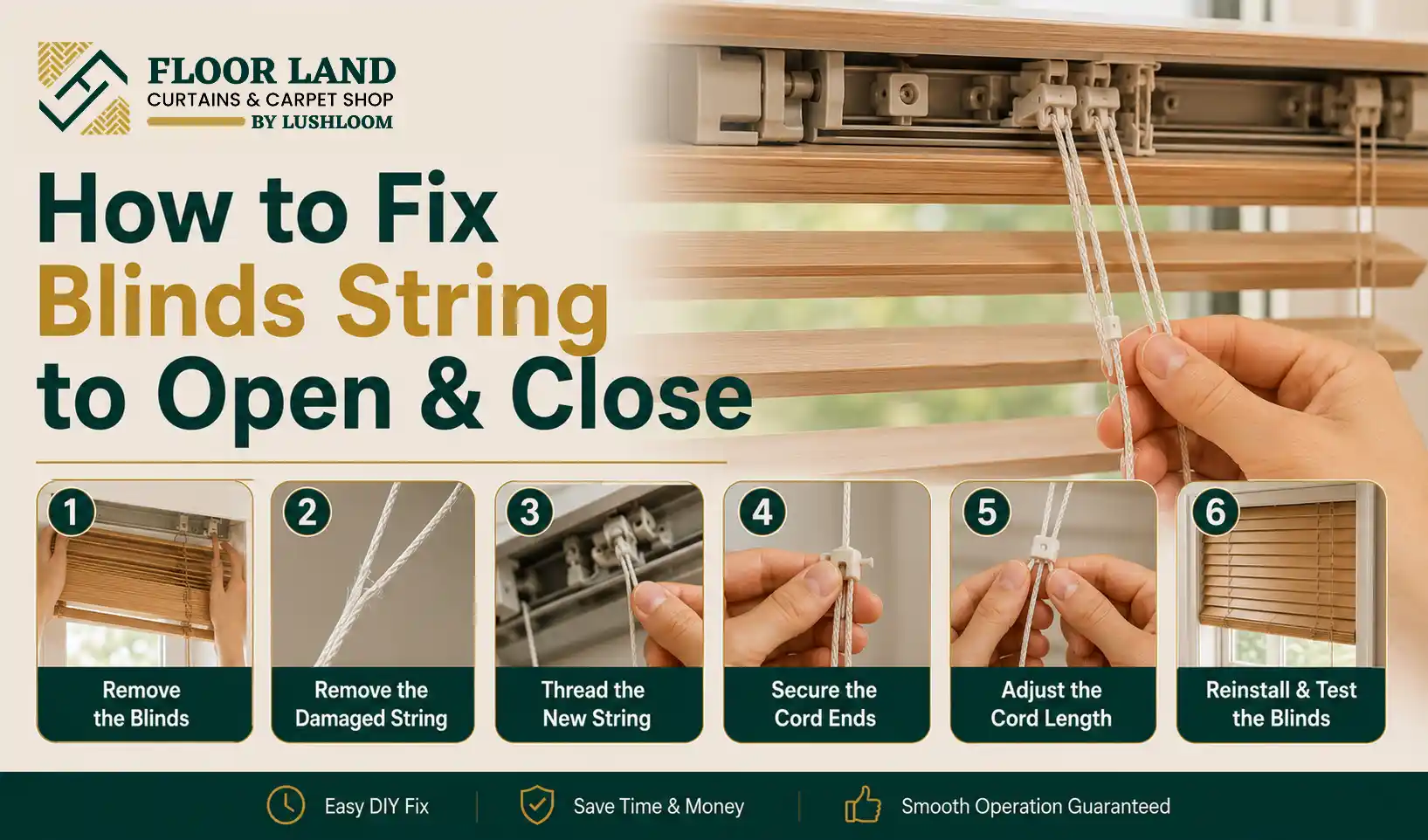
To fix the blind string that does not open and close, follow the steps mentioned:
- Remove the Blinds: First, carefully remove the blinds and place them on a flat surface. This way, you can easily access the string and internal blind parts.
- Remove Damaged String: Now carefully remove the damaged string. Check the threading of the old string before removing it.
- Thread the New String: Thread the new cord throughout the headrail, lift mechanism, and bottom rail. Make sure that you have followed the same path as the old string.
- Carefully Secure the Ends: To prevent the cord from fraying, tie a strong knot at each end. This also prevents the string from slipping.
- Adjust the Cord Length: For even, smooth blind raising and lowering, the lengths of both lift strings must be equal. You can trim the length if required.
- Reinstall & Test: The last step is to mount the blinds back on the bracket and check their functionality.
How to Fix the Pull Cord on Horizontal Blinds
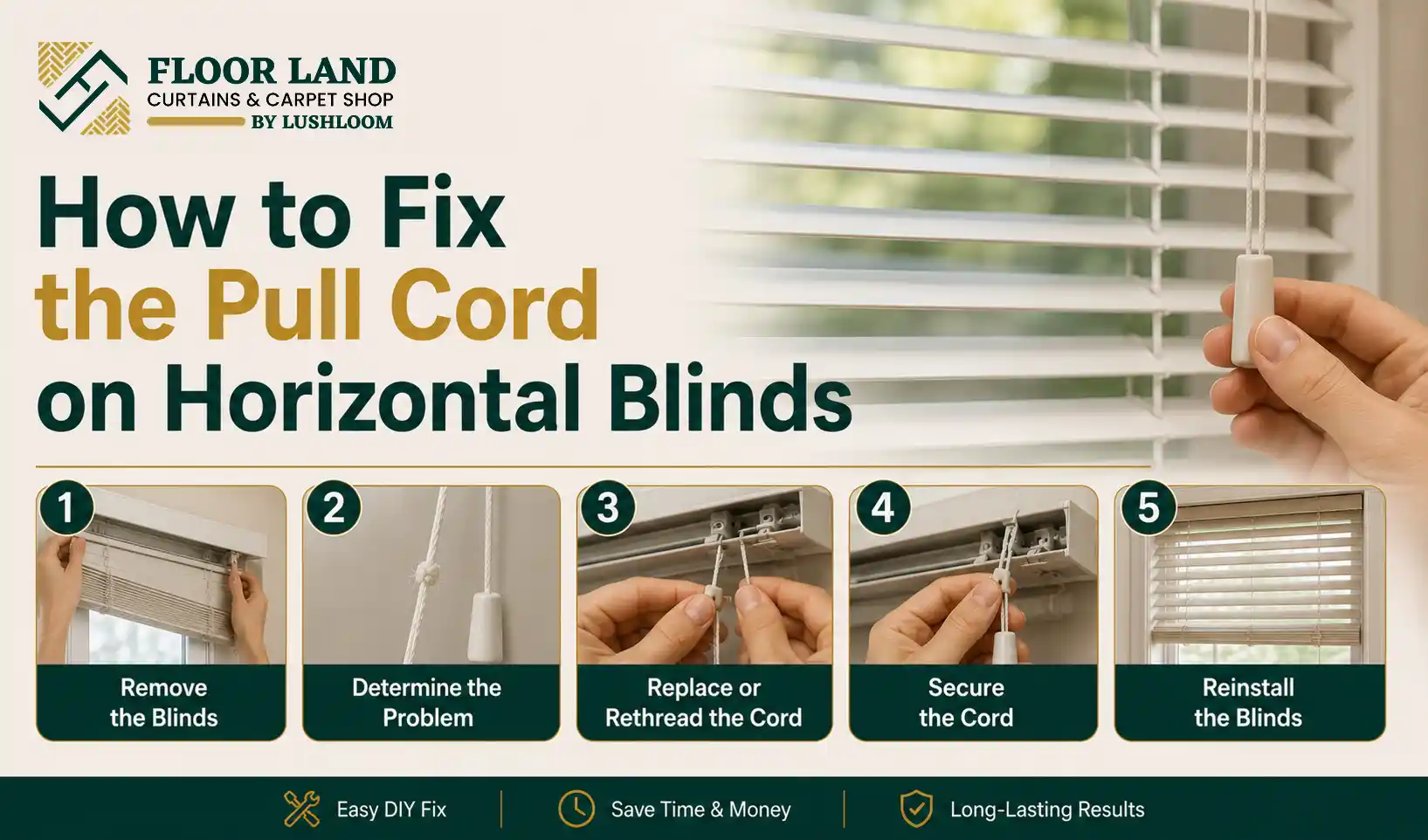
For fixing the pull cord on horizontal blinds, the process is quite the same:
Remove the Blinds: Take off the blinds from the brackets and place them on the workstation for careful inspection.
Determine the Problem: Identify the main problem, whether the blind is tangled, frayed, or broken.
Replace or Rethread the Cord: Now you have to replace the damaged cord. Make sure to thread the new cord on the same path as the old one.
Secure the Cord: After threading the cord, tie a firm knot at the end. Trim the excess length if required.
Reinstall the Blinds: Now mount the blinds back onto the bracket and ensure they are properly secured.
How To Fix Blinds With 4 Cords?
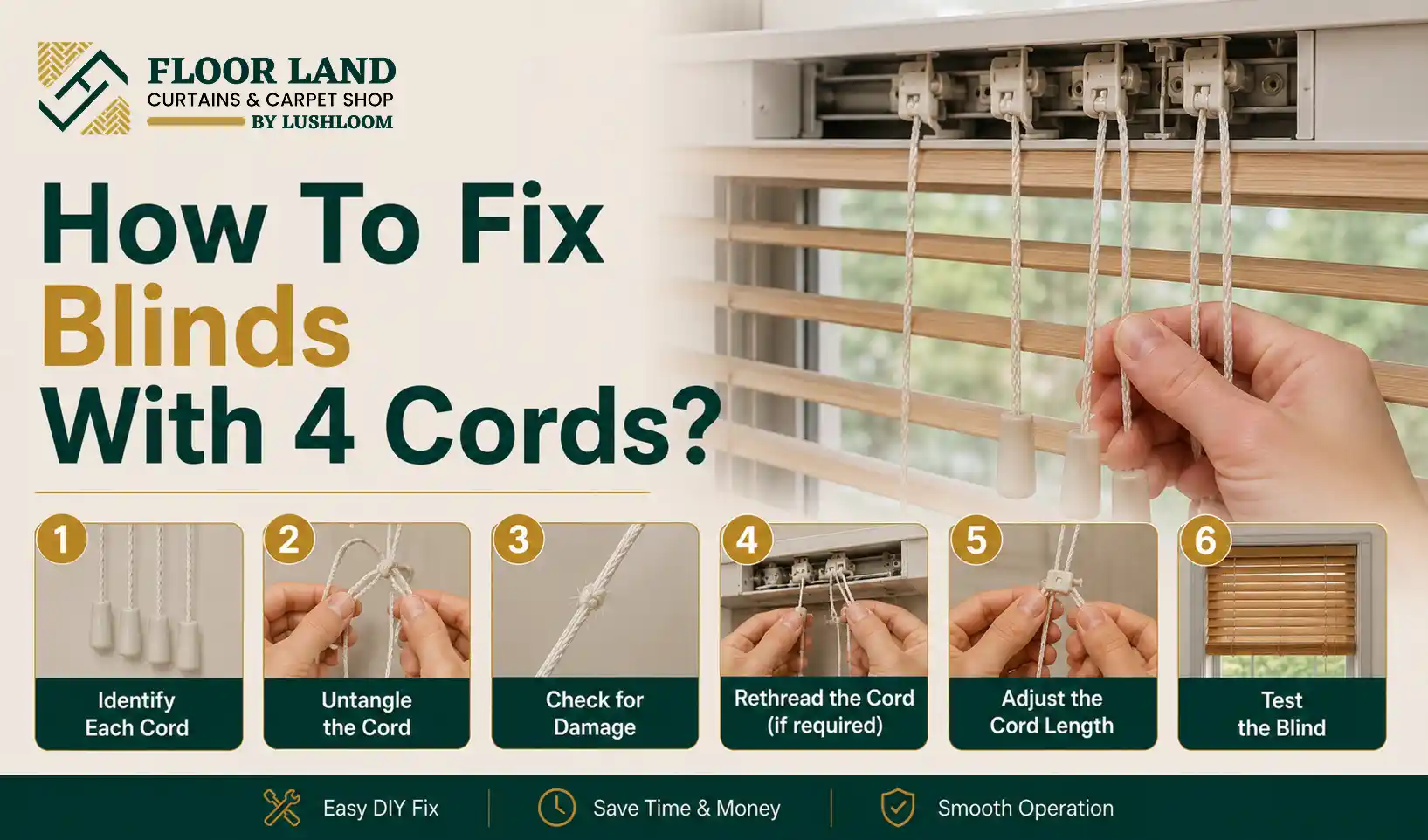
Fixing the blinds with 4 cords requires careful consideration.
- Identify Each Cord: Carefully identify the cords and determine what each does. Generally, two cords are used to raise or lower the blinds. The other two cords are used to control the tilt or support the lift system.
- Untangle the Cord: If you see any twisted or tangled cords, straighten them first.
- Check for Damage: This is the main step; you must inspect all four cords for knots and breaks. Replace any damaged or broken cord before using the window blinds.
- Rethread the Cord (if required): While inspecting the cord, if any of it comes out, thread it back through the headrail and bottom rail.
- Adjust the Cord Length: For the lift cord, the length of each cord must be the same for even raise and lower.
- Test the Blind: To check the functionality of the blinds, raise and lower them several times.
How to Repair Blind Cord?

Repairing a damaged blind cord is easy if you know the right way to do it.
Identify the Damage: Before repairing the cord, you must know the exact problem. Once you have analyzed the damage, you can follow the relevant repair method.
Fix the Frayed Cord: If some part of the cord is frayed, then you can cut it. Make sure to heat-seal the cut end to prevent further fraying.
Replace the Broken Cord: For the broken string, the only solution is replacement. The quick step to it is to tie the new cord to the end of the old one. Now slowly pull the broken cord while feeding the new cord through the same path.
Lubricate the Mechanism: To ensure smooth cord movement, apply a small amount of silicone spray inside the headrail. Never use oil-based lubricants, as they can attract more dust and cause jams.
Carefully Test the Cord: After repairing or replacing the damaged or broken string, check the blinds’ functionality. Now it must function smoothly.
Expert Tips to Prevent the Blind String in the Future
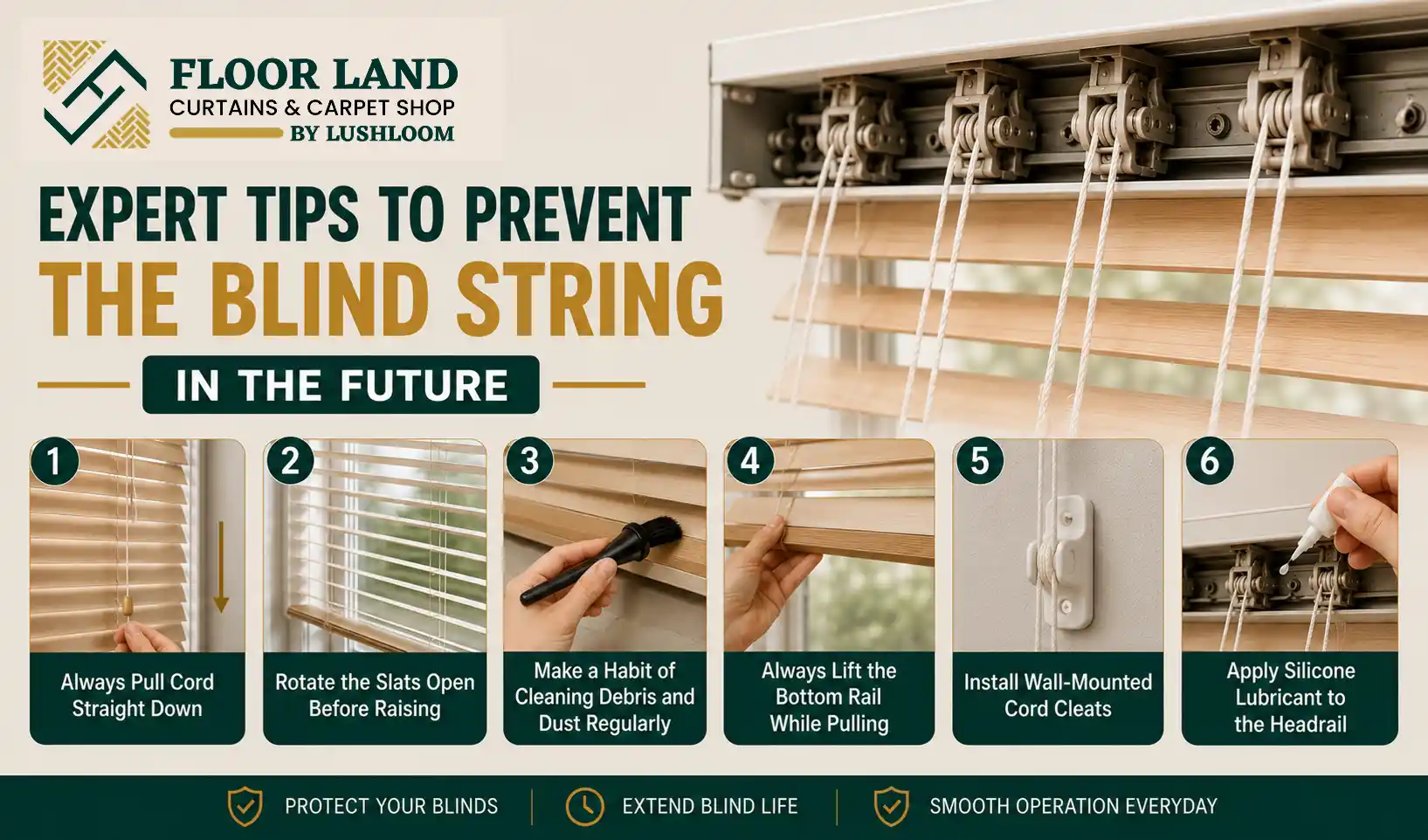
Prevention is always better than the cure. You can prevent your blind string from damage by following a few effective tips. This way, you can use them for longer.
1. Always Pull Cord Straight Down
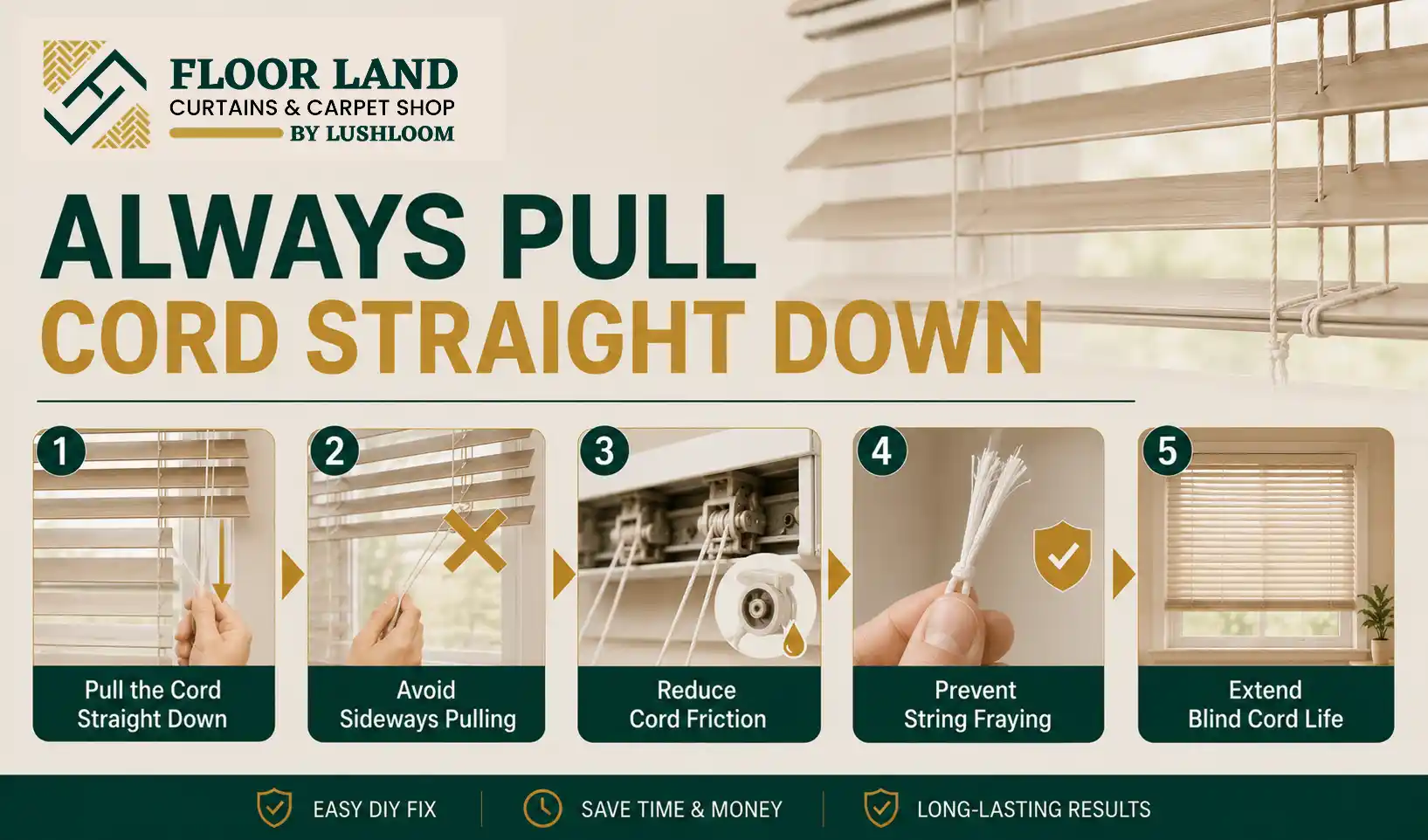
For better, longer-lasting functionality of the blind string, make sure to pull it straight down, without pulling sideways. If you pull it at any other angle, it can scrape against the sharp metal edges of the cord lock mechanism. This creates friction and can fray and snap.
2. Rotate the Slats Open Before Raising

Make sure your blind slats are fully horizontal before pulling them up. If the slats are closed and you try to raise the blinds, it can cause massive mechanical resistance. Ultimately, there will be uneven weight distribution and unnecessary tension on the strings and cord locks.
3. Make a Habit of Cleaning Debris and Dust Regularly

Regular dusting and cleaning of the blinds, headrails, and cords are the best way to prevent the cord from getting clogged. When dust, pet hair, and grease accumulate on the string, they can act like sandpaper on the internal gears. So every pull grinds the cord.
4. Always Lift the Bottom Rail While Pulling
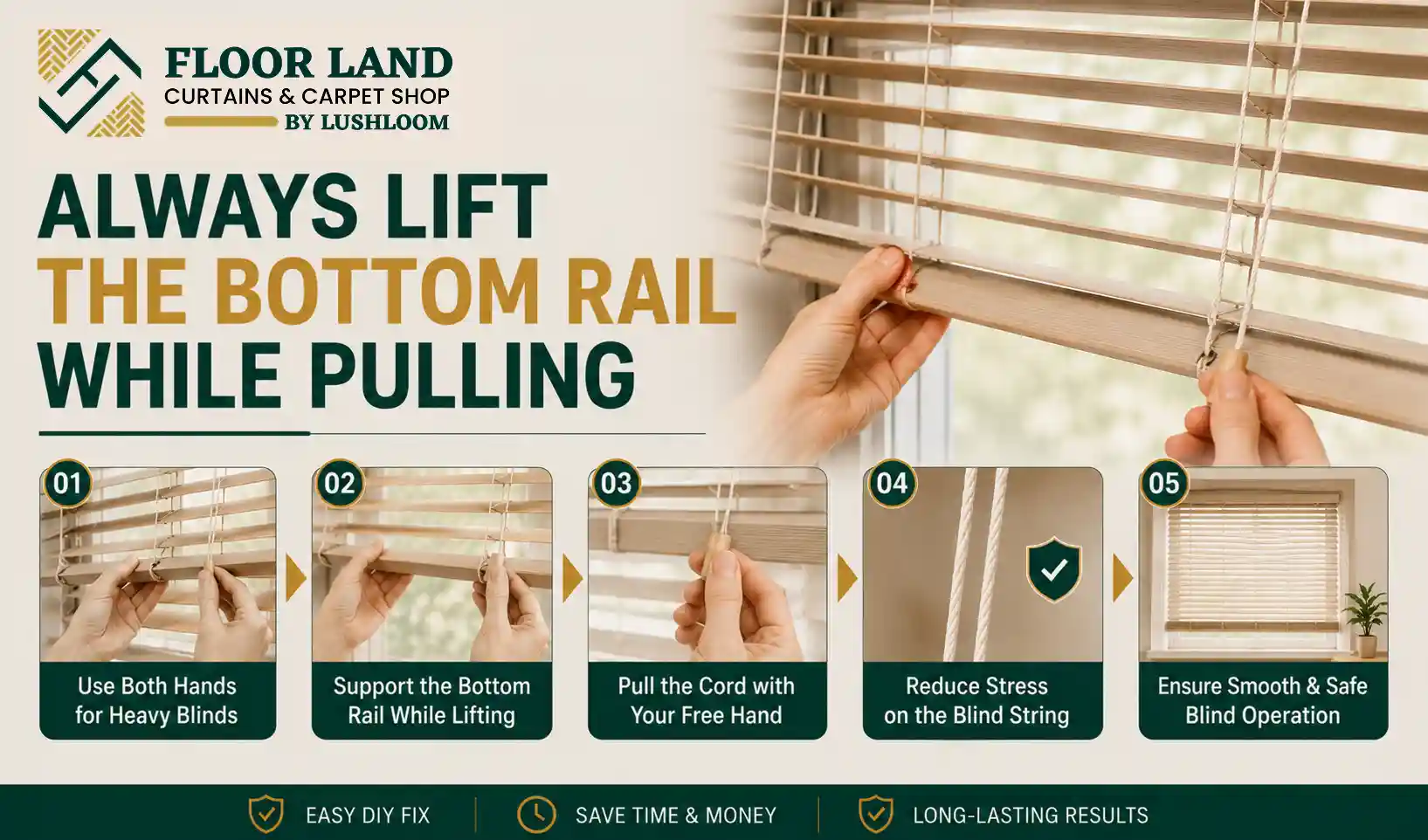
For the large, heavy blinds, you just use the two-handed technique. Use one hand to gently lift the bottom rail and pull the string down with your other hand. This way, there will be less weight burden on the delicate string.
5. Install Wall-Mounted Cord Cleats

Another best tip is to mount the plastic or metal cleat on the wall or window frame near the blind. You can wrap the excess string over it when you raise the blind. This way, there will be very few chances of the string being chewed by pets or caught in vacuum cleaners.
6. Apply Silicone Lubricant to the Headrail

For the long-lasting use of the blind string, make sure to spray dry silicone spray into the headrail gears and rollers. This way, the string requires less pulling force to operate. You can spray it once a year. Do not use WD-40 or any other oil-based lubricant, as they attract more dust and dirt.
Common Cause of Blind String Damage ( Breaking or Snapping)
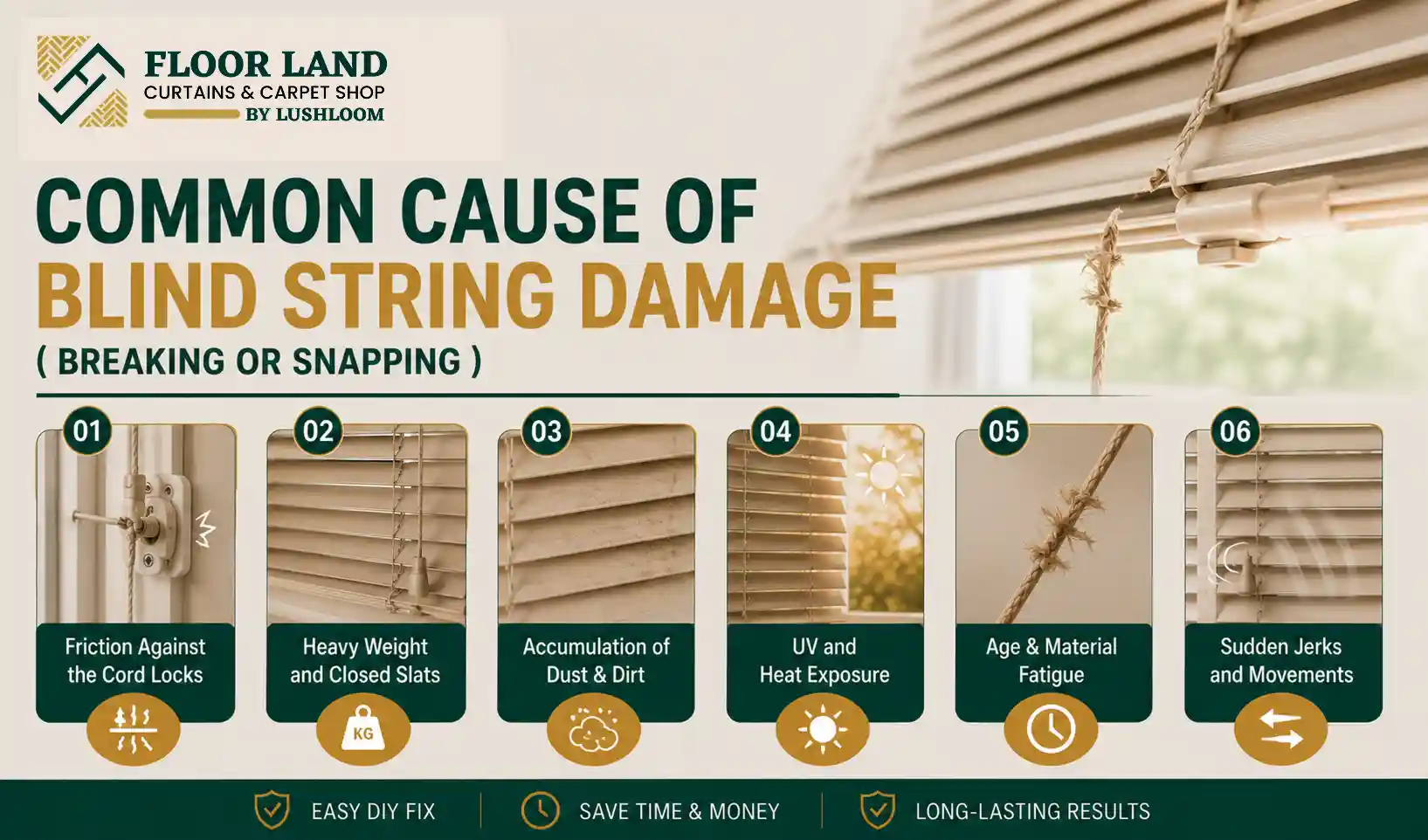
Understand some common reasons that can permanently damage the blind strings.
-
- Friction Against the Cord Locks: Constantly pulling the cord at an angle forces it to rub against the sharp metal teeth or edges of internal cord locks.
- Heavy Weight and Closed Slats: Raising the blinds with the slats tilted or closed creates heavy mechanical resistance. The internal strings are forced to lift the heavy weight and damage them.
- Accumulation of Dust & Dirt: When the blind or cord is not cleaned or dusted regularly, then grit, pet dander, and grease settle on the headrail and cord. This accumulated dust grinds against the fibers of the cords and permanently damages them.
- UV and Heat Exposure: Another major cause is prolonged and constant exposure of the string to direct sunlight. The heat of the sun can brittle the fiber and ultimately cause snapping or breakage.
- Age & Material Fatigue: Blind strings also experience material fatigue with prolonged use over years. Sometimes, low-density and cheap cord wears out faster.
DIY vs Professional Help for Fixing a Damaged Blind String
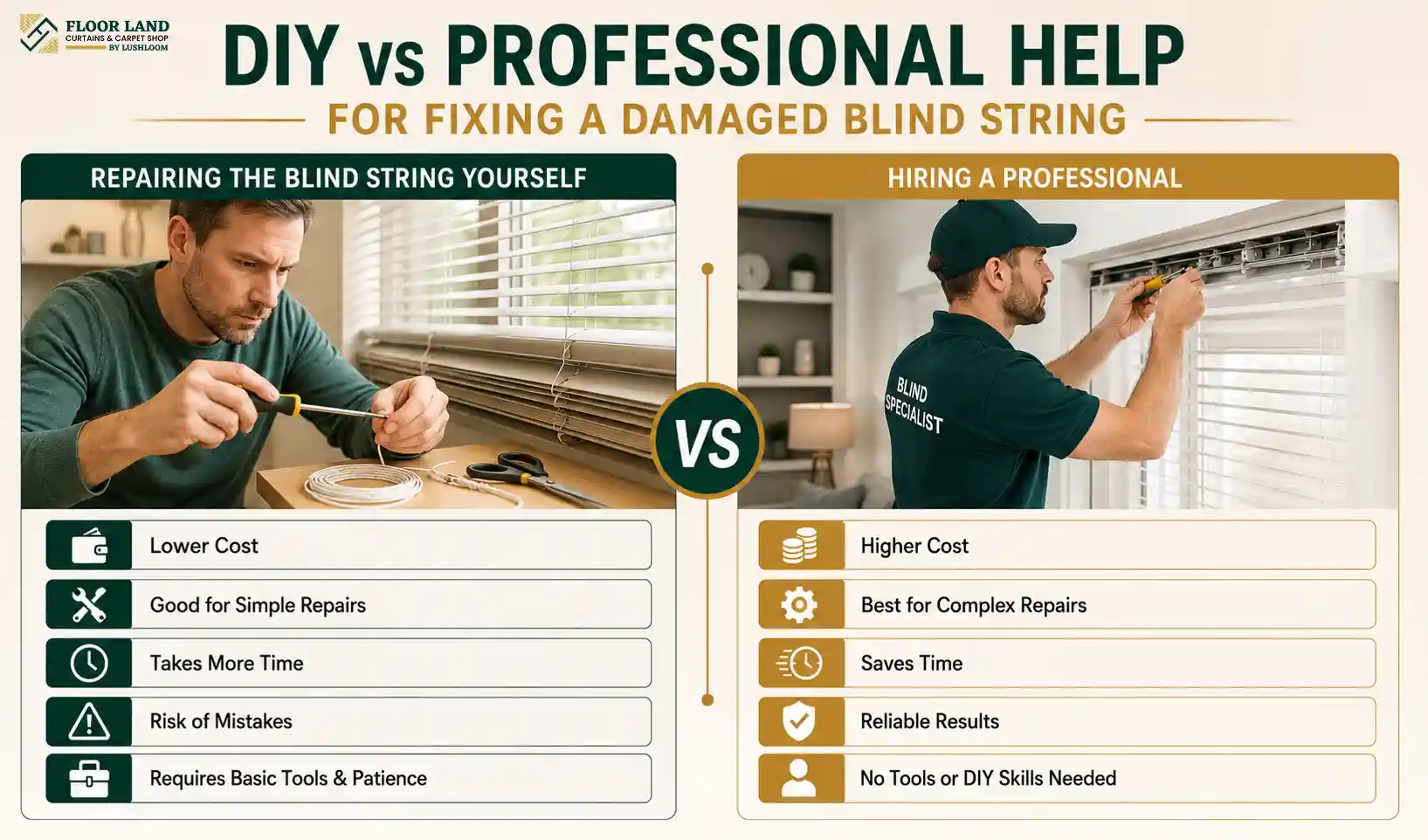
| Repairing the Blind String Yourself | Hiring a Professional |
|---|---|
| Lower Cost You only pay for a replacement cord and a few basic tools. |
Higher Cost Labor and replacement parts make professional repairs more expensive. |
| Good for Simple Repairs Ideal for fixing tangled, frayed, or single broken strings. |
Best for Complex Repairs Recommended for damaged cord locks, lift mechanisms, or multiple broken strings. |
| Takes More Time You may spend 30–60 minutes learning and completing the repair. |
Saves Time An experienced technician can diagnose and fix the issue much faster. |
| Risk of Mistakes Incorrect threading or uneven cord lengths can affect how the blinds operate. |
Reliable Results Professionals ensure the cords are installed and adjusted correctly. |
| Requires Basic Tools & Patience You'll need a replacement cord, scissors, and a screwdriver. |
No Tools or DIY Skills Needed The technician brings the right tools and handles the entire repair. |
Final Thoughts
Like every blind element, the blind string also needs care and replacement. To fix the blind string, you must understand the main problem and use the right tools and techniques. For corded hybrid blinds, you can seek help from a professional. To ensure the cord’s long-term functionality, choose materials like nylon and polyester. Also, make a habit of cleaning the cord and blinds regularly to keep them working fine. Avoid sudden jerking and extended UV exposure. Follow the steps and tips above to fix your blind string and keep it in pristine condition.
Frequently Asked Questions
Can I fix the string on the blinds?
Yes, you can definitely do this. The tools and equipment required for this process include a new blind cord, small screwdrivers, a lighter, and scissors. You need to be patient while fixing the string on the blinds.
How to rethread a blind string?
To rethread the blind string, you must determine whether it is broken or just frayed. If the cord is gently frayed, you can combine old and new cord by melting and rolling their ends. Now pull out the old cord and feed the new one into the blinds.
Can I restore my own blinds?
Yes, you can easily do it. First, remove the old blinds and take out the frayed cord. Now thread the new string that passes through the slats and headrail. It must be secure at the bottom. Make sure to perform these steps carefully and with patience for better outcomes.
How To Fix Roman Blind Strings That Won’t Roll Up?
To fix Roman blinds that won’t roll up, you have to take them down first. Now check the string; if you see any knots, then fix them. If the string is extremely damaged, you can simply replace it.