
Types of Canopy Roofing 2026: Materials, Styles & Best Uses
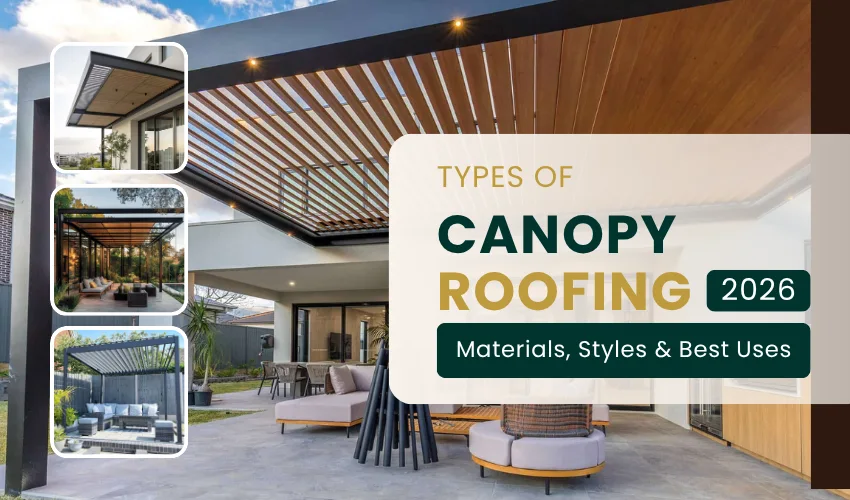
A canopy is an overhead roofing structure that offers weather protection, shade, and visual appeal. The common types of canopy roofing include polycarbonate, glass, metal, fabric, PVC, wooden, acrylic, fiberglass, tensile membrane, and retractable systems. Every space requires different canopy types to offer better functionality and aesthetic appeal.
Each type is different in cost, durability, light transmission, and weather resistance. This blog post by Floor Land explains the top 30 types of canopy roofing, including their structural design, materials, pros and cons. You will also get an idea of the lifespan and maintenance for each type.
Quick Comparison Table of Different Canopy Roofing
| # | Canopy Type | Category | Cost (per sq. ft.) | Waterproof |
|---|---|---|---|---|
| 1 | Polycarbonate | Fixed (Material) | $12–$40 | Yes (sealed) |
| 2 | Glass | Fixed (Material) | $40–$100 | Yes (sealed) |
| 3 | Metal | Fixed (Material) | $15–$50 | Yes |
| 4 | Aluminum | Fixed (Material) | $20–$60 | Yes |
| 5 | Wooden | Fixed (Material) | $25–$80 | With panels/shingles |
| 6 | PVC | Fixed (Material) | $8–$25 | Yes |
| 7 | Acrylic | Fixed (Material) | $18–$45 | Yes (sealed) |
| 8 | Fiberglass (GRP) | Fixed (Material) | $15–$40 | Yes (sealed joints) |
| 9 | Tensile Structure | Specialty / Modern | $25–$100+ | Yes (sealed membrane) |
| 10 | Solar Panel | Specialty / Modern | $35–$100+ | Yes |
| 11 | Pergola | Specialty / Modern | $20–$80+ | Depends on roof cover |
| 12 | Manual Retractable | Retractable | $15–$45 | Water-resistant |
| 13 | Motorized Retractable | Retractable | $25–$70* | Water-resistant |
| 14 | Sliding Roof | Retractable | $40–$120* | Yes (sealed) |
| 15 | Louvered Roof | Retractable | $50–$150+ | Yes (louvers closed) |
| 16 | Flat Roof | Shape | $15–$80+ | Depends on material |
| 17 | Lean-To (Mono-Pitch) | Shape | $15–$70+ | Yes |
| 18 | Gable | Shape | $20–$80+ | Yes |
| 19 | Hip & Pyramid | Shape | $25–$90+ | Yes (with flashing) |
| 20 | Curved / Arched | Shape | $25–$100+ | Yes (sealed) |
| 21 | Dome | Shape | $30–$120+ | Yes |
| 22 | Barrel Vault | Shape | $30–$100+ | Yes |
| 23 | Cantilever | Shape | $25–$90+ | Yes |
| 24 | Corrugated Sheet | Shape / Profile | $8–$45+ | Yes (sealed fasteners) |
| 25 | PVC-Coated Polyester | Fabric / Membrane | $15–$45 | Yes (heat-welded seams) |
| 26 | Canvas | Fabric / Membrane | $10–$35 | Water-resistant only |
| 27 | HDPE Shade Fabric | Fabric / Membrane | $8–$25 | No |
| 28 | PTFE Membrane | Fabric / Membrane | $40–$120+* | Yes |
| 29 | ETFE Cushion | Fabric / Membrane | $50–$150+ | Yes |
| 30 | Shade Sail | Fabric / Membrane | $8–$30 | No |
Fixed Canopy Roofing Types ( By Materials)
These are immovable, overhead shelters that provide weather protection and shade. Check the most common types of these canopies.
1. Polycarbonate Canopy Roofing
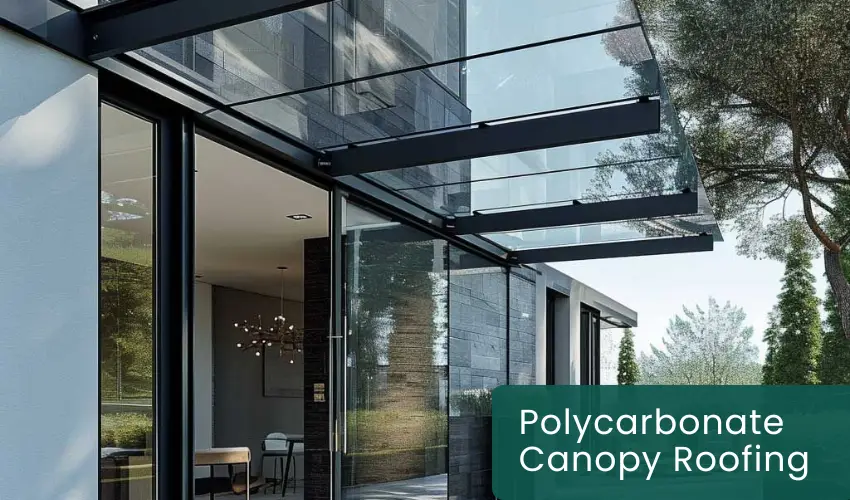
This canopy roofing is manufactured from a durable polycarbonate sheet and is further supported by a metal frame (aluminum or galvanized steel). This permanent overhead shelter resists impact and offers protection against harsh weather conditions, specifically UV rays. These canopies are available in different roof designs, including lean-to, flat, dome, or curved. You can achieve full waterproofing with these roofs by properly sealing and installing them.
- Best used on patios, balconies, garden seating, entrances, cafes, and pool covers
- It can be easily scratched and offers moderate noise insulation. Temperature fluctuations can cause these overhead shelters to expand and contract.
- When protected with UV-protected panels, they can last for 15-25 years.
- Require minimal cleaning with mild soap and water.
- The average cost is USD $12–$40 per square foot
2. Glass Canopy Roofing
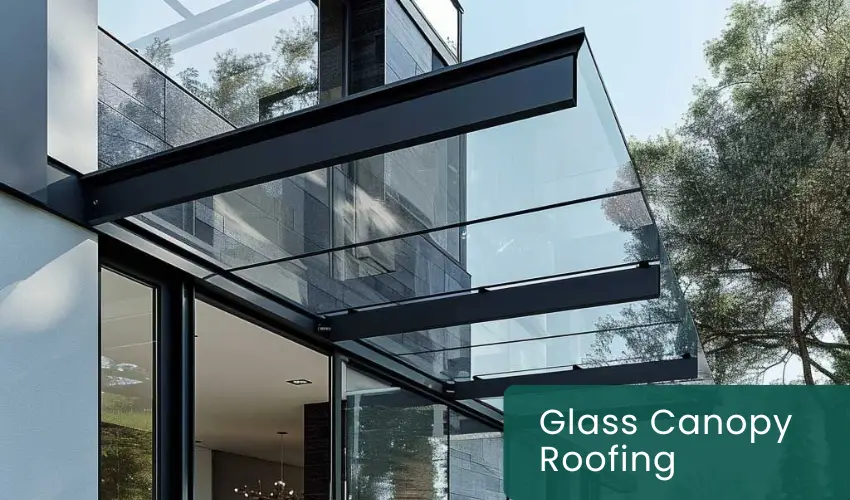
This roofing is manufactured from high-quality tempered or laminate safety glass with aluminum and stainless steel framing. These overhead shelters are commonly used at building entrances, terraces, balconies, patios, and storefronts. The elegant appearance of these canopies enhances aesthetic appeal. Glass roofing is the best option for light transmission and UV resistance. Before installing this roofing, always remember that this roofing is a bit heavier than polycarbonate and requires strong structural support. With proper care, these canopies can easily last for 30-40 years.
- You can get this roofing in flat, sloped, or frameless designs.
- These overhead shelters can be fully waterproof when properly installed and sealed.
- Requires higher installation cost and frequent cleaning.
- On average, glass canopy roofing can cost around USD $40–$100 per sq. ft
3. Metal Canopy Roofing
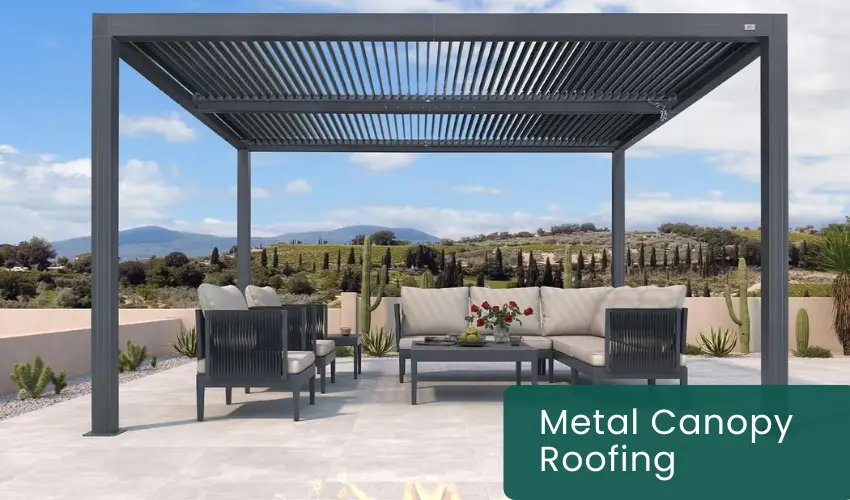
Metal canopy roofing is manufactured from galvanized steel, zinc, aluminum, or corrugated metal sheets. This is commonly installed in carports, warehouses, loading bays, entrances, and walkways. Metal overhead shelters are available in gable, curved, sloped, and flat styles. Some low-quality metal roofing requires corrosion protection when installed in coastal areas. The average lifespan of these shelters is around 40-70 years, depending on the types of metals being used.
- Can be noisy in heavy rains and storms
- Metal roofing can cost around USD $15–$50 per sq. ft., depending on metal type.
- These overhead shelters are fire- and weather-resistant.
- Require low maintenance and occasional inspection
4. Aluminum Canopy Roofing
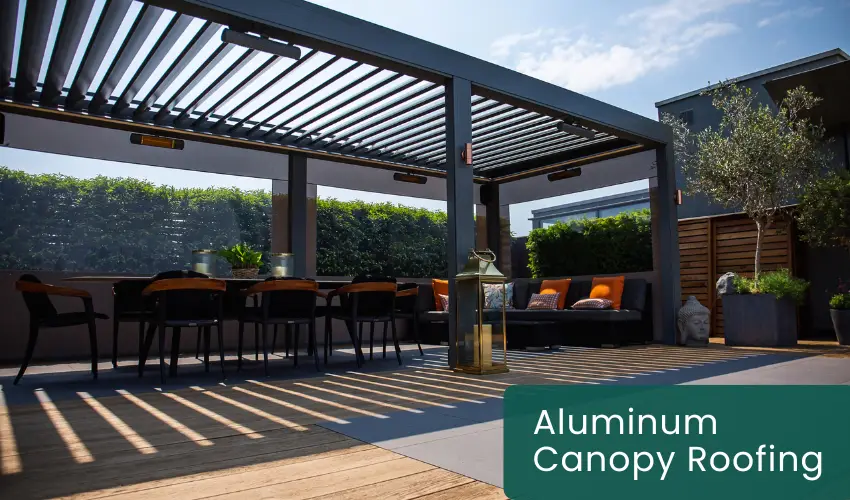
Aluminum canopy is manufactured from anodized aluminum panels that are supported by aluminum frames. It is available in louvered, curved, sloped, and flat designs. You can also customize the design as per your liking. This canopy roofing is comparatively easy to install as it is lightweight. Another plus point is that it is waterproof due to proper joints, flashing, and drainage. Aluminum roofing is rust-resistant, recyclable, and requires very low maintenance. If you want a long-term overhead shelter solution, go with this roofing.
- The upfront cost is high.
- Best to be installed on patios, balconies, walkways, and pergolas.
- The aluminum canopy with high-end finishes can function well for 30-50 years on average.
- This canopy costs around USD $20–$60 per sq. ft. depending on the finish and design.
5. Wooden Canopy Roofing
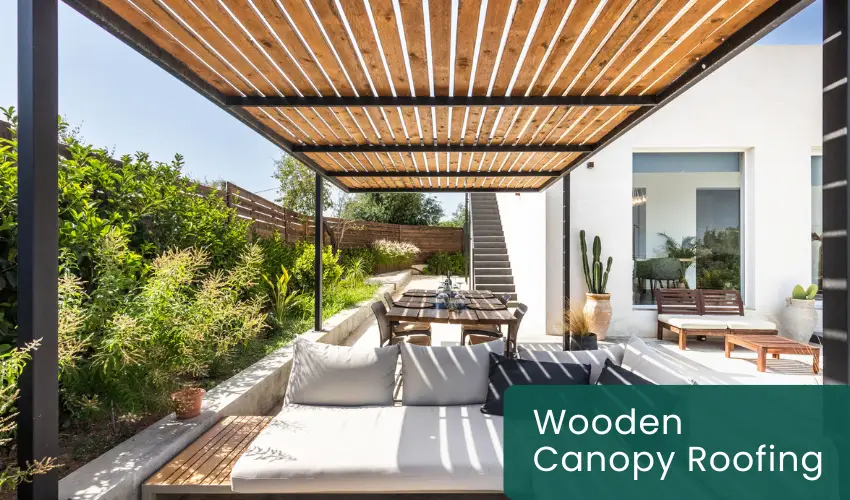
This traditional wooden structure is built with treated wood and engineered timber. It is fitted with polycarbonate, metal, glass, or shingles. Depending on the material being used, the weight of this roofing varies from moderate to heavy. It can become waterproof when combined with roofing panels, shingles, or metal sheets. Areas like patios, decks, exterior dining areas, porches, and gazebos are the most ideal for these overhead shelters. If you want to achieve a natural aesthetic and an improved outdoor ambiance, you must install these canopies.
- Requires regular sealing or staining to keep it looking fresh.
- Can easily last for 20-40 years with careful cleaning and maintenance
- Periodic sealing and inspection are required
- These canopies are somewhat affordable, costing around USD $25–$80 per sq. ft
6. PVC Canopy Roofing
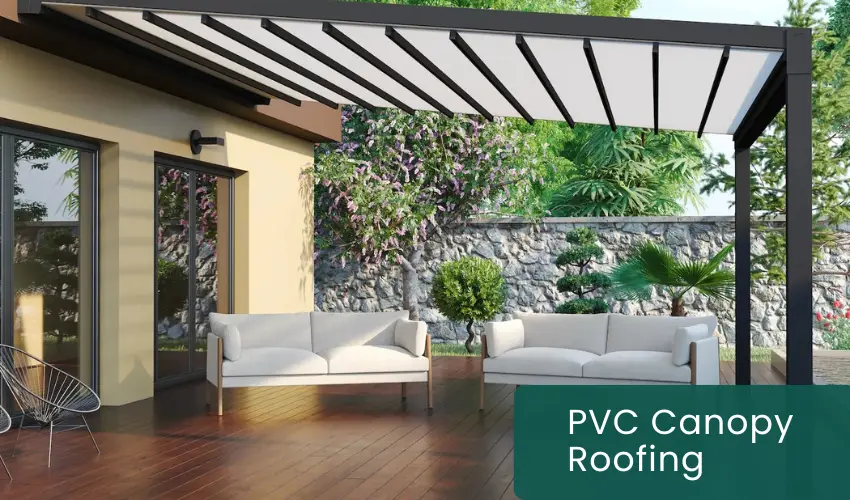
If you are looking for an affordable alternative to polycarbonate canopies, then try these PVC overhead shelters. They are manufactured from rigid and flexible PVC sheets, supported by aluminum and steel frames. These canopies are resistant to corrosion, moisture, and chemicals. PVC roofing works best on patios, walkways, cafes, gardens, shelters, and walkways. Many homeowners also pair these structures with artificial grass or SPC flooring to create a durable, low-maintenance outdoor living space. If the PVC used for canopies is not UV-stabilized, it may discolor or become brittle under prolonged UV exposure.
- Available in different roofing styles, including lean-to, flat, curved, and custom configurations.
- Average cost for a PVC canopy is $8–$25 per sq. ft. (installed)
- Easily last for 10-20 years, depending on the PVC type and environmental conditions
- Occasional washing with water and soap is enough to keep it clean
7. Acrylic Canopy Roofing
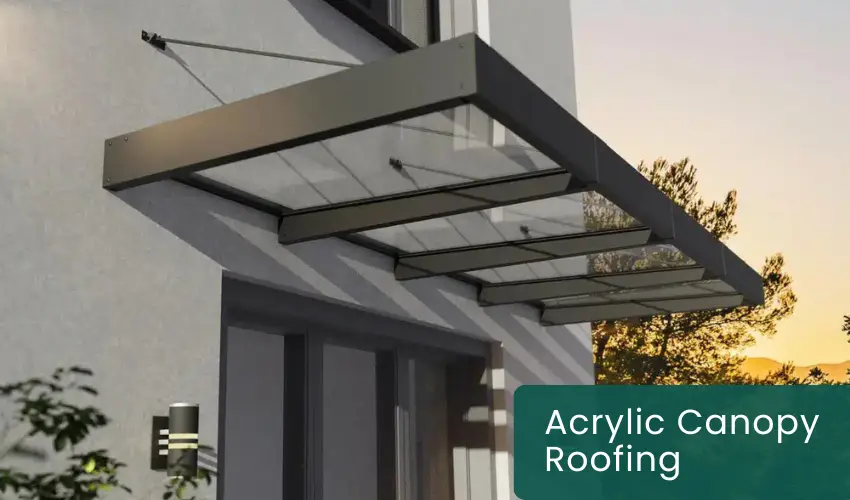
Acrylic overhead shelters are made from clear acrylic (PMMA) sheets, known for offering excellent optical clarity and weather resistance. Don’t think of it as polycarbonate roofing, as acrylic offers better transparency and gloss retention. Aluminum and steel are being used for the supporting frame. These components are most commonly used at patios, balconies, skylights, and entrances of residential and commercial spaces. High-quality acrylics resist yellowing and easily last for 20-30 years when paired with UV-stabilized sheets.
- The average cost for acrylic canopies is USD $18–$45 per sq. ft. (installed)
- Choose roof styles like flat, curved, arched, and dome
- It has lower impact resistance than polycarbonate
- High chances of cracking under heavy impact
8. Fiberglass (GRP) Canopy Roofing
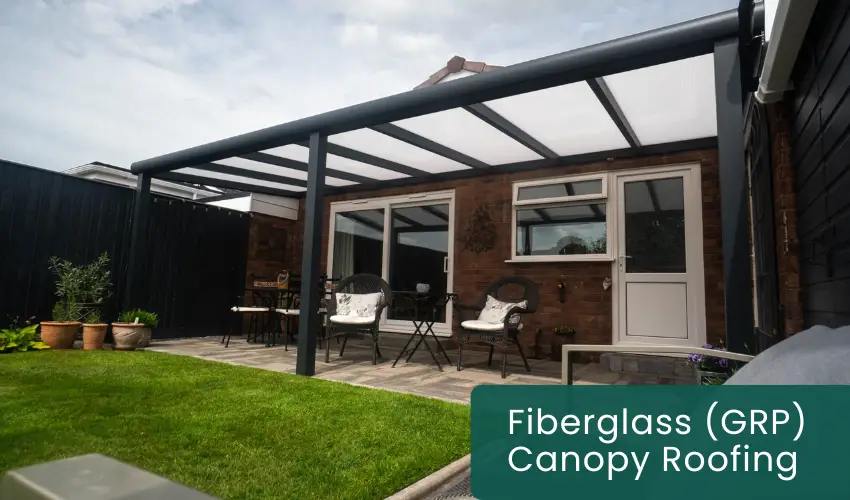
Fiberglass canopies are manufactured from Glass-reinforced plastic (GRP) panels with polyester or epoxy resin. Normally, the cost of these canopies is USD $15–$40 per sq. ft. (installed), depending on panel thickness, structural designs, and finishes. The prominent features of this roofing are its corrosion resistance, high strength, and weather resistance. Besides, due to its easy cleaning and maintenance, it is widely used throughout the world. For improved exterior aesthetics, get these canopies in custom-molded designs. The standard styles are arched, curved, flat, and corrugated.
- With the help of properly sealed joints, a fiberglass canopy is completely waterproof.
- Mostly used in walkways, patios, factories, parking, agricultural buildings, and coastal areas.
- Offers lower transparency than glass or acrylic canopies
- Easily last for 20 to 30 years with moderate level maintenance
Specialty & Modern Canopy Roofing Types
Beyond the traditional materials, many modern canopies and special canopies are also available. They have improved functionality, better energy efficiency, and durability.
1. Tensile Canopy Structure
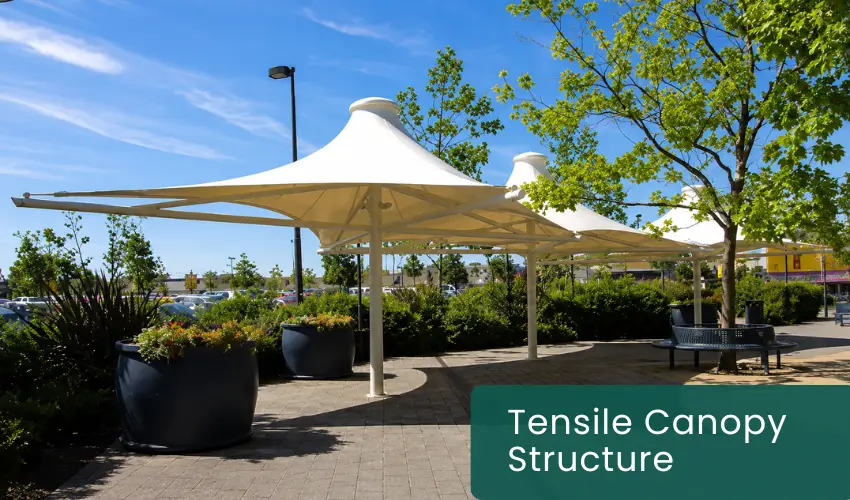
This roofing system uses tensioned membranes made from PTFE, ETFE, HDPE, or PVC-coated fabric. It is supported by steel cables and structural frames in addition to the rigid roofing system. These canopies mostly exist in cone, arch, saddle, or wave designs. They are much lighter than the standard roofing system. You can observe these canopies mostly in airports, shopping malls, event venues, and stadiums.
This system can be fully waterproof if designed with best-quality tensioned, sealed membrane materials. There are many advantages of these canopies, including modern appearance, quick installation, design flexibility, and lightweight construction. Above all, this system covers a large area without interior columns.
- Requires high engineering and installation costs
- These canopies require membrane cleaning to function well.
- The average cost of this system is USD $25–$100+ per sq. ft.
- Last about 20 to 35 years very easily by following the maintenance guide by the manufacturer.
2. Solar Panel Canopy
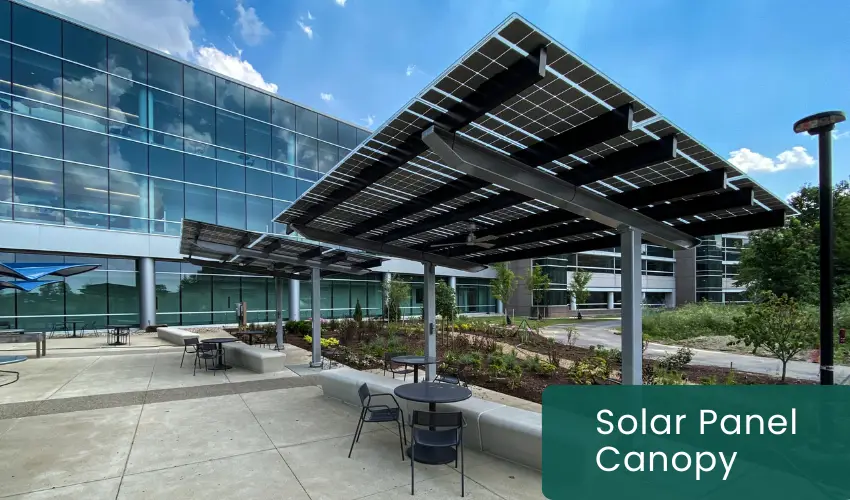
A solar panel canopy is a roofing structure that is integrated with photovoltaic panels. This roofing provides shade and weather protection and generates electricity. To provide support, an aluminum and galvanized steel frame is used. Generally, solar canopies are a bit heavier than conventional canopies. When we talk about design styles, they are available in sloped, flat, and cantilevered forms. The solar panels above the canopy can easily last for over 25 to 30 years. The supporting system can even function well for an extended period. The most suitable places for these canopies are parking lots, carports, walkways, schools, and commercial entrances. The price of these overhead shade structures is around USD $35–$100+ per sq. ft. (installed).
- This roofing system is fully waterproof. There is proper flashing and a drainage system.
- Reduce energy bills by generating electricity with very low carbon emissions.
- The upfront cost of this roofing is high and requires professional installation to ensure proper electricity production.
- Must perform periodic cleaning and electricity inspection.
3. Pergola Canopy Roof
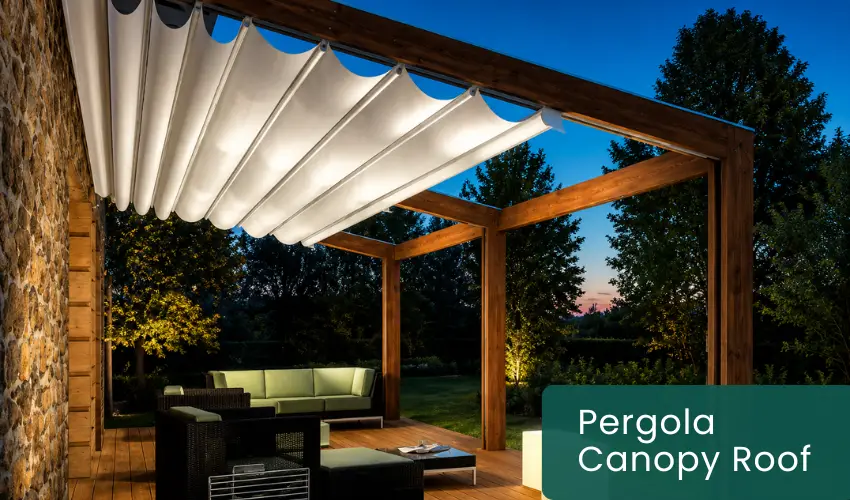
Another modern overhead shade type is pergola canopy roofing. It comprises vertical posts and overhead beams. These beams are covered with best-quality fabrics, polycarbonate panels, glass, and louvered roof options. The per-square-foot cost of these canopy roofs is USD $20–$80+. Pergola canopy available in different design profiles, including louvered, flat, slatted, and retractable. Restaurants, cafés, and retail spaces often pair modern canopies with LVT flooring to create attractive, easy-to-maintain customer areas. Pergola roofs have low- to moderate-weight options, depending on the frame and roof materials. If the roof is made of fabric, it is water-resistant. For complete waterproofing, choose polycarbonate, glass, or a louvered system.
- Offer limited weather protection and shade
- Suitable for use on patios, decks, terraces, outdoor dining areas, and cafes.
- Available in different designs and colors, this roofing system improves the aesthetics of outdoor spaces. You can get it in a retractable or adjustable roof system.
- The expected life of these canopies is 15-30 years, depending on the frame materials or roof covering.
Retractable & Adjustable Canopy Roofing Types
We have listed the top 4 types of retractable or adjustable roofing systems. These canopies are both functional and aesthetically pleasing.
1. Manual Retractable Canopy
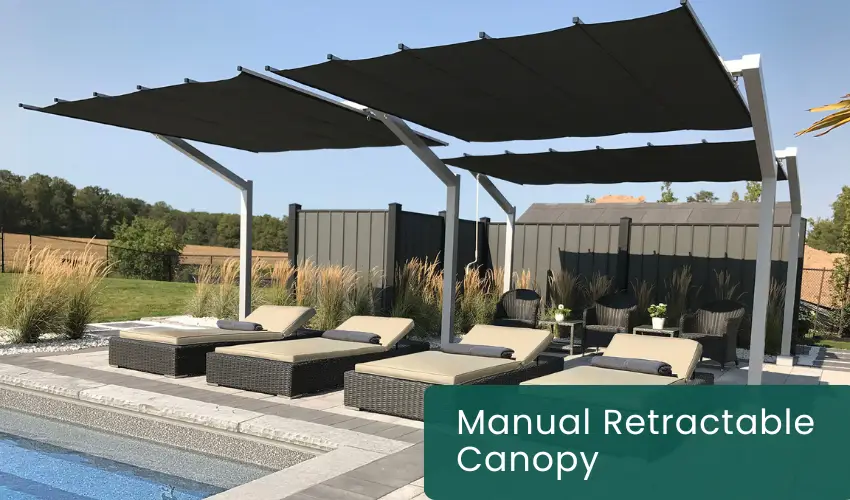
This retractable manual canopy is operated by a hand-crank-and-pull mechanism. For the canopy, acrylic, polyester, or PVC-coated fabrics are usually used. The supporting frame is designed with aluminum and steel, which are the best options. There is no use of electricity for operating this roofing system. The roof is made from the best-quality frame and canopy fabrics, which can easily last 10-20 years.
- Use this roofing system in balconies, decks, cafes, and shopfronts.
- These are cost-effective solutions, available for $15–$45 per sq. ft.
2. Motorized Retractable Canopy
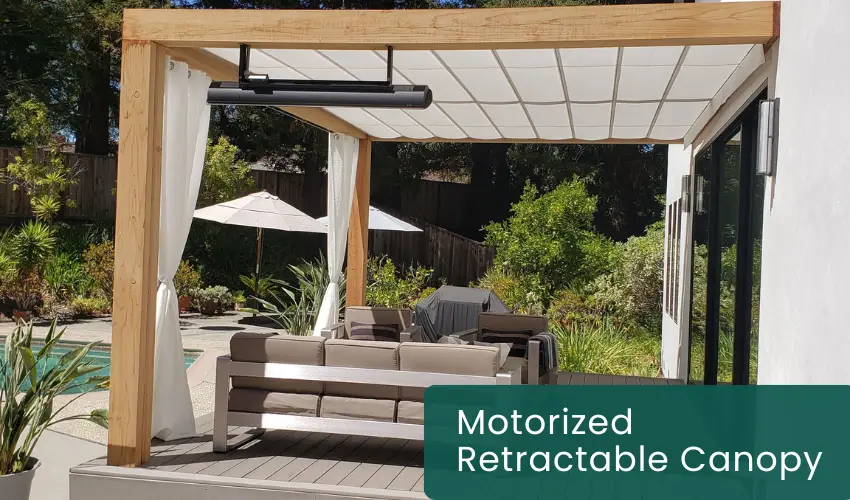
A motorized canopy includes an electric motor controlled by a remote, a wall switch, and a smart home system. The canopy is made from high-quality fabrics, and the frame is made of steel and aluminum. These smart overhead shades are generally installed in cafes, hotels, pool areas, and terraces. On average, these canopies can last 15 to 25 years with maintenance and periodic inspections of motors, sensors, and moving parts.
- One-touch operation and compatibility with smart home systems
- Comes with window or rain sensors
- Requires a power supply to operate.
3. Sliding Roof Canopy
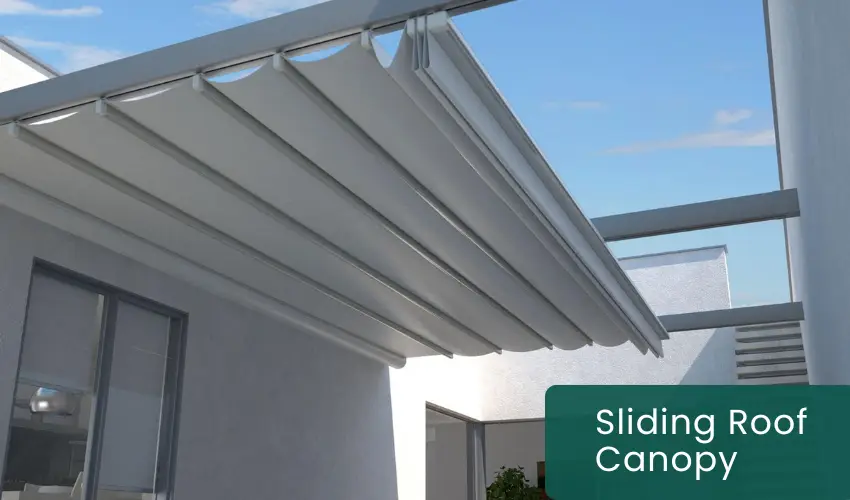
This is the movable roofing system that can include panels. These panels slide horizontally on the track for easy opening and closing. This canopy is fully waterproof when completely sealed. You can get maximum ventilation and adjustable coverage from this canopy system. Terraces, patios, restaurants, and pool enclosures are the best spaces to use this canopy roof.
- The average lifespan of these canopies is around 20 to 30 years without showing signs of wear.
- You need to clean the tracks and lubricate the moving parts for proper functioning of sliding roof canopies.
4. Louvered Roof Canopy
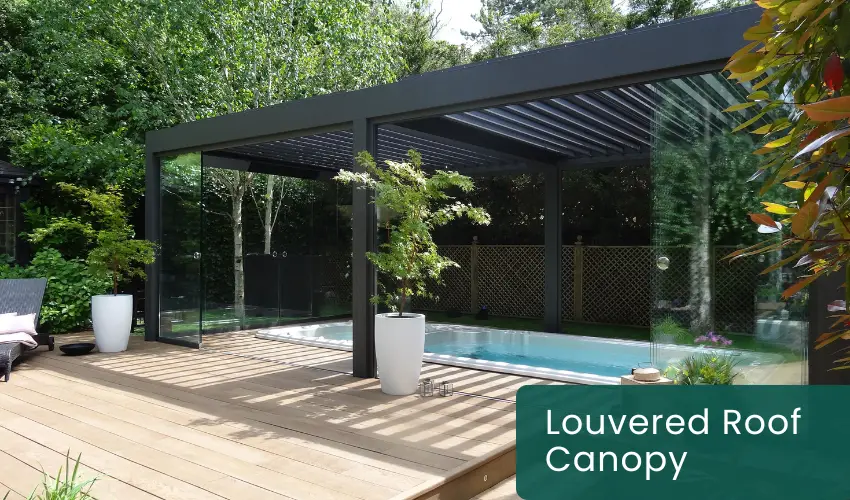
Louvered roof canopies feature rotating slats to control sunlight, ventilation, and rain protection. These are designed from powder-coated aluminum. When we talk about the design option, it comes with a flat roof with horizontal louvers. They can easily rotate by 150–180° depending on the system used.
- It is fully waterproof when the louvers are fully closed. With the integrated drainage systems, these canopies do not cause water pooling.
- The average cost is about USD $50–$150+ per sq. ft.
- Lounges, rooftop terraces, cafes, and hotels are the ideal places for these canopy roofs.
Architectural Canopy Roof
Now learn about the architectural canopy roof based on its shapes. You can choose the shape and design the canopy in your desired materials.
1. Flat Canopy Roof
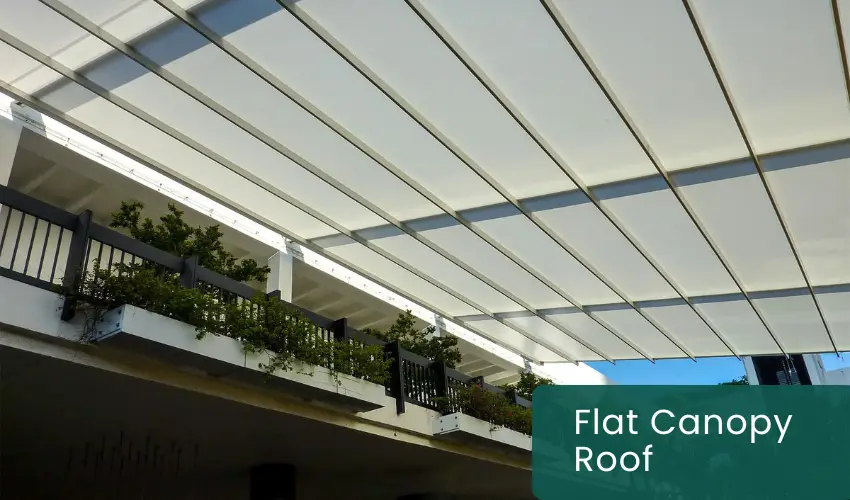
This canopy roof has a nearly level profile for a modern appearance. You can customize the canopy with metal, glass, polycarbonate, acrylic, PVC, and fabric options. To provide support, aluminum and steel are used.
2. Lean-To (Mono-Pitch) Canopy Roof
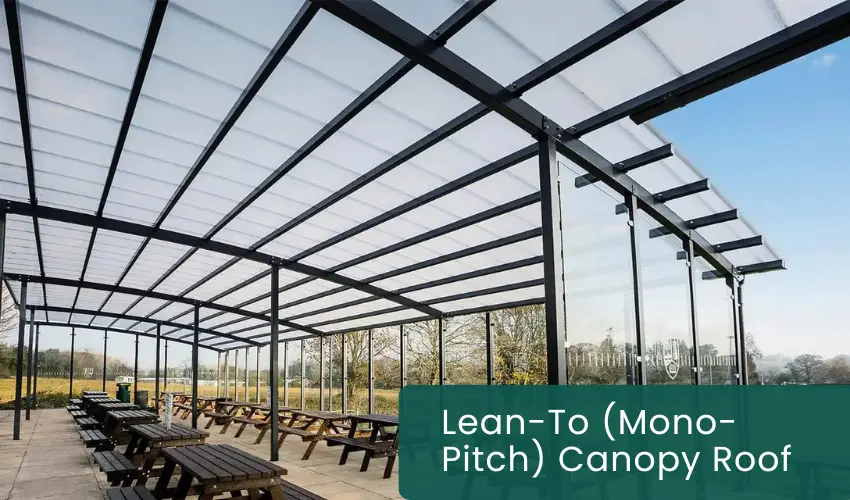
This is a single-slope roofing structure attached to an existing building on one side. The other side of the canopy is supported by posts and brackets. Ideal places to install these canopy roofs are walkways, carports, and shopfronts.
3. Gable Canopy Roof
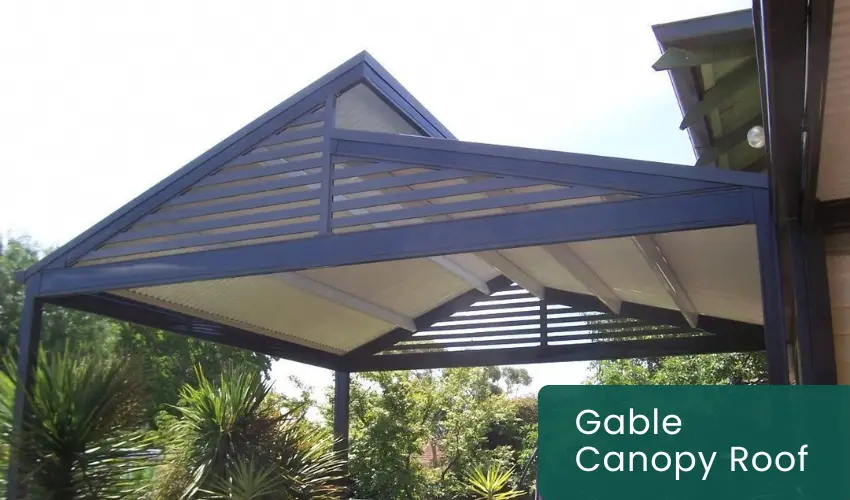
It features two sloping roof sections that meet at the central ridge, creating a triangular profile. This design helps with proper drainage of rainwater and improves ventilation. A gable canopy is best for both residential and commercial spaces.
4. Hip & Pyramid Canopy Roof
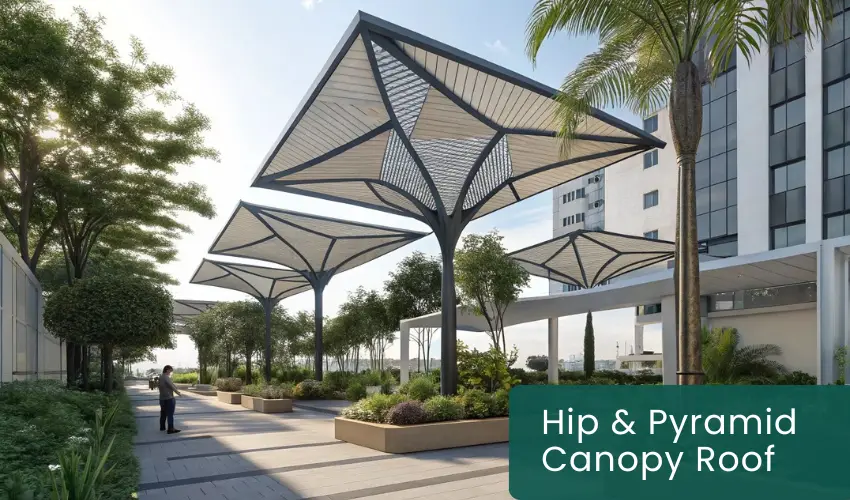
A hip canopy roof has four sloping sides that easily meet at a ridge. Meanwhile, a pyramid roof has four equal slopes that converge at a central peak. These are fully waterproof with proper flashing, ridge detailing, and drainage.
5. Curved / Arched Canopy Roof
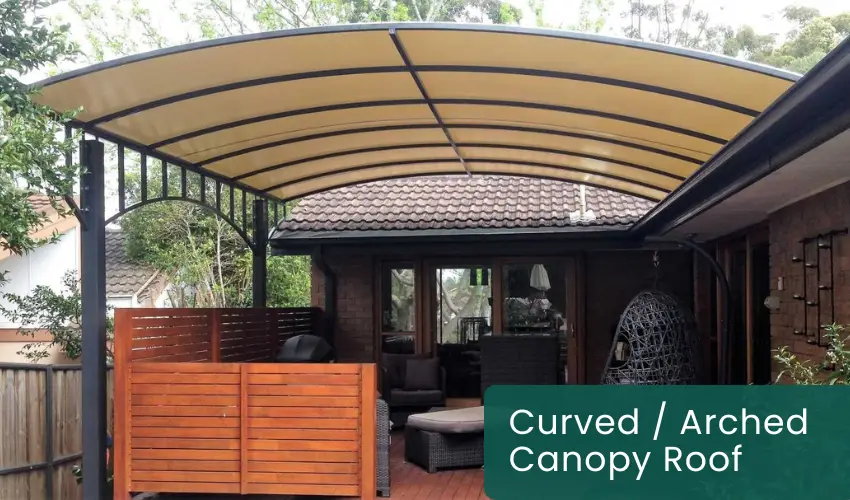
This canopy roof features a curved profile, improving water runoff. This is constructed from flexible materials, glass, and a tensile membrane supported by aluminum and steel frames. It is fully waterproof when properly sealed and drained.
6. Dome Canopy Roof
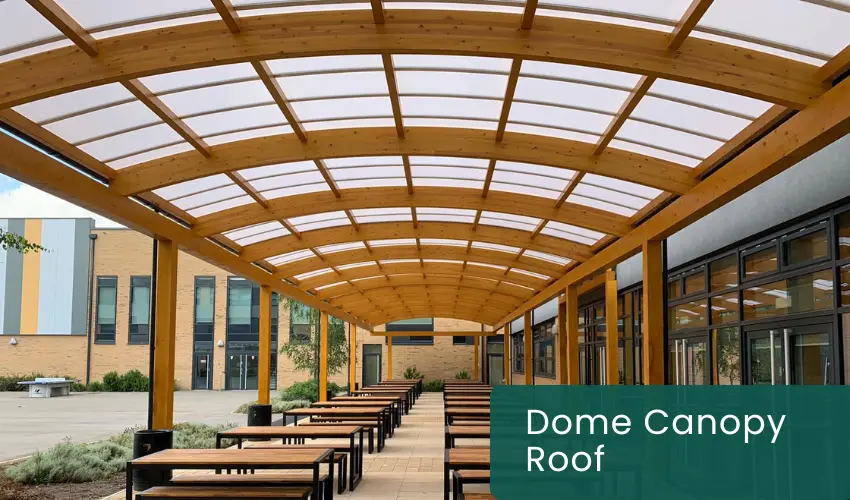
This canopy features a rounded, hemispherical, or polygonal shape. It distributes the structural load and offers excellent weather protection. Gazebos, atriums, skylights, shopping malls, and hotels are suitable places to use these canopies.
7. Barrel Vault Canopy Roof
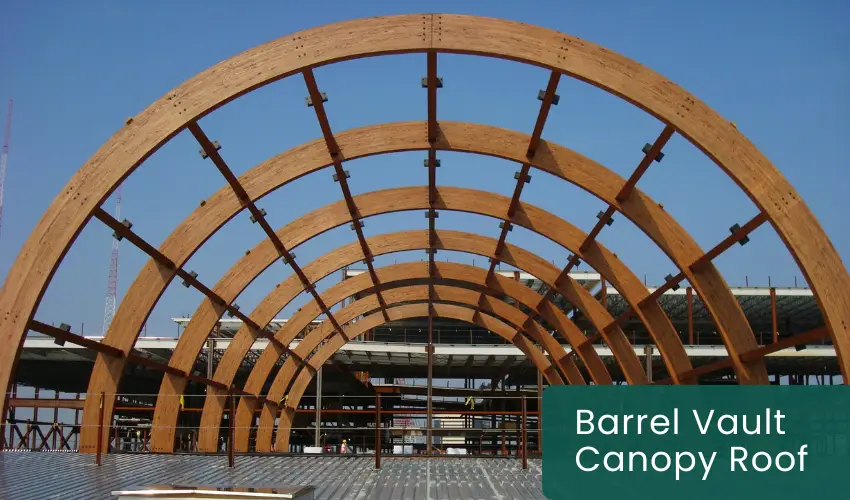
This roofing system features a semi-cylindrical arch that spans the supports. It creates a tunnel-like profile. This canopy roof offers high structural efficiency and excellent rainwater runoff. A barrel vault roof is more expensive than lean-to canopies.
8. Cantilever Canopy Roof
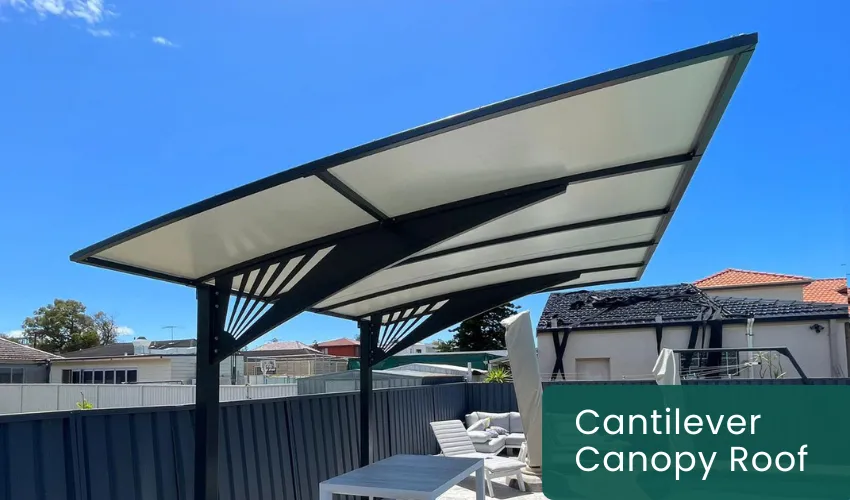
It is supported from one side only, that is, projected outwards without front columns. A cantilever roof is best installed in walkways, loading areas, balconies, and parking bays. These canopies effectively use the space and are suitable for high-traffic spaces.
9. Corrugated Sheet Canopy (Profile)
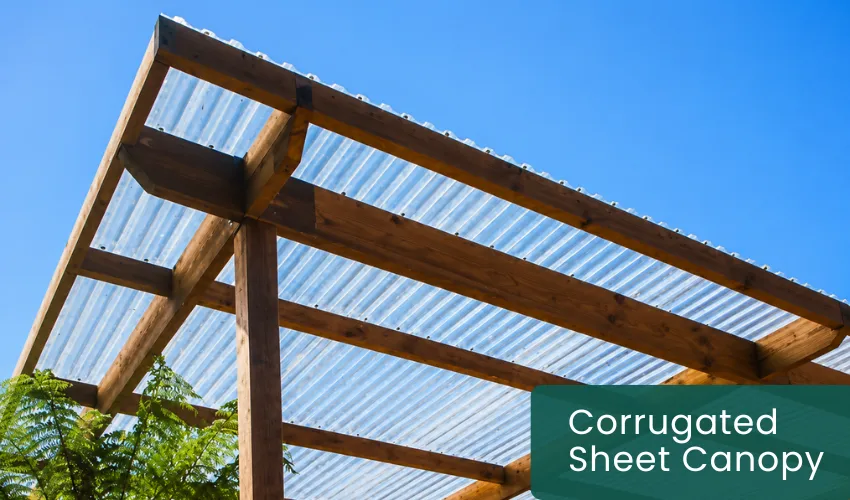
Corrugated roofing is designed with galvanized steel, aluminum, polycarbonate, fiberglass (GRP), or PVC panels with wave-shaped profiles. This improves its strength and weather-drainage capacity. These overhead shelters are commonly installed in curved or sloped frames. To make them completely waterproof, the sheets and fasteners are properly sealed. The most suitable places for this canopy are sheds, warehouses, walkways, outdoor storage areas, and agricultural buildings. Corrugated canopies have a strong profile and are very easy to install. It is available in multiple materials so you can easily choose the best option as per your space requirements and needs.
Fabric & Membrane Canopy Roofing Types
There are 6 main types of fabric and membrane canopy that are widely used these days. Take a look at these types:
1. PVC-Coated Polyester Fabric Canopy
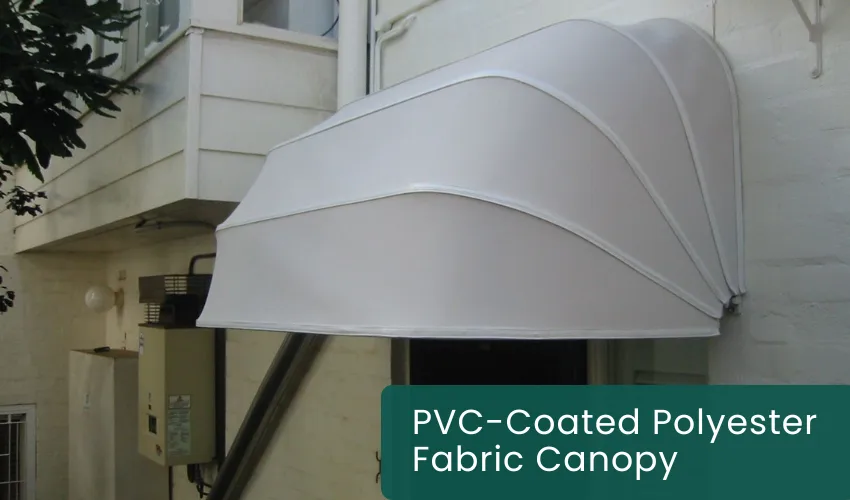
This is a very lightweight membrane roofing system. It is made by coating woven polyester fabric with PVC. The design profile for these canopies includes tensile, curved, wave, saddle, and retractable. To make this roofing completely waterproof, heat-welded seams and proper installation are required. These canopies can fade and need replacement in harsh weather conditions.
- Best for car park shades, patios, restaurants, cafes and schools
- These canopies can last for 15 to 25 years if a proper care routine is being followed.
- PVC-coated polyester canopies are available at USD $15–$45 per sq. ft.
2. Canvas Canopy
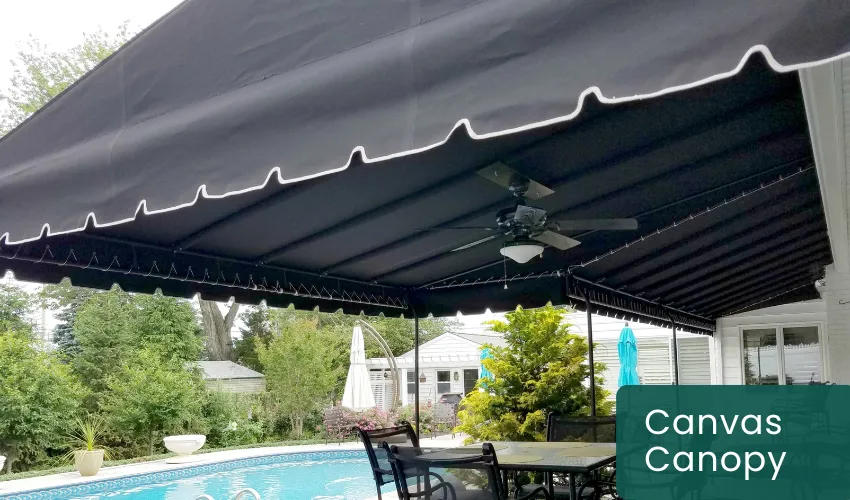
This is the fabric-covered shelter that offers mild weather protection and shade in outdoor spaces. The commonly used fabrics for these canopies are treated cotton, polyester, and other synthetic fabrics. These fabrics are treated with water- and UV-resistant coatings to make them suitable for residential and commercial use. Canvas canopies are available in different design styles, including fixed, retractable, freestanding, and pergola style. They are less durable and long-lasting than the rigid roofing materials. 8-15 years is the average lifespan, and they are available at USD $10–$35 per sq. ft.
- These canopies fade over time and need to be replaced.
- Not recommended for areas with very harsh weather conditions.
3. HDPE Shade Fabric Canopy
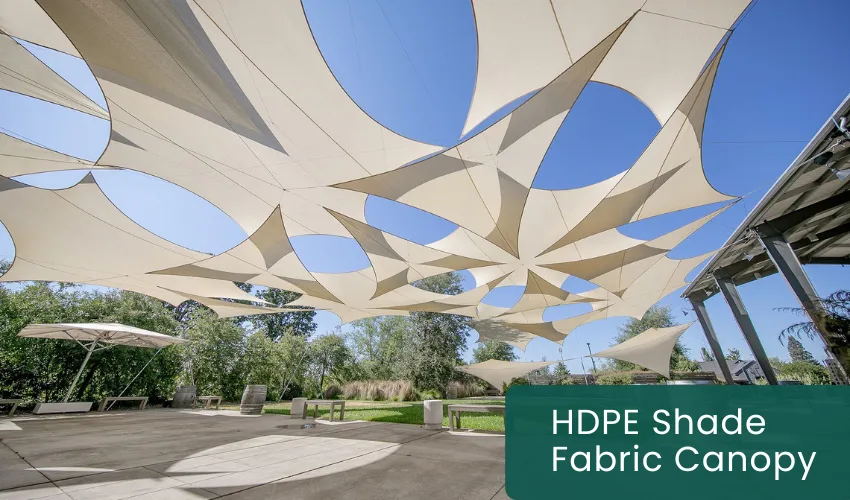
It is made from high-density polyethylene knitted fabrics. This canopy is not waterproof and is used for offering shade and airflow. The most suitable places to use this roofing system include playgrounds, schools, car parks, pools, parks, patios, gardens, and outdoor seating systems. These are extremely lightweight with a high strength-to-weight ratio. The life expectancy of this roofing system directly depends on fabric quality and UV exposure. Usually, it lasts 10-15 years.
- It requires proper re-tensioning periodically.
- The average price range of these canopies is around $8–$25 per sq. ft
4. PTFE Membrane Canopy
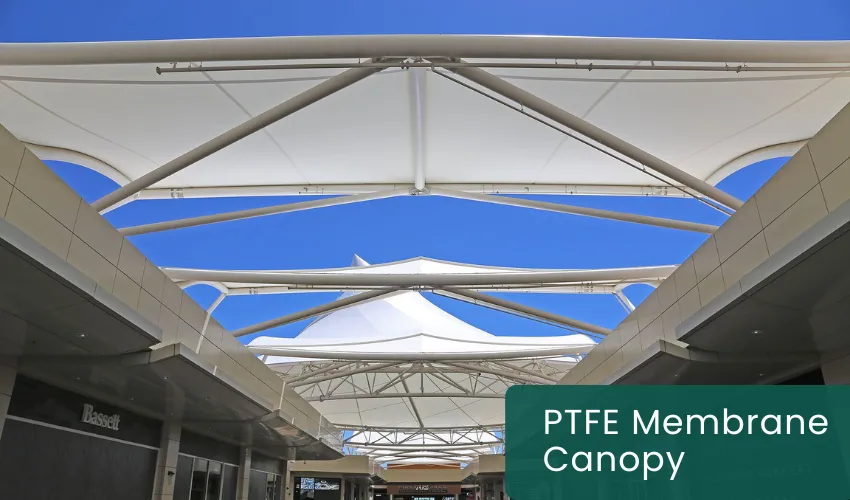
This canopy is made from fiberglass coated with polytetrafluoroethylene. This roofing is available in various designs, including tensile, saddle, wave, and cone. Custom options are also available. The high-quality roofing system can last around 25-35 years when maintenance is performed as recommended by the manufacturer. Cleaning dirt and dust is very quick and easy with non-stick PTFE.
- PTFE membrane canopy has a self-cleaning surface
- Ideal for installation at stadiums, airports, exhibition centers, and transportation hubs.
5. ETFE Cushion Canopy
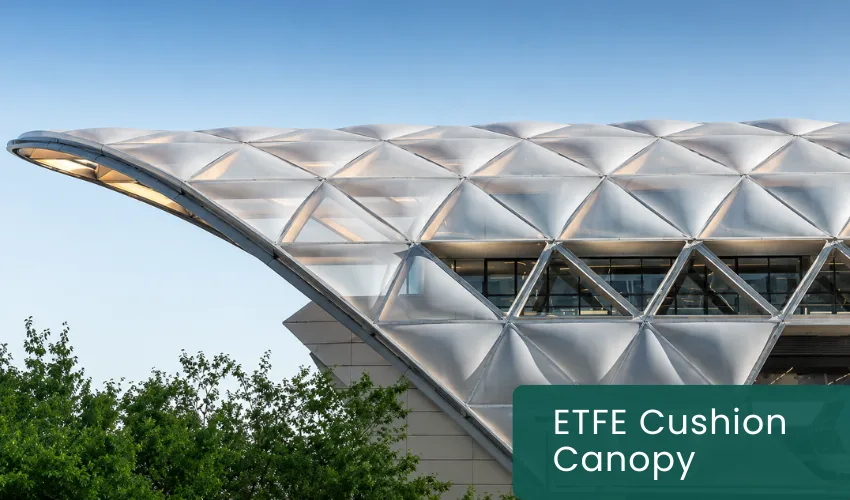
This cushion canopy is designed from multiple layers of ethylene tetrafluoroethylene (ETFE) film. It is inflated with very low-pressure air to form a cushion. It is very lightweight, at only 1% of the weight of glass glazing. The best application spots for this roofing system are botanical gardens, atriums, stadiums, airports, and shopping malls. The main features of this cushion canopy are its maximum light transmission and self-cleaning nature.
- By following the proper maintenance routine, you can enjoy its functionality for almost 25-35 years.
- Generally, the minimum and maximum price range for these canopies includes USD $50–$150+ per sq. ft. (installed)
6. Shade Sail Canopy
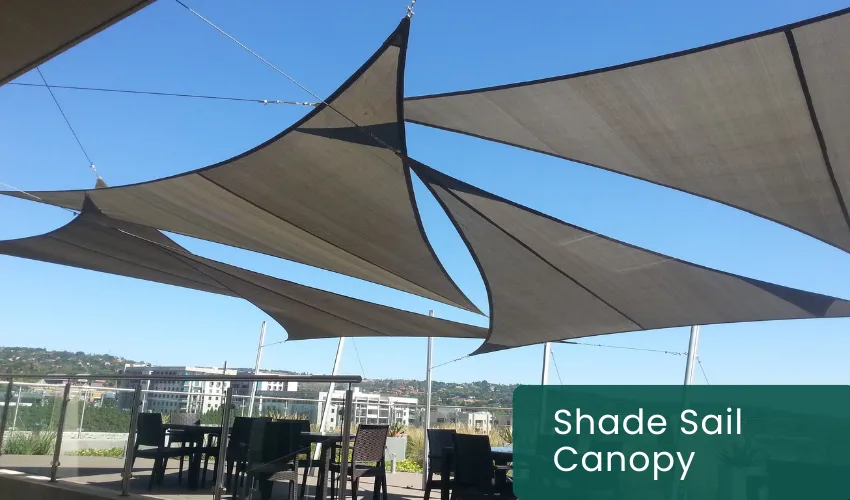
A shade sail canopy is a tensioned fabric structure anchored between posts or buildings. The fabric used for this roofing system is UV-stabilized HDPE shade, supported by stainless steel fittings. Due to its breathable nature, the fabric offers UV protection and shade. HDPE is not waterproof in nature. The most ideal places to use these canopies include schools, grounds, cafes, pools, and parks.
- The average lifespan of these canopies is 10- 15 years
- This roofing system costs you around USD $8–$30 per sq. ft.
Final Thoughts
There are hundreds of canopy roofing systems available these days. Choosing the best materials and design profiles for the canopies depends entirely on your space needs and aesthetic requirements. The above-mentioned options are the best in terms of material, design, and longevity. Analyze the condition of your space and choose the most appropriate roofing system.
Frequently Asked Questions
What type of canopy roofing materials are widely used in 2026?
Heat-resistant, sustainable options are widely used for canopy materials in 2026. Moreover, people are most attracted to canopies with minimalistic and modern designs.
Which canopy roofing lasts the longest?
Metal canopy structures made from steel, aluminum, and zinc are among the highly durable options. Meanwhile, polycarbonate roofs have an average lifespan of 15 to 25 years.
What is the main purpose of canopy roofing?
Canopy roofing offers many important purposes. It protects your outdoor spaces from the harsh sunlight and other extreme weather conditions. Modern roofing systems enhance the aesthetics of your exterior spaces.