
How to Remove Coffee Stain From Carpet: Fresh & Old Stains

To remove coffee stains from the carpet, blot the liquid immediately, dilute it with cool water, apply mild detergent, blot from the outside in, rinse thoroughly, and dry completely. That order matters more than any product you buy. For a fresh coffee spill, press a dry white towel into the carpet to pull up as much liquid as possible, rinse the spot with a little cool water, and keep blotting from the outside edge toward the middle. If the stain still shows, follow with a mild detergent solution, rinse, and dry the area well.
Old, dried coffee needs the same sequence with one extra step: rehydrate the spot before you treat it. Coffee stains are rarely permanent on carpet, but heat, scrubbing, and leftover cleaning residue can make them permanent. Check your carpet manufacturer’s care instructions and test any solution on a hidden patch before you commit. This guide by Floor Land will help you to remove the coffee stains from your luxury carpet very easily.
Which Method Is Most Beneficial for Removing Coffee Stains
| Situation | Best first move | Realistic result |
| Black coffee, spilled minutes ago | Blot, cool water rinse, blot dry | Usually gone completely |
| Coffee with milk or cream | Blot, cool water, enzyme spotter | Stain and odor both need attention |
| Sugary or syrup coffee | Blot, rinse twice, extract residue | Clean, but re-check in a week |
| Dried stain, days old | Rehydrate, detergent solution, repeat | Often fades to invisible over 2-3 passes |
| Dried stain, months old on light carpet | Detergent, then 3% peroxide test patch | Partial lift is a fair expectation |
| Large spill soaked into the pad | Extract, then call a professional | DIY blotting rarely reaches the backing |
Step-by-Step Method for Removing Fresh Coffee Stains
Here’s the full sequence after you’ve done the initial blotting of wall-to-wall carpet.
What You Need
- 2 or 3 white towels
- Cool water in a spray bottle or small cup
- Cleaning solution made of 1/4 teaspoon clear liquid dish soap mixed into 1 cup cool water
- Small soft brush (optional)
- Shop vac or portable extractor (optional, but helpful)
1. Test Your Solution First
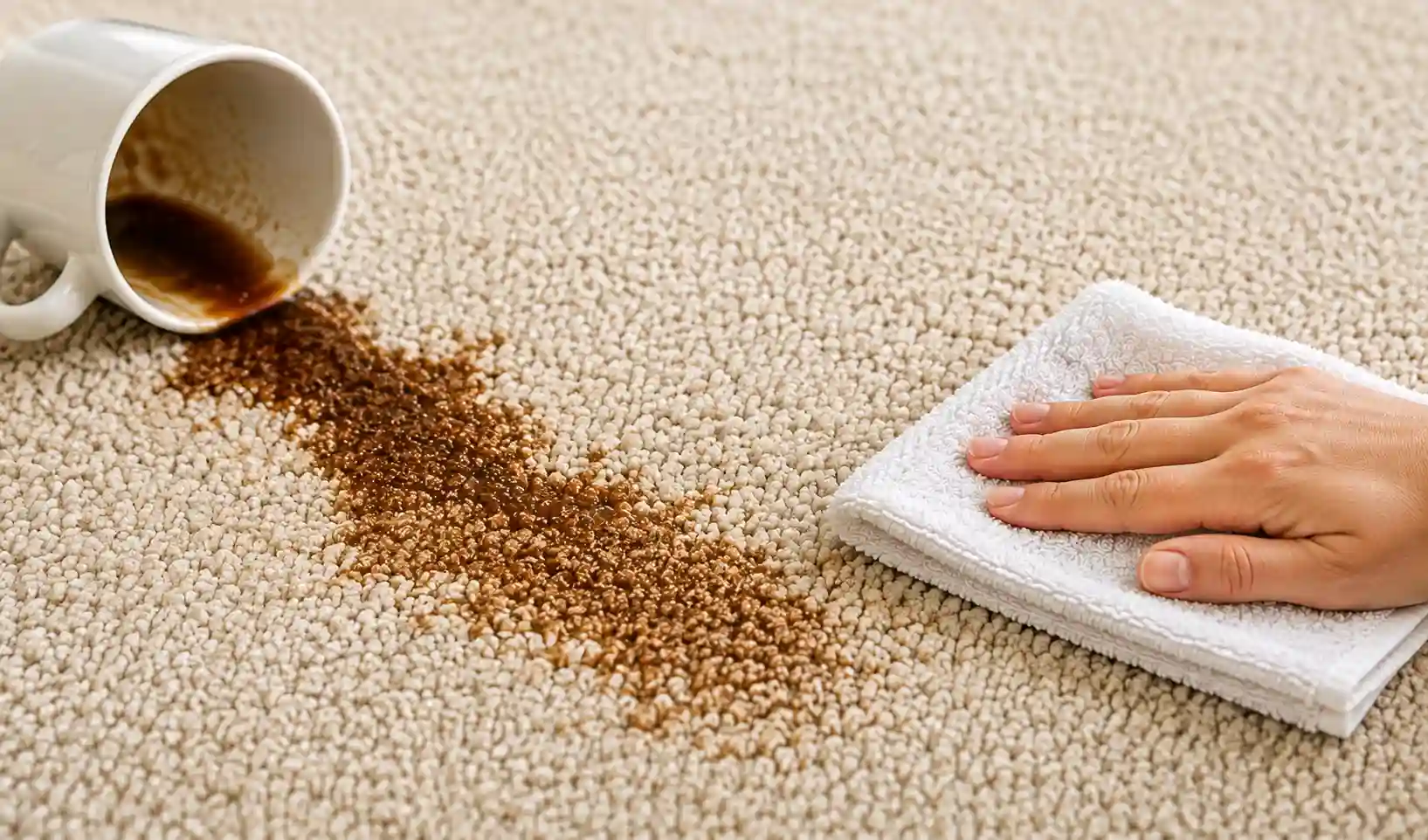
Find a hidden patch, inside a closet or under custom furniture, and dab a little solution on it. Press a white towel into it. If any color comes off on the towel, stop and use plain water only. This takes thirty seconds, and it saves people from bleached-out patches on dyed wool and some solution-dyed synthetics.
2. Rinse the Spot With Cool Water
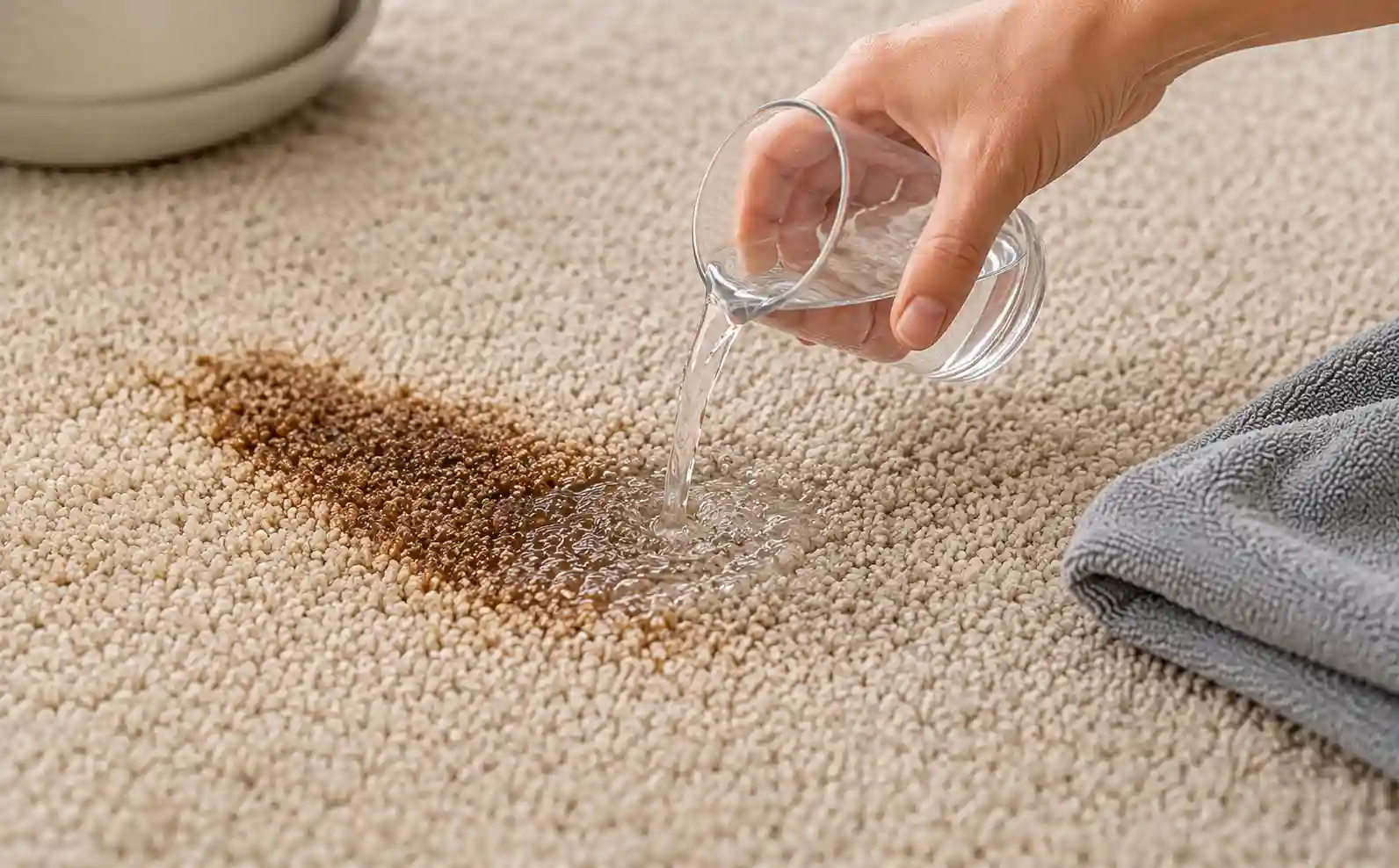
Mist it or pour a small amount, roughly a tablespoon for a coaster-sized stain. You want the fibers damp, not the backing wet. The goal is to dilute the tannin so the towel can carry it away.
3. Blot From the Outside In
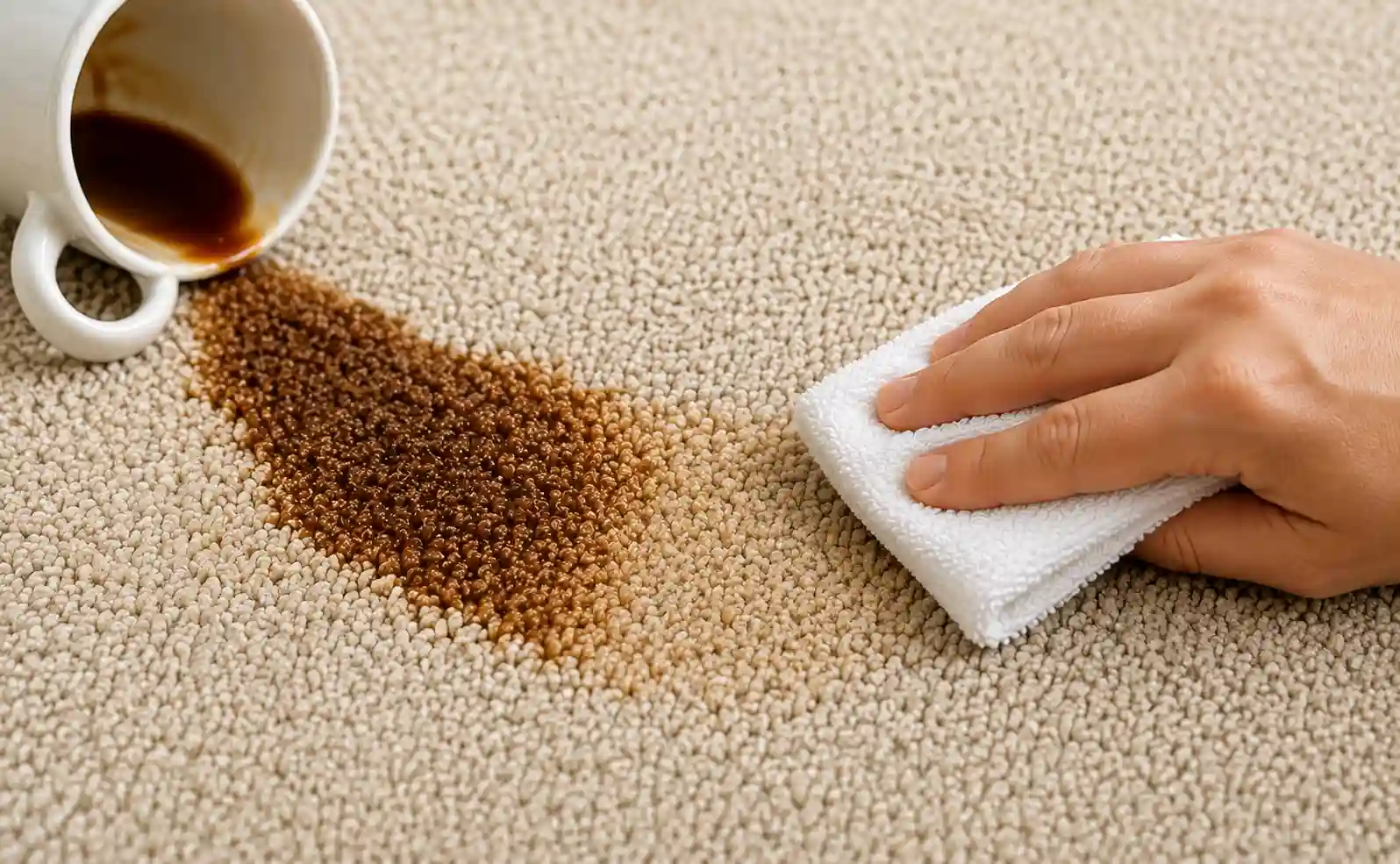
Start at the edge of the stain and work toward the center. This keeps the stain from spreading into a bigger ring. Press, hold, lift, rotate to a dry spot on the towel. Repeat.
4. Apply the Detergent Solution Sparingly
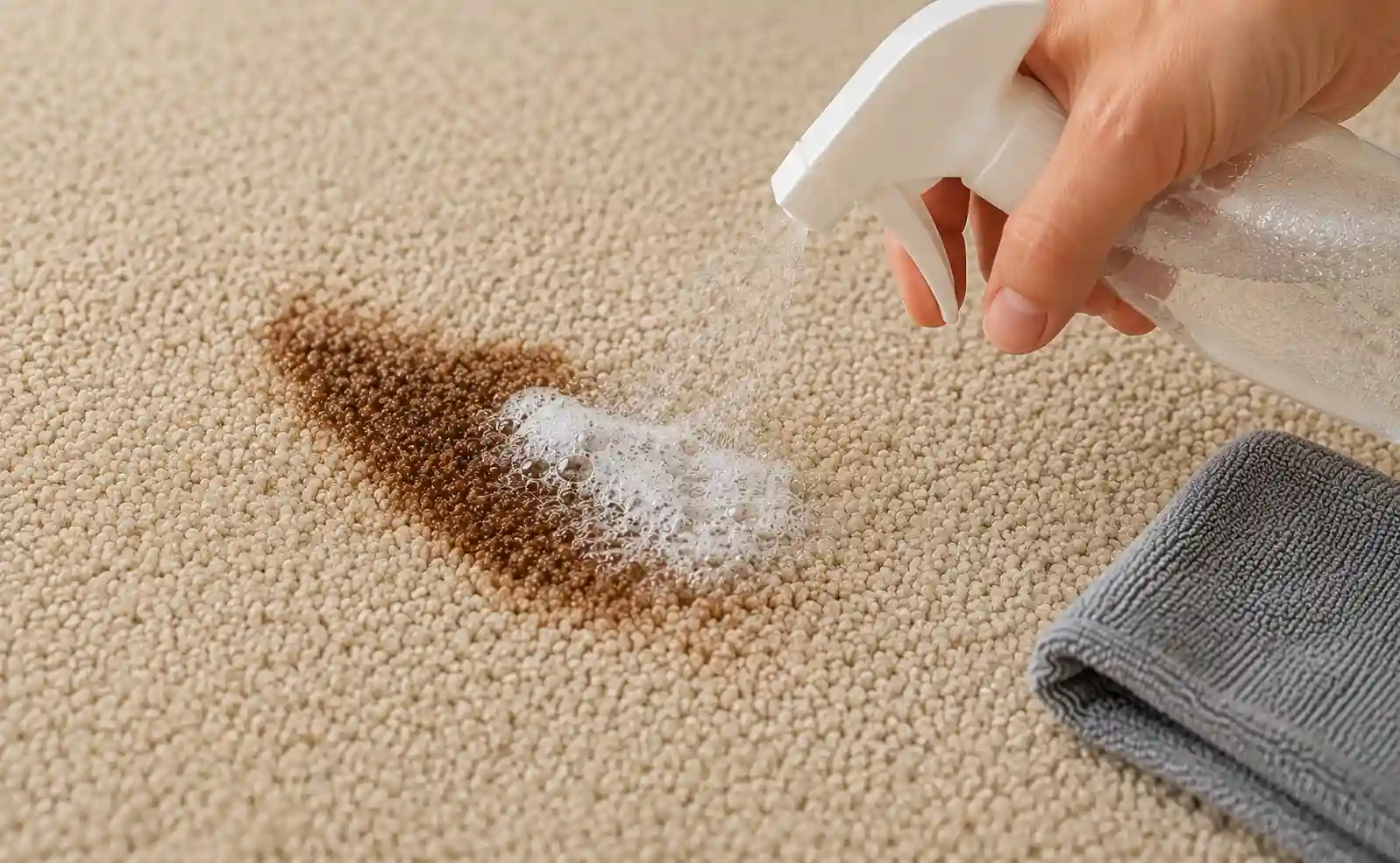
Dab it onto the stain with a damp towel rather than pouring it. Let it sit for three to five minutes. Detergent is mildly alkaline, which is exactly what a slightly acidic tannin stain responds to.
5. Blot Again and Then Rinse
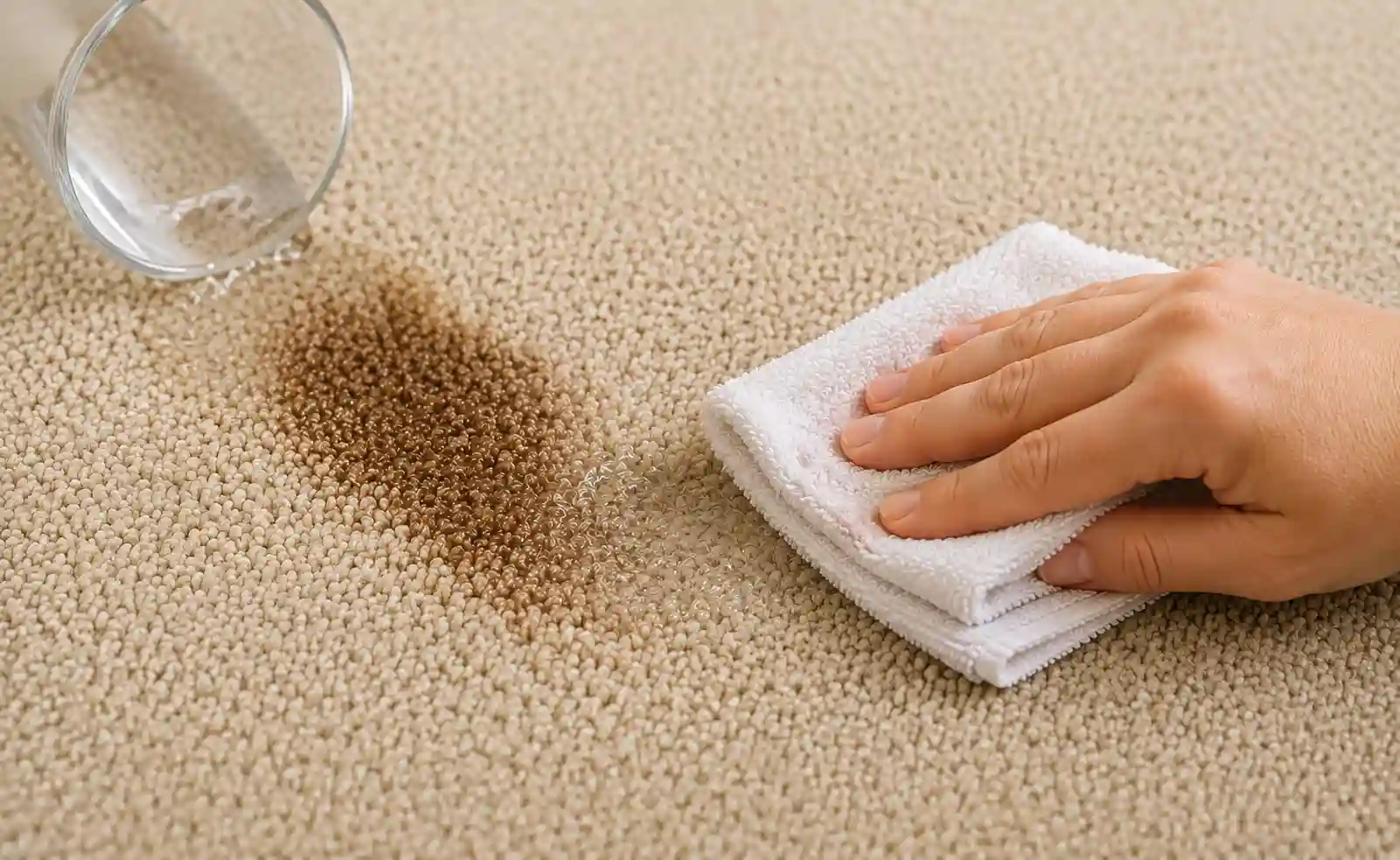
This step is the one people skip, and it’s the one that decides whether the spot comes back. Mist with clean, cool water, blot, repeat two or three times. Any soap left in the fibers becomes a magnet for dirt, and that spot will look dark again within a couple of weeks.
6. Dry It Properly
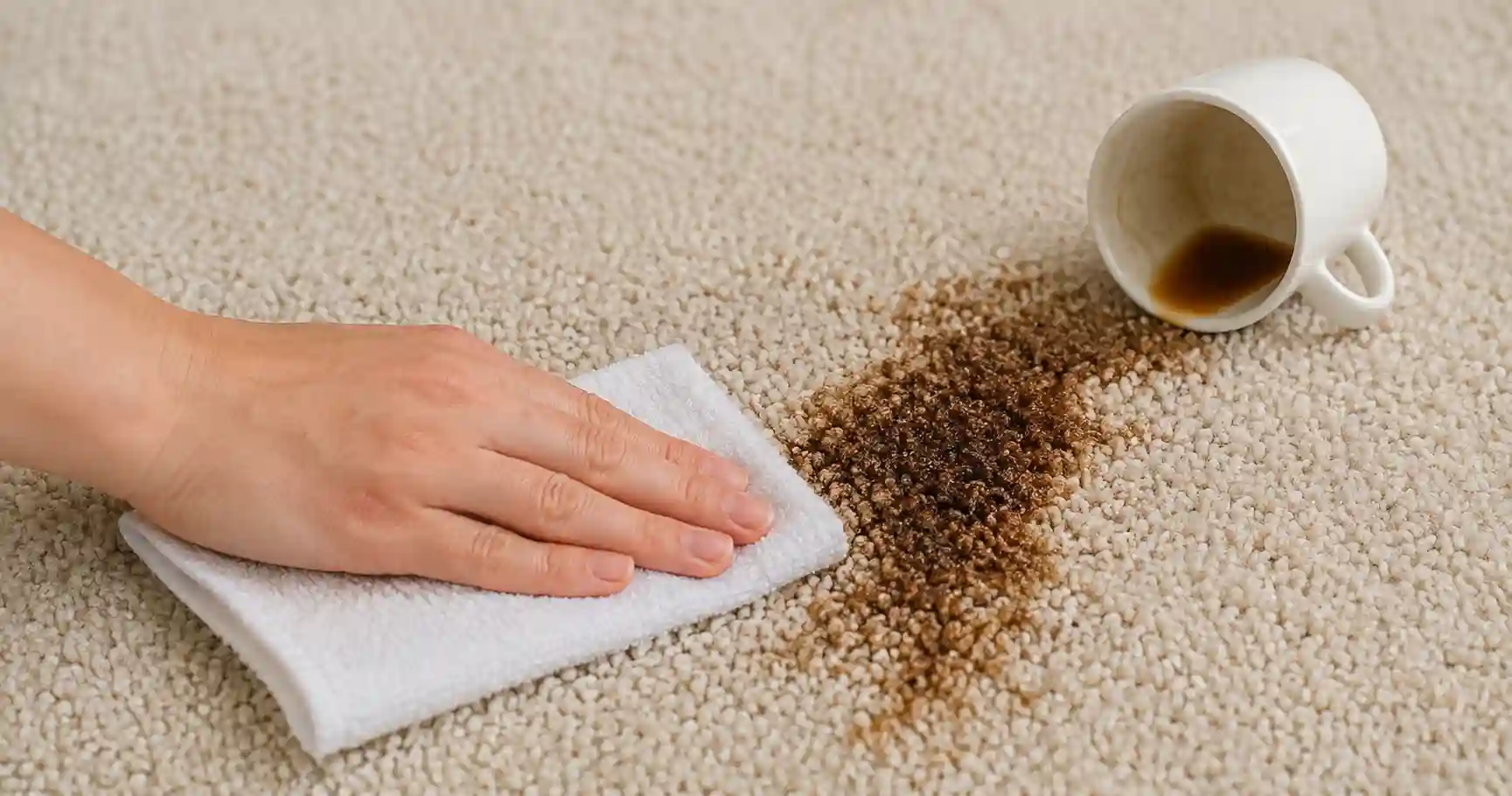
Stack four or five dry towels on the damp area and weigh them down with a heavy book or a bowl. Leave them for several hours. Then run a fan across the spot and let air move over it until the carpet feels completely dry to the touch. Do not walk on it while it’s damp.
If a faint shadow remains after it’s fully dry, treat it once more rather than attacking it harder in one session. Two gentle passes beat one aggressive one.
How to Remove Old or Dried Coffee Stains?
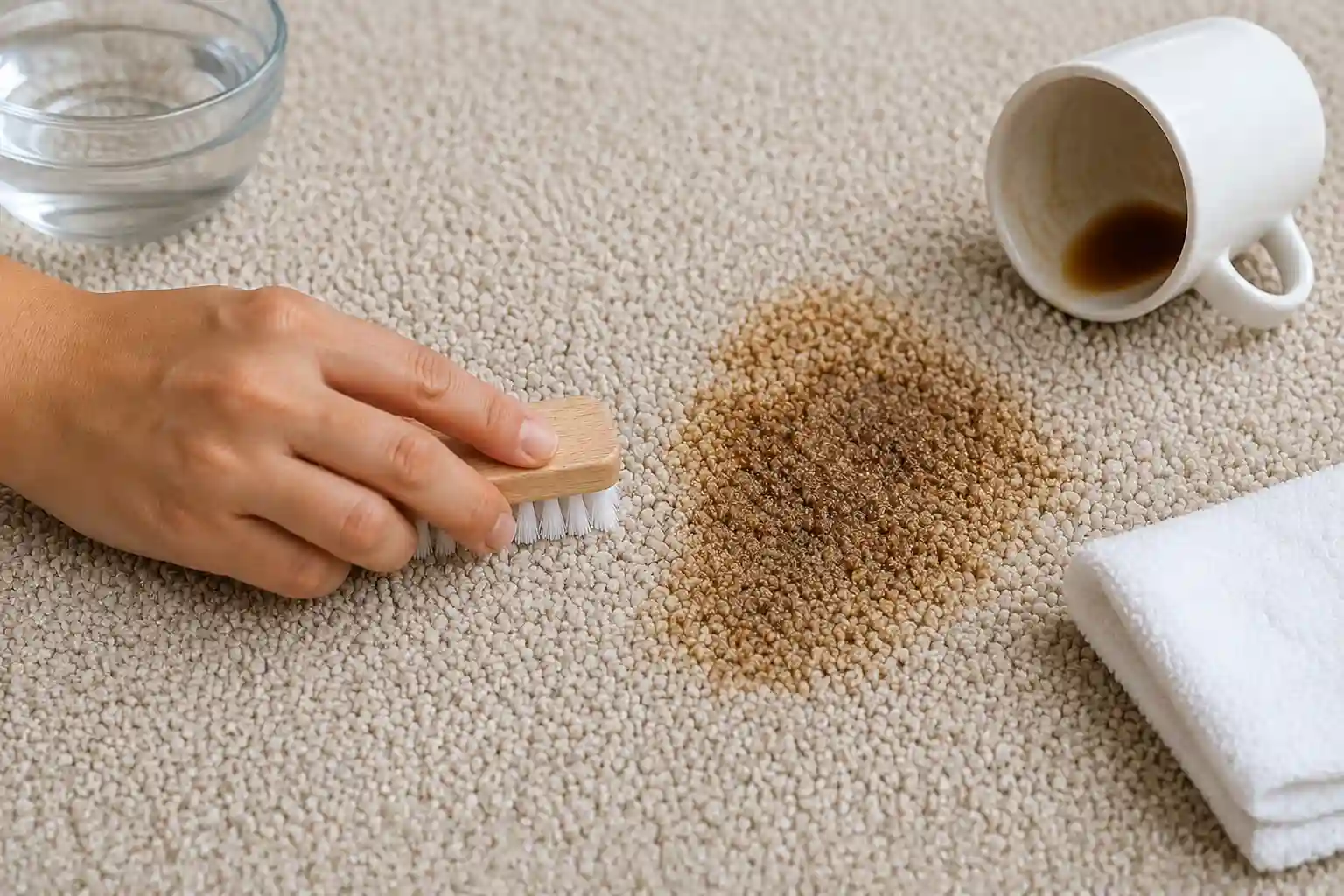
A dried stain isn’t a different problem; it’s the same problem with a hardened surface. The tannin has crystallized into the fiber, and it needs to go back into solution before anything can lift it.
Start by vacuuming the area. Dried coffee leaves fine grit that turns to mud the moment you add water.
Then rehydrate. Dampen a white towel with cool water, lay it flat over the stain, and leave it for ten to fifteen minutes. Some people mist the spot directly, which also works. The towel method keeps moisture in the pile rather than sending it down into the backing.
Now follow the same detergent sequence as a fresh spill. The difference is patience. Old stains usually need two or three full cycles of apply, dwell, blot, rinse, with drying time in between. Rushing it means over-wetting, and over-wetting causes more problems than the original coffee did.
For stains that have been there for months on light-colored carpet, expect improvement rather than perfection from the first attempt. Sun exposure and repeated foot traffic can lock color into the fiber in a way that no home method fully reverses.
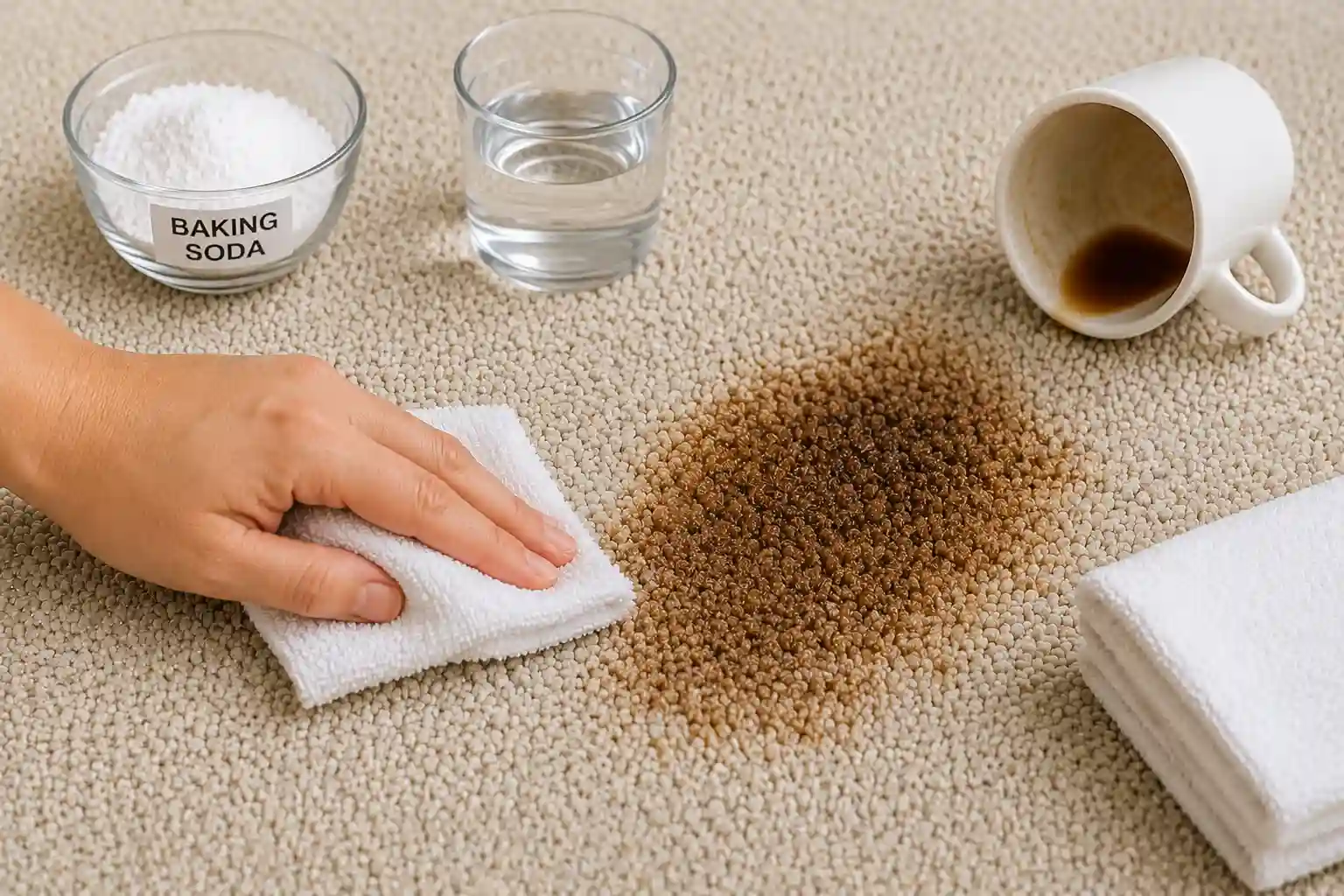
How to Remove Coffee Stain From Carpet With Baking Soda
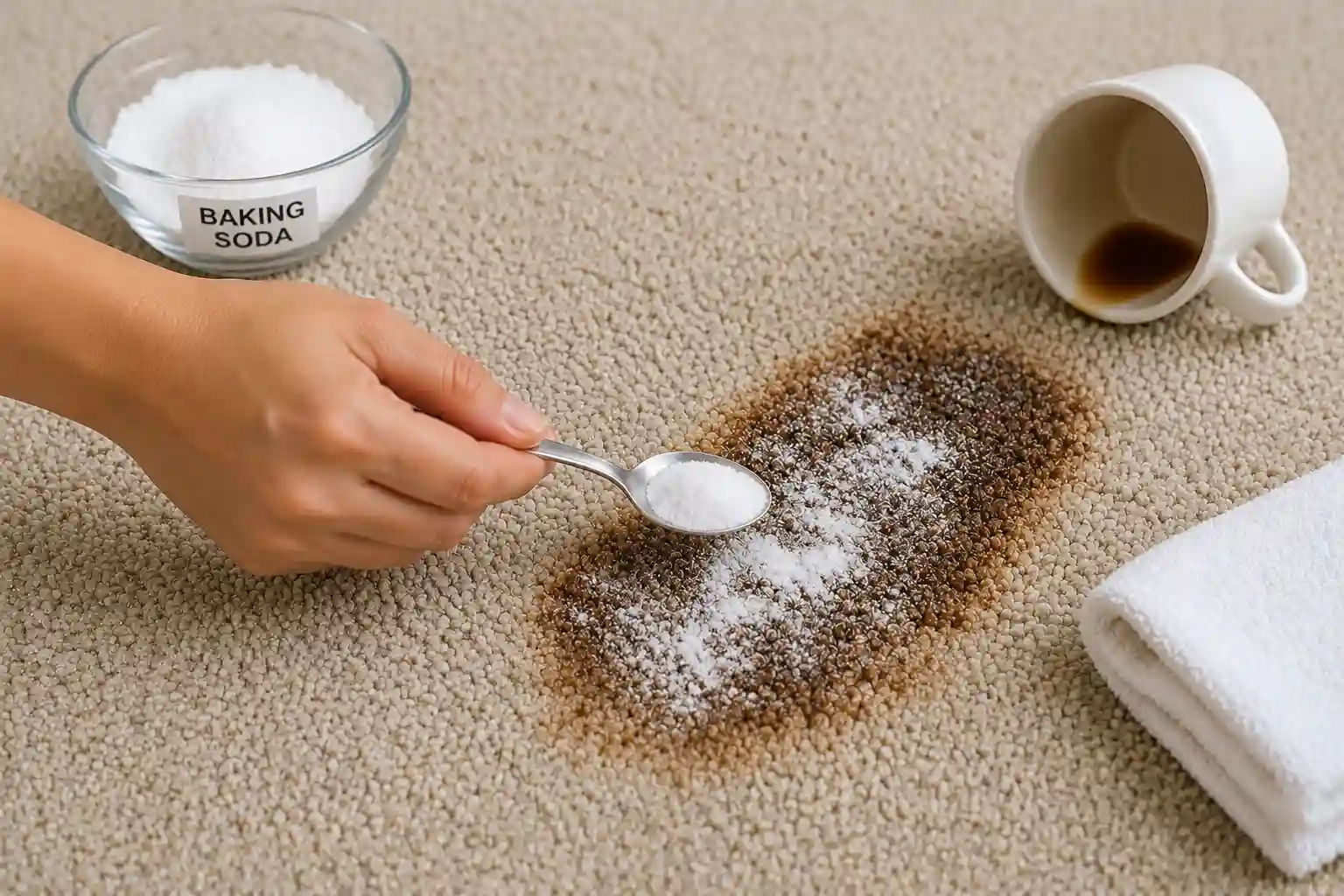
Baking soda earns its reputation for odor, not for color. It’s a mild alkali and an excellent absorbent, so it’s genuinely useful in two situations: pulling residual moisture out of a spot you’ve just treated, and neutralizing the sour smell left by milky coffee. Here’s how to use it well.
For a fresh spill, blot the liquid out first. Then sprinkle a thin, even layer of dry baking soda over the damp area, about a tablespoon for a small stain. Let it sit until it’s fully dry, which usually takes a few hours, or overnight for a bigger spot. The powder will clump as it draws moisture up. Vacuum thoroughly, then go over it a second time in a different direction.
For a paste, mix baking soda with just enough cool water to make something like toothpaste. Dab it onto the stain; don’t grind it in. Let it dry completely, then vacuum.
Two honest cautions. First, baking soda does very little to the actual tannin color, so treat it as a support step, not the main event. Second, the powder is fine enough to settle into the base of a densely cut pile, and it doesn’t all come back out with a household vacuum. Use less than you think you need, and vacuum more than you think you should. On plush or shag carpet, the paste method leaves the most residue, and the dry-sprinkle method leaves the least.
Can Baking Soda Damage Carpets?
It won’t harm the fibers themselves. The risk is leftover grit, which can feel chalky underfoot and attract soil over time. It also isn’t ideal on wool, where alkaline residue is best avoided.
How to Remove Coffee Stain From Carpet Without Vinegar
Plenty of people would rather not fill the room with vinegar smell, and on wool carpet there’s a better reason to skip it. So here’s what to use instead.
- Clear dish soap and cool water are the workhorses. A quarter teaspoon in a cup of water handles most coffee stains on its own. Use a clear, dye-free soap. Colored or moisturizing formulas leave residue that shows.
- Enzyme spotters are the right call for coffee with milk or cream. Enzymes break down protein and fat, which is exactly what plain detergent struggles with, and they handle the smell at the same time. Apply, let it dwell for the time on the label, then blot and rinse.
- Oxygen-based spot cleaners release a small amount of active oxygen that breaks down the color rather than lifting it out. These work well on set-in tannin and are widely sold as coffee-specific formulas.
- Solvent-free spot removers with no rinse requirement are convenient for small spots, though you should still blot rather than leave them sitting wet.
Is Vinegar Safe for Carpets?
On most synthetics, diluted white vinegar is fine, and it does help with alkaline residue. On wool, repeated acidic treatment isn’t a great habit, and undiluted vinegar can dull the fiber. It also does very little that a mild detergent doesn’t already do for coffee specifically. If you use it, keep it to one part vinegar in two parts water, and always rinse afterward.
Does Vinegar and Baking Soda Remove Old Coffee Stains from Carpet?
Combining them is popular advice, but it’s the weakest. An acid and a base cancel each other out. You get a satisfying fizz, then a mildly salty solution with very little cleaning power left. The fizzing does loosen surface debris mechanically, which is why people think it works, but on an old tannin stain it underperforms a simple detergent solution. Use one or the other, not both at once.
Can You Use Hydrogen Peroxide for Coffee Stains on Carpets?
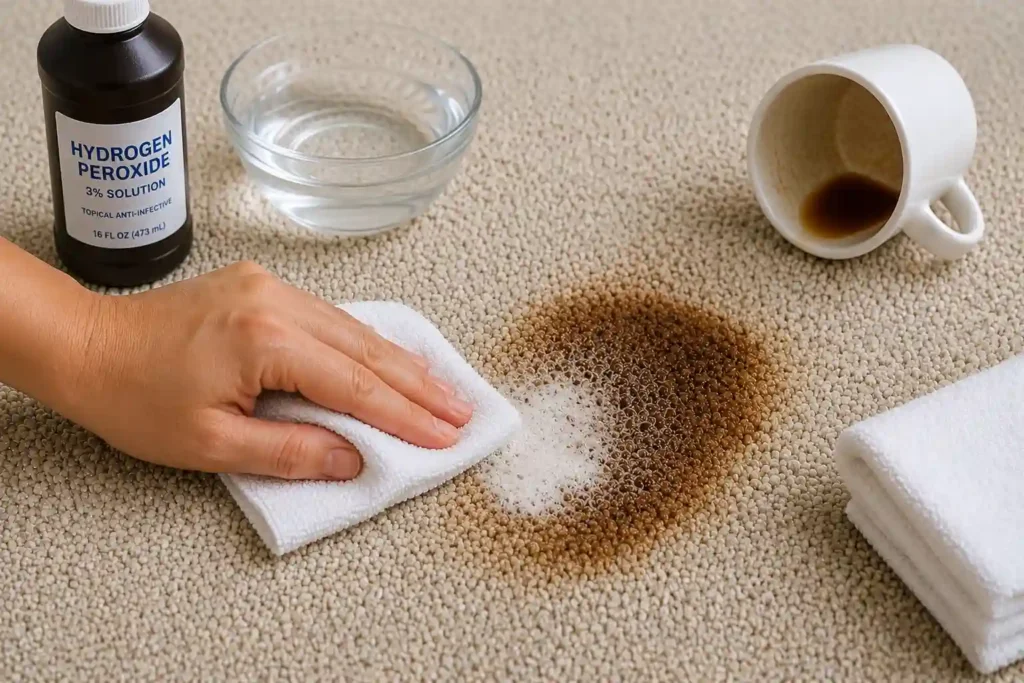
Yes, with real caution and only after gentler methods have stalled. Hydrogen peroxide is an oxidizer. It doesn’t lift the stain out; it breaks the color molecules apart. That makes it genuinely effective on the faint brown shadow that survives detergent treatment, and it’s the reason professionals keep it on the truck.
It’s also a mild bleach. On light beige, cream, and white carpet, the risk is low. On mid-tone and dark carpet, and on anything wool, it can permanently lighten the dye. Some carpet warranties specifically exclude damage from peroxide and other oxidizers, so it’s worth reading the manufacturer’s care sheet before you open the bottle.
If you go ahead:
- Use standard 3% household strength. Nothing stronger, and never use salon-grade developers.
- Test on a hidden area and wait a full hour before judging. Peroxide lightens slowly, so a five-minute check tells you nothing.
- Apply a small amount with a white cloth rather than pouring it on.
- Let it dwell five to ten minutes, no longer.
- Blot, then rinse with cool water two or three times.
- Dry the area fully and check the color in daylight the next day.
Skip it entirely on wool, silk blends, jute-backed rugs, and any carpet with a hand-knotted or natural-dye construction.
How to Choose a Coffee Stain Remover or Carpet Cleaner
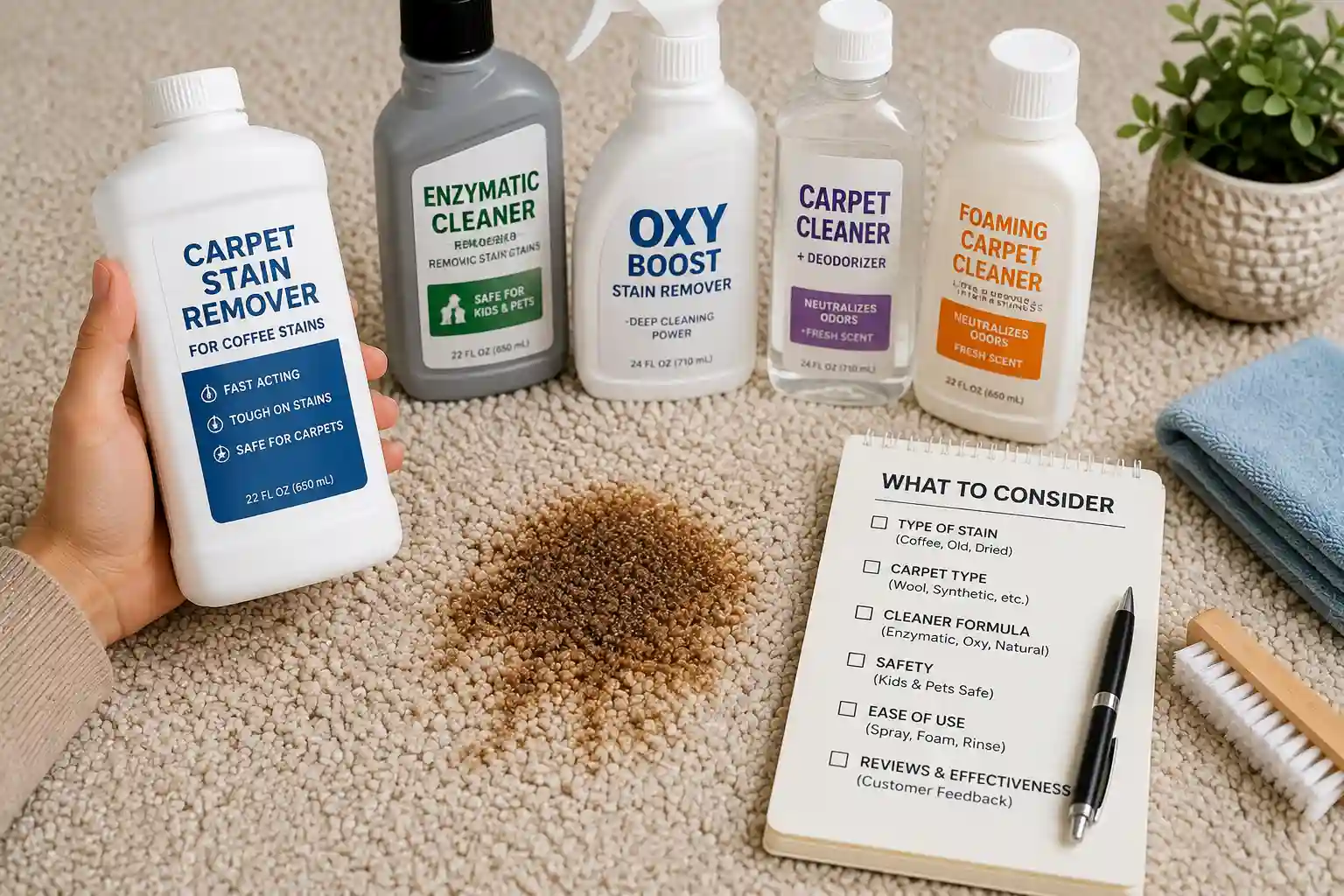
Choosing the right coffee remover for the carpet will save you time and protect you from the major cleaning hassle.
| Product type | Works best on | Watch out for |
| Clear dish soap solution | Fresh black coffee, most fibers | Residue if you skip rinsing |
| Enzyme cleaner | Milk, cream, sugar, lingering odor | Needs dwell time to work |
| Oxygen or “oxy” formula | Set-in tannin, light carpet | Mild lightening risk on dark dye |
| Solvent-free spot spray | Small fresh spots, quick fixes | Not strong enough for old stains |
| Wool-safe pH-neutral cleaner | Wool, wool blends, natural fiber | Slower on heavy staining |
| Portable extractor plus formula | Large spills, repeat stains | Easy to over-wet if you rush |
When you’re choosing a coffee stain remover, look for three things on the label: the fiber types it’s approved for, whether it needs rinsing, and whether it’s pH-neutral. That third one matters most on wool.
The best carpet cleaner for coffee stains in practice is usually a small portable extractor paired with an oxy or enzyme formula, because extraction is the part home methods do worst. Towels pull moisture out of the top of the pile. An extractor pulls it out of the base, and that’s where returning stains hide. If you spill often, or you have kids and a home office, a portable unit pays for itself faster than repeated spot treatments.
Whatever you buy, test it in a hidden spot. Two products with identical claims can behave differently on the same carpet.
Coffee With Milk, Cream, or Sugar Needs a Different Approach
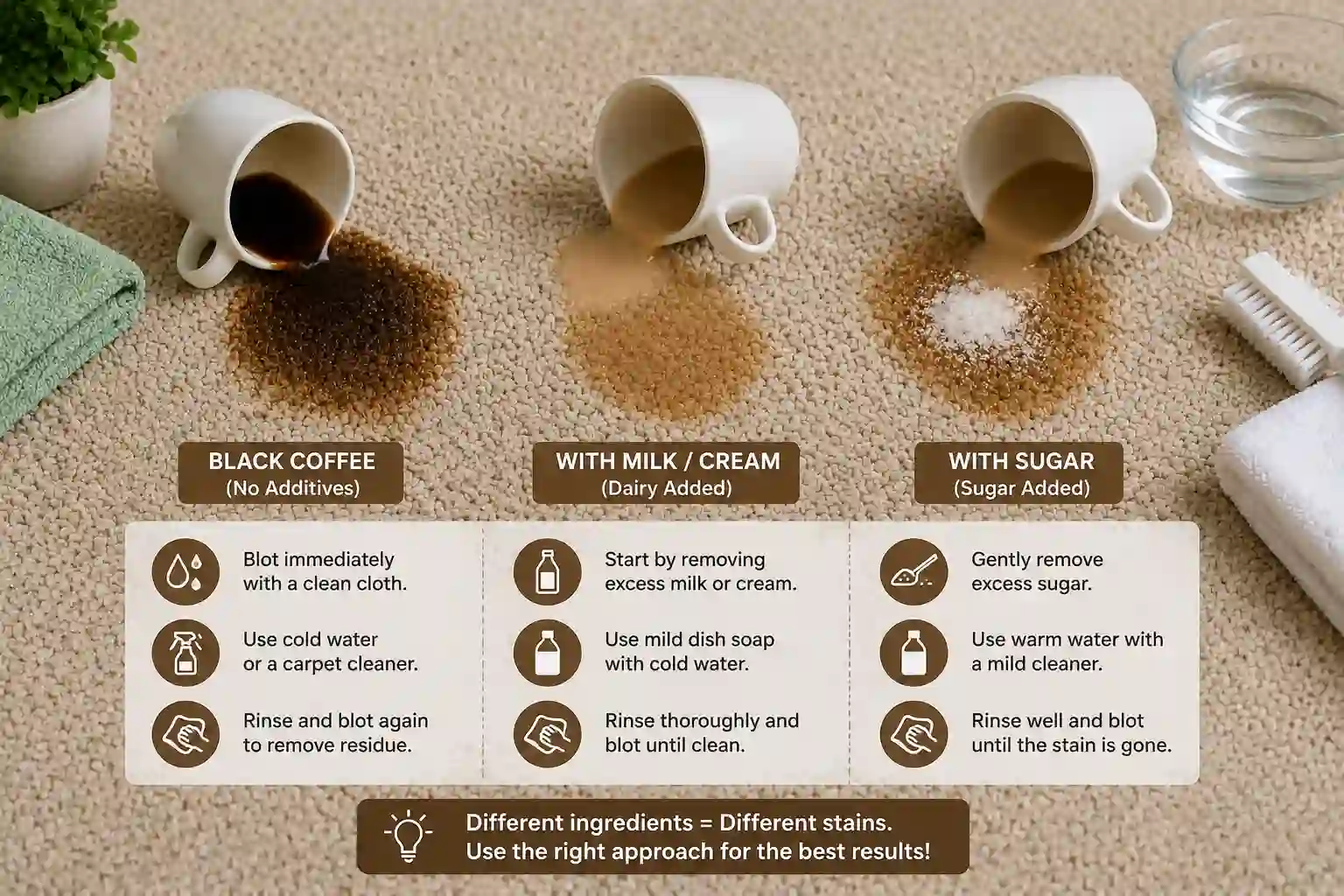
A flat white is three stains in one. Tannin colors the fiber, milk fat coats it, and protein binds to it. Sugar adds a fourth layer of stickiness.
Treat it in that order. Blot the liquid, rinse with cool water only, and resist the urge to use warm water. Warm water cooks milk protein into the fiber the same way it sets eggs on a pan.
Then use an enzyme cleaner. Detergent alone will pull the color out and leave the protein behind, and a few days later the spot smells sour even though it looks clean. That smell is bacteria feeding on milk residue, and no amount of air freshener fixes it.
Sugar is the quiet problem. Sugary residue stays tacky, grabs every particle of soil that walks across it, and turns a cleaned spot into a dark patch within a week or two. The fix is boring but effective: rinse twice as many times as you think necessary, and extract or blot dry each time.
For a latte or cappuccino spill on light carpet, plan on a detergent pass, an enzyme pass, and a thorough rinse. It’s more work than black coffee, but the result holds.
Fiber Type Changes the Cleaning Rules
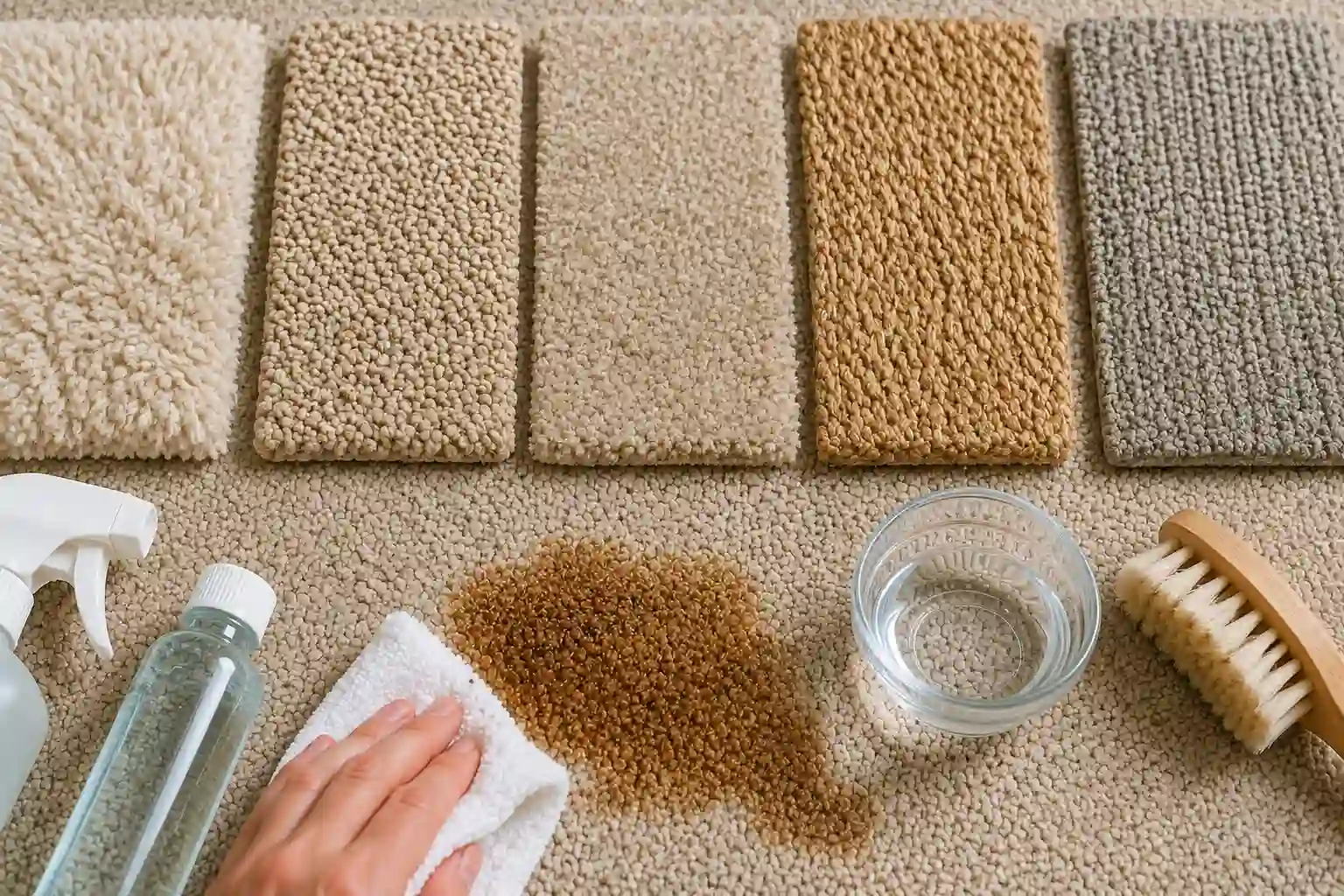
Not every carpet reacts the same way, and this is where most online advice falls short.
- Nylon takes dye readily, which makes it durable but also means tannin grabs onto it. It responds well to detergent and to oxy cleaners. Most stain-resistant treatments on nylon wear off in traffic areas, so an old spill in a hallway can be harder than the same spill in a bedroom.
- Polyester and triexta are hydrophobic. Water-based stains sit on the surface longer, so quick blotting removes almost everything. Oily residue is the harder problem on these fibers.
- Olefin (polypropylene) is solution-dyed and highly bleach-resistant, so peroxide is usually safe. It holds oils, though, and it crushes easily under scrubbing.
- Wool and sisal carpets need the gentlest hand. Use cool water, pH-neutral or wool-approved cleaners, and no peroxide, no chlorine bleach, no strong alkaline products. Wool also holds a lot of water, so over-wetting leads to long drying times and possible browning from the natural fiber itself.
Light-colored carpet has no material disadvantage; it just shows everything. On cream or pale grey, work in smaller sections, rinse more, and dry more carefully, because the faint outline of an incomplete rinse is visible in a way it wouldn’t be on a mid-brown carpet.
Why Coffee Stains Sometimes Come Back
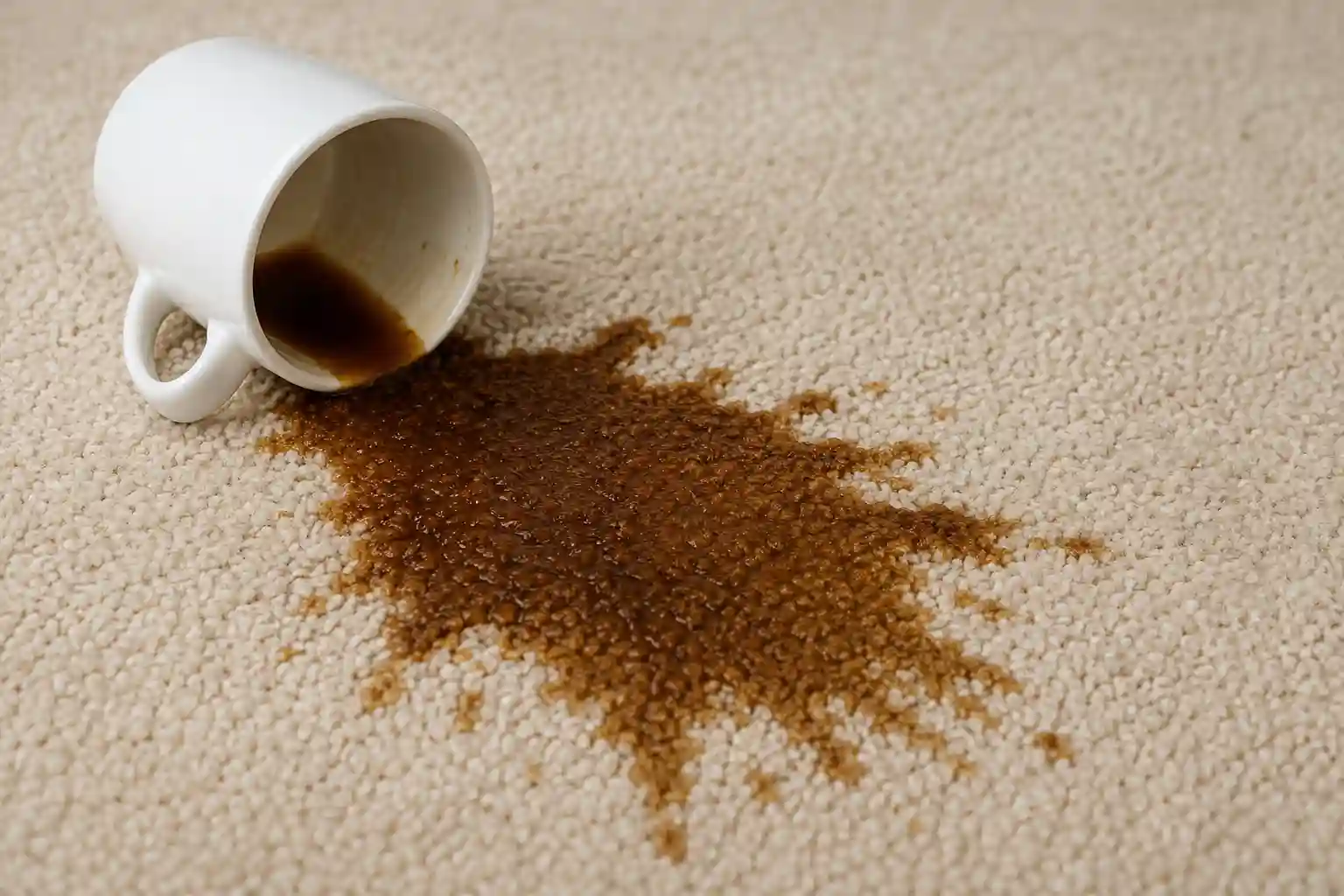
You cleaned it, it looked perfect, and three days later a brown circle is back. This is wicking, and it’s the most misunderstood part of carpet cleaning.
When liquid soaks past the fiber into the backing and the pad, cleaning the surface doesn’t touch it. As the area dries, moisture travels upward and carries the dissolved stain back to the tips of the pile. The spot reappears looking almost as strong as before.
Residue does the same thing by a different route. Leftover soap stays sticky and attracts soil, so the spot darkens gradually rather than suddenly.
Both are avoidable.
- Use less liquid than feels right. Damp fibers, dry backing.
- Rinse until the towel comes up clean, then rinse once more.
- Weight dry towels over the spot for six to eight hours to pull moisture up into the towel instead of the pile.
- Move air across the area with a fan until it’s dry to the touch at the base.
- Vacuum the spot once it’s fully dry to lift any crystallized residue.
If a stain has wicked back twice, the liquid reaches the pad. Surface treatment won’t solve it, and this is the point where extraction equipment does something your towels can’t.
When to Call a Professional Carpet Cleaner
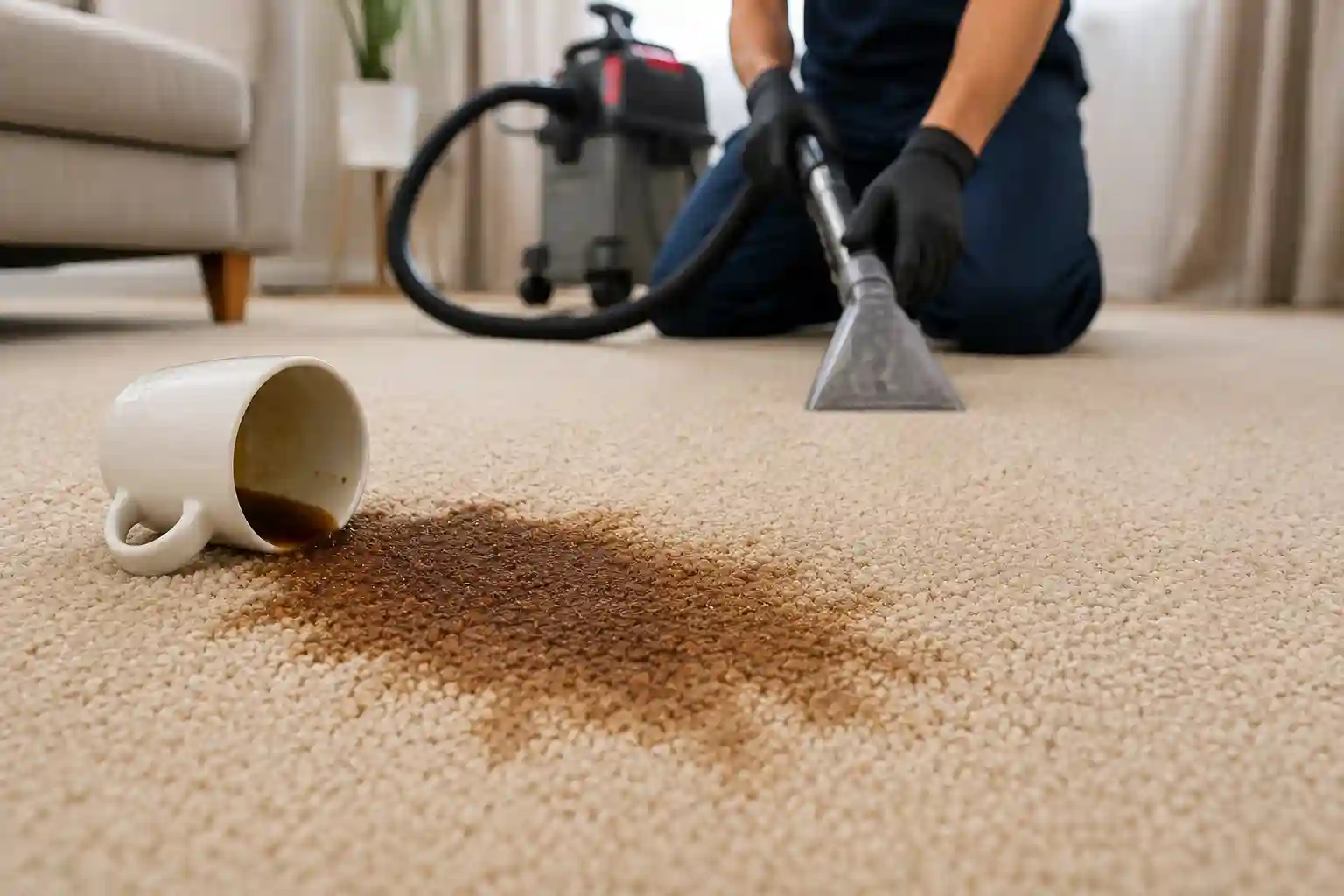
DIY handles most coffee spills. A few situations don’t respond to it, and recognizing them early saves you from making the carpet worse.
Call a professional when:
- The spill was large enough to reach the pad, or you can feel dampness in the backing.
- The stain has come back after two properly rinsed and dried attempts.
- The carpet is wool, silk blend, or a hand-made rug you’d be upset to damage.
- The stain covers more than about a foot across.
- You’ve already tried multiple products, and you’re not sure what’s still in the fibers.
- The carpet is under warranty, and the manufacturer requires professional cleaning at set intervals.
A good technician uses hot water extraction with proper vacuum recovery, which removes the cleaning solution rather than leaving it behind. They can also apply tannin-specific reducers that aren’t sold to consumers, and they can pull the carpet back to treat the pad when a spill has gone deep.
Ask whether the company is certified, what solution they’ll use on your fiber type, and how long the drying time will be. Anyone who can’t answer the fiber question is worth passing on.
Final Thoughts
Successfully removing a coffee stain comes down to technique and patience rather than relying on aggressive chemical products. The fundamental rule is controlled, sequential care: blot up excess liquid immediately, dilute with cool water, and rinse out detergent thoroughly so lingering soap residue doesn’t attract new dirt later.
Avoid scrubbing vigorously or applying high heat, as harsh friction deforms carpet fibers while heat sets natural tannins permanently. Tailor your method to your specific carpet material and coffee mix. Using enzyme spotters for dairy or sugar, mild detergents for plain black coffee, and extra caution with delicate wool or natural fibers. Most importantly, control moisture and allow ample drying time so liquid resting in the backing doesn’t wick back to the surface. When a spill reaches deep into the carpet pad or involves high-value textiles, calling a professional carpet cleaner remains the safest way to protect your floor.
Frequently Asked Questions
Rarely on synthetic carpet, even after months. Wool and natural fibers hold tannin more stubbornly, and stains left untreated for a long time may only partially lift. Permanent damage more often comes from scrubbing or from bleach-based products than from the coffee.
Yes. Vacuum the grit, rehydrate the spot with a damp towel for ten to fifteen minutes, then treat it with a detergent solution. Expect to repeat the cycle two or three times with drying in between.
Not well together. The acid and the base neutralize each other, leaving a weak solution with little cleaning power. Use a mild detergent, or an enzyme or oxy cleaner, and you’ll get a better result.
On light-colored synthetic carpet, 3% peroxide can help with the last traces of color. Test a hidden area and wait an hour before judging. Avoid it on wool, silk blends, and dark carpet, and check your warranty first.
It won’t damage the fibers, but the powder can settle deep into a dense pile and stay there. Use it sparingly and vacuum in two directions once it’s fully dry.
Either liquid reached the backing and wicked upward as it dried, or cleaning residue stayed in the fibers and attracted soil. More rinsing and better drying prevent both.
For most homes, an oxygen-based or enzyme formula used with a portable extractor gives the most reliable result, because extraction removes what towels leave behind. For wool, choose a pH-neutral, wool-approved product instead.
It works about as well as plain cool water. The carbonation adds nothing meaningful. If it’s what you have within reach, use it, but don’t go looking for it.
Not as the first step. Heat sets tannin. Blot and rinse cool first, and save heat extraction for after the color is gone, or leave it to a professional.
Usually not. Plain black coffee on a synthetic carpet almost always comes out, even years later, because nylon and polyester don’t absorb dye the way natural fibers do. What does become permanent is fiber damage from scrubbing, discoloration from bleach or strong solvents, and staining on wool or silk-blend carpet that sat untreated for a long time. The stain itself is rarely the thing that ruins a carpet.