
How to Remove Stains from Carpet: Effective Tips for Every Stain

To remove a stain from carpet, blot up as much of the spill as you can. Then, apply a mild cleaning solution to a white cloth, work it in from the outside edge toward the middle, blot again, rinse with cold water, and dry the area quickly. That sequence handles most household stains. The cleaning agent changes based on two things: what caused the stain and what your carpet is made of.
Wool reacts badly to alkaline and oxygen-based cleaners that nylon shrugs off. Grease needs a solvent, not water. Fresh spills usually lift with plain water and a drop of dish soap. Dried stains need softening first. Stains that have sat for years often lighten rather than vanish, and a few will never come out. This detailed blog post by Floor Land explains the best ways to remove different types of stains from carpets.
Which Method Suits Which Stain: Quick Overview
| Type of Stain | Best Cleaning Method | Suitable for Fresh or Old Stains | Important Precaution |
| Coffee and tea | Cool water with dish soap, then a mild white vinegar rinse | Both, though old tannin marks may only lighten | Do not start with an alkaline cleaner; it can lock tannin into the fiber |
| Red wine | Blot, cold water, dish soap, then 3% hydrogen peroxide on light synthetics | Best fresh; old stains need an oxidizer | Never use hot water; heat sets the pigment |
| Tomato sauce and food | Dish soap solution first, then a diluted vinegar rinse | Both | Scrape solids off before adding any liquid |
| Grease, oil and butter | Absorb with baking soda, then a citrus or dry solvent spotter | Both | Test solvents first; some damage olefin and latex backing |
| Ink and marker | Isopropyl alcohol dabbed on a white cloth | Best fresh; ballpoint responds better than permanent marker | Work in tiny amounts; alcohol spreads ink if you flood it |
| Mud and soil | Let it dry fully, vacuum, then clean with detergent | Both | Never wipe wet mud; it pushes soil into the backing |
| Pet urine | Enzyme cleaner, applied generously and left to work | Both; older deposits need repeat treatment | Vinegar and baking soda mask odor; they do not break down uric acid |
| Blood | Cold water and salt, or 3% hydrogen peroxide on light carpet | Best fresh; dried blood needs repeated softening | Warm water cooks the protein and sets the stain permanently |
| Chewing gum and wax | Freeze gum with ice, lift wax with brown paper and a warm iron | Both | Keep the iron on low, synthetic fibers melt easily |
| Nail polish | Non-acetone remover on a cloth, small dabs | Best fresh | Acetone dissolves some fibers and backing adhesives |
How to Remove Stains from Carpet at Home?
Use this method when you are not sure what you are dealing with. It is gentle enough for almost any wall-to-wall carpet, and it solves a surprising share of household stains on its own.
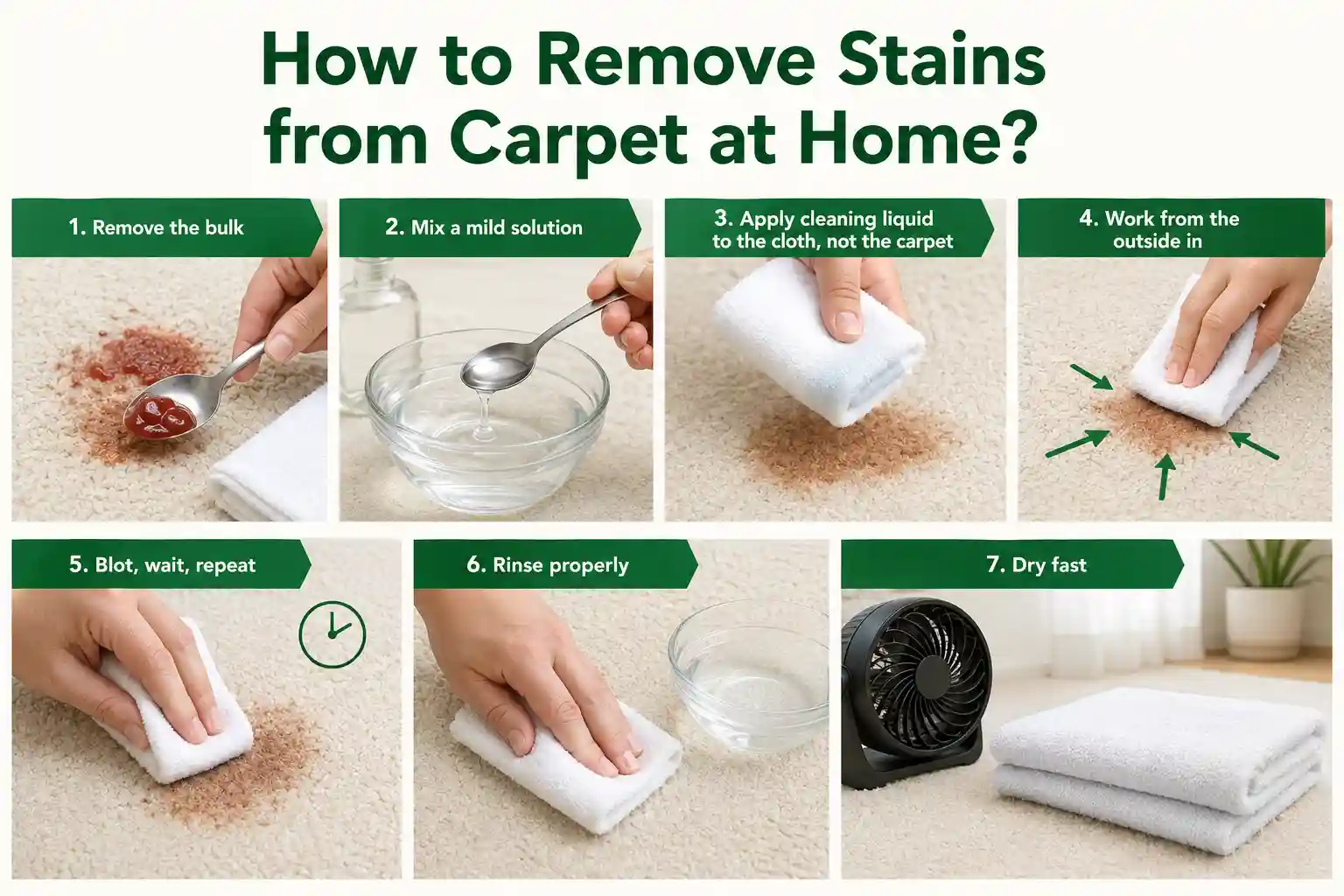
- Remove the bulk. Scoop solids with a spoon or a blunt knife. For liquids, press a folded white towel straight down and lift. Repeat with a dry section of towel until it stops picking up color.
- Mix a mild solution. One teaspoon of clear, non-bleach dish soap in half a liter of cool water is enough for most spills. Clear matters. Colored washing-up liquid can leave its own tint behind.
- Apply cleaning liquid to the cloth, not the carpet. Dampen a white cloth and press it onto the stain. This controls how much liquid enters the pile and stops the stain from spreading through the backing.
- Work from the outside in. Start at the edge of the stain and move toward the center. Working outward is how a small mark becomes a large ring.
- Blot, wait, repeat. Press, hold for a few seconds, and then lift. Give the solution two or three minutes of dwell time between rounds. Chemistry needs contact time, and patience does more than pressure.
- Rinse properly. Blot with a cloth dampened in plain cool water until no suds come up. Skipping this step is the single biggest cause of a stain that reappears a week later.
- Dry fast. Lay a thick towel over the damp patch, stand on it to draw moisture up, then aim a fan at the area. A wet carpet should be dry within a few hours, not overnight.
Why Blotting Beats Rubbing
Rubbing the luxury carpet does two damaging things at once. It abrades the tips of the fibers, which makes that patch reflect light differently and look permanently dull even after the stain is gone. It also forces the spill deeper into the yarn and down into the backing, where you cannot reach it and where it will wick back to the surface later. Blotting lifts the stain upward into an absorbent cloth. It feels slower. It is not.
How to Remove Fresh Carpet Stains
Acting quickly is worth more than any product. A spill sitting on the surface is still a liquid. Left alone, water evaporates, the residue concentrates, and the coloring compounds start bonding to the dye sites in the fiber.
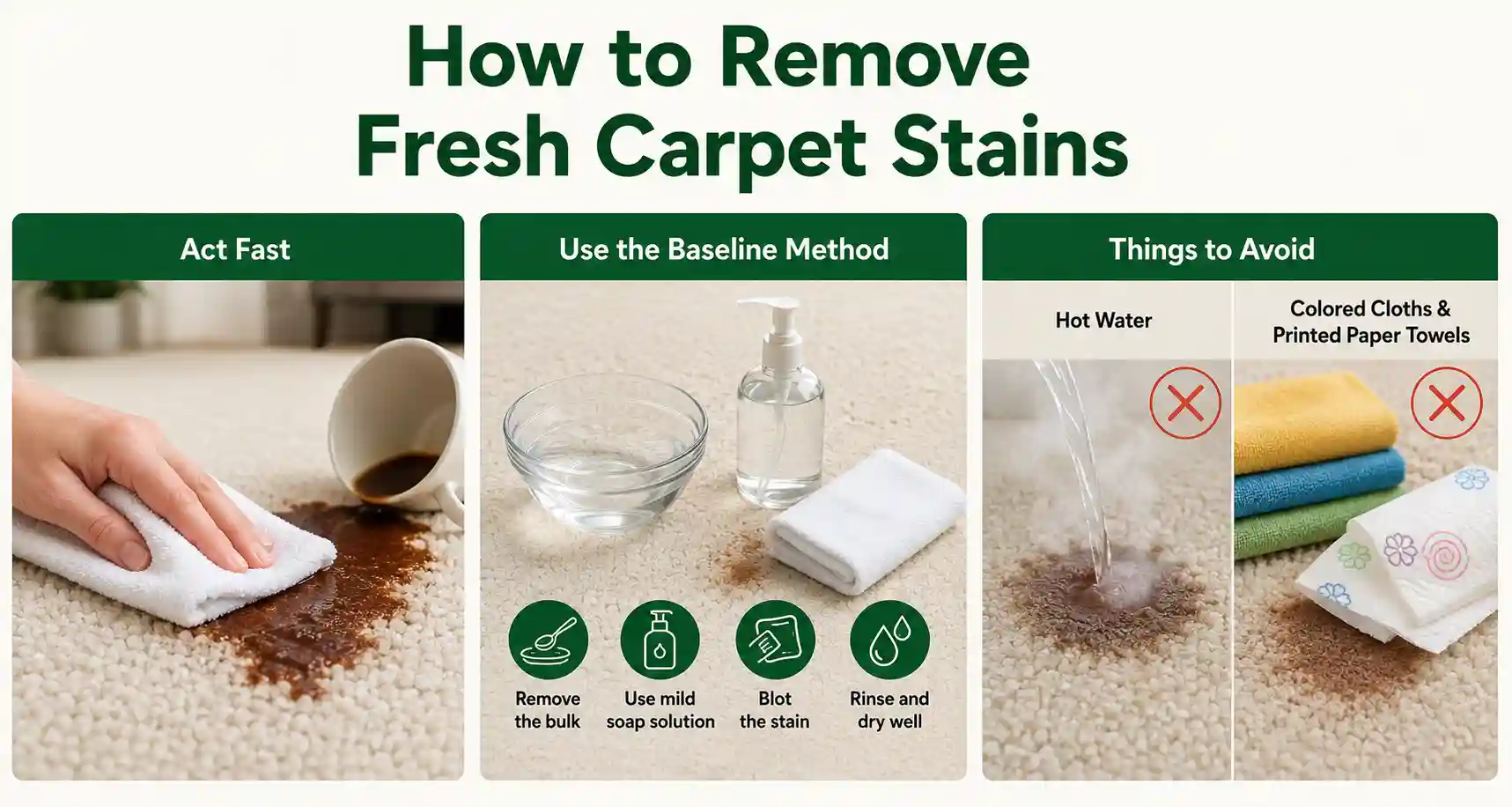
Blot immediately with anything white and absorbent. Do not fetch a cleaner first. Once you have lifted as much as possible, follow the baseline method above. For most fresh coffee, juice, soft drink, wine, and food spills, dish soap and cool water are all you need.
Two things to avoid in the first minutes:
- Hot water. Heat sets protein stains such as blood, milk, and egg, and it drives pigment deeper into synthetic fibers.
- Colored cloths and paper towels with print. Dye transfer onto a wet carpet is a stain of its own.
How to Get Dried Carpet Stains Out
A dried stain on indoor and outdoor carpets is not the same problem as a fresh one. The moisture has gone, the residue has hardened into a crust around the fibers, and any cleaner you apply will sit on top of that crust instead of reaching the stain.
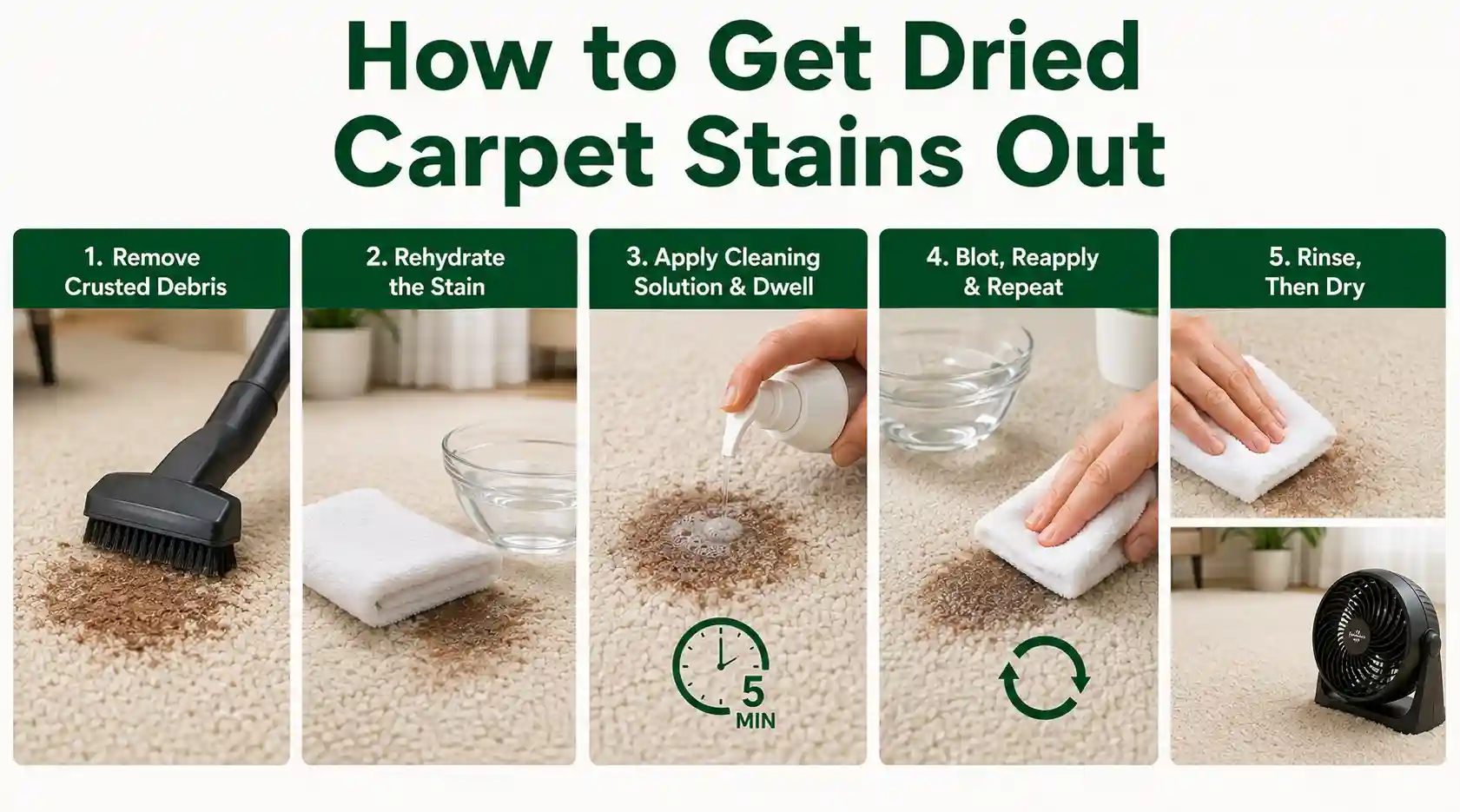
So rehydrate before you clean.
- Scrape or vacuum away anything crusted on the surface. A stiff brush used gently along the pile helps here, but do not scrub.
- Dampen the area with cool water and lay a wet cloth over it for fifteen to thirty minutes. This softens the residue and gives the cleaner something to work into.
- Apply dish soap solution and let it dwell for five minutes rather than one. Dried stains need longer contact.
- Blot, reapply the cleaning solution, and blot again. Expect three or four cycles. Each pass should lift a little more color onto the cloth.
- Rinse, then dry with a fan.
If the color on your blotting cloth stops changing after several rounds, the water-soluble part of the stain is gone. What remains needs a different chemistry, usually an oxidizer or an enzyme. That is the point to move to the next section rather than keep scrubbing.
How to Remove Old and Set-In Carpet Stains
Old stains on the carpet tiles and wall-to-wall floor coverings behave differently because they have had time to do more than sit there. Sugars caramelize. Tannins oxidize and darken. Protein cross-links. Some spills chemically bond to the dye sites in the fiber, which means what you are looking at is no longer a deposit on the carpet. It is a change in the carpet’s color.
That distinction decides your approach.
If the stain is still a deposit, repeated gentle treatment will shift it. Rehydrate, use a longer dwell time, and work through several cycles over an afternoon rather than attacking it hard in one go.
If the stain has become discoloration, no amount of detergent will help, because there is nothing left to lift. You need to break down the color itself with an oxidizing agent, or in the case of some red dyes, a reducing agent plus heat. Both are covered below.
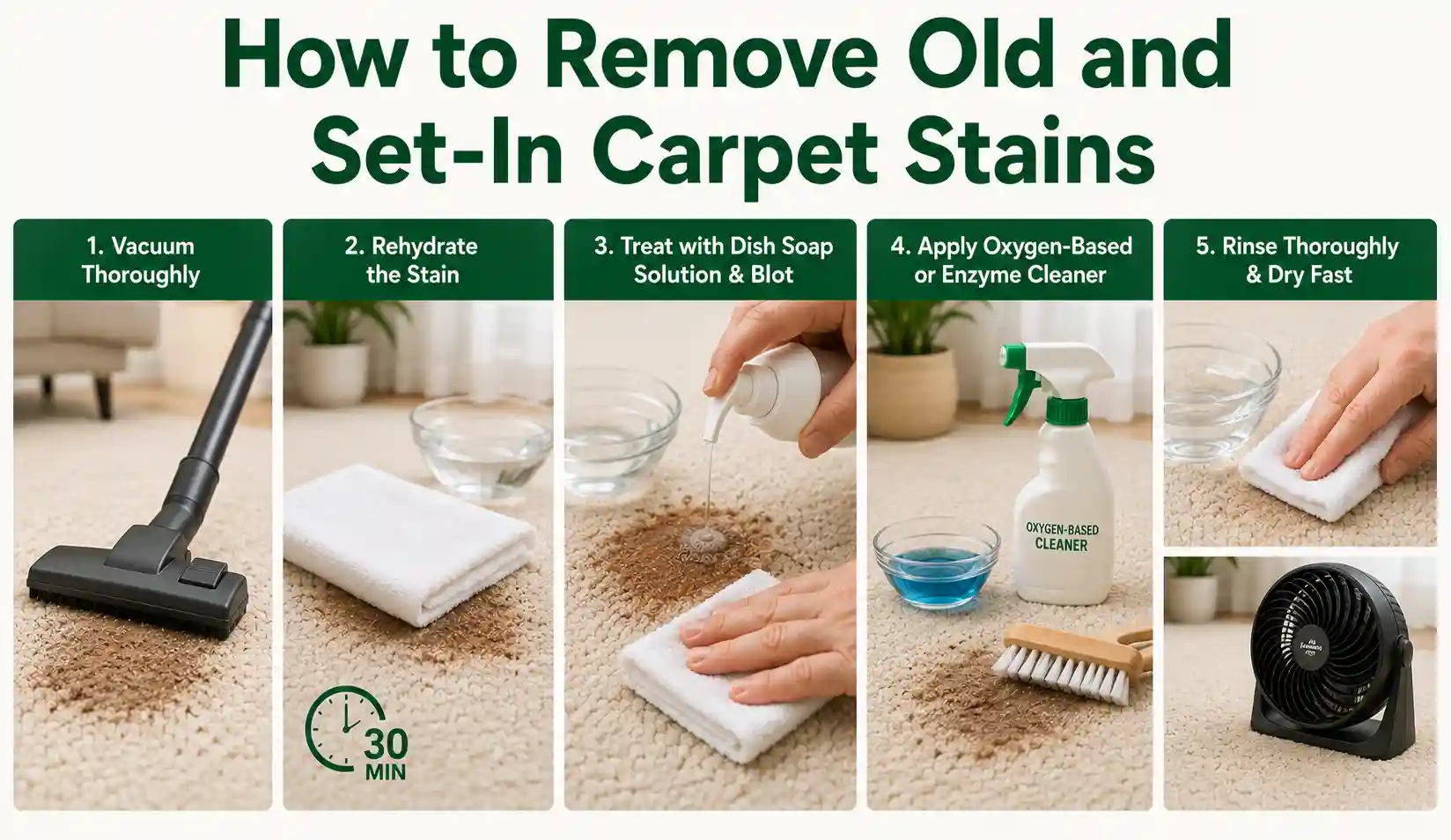
A practical sequence for a genuinely old stain:
- Vacuum thoroughly to remove loose soil around and within the pile.
- Rehydrate for thirty minutes under a damp cloth.
- Treat with a dish soap solution and blot through several cycles. Remove everything that comes out easily first.
- Only then apply an oxygen-based or enzyme cleaner suited to the stain type.
- Rinse thoroughly and dry fast, because heavy moisture in an old stain is exactly the condition that causes it to wick back.
How to Remove 10-Year-Old Stains from Carpet
Be realistic here, because the honest answer helps you more than an optimistic one. A ten-year-old stain has usually done three things: bonded to the fiber, been walked on and ground in by years of foot traffic, and quite possibly been treated before with something that set it further.
You can still improve it. Work through the sequence above, then apply an oxygen-based cleaner and let it dwell for thirty minutes to an hour, keeping the area barely damp rather than wet. Repeat on separate days rather than escalating to a harsher product in one session.
Expect lightening, not disappearance. A dark ring might fade to a faint shadow you only notice when you look for it. That is a good outcome for a decade-old mark. If the stain sits in a traffic lane, the surrounding carpet is also worn. So even a perfect result will look slightly different from the rest of the room.
Some ten-year-old stains will not move at all. If a previous owner used chlorine bleach, an acne cream, a benzoyl peroxide product, or a plant fertilizer on that spot, the dye is gone, not just covered. No cleaner restores missing dye. The only fixes are professional spot dyeing or replacing that section of carpet from an offcut.
The Best Carpet Stain Remover for Old Stains
There is no single best product, because old stains are not one problem. The best carpet stain remover for old stains is the one whose chemistry matches what the stain has become. Learn the four categories, and you will pick correctly every time.
| Product Type | What It Does | Best For | Watch Out For |
| Oxygen-based cleaner (hydrogen peroxide or sodium percarbonate) |
Breaks apart the color-carrying part of the molecule | Old coffee, tea, wine, fruit juice, food dye, pet stain shadows | Not for wool or silk, and needs a colorfast test on any dark carpet |
| Enzyme cleaner | Digests protein, starch, and uric acid so it can be rinsed away | Pet urine, vomit, blood, milk, egg, old food | Needs hours of dwell time and must stay damp to work |
| Solvent spotter (citrus, d-limonene or dry-cleaning type) |
Dissolves oil-based residue that water cannot touch | Grease, cosmetics, tar, adhesive, ink | Can soften olefin and latex backing; always test |
| Reducing agent (sodium bisulfite type, sold as red stain remover) |
Strips color from synthetic dyes rather than oxidizing them | Red drink dye, food coloring, some inks | Usually needs heat to activate, easy to over-apply |
A few buying notes from experience. Look for a product that names the stain category on the label rather than promising to remove everything. Avoid anything that leaves a sticky or perfumed film, because that residue attracts soil and the spot will look dirty again within weeks. If a product does not tell you to rinse afterward, rinse anyway.
How to Remove Stains from Carpet with Baking Soda
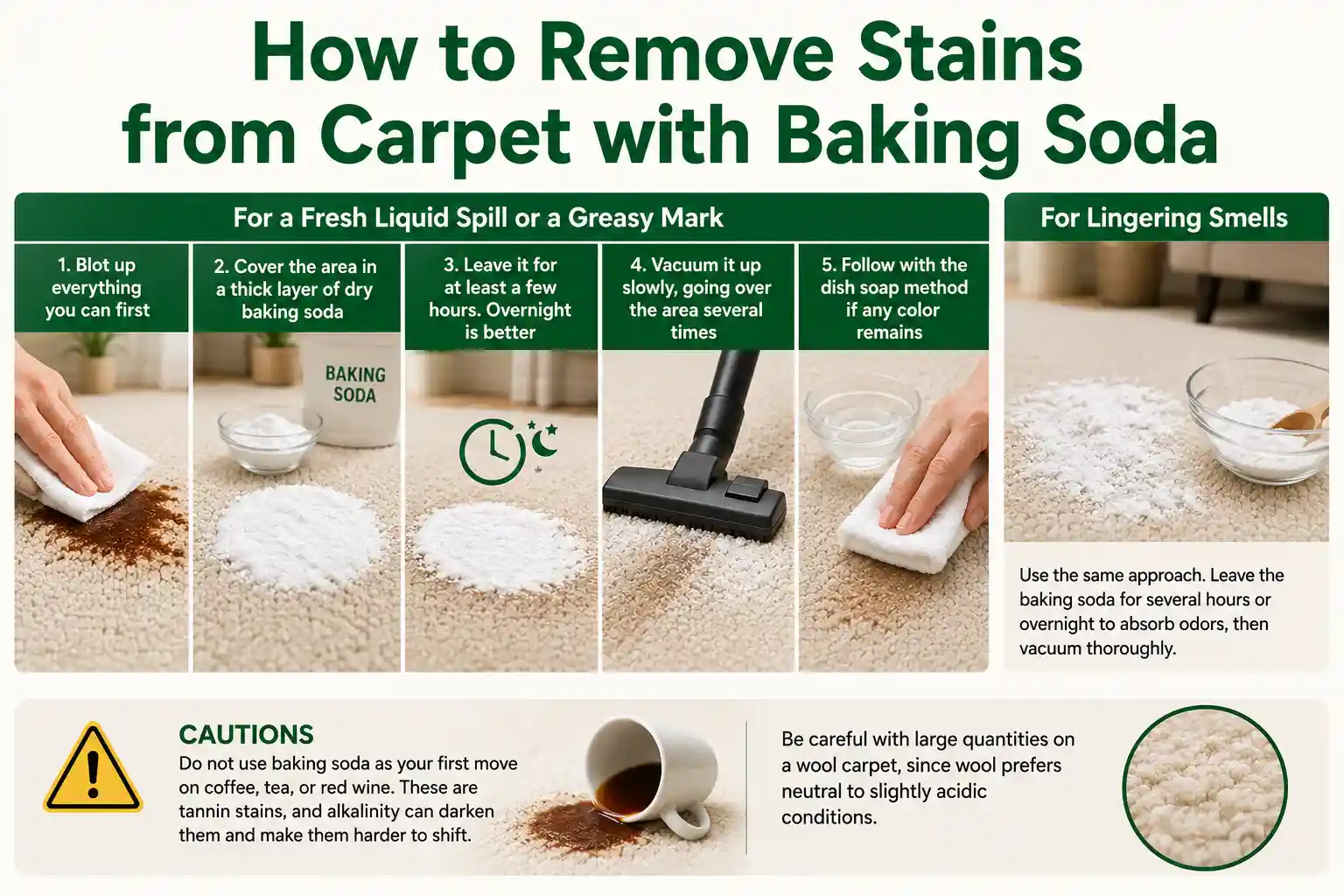
Baking soda earns its reputation, but not for the reason most people think. It is a mild alkali and a very good absorbent. That makes it excellent at pulling liquid and oil out of a pile and at neutralizing acidic odors. It is a poor stain remover on its own for anything that has already dried.
Use it where it actually works.
For a fresh liquid spill or a greasy mark:
- Blot up everything you can first.
- Cover the area in a thick layer of dry baking soda, enough that you cannot see the carpet.
- Leave it for at least a few hours. Overnight is better for grease and odor.
- Vacuum it up slowly, going over the area several times from different directions.
- Follow with the dish soap method if any color remains.
For lingering smells, the same approach works, though you need to be patient and vacuum thoroughly. Leftover baking soda in the pile feels gritty and dulls the fiber.
Two cautions. Do not use baking soda as your first move on coffee, tea, or red wine. These are tannin stains, and alkalinity can darken them and make them harder to shift. And be careful with large quantities on a wool carpet, since wool prefers neutral to slightly acidic conditions.
How to Remove Stains from Carpet with Baking Soda and Vinegar
This combination is everywhere online, and it does have real uses, but the popular version of it is chemically backward. When you pour vinegar onto baking soda, an acid meets a base, and they neutralize each other. The fizz is carbon dioxide escaping. What you are left with is mostly water and salt, which is a far weaker cleaner than either ingredient was on its own.
The fizzing still helps a little, because the bubbles lift loose particles mechanically. That is why people see some improvement and assume the chemistry is doing the work.
Use them sequentially instead, and you get the benefit of both.
- Blot the stain and let the area dry, or use baking soda to absorb what is left.
- Vacuum the powder away completely.
- Mix one part white vinegar with three parts cool water and spray lightly, or apply with a damp cloth.
- Let it sit for five minutes. Vinegar is mildly acidic, which suits tannin stains, urine salts, and alkaline residue left behind by earlier cleaning.
- Blot with a clean cloth, rinse with plain water, and dry with a fan.
If you prefer the fizz method for the mechanical lift, sprinkle the baking soda first and mist the vinegar solution over it rather than mixing them in a bowl. Either way, rinse afterward. Both ingredients leave residue, and residue is what makes a clean patch turn gray faster than the carpet around it.
Can vinegar damage carpet? Diluted white vinegar is safe on most synthetic carpets. Repeated use of undiluted vinegar can dull fibers and, on wool, affect dye stability over time. Never use it on natural plant fibers like jute or sisal carpet, where moisture can cause browning. And never mix vinegar with hydrogen peroxide or bleach.
How to Remove Stains from Carpet with Hydrogen Peroxide
Hydrogen peroxide is the strongest tool most people already have at home, and the one most likely to cause damage if used carelessly. It works by oxidation, attacking the part of a stain molecule that carries color. That is exactly why it also attacks carpet dye.
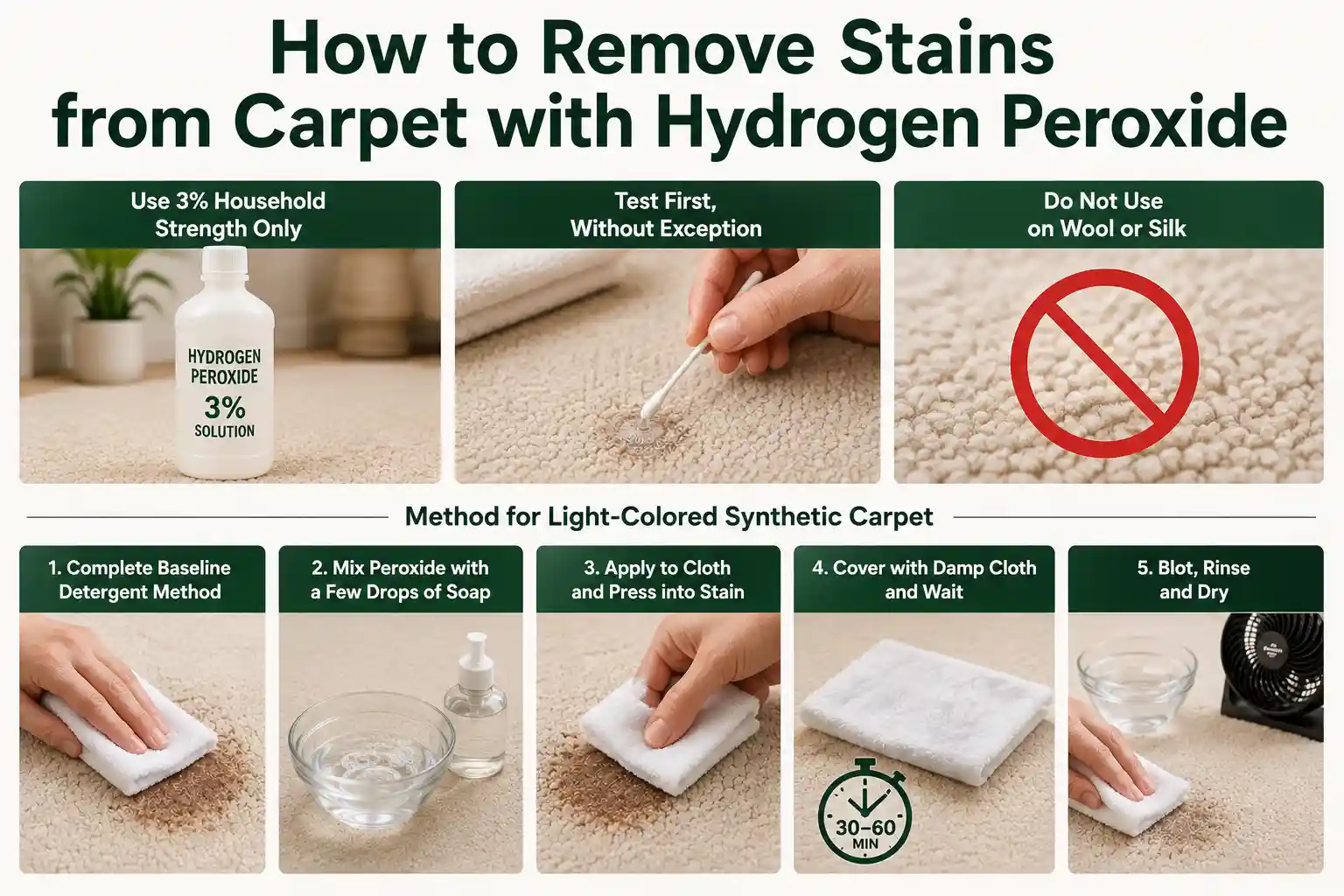
- Use 3% household strength only. Higher concentrations sold for hair or industrial use will bleach carpet.
- Test first, without exception. Apply a drop to a hidden area, cover it, wait an hour, then check for lightening. Peroxide damage is often slow to appear, so a five-minute test is not enough.
- Do not use it on wool or silk. Active oxygen degrades protein fibers and can yellow or shift the color of a wool carpet. This is not a small risk; it is the standard warning across the wool care industry.
Method for light-colored synthetic carpet:
- Complete the baseline detergent method first, so peroxide only has to deal with what detergent could not remove.
- Mix 3% hydrogen peroxide with a few drops of clear dish soap.
- Apply to a white cloth and press into the stain. Keep it damp, not soaked.
- Cover with a damp cloth and leave for thirty minutes to an hour, checking every fifteen minutes.
- Blot, rinse thoroughly with cool water, and dry with a fan.
Peroxide is at its best on old organic stains such as coffee, tea, wine, fruit juice, blood, and the brown shadow left by pet accidents. It is useless on grease, which needs a solvent instead.
How to Remove Common Carpet Stains?
Treating different types of stains on the carpet isn’t the same. You need different cleaning solutions and methods depending on the stain type.
1. How to Remove Coffee and Tea Stains From Carpets?
To remove the tea and coffee stains, blot, then use cool water with dish soap. Once the bulk has lifted, switch to a one-to-three white vinegar-to-water solution, because mild acid suits tannin better than alkali. For old rings, finish with an oxygen-based cleaner.
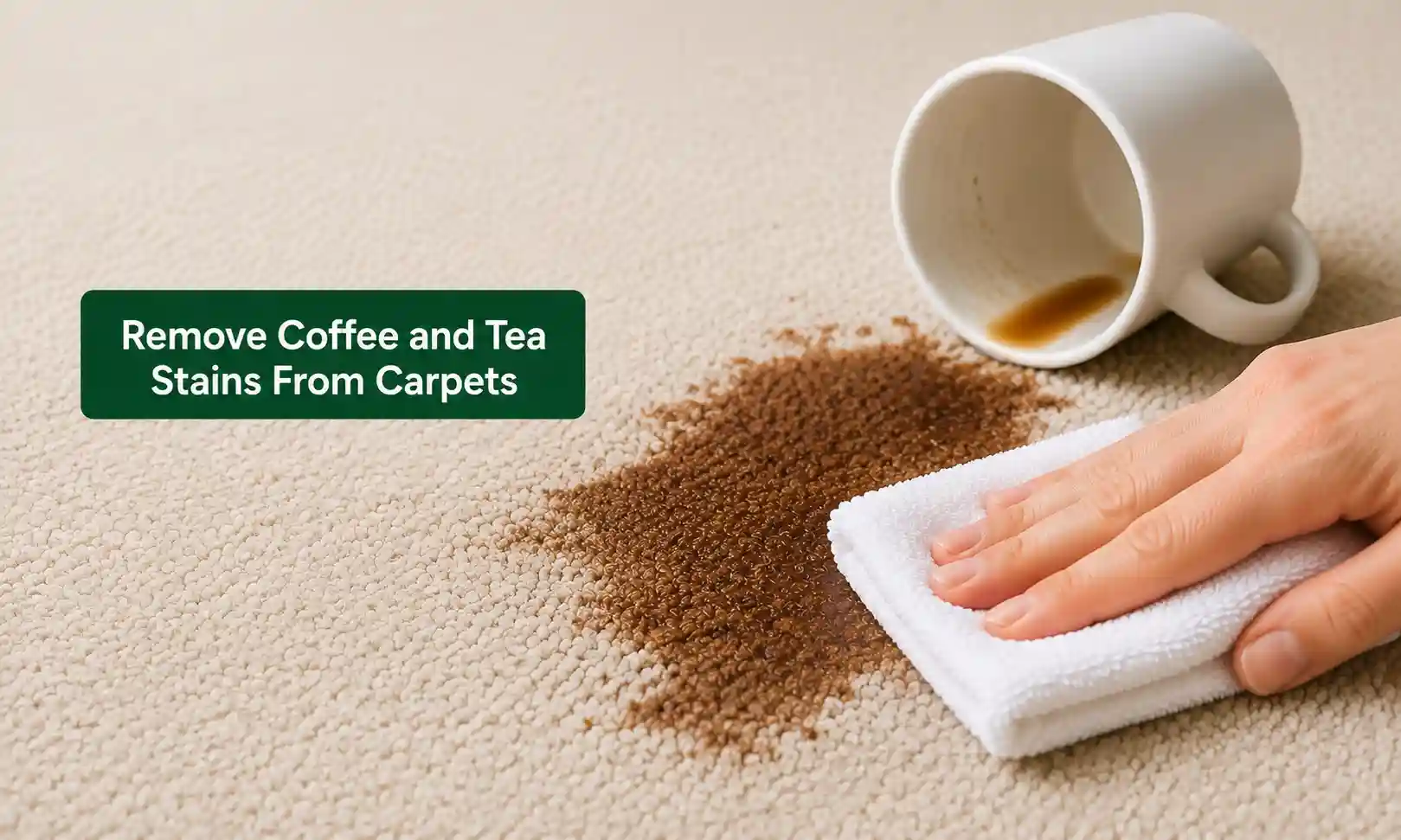
Milky coffee also has a protein component, so if a shadow remains, an enzyme cleaner may finish the job.
2. How to Remove Red Wine Stains From Carpet?
Blot hard and fast, then flush with cool water and blot again. Salt or club soda helps only while the spill is still wet, and mainly by absorption.
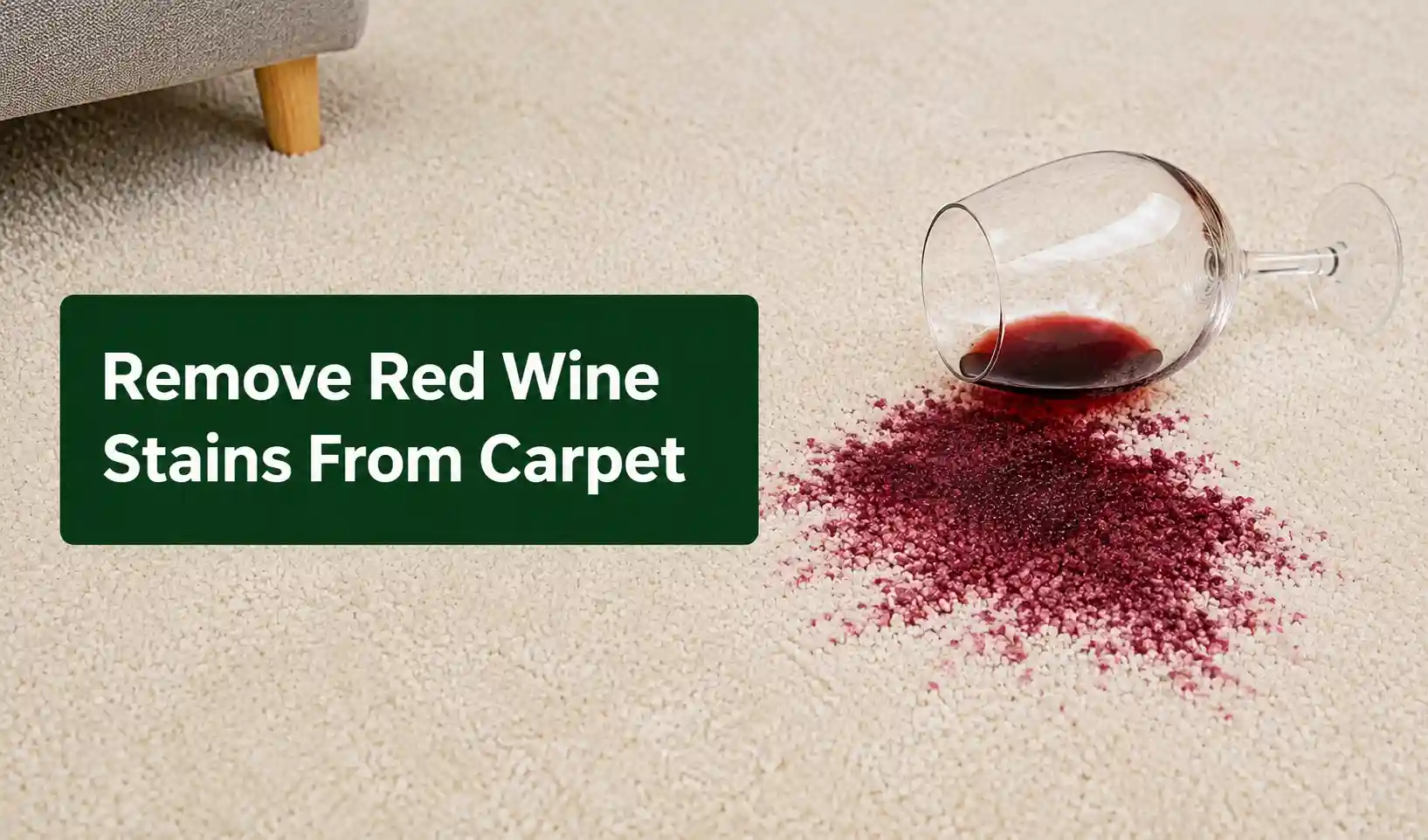
Once you have lifted what you can, use dish soap, then move to 3% hydrogen peroxide on light synthetic carpet. On wool, stop at the detergent stage and call a professional, because wine plus a wool carpet is one of the most common causes of DIY bleach damage.
3. How to Remove Food, Sauce and Chocolate Stains From Carpets?
Scrape the solids away first. Chocolate is easier if you chill it with an ice cube until it hardens. Then treat as a combination stain: dish soap for the fat, a vinegar rinse for the acid content, and an oxidizer for the pigment if a mark remains.
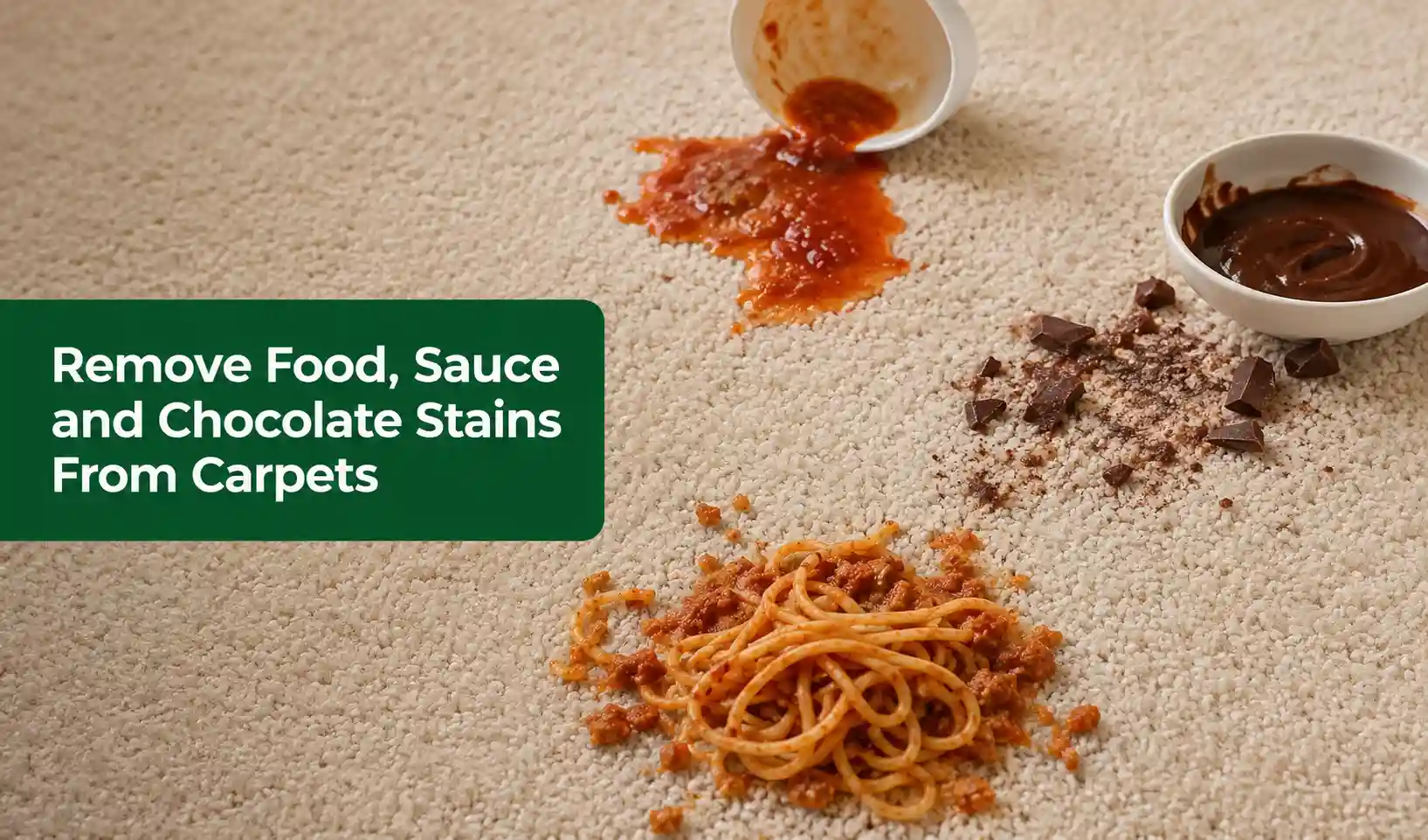
Tomato sauce is the stubborn one because of its dye load, so expect two or three passes.
4. How to Remove Grease and Oil Stains From Carpet?
Water makes this worse. Start by absorbing with baking soda or cornstarch left on for several hours, then vacuum. Follow with a degreasing dish soap solution or a citrus-based spotter applied to a cloth.
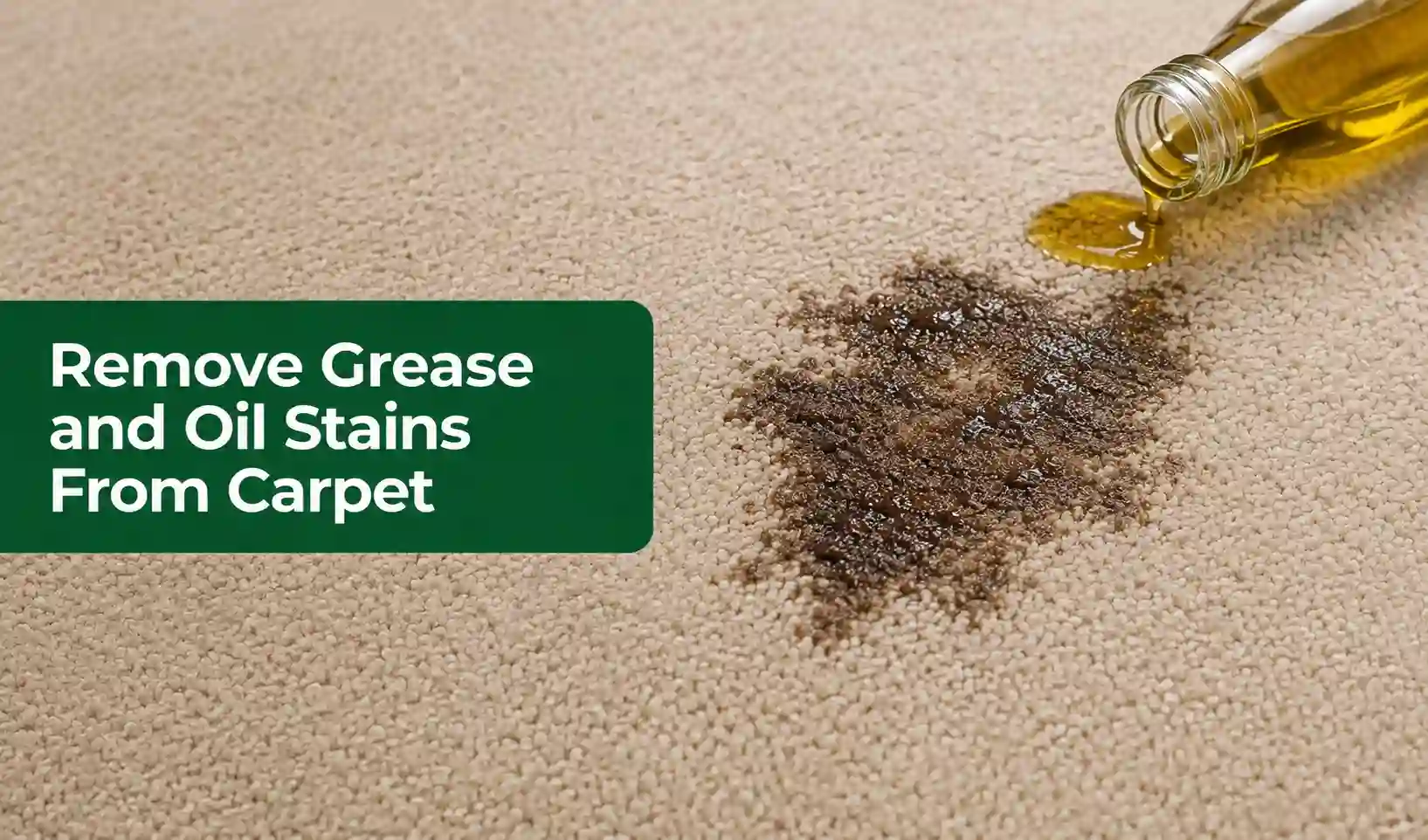
On polyester and olefin, which attract oil, you will almost certainly need the solvent step. Test any solvent on a hidden area first, since some soften the backing adhesive.
5. How to Remove Ink and Marker Stains From Carpet?
Dab isopropyl alcohol onto a white cloth and press. Use small amounts and change to a clean part of the cloth constantly, because ink spreads the moment the area gets too wet.
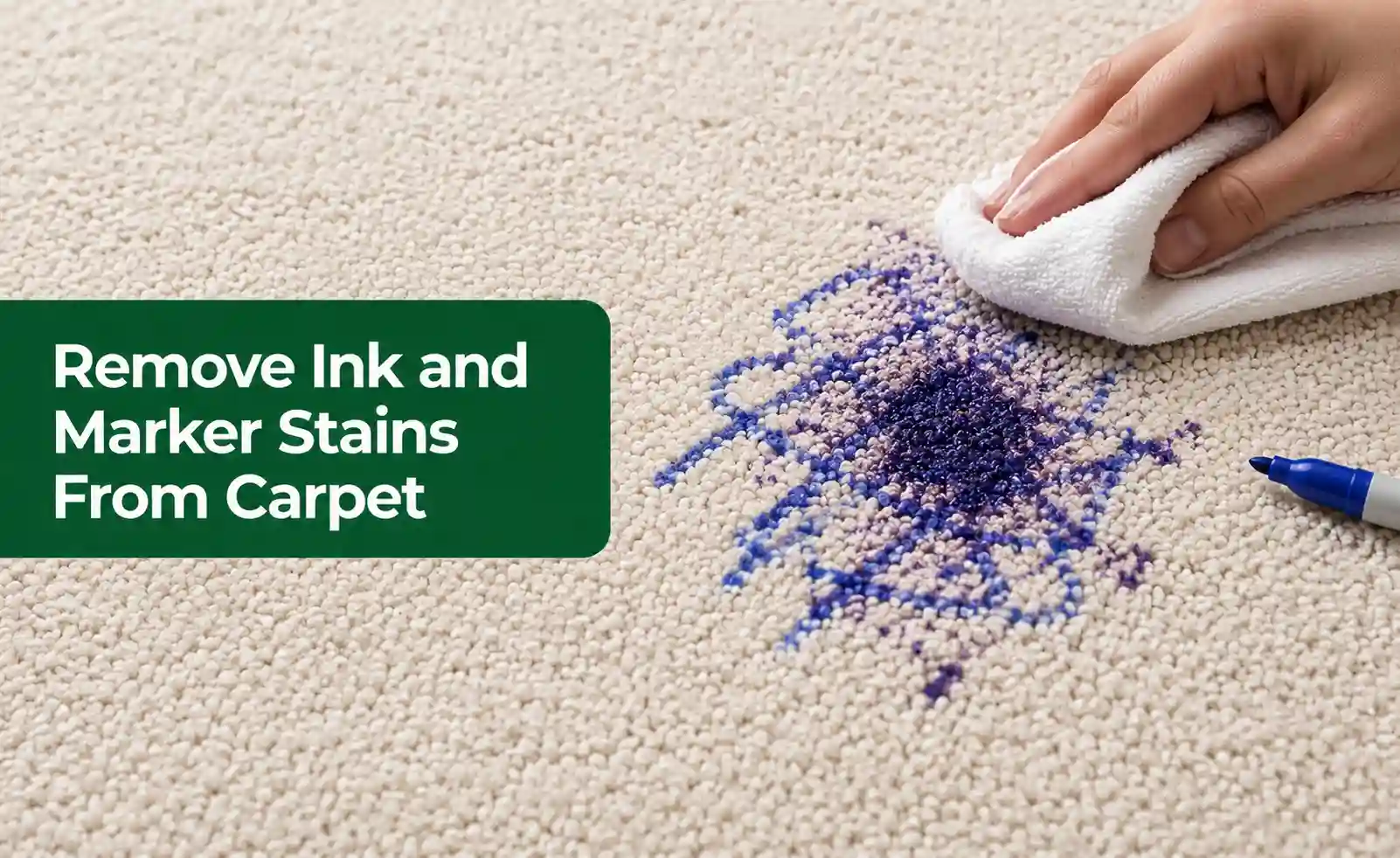
Ballpoint usually comes out. Permanent marker and printer ink often do not. Stop before you have spread a small dot into a large gray patch, since a small ink mark is easier for a professional to fix than a diluted one.
6. How to Remove Mud and Soil Stains From Carpet?
Do nothing while it is wet. Let it dry completely, break up the crust with your fingers, and vacuum. Most of it will come away as dust.
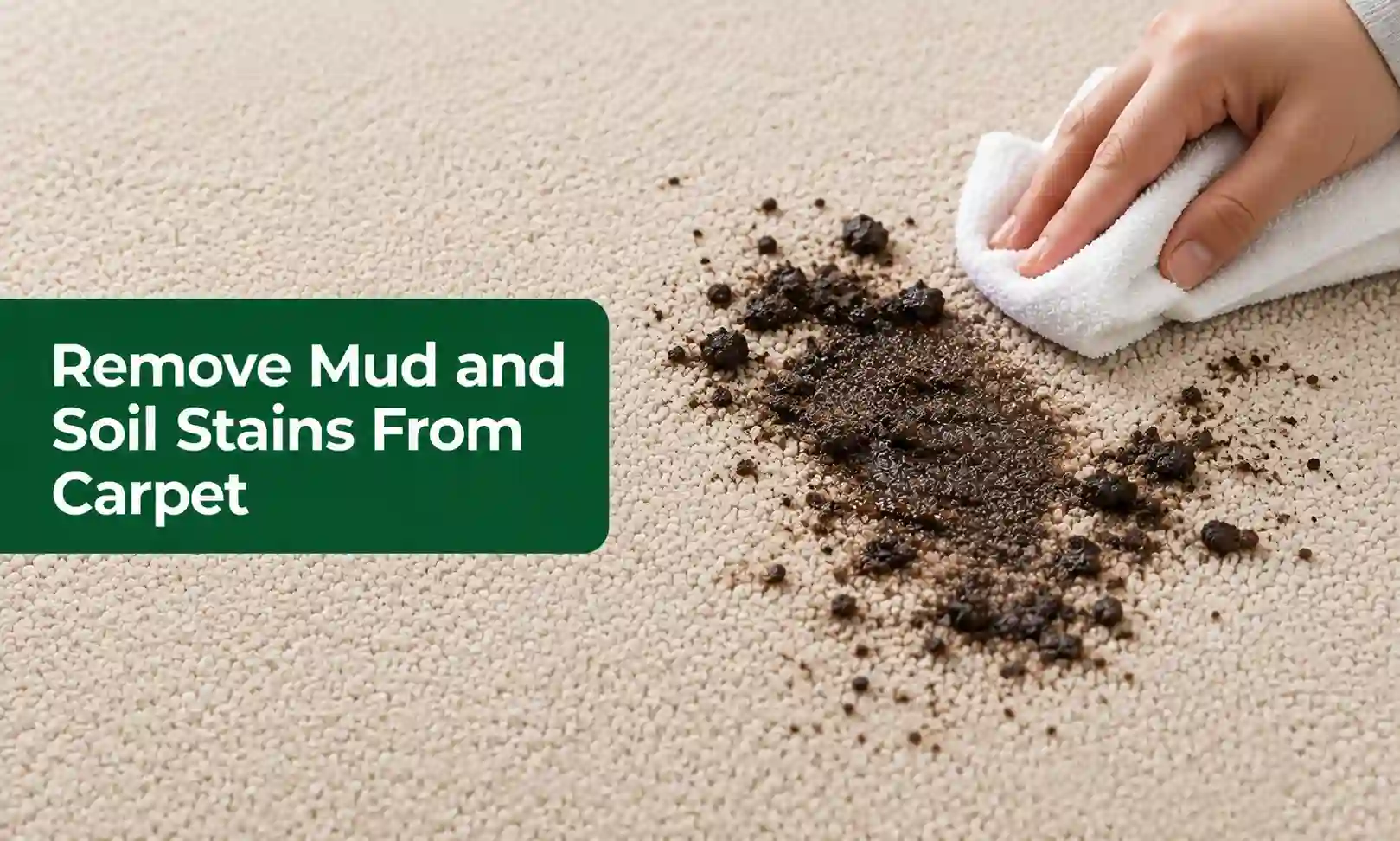
Clean any remaining tint with dish soap and cool water. Wiping wet mud is what turns a surface mark into a stain in the backing.
7. How to Remove Pet Urine, Vomit and Feces From Carpet?
Remove solids, blot liquid, and then use an enzyme cleaner rather than a general-purpose one. Urine leaves uric acid crystals that ordinary detergent cannot dissolve, which is why the smell returns on humid days even after the visible mark has gone. Enzymes break those crystals down.
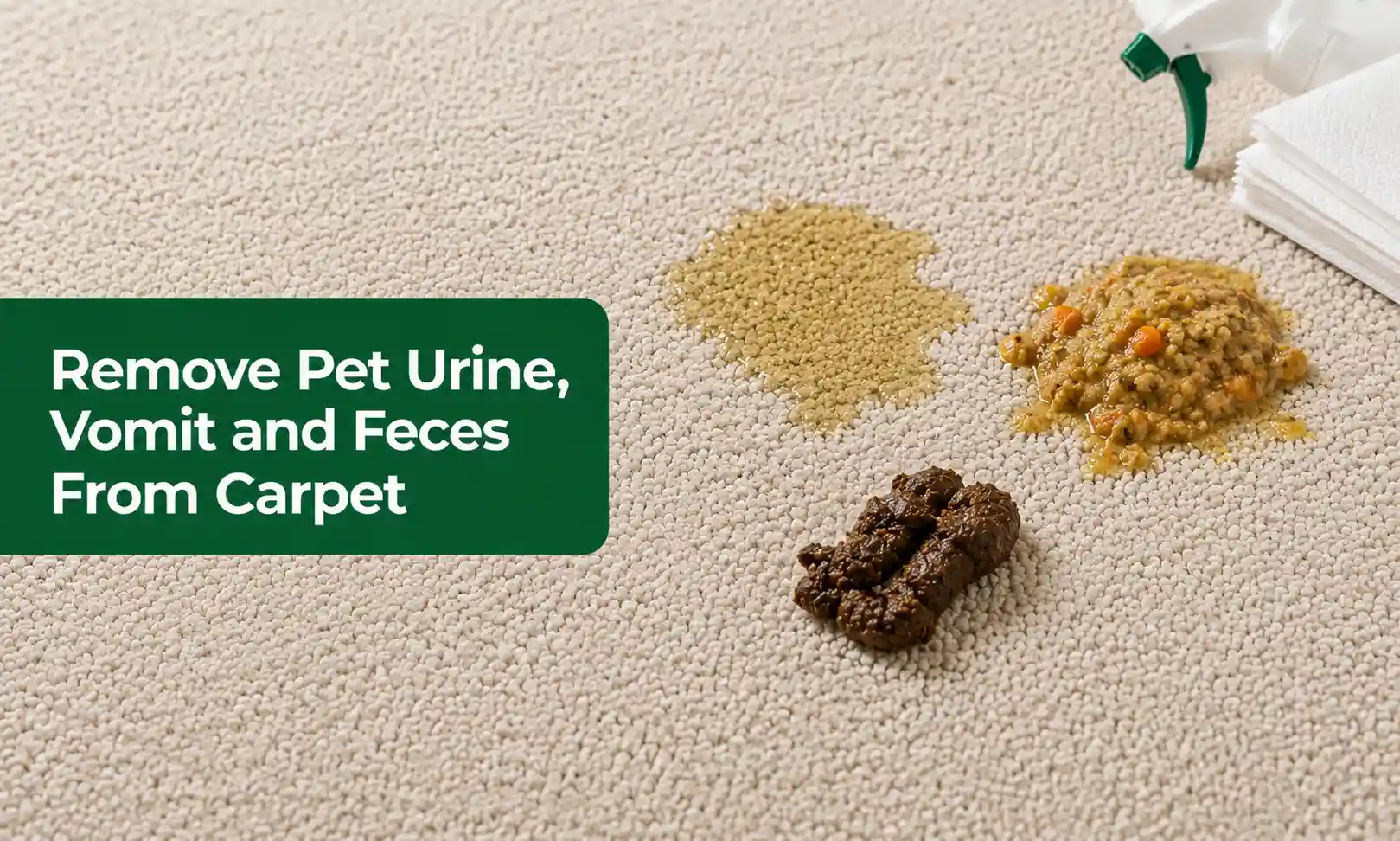
Apply generously, enough to reach as deep as the urine did, and keep the area damp for the dwell time on the label, often several hours. Cover it with a damp towel to slow evaporation. Repeat for older deposits.
Vinegar and baking soda will reduce the smell temporarily. They do not remove the source. And be aware that pet urine is alkaline as it ages and can strip carpet dye on its own, so a yellow patch that stays after cleaning may be dye loss rather than a remaining stain.
8. How to Remove Blood Stains From Carpets?
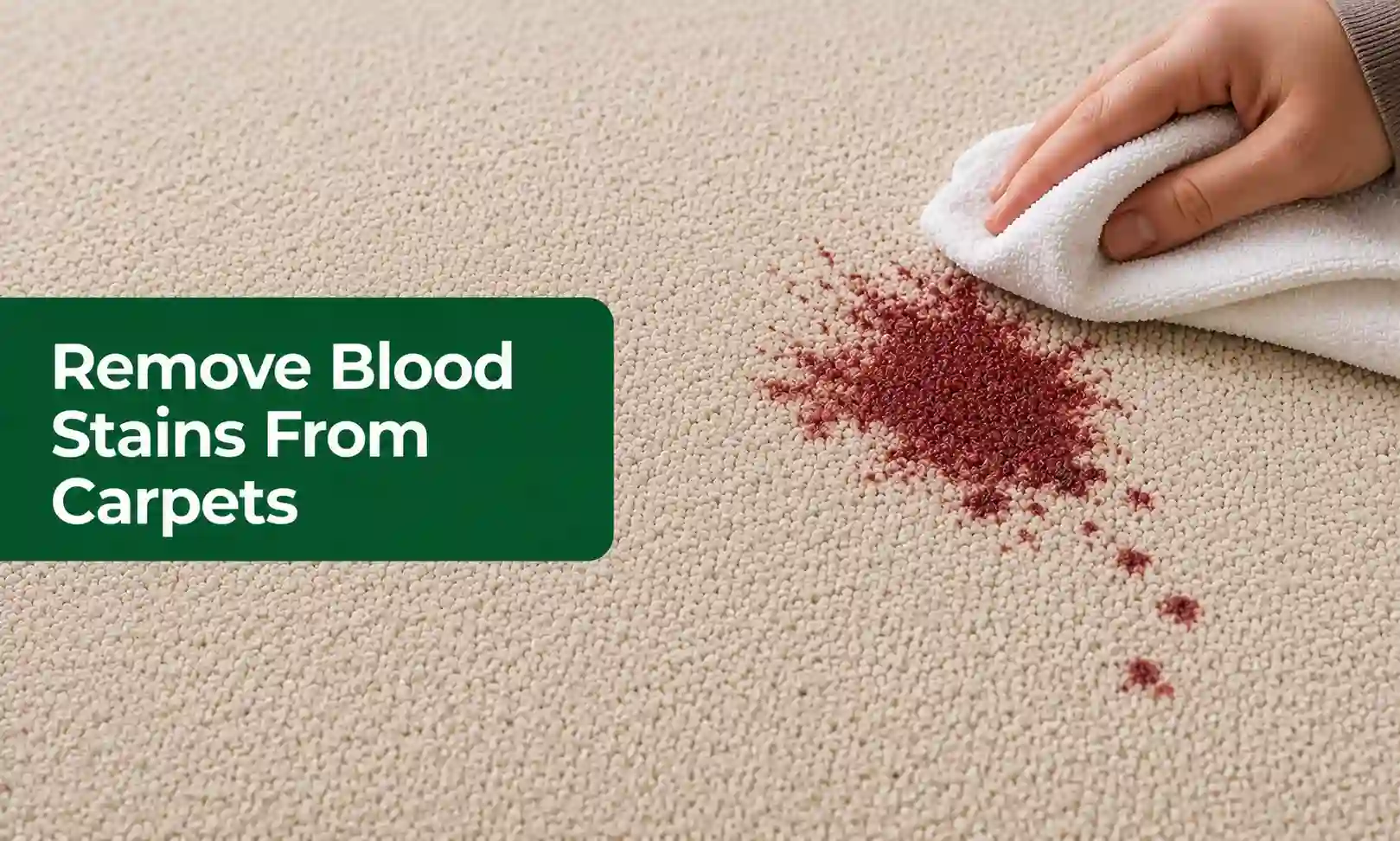
To remove blood stains from carpet, you should use cold water only. Warm water sets protein and makes the stain permanent. Blot with cold water repeatedly, and use a little salt paste for dried blood to help break up the crust. On light synthetic carpet, 3% hydrogen peroxide works well on blood, though it will foam noticeably. An enzyme cleaner is the safer option on colored carpet.
Why Stains Come Back After Cleaning
This is one of the most common complaints after a DIY clean, and it usually has one of two causes.
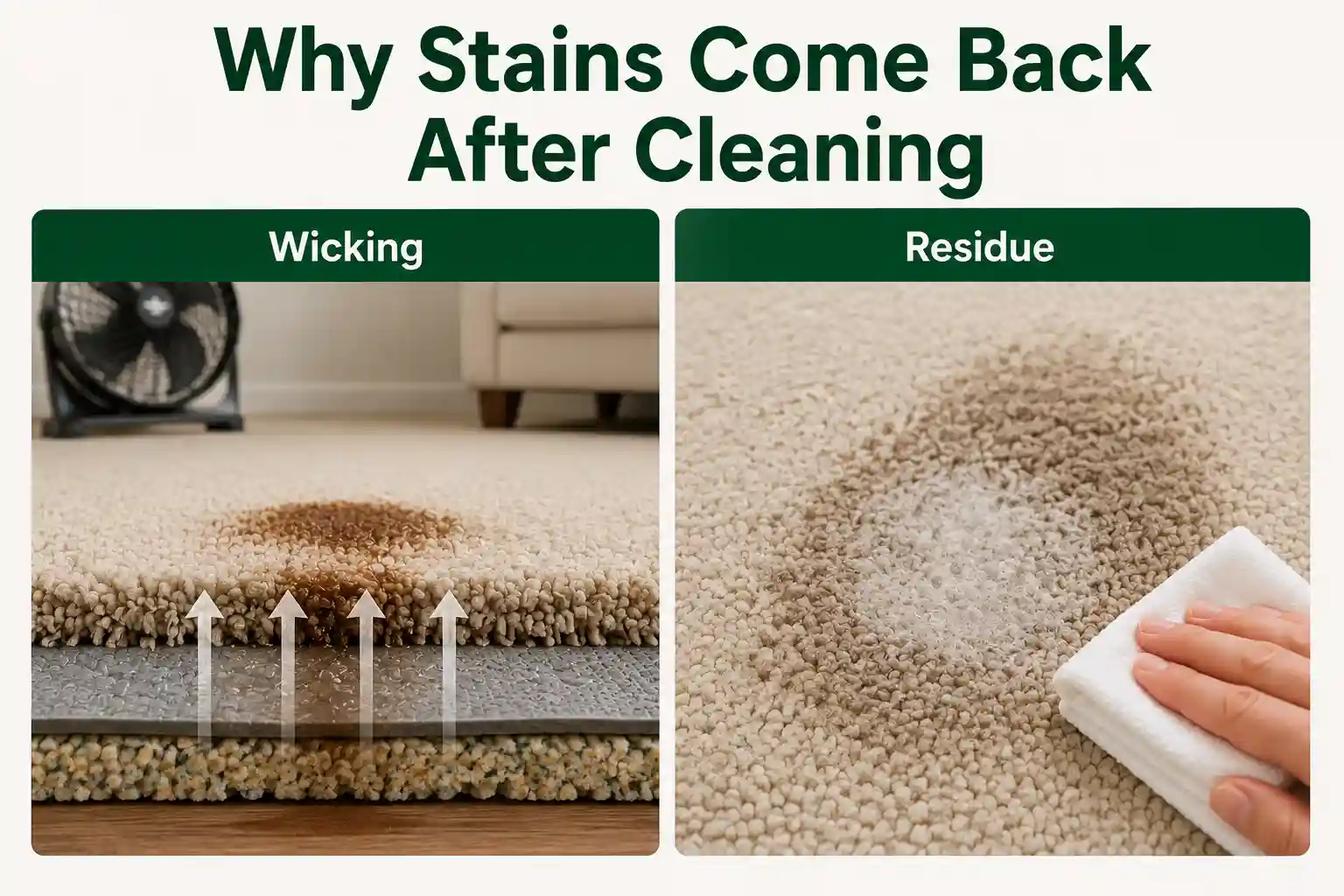
Wicking. You used too much liquid. The spill and the cleaner soaked past the pile into the backing and the underlay. As the carpet dries, moisture travels upward and carries the dissolved stain back to the tips of the fibers, where you see it again a day or two later. The fix is prevention: use less liquid, blot rather than pour, and dry fast with a fan. If a stain has already wicked back, place a thick dry towel over it, weigh it down with something heavy, and leave it overnight to draw the residue up into the towel.
Residue. You did not rinse. Detergent and shampoo left in the pile stay sticky, and sticky fibers grab soil from shoes with every step. Within a fortnight, the clean patch is dirtier than the carpet around it. Rinse with plain cool water until no foam appears on the blotting cloth, every single time.
Mistakes That Cost People Their Carpets
There are some carpet cleaning mistakes that can damage the carpet rather than cleaning it.
- Scrubbing. It damages fiber tips and creates a permanent dull patch that no cleaner fixes.
- Using hot water on protein stains. Blood, milk, egg, and pet accidents all set with heat.
- Over-wetting. Soaking the pile risks wicking, backing delamination, shrinkage, and mold in the underlay.
- Mixing products. Layering a peroxide cleaner over an ammonia product, or vinegar over bleach, produces unpredictable results and sometimes harmful fumes.
- Skipping the patch test. Ten minutes of testing is cheaper than a bleached spot.
- Using bleach on colored carpet. Even diluted, chlorine bleach strips dye and can weaken the fiber. The lighter mark it leaves is permanent.
- Escalating too quickly. Trying five products in one hour makes a professional’s job harder, because they then have to work out what chemistry is already sitting in the fibers.
- Leaving it wet overnight. A carpet that stays damp for more than a day develops a musty smell that is harder to remove than the original stain.
What Do Professional Carpet Cleaners Use to Remove Stains
Professionals get better results largely because they identify the stain and the fiber first, then select a specific chemistry rather than a general-purpose spray. Their toolkit falls into a few groups.
- Alkaline pre-sprays for general soil and traffic lanes, chosen at a pH the fiber can tolerate. Wool gets a much gentler product than nylon.
- Enzyme and protein spotters for urine, vomit, blood and food. Applied and left to dwell, often under cover to keep them damp.
- Acidic spotters for rust, mineral marks and urine salts, and as a final rinse to bring the carpet back to a slightly acidic pH.
- Solvent spotters, often described as paint, oil and grease removers, for anything water will not touch.
- Oxidizers based on hydrogen peroxide or sodium percarbonate, used on tannin and organic pigment stains. These do not lift the stain so much as destroy the part of the molecule that carries color.
- Reducing agents for synthetic red dye, usually applied with heat from a steam iron through a damp towel, which is the standard method for red drink spills.
- Hot water extraction, the truck-mounted or portable machine most people call steam cleaning. A high-temperature solution is injected and immediately vacuumed back out, taking suspended soil with it.
- Acid rinse and air movers to finish, neutralizing residue so the carpet does not resoil quickly and drying it in hours rather than days.
For damage rather than dirt, a specialist may offer spot dyeing to restore color to a bleached area, or a bonded insert, where a damaged patch is cut out and replaced with carpet taken from a wardrobe or an offcut.
Final Words
Successfully removing carpet stains comes down to acting quickly, matching the right chemistry to the stain, and protecting the carpet fibers. Always blot rather than rub to prevent forcing spills into the backing or fraying fiber tips. Fresh spills respond best to cool water and mild dish soap, whereas stubborn or older stains require targeted treatments like enzymes for organic waste, solvents for grease, or oxidizers for set-in pigments.
Crucially, always rinse away any remaining detergent with plain water and dry the area quickly to prevent wicking and re-soiling. Understanding whether a mark is removable surface residue or permanent dye loss ensures you treat your carpet effectively while preventing irreversible damage.
Frequently Asked Questions
Often improved, sometimes removed completely, occasionally not at all. If the stain is still a deposit sitting in the fiber, repeated gentle treatment with the right chemistry will lift most of it. If it has bonded to the dye sites or stripped the dye out, you are looking at discoloration rather than dirt, and cleaning cannot reverse that.
It absorbs liquid and grease and neutralizes odor very effectively, which is genuinely useful. It is not a strong stain remover for dried marks, and it should not be your first choice on coffee, tea, or wine, where alkalinity can make the stain darker.
Diluted white vinegar at roughly one part vinegar to three parts water is safe on most synthetic carpets. Undiluted or frequently repeated use can dull fibers and affect dye on wool. Avoid it entirely on jute, sisal, and seagrass, and never combine it with bleach or peroxide.
Sometimes, but it demands a proper test. Use 3% strength, apply a drop to a hidden area, cover it, and check an hour later. Dark and richly dyed carpets lighten most easily. On wool and silk, do not use it at all.
The one that matches the stain type. Oxygen-based cleaners for old coffee, tea, wine and fruit stains. Enzyme cleaners for anything organic, especially pet accidents. Solvent spotters for grease and ink. A dedicated red stain remover for drink dye. A product that claims to handle every stain equally well tends to underperform on all of them.
Either the stain wicked up from the backing as the carpet dried, or cleaning residue was left in the pile and attracted new soil. Use less liquid, rinse with plain water, and dry the area quickly with a fan. For a stain that has already returned, weigh a dry towel over it overnight to draw the residue out.
It removes embedded soil extremely well, which often makes a room look transformed, but heat and water alone will not touch a stain that has bonded chemically to the fiber. Those need a targeted spotter applied before extraction. Heat can also set some protein stains, which is why professionals treat the spot first and extract afterward.
There is no fixed deadline, but the first hour matters most for liquids, and the first day matters most for anything with dye or protein in it. After a few weeks, most stains have oxidized or bonded enough that home methods will lighten rather than remove them.
You can, but treat the spot by hand first and use the machine mainly to rinse and extract. Running a machine over an untreated stain floods the backing and is a common cause of wicking. Whatever the machine puts down, make a final pass with plain water to pull the detergent back out.
A reputable one will not, and that is a good sign. Bleach marks, dye loss, cellulosic browning, and stains that have altered the fiber cannot be cleaned away. A professional can promise an honest assessment and the right chemistry, plus repair options like spot dyeing if the stain turns out to be damage rather than dirt.