
How to Get Rid of Carpet Beetles: What Actually Works
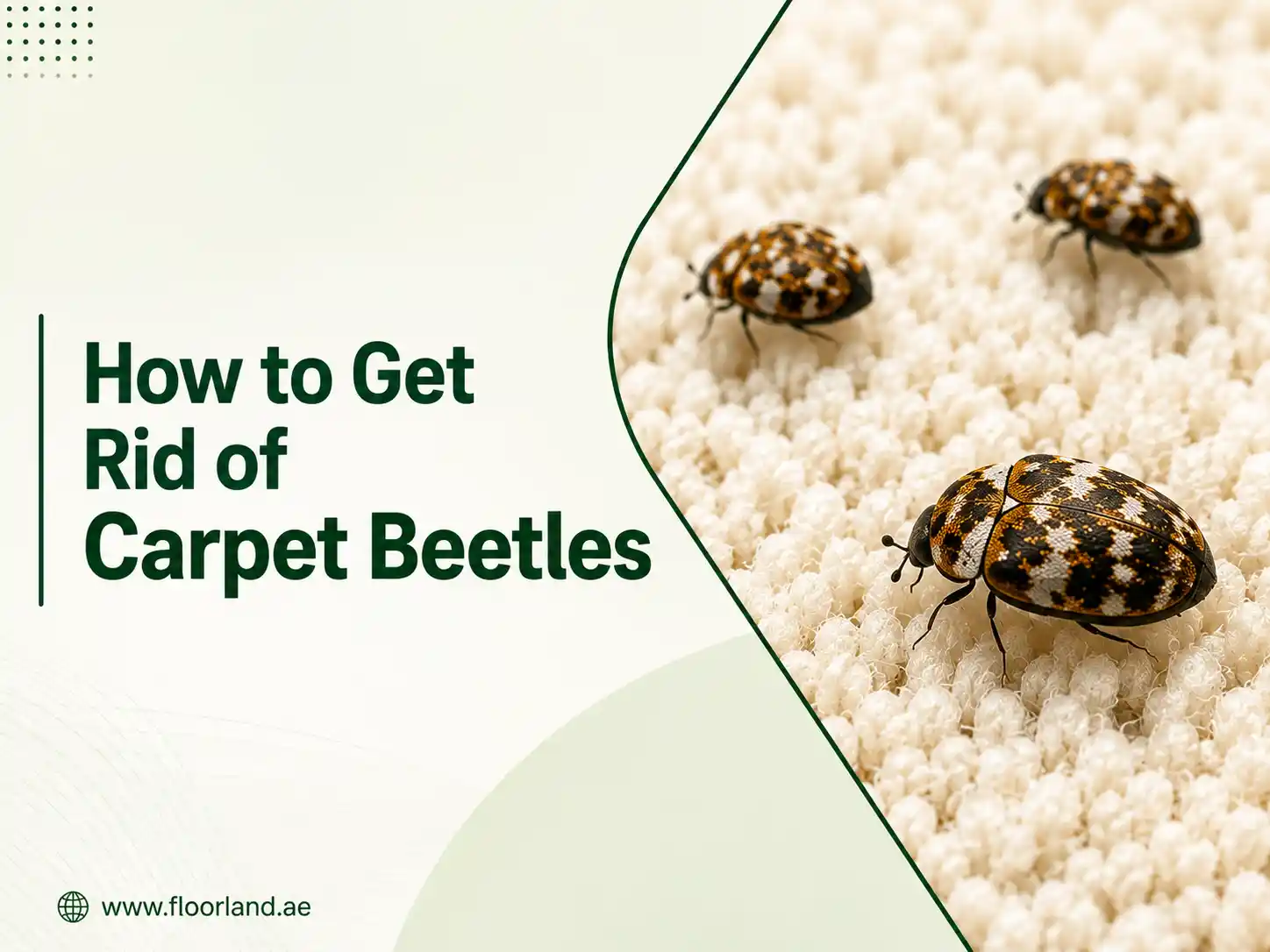
Carpet beetles are best controlled by removing the larvae, cleaning their hiding places, and stopping the conditions that help them spread. Start by vacuuming carpets, rugs, furniture, baseboards, closets, and other areas where larvae or shed skins appear. Wash or heat-treat washable fabrics, then inspect dark, undisturbed spaces for eggs and larvae. Pay attention to natural-fiber materials, pet hair, lint, and debris, as these can provide food for carpet beetle larvae.
For a small infestation, thorough cleaning and repeated vacuuming may be enough. Larger or persistent infestations may need targeted insecticide treatment or professional pest control. The key is to treat the source, not just the adult beetles you can see. Regular cleaning and inspection can also help prevent them from returning. Read this blog by Floor Land very carefully to get rid of carpet beetles.
Carpet Beetle Problems and What to Do
| What you are dealing with | What to do about it |
| Adult beetles near windows | Remove them, then search nearby for the breeding site |
| Larvae or shed skins | Vacuum the area repeatedly and clear out lint and hair |
| Infested carpet or rug | Deep clean it, vacuum both sides if you can lift it, treat the edges |
| Wool, silk, or fur clothing | Launder hot, dry-clean, or freeze in a sealed bag |
| Damage that keeps appearing | Look for a hidden source such as a bird nest or dead animal |
| Repeat infestation after cleaning | Book a professional inspection |
How to Get Rid of Carpet Beetles: The Core Process
Getting rid of carpet beetles requires more than removing the adult insects you see. The main goal is to find and eliminate larvae, their food sources, and hidden breeding areas. A thorough cleaning routine, targeted treatment, and regular inspection can help stop the infestation from returning.
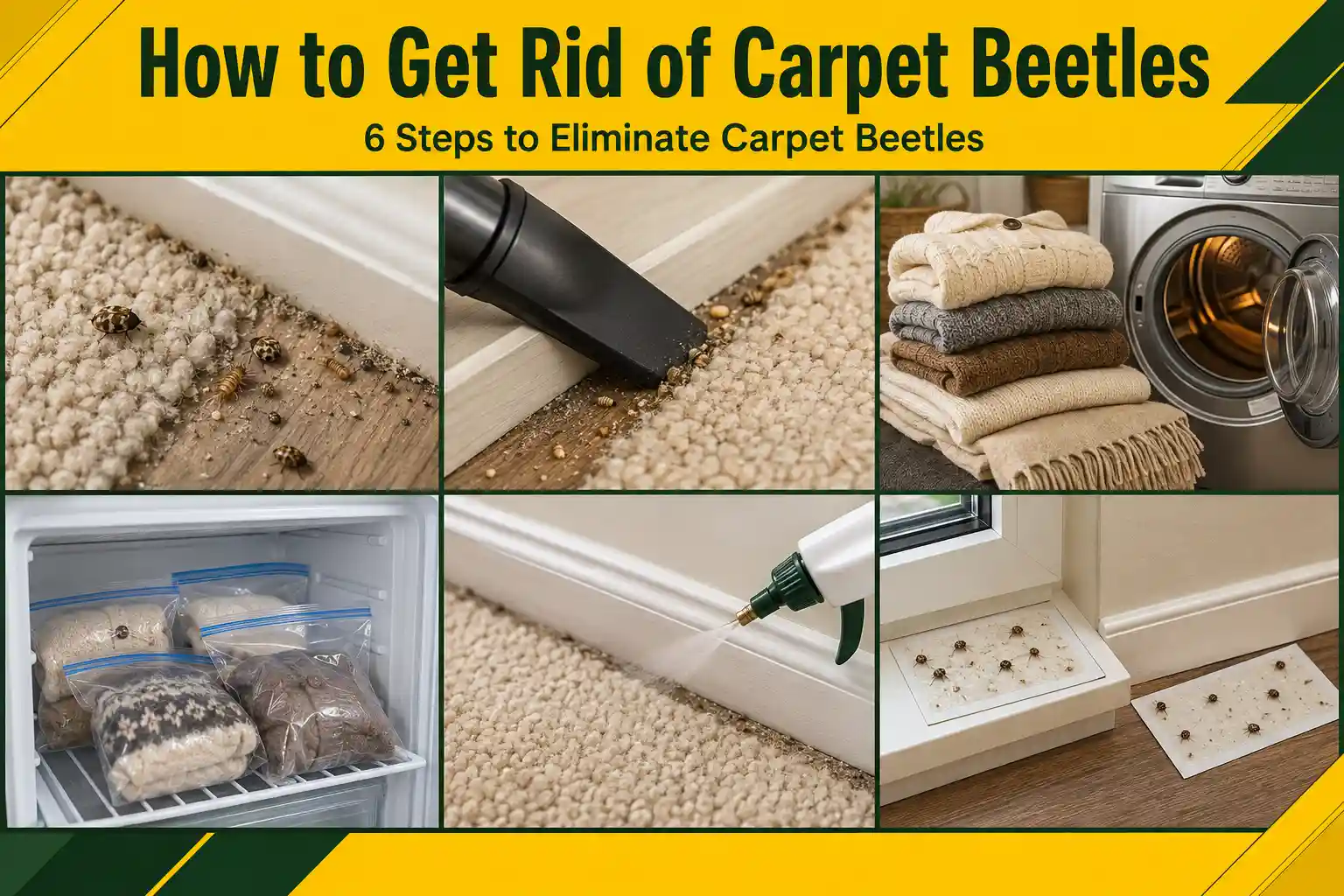
1. Find the Source Before You Treat Anything
Most people skip this step, and it is why infestations come back. Larvae need animal fiber or protein to eat, so something in your home is feeding them.
Look for shed skins that resemble empty hairy shells, fecal pellets the size of a salt grain, grazed patches on wool carpet along walls, and irregular holes in stored sweaters.
Beetles over the custom carpets do not spin webbing. If you find silky tubes alongside the holes, you are dealing with clothes moths, and the treatment differs.
2. Vacuum The Infested Zone Properly
Vacuuming is the most effective non-chemical control you have. It lifts out larvae, eggs, shed skins, and the lint they feed on. Focus on the places a normal clean misses:
- Carpet edges and the gap where carpet meets the baseboard
- Under beds, sofas, and dressers you never move
- Closet floors and the corners of built-in wardrobes
- Floor vents, ducts, and radiator recesses where pet hair gathers
- Upholstery seams and the underside of custom furniture
Use the crevice tool, not the wide floor head, and press hard along edges. Empty the canister outdoors afterward, since larvae survive inside it. Repeat every two or three days for at least three weeks.
3. Wash, Dry-Clean, or Heat-Treat the Fabrics
Heat kills every life stage. Wash infested clothing and bedding at the hottest temperature the care label allows, then run a hot dryer cycle. Dry-cleaning handles wool suits, silk, and anything that cannot get wet. UC IPM notes that half an hour at 120°F kills carpet beetles, which a hot dryer clears easily.
Always clean items before storing them. Sweat and food stains attract egg-laying females far more than clean fabric does.
4. Freeze What You Cannot Wash
Freezing handles the awkward items: vintage wool, felt hats, taxidermy, natural-bristle brushes. Seal each one in a plastic bag first, so condensation forms on the bag rather than the fabric. Freeze at 0°F or lower. Extension guidance ranges from three days at very low temperatures to two weeks in a domestic freezer, so allow the full two weeks.
5. Use Insecticide Only Where It Makes Sense
If larvae keep appearing after two or three weeks of cleaning, a targeted treatment helps. Choose a residual spray or dust that names carpet beetles or fabric pests on the label. Pyrethroids such as bifenthrin and permethrin are common here.
Apply it to carpet edges, floor-to-wall junctions, the space under heavy furniture, closet floors, and cracks in storage areas. Inside wall voids and attics, dust works better than liquid.
Never spray clothing, bedding, mattresses, or soft toys. Extension entomologists are consistent on this point. Those items get treated with heat instead.
Read the label before you open the container. It is a legal document and sets out ventilation, re-entry, and pet safety requirements. Test the spray on a hidden patch of carpet first to check for staining, and keep children and pets out until surfaces are dry.
6. Monitor, Repeat, and Be Patient
Place plain sticky traps on windowsills, in closets, and along baseboards. They will not solve the problem, but they show where activity is heaviest and whether numbers are falling. Eggs already in place keep hatching for weeks, so keep vacuuming and keep checking the traps.
How to Get Rid of Carpet Beetles Naturally
Non-chemical control can carry the whole job if you catch the problem early. Heat, freezing, repeated vacuuming, and removing the food source do the real work. The popular home remedies deserve a closer look.
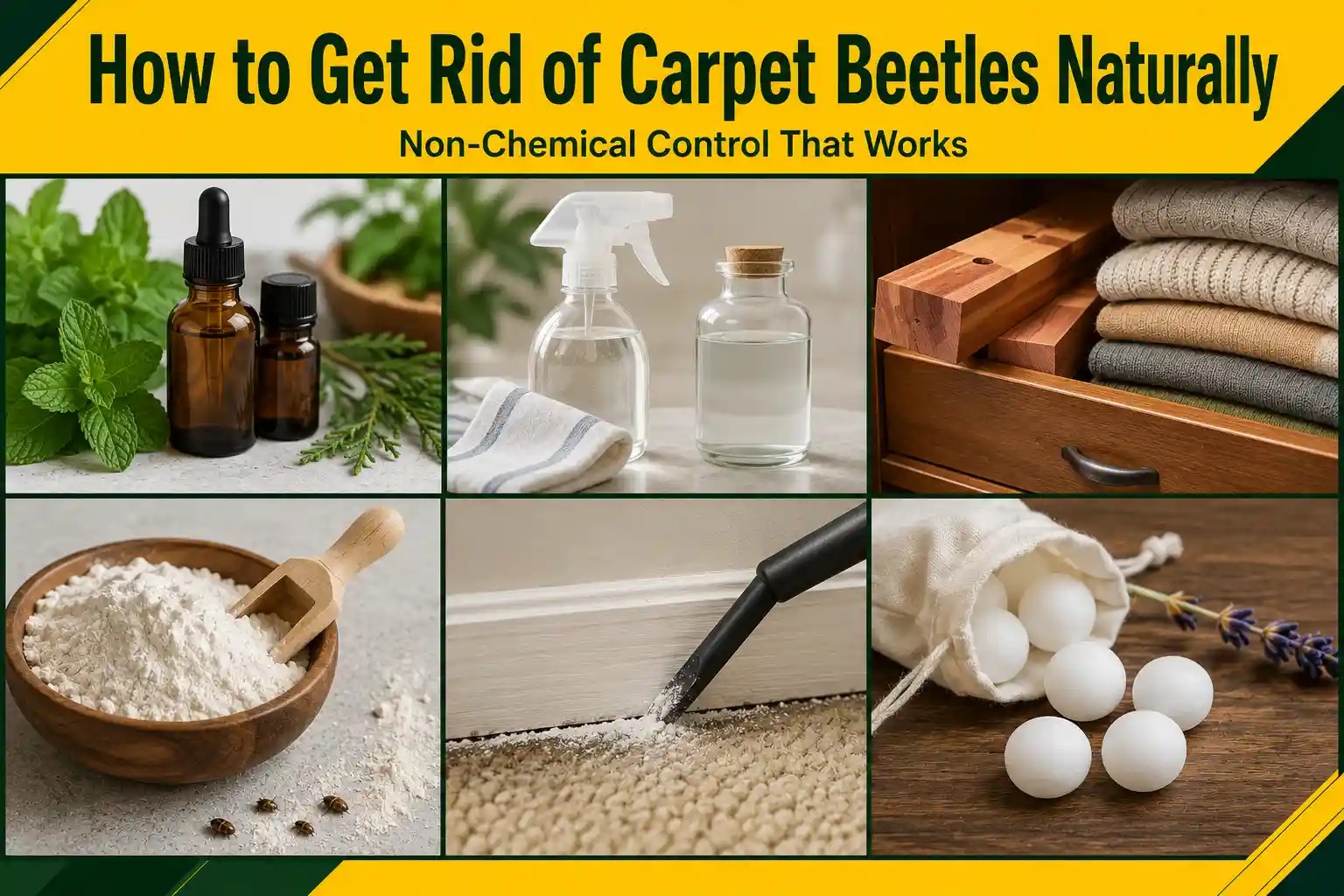
- Essential oils such as peppermint and cedarwood may repel beetles at close range. They will not clear an established infestation, and the effect fades as the oil evaporates.
- Vinegar cleans surfaces and lifts residue. It is not an insecticide.
- Cedar blocks and closets get mixed reviews. UC IPM calls cedar’s effectiveness debatable, since the oil dissipates over time. A tightly sealed container matters more than the wood.
- Diatomaceous earth has a real mechanism. It dries the insect out by absorbing the oils in its cuticle. It only works while dry and undisturbed, so it suits wall voids and cracks rather than open carpet. Avoid breathing the dust.
Mothballs containing paradichlorobenzene or naphthalene need a high vapor concentration to work, which only happens in a sealed container. Loose mothballs in an open closet mostly just smell.
How to Identify Carpet Beetles and Their Larvae
Carpet beetles are small, but their larvae can cause noticeable damage to carpets, rugs, clothing, and other natural-fiber materials. Adult beetles often appear near windows, while larvae stay hidden in dark areas. Knowing their appearance and common signs helps you find an infestation early.
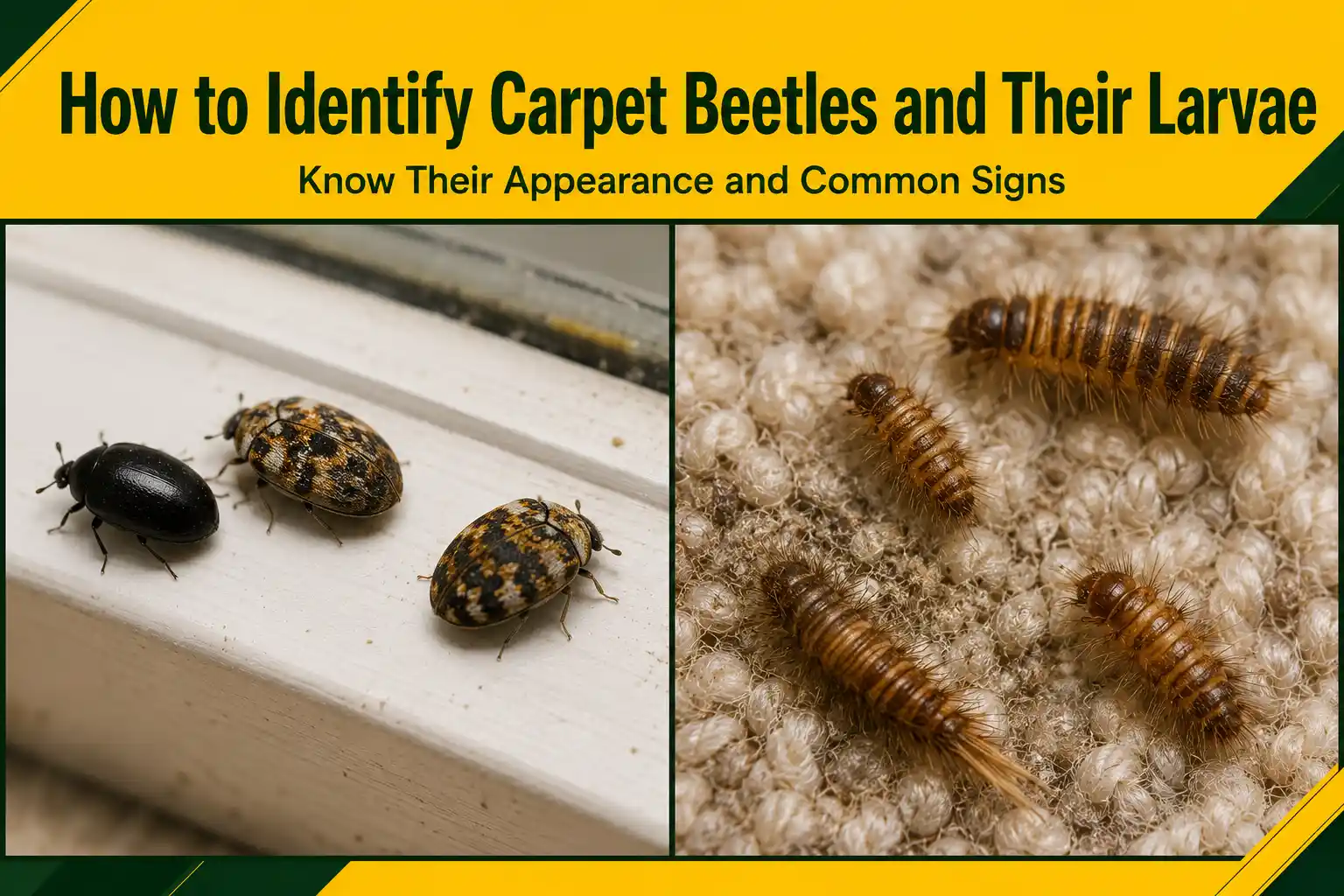
Adult Carpet Beetles
Adults are small and oval, roughly 1/16 to 1/8 inch long. Black carpet beetles run larger, up to about 3/16 inch, and look shiny black. Varied and furniture carpet beetles are mottled with white, brown, yellow, or orange scales that rub off with age.
You will usually find adults near light, on windowsills or in fixtures. They head for windows because they feed on pollen outdoors. Adults are not the destructive stage, so killing the ones you see changes little.
Carpet Beetle Larvae
Larvae do all the damage. They run about 1/8 to 1/4 inch long, tan to reddish-brown, and are covered in stiff hairs. Most people describe them as tiny fuzzy caterpillars. Black carpet beetle larvae look different: smooth, carrot-shaped, tapering to a tail of long hairs, and up to 5/16 inch.
Larvae avoid light, which is why you find the damage long before you find the insect. Their damage shows up as bare patches on wool rugs rather than scattered pinholes, usually under furniture or at a room’s edges.
Where Carpet Beetles Hide and What Attracts Them
Larvae settle wherever an undisturbed food source sits, which is rarely the middle of a room. Common breeding sites include carpet under a wardrobe that never moves, lint in floor vents, stored wool in attics, old bird or rodent nests in chimneys, and dead insects piled inside light fixtures. Down pillows and forgotten dried pet food qualify too.
Adults come from outside, through open windows and torn screens or on cut flowers. Second-hand rugs and clothing bring larvae in directly. Soiled fabric attracts them most, so a wool blanket stored with a sweat stain is a stronger target than a clean one.
Does Baking Soda Get Rid of Carpet Beetles?
No. Baking soda is not an insecticide, and no reliable extension or pest-control source lists it as a carpet beetle treatment. It does not dry larvae out the way a desiccant dust does. Where it helps is cleaning: sprinkle it on carpet, leave it, then vacuum, and it absorbs odors while you cover the floor thoroughly. The vacuuming is doing the work.
How to Get Rid of Carpet Beetles Fast
You cannot clear an infestation overnight, but you can cut the population sharply in a single afternoon. Hot-wash every affected fabric, vacuum the room thoroughly, remove the vacuum contents outside, bin what is badly damaged, and freeze what you cannot wash.
That kills most live larvae. It does not touch the eggs tucked into carpet backing and cracks, which is why the follow-up weeks still matter. Anyone promising a one-day permanent fix is overselling it.
How to Get Rid of Carpet Beetles Permanently
Permanent is the wrong word to promise, since adults can fly in from outside any spring. Long-term control rests on three things. Eliminate the current larvae everywhere you found evidence, not just where you saw a beetle. Remove what feeds them, which is the real fix. Then keep new adults out by repairing screens and sealing gaps.
Set your expectations by the life cycle. Depending on species and conditions, the larval stage runs from roughly ten weeks to well over a year. A home can look clear for months, then show fresh damage. Keep vacuuming and keep traps down through the first full year.
How to Get Rid of Carpet Beetles in Bed
Carpet beetles do not live in your bed the way bed bugs do. They do not feed on people and they do not bite. What draws them to a bedroom is wool blankets, feather pillows, down duvets, and shed hair collecting under the bed.
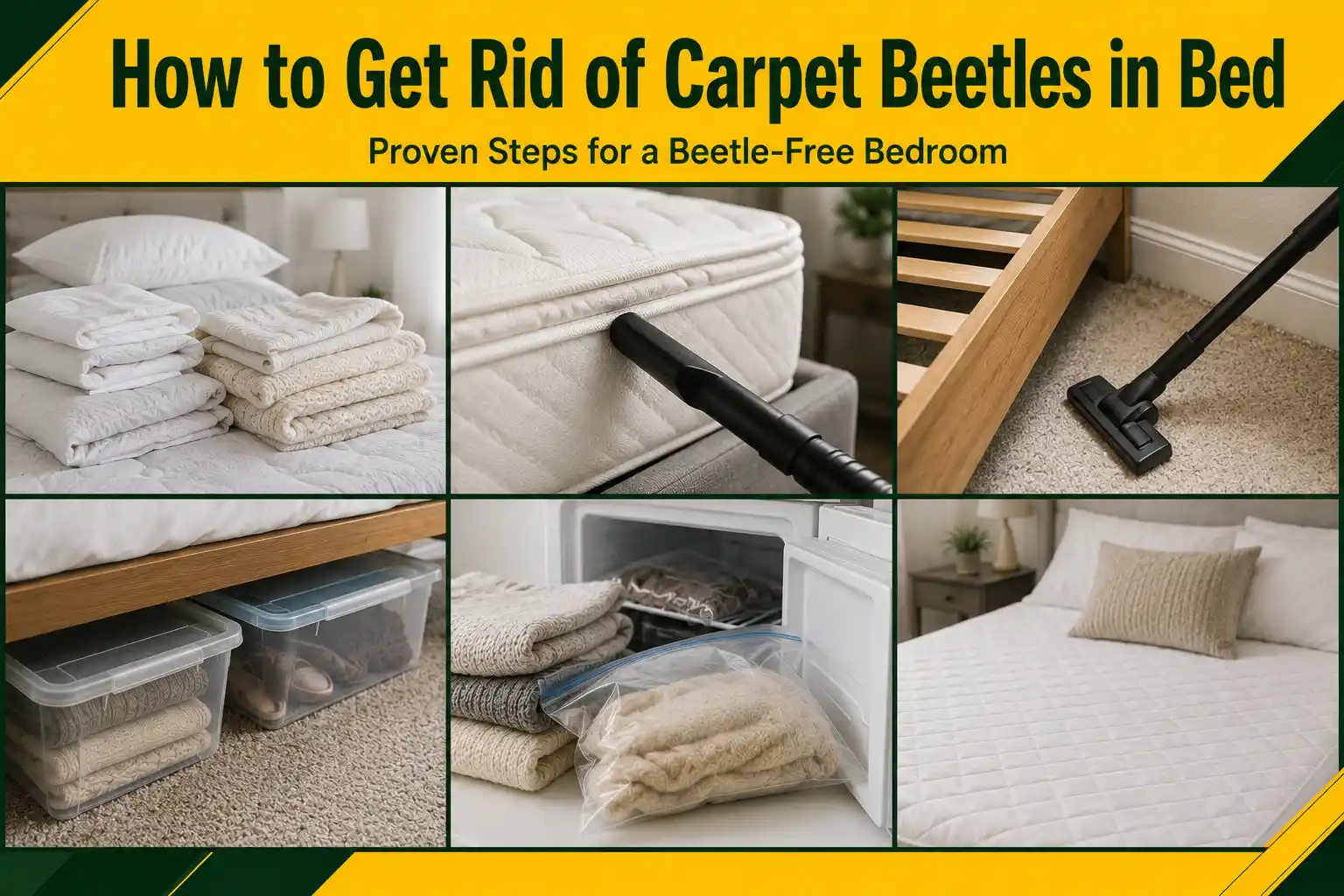
- Strip the bed completely, including the mattress protector, and wash everything hot.
- Vacuum the mattress surface, seams, and piping, then the frame, slats, and headboard.
- Pull the bed out and vacuum the carpet underneath and the baseboards behind it.
- Empty under-bed storage, check stored wool and shoes, and vacuum the boxes.
- Dry-clean or freeze wool blankets and down items you cannot wash.
Never spray insecticide on a mattress or bedding.
If you have an itchy rash, carpet beetles may still be involved. The bristly hairs on the larvae can irritate skin, a reaction sometimes called carpet beetle dermatitis and often mistaken for bites. See a doctor if it persists.
How to Get Rid of Carpet Beetles in a Car
Cars get infested less often than homes, but pet hair on seats, wool mats, crumbs, and dead insects in the trim all feed larvae.
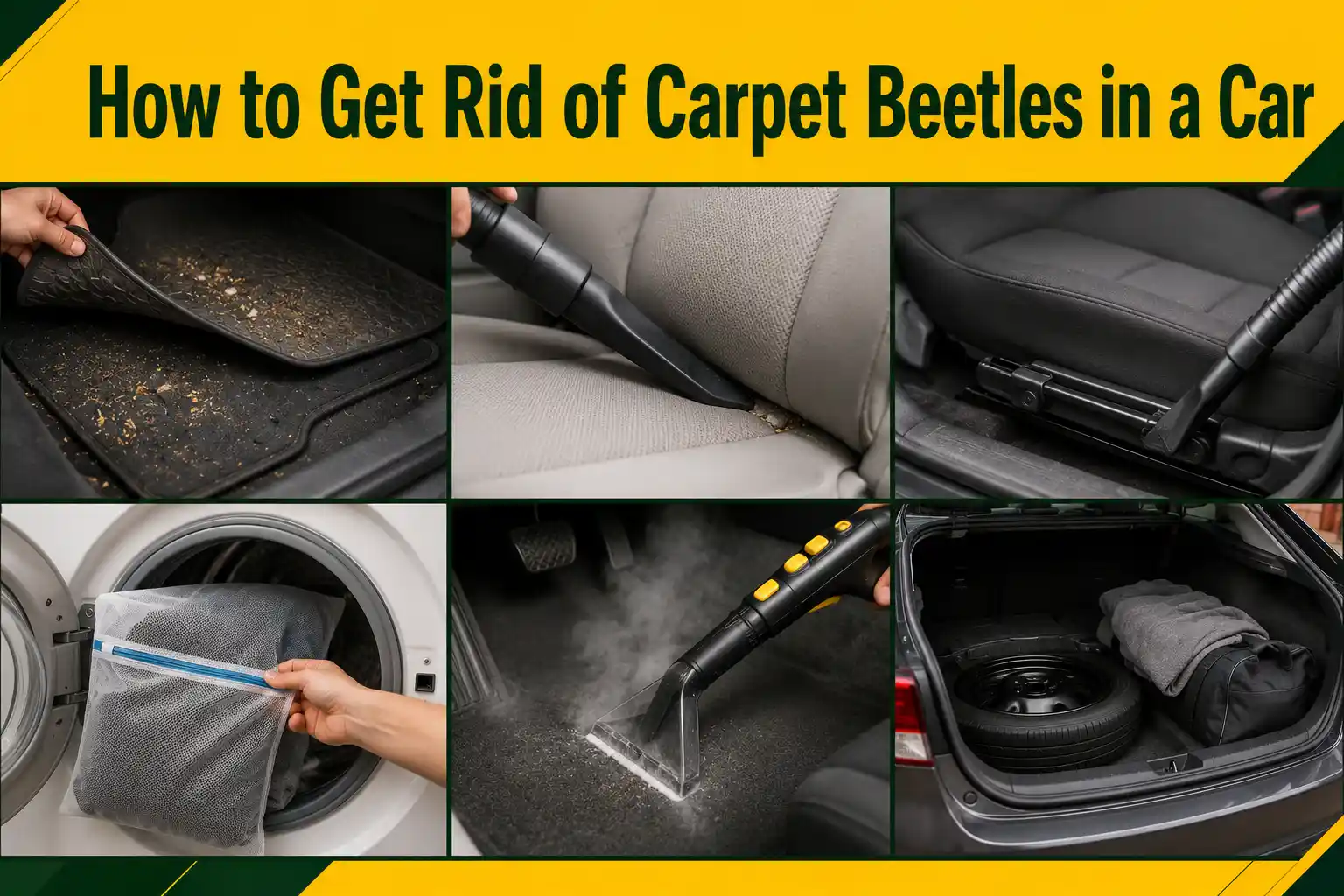
- Remove the floor mats and loose items, and vacuum the mats on both sides.
- Vacuum the interior with a crevice tool, working the seat rails, seams, trunk lining, and spare wheel well.
- Wash removable fabric covers hot and dry them fully.
- Steam clean or shampoo the carpets if you see damage, dry the interior completely, and check the trunk for forgotten blankets or gym bags.
Skip insecticide sprays in a vehicle. It is a small enclosed space you breathe in daily, so vacuuming and hot cleaning are safer. A professional detailing service can do the job in one session.
How to Prevent Carpet Beetles?
There are some easy ways to prevent carpet beetles in the future. Take a look at them:
- Vacuum edges, corners, and under furniture on a schedule, not just the open floor.
- Clean wool, silk, and fur before storing them, and use sealed containers or garment bags.
- Watch low-traffic rooms. Guest bedrooms and spare closets are where infestations start.
- Clear lint and pet hair from vents, ducts, and radiator covers.
- Inspect second-hand rugs, furniture, and clothing before they come inside.
- Shake out cut flowers outdoors, and repair torn screens and gaps around doors and vents.
- Remove nests from eaves and chimneys, and clear dead insects from light fixtures.
When to Call a Professional
DIY control works well for a small, contained problem. Call a professional when:
- Larvae keep appearing after three or four weeks of consistent cleaning and treatment
- You find activity in more than one room or on more than one floor
- You suspect a source you cannot reach, such as a nest in a wall void or chimney
- Valuable rugs, antiques, or a fabric collection are at stake
- You are not comfortable applying insecticide yourself
A professional brings inspection experience and access to products restricted to licensed applicators. Some treatments, such as DDVP resin strips, carry firm occupancy limits and belong only in professional hands. Ask the company where they believe the infestation is breeding. If they cannot answer, keep looking.
Final Words
Carpet beetles are easier to control when you deal with the source instead of only removing the adults you notice. Keep vacuuming carpets, edges, furniture, closets, and other hidden areas where larvae may remain. Wash, dry-clean, heat-treat, or freeze affected fabrics based on their care requirements. If activity continues, inspect for hidden food sources such as lint, pet hair, old nests, or dead insects.
Avoid relying on baking soda, vinegar, or essential oils as a complete treatment because they cannot eliminate an established infestation. Monitor the area for several weeks and repeat cleaning as needed. If larvae continue appearing, the infestation spreads, or the source is difficult to reach, professional inspection may be the better option.
Frequently Asked Questions
They do not bite, and they do not spread disease. The larvae’s bristly hairs can cause an itchy rash or trigger allergy and asthma symptoms in sensitive people. The real harm is to your belongings.
No. It cleans and deodorizes, but it has no proven insecticidal effect on larvae.
Yes, if it is wool or a wool blend. Larvae graze the pile down to the backing, usually along edges and under furniture. Synthetic carpet is safe, though larvae still feed on hair and spilled food trapped in it.
Look for hairy larvae and small shed skins with no webbing. Webbing and silk cases point to clothes moths. Dark spotting on a mattress with bites on your skin points to bed bugs.
Often yes, for a small infestation, provided you vacuum the right places for several weeks. It fails when a hidden food source keeps producing new larvae.
Usually three to six weeks of consistent work. A large or hidden infestation takes longer, because the larval stage itself can last many months.
Almost always because the breeding site is still there. A dead rodent, an old bird nest, or a lint-packed vent will refill a room no matter how often you vacuum.