
Best Kitchen Flooring Ideas: 14 Durable and Stylish Options

The best kitchen flooring for most homes is waterproof luxury vinyl plank (LVP) or rigid-core SPC vinyl. These floors resist spills, handle heavy foot traffic, and look like real wood or stone. Porcelain tile is the most durable choice, engineered hardwood adds real-wood warmth, and water-resistant laminate offers the best value on a tight budget. The right pick depends on your household, your budget, and how hard you use your kitchen.
Your kitchen floor works harder than any other floor in your home. It takes a beating from dropped pans, splashing sinks, muddy paws, and hours of standing while you cook. So the best kitchen flooring ideas balance good looks with real-world toughness.
This guide by Floor Land explains which floors work (and fail) in real kitchens. You will find 14 practical ideas, a side-by-side comparison, a simple buying checklist, and honest answers to common questions.
14 Best Kitchen Flooring Ideas
Your kitchen floor handles daily spills, heavy foot traffic, and messes. Discover 14 easy flooring ideas that look amazing, hold up well, and fit your style and budget.
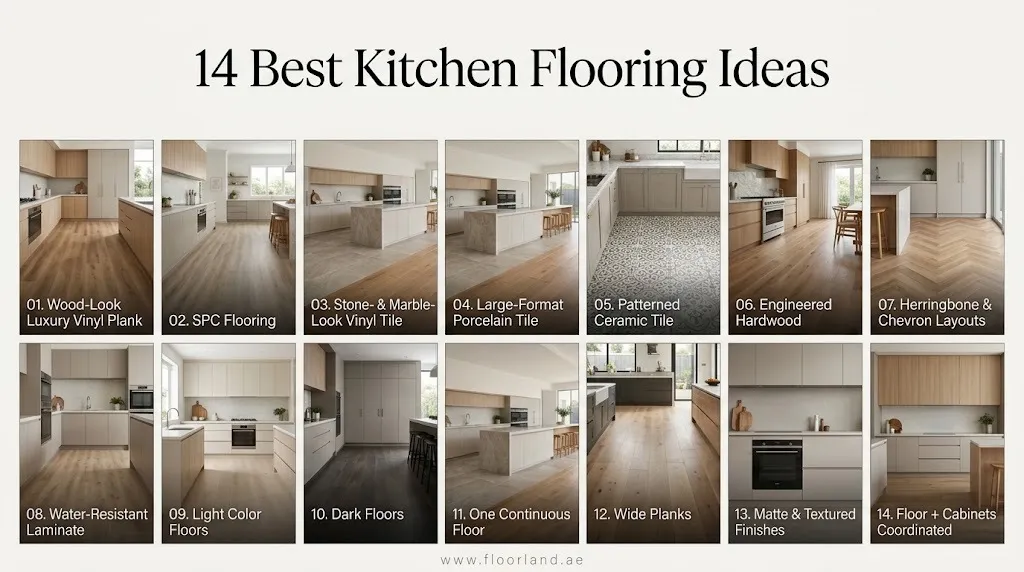
1. Wood-Look Luxury Vinyl Plank
Luxury Vinyl Flooring in planks gives you the warm look of oak, hickory, or walnut without the worry. Modern printing and embossed textures make many planks hard to tell apart from real wood. Most quality LVP is fully waterproof, so a leaking dishwasher will not ruin it.
LVP also feels softer and quieter than tile. That makes long cooking sessions easier on your feet. Most waterproof vinyl and SPC floors now come in a wide range of wood-look styles and plank widths.
Pro tip: Check the wear layer. A 12 mil wear layer suits most homes, while 20 mil or more stands up better to pets and heavy traffic.
2. SPC Flooring
SPC (stone plastic composite) flooring uses a dense core made from limestone powder and PVC. This core resists dents from dropped cans and chair legs better than flexible vinyl. It also hides small bumps in the subfloor.
Flooring experts often recommend SPC flooring to families with large dogs or young children. It handles spilled water bowls, dropped toys, and sticky messes with ease.
Pro tip: Choose a matte or low-sheen finish. It hides paw prints and fine scratches far better than a glossy one.
3. Stone- and Marble-Look Vinyl Tile
Love the look of marble or slate but not the cost or cold feel? Stone-look luxury vinyl tile (LVT) delivers veining and texture at a lower price. Some styles even come with grout-look edges for a realistic tile layout. This idea works well in modern and transitional kitchens. It pairs nicely with white quartz counters and brushed brass hardware.
4. Large-Format Porcelain Tile
Porcelain is one of the toughest kitchen floors you can buy. The ANSI A137.1 standard defines porcelain as tile that absorbs 0.5% or less of water. That makes it ideal near sinks and dishwashers. Large tiles, such as 24 × 24 inches or 12 × 24 inches, mean fewer grout lines. Fewer lines make the floor easier to clean and help a small kitchen feel bigger. Porcelain also comes in wood-look, stone-look, and concrete-look tile styles.
Pro tip: Large tiles need a very flat subfloor. Ask your installer to check flatness first to avoid lippage (uneven tile edges).
5. Patterned Ceramic Tile
Patterned ceramic tile turns your floor into a design feature. Moroccan, geometric, and vintage cement-look designs add personality to simple cabinets. Ceramic also costs less than most porcelain.
Keep the rest of the room calm when you use a busy pattern. Solid cabinets and plain counters let the floor stand out without clutter.
6. Engineered Hardwood in Warm Oak
If you want a real wood flooring look, engineered hardwood is the smarter kitchen choice. It has a real hardwood top layer bonded to a stable, layered core. That core resists the swelling and cupping that humidity causes in solid wood.
Warm white oak is a top pick right now. It suits farmhouse, Scandinavian, and modern kitchens alike. When you compare engineered hardwood flooring, look for a factory-applied finish that resists moisture and scratches.
Pro tip: Pick a product with a wear layer of 2 mm or more. A thicker top layer usually lets you sand and refinish the floor later.
7. Herringbone and Chevron Layouts
Herringbone and chevron patterns add movement and a high-end feel. You can get these layouts in engineered wood, vinyl, and laminate. The zigzag lines draw the eye across the room and make it feel more custom.
These patterns suit both classic and modern homes. They look especially striking in galley kitchens, where they visually widen the space.
Pro tip: Pattern installs take more time and create more waste. Budget for 10–15% extra material and slightly higher labor.
8. Water-Resistant Laminate on a Budget
Laminate gives you a realistic wood or stone look for less money. Newer water-resistant lines use sealed edges and tight locking joints that keep spills out for a set time. That makes them far better suited to kitchens than older laminate.
Look for an AC3 rating for general home use or AC4 for extra durability. Modern laminate flooring also offers realistic wood and stone textures.
Pro tip: “Water-resistant” is not the same as “waterproof.” Wipe up spills quickly and read the warranty details.
9. Light Color Floors for Small or Dark Kitchens
Pale oak, soft gray, and warm beige floors bounce light around the room. They make compact kitchens feel wider and brighter. Light floors also hide dust and pet hair better than very dark ones.
Pair light floors with light walls for an airy feel. Or add contrast with deep green or navy cabinets.
10. Dark Floors for Drama and Contrast
Espresso wood tones, charcoal tile, and black slate-look vinyl create a bold, grounded look. They pair well with white cabinets and brass fixtures. Dark floors do show crumbs, dust, and scratches more easily. Choose a textured or matte surface to reduce this. Dark floors work best in bright kitchens with good natural light.
11. One Continuous Floor for Open-Plan Homes
Running one floor from the kitchen into the living and dining areas creates a seamless, spacious look. It also removes trip hazards and awkward transition strips.
Waterproof LVP and SPC are ideal for this. They handle kitchen spills yet still feel warm and comfortable in living spaces. Many residential flooring lines also offer matching trims and stair nosings for a consistent whole-home look.
Pro tip: Large floating floors may need expansion joints at doorways. Follow the manufacturer’s maximum run length.
12. Wide Planks for Modern Farmhouse Style
Wide planks (7 inches or more) show off more grain and have fewer seams. They give a kitchen a relaxed, open feel. Wide planks suit modern farmhouse, rustic, and coastal styles. Pair them with shaker cabinets, open shelving, and a farmhouse sink for a cohesive look.
13. Matte and Textured Finishes
High-gloss floors look sleek in photos but can feel slippery when wet. Matte, wire-brushed, and embossed finishes offer better grip. They also hide scuffs, water spots, and fine scratches. This is one of the most practical kitchen flooring ideas for homes with kids, older adults, or pets.
14. Coordinate Your Floor With Your Cabinets
Your floor and cabinets should work together, not compete. Here are pairings that consistently look good in the kitchens we help design:
- White cabinets: Warm mid-tone oak, gray-washed wood, or patterned tile.
- Navy or dark blue cabinets: Light natural oak or soft beige stone-look tile.
- Sage green cabinets: Pale wood for a calm look, or charcoal tile for contrast.
- Wood cabinets: A contrasting floor, such as light stone-look tile, to avoid a wood-on-wood clash.
- Black cabinets: Light oak or warm neutral tile to keep the room from feeling heavy.
What Makes a Floor Right for a Kitchen?
Before you look at colors and patterns, check how a floor performs. Consider the points below when choosing kitchen flooring.
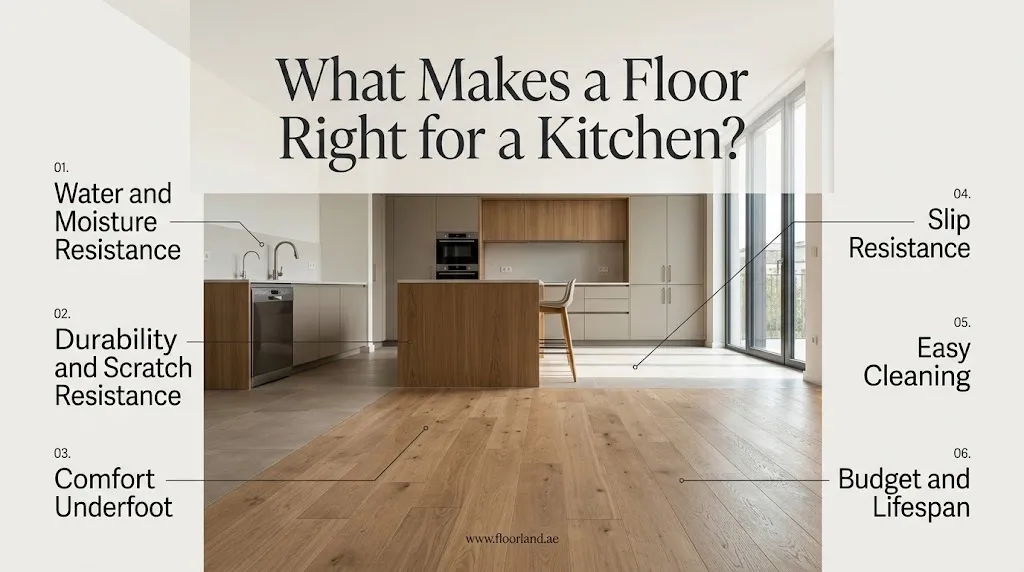
1. Water and Moisture Resistance
Sinks drip, dishwashers leak, and pots boil over. A kitchen floor must handle standing water without swelling or staining. Waterproof vinyl and porcelain tile lead here. Laminate and wood need a water-resistant rating and quick clean-ups.
2. Durability and Scratch Resistance
Chairs slide, cans fall, and pets run across the room. Look for a thick wear layer on vinyl, a high AC rating on laminate, and a hard, factory-cured finish on wood.
3. Comfort Underfoot
If you cook often, you stand on this floor for long periods. Vinyl, laminate, and wood feel warmer and softer than tile. If you choose tile, you can add a cushioned mat in front of the sink.
4. Slip Resistance
Wet floors cause falls, especially for children and older adults. For tile, check the DCOF (dynamic coefficient of friction) rating. The ANSI A326.3 standard uses a DCOF of 0.42 or higher as the benchmark for level indoor floors that may get wet. Matte and textured finishes also grip better than high-gloss surfaces.
5. Easy Cleaning
Food, grease, and crumbs land on the floor daily. Smooth surfaces with few seams clean fastest. Deep grout lines and heavy textures trap more dirt.
6. Budget and Lifespan
Think about the total cost, not just the price per square foot. Include underlayment, trim, labor, and how long the floor will last. A cheaper floor that fails in five years often costs more in the end.
How to Choose the Best Kitchen Flooring for Your Home
No single floor is perfect for every kitchen. Match your choice to how you live.
| Your Situation | Our Top Recommendation | Why It Works |
| Pets and young kids | SPC vinyl with 20+ mil wear layer | Waterproof, dent-resistant, easy to clean |
| Serious home cook | LVP, or tile with an anti-fatigue mat | Comfort for long hours standing |
| Tight budget | Water-resistant laminate or basic LVP | Strong looks for the price |
| Resale value | Engineered hardwood or porcelain tile | Buyers see them as premium |
| Rental property | Commercial-grade LVP | Tough, fast to install, easy to replace |
| Radiant floor heating | Tile or heating-rated vinyl | Handles heat well (check limits) |
| Concrete slab subfloor | Tile, LVP, or SPC | Handles slab moisture better than wood |
A Quick Buying Checklist
- Measure your kitchen and add 5–10% for cuts and waste (10–15% for patterns).
- Order samples and view them in your kitchen at different times of day.
- Check the wear layer, AC rating, or DCOF rating, depending on the material.
- Read the warranty, especially the rules about water damage and kitchen use.
- Ask about underlayment, trim, and transition pieces so you get a full quote.
- Confirm whether your subfloor needs leveling or moisture testing.
Kitchen Flooring Installation Tips From Experts
A great floor can still fail if the installation goes wrong. These are the issues we see most often on kitchen projects.
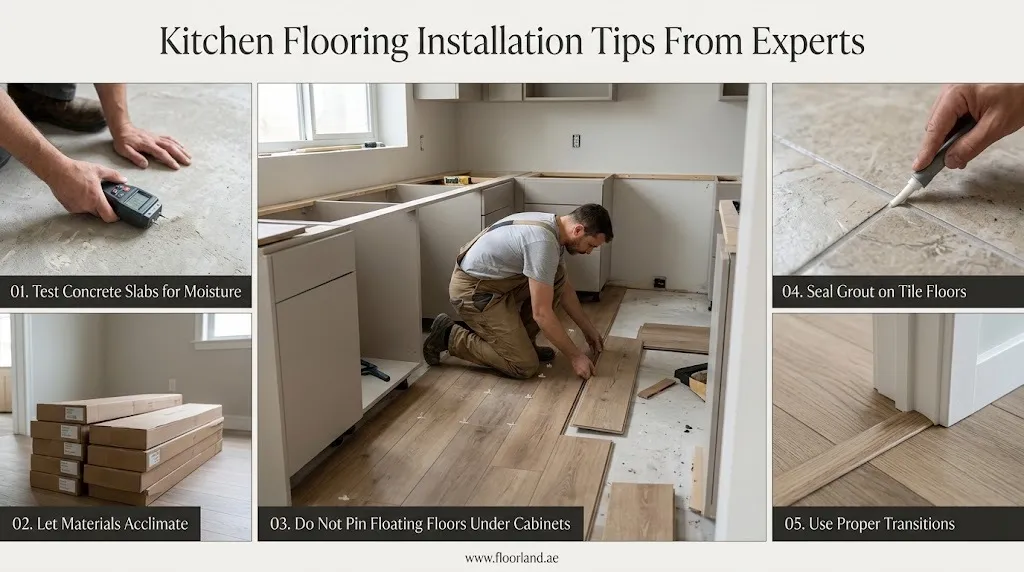
- Test concrete slabs for moisture. Installers often use a relative humidity test (ASTM F2170) before laying wood or vinyl over concrete.
- Let materials acclimate. Follow the manufacturer’s instructions for how long boxes should sit in the room before installation.
- Do not pin floating floors under heavy cabinets or islands. Most brands ask you to install cabinets first and run the floor up to them, leaving an expansion gap.
- Seal grout on tile floors. Sealed grout resists stains from coffee, wine, and cooking oil.
- Use proper transitions. Plan clean transitions where the kitchen meets carpet, tile, or a different floor height.
If you are unsure about your subfloor, ask a qualified installer to inspect it before you buy any flooring.
How to Keep Your Kitchen Floor Looking New?
There are ways to keep your kitchen floor looking new.
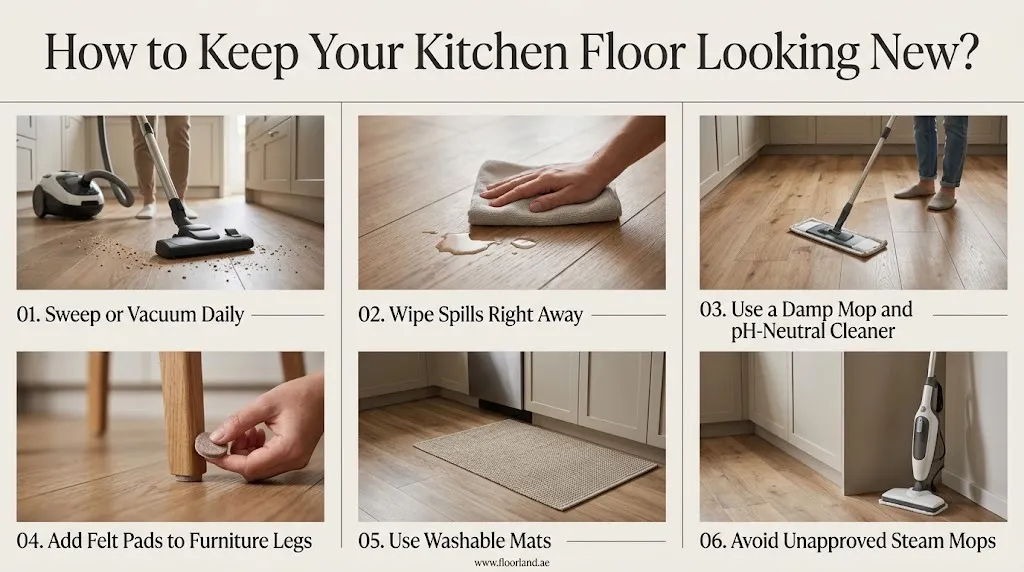
- Sweep or vacuum daily to remove grit that scratches finishes.
- Wipe spills right away, even on waterproof floors, to prevent slips and stains.
- Use a damp (not soaking) mop and a pH-neutral cleaner made for your floor type.
- Add felt pads to the chair and stool legs.
- Place washable mats at the sink and in front of the stove.
- Avoid steam mops unless your flooring maker approves them.
Final Words
The best kitchen floor is the one that fits the way you actually use your kitchen. A stylish floor that cannot handle water, traffic, or daily cleaning will disappoint you quickly. A practical floor you don’t love will feel like a compromise every day. The goal is to find a floor that does both jobs well.
For most homes, waterproof LVP or SPC vinyl offers the best balance of looks, comfort, and easy care. Porcelain tile lasts the longest and handles the most abuse. Engineered hardwood brings the warmth of real wood with better stability than solid boards. Water-resistant laminate gives you a lot of style for a smaller budget. Before you decide, ask yourself three simple questions. How much water and traffic will this floor face? How long do you plan to keep it? How much time do you want to spend on upkeep? Your honest answers will narrow the list fast.
Finally, remember that good preparation matters as much as the material. Order samples, check them in your own light, test your subfloor, and follow the maker’s installation rules. Do these steps well, and your new kitchen floor will look good and perform well for many years.
Frequently Asked Questions
What is the most durable flooring for a kitchen?
Porcelain tile is the most durable kitchen flooring. It resists water, scratches, stains, and heat. SPC vinyl comes a close second and feels warmer and softer underfoot.
Is luxury vinyl plank good for kitchens?
Yes. Quality LVP is waterproof, comfortable, and easy to clean. It is one of the most popular kitchen floors in American homes today. Choose a thicker wear layer for high-traffic kitchens.
Can you put hardwood flooring in a kitchen?
Yes, but engineered hardwood is the safer choice. It handles humidity changes better than solid wood. Wipe spills quickly and use mats near the sink and dishwasher. It helps to understand the different types of hardwood flooring before you decide.
Is laminate flooring okay in a kitchen?
Water-resistant laminate works well in most kitchens. Standard laminate can swell if water sits on it. Always check the product’s water rating and warranty before you buy.
What is the best kitchen flooring for dogs?
SPC rigid-core vinyl with a 20 mil or thicker wear layer is our top choice for dog owners. It resists scratches, dents, and spilled water bowls. A matte finish hides claw marks better.
Should kitchen floors be lighter or darker than cabinets?
Most designers aim for contrast. Light cabinets pair well with mid-tone or darker floors, and dark cabinets pair well with lighter floors. Contrast keeps the room from looking flat.
Is carpet a good idea in a kitchen?
No. Carpet absorbs spills, grease, and odors, and it is hard to clean. Use a hard floor and add a washable rug if you want softness.
What is the kitchen flooring trend for 2026?
Warm natural wood tones, textured stone looks, wide planks, and herringbone patterns lead current trends. Homeowners also want waterproof floors that flow through open-plan spaces.