
Stair Runner Ideas: 20 Stylish Ways to Upgrade Your Stairs
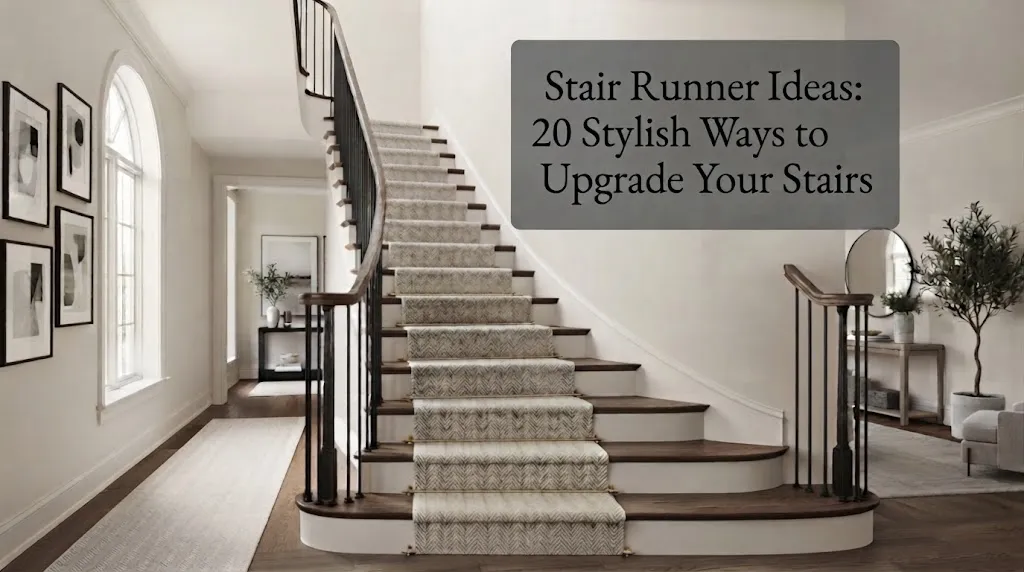
The most stylish stair runner ideas today include natural sisal with bound edges, wool herringbone, bold stripes, animal prints, vintage patchwork, and color-drenched runners that match the surrounding walls. A wool or wool-blend stair runner with a low, dense pile offers the best balance of comfort, durability, and style for residential and commercial stairs. Aim for a runner width that leaves roughly 3 to 5 inches of exposed tread on each side, always install it over a stair pad, and secure it firmly at every step for safety.
This Floor Land guide gives you 20 stair runner ideas for every style and budget. Beyond the inspiration, it covers what most blogs skip: how to pick the right material, how to measure, which installation method suits your stairs, and how to keep your runner looking good for years. So, let’s get started.
Before You Choose: Stair Runner Materials Compared
Pattern gets all the attention, but material decides how your runner feels, how it wears, and how much maintenance it needs. Use this comparison to narrow your options before you start browsing designs.
| Material | Durability | Feel Underfoot | Best For | Watch Out For |
| Wool | Very high | Soft, springy | Most homes; everyday comfort | Higher upfront cost; can shed at first |
| Sisal | Very high | Firm, crisp | High-traffic, adult-only stairs | Slippery in socks; water marks |
| Jute | Moderate | Soft, chunky | Low-traffic, relaxed spaces | Wears faster; sheds; absorbs spills |
| Seagrass | High | Smooth, hard | Rustic and coastal homes | Hard to dye; limited colors |
| Nylon | Very high | Soft | Pets, kids, busy families | Can look less natural if low grade |
| Polypropylene | High | Firm to soft | Budget and stain-prone spaces | Pile can flatten over time |
| Wool blends | High | Soft, resilient | Balance of comfort and cost | Quality varies by blend ratio |
20 Stair Runner Ideas to Upgrade Your Stairs
Each idea below includes who it suits best and a practical tip to help you get it right the first time.

1. Natural Sisal with a Bound Linen Edge
Sisal remains the workhorse of stair runners for good reason. Its tight, crisp weave stands up to heavy foot traffic, and its warm, earthy tone pairs well with oak, walnut, or painted treads. A bound edge in linen or cotton softens the fiber’s rustic character and makes the runner look tailored rather than utilitarian.
Sisal carpet and runners feel smooth under shoes but can feel slick under socks, and they mark when water sits on them. Choose a sisal-wool blend or a boucle weave if your household walks the stairs barefoot or has pets that track in rain.
2. Wool Herringbone for Quiet Texture
Herringbone gives a staircase movement without shouting. The zigzag weave catches light differently on each tread and riser, so a single-color runner still reads as rich and layered. Wool adds natural spring, which means the pile recovers after thousands of footsteps and keeps its shape on the stair nosing.
Designer Tip: Ask for a flatweave or low-loop herringbone. A deep, plush pile looks luxurious in the showroom but wraps poorly over the stair nose and can make the step feel shorter underfoot.
3. Bold Stripes That Stretch the Stairwell
Vertical stripes pull the eye upward, making a short or cramped staircase feel taller and more generous. Go graphic with navy and cream, playful with multicolor bands, or tailored with a single narrow pinstripe. Stripes also hide the small wear marks that plain carpet reveals.
Stripes demand straight installation. A crooked stripe shows immediately, so hire a fitter who has worked with striped goods, especially if your stairs include a turn.
Best for: Narrow staircases, townhouses, and anyone who wants energy without committing to a busy print.
4. Color-Drenched Runner That Matches the Walls
Color drenching, where walls, trim, and ceiling share one shade, has moved onto the stairs. Pick a runner in the same hue as your hallway paint, or one shade deeper, and the whole stairwell reads as a single, enveloping space. Deep greens, terracotta, oxblood, and inky blue work especially well.
Designer Tip: Bring a paint chip to the carpet supplier and view the samples together in your actual stairwell. Artificial light shifts carpet color more than it shifts paint.
5. Animal Print with Restraint
Leopard, zebra, and antelope runners have become a designer favorite because they read as a neutral once your eye adjusts to the pattern. The trick is restraint: make the runner the only animal print in the space, and keep the surrounding walls and art calm.
Choose a print with a soft, blurred edge rather than high-contrast spots. Softer prints forgive dust, pet hair, and small stains far better.
6. Vintage Patchwork from Mismatched Rugs
Instead of buying one long runner, stitch together several vintage runners or rug fragments. The result feels collected and one-of-a-kind, and each flight tells a slightly different story. Many rug restorers now offer this service and will join sections so the seams sit discreetly at the back of a tread.
Match the pieces by width, pile height, and overall color temperature. Patterns can clash; thickness cannot, because uneven pile creates a tripping hazard.
Best for: Eclectic, bohemian, and heritage homes, and anyone who loves flea-market finds.
7. Persian-Style Traditional Runner
A Persian or Turkish-style runner brings rich jewel tones, intricate borders, and a sense of history to even a brand-new build. Busy traditional patterns are also remarkably practical, because they disguise spills and the gradual wear that shows first on the front edge of each tread.
Center the runner’s medallion or border pattern on the flight, not just the first step. Ask your installer to lay the full length out before cutting so the pattern repeats land evenly.
8. Geometric Lattice or Trellis Pattern
A two-tone lattice brings structure and rhythm to a staircase without feeling trendy. Trellis and diamond motifs look crisp on straight flights and work equally well with contemporary lighting or traditional banisters. So, choose a scale that fits your tread depth. A large repeat can get cut off at the nosing, so ask to see how one full motif sits on a single step before you order.
Best for: Transitional homes and spaces with clean-lined furniture.
9. Contrast Binding for a Tailored Frame
Binding the edges of a plain runner in a contrasting tape instantly makes it look custom. Black tape on a cream runner feels graphic and modern; a sage or blush tape on a natural fiber runner feels soft and considered. Binding also protects the cut edges from fraying.
Pick a binding color that appears elsewhere in the hallway, such as your door hardware, picture frames, or banister, so the detail feels intentional.
10. Scalloped or Shaped Edges
Scalloped, wavy, or zigzag edges turn a simple runner into a piece of craftsmanship. The shaped border adds charm and a touch of whimsy, and it pairs beautifully with painted stairs where the edge contrast stands out.
Designer Tip: Shaped edges need precise fitting, so budget for a specialist installer and expect a longer lead time for custom-cut pieces.

11. Ombré Color Gradient
An ombré runner shifts gradually from one tone to another as it climbs, often from dark at the bottom to light at the top. It creates movement and makes the staircase feel like a deliberate art piece. Most ombré runners are custom-made to your exact stair count. Measure carefully and confirm the gradient direction with your supplier before production.
12. Coastal Blue-and-White
Navy, chambray, and crisp white bring a breezy, relaxed feeling to a staircase. Rope-like textures, broad nautical stripes, and soft denim tones all fit the look. Cool blues also calm a busy entry and make a warm, sunny hallway feel fresher.
Best for: Coastal, lake, and Hamptons-style homes, and bright hallways with plenty of daylight.
Expert Tip: White shows dirt quickly on stairs. Keep white to the pattern or border and use a mid-blue or oatmeal as the dominant ground color.
13. Heritage Plaid or Tartan
Plaid brings warmth and a touch of tradition, particularly in homes with wood paneling or a classic country feel. Deep reds, forest greens, and camel tones feel cozy in cooler months and look especially inviting during the holidays.
Plaid is a pattern with two directions, so it shows any misalignment. Ask your fitter to check the lines at every tread before fastening.
14. Flatweave for Modern Minimalism
A flatweave or dhurrie-style runner lies close to the tread, creating a clean, streamlined silhouette that suits modern homes. Flatweaves come in a huge range of colors and subtle patterns, and they grip the stair nosing neatly.
Always use a thin, quality stair pad under a flatweave. It adds cushioning, reduces noise, and extends the runner’s life considerably.
15. Tone-on-Tone Neutrals for Small Spaces
In a tight hallway, a runner in almost the same shade as the treads makes the staircase feel wider and calmer. Think greige on pale oak, or warm stone on white-painted steps. The texture does the work, while the color stays quiet.
Choose a runner with visible texture, such as a loop, rib, or boucle. A flat, perfectly matched color can look like a mistake rather than a design choice.
16. Painted Stairs Paired with a Runner
Paint the exposed edges of your treads and risers before installing the runner, and you get two design moves in one. Black or charcoal treads with a light runner feel crisp and dramatic, while white risers and stained treads feel classic. This approach also refreshes worn stairs without a full replacement.
Use a floor-grade paint and finish it with a clear, slip-resistant topcoat on the exposed tread margins. Standard wall paint wears through quickly on stairs.
17. Stair Rods as Decorative Jewelry
Stair rods sit at the junction of each tread and riser, adding a glint of metal to every step. Antique brass feels traditional, matte black feels modern, and polished nickel feels crisp. In most modern installations, the rods are decorative, because tacks and staples hold the runner in place. Coordinate your rod finish with your door hardware and light fixtures. Mixing too many metal tones on one stairwell looks unplanned.
18. Hollywood (Upholstered) Installation
How you install a runner changes its look as much as the runner itself. A waterfall installation drapes the runner straight down from the nose of one tread to the next, leaving a small gap behind. A Hollywood, or upholstered, installation wraps the runner tightly under each nose and fastens it to the riser, giving a crisp, tailored profile. Hollywood installation takes more time and slightly more material, so factor both into your quote. Choose a thinner runner, because thick carpet struggles to wrap tightly around the nose.
Best for: Formal homes and homeowners who want a precise, custom finish.
19. Continuous Runner Around Winders and Landings
A runner that flows seamlessly around turns, winder steps, and onto the landing makes a staircase feel generous and architectural. A skilled installer cuts and joins the runner so the pattern and border continue around every angle.
Continuous installation on winders is not a DIY job. Hire an installer who can show you photos of similar staircases they have fitted.
20. Performance Runner for Pets and Kids
Performance runners made from nylon, polypropylene, or solution-dyed fibers stand up to muddy paws, spills, and endless trips up and down. Many look almost identical to wool or natural fiber, so you give up very little style for a lot of peace of mind.
Pick a mid-tone, lightly patterned design. Very dark and very light solids both show pet hair and dust. Ask about stain resistance, colorfastness, and whether the supplier recommends the product specifically for stairs.
How to Choose the Right Stair Runner
To choose the right stair runner for your space, must check the factors mentioned below:
Measure Width and Reveal
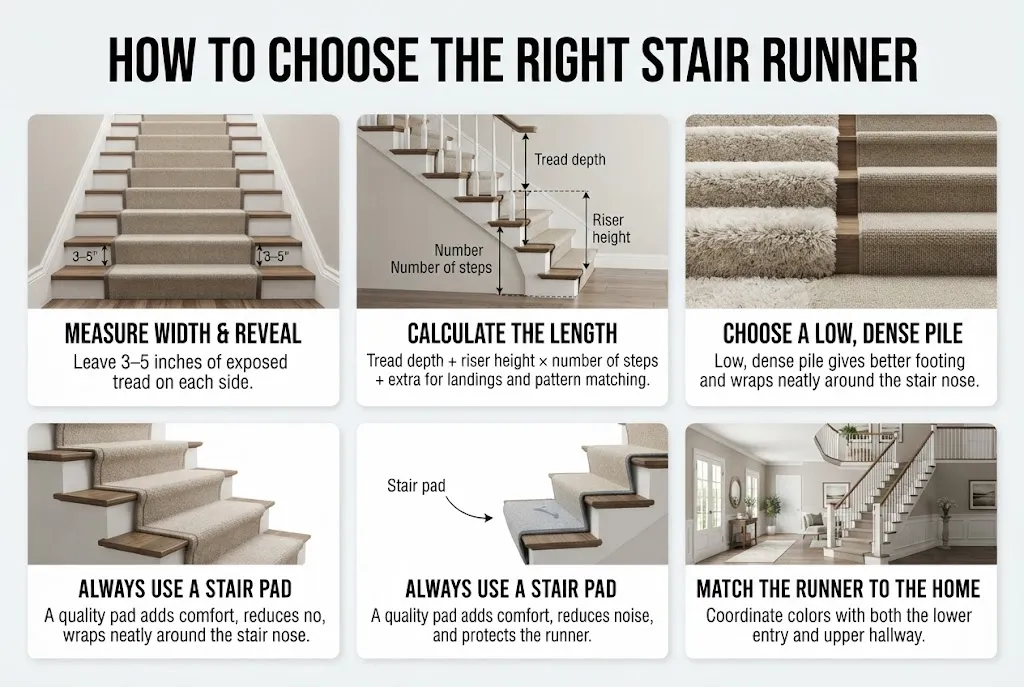
Measure the width of your treads first. Most designers leave about 3 to 5 inches of exposed tread on each side, which keeps the runner looking intentional and shows off the wood. On a typical 36-inch staircase, that points to a runner around 26 to 30 inches wide. On very wide stairs, scale up so the runner does not look skimpy.
Calculate the Length
Measure one tread’s depth and one riser’s height, including the curve of the nose. Add them, then multiply by the number of steps. Then add extra length for landings, pattern matching, and a small allowance for error. Always confirm the final figure with your installer before you order, because pattern repeats and installation style both affect how much material you need.
Choose a Low, Dense Pile
Thick, fluffy carpet looks inviting, but it makes each step feel shallower and wraps poorly over the nose. A low, dense pile gives you a firmer footing, a crisper look, and a longer life on the stairs.
Always Use a Stair Pad
A pad cut slightly narrower than the runner cushions each step, reduces noise, and stops the runner from wearing against the edge of the tread. It also helps a flatweave feel far more comfortable.
Match the Runner to the Home, Not Just the Hallway
Your staircase connects two floors, so choose a runner that makes sense with both. Pull at least one color from the downstairs entry and one from the upstairs landing or hallway to tie the levels together.
Why a Stair Runner Is Worth It
A runner does far more than decorate. Here is what it brings to your home:
- Safety: Bare wood and stone stairs become slippery, especially in socks. A securely fitted runner adds grip where your feet actually land.
- Noise reduction: Carpet and a good pad absorb the thud of footsteps, which makes a real difference in open-plan homes and multi-level households.
- Protection: Foot traffic wears the center of each tread first. A runner takes that wear, so your hardwood keeps its finish.
- Style: A runner introduces color, pattern, and texture in a space that rarely gets furniture or art at eye level.
- Value: A runner often costs less than full wall-to-wall stair carpet and leaves the beauty of the wood on show.
Installation of Stair Runners: DIY or Professional?
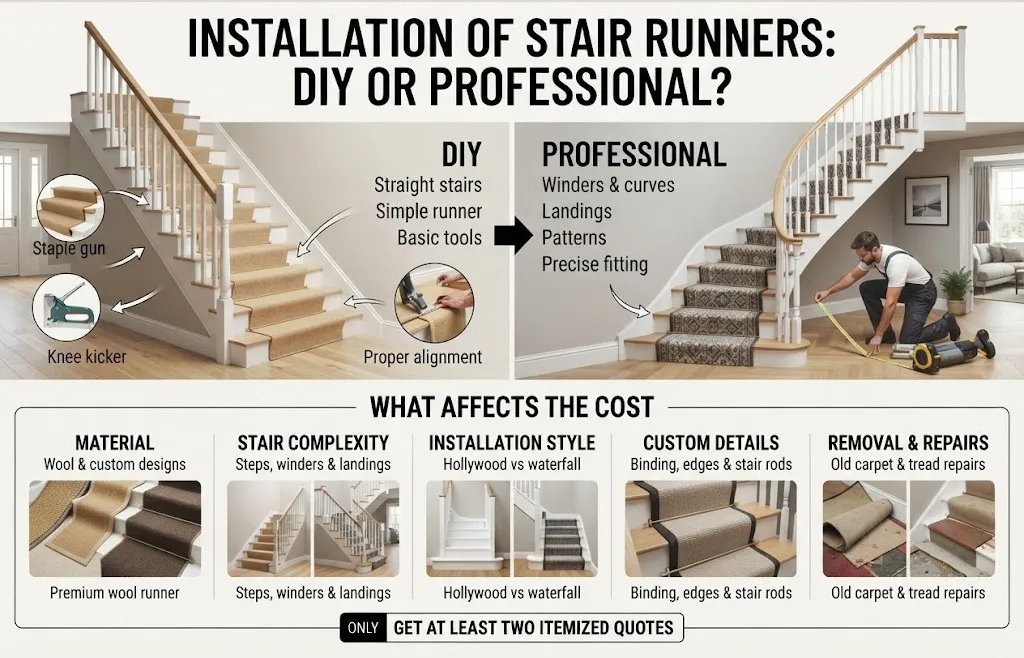
A straight flight with a plain or natural fiber runner makes a manageable weekend project for a confident DIYer with a knee kicker, a staple gun, and patience. Secure the runner to the treads and risers at every step, check alignment constantly, and never leave a loose section that could catch a foot.
Hire a professional if your stairs include winders, curves, open sides, or landings, or if you choose stripes, plaid, or a large repeat pattern. These layouts require precise cutting and pattern matching, and mistakes cost both material and safety.
What Affects the Cost
Rather than relying on a single price per step, consider the factors that drive your final quote:
- The material and quality of the runner itself, with wool and custom designs at the higher end.
- The number of steps, plus any landings, winders, or curved sections.
- The installation style, since Hollywood installation takes longer than waterfall.
- Custom binding, shaped edges, and stair rods.
- Removal of old carpet, tack strips, or staples, and any repairs to the treads underneath.
Get at least two itemized quotes so you can compare like-for-like.
How to Care for Your Stair Runner
Follow the tips below to keep your stair runner clean and in pristine condition.
- Vacuum weekly with a handheld or stair attachment, working into the crease where the tread meets the riser.
- Blot spills immediately with a clean, dry cloth. Never rub, and follow the manufacturer’s guidance, especially for natural fibers such as sisal and jute.
- Use a doormat at the entry to catch grit before it reaches the stairs. Grit cuts carpet fibers over time.
- Schedule professional cleaning every year or two, depending on traffic, using a cleaner experienced with your runner’s material.
- Check fastenings regularly and fix any loose section right away. A loose runner is a trip hazard.
Final Thoughts
The right stair runner turns your staircase from a passageway into a feature. Start with the practical decisions: how the stairs are used, which material suits your household, and which installation style fits your space. Then let your personality lead the pattern, whether that means a calm tone-on-tone neutral, a confident stripe, or a runner stitched together from vintage finds.
Order a large sample, test it on your stairs, and invest in a good pad and a careful installation. Get those basics right, and your runner will look beautiful and feel safe underfoot for years.
Frequently Asked Questions
How wide should a stair runner be?
Most designers leave about 3 to 5 inches of exposed tread on each side. On a standard 36-inch-wide staircase, that usually means a runner around 26 to 30 inches wide. Wider stairs call for a proportionally wider runner.
What is the best material for a stair runner?
Wool is the best all-round choice for most homes because it feels soft, resists crushing, and wears well. Sisal suits high-traffic homes that want texture, while nylon and polypropylene suit households with pets and young children.
What is the difference between a waterfall and a Hollywood installation?
A waterfall installation lets the runner drop straight from the nose of one step to the base of the next riser. A Hollywood installation wraps the runner tightly under each stair nose and fastens it to the riser for a crisp, tailored look.
Are stair runners safe?
A properly installed runner improves safety by adding traction to slippery wood or stone. Safety depends on the fit: choose a low pile, use a pad, and fasten the runner securely at every step so nothing shifts or bunches.
Can I install a stair runner myself?
Yes, on a straight flight with a plain or natural fiber runner, many confident DIYers succeed. For winders, landings, curves, or patterned runners such as stripes and plaid, a professional installer gives a safer and neater result.
Do stair rods hold the runner in place?
In most modern installations, stair rods are decorative. Staples or tacks do the real work of holding the runner, while the rods add a traditional finishing touch.
How long does a stair runner last?
Lifespan depends on the material, pile, traffic, and care. A good-quality wool or nylon runner on a pad, vacuumed regularly, lasts many years longer than a thin, low-grade runner laid straight onto the treads.
Should the stair runner match the hallway rug?
It should coordinate rather than match exactly. Repeat one color, texture, or pattern scale between the two so the spaces feel connected without looking like a set.