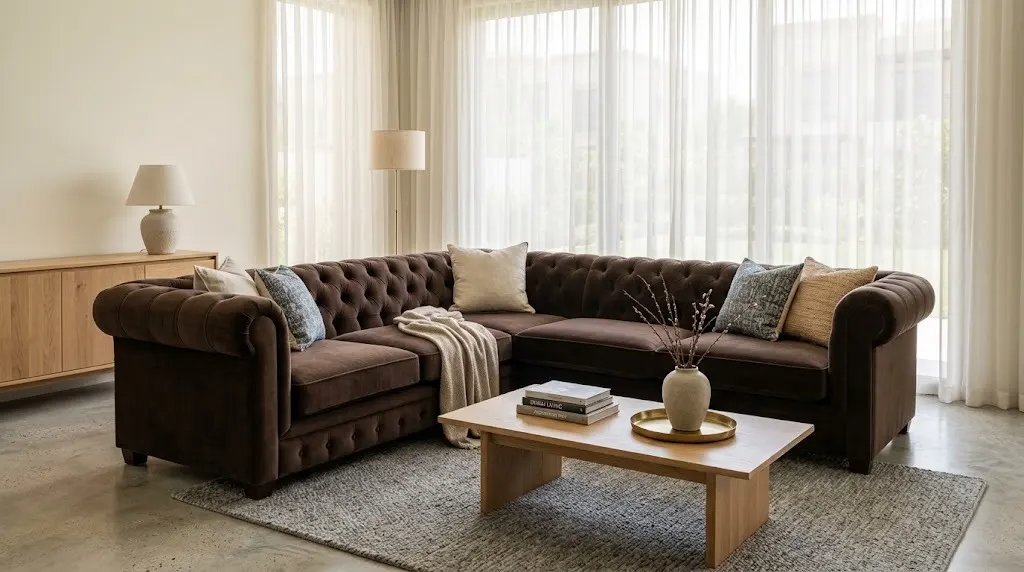
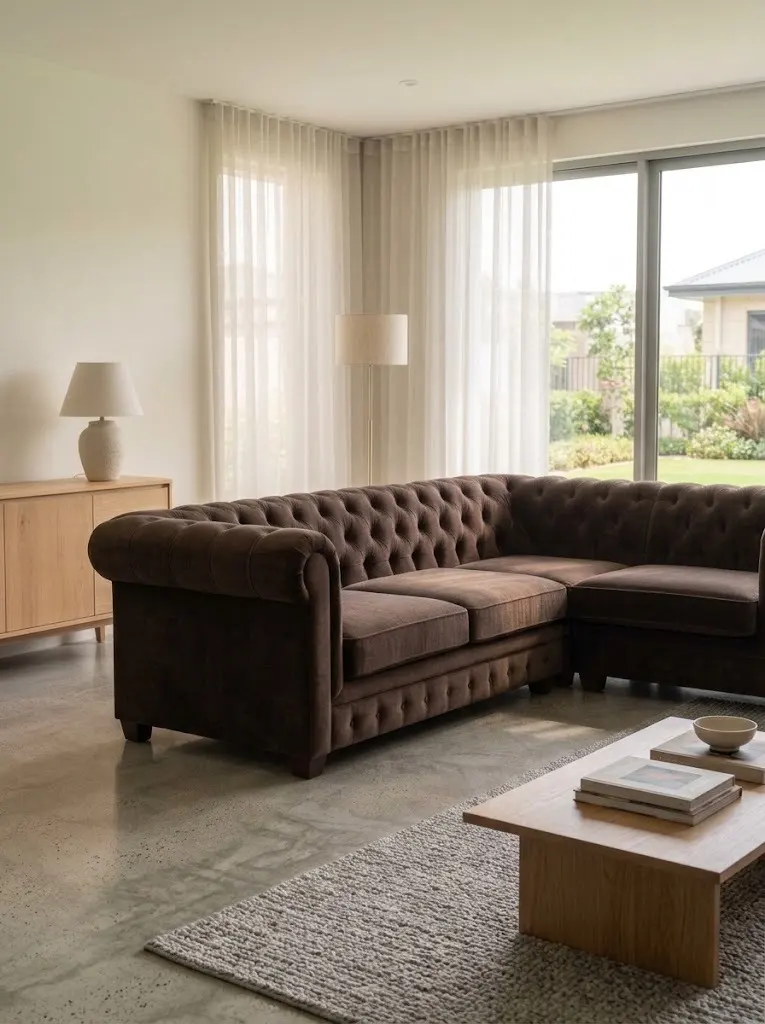
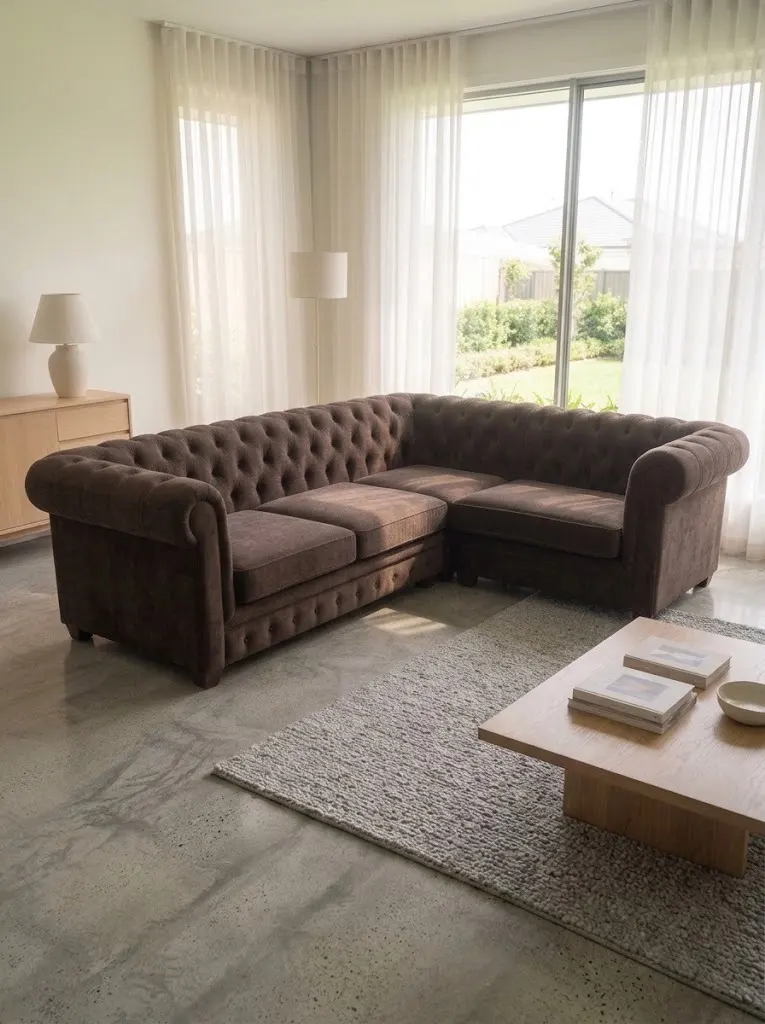
On 21 August 2026, our upholstery team completed a residential furniture upholstery project at Arabian Ranches Bliss, Dubai. The work covered a 5-seater living-room sofa and a bedroom headboard, with different upholstery materials selected for each piece.
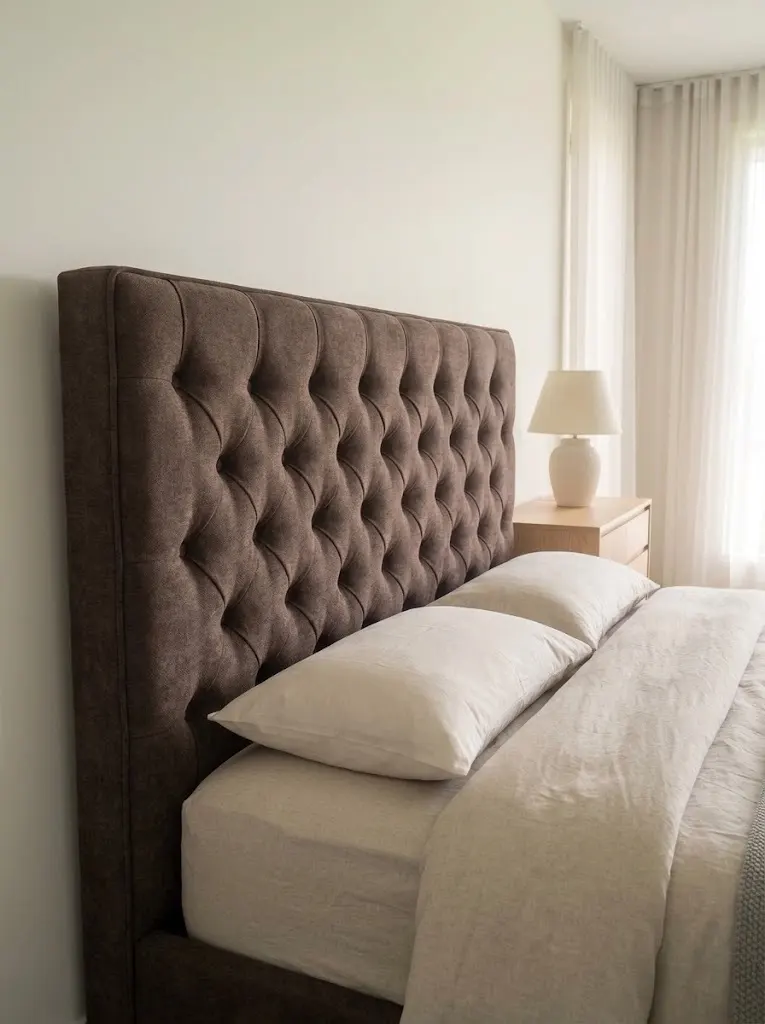
For the sofa, we used dark brown velvet with button tufting to create a richer, more structured finish. For the headboard, we worked with a cotton-blend upholstery fabric and memory foam, giving the piece a softer padded surface suited to the bedroom.
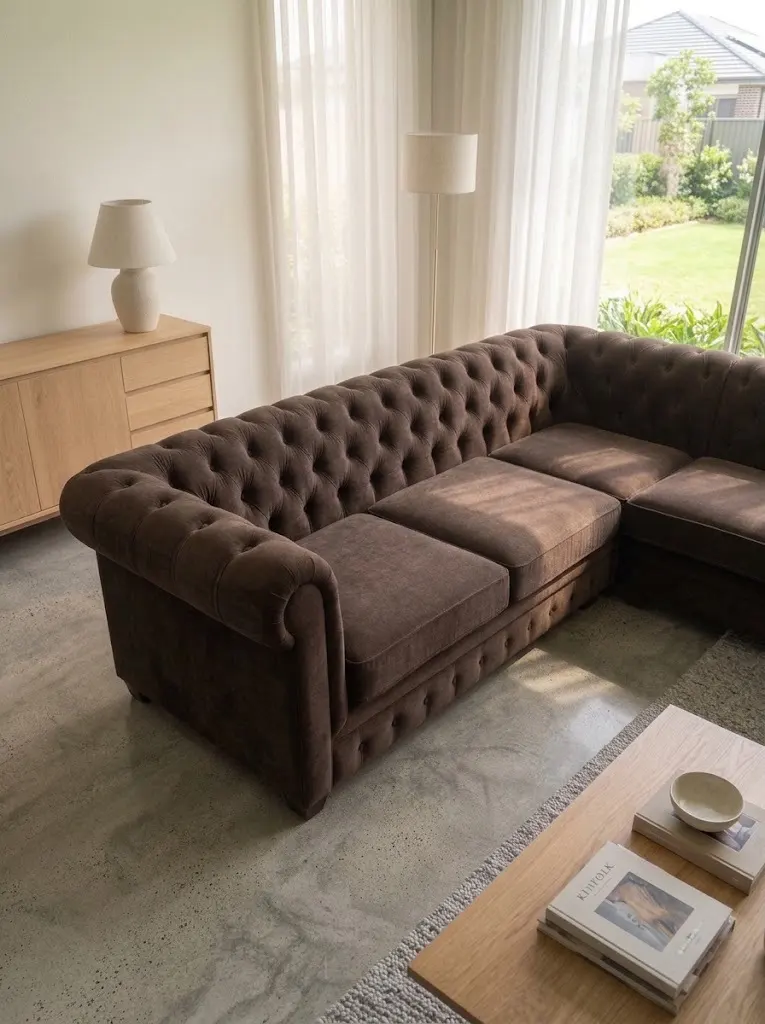
We started with the 5-seater sofa because its larger surface area and button-tufted detailing required careful fabric handling. The selected dark brown velvet gave the sofa a deeper finish while adding the soft texture expected from a velvet-upholstered living-room piece.
Before fitting the new fabric, our team assessed the upholstered sections and planned how the material would be positioned across the sofa. Velvet has a visible pile direction, so we paid attention to its orientation during fitting. Keeping the pile consistent helps prevent noticeable changes in shade or texture between different sections of the sofa.
We then worked the fabric across the individual upholstered areas, maintaining controlled tension as we moved around the sofa. This was particularly important around the corners and shaped sections, where excess material can create unwanted folds if it is not handled correctly.
For this apartment, we used an eyelet header because it suited the clean, contemporary character of the bedrooms. The curtain panels were finished with 40mm matte black metal eyelet rings, paired with 28mm matte black metal poles.
We kept the finish consistent across the hardware so the curtain rods and eyelets appeared as one coordinated element. The matte black finish also provided a subtle contrast against the softer curtain fabric.
The sofa’s button tufting was one of the main details we had to preserve during the upholstery work.
Rather than treating the tufted area as a flat surface, we positioned the velvet around each recessed section so the folds remained defined and the buttons stayed visually aligned. The fabric tension around the tufting also had to be controlled carefully to avoid loose or uneven sections.
The combination of dark brown velvet and button tufting gave the finished sofa a more defined appearance, with the velvet’s surface changing subtly as the light falls across the tufted sections.
We handled the headboard upholstery separately because its construction and intended use were different from the living-room sofa.
For this piece, we selected a cotton-blend upholstery fabric with memory foam. Our focus was to create an evenly padded surface while keeping the fabric smooth across the face of the headboard.
We fitted the upholstery fabric over the memory-foam padding and worked carefully around the edges to maintain a neat transition between the front surface and the surrounding areas. The padding helped give the headboard a softer feel, while the cotton-blend fabric provided the finished textile surface.
After fitting the materials, our team checked the finished upholstery rather than considering the work complete as soon as the fabric was attached.
We inspected the sofa and headboard for:
- Even fabric tension
- Smooth upholstered surfaces
- Clean corners and edges
- Consistent velvet direction
- Defined button-tufted sections
- Neat finishing around the headboard
- Visible creases or loose areas that required adjustment
- Overall consistency across the finished pieces
On the sofa, we paid particular attention to the relationship between the velvet and button tufting. On the headboard, our priority was achieving a smooth padded finish without compromising the fabric’s appearance.
We completed both pieces with materials selected for their specific use and appearance. The 5-seater sofa now has a dark brown velvet finish with button tufting, giving the living-room furniture a richer, more defined upholstered appearance. The headboard was finished with cotton-blend fabric over memory foam, creating a softer padded surface for the bedroom.
Using different materials for the two pieces let us approach each item based on its construction and function, rather than applying the same upholstery treatment throughout the project.