
How to Clean Window Tracks: Remove Dirt, Dust & Mold
To clean window tracks, start by removing loose dust and debris, then loosen stuck-on dirt with a soft brush and clean the track with a suitable solution. For mold, use a mold-safe cleaner and dry the area thoroughly to prevent it from returning. Window tracks collect more than visible dust. Hair, dead insects, sand, grime, and moisture can build up inside the narrow channels, making windows harder to open and close. Dirty tracks can also leave marks on the frame or surrounding surfaces.
The good news is that you do not need specialized equipment for routine cleaning. A vacuum, old toothbrush or soft brush, microfiber cloth, and mild cleaning solution are usually enough. For heavily soiled tracks, you may need a little more time and repeated cleaning. In this guide by Floor Land, you will learn how to clean window tracks safely, remove stubborn dirt and mold, and keep them cleaner for longer.
Why Window Tracks Get So Dirty
Window tracks sit at the lowest point of the frame. Gravity pulls everything down into them. Outdoor dust, pollen, and soil blow in through the screen. Insects crawl in and die there. Indoors, condensation runs down the glass and pools in the channel.
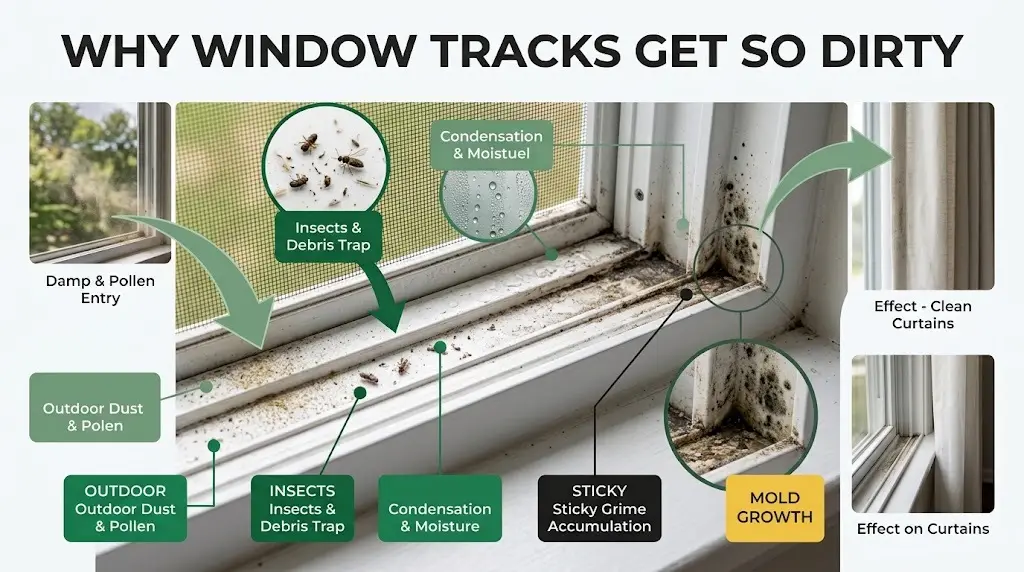
That mix of dust and moisture creates a paste that hardens over time. Once it dries, it clings to corners and ridges that a simple wipe cannot reach. If the moisture stays long enough, mold and mildew move in, especially on windows in bathrooms, kitchens, and bedrooms where humidity runs high. This condition can also compromise the look of high-quality custom-made curtains.
Tools and Supplies You Will Need for Cleaning Window Tracks
You do not need special products for cleaning the window tracks. Gather these items before you start:
| Item | What It Does |
| Vacuum with a crevice tool | Lifts loose dust, sand, and dead insects |
| Old toothbrush or detail brush | Reaches tight corners and ridges |
| Baking soda | Loosens stuck grime with gentle abrasion |
| White vinegar in a spray bottle | Breaks down dirt and mineral buildup |
| Dish soap and warm water | Cuts general grease and grime |
| Microfiber cloths or paper towels | Wipes and dries the track |
| Cotton swabs | Clean small gaps and weep holes |
| Plastic putty knife or old gift card | Scrapes off hardened debris |
| Rubber gloves | Protect your hands from dirt and mold |
For mold, you may also want a dust mask and safety glasses. We cover that in its own section below.
Check These Things Before Cleaning Your Window Tracks
Take two minutes to prepare. It saves time and protects your window.

- Remove the screen and set it aside. You can wash it in the tub or with a hose while the track soaks.
- Lay an old towel under the window to protect your carpet or rug from drips.
- Check your window manual or the manufacturer’s website. Some brands advise against certain cleaners on their finishes.
- Test any cleaner on a small hidden spot first, especially on painted or wood frames.
- Never mix bleach with vinegar, ammonia, or other household cleaners. These combinations release toxic gases.
How to Clean Window Tracks – 9 Easy Steps
This method works on most sliding, single-hung, and double-hung windows. It removes loose dust, stuck grime, and light mildew in one session.
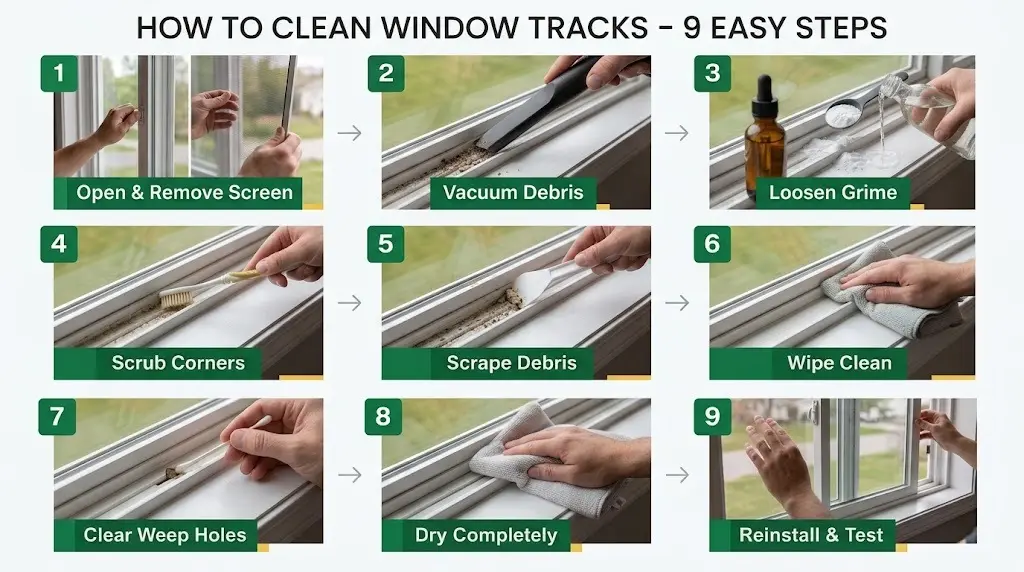
Step 1: Open the Window and Remove the Screen
Slide the window as far open as it goes. This exposes the full length of the track. Pop out the screen by pressing its tabs or lifting it from the frame. If your sash tilts in or lifts out, remove it for easier access. Many modern double-hung windows tilt inward with two small top latches.
Step 2: Vacuum the Loose Debris
Run a vacuum with a crevice tool along the entire track. Go slowly and pass over each section twice. Focus on corners, where dirt piles up the most. A dry pass matters because water turns loose dust into mud that is harder to remove.
If you do not have a crevice tool, flatten a paper towel tube and tape it to the vacuum hose. It works as a quick homemade attachment.
Step 3: Loosen the Grime With Baking Soda and Vinegar
Sprinkle a thin layer of baking soda along the track. Then spray white vinegar over it until the powder is damp. The mixture will fizz. Let it sit for about 5 to 10 minutes. The reaction softens dried dirt and lifts it from ridges and corners.
For a milder option, use warm water with a few drops of dish soap. This works well on tracks that you clean often.
Step 4: Scrub the Corners and Ridges
Use an old toothbrush to scrub the track while the mixture is still wet. Work in short strokes along each channel. Press the bristles into the corners, where grime hides. For stubborn buildup, dip the wet brush directly into baking soda for extra scrubbing power.
Step 5: Scrape Off Stuck Debris
Some deposits refuse to budge, such as old paint drips or hardened mud. Gently scrape them with a plastic putty knife or an old gift card. Avoid metal blades on vinyl and painted surfaces because they scratch easily. You can also wrap a thin cloth around a butter knife to reach narrow gaps without damage.
Step 6: Wipe the Track Clean
Dampen a microfiber cloth with clean water and wipe away the loosened dirt and residue. Rinse the cloth often. For narrow channels, wrap the cloth over a flat screwdriver or a chopstick and slide it along the groove. Repeat until the cloth comes away clean.
Step 7: Clear the Weep Holes
Look along the outer edge of the track for small slots or holes. These are weep holes. Poke each one gently with a cotton swab, pipe cleaner, or thin wire to push out debris. Then pour a little water into the track and watch it drain outside. If water pools, clear the hole again.
Do not force a sharp tool into weep holes. Some have small flaps that keep insects and wind out, and they break easily.
Step 8: Dry the Track Completely
Use a dry cloth or paper towel to remove all moisture. Leave the window open for 15 to 20 minutes so air can dry hidden spots. A dry track resists mold and keeps new dust from sticking.
Step 9: Reinstall the Screen and Test the Window
Put the screen and sash back in place. Slide the window open and closed a few times. It should move smoothly and quietly. If it still drags, see the lubrication tip in the prevention section below.
How to Remove Mold From Window Tracks
Black, green, or gray spots in the track usually mean mold or mildew. It often grows on windows with frequent condensation. You can handle small patches yourself. The U.S. Environmental Protection Agency advises that most homeowners can clean mold areas smaller than about 10 square feet. A window track almost always falls well under that size.
Protect Yourself First
- Wear rubber gloves and safety glasses.
- Put on an N95 mask if you have allergies, asthma, or a sensitive respiratory system.
- Open the window and nearby doors to keep fresh air moving.
Step-by-Step Mold Removal From Window Tracks
Follow these steps to clean mold from window tracks.
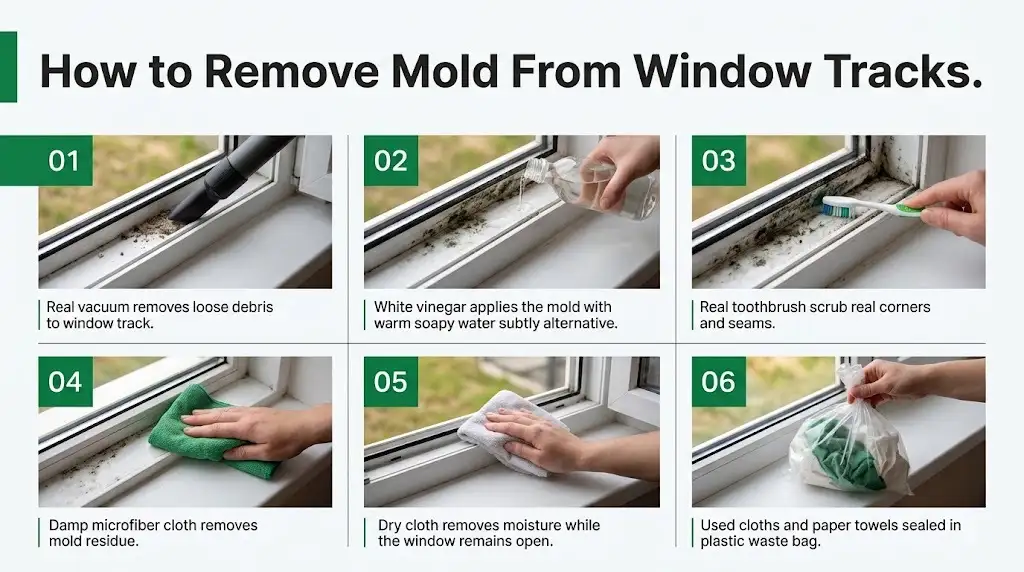
- Vacuum gently. Remove loose debris first. Use a vacuum with a HEPA filter if you have one so spores stay trapped.
- Apply a cleaning solution. Spray undiluted white vinegar on the mold and let it sit for one hour. Vinegar works well on hard surfaces like vinyl and aluminum. Warm water with dish soap also removes surface mold effectively.
- Scrub it off. Use a toothbrush to scrub the moldy areas. Focus on corners and seams where spores hide.
- Wipe and remove residue. The EPA points out that dead mold can still trigger allergies. Killing it is not enough, so wipe away every trace with a damp cloth.
- Dry thoroughly. Moisture feeds mold. Dry the track completely and leave the window open for a while.
- Bag the waste. Seal used paper towels and cloths in a plastic bag and throw them away.
What About Bleach?
Many people reach for bleach first. It removes stains fast on hard, nonporous surfaces. However, the EPA does not recommend bleach as a routine practice for mold cleanup. It also does not work well on porous materials like wood, where mold roots grow below the surface.
If you choose bleach for a vinyl or aluminum track, the CDC suggests a solution of no more than 1 cup of bleach per gallon of water. Ventilate the room well. Never combine bleach with vinegar, ammonia, or glass cleaners. Many glass cleaners contain ammonia, so rinse the track with plain water before and after.
When to Call a Professional
Contact a mold specialist if the mold spreads onto the wall or sill, keeps returning after cleaning, or comes with a musty smell in the room. These signs often point to a hidden leak or moisture problem inside the wall.
Why Cleaning Your Window Tracks Matters
Clean tracks do more than look nice. Here is what regular cleaning protects:

- Smooth operation. Grit acts like sandpaper on rollers and seals. Clean tracks let the sash glide without force.
- Proper drainage. Most sliding and vinyl windows have small weep holes that let rainwater escape outside. Debris blocks these holes, and water backs up into your home.
- Healthier indoor air. Mold in the track releases spores every time you open the window. These spores can settle on nearby sofas and upholstered chairs. Removing it improves the air in that room.
- Longer window life. Trapped moisture can rot wood frames and wear out weatherstripping. Routine care prevents costly repairs.
- Fewer pests. Food crumbs, dead bugs, and damp debris attract ants, spiders, and other insects.
How Often Should You Clean Window Tracks?
Most homes do well with a light clean every one to three months and a deep clean twice a year. Spring and fall work best because you tend to open windows more during those seasons.
Clean more often if you live near a busy road, a construction site, or farmland. Windows that collect heavy condensation also need extra attention. Regular light cleaning keeps the job quick. A damp cloth often does the trick when you stay on top of it.
How to Clean Window Tracks by Material
Different frames need slightly different care. Use this guide to avoid damage.
-
Vinyl Tracks
Vinyl handles water, dish soap, vinegar, and baking soda well. Avoid harsh solvents and abrasive pads, which can dull and scratch the surface. Use plastic tools only for scraping.
-
Aluminum Tracks
Aluminum can develop white oxidation spots over time. A vinegar and water mix removes light oxidation. Scrub with a soft brush and dry the track right away. Skip steel wool, which leaves scratches and can cause more corrosion.
-
Wood Tracks
Wood needs the gentlest approach. Use a lightly damp cloth, not a soaking one. Mild dish soap works best. Avoid soaking wood in vinegar, which can damage some finishes. Dry the wood immediately and check for soft spots, which may signal rot.
Common Mistakes to Avoid While Cleaning Window Tracks
There are some mistakes that most of the people usually make while cleaning the window tracks:
- Adding water before vacuuming. Wet dust turns into mud and spreads deeper into corners.
- Using metal scrapers on vinyl. Scratches trap dirt and make future cleaning harder.
- Skipping the weep holes. Clean tracks with blocked drains still let water back into your home.
- Leaving the track wet. Moisture invites mold to return within days.
- Mixing cleaning products. Bleach combined with vinegar or ammonia creates dangerous fumes.
- Spraying oil lubricants. Oil attracts dust and turns into sticky grime. Use a silicone spray instead.
How to Keep Window Tracks Clean Longer
Prevention saves you from deep scrubbing. Try these simple habits:
- Vacuum monthly. A quick pass with the crevice tool takes less than a minute per window.
- Wipe condensation daily. On cold mornings, dry the glass and track with a cloth. The EPA recommends acting quickly on condensation because it signals high humidity.
- Control indoor humidity. Aim for 30 to 50 percent relative humidity. Use exhaust fans while cooking or showering and run a dehumidifier in damp rooms.
- Keep screens clean. Dirty screens shed dust straight into the track.
- Apply a silicone lubricant. After a deep clean, spray a light coat of dry silicone spray on the track. It helps the sash glide and repels dust.
- Check weatherstripping. Worn seals let in more dirt and moisture. Replace them when they crack or flatten.
Final Thoughts
Clean window tracks keep your windows sliding smoothly, protect your frames from water damage, and help your home stay mold-free. The process is simple. Vacuum first, loosen grime with baking soda and vinegar, scrub the corners, clear the weep holes, and dry everything well.
Make a quick vacuum pass part of your monthly routine and schedule a deep clean each spring and fall. With these small habits, your window tracks will never reach that gritty, neglected state again.
Frequently Asked Questions
What is the best homemade cleaner for window tracks?
Baking soda and white vinegar make the most effective homemade cleaner. The fizzing action lifts dried grime from corners. For routine cleaning, warm water with a few drops of dish soap works just as well.
Can I use a pressure washer on window tracks?
No. A pressure washer forces water past seals and into the wall cavity. This can cause leaks, mold, and rot. Stick with a vacuum, brush, and damp cloth.
How do I clean window tracks without removing the window?
Open the window fully and clean one half of the track. Then close it and clean the other half. A thin brush and a cloth wrapped around a flat tool help you reach under the sash.
Why does mold keep coming back on my window tracks?
Recurring mold means moisture remains. Common causes include heavy condensation, blocked weep holes, high indoor humidity, or a frame leak. Fix the moisture source and the mold will stop returning.
Is it safe to use vinegar on aluminum window tracks?
Yes, in diluted form. Mix equal parts vinegar and water, scrub gently, and dry the track right away. Do not let vinegar sit on aluminum for long periods.
What can I use instead of a toothbrush?
Try a stiff paintbrush, a grout brush, a pipe cleaner, or a cotton swab. A cloth wrapped around a chopstick or butter knife also reaches tight grooves.