
How to Clean Blinds at Home: Methods for Every Material, Stain, and Problem
To clean blinds at home, dust them first with a microfiber cloth or a vacuum brush attachment. Then wipe each slat with a cloth dampened with warm water and a few drops of dish soap, and dry it straight away. Metal and vinyl blinds can go in the bathtub for a deep wash. Real wood blinds need dry dusting and only a barely damp cloth. Fabric blinds need a vacuum and gentle blotting with lukewarm water instead of scrubbing.
That is the short answer. Most people go wrong in the details. Hot water can loosen the glue in a vertical blind hem. Tap water can leave a ring on a fabric roller blind. A soak that brightens aluminum can split a wooden slat. This blog post by Floor Land explains clear steps for different blind types and each common problem.
Identify What Your Blinds Are Made Of
Most cleaning damage happens because someone treats faux wood like metal or real wood like faux wood. A few quick checks can tell you what type of custom blinds you have.
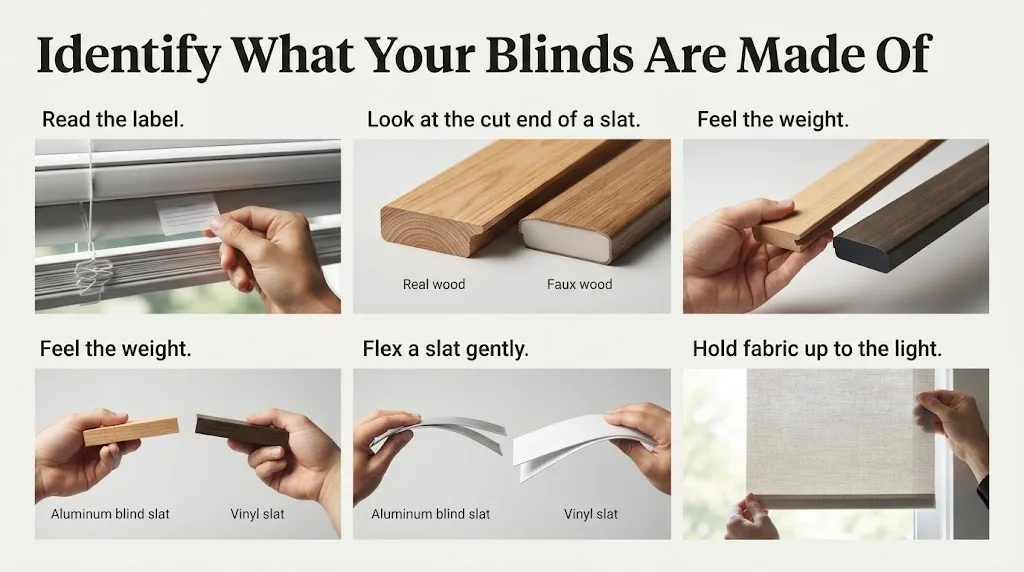
- Read the label. Most made-to-measure blinds carry a sticker on the headrail or inside the bottom rail. Hunter Douglas says it ships detailed cleaning instructions with every product, so check your paperwork too.
- Look at the cut end of a slat. Real wood shows grain running through the edge. Faux wood looks uniform or shows a solid plastic or foam core.
- Feel the weight. Faux wood slats feel heavier and denser than real wood slats of the same size.
- Flex a slat gently. Thin aluminum slats bend easily and spring back. Vinyl feels softer and slightly waxy.
- Hold fabric up to the light. A paper-like or stiff coated fabric usually means spot cleaning only. Bissell’s cleaning guide makes the same point: the more paper-like the material, the less likely it is to survive wet cleaning.
If you’re still unsure, test your cleaner on a small, hidden area at the back of the bottom rail. Wait until it dries fully before you judge the result.
Tools Required for Cleaning The Blinds
You don’t need a special blind-cleaning gadget. These basics cover every blind type.
- Microfiber cloths. Their fine split fibers grab dust instead of pushing it around. Keep one dry and one damp.
- A vacuum with a soft brush attachment. A model with a HEPA filter traps fine dust and pet dander instead of blowing it back into the room. This matters if anyone in the home has allergies.
- Mild dish soap. Choose a plain formula without bleach or added moisturizers.
- Distilled water for fabric. Hunter Douglas recommends cool distilled water for spot cleaning some of its fabric shades. Tap water minerals can dry into a visible ring.
- White vinegar. Standard household vinegar is around 5 percent acetic acid. It cuts kitchen grease and soap film on hard slats.
- A hair dryer with a cool setting or a can of compressed air. These clear dust from cellular shades without touching the fabric.
- A clean cotton sock or kitchen tongs wrapped in microfiber. Both let you clean the top and bottom of a slat in one pass.
- A stable step stool and old towels. Towels protect the sill, the floor, and the bathtub.
Prepare the Window Before You Start
For deep blind cleaning, prepare the window before you start.
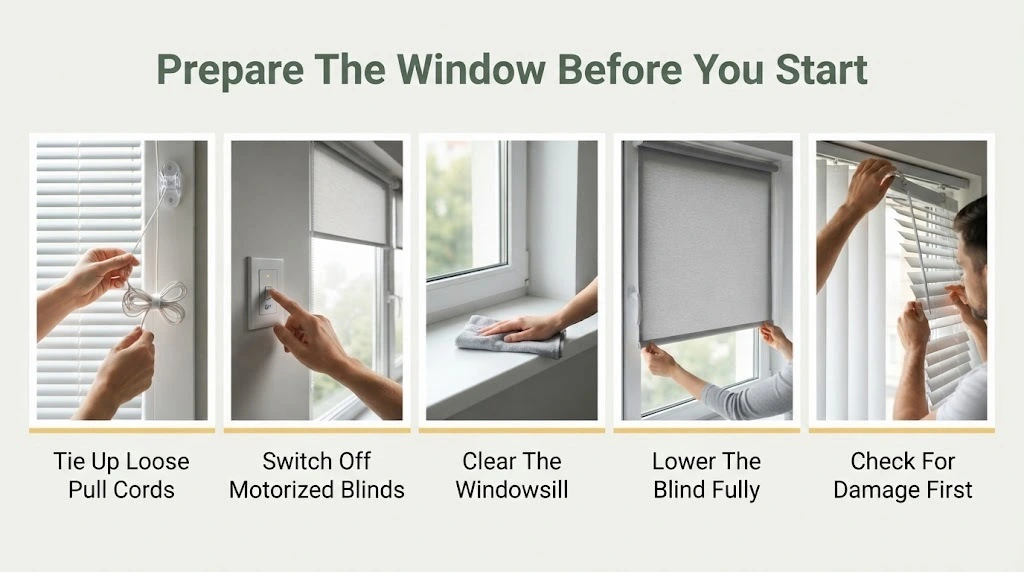
- Tie up loose pull cords and keep children and pets out of the room while you work.
- Switch off motorized blinds at the wall or remove the batteries if you plan to use any moisture.
- Clear the windowsill and lay a towel along it. Dust and drips always land there.
- Lower the blind fully so you can reach every slat or the whole fabric panel.
- Check for damage first. Look for broken ladder strings, cracked slats, or loose brackets. Cleaning will not fix these, and rough handling can make them worse.
How to Clean Real Wood Blinds
Real wood is the most sensitive hard blind. Experts advise keeping fine wood products away from steam, high moisture, rain, and sprinklers. It also warns against chemical solvents and scrubbing cleansers. Water swells the grain and can cause warping, cracking, or a cloudy finish.
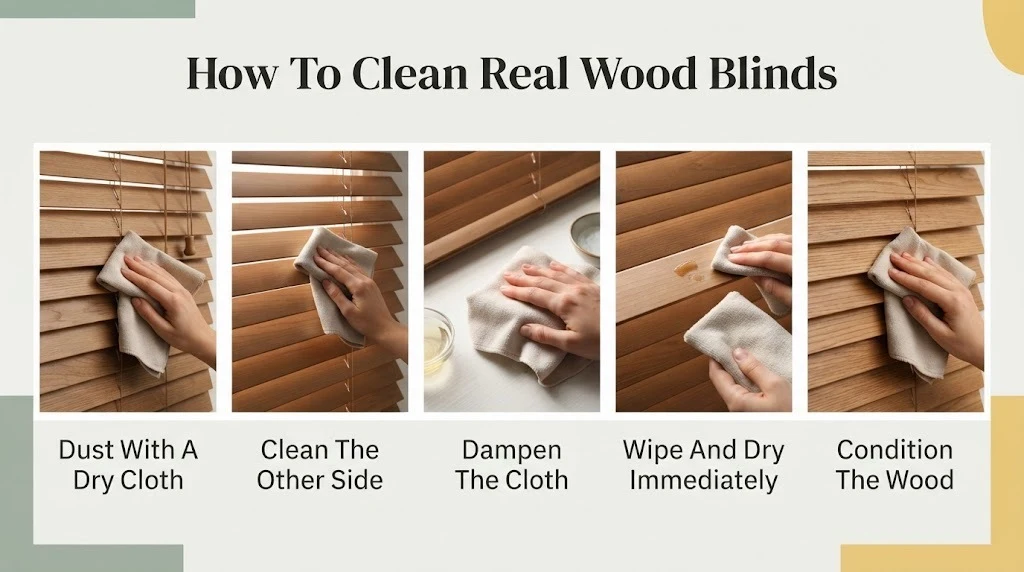
- For cleaningreal woodenn blinds, close the slats and dust with a dry microfiber cloth, a lambswool duster, or a vacuum brush.
- Tilt the slats and repeat on the other side.
- For sticky marks, dampen a corner of a cloth with water and a tiny drop of dish soap. Wring it until it feels almost dry.
- Wipe only the mark and dry it immediately with a clean cloth.
- Treat stained wood blinds with lemon oil or another wood conditioner from time to time.
Never put real wood blinds in the bath and never spray cleaner directly onto them. Skip vinegar too. Its acid can dull a lacquer or stain finish with repeated use.
How to Clean Fabric Roller Blinds
Many roller blind fabrics carry a stiffening or blackout coating. Scrubbing, solvents, or heavy soaking can crack or strip it. Avoid using hydrocarbon cleaners such as mineral spirits on its roller shade fabrics.
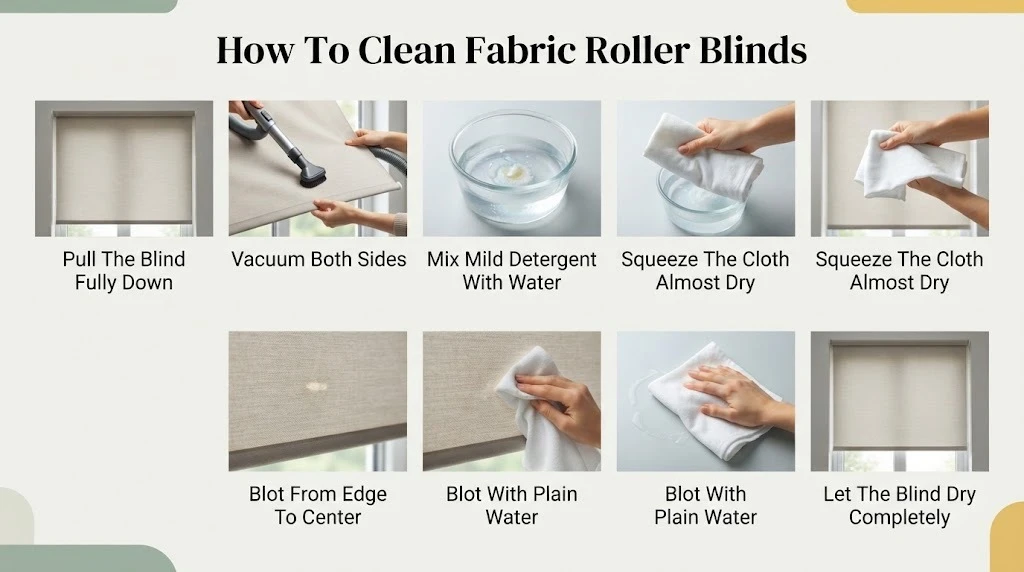
- Pull the blind fully down so the whole panel is flat.
- Vacuum both sides with a brush attachment on low suction. Steady the fabric with your free hand to prevent creasing.
- Mix a small amount of mild detergent into cool or lukewarm water. Use distilled water if your tap water is hard.
- Dip a white cloth or sponge and squeeze it almost dry.
- Blot the mark from the outside edge inward. This stops it from spreading.
- Blot again with a cloth dampened in plain water to lift the soap.
- Leave the blind down until it is completely dry.
Spot cleaning can leave the treated area looking cleaner than the rest. Feather your blotting outward into the surrounding fabric so you do not create a bright patch with a hard edge.
How to Clean Roman Blinds
Roman blinds hold dust in their folds, and most have rods sewn into pockets on the back. That makes them unsuitable for the washing machine in most cases.
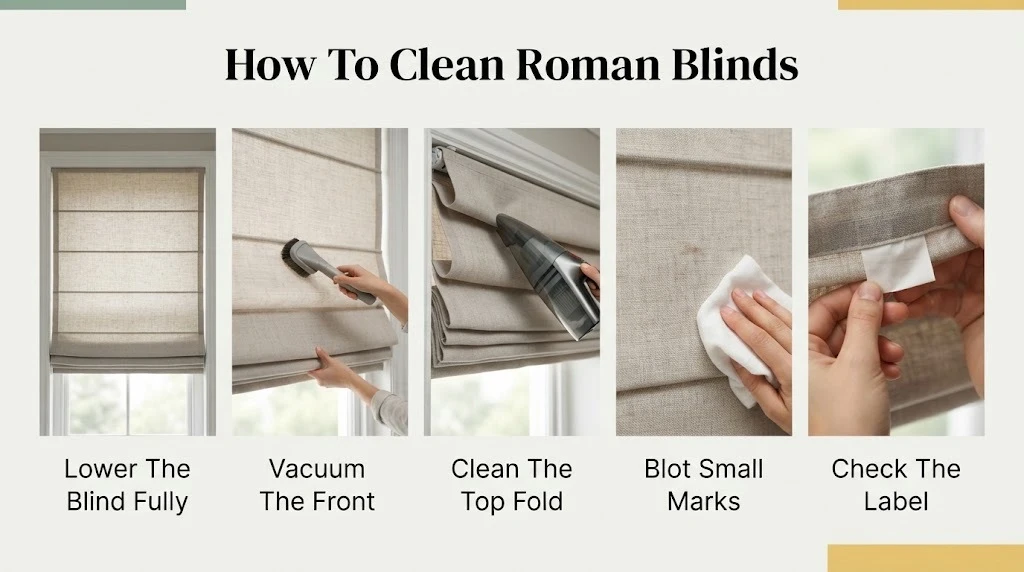
- Lower the blind fully to open the folds.
- Vacuum the front with a brush attachment while you support the fabric from behind with your other hand. This prevents stretching and creasing.
- Use a handheld vacuum for the top fold near the headrail.
- Blot small marks with warm water and a soft cloth. Test on the back first.
- Check the label. Silk, linen, and lined Roman blinds often need professional dry cleaning.
How to Clean Aluminum Blinds
Aluminum mini blinds and venetians are the toughest blinds in most homes. You can clean them in place for routine care or take them down for a full wash once or twice a year.
Cleaning Aluminum Blinds in Place
- Dust or vacuum both sides first.
- Mix a few drops of dish soap into a bowl of warm water.
- Dip a microfiber cloth and wring it until no water drips.
- Pinch each slat between the folded cloth and slide from end to end.
- Rinse the cloth in clean water often so you do not spread grime back onto the slats.
- Dry each slat with a second cloth to prevent spots.
Deep Cleaning Aluminum Blinds in the Bathtub
Bathtub immersion is fine for some aluminum blinds, but not for blinds with decorative tapes or cotton ladders. Fabric tapes can shrink, stain, or bleed color. Check your own blind before you soak it.
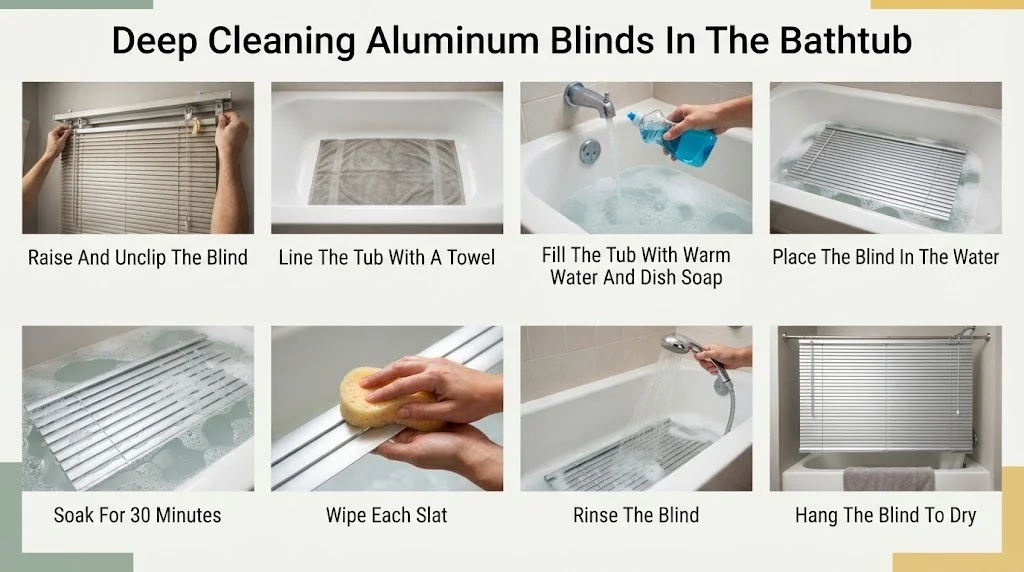
- Raise the blind and unclip it from the brackets. Note how the valance clips sit so refitting is easy.
- Line the tub with an old towel to protect both the tub and the slats.
- Fill the tub with warm water and a good squirt of dish soap.
- Lower the blind fully, close the slats, and lay it in the water.
- Let it soak for about 30 minutes to loosen grime.
- Wipe each slat with a soft sponge. Flip the slats and clean the other side.
- Drain the tub and rinse the blind with the shower head.
- Hang the blind fully extended to dry over the shower rail or on its brackets with a towel below. Tilt the slats so water runs off.
Keep the headrail out of the water where you can. The tilt mechanism and cord lock contain metal parts that can rust if they stay wet.
The Outdoor Hose Method
For very dirty blinds and a sunny day, lay the blind on an old blanket or drop cloth on a clean driveway or patio. Brush both sides with soapy water and a soft brush. Rinse with a gentle hose spray and hang the blind on a fence or washing line to dry. Bring it in before the slats sit in strong sun for hours.
How to Clean Vinyl and PVC Blinds
Vinyl blinds clean the same way as aluminum with two differences. They are softer, and they react to heat. Use warm water rather than hot and avoid scouring pads that leave fine scratches. Those scratches hold dirt and make the blind look dull faster.
For greasy kitchen blinds, mix equal parts white vinegar and warm water. Wipe the slats, wait a minute for the grease to loosen, and wipe again with clean water. Dry each slat afterward.
How to Clean Faux Wood Blinds
Faux wood handles moisture better than real wood, which is why people choose it for kitchens and bathrooms. It still has limits.
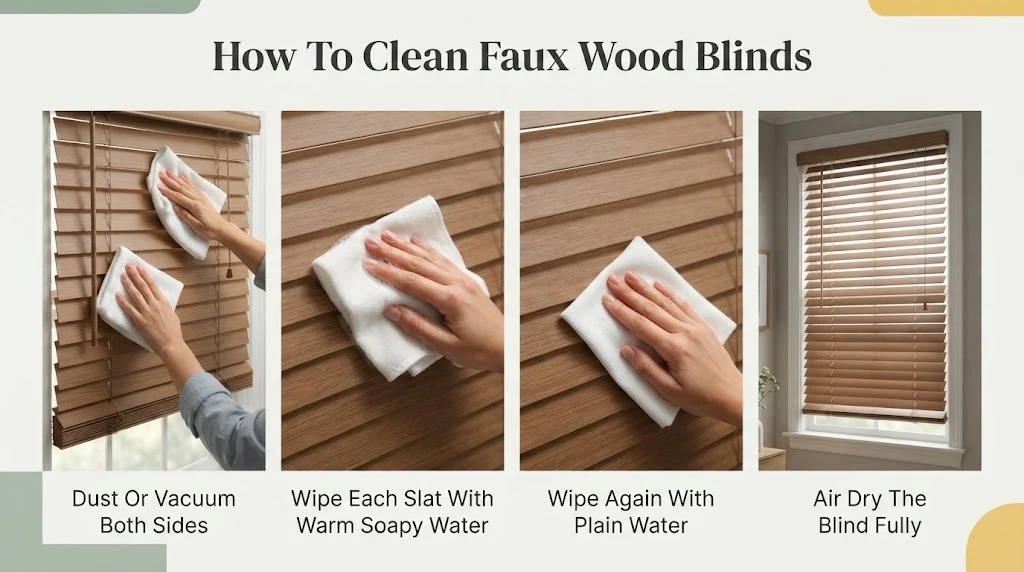
- Dust or vacuum both sides.
- Wipe each slat with a cloth dampened with warm, soapy water.
- Wipe again with a cloth dampened with plain water to remove soap film.
- Leave the blind to air dry fully before you close or raise it. Hunter Douglas gives the same instruction for its own faux wood ranges.
Avoid ammonia, bleach, and harsh solvents. English Blinds notes that some cleaning products damage the finish on faux wood and that damaged finishes can discolor over time.
How to Clean Fabric Vertical Blinds
Vertical blind vanes have a small weight sealed into the bottom hem with adhesive. Water that is too hot can melt that glue. Once the weights slip, the vanes twist and no longer hang straight.
Hand Washing Vertical Blinds
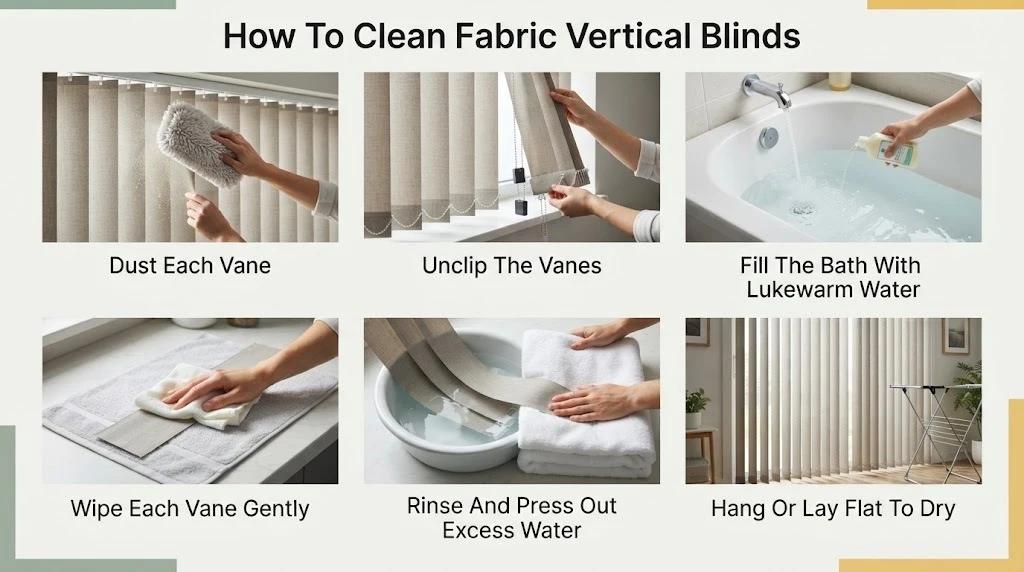
- Dust each vane of vertical blinds while it still hangs.
- Rotate the vanes open, unclip them from the carriers, and remove the bottom chain if there is one.
- Fill a bath or large basin with lukewarm water and a little mild detergent.
- Wipe each vane gently from top to bottom with a soft cloth. Use the same direction every time and avoid scrubbing.
- Rinse in clean lukewarm water and press out excess water with a towel.
- Hang the vanes or lay them flat on towels to dry before you clip them back in.
Machine Washing Vertical Blinds
Only do this if the label confirms the vanes are machine washable.
- Roll a few vanes loosely and place them in a pillowcase or zip-up laundry bag.
- Wash on a delicate cycle with a slow spin and a mild detergent.
- Hang them straight away to air dry. Never use a tumble dryer because the heat can melt and distort the vanes.
Vinyl vertical vanes are simpler. Wipe them in place with soapy water or soak them in the bath like aluminum blinds.
How to Clean Cellular and Honeycomb Shades
Honeycomb shades trap dust and the occasional insect inside their cells. There are four safe methods: light dusting, gentle vacuuming with a brush, compressed air or a hair dryer on a non-heat setting, and careful spot cleaning.
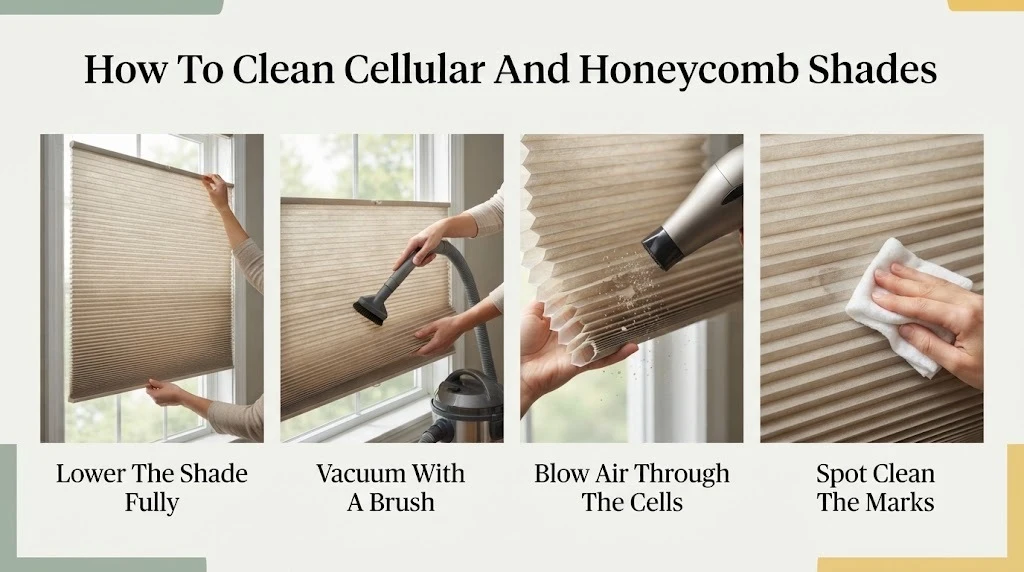
- Lower the shade fully.
- Vacuum the face with a brush attachment using vertical strokes and low suction.
- Blow air through the cells from one end with a cool hair dryer or compressed air. Tilt the shade so dust and insects fall out of the far end.
- Spot clean marks with a cloth moistened in lukewarm water and a little mild detergent. Blot gently because rubbing can crease the pleats.
Never submerge honeycomb shades. Some fabrics are excluded even from spot cleaning, so check the care guide for your range. For a full refresh, many brands recommend professional ultrasonic cleaning.
Woven Wood, Sheer, and Motorized Shades
Woven wood and bamboo shades are made from grasses, reeds, and wood strips. Vacuum them weekly on low suction, and be careful not to snag the weave. Water can stain natural fibers, so keep cleaning dry.
Sheer shades, such as layered sheer styles, can be spot-cleaned with a damp cloth or sponge and a little mild soap. Never wring or crush the vanes.
Motorized blinds need the same care as their material type, but keep moisture well away from the motor, the battery wand, and any wiring. After cleaning, run the blind up and down a few times to confirm it still reaches its set limits.
The Weekly Dusting Routine (All Blind Types)
Light dusting does most of the work. Hunter Douglas states that regular light dusting keeps most blinds and shades looking new. Curtain World suggests a light clean once a week and a more detailed clean once a month.
- Close the slats so they lie flat and face into the room.
- Start at the top and work down. Falling dust lands on slats you haven’t cleaned yet.
- Vacuum or wipe each slat from one end to the other. On fabric shades, use slow vertical strokes.
- Tilt the slats the opposite way and repeat on the window side.
- Open the slats halfway and wipe along the top edges where dust sits thickest.
- Wipe the sill and the window frame last.
Pro tip: On metal and vinyl blinds, wipe a used dryer sheet along the slats after dusting. It leaves a light anti-static film that helps dust slide off. Hunter Douglas lists reducing static build-up as a care step for vinyl and aluminum verticals. Skip this on wood and fabric.
How to Fix Common Blind Problems
Even with regular care, window blinds can occasionally develop stubborn blemishes like grease buildup, discoloration, or water stains. Here is how to troubleshoot and fix these common issues without damaging your window treatments.
-
Sticky Kitchen Grease
Grease binds dust into a tacky film that dry dusting cannot shift. On metal, vinyl, and faux wood, use warm water with a degreasing dish soap. For heavy build-up, use an equal parts vinegar-and-water mix and let it sit for a minute before you wipe. Kitchen blinds near the cooker benefit from a soapy wipe every month, not every season.
-
Yellowed White Blinds
First, work out the cause. Grime and cooking residue wash off with soap and water. Nicotine film also comes off with repeated washing on metal and vinyl, though it can take several rounds. Sun yellowing is different. UV light breaks down the protective coating on the slat, and the color change becomes permanent.
Budget Blinds notes that this coating can wear through in around seven to eight years on aluminum and faux wood blinds. No cleaner reverses it. If clean blinds still look yellow only on the sunny side, UV damage is the likely cause, and replacement with UV-resistant slats is the real fix.
-
Water Rings on Fabric
Rings form when minerals and loosened dirt dry at the edge of a damp patch. Blot the whole area again with distilled water and work outward past the ring so it dries without a hard line. Speed up drying with a fan or a hair dryer on cool.
-
Mold and Mildew
Bathroom and kitchen blinds are most at risk. The US EPA says homeowners can usually handle mold patches smaller than about 10 square feet themselves. Larger growth or mold linked to serious water damage calls for a professional. The EPA also stresses that bleach is not required for routine cleanup. Detergent and water work on hard surfaces.
- Metal, vinyl, and faux wood: Wash the affected slats with detergent and water. For stubborn spots, apply the vinegar and water mix, leave it for 10 to 15 minutes, wipe it off, and dry the slats completely.
- Fabric: Test a diluted vinegar solution on a hidden area. Blot the spot and dry the blind fully in the lowered position. Mold that has grown into absorbent fabric often stains permanently, and the blind may need replacing.
- Real wood: Light surface mildew may lift with a wood-safe cleaner on a barely damp cloth. Mold that has stained into the grain usually means a new slat.
Wear gloves and a mask when cleaning mold. Then fix the moisture source. The EPA advises drying damp materials within 24 to 48 hours to stop mold returning. Run the exhaust fan during and after showers and wipe condensation off the window each morning in winter.
Mistakes That Shorten the Life of Your Blinds
How you clean and handle your window treatments matters just as much as how often you do it. Make sure you aren’t accidentally damaging your blinds by avoiding these frequent maintenance pitfalls.
- Wetting before dusting. You create mud and push it into the slat texture.
- Using hot water on vinyl or verticals. Heat softens PVC and weakens hem adhesive.
- Spraying cleaner straight onto the blind. Overspray soaks into wood, fabric and the headrail. Spray the cloth instead.
- Scrubbing fabric. Friction strips coatings and raises the fibers into fuzzy patches.
- Raising a damp blind. Rolled or stacked damp fabric develops mildew and water lines within days.
- Using bleach, ammonia, or abrasive powders. These fade colors and eat into protective finishes.
- Ignoring the cords. Dusty lift cords transfer dirt onto clean slats. Wipe them down with a damp cloth as you finish.
How Often Should You Clean Blinds?
Your home sets the pace more than the blind type does. Clean more often if you have pets, allergies, a smoker in the house, a busy road outside, or a dusty climate.
| Blind type | Routine care | Deep clean |
| Aluminum and vinyl | Dust every 1 to 2 weeks | Soapy wipe every 3 months. Full wash once or twice a year |
| Faux wood | Dust every 1 to 2 weeks | Soapy wipe every 3 months |
| Real wood | Dust every 1 to 2 weeks | Spot clean as needed. Condition the finish once or twice a year |
| Fabric roller and Roman | Vacuum every 2 weeks | Spot clean when marks appear. Professional clean if heavily soiled |
| Fabric vertical | Vacuum every 2 weeks | Hand or machine wash once a year if the label allows |
| Cellular and honeycomb | Dust or blow out every 2 weeks | Spot clean as needed. Ultrasonic clean every few years |
| Kitchen and bathroom blinds | Wipe weekly | Soapy or vinegar wipe monthly |
When to Call a Professional or Replace Your Blinds
Some jobs are not worth the risk at home. Professional ultrasonic cleaning uses high-frequency sound waves in a tank of cleaning solution to lift dirt from slats and fabric without scrubbing. Hunter Douglas recommends it for selected fabric ranges. Consider a professional when:
- the fabric is silk, linen, or labeled dry clean only,
- mold covers a large area or keeps coming back,
- smoke or fire residue has coated the blinds,
- the blinds are large, motorized, or difficult to remove safely.
Replacement makes more sense when slats are warped, cracked, or permanently yellowed, when ladder strings have rotted, or when old blinds have looped cords that pose a safety risk.
Check the Cords While You Clean
Cleaning day is a good time to look at cord safety. According to the US Consumer Product Safety Commission, about nine children under five die each year from strangulation on window covering cords. The CPSC recommends cordless window coverings in homes with young children. If you keep corded blinds, it advises keeping all cords out of reach and moving cribs, beds, and furniture away from windows.
- Fit a cord cleat high on the wall and wrap pull cords around it after cleaning.
- Check that cord stops and tension devices are still attached.
- Look for exposed inner cords between slats that a child could pull into a loop.
Final Thoughts
Clean blinds depend less on effort and more on choosing the right method. Dust every week or two so grime never gets a chance to bond. Give metal and vinyl a soapy wash a few times a year. Keep wood dry and conditioned. Blot fabric gently and let it dry fully before you raise it. These habits keep your blinds looking good and working smoothly for years.
Frequently Asked Questions
How do you clean fabric blinds?
Vacuum both sides with a soft brush attachment on low suction while you steady the fabric with your other hand. Then spot-clean marks by blotting with a cloth dampened with cool water and a little mild detergent. Use distilled water if your tap water is hard, so you avoid rings. Blot again with plain water and let the blind dry fully in the lowered position. Never scrub because rubbing damages the fabric coating.
How do you clean blinds while they are hanging?
Lower the blind and close the slats flat. Dust or vacuum from top to bottom. Wipe each slat with a microfiber cloth dampened in warm, soapy water and wrung almost dry. Tilt the slats the other way and repeat. Finish with a dry cloth and keep a towel on the sill to catch drips. Use this method for metal, vinyl, and faux wood. Real wood and fabric need dry dusting and spot cleaning only.
How do you clean fabric blinds by hand?
Take the blind or vanes down and dust them first. Fill a bath or basin with lukewarm water and a small amount of mild detergent. Wipe the fabric gently in one direction with a soft cloth. Rinse in clean lukewarm water and press out the excess with a towel instead of wringing. Hang or lay flat to air dry. Keep the water lukewarm because heat can melt the glue holding weights in vertical blind hems.
How do you clean window blinds with vinegar?
Mix equal parts white vinegar and warm water. Dampen a microfiber cloth with the mix and wring it well. Wipe each slat and follow with a cloth dampened in plain water. Dry the slats straight away. Vinegar works best on aluminum, vinyl, and faux wood, especially for kitchen grease and light mildew. Do not use it on real wood because the acid can dull the finish. The smell fades within an hour.
How do you clean blinds in the tub?
Use the tub only for aluminum and vinyl blinds without fabric tapes. Line the tub with an old towel and fill it with warm water and dish soap. Lay the blind fully extended with the slats closed and soak it for about 30 minutes. Sponge each side of every slat, drain the tub, and rinse with the shower head. Hang the blind fully extended with the slats tilted so water runs off. Keep the headrail dry where possible to protect the mechanism from rust.
How do you clean window blinds without removing them?
Pull a cotton sock over your hand or wrap a microfiber cloth around a pair of kitchen tongs. Dampen it lightly with soapy water. Grip each slat and slide from end to end to clean both faces at once. Rinse the sock or cloth often. Dry the slats with a clean cloth as you go. For fabric styles, rely on a vacuum brush and spot blotting instead of a damp wipe.