
How Much Does a Bathroom Remodel Cost? From Basic Updates to Full Renovations
Bathroom remodel costs vary widely in 2026, from roughly $1,500 for a small cosmetic update to $80,000 or more for a large, high-end primary bathroom. For many mid-range projects, homeowners spend roughly $15,000 to $30,000.
That is a wide range, and it frustrates a lot of people who are trying to set a budget. The gap exists because “bathroom remodel” can mean anything from new paint and a vanity to gutting the room down to the studs. This guide by Floor Land breaks the cost down piece by piece, so you can see what drives the price, what a fair quote looks like, and where you can save. The figures below reflect current national cost surveys, contractor pricing, and industry data.
Bathroom Remodel Cost by Scope
Scope is the single biggest factor in what you pay. The table below shows how costs rise as the work gets deeper.
| Remodel level | What it usually includes | Typical cost | Cost per sq ft |
| Cosmetic refresh | Paint, new vanity or top, faucet, lighting, mirror, hardware. Tub and layout stay. | $5,000 to $10,000 | $80 to $120 |
| Mid-range remodel | New tub or shower, wall and floor tile, vanity, toilet, fan, and lighting. Same layout. | $15,000 to $30,000 | $150 to $250 |
| High-end remodel | Custom tile shower with glass, quality fixtures, custom vanity, possible fixture moves. | $35,000 to $60,000 | $250 to $400 |
| Luxury or primary suite | Layout changes, larger footprint, freestanding tub, heated floors, premium stone. | $60,000 to $120,000+ | $400 to $600+ |
The jump from a refresh to a mid-range remodel is where much of the cost comes from. Once the tub or shower comes out, you are paying for demolition, waterproofing, plumbing work, tile setting, and several trades working in sequence. That is why removing the tub is often the moment a $9,000 project turns into a $20,000 one.
Bathroom Remodel Cost by Size and Type
Size matters, but not in a straight line. A small bathroom still needs a plumber, an electrician, a tile setter, and permits. Those fixed costs make small bathrooms more expensive per square foot, even though the total bill is lower.
| Bathroom type | Typical size | Cost range |
| Half bath or powder room | 15 to 30 sq ft | $1,500 to $15,000 |
| Guest or hall bathroom | 35 to 80 sq ft | $5,600 to $25,000 |
| Primary bathroom (mid-range) | 75 to 120 sq ft | $8,400 to $50,000 |
| Primary suite (high-end) | 100+ sq ft | $50,000 to $120,000+ |
For a quick size-based estimate, use these square-footage ranges:
| Bathroom size | Estimated cost range |
| 25 sq ft | $1,800 to $6,300 |
| 40 sq ft (a standard 5×8 hall bath) | $2,800 to $10,000 |
| 50 sq ft | $3,500 to $12,500 |
| 75 sq ft | $5,300 to $18,800 |
| 100 sq ft | $7,000 to $25,000 |
These ranges lean toward partial remodels; a full gut of the same room usually lands higher.
National homeowner surveys put the median spend on a bathroom remodel at about $13,000. Major remodels average about $22,000, and large bathrooms (100 square feet or more) come in around $25,000.
Bathroom Remodel Cost Breakdown: Where Your Money Goes
Knowing how a budget splits up helps you read contractor quotes and spot where to cut. Labor typically makes up 40% to 65% of the total, materials 30% to 45%, and permits, demolition, and disposal 5% to 10%.
| Item | Typical installed cost |
| Demolition and disposal | $1,000 to $2,300 |
| Plumbing rough-in (same layout) | $3,000 to $5,000 |
| Moving one fixture | Adds $1,000 to $5,000 |
| Full layout change | Adds $5,000 or more |
| Electrical (GFCI outlets, fan, lighting) | $800 to $2,500 |
| Prefab acrylic shower surround | $1,500 to $3,000 |
| Custom tiled shower with glass | $5,000 to $12,000 |
| Tub replacement | $2,000 to $9,400 |
| Vanity (budget / mid-range / custom) | $400 to $700 / $1,200 to $2,500 / $3,500 to $8,000 |
| Countertop | $400 to $4,300 |
| Toilet installation | About $375 on average |
| Faucets | $170 to $360 |
| Floor tile and tiling | $10 to $50 per sq ft installed |
| Permits | $100 to $1,000 |
Installed prices vary by region and product choice.
Showers and Tubs
The wet area is usually the most expensive part of the room. The average shower installation runs about $8,000, higher than many other individual line items. A prefab acrylic surround is the budget option. A tiled shower costs more because it needs a waterproof membrane, a properly sloped pan, and hours of skilled tile work.
Plumbing
Keeping the toilet, sink, and shower where they are is the most reliable way to control cost. Every move means opening floors or walls, rerouting supply and drain lines and sometimes changing venting. In older homes, contractors often recommend replacing galvanized or aging supply lines while the walls are open, which adds $1,500 to $4,000.
Vanity and Countertop
A stock 30-inch vanity from a big-box store costs $400 to $700. Semi-custom units run $1,200 to $2,500, and custom cabinetry reaches $3,500 to $8,000.
Tile
Tile prices span a huge range. Budget ceramic starts under $3 per square foot, mid-range porcelain runs about $6 to $11, and natural stone or designer tile reaches $15 to $40. Installation labor often costs more than the tile itself, especially for small-format mosaics, herringbone patterns, and niches. If you are considering alternatives to traditional tile, LVT flooring can be another option for moisture-prone areas.
Electrical and Ventilation
Most remodels need at least GFCI-protected outlets, a properly vented exhaust fan, and new lighting. Expect $800 to $2,500 for this work. If your electrical panel can’t handle added loads, such as heated floors or a heated towel rack, a panel upgrade adds $850 to $2,500.
Mid-Range Remodel of a 5×8 Hall Bathroom
Here is how the numbers come together for a common project: a 40-square-foot hall bath where the tub becomes a tiled walk-in shower, and the layout stays the same. The figures are illustrative estimates based on the ranges above, not a quote.
| Line item | Estimated cost |
| Demolition and disposal | $1,500 |
| Plumbing updates (no fixture moves) | $3,500 |
| Electrical: GFCI, exhaust fan, vanity light | $1,500 |
| Tiled walk-in shower with glass door | $6,500 |
| Vanity, top and faucet | $2,000 |
| Toilet, installed | $600 |
| Floor tile, installed (40 sq ft) | $1,200 |
| Drywall repair and paint | $1,200 |
| Mirror, accessories, hardware | $800 |
| Permits | $500 |
| Subtotal | $19,300 |
| Contingency (15%) | $2,895 |
| Total budget | $22,195 |
Notice how the shower, plumbing, and demolition make up more than half of the budget before a single vanity or mirror is chosen. That is typical, and it is why finish upgrades rarely move the total as much as layout decisions do.
Bathroom Remodel Labor Costs in 2026
Labor is the largest part of most bathroom budgets, and it has been rising. A bathroom renovation brings in more trades per square foot than almost any other room in the house.
| Trade | Typical 2026 rate |
| Plumber | $85 to $175 per hour |
| Electrician | $60 to $145 per hour |
| Tile installer | $12 to $22 per sq ft |
| Interior designer | $50 to $200 per hour |
| General contractor markup | 10% to 20% of project cost |
Rates in major metros often exceed these ranges.
The general contractor’s markup pays for scheduling the trades, ordering materials, pulling permits, managing inspections, and standing behind the work. In a bathroom with four or five trades, that coordination saves real time and prevents costly sequencing mistakes. Most homeowners who remodel a bathroom hire a professional, and close to half hire a general contractor.
Hidden Bathroom Remodel Expenses
Bathrooms hide water damage better than almost any other room. You often don’t know what is behind the tile until demolition starts. About one in three homeowners say their bathroom project cost more than they expected. These are the most common surprises:
| Hidden issue | Typical added cost |
| Rotted subfloor or water damage | $3.75 to $7 per sq ft |
| Outdated or failing supply lines | $1,500 to $4,000 |
| Mold remediation | $500 to $6,000 |
| Asbestos or lead abatement (older homes) | $500 to $3,000+ |
| Electrical code upgrades | $500 to $2,500 |
| Damaged floor joist repair | $300 to $1,500 per joist |
Homes built before 1980 carry a higher risk of lead paint, and older tile adhesives, flooring, and pipe insulation may contain asbestos. If your house falls into that age range, ask your contractor how they test for and handle these materials before you sign.
The best protection is a contingency fund. Set aside 10% to 20% of your project budget. Lean toward 20% if the bathroom is original to an older home, if you have noticed soft spots in the floor, or if a previous leak was never fully repaired.
What Is Driving Bathroom Remodel Costs in 2026?
Bathroom remodeling costs are driven by rising material prices, skilled labor shortages, and trade tariffs on imported vanities and cabinets, making careful planning and budgeting more critical than ever.

Tariffs on Vanities and Cabinets
On October 14, 2025, the U.S. began charging a 25% Section 232 tariff on imported kitchen cabinets and bathroom vanities. The rate was scheduled to rise to 50% on January 1, 2026. That increase was delayed by presidential proclamation, and the higher rate is now set for January 1, 2027.
What this means for you: imported vanities, especially budget and mid-range models, cost more now than they did in early 2025. If you are planning a remodel for late 2026, it may make sense to order your vanity early, before any further increase takes effect. It also pays to compare domestic-made options, which the tariff does not touch.
Labor Shortages
Skilled trades remain in short supply in most markets. Plumbers, electricians and tile setters book out weeks in advance, and their rates reflect that. Plan your project start date early and expect to wait for the best contractors.
A Slower Remodeling Market
Harvard University’s Joint Center for Housing Studies projects national spending on home improvements and repairs to reach about $518 billion by the end of 2026, with growth slowing to about 1.6% a year. A cooler market can work in your favor. Contractors with open schedules are more willing to negotiate, especially for projects that start in winter.
How Location Changes Bathroom Remodel Costs
Where you live affects labor rates, permit fees, and even material delivery costs. The same bathroom can cost twice as much in one city as in another.
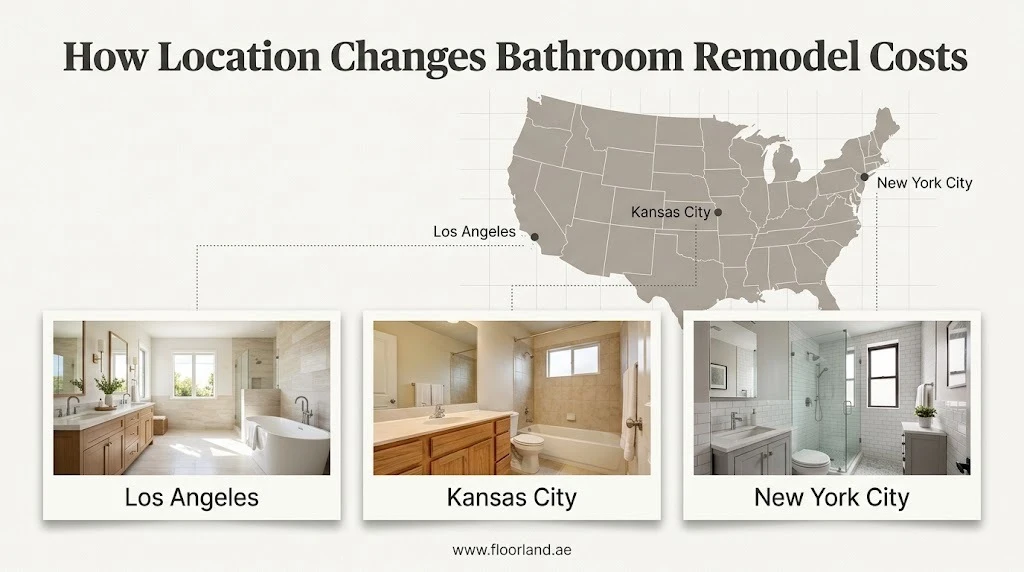
- Average bathroom remodels run about $20,000 in Los Angeles and about $12,000 in Brooklyn and Dallas.
- In New York City, a mid-range remodel commonly reaches $25,000 before luxury features, and primary baths can exceed $80,000.
- The same project in a market like Kansas City typically runs 30% to 40% less.
If you live in a high-cost metro, add a regional adjustment to any national figure you see. The most accurate way to do this is to collect three local quotes for the same written scope.
Is a Bathroom Remodel Worth It? Return on Investment
A bathroom remodel rarely pays for itself in full at resale. However, a well-planned midrange project recovers most of its cost, and you get to enjoy the space in the meantime. Here are the national figures from the 2025 Cost vs. Value Report:
| Project | Average job cost | Value at resale | Cost recouped |
| Midrange bath remodel | $26,138 | $20,915 | 80% |
| Universal design bath remodel | $42,183 | $25,812 | 61% |
| Upscale bath remodel | $81,612 | $34,000 | 42% |
| Midrange bathroom addition | $60,645 | $32,347 | 53% |
| Upscale bathroom addition | $111,255 | $40,526 | 36% |
A remodel usually makes the most sense when the bathroom has leaks, rot, mold, or failing fixtures; you plan to stay in the home for five years or more; the room no longer works for your household; or a dated bathroom is likely to scare off buyers in your market.
It may not be worth a full remodel when you plan to sell within a year or two and a cosmetic refresh would fix the main problems, or when your plans would push your home far above the price of others in your neighborhood.
How Much Should You Budget?
A simple rule of thumb: spend about 5% to 10% of your home’s value on a primary bathroom and 3% to 5% on a secondary bathroom. For a $400,000 home, that works out to about $20,000 to $40,000 for a primary bath and $12,000 to $20,000 for a hall bath.
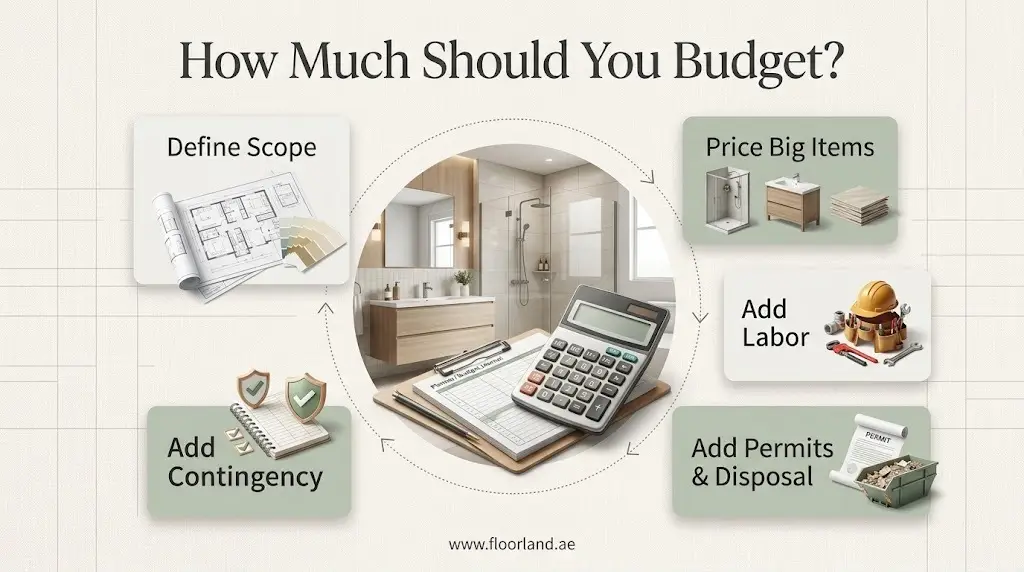
Use these steps to build your own number:
- Decide on scope first: refresh, mid-range, or full gut. Decide whether any fixtures will move.
- Price the big items: shower or tub, vanity, tile, toilet, and plumbing.
- Add labor. If you are pricing materials yourself, labor will usually equal or exceed the material cost.
- Add permits, demolition, and disposal (5% to 10%).
- Add a 10% to 20% contingency.
Ways to Lower Bathroom Remodel Costs Without Cutting Corners
Below are some practical ways to lower bathroom remodeling costs without compromising essential work.

- Refinish instead of replace. A solid cast-iron tub can often be reglazed for a fraction of the cost of a new one.
- Choose large-format porcelain. Larger tiles mean fewer grout lines and less labor than small mosaics.
- Use tile where water hits. Tile the shower and floor fully, then paint the remaining walls with moisture-resistant paint. For dry areas outside direct water exposure,vinyl wallpaper can also be considered as a decorative wall finish.
- Buy a stock vanity. A quality stock or domestic-made vanity costs far less than custom.
- Do the simple work yourself. Painting, installing accessories, and swapping hardware are reasonable DIY tasks. Leave plumbing, electrical, and waterproofing to licensed professionals, since mistakes there cause expensive leaks.
- Schedule in the off-season. Contractors are often more flexible in late fall and winter.
- Order materials early. Delivery delays keep crews waiting, and some contractors charge for idle days.
One place not to save: waterproofing. A failed shower membrane can rot the subfloor and framing, turning a finished bathroom into a full tear-out within a few years.
How Long Does a Bathroom Remodel Take?
| Project type | Typical construction time |
| Cosmetic refresh | 2 to 3 weeks |
| Standard mid-range remodel | 4 to 6 weeks |
| Complex or structural changes | 8 to 12 weeks |
Design, permits, and material lead times add to these figures. If you’re updating the bathroom as part of a wider apartment renovation, coordinate the bathroom work with the rest of the renovation schedule.
Plan for extra time before work starts. Design decisions, permit approval, and custom orders can easily add several weeks. If this is your only bathroom, plan where your household will shower while the room is out of service.
How to Get an Accurate Bathroom Remodel Quote
A low quote isn’t a good deal if it leaves out half the work. Use this checklist when you compare bids:
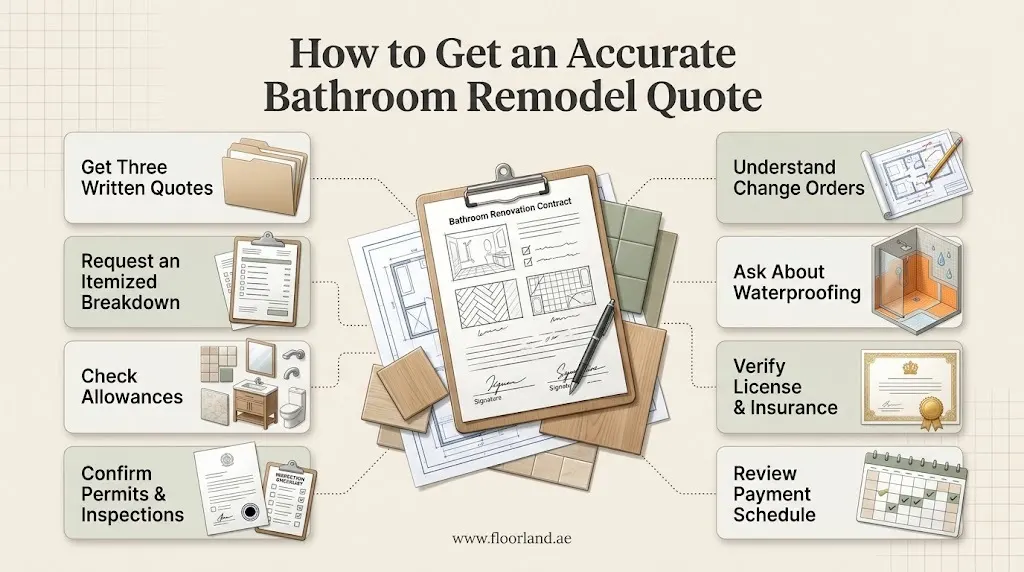
- Get at least three written quotes for the same scope, with fixtures and finishes listed.
- Ask for an itemized breakdown of labor, materials, permits, and disposal.
- Check which items are allowances (placeholder amounts for tile, vanity, or fixtures) and whether those amounts are realistic.
- Confirm who pulls the permits and schedules inspections.
- Ask how the contractor prices surprises such as rot or mold, and how change orders work.
- Ask which waterproofing system they use for the shower.
- Verify the contractor’s license and insurance with your state, and ask for recent local references.
- Review the payment schedule. Avoid paying most of the total before work begins.
The Bottom Line
Bathroom remodel costs vary significantly by scope, bathroom size, layout and finish level. A mid-range project commonly falls around $15,000 to $30,000, while small cosmetic updates can cost considerably less and high-end primary bathrooms can exceed $80,000.
The biggest cost decisions are whether the tub or shower comes out, whether fixtures move and how high-end your finishes are. Labor makes up the largest share of many bathroom budgets, while a 10% to 20% cushion helps protect against hidden problems.
Start with a clear scope, get three itemized quotes for that exact scope and build your contingency in from day one. That approach gives you a bathroom you will enjoy and a budget you can trust.
Frequently Asked Questions
How much does a small bathroom remodel cost?
A small bathroom of about 40 square feet typically costs $2,800 to $10,000 for a partial update. A full gut with a new tiled shower usually lands between $15,000 and $25,000, depending on your region and finishes.
Can I remodel a bathroom for $10,000?
Yes, if you keep the layout and limit the scope. $10,000 can cover a new vanity, toilet, flooring, lighting, paint and a prefab tub or shower surround in a small bathroom. It usually won’t cover a custom tiled shower plus plumbing changes.
What is the most expensive part of a bathroom remodel?
Labor is the highest overall cost at 40% to 65% of the budget. Among individual items, the shower is usually the biggest, with an average installation cost of about $8,000.
Do I need a permit to remodel a bathroom?
You usually need one for plumbing, electrical or structural work. Cosmetic updates such as painting or swapping a faucet often don’t require one. Permit fees typically run $100 to $1,000, depending on your city and scope.
Does a bathroom remodel increase home value?
It does, but you will rarely recover the full cost. A midrange bathroom remodel recoups about 80% of its cost at resale, while an upscale remodel recoups about 42%, according to the 2025 Cost vs. Value Report.
Is it cheaper to remodel a bathroom yourself?
Doing some of the work yourself can reduce labor costs. Demolition, painting and installing accessories are reasonable DIY jobs. Plumbing, electrical and shower waterproofing should go to licensed pros, since errors there can lead to leaks, failed inspections and costly repairs.
Will tariffs make my bathroom remodel more expensive?
Imported vanities and cabinets carry a 25% tariff that took effect in October 2025, and an increase to 50% is scheduled for January 1, 2027. Buying domestic products or ordering early can reduce the impact.