
Flooring Repair Techniques: What Works, What Doesn’t, and Why
Flooring repair is the process of fixing damaged, worn, or loose flooring materials without tearing out and replacing the entire floor. It covers everything from filling a scratch in hardwood to reglueing vinyl tiles, cracked ceramic tile, and squeaky subfloors.
Most surface-level damage can be repaired successfully, while structural damage, water-soaked subfloors, and widespread wear usually call for replacement instead. This guide by Floor Land breaks down which repairs genuinely hold up over time and which ones tend to fail within a year or two. Additionally, you will also learn why the difference comes down to matching the fix to the actual cause of the damage rather than just covering it up.
Quick Tips for Flooring Repair
| Flooring Issue | Can It Be Repaired? | Typical Fix | Long-Term Success |
| Scratches on hardwood | Yes | Sand and refinish the affected boards, or use a matching touch-up marker for light scratches | High, if the scratch hasn’t gone through the finish into bare wood |
| Squeaky floors | Yes | Add shims or screws to close the gap between subfloor and joist | High, when the actual gap is located and closed |
| Loose or lifting vinyl tile | Yes | Reheat and reglue, or replace the single tile | High for one or two tiles; lower if moisture caused the lifting |
| Cracked ceramic or porcelain tile | Usually | Remove and replace the cracked tile and matching grout | High, unless the crack came from a moving subfloor |
| Peaking or gapping laminate | Sometimes | Replace the affected plank; gaps may need humidity correction | Moderate; laminate rarely repairs invisibly |
| Water-damaged hardwood or laminate | Rarely | Remove and replace affected boards; dry the subfloor fully | Low if drying isn’t complete before new material goes down |
| Deep gouges through hardwood finish | Yes | Wood filler, sanding, and refinishing | High when color-matched and properly sealed |
| Buckled vinyl plank (SPC/LVP) | Sometimes | Reset the plank after resolving the underlying moisture or subfloor issue | Moderate; depends on fixing the root cause |
| Cracked concrete floor | Sometimes | Epoxy or polyurethane crack injection | Moderate to high for stable, non-moving cracks |
| Worn carpet or matted traffic areas | Rarely | Patch small burns/stains; re-stretch loose carpet | Moderate for stretching; low for widespread wear |
Repair Methods by Flooring Type
Every type of flooring requires different fixation to make it look and perform well.
1. Hardwood Floor Repair
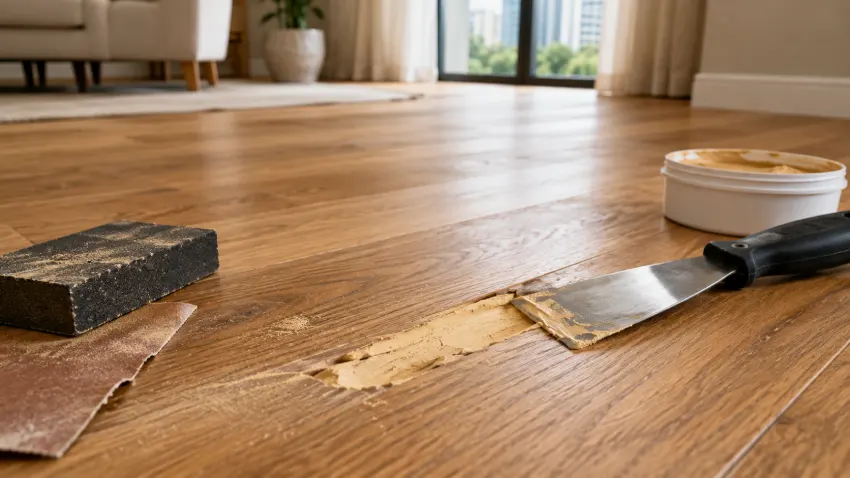
Hardwood is one of the most repairable flooring types because it can be sanded down and refinished multiple times over its life. Light scratches respond well to color-matched touch-up markers or wax sticks. Deeper gouges on wooden floor need wood filler, sanding, staining, and a fresh coat of finish to blend in.
Water-cupped boards sometimes flatten out on their own once the moisture source is fixed and the wood dries slowly; boards that stay warped need replacement. For squeaks, working from a basement or crawl space to add screws or shims is more reliable than trying to fix them from above.
2. Laminate Flooring Repair
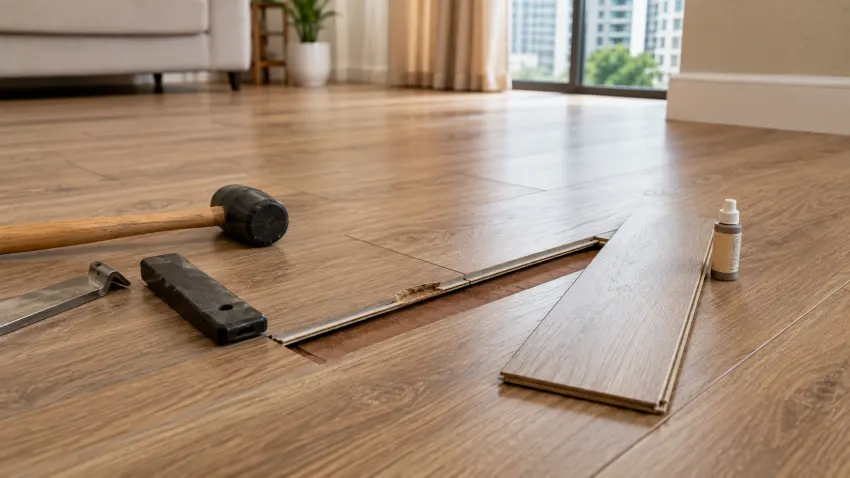
If you want to know how to repair laminate flooring, follow the steps below. Laminate can’t be sanded or refinished, since the surface is a printed image layer under a wear coating, not solid wood. Repair options are limited to replacing individual planks or using seam fillers on small chips. Peaking and gapping are almost always moisture or installation issues (not enough expansion gap at the walls), so the fix is addressing humidity control or trimming the gap, not gluing the seams.
Laminate floor repair has a lower success rate for invisibility compared to hardwood, which is worth knowing before you commit to matching an older floor.
3. Vinyl and Sheet Vinyl Repair
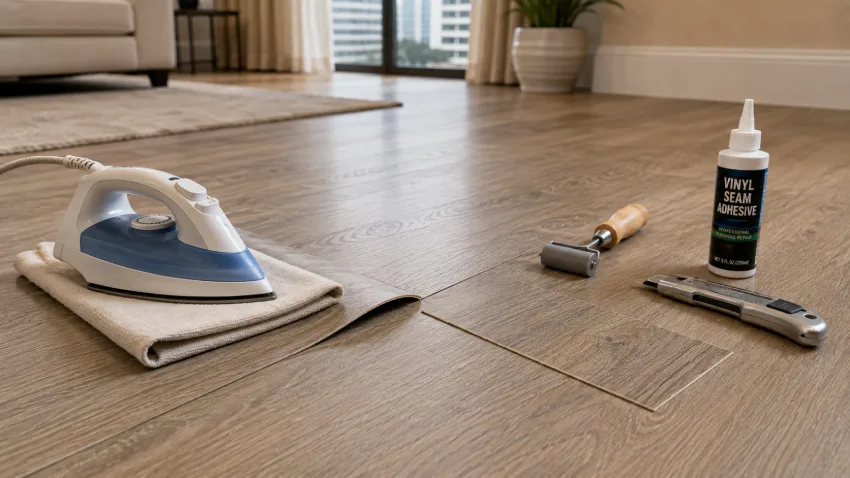
Vinyl flooring responds well to heat. A hairdryer or clothes iron over a cloth can soften old adhesive enough to press a lifted edge back down. For more serious damage, cutting a patch from matching scrap material and heat-sealing the seams gives a durable, mostly invisible repair. It also works best if you cut along an existing pattern line to hide the seam.
Sheet vinyl seams that have separated can often be re-glued with vinyl seam adhesive rather than replaced outright.
4. Best Repair for SPC and LVP (Rigid and Luxury Vinyl Plank)
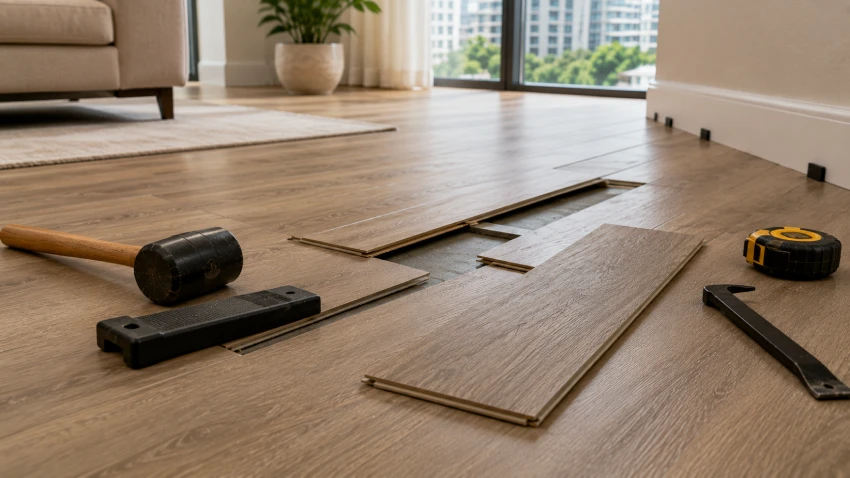
SPC and LVP click-lock together rather than glue down, which makes single-plank replacement possible but more involved than with glue-down vinyl, since you often need to disassemble planks back to the damaged one and reinstall in sequence.
Buckling in floating LVP floors is almost always caused by not leaving enough expansion gap around the perimeter, or by moisture pushing the planks together. Trimming the expansion gap or resolving the moisture issue, then letting the floor relax before resetting it, works far more often than trying to force the plank back down.
5. Tile Floor Repair (Ceramic and Porcelain)
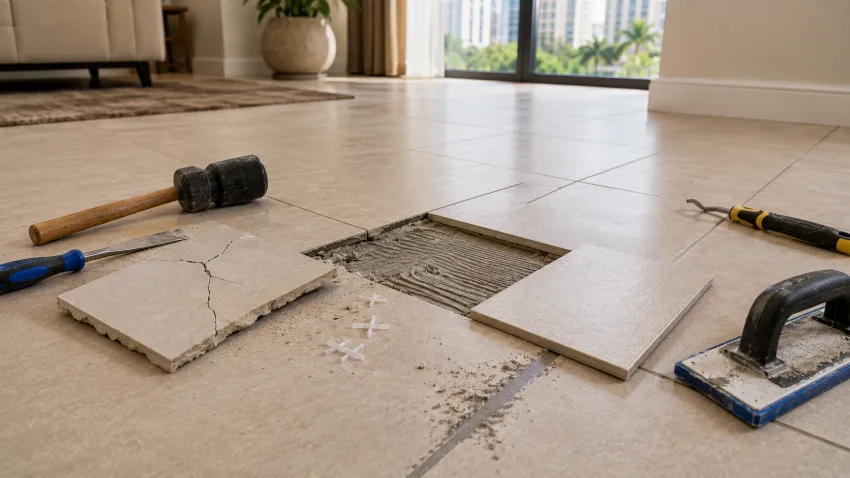
Individual cracked tiles can be chiseled out and replaced cleanly, as long as you have matching tile and can remove the old tile without damaging the substrate. Cracked grout is a simpler fix: rake out the old grout to a consistent depth and repack with fresh grout, making sure the new grout is fully cured before sealing. If cracks are appearing in multiple tiles in a line or pattern, that’s usually a sign of subfloor movement rather than a tile problem, and repairing the tiles without addressing the substrate will just mean cracking again.
6. Carpet Repair Method
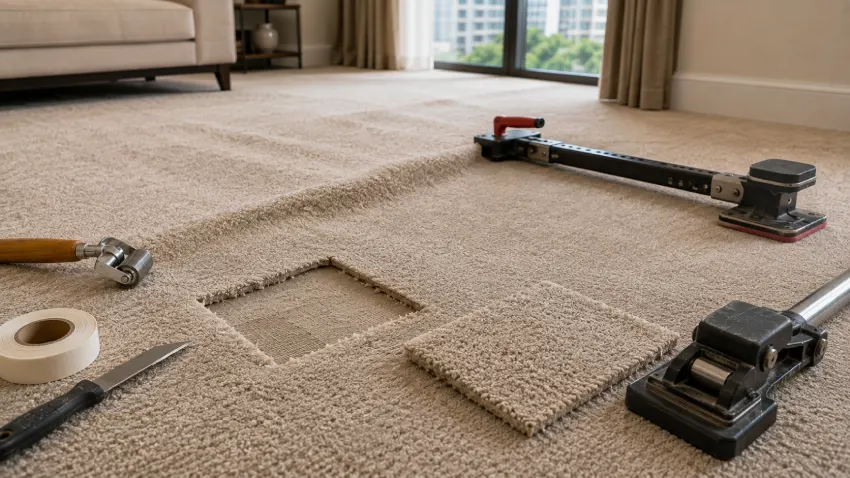
Small burns, stains, or tears can be patched using luxury carpet cut from a closet or scrap piece, matched to the pile direction and pattern. Loose or rippled carpet, often from age or improper installation, can be re-stretched with a power stretcher or knee kicker to remove the wrinkles.
Matted, worn traffic lanes are the one carpet issue that doesn’t really repair well; the fibers are physically crushed and won’t spring back, so replacement of that section (or the whole carpet) is usually the honest answer.
7. Concrete Floor Repair
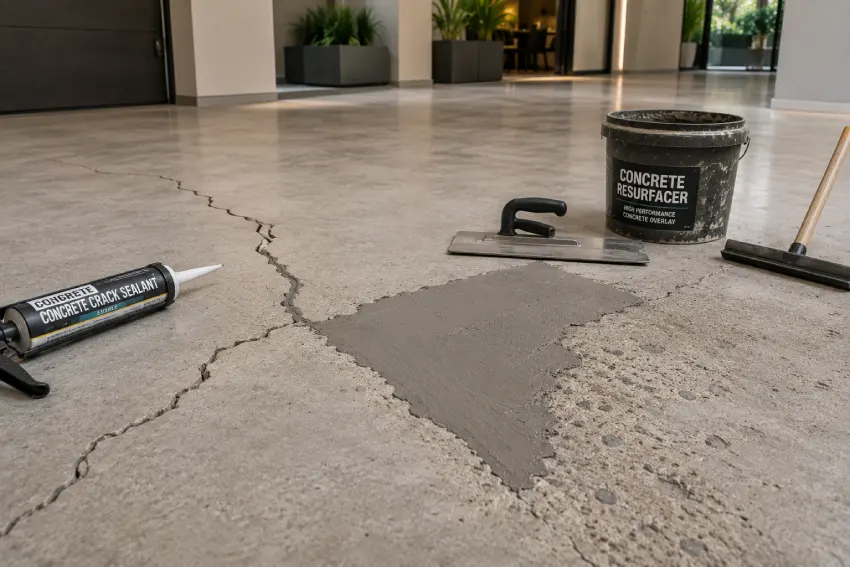
Hairline cracks that aren’t moving can be filled with a flexible concrete crack sealant. Structural cracks, especially ones wider than about 1/8 inch or that keep growing, need epoxy or polyurethane injection to restore strength, and in some cases an engineer should look at what’s causing the movement before you seal anything.
Spalling or pitting on the surface can be resurfaced with a concrete overlay, but only after the underlying cause, usually water intrusion or freeze-thaw damage, has been addressed.
Signs Your Flooring Actually Needs Repair
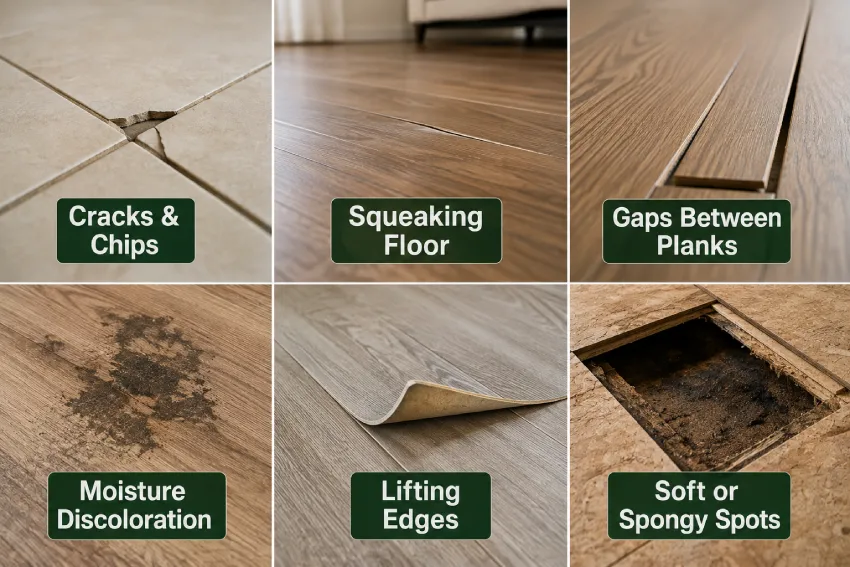
Not every mark on a floor is a repair job. Some are cosmetic and can wait. Others are early warnings of something bigger happening underneath. Here’s what tends to separate the two:
- Visible cracks, chips, or gouges in tile, laminate, or hardwood that catch on socks or bare feet
- Squeaking or bouncing when you walk across a specific area, which usually points to a subfloor or joist problem
- Gaps between planks or boards that widen or shrink with the seasons, a sign of humidity movement
- Discoloration or a musty smell, which almost always means moisture is involved somewhere below the surface
- Loose, lifting, or curling edges on vinyl or laminate, often from adhesive failure or trapped moisture
- Soft or spongy spots underfoot, a red flag for subfloor rot that needs attention before it spreads
If you’re only seeing surface wear, a repair is likely enough. If you’re feeling movement, smelling moisture, or seeing damage spread across a wide area, that’s usually the subfloor talking, and it changes the whole conversation.
Repair or Replace: How to Actually Decide
This is the question that matters most, and it’s the one most flooring articles skip past. Here’s a practical way to think about it.
Repair Makes Sense When
- The damage is isolated to a small area (a few boards, tiles, or planks)
- The subfloor underneath is dry, flat, and structurally sound
- You can source matching material, or the mismatch will be in a low-visibility spot
- The floor is otherwise in good condition and simply needs a fix, not a facelift
Replacement Makes More Sense When
- Damage covers more than roughly 20-30% of the total floor area
- The subfloor has water damage, rot, or mold
- The flooring is discontinued, and no matching material exists
- You’ve already repaired the same spot more than once, and it keeps failing
- The floor is old enough that a repair would look obviously patched next to worn original material
A good rule of thumb from years of doing this work: if you’re spending more than half of what a full replacement would cost just to patch a problem that keeps coming back, you’re not actually saving money. You’re delaying the inevitable and paying twice.
Repairs That Actually Work for the Flooring
These are the fixes that hold up because they address the real cause of the problem, not just its appearance.
1. Sanding and Spot-Refinishing Hardwood
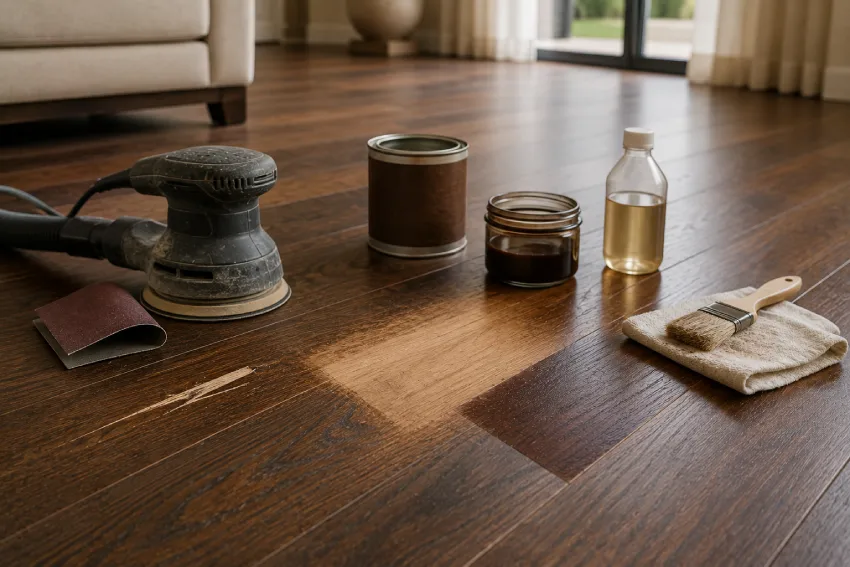
When a scratch or gouge has gone through the finish but not deep into the wood, sanding the area down and reapplying stain and finish restores it almost invisibly. This works because you’re removing the damaged layer entirely, not hiding it under a filler that will eventually crack or discolor differently than the surrounding wood.
2. Closing Subfloor Gaps to Fix Squeaks
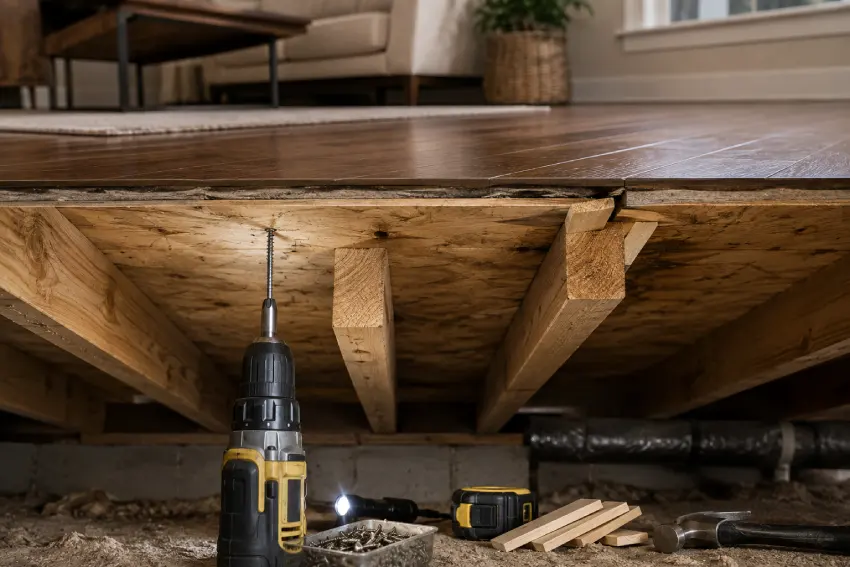
Squeaks happen because two layers of material are rubbing against each other, usually the subfloor and a joist, or the subfloor and the finished floor above it. Screwing the layers together (from below, if you have access) or driving shims into the gap eliminates the movement causing the noise. This is one of the most reliable repairs in flooring because it targets the mechanical cause directly.
3. Replacing Individual Tiles
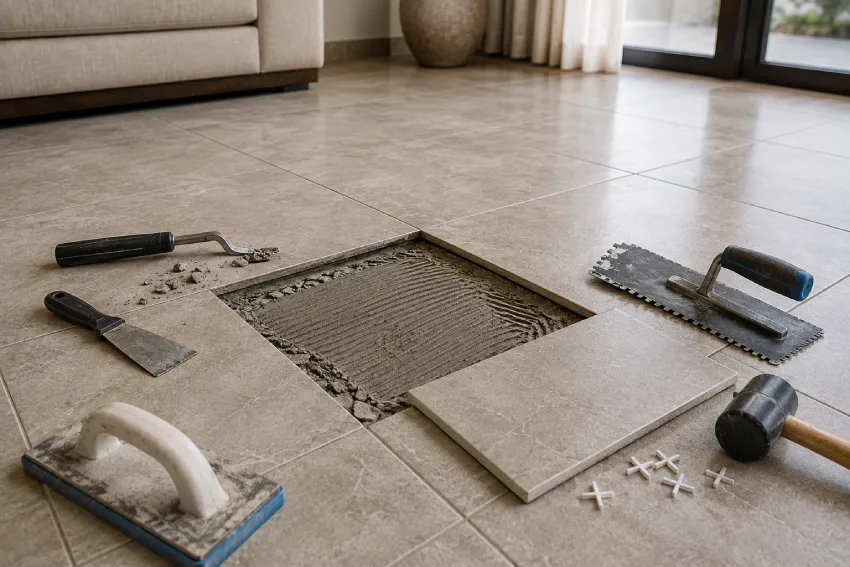
Ceramic, porcelain, and vinyl composition tile are designed to be replaced one at a time. As long as you have matching material and the surrounding tiles are still well-bonded, swapping a cracked tile is a clean, durable fix. The key is removing the old grout and adhesive completely so the new tile sits flush.
4. Reglued Vinyl and Sheet Flooring
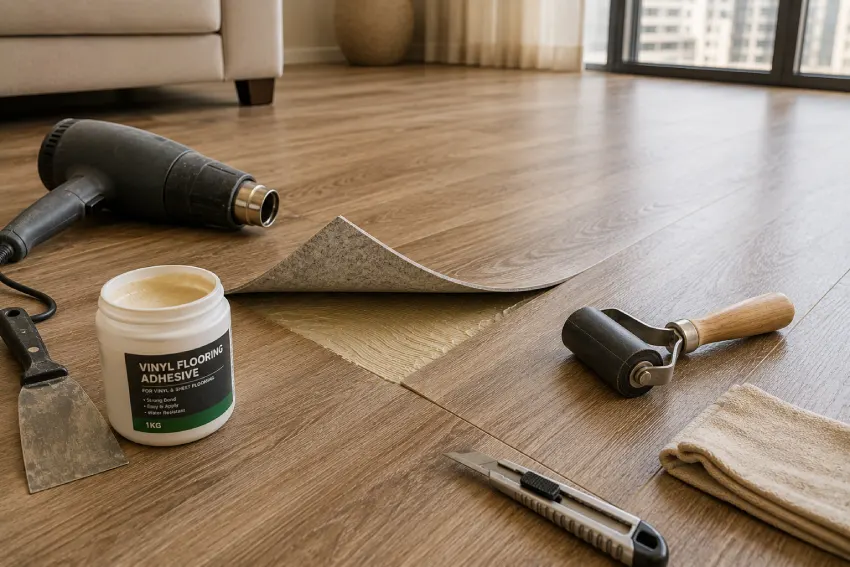
Heat-softening the adhesive under a lifted edge and pressing it back down works well when the original adhesive simply aged out and lost its grip. It’s a genuinely long-lasting fix as long as moisture wasn’t the reason the adhesive failed in the first place.
5. Crack Injection on Concrete
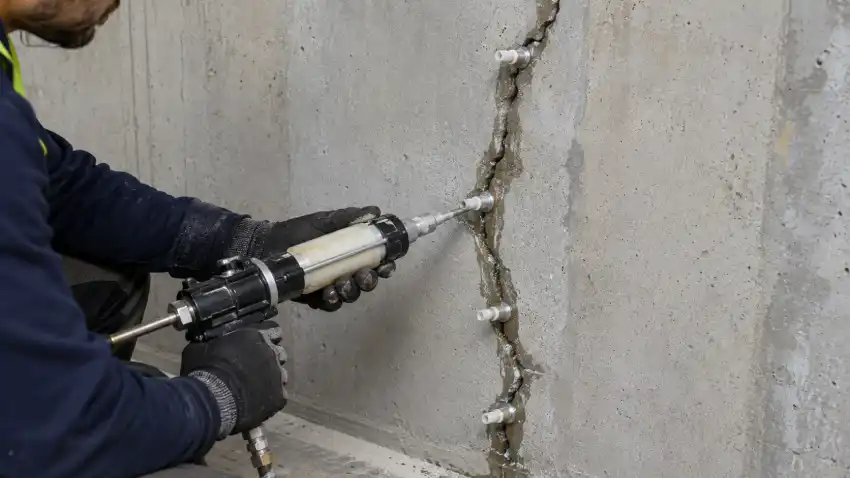
For stable cracks that aren’t actively widening, epoxy or polyurethane injection restores structural continuity and stops water or debris from getting into the crack. This is standard practice in concrete repair and holds up well when the crack isn’t tied to ongoing foundation movement.
Flooring Repairs That Usually Fail
These are the fixes people try because they’re fast or cheap, but they tend to come back within months.
1. Caulk or Filler Over Moving Cracks
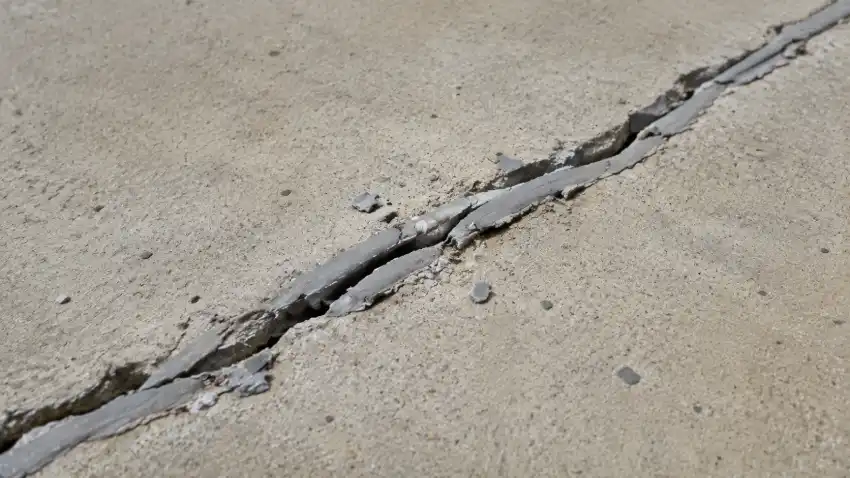
If a crack in tile, grout, or concrete is opening and closing with temperature or settling, filling it once does nothing to stop the movement causing it. The filler cracks again, often faster than the original.
2. Gluing Down Laminate That’s Peaking From Moisture
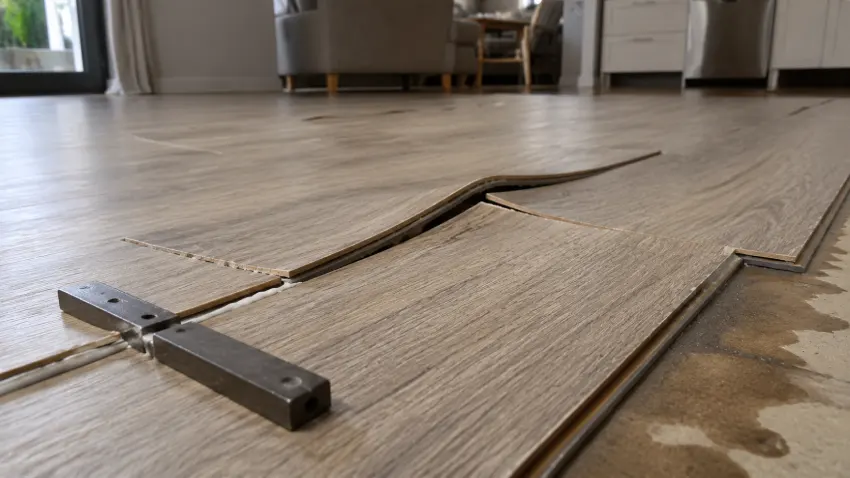
Laminate peaks (pushes up at the seams) because it’s absorbing moisture and expanding with nowhere to go. Gluing or clamping it back down without addressing the moisture source just delays the same failure.
3. Painting Over or Filling Water-Stained Subfloor
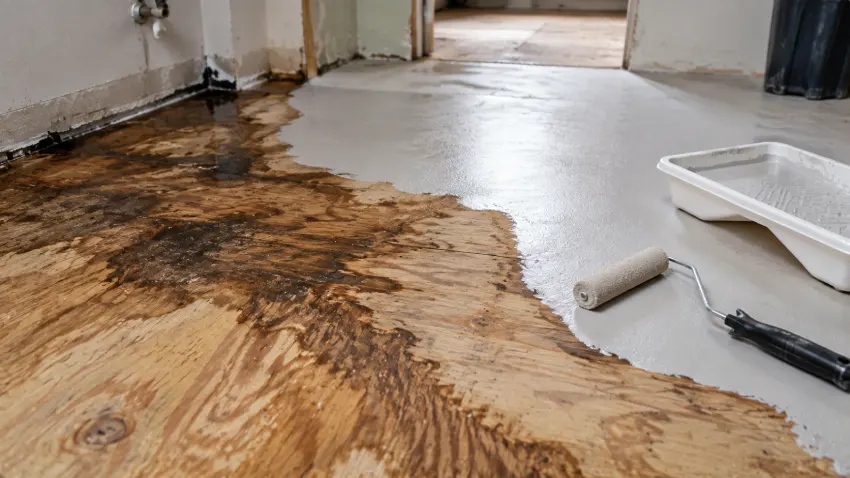
This hides the stain but does nothing about the moisture that caused it. If the source isn’t found and fixed, the damage keeps spreading under whatever new flooring goes on top.
4. Patch-Carpeting Worn Traffic Paths
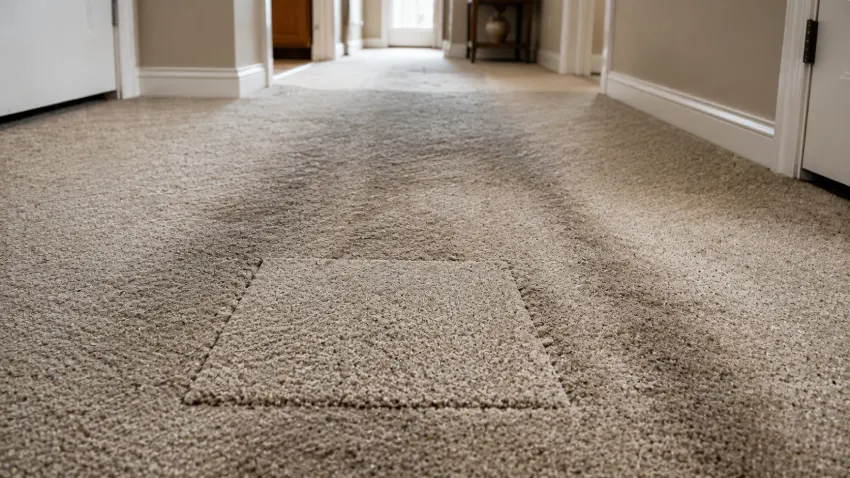
A carpet patch can disguise a stain or burn, but matted, worn traffic lanes are a sign the carpet’s fibers are structurally crushed. A patch in a high-traffic hallway will look different from the surrounding carpet within a year because the wear pattern continues around it.
5. Reglued Veneer Over Structural Gaps
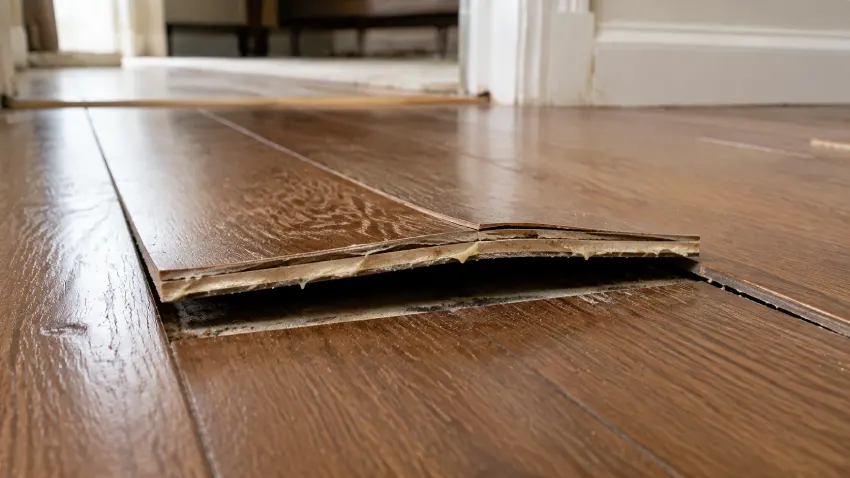
On engineered hardwood or veneer flooring, trying to glue down a lifting section without knowing why it lifted (usually subfloor movement or moisture) rarely lasts, because the same forces that caused the lift are still present underneath.
Why Some Repairs Don’t Last?
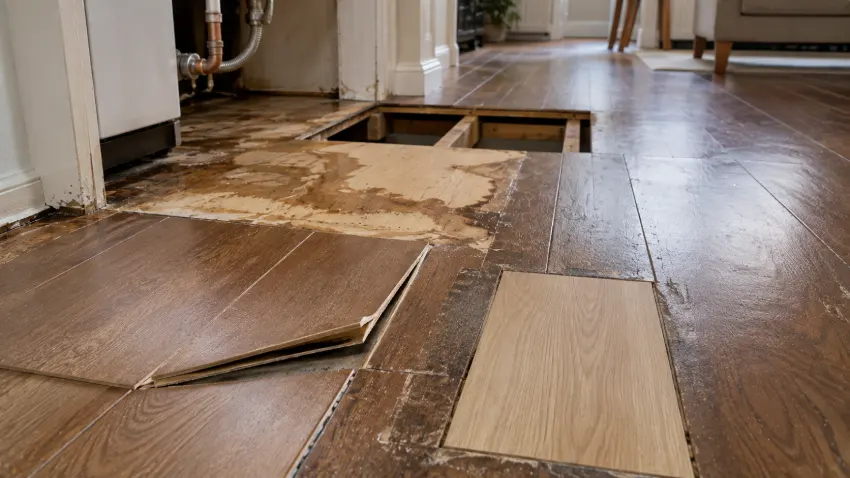
The pattern across every failed repair above is the same: the fix addressed the symptom, not the cause. Flooring damage almost always has a root cause, and skipping that step is why so many DIY repairs need to be redone.
Moisture is the biggest repeat offender. It causes peaking laminate, lifting vinyl, cupping hardwood, and musty carpet padding. Unless the moisture source, whether it’s a leaking appliance, poor subfloor ventilation, or seasonal humidity, gets identified and controlled, any repair on top of it is temporary by design.
Subfloor movement is the second most common cause. Squeaks, cracked grout lines, and shifting tile often trace back to a subfloor that flexes more than it should, either from insufficient support, water damage, or simply not being fastened tightly enough to the joists. A cosmetic repair on the surface can’t fix a structural issue underneath it.
Mismatched materials are the third reason repairs fail visually even when they hold physically. Flooring fades and wears with age and UV exposure, so a brand-new patch next to ten-year-old material will stand out even if the repair itself is technically sound.
DIY Repair vs. Professional Repair
Plenty of flooring repairs are genuinely doable without hiring anyone. Others carry enough risk of making things worse that paying a professional is the cheaper option in the long run.
| DIY Flooring Repairs | Professional Flooring Repairs |
| Replace or reglue loose vinyl planks or tiles | Sanding and refinishing an entire hardwood floor |
| Repair minor hardwood scratches and surface marks | Repairs involving mold or extensive water damage |
| Fix squeaky floors with subfloor access | Structural subfloor repairs |
| Repair small grout cracks or gaps | Large-format tile replacement and leveling |
| Re-stretch carpet in small rooms using a knee kicker | Repairs around radiant floor heating systems |
A good way to decide: if a mistake would cost you more to fix than the professional’s quote, hire the professional. If a mistake just means redoing a small, cheap section yourself, DIY is usually worth a try.
Common Mistakes That Undermine a Repair
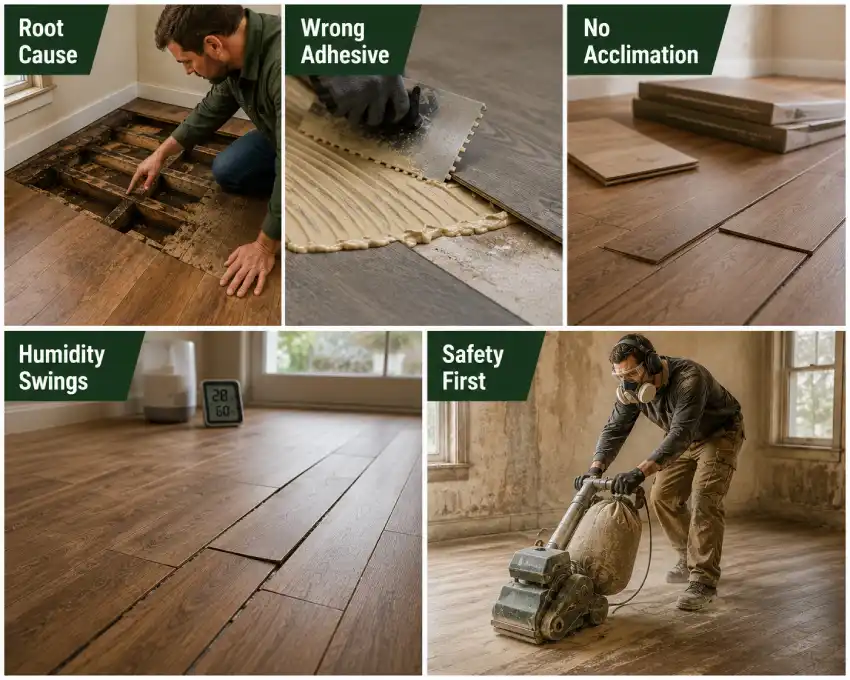
There are several mistakes that people often make while repairing damaged flooring.
- Skipping the root cause. Fixing what you can see without asking why the damage happened in the first place is the single biggest reason repairs fail.
- Using the wrong adhesive or filler for the material. Wood filler on vinyl, or vinyl adhesive on wood, won’t cure or bond the way the manufacturer intended.
- Not letting materials acclimate. Wood and laminate replacement pieces need to sit in the room for 48-72 hours before installation, or they’ll expand or contract after you’ve already installed them.
- Ignoring humidity swings. A repair that looks perfect in dry winter air can gap or buckle by summer if humidity wasn’t factored in.
- Ignoring safety basics. Sanding old finishes can release fine dust that’s worth wearing a respirator for, and any flooring installed before the 1980s should be checked for asbestos content before you cut, sand, or pry it up.
How to Make Flooring Repairs Last Longer
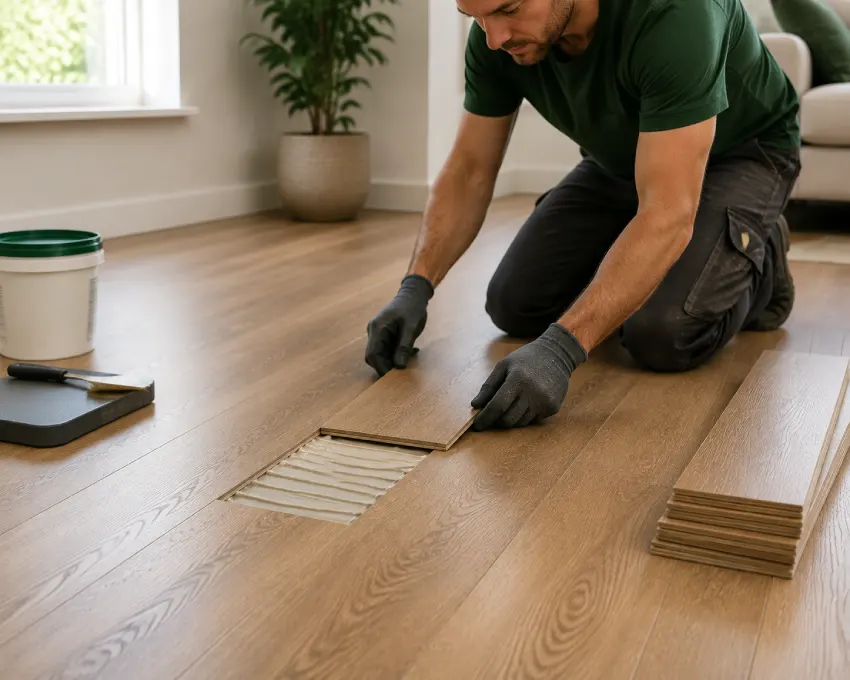
A repair holds up longer when it’s treated as a small construction project, not a quick patch. That means matching materials as closely as possible, letting adhesives and grout cure for the full time on the label instead of walking on them early, and controlling the humidity in the room before and after the work.
It also means testing the fix under normal conditions, walking on it, letting it sit through a full day/night temperature cycle, before assuming it’s done. Rushing the cure time is one of the most common reasons a technically correct repair still fails within weeks.
Cost Considerations for Flooring Repair
Repair costs vary a lot by flooring type and scope, but a few patterns hold across most jobs:
- Small, single-material repairs (a tile, a plank, a patch of vinyl) are the cheapest, often in the range of a hundred dollars or less in materials if you already own basic tools.
- Refinishing hardwood, whether spot or whole-room, costs significantly more due to equipment rental or professional labor, but still tends to run less than replacement.
- Water damage repairs cost more than they appear to at first, because the visible flooring is often the smallest part of the job compared to drying, mold remediation, and subfloor replacement.
- Repeated repairs to the same spot add up fast; three small fixes to one recurring problem often exceed the cost of solving it properly the first time.
Getting a quote for both repair and replacement before committing is worth the extra step, especially for larger areas, since the price gap between the two is sometimes smaller than people assume.
| Repair Type | Typical Cost (USD) |
| Hardwood scratch repair | $50–$200 |
| Hardwood refinishing | $3–$8/sq. ft. |
| Laminate plank replacement | $100–$350 |
| Vinyl repair | $75–$250 |
| Tile replacement | $150–$600 |
| Carpet patch or re-stretching | $100–$600 |
| Concrete crack repair | $250–$1,000 |
| Subfloor repair | $500–$2,500+ |
Preventive Maintenance That Reduces Future Floor Repairs
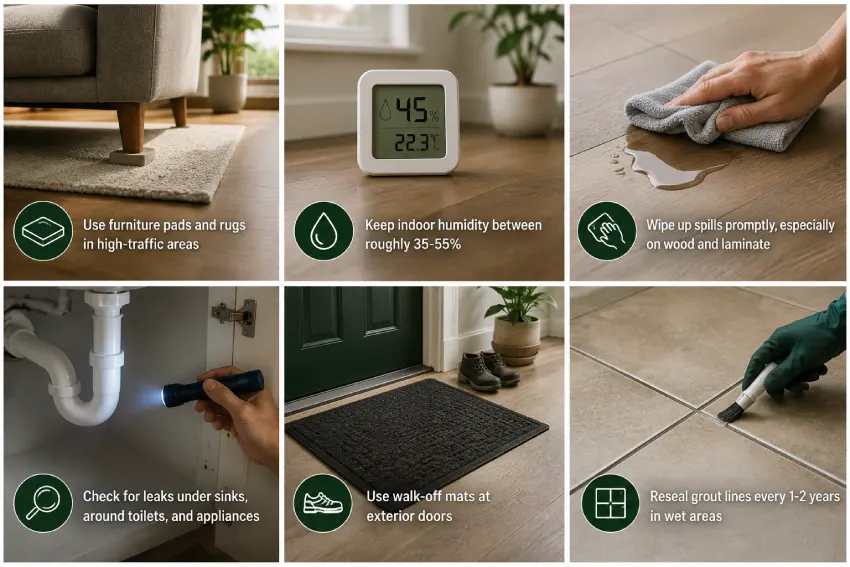
There are some preventative measures that help in reducing future floor repairs:
- Use furniture pads and rugs in high-traffic areas to reduce surface wear
- Keep indoor humidity between roughly 35-55% to limit expansion and contraction in wood, laminate, and vinyl
- Wipe up spills promptly, especially on hardwood and laminate, where standing water causes the most damage
- Check under sinks, around toilets, and near appliances periodically for slow leaks before they reach the floor
- Use walk-off mats at exterior doors to cut down on grit that scratches finishes over time
- Reseal grout lines every 1-2 years in wet areas like bathrooms and kitchens
Final Thoughts
A successful flooring repair is less about choosing the quickest fix and more about understanding what caused the damage in the first place. Surface scratches, loose tiles, squeaky boards, and minor cracks can often be repaired effectively when the underlying problem has been resolved, and the correct materials are used.
On the other hand, recurring moisture issues, structural movement, or widespread wear usually make replacement the smarter long-term investment. Taking the time to diagnose the cause, follow proper repair methods, and allow materials to cure correctly will help your floor perform as intended for years to come. When you’re unsure whether a repair will last, getting professional advice before starting can save both time and money.
Frequently Asked Questions
Rarely. Laminate’s core is typically compressed wood fiber that swells permanently once it absorbs water. In most cases, the affected planks need to be replaced rather than dried and reused.
Have someone walk across the spot while you watch from below if you have basement or crawl space access. Visible movement at the subfloor-to-joist connection means the joist gap needs shimming; if the subfloor itself flexes between joists, it usually needs additional screws into the joist.
Usually yes, for isolated, visible damage. Buyers and inspectors notice obvious flooring issues, and a clean, competent repair costs far less than what it can knock off a sale price or hold up in negotiations.
You can, but expect a visible difference unless the materials are very close in age, finish, and wear. Placing the repair in a less visible area, like under furniture or in a closet, hides the mismatch better than a repair in the middle of a room.
Follow the adhesive, grout, or finish manufacturer’s cure time exactly, even if it looks dry sooner. Light foot traffic is often fine after 24 hours, but full cure for adhesives and finishes can take days, and walking on it too early is one of the most common reasons repairs fail.