
How to Clean a Yoga Mat: 7 Effective Ways for Everyday and Deep Cleaning
To clean your yoga mat, wipe it down with a lightly damp cloth using a mild solution of water and a small amount of gentle soap or a dedicated mat cleaner. Wipe the surface, go over it again with plain water, then let the mat dry flat before you roll it. That handles ordinary sweat and dust.
The right method depends on two things: what your mat is made of, and how dirty it actually is. Closed-cell surfaces like PVC and TPE sit on top of moisture. Open-cell surfaces like polyurethane and some rubber absorb it, so they need less liquid and faster drying. A quick wipe covers everyday practice. Deep cleaning is for odor, oil buildup, and grip that has started to feel unreliable. Your custom mat’s care instructions always take priority over general advice. This comprehensive blog post by Floor Land explains 7 ways to clean yoga mats, what materials to avoid, and other important details.
7 Effective Methods to Clean a Yoga Mat
Keeping your yoga mat clean helps remove sweat, dirt, oils, and odors that build up with regular use. But not every mat should be cleaned the same way. Here are 7 effective ways to clean a yoga mat, including simple options for everyday cleaning and deeper methods for stubborn dirt and smells.
1. Clean Yoga Mats with a Damp Cloth
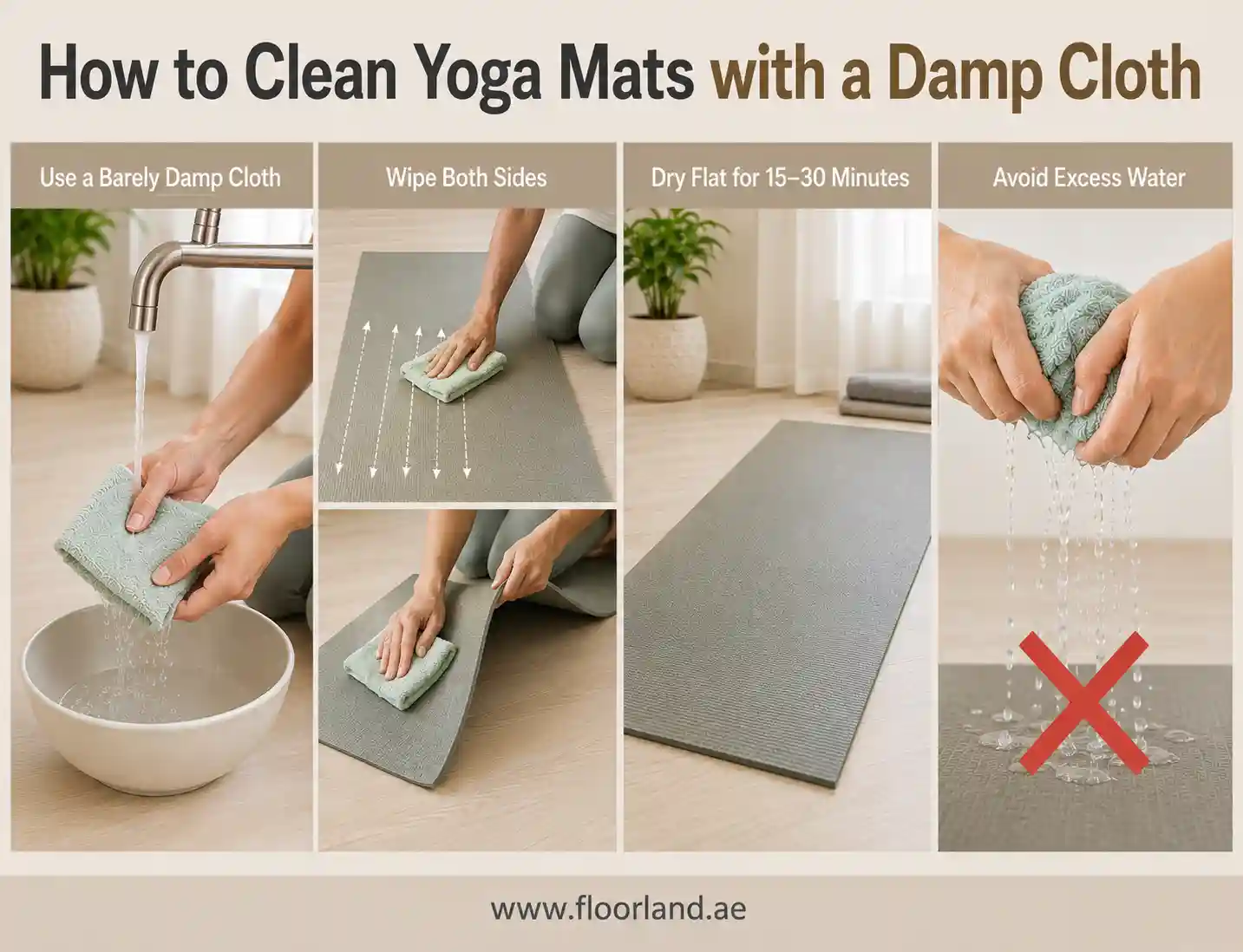
Plain water on a well-wrung cloth handles light dust and short, low-sweat sessions. It is also the safest option for open-cell PU tops and cork, which absorb whatever you put on them. You need one microfiber cloth and cool water.
Wring the cloth until it feels barely damp, then wipe the length of the mat in overlapping passes rather than circles. Give the hand and foot zones a second pass. Flip the mat and wipe the underside so floor dust does not transfer back. Leave it flat for 15 to 30 minutes. The mistake here is a wet cloth. Water pooling on the surface is water going into the mat.
2. Clean a Yoga Mat With Mild Soap and Water
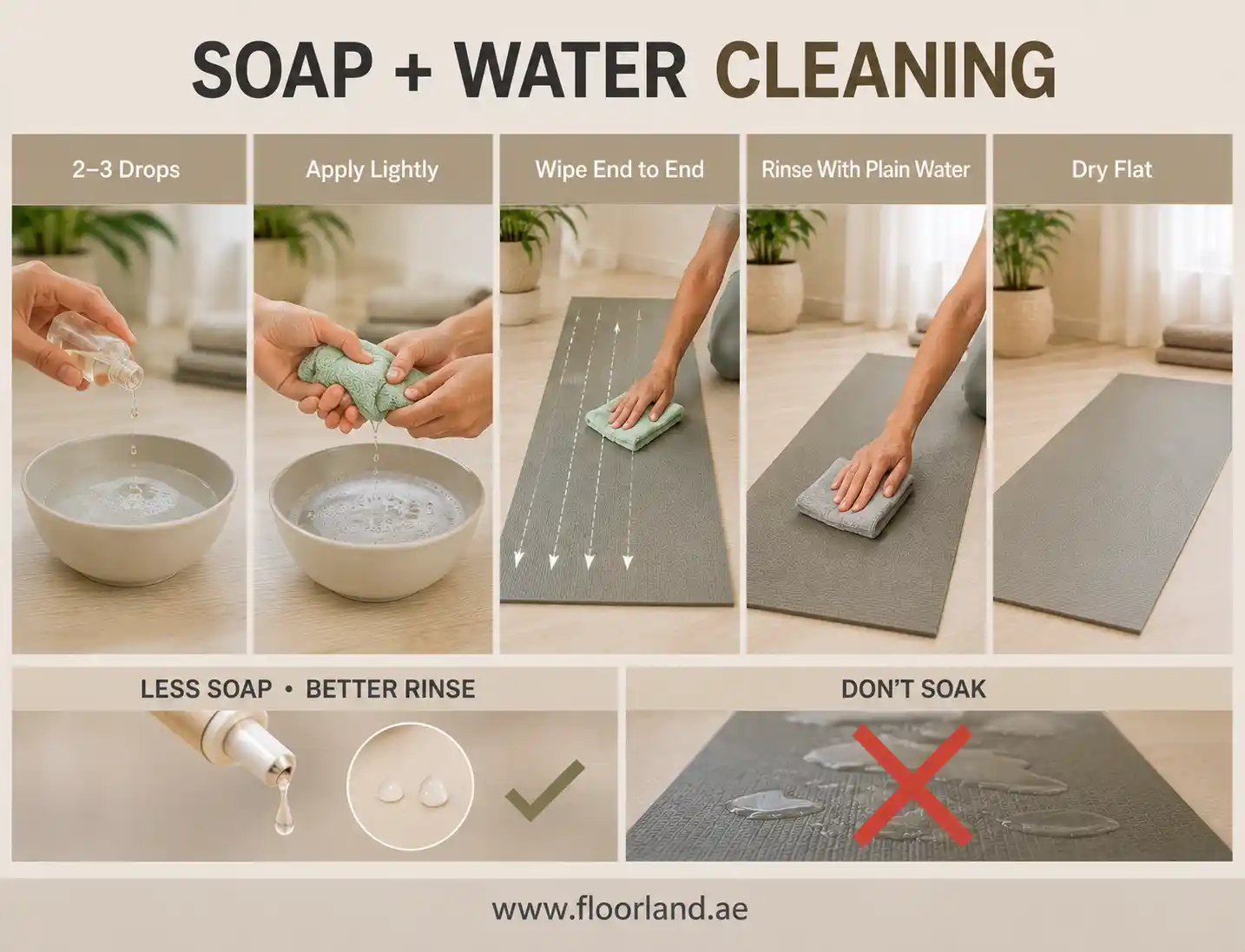
Soap earns its place once sweat and skin oil are involved, because water alone will not lift oil. Add two or three drops of mild dish soap or castile soap to a bowl of warm water, or mix the same strength in a spray bottle. Mist lightly or apply with a wrung-out cloth, then wipe from one end to the other.
Follow straight away with a second cloth rinsed in plain water. That rinse pass is not optional, since leftover soap is the usual reason a mat turns slippery. Dry flat before rolling. Use less soap than feels right. More detergent does not clean better; it only leaves more behind to remove.
3. Clean a Yoga Mat With Diluted White Vinegar
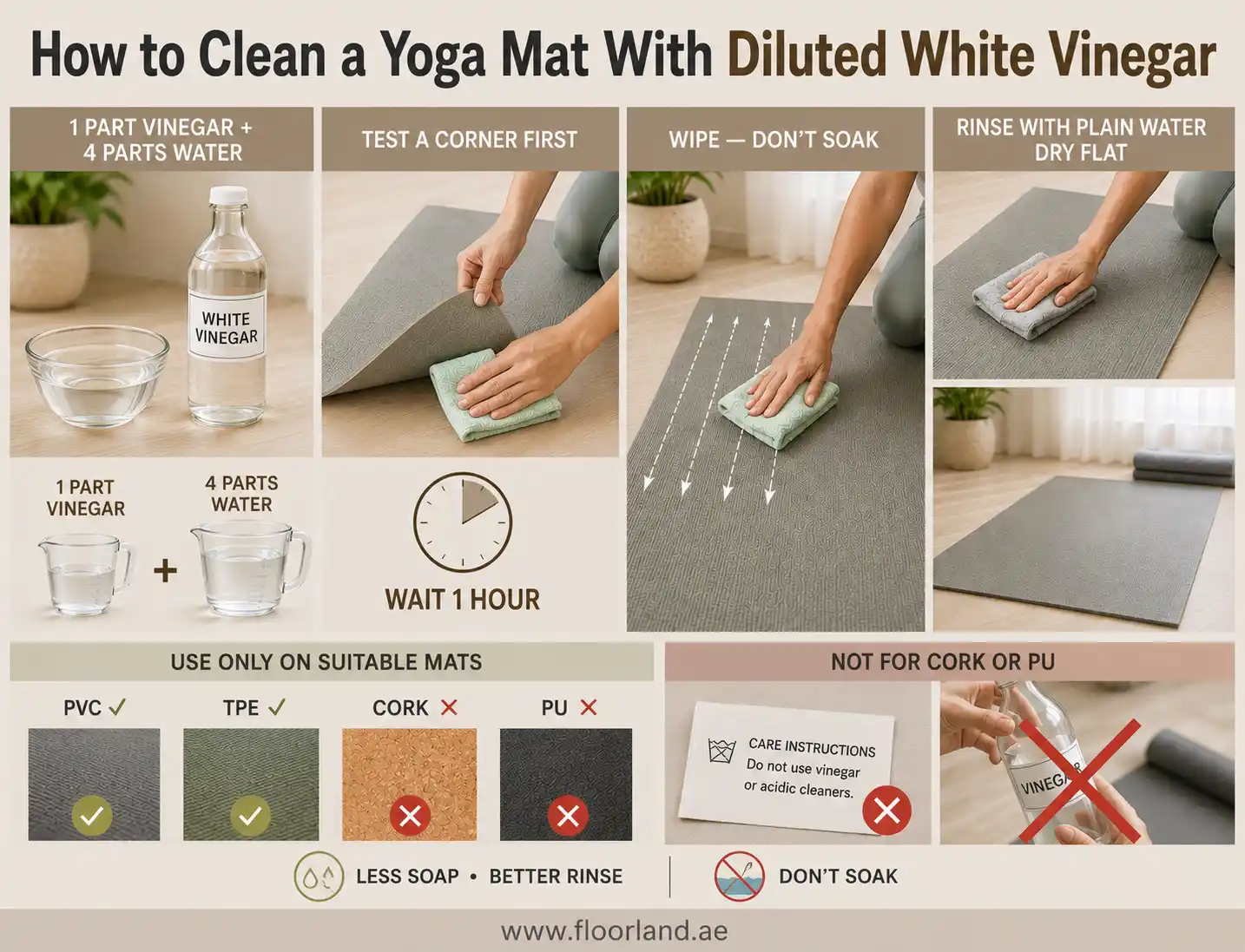
Diluted white vinegar targets odor and light sweat residue on closed-cell mats such as PVC and TPE. It also works well on the underside of many yoga rubber or ablution mats. Mix one part distilled white vinegar with four parts water, or use a weaker solution for regular use. Test a corner first, wait an hour, then check for color or texture change.
Apply with a wrung-out cloth rather than a heavy spray, wipe with plain water afterward, and dry flat. Keep vinegar off cork, off polyurethane grip layers, and off any mat whose care instructions rule it out. Several brands, including Nike, list it as something to avoid. Vinegar reduces smell. It does not sterilize a mat.
4. Clean a Yoga Mat With Baking Soda
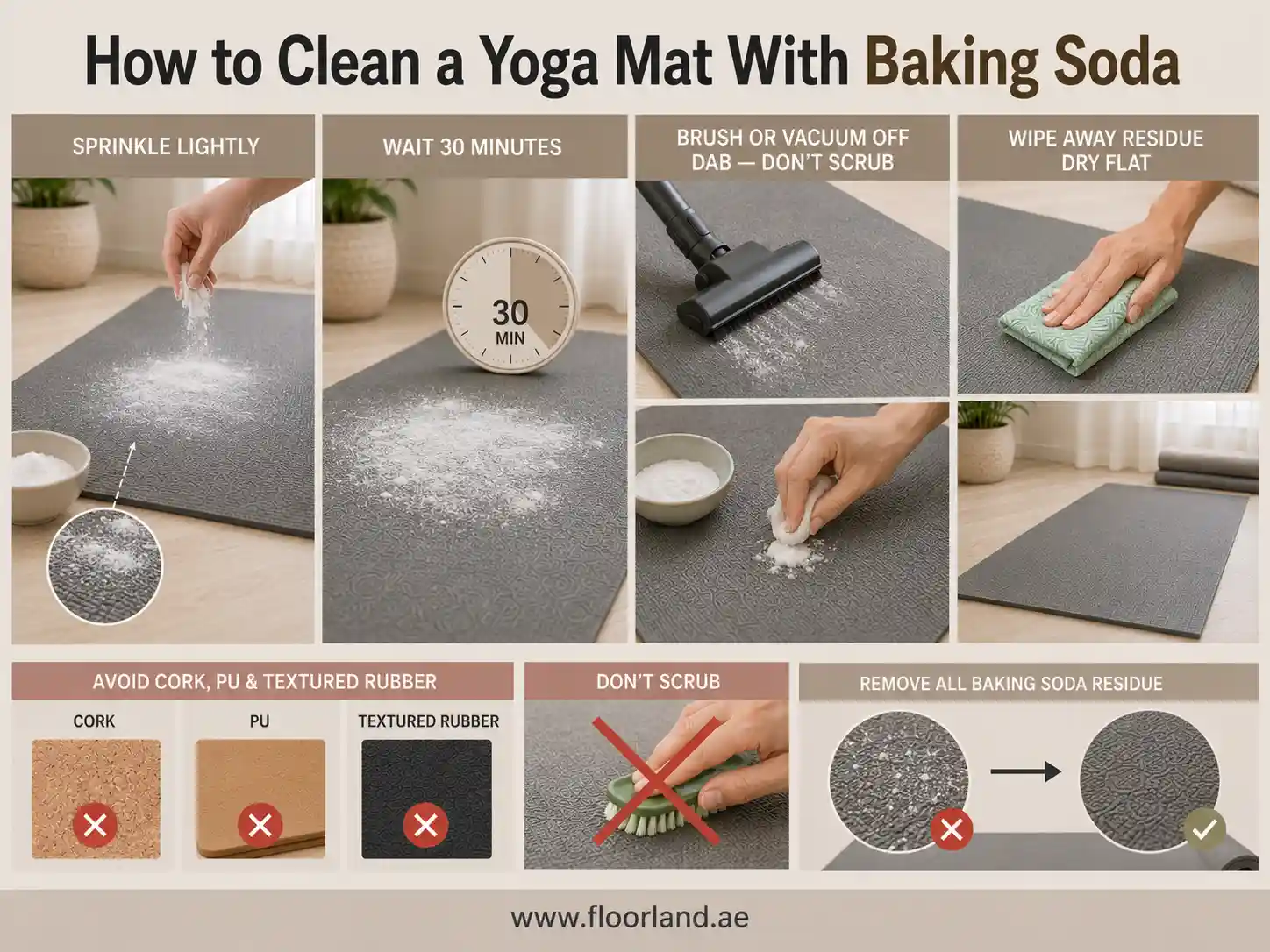
Baking soda handles localized problems rather than whole-mat grime. Reach for it when one area smells stubborn, or a small mark has survived soap. For odor, sprinkle it dry across a closed-cell mat, leave it for 30 minutes, then brush or vacuum it off before wiping with a damp cloth.
For a mark, mix a thin paste and dab it on with a fingertip. Do not scrub. Baking soda is mildly abrasive, so it’s a poor fit for cork, PU tops, and textured rubber, where grip depends entirely on surface texture. Rinse off every trace, since dried powder feels gritty underfoot. Dry the mat flat before rolling it.
5. Clean Yoga Mat in the Bathtub
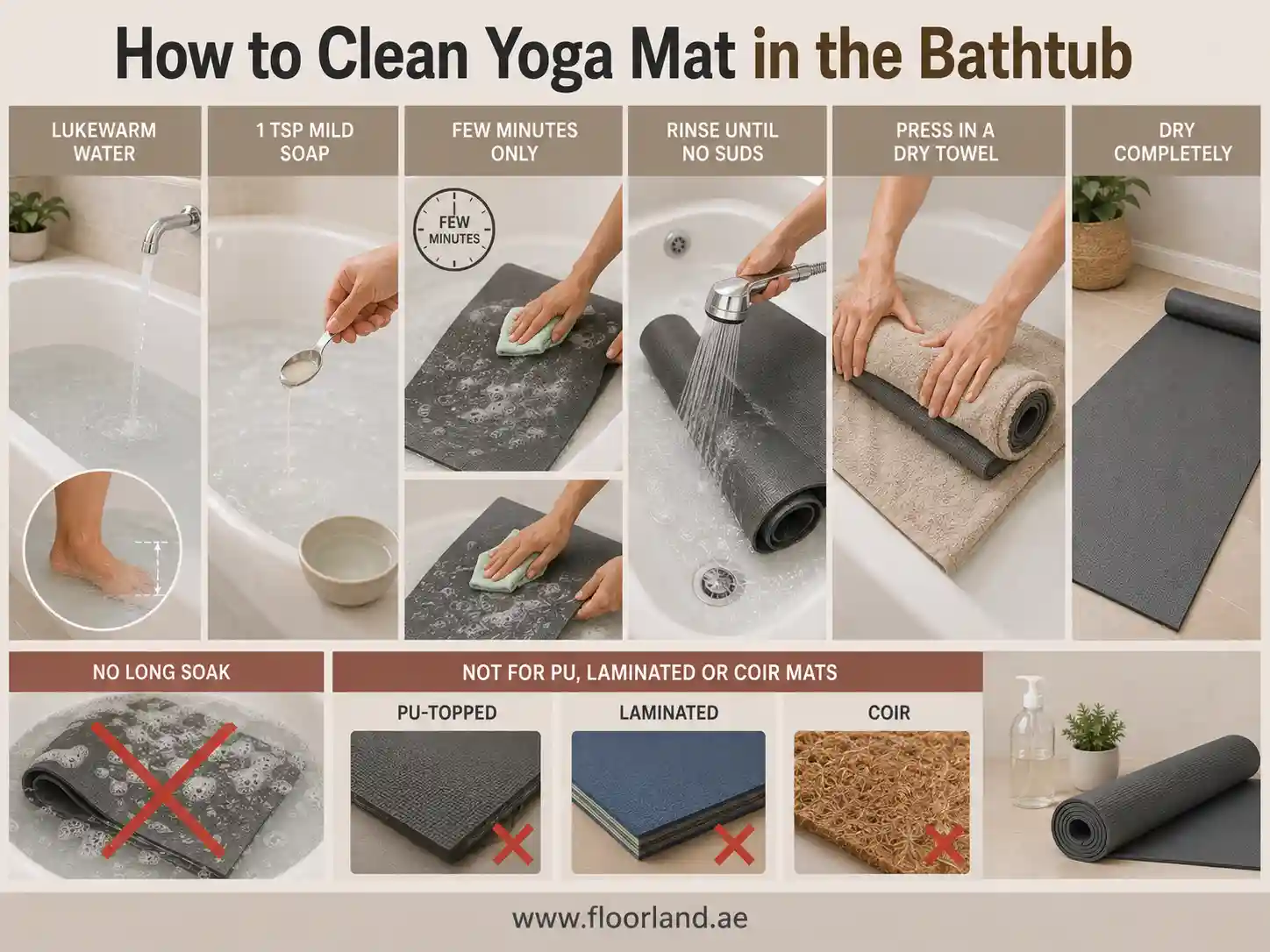
A bathtub wash suits a genuinely grimy closed-cell mat, usually a PVC or TPE mat used for hot yoga or shared classes. Rinse the tub first so shampoo residue does not transfer. Fill it with lukewarm water to about ankle depth and add roughly a teaspoon of mild soap.
Lay the mat flat or in a loose spiral, wipe both sides, and keep contact time to a few minutes. Long soaks drive water into edges and bonded layers, where it does not come out cleanly. Rinse until no suds appear, then roll the mat in a dry towel and press to pull out the water. Skip this method entirely for PU-topped, laminated, and coir mats.
6. Wash a Yoga Mat in the Washing Machine
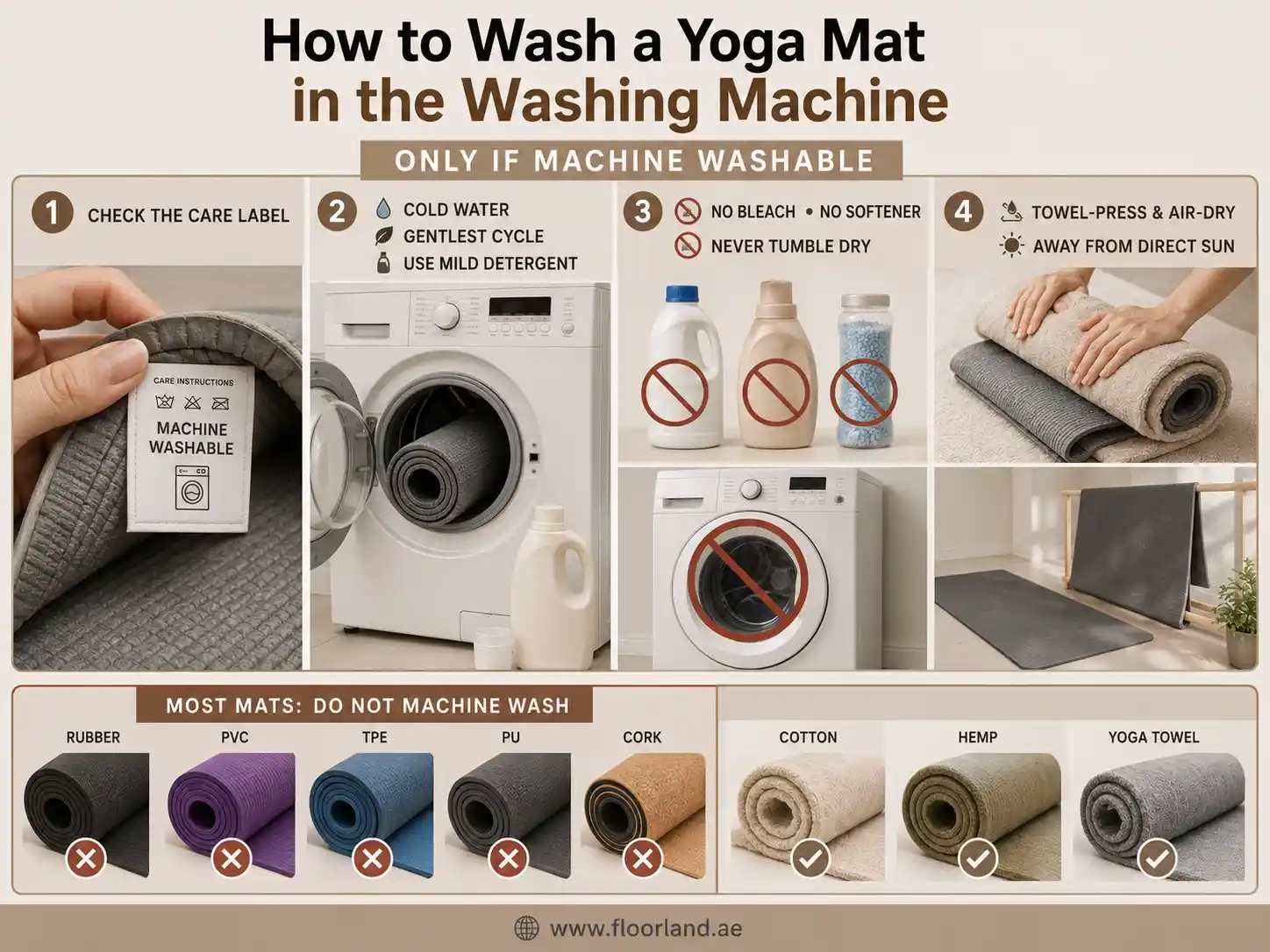
Use a washing machine only when the manufacturer specifically lists your mat as machine washable. Cotton and hemp yoga rugs, yoga towels, and some microfiber-topped combo mats qualify. Rubber, PVC, TPE, PU, and cork mats almost never do, and brands including Manduka and Nike say so plainly. Agitation creases foam permanently, spin cycles tear edges and separate bonded layers, and heat degrades natural rubber. If your care label does allow it, use cold water, the gentlest cycle available, and a very small amount of mild detergent. Skip bleach, fabric softener, and scented boosters, which coat the surface and cut grip. Never tumble dry. Towel-press out the water, then air-dry away from the sun.
7. How to Disinfect a Yoga Mat Safely
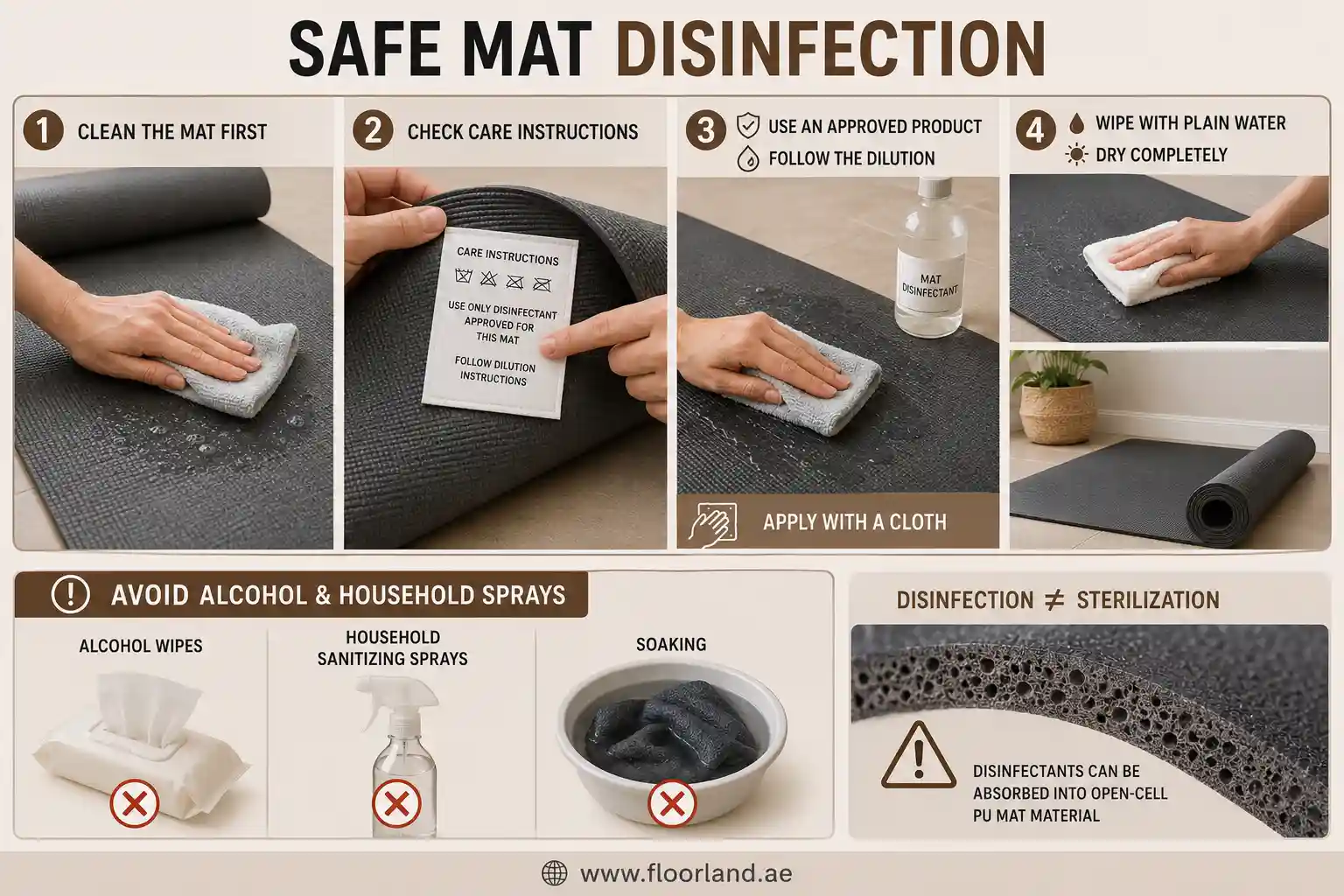
Disinfecting makes sense for a shared mat, a studio mat, or one used while someone at home was ill. It is not a routine step. Clean the mat first, because disinfectant does little sitting on a layer of body oil. Then use a product your manufacturer approves, at the dilution they specify, applied with a cloth rather than a soaking spray. Alcohol wipes and household sanitizing sprays strip grip coatings and dry out rubber. Open-cell PU absorbs them and cannot release them, which is why Manduka advises against disinfectants on those mats. Wipe with plain water afterward and dry fully. No home method sterilizes a mat, no matter what the label claims.
How to Clean a Yoga Mat After Every Workout
The goal after a session is simple. Lift off the sweat and skin oils before they soak in and go stale. You do not need much liquid to do that. Mix warm water with two or three drops of mild dish soap in a spray bottle, or use a mat spray made for your mat type. Skip fragrance-heavy household sprays.
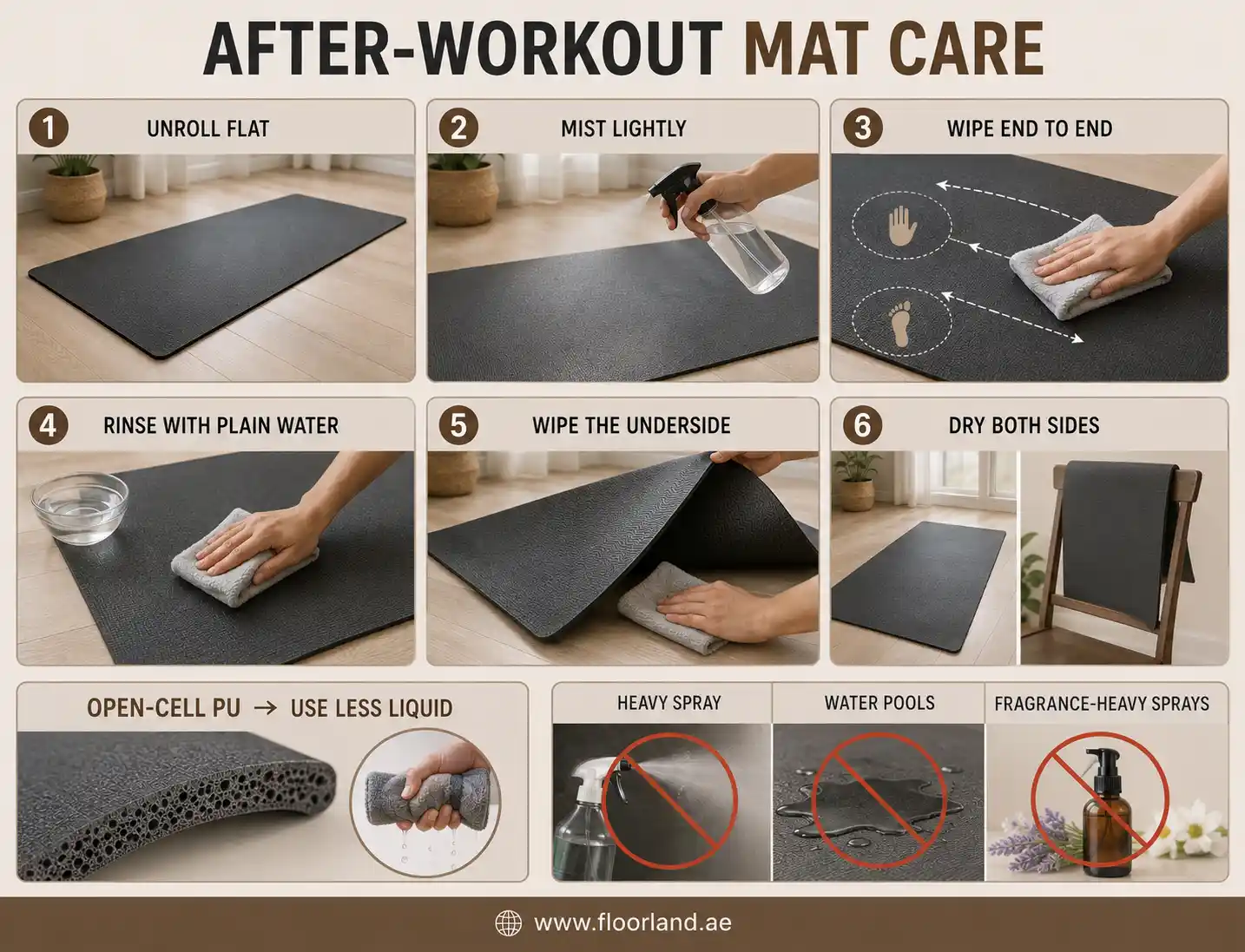
- Unroll the mat flat on the floor. Do not clean it hanging or rolled.
- Mist the surface lightly. It should look barely damp, never beaded or pooled.
- Wipe with a soft cloth, moving from one end to the other rather than in circles. Give extra attention to the hand and foot zones, since that is where most of the residue lands.
- Go over the mat a second time with a cloth wrung out in plain water. This lifts the soap off. Skipping this step is the single most common reason mats turn slippery.
- Flip the mat and give the underside a quick wipe. Floor dust transfers back onto the top when you roll it.
- Let it dry flat or hang it over a chair back until it is dry to the touch on both faces.
Do this after each practice if you sweat, and every few sessions if you do not. A microfiber cloth works better than paper towels, which shed and leave lint on textured surfaces.
If your mat has an open-cell polyurethane top, it will cut moisture further. Use a cloth dampened with plain water and wrung out hard, and treat spray bottles with caution. Those surfaces pull liquid inward, and what goes in has to come back out on its own.
How to Deep Clean a Yoga Mat?
Deep cleaning the yoga rubber mat is a different job from a wipe-down. You are removing built-up body oil, product residue, and the film that makes a mat feel slick even when it looks clean. Plan for it when grip has faded, the surface looks dull or patchy, or a smell lingers after normal cleaning.
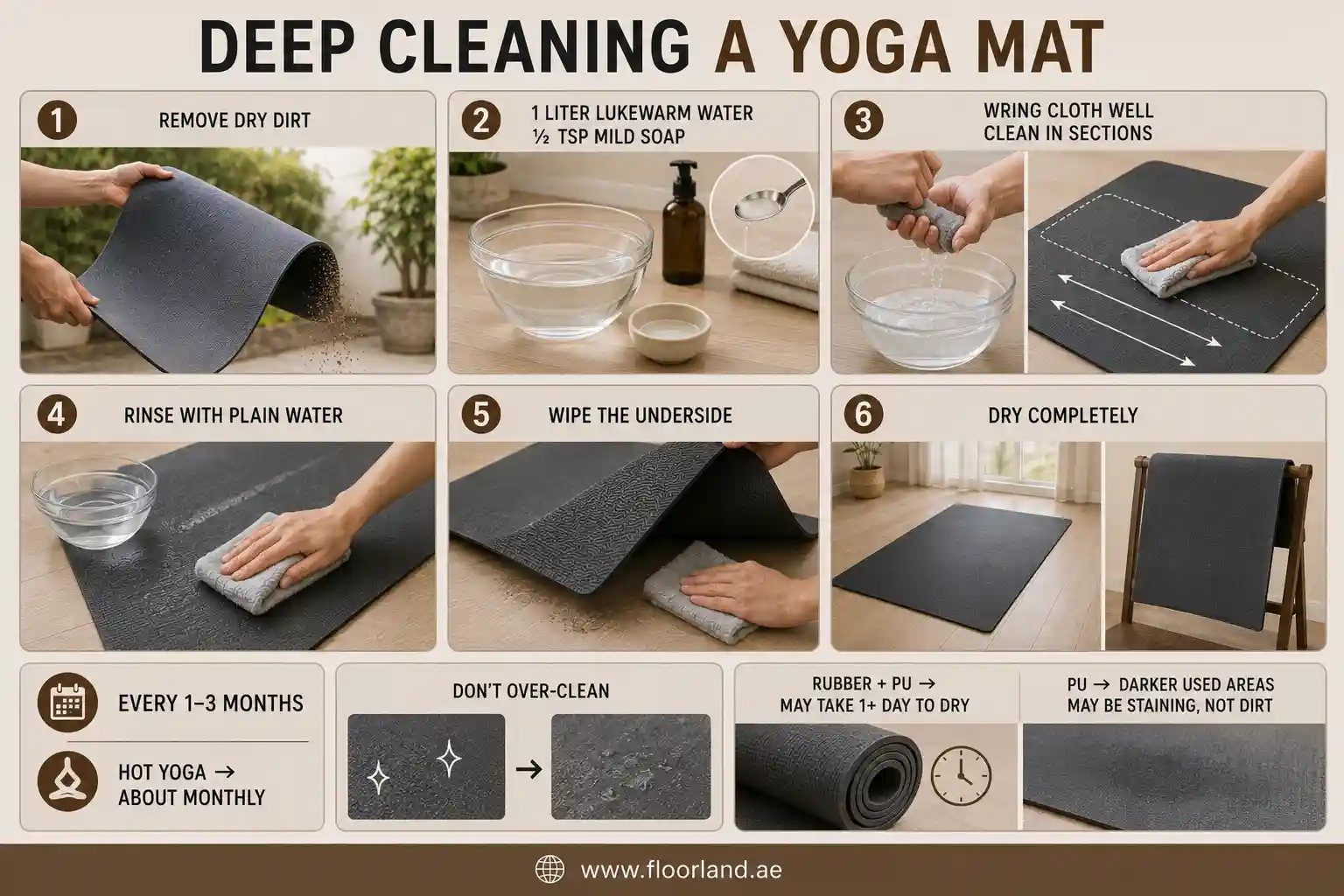
- Prepare first. Give the mat a dry wipe or a quick shake outside to remove hair and grit. Grit is what scratches a surface during cleaning, not the cleaner itself.
- Mix a working solution. One liter of lukewarm water with about half a teaspoon of mild dish soap or castile soap is plenty. Weak and thorough beats strong and fast here.
- Clean in sections. Dip a soft cloth or a non-abrasive sponge, wring it out well, then work across roughly a third of the mat at a time. Use light pressure and overlapping passes. Let the cloth do the work rather than your arm.
- Rinse as you go. Follow each section with a second cloth rinsed in clean water. This matters more than the washing step. Residual soap is what causes the sticky, slippery feel people complain about after cleaning.
- Handle the underside. Bottom surfaces collect studio floor dirt and shoe grime. They usually need a firmer wipe than the top, and most bottoms tolerate a little more moisture.
- Dry it properly. Lay the mat flat or hang it fully open. Rubber and PU mats can hold moisture for a day or longer, so give it time.
Most people need this every one to three months. Hot yoga practitioners often need it monthly. Deep cleaning more often than the mat requires shortens its life, since every wash removes a little surface texture.
Two things to expect. A deep-cleaned rubber mat may smell stronger for a day as the material airs out. A PU mat may look slightly darker in used areas even after cleaning, and that is staining rather than dirt. It does not affect performance.
How to Clean a Yoga Mat Naturally
Household ingredients work well for routine care, but “natural” and “safe for your mat” are not the same thing. Lemon juice is acidic. Salt is abrasive. Essential oils are oils, and oil on a grip surface is the opposite of what you want.
Here is how the common options actually behave.
Mild liquid soap and water. The most reliable natural option for nearly every mat. Very little soap, thorough rinsing, light moisture.
Baking soda. Good for odor and for lifting small marks. Mix a tablespoon into a cup of water for a wipe-down solution, or make a thin paste for a specific spot. Rinse it off completely, since dried baking soda leaves a powdery residue that feels gritty underfoot.
Diluted white vinegar. Useful for smell on closed-cell mats. See the section above for limits.
Lemon juice diluted in warm water. Some brands recommend it for their own mats, and it does freshen a surface. It is acidic, so treat it like vinegar rather than like water, and rinse afterward.
Essential oils. Best avoided on the practice surface. Even a few drops can leave a slick film, and porous mats hold the oil rather than releasing it. If you want a scent, put it on your cloth after cleaning is finished, or spray it in the room instead.
Salt or baking soda as a scrub. Some brands suggest salt to boost cleaning on PVC and TPE. It works because it is abrasive, which is exactly why it does not belong on cork, PU, or textured rubber. Grip depends on surface texture, and abrasives change texture.
Two natural methods to skip entirely. Do not use tea tree oil as a mat treatment, since it is still an oil. Do not leave a mat in the sun to freshen it. UV and heat break down rubber and cause fading, cracking, and brittleness, and that is one of the few points every mat brand agrees on.
How to Clean Different Types of Yoga Mats
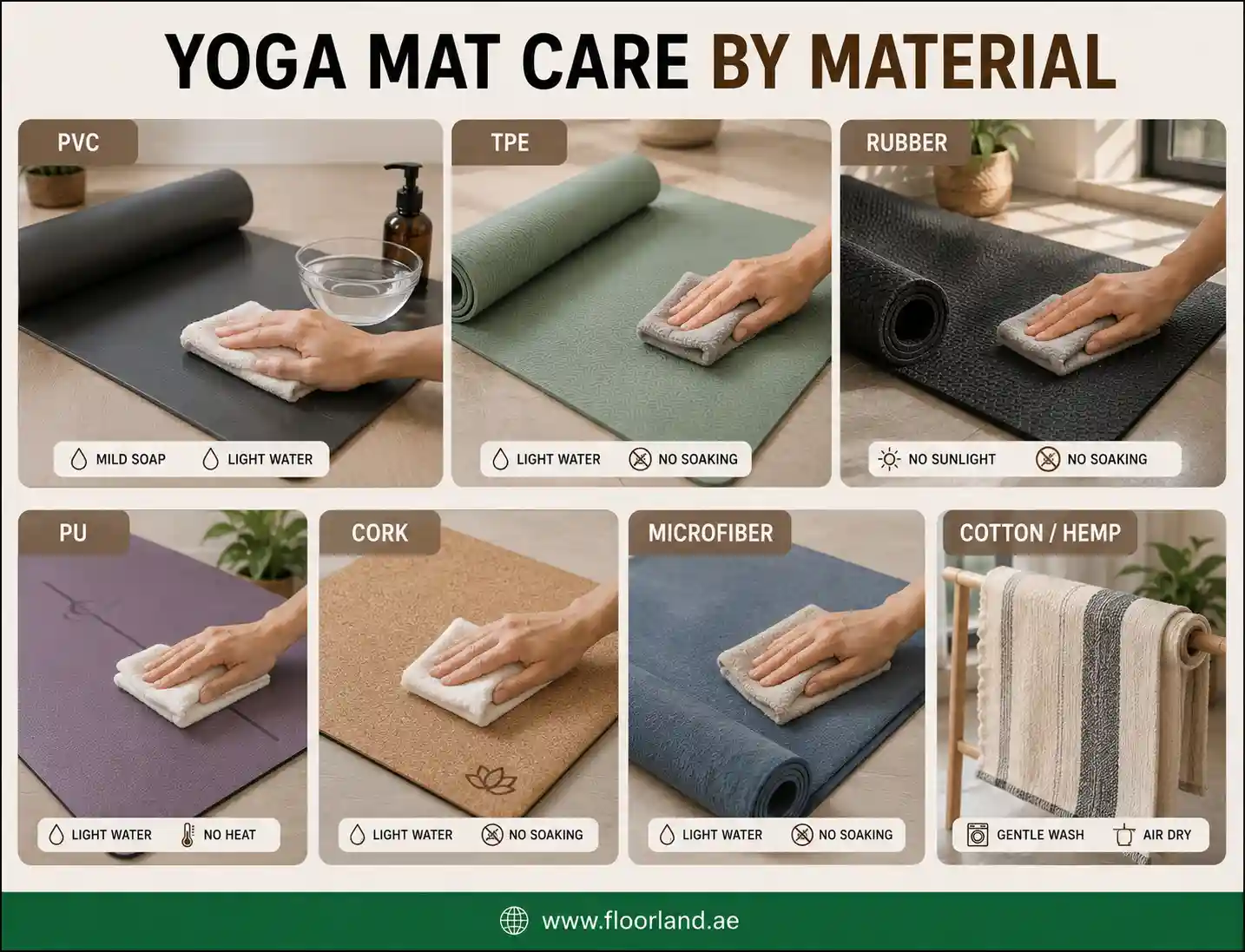
Material sets the limits. Two mats made from the same base material can still need different care, because surface finishes, top coatings, and antimicrobial treatments vary between products. Use the guidance below as a starting point, then check your own mat.
PVC Mats
PVC is closed-cell, so liquid stays on the surface. These are the most forgiving mats to clean. Mild soap and water, diluted vinegar, and a gentle salt scrub all work here. Rinse well and dry flat. Avoid alcohol-based cleaners and strong solvents, which can dry the material and change how it feels.
TPE Mats
TPE is also closed-cell and cleans much like PVC, though it is generally softer and more easily marked. Use light pressure and avoid abrasives. TPE tolerates less heat than PVC, so keep water lukewarm and keep the mat away from radiators, car interiors, and sunny windows.
Natural Rubber Mats
Rubber cleans well with mild soap and water, but it does not like three things: sunlight, heat, and prolonged soaking. UV exposure causes oxidation, white patches, and brittleness. Heat accelerates the same process. Long soaks can leave rubber smelling worse than before.
Wipe rather than drench, rinse the soap off, and dry indoors in moving air. Rubber has a natural smell that is not dirt, and it fades over weeks of use. Many rubber mats also have a polyurethane or textured grip layer on top, and that layer, not the rubber, determines what you should use.
PU and Polyurethane-Coated Mats
Polyurethane tops give excellent wet grip, which is why they are common on premium and hot yoga mats. They are usually open-cell, so they absorb sweat and whatever you clean them with.
The rules are stricter. Use a barely damp cloth and plain water or a cleaner the brand approves. Skip essential oils, lotions, and general household spray cleaners, which sink into the surface and cannot be rinsed out. Manduka warns against using disinfectants on its open-cell PU mats for exactly this reason.
Expect staining over time. Darker patches where hands and feet land are normal on PU and do not mean the mat is dirty or finished.
Cork Mats
Cork gets its grip from surface texture, and it is a sealed natural material rather than a plastic. Keep water use light, avoid vinegar and other acids unless the brand approves them, and never soak or machine wash a cork mat. Aggressive scrubbing lifts cork particles and creates flaking. A cloth wrung out in plain water, plus occasional mild soap, is usually all cork needs. Wipe with the surface, not against it.
Microfiber and Suede-Topped Mats
These have a fabric layer bonded to a rubber or foam base. The fabric part is easy to clean. The bond is the vulnerable point. Many are hand-washable; some are machine-washable on cold and gentle, and drying is the slow part because the fabric holds water. Follow the specific product instructions here more strictly than for any other type.
Cotton and Hemp Rugs
Traditional Mysore-style rugs are textiles, not mats, and most are machine washable on a cool cycle with mild detergent. Air dry them flat or on a line. They shrink slightly with the first few washes, which is normal.
How to Remove Sweat, Odor and Stains From a Yoga Mat
Different problems need different fixes, and no single solution handles them all.
Heavy sweat buildup. Wipe after every session while the sweat is still fresh. Once it dries and layers up, it needs a deep clean, not a wipe. A towel over the mat during hot practice prevents most of it in the first place.
Persistent smell. First, rule out trapped moisture, which is the most common cause. A mat rolled up slightly damp will smell within days. Unroll it and let it dry fully for 24 hours, then judge it again. If the smell persists, deep clean it and try a baking soda wipe-down on a closed-cell mat. Sprinkle baking soda on a dry mat, leave it 30 minutes, then vacuum or brush it off before wiping.
Sticky or slippery surface after cleaning. Almost always soap residue. Go over the mat with a cloth wrung out in plain warm water, changing the water once, then dry it flat. It usually clears in one pass.
Body oils and lotion buildup. These need soap, since water alone will not lift oil. Use a mild soap solution and clean the whole mat rather than the visible spot, because oil spreads thin across the entire surface. Applying lotion or sunscreen right before practice guarantees the problem returns.
Visible dirt and grit. Shake or dry brush it off before adding any liquid. Wet grit turns into an abrasive paste that scratches the surface.
Stains. Manage expectations here. On PU, rubber, and cork, discoloration often becomes permanent, and hard scrubbing damages grip while rarely removing the mark. Try mild soap and gentle pressure once. If it does not shift, leave it.
Chalk, makeup, and self-tan residue. Chalk brushes off dry and then wipes away with water. Makeup and self-tanner are pigments in an oil or lotion base, so they need soap, and they still often leave a shadow on porous surfaces.
How to Dry a Yoga Mat After Cleaning
Drying is where most mat damage actually happens, and it is the easiest step to rush.
- Get the water out mechanically first. Roll the mat in a dry towel and press along it. This does more than an extra hour of air drying.
- Lay the mat flat or hang it fully open over a drying rack, a shower rail, or a chair back. A rolled or folded mat will not dry.
- Dry both sides. The underside stays damp longest, especially on carpet or tile. Flip it partway through.
- Use moving air. A fan, an open window, or a well-ventilated room speeds it up considerably.
- Keep it out of direct sunlight. UV fades color and degrades rubber, PU and cork.
- Skip artificial heat. No radiators, hair dryers, tumble dryers or hot cars.
- Wait until both faces are dry to the touch before rolling. If in doubt, give it a few more hours.
Rough timings: a wiped mat is ready in 15 to 30 minutes. A deep-cleaned mat needs a few hours. A washed or soaked mat often needs 24 hours, and a thick rubber mat can need longer.
Store the mat rolled loosely rather than folded, and stand it upright if you can. Tight folds create creases that turn into cracks.
How Often Should You Clean a Yoga Mat?
Frequency depends on how much sweat and skin contact your mat gets, not on a fixed calendar. Use these as reasonable starting points and adjust to what your mat looks and smells like.
| Type of Use | Quick Wipe | Deep Clean |
| Occasional practice, once or twice a week, low sweat | Every few sessions | Every 3 to 6 months |
| Regular practice, three to five times a week | After most sessions | Every 1 to 2 months |
| Heavy sweating or intense flow classes | Every session | Monthly |
| Hot yoga | Every session, without exception | Every 2 to 4 weeks |
| Shared or studio mats | Before and after every use | As often as the studio allows |
| Mats used on outdoor or dusty floors | After each use, both sides | Every 1 to 2 months |
A few honest caveats. Cleaning too often is a real thing, particularly on cork and PU, where each wash removes a little surface. Some brands specifically recommend deep cleaning no more than a few times a year for their mats. If your mat looks fine, smells fine, and grips fine, a quick wipe is doing its job.
Practicing on a towel over your mat changes the maths considerably. The towel takes the sweat, and it goes in the washing machine without any of the concerns that apply to the mat.
What Not to Use on a Yoga Mat?
Below are the details of the materials that you must avoid while cleaning the yoga mats.
- Bleach and bleach-based sprays. Harsh on every mat material, and residue sits against your skin.
- Alcohol-based cleaners and sanitizing wipes. They dry out rubber and PU and strip grip coatings. Many brands name them specifically.
- Household all-purpose sprays and bathroom cleaners. Built for hard surfaces, not for grip layers.
- Essential oils on the practice surface. They leave a slippery film, and porous mats hold them indefinitely.
- Fabric softener and scented laundry boosters. They coat the surface and reduce traction.
- Abrasive pads, stiff brushes and scouring powders. Grip is texture, and abrasives flatten texture.
- Hot water. Warm or lukewarm only. Heat softens PVC and degrades rubber.
- Direct sunlight for drying or freshening. UV is one of the fastest ways to age a mat.
- Tumble dryers, radiators, and hair dryers. Heat plus tension warps mats.
- Long soaking on any mat not rated for it. Water in the core or between bonded layers does not come out cleanly.
- Too much soap. More soap does not mean cleaner; it means a residue you then have to remove.
One more thing worth saying plainly. No home cleaning method sterilizes a yoga mat, and claims that a spray kills everything on contact are marketing rather than fact. Regular cleaning keeps a mat pleasant and reduces buildup. That is a realistic goal.
Final Words
Keeping your yoga mat clean does not require harsh chemicals or complicated routines. For everyday practice, a lightly damp cloth and mild cleaner are usually enough to remove sweat, dust, and oils. Deeper cleaning should be reserved for stubborn buildup, odors, or reduced grip. Most importantly, choose a method based on your mat’s material and avoid excessive water, heat, abrasives, and direct sunlight. Always let the mat dry completely before rolling or storing it. With regular cleaning and proper care, your yoga mat can stay fresh, comfortable, and ready for your next practice.
Frequently Asked Questions
Wipe with a cloth wrung out in mild soapy water, follow with a plain water cloth, and dry it flat indoors. Keep rubber away from sunlight, heat, and long soaks. If your rubber mat has a PU or textured top layer, follow the guidance for that surface instead, since the top layer is what you are actually cleaning.
Soap residue, almost every time. Wipe the mat with a cloth wrung out in clean, warm water, change the water, wipe again, then dry it flat. Using too much cleaner or skipping the rinse step causes it. Oil-based additives, including essential oils, produce a similar film that is harder to remove.
Probably not. Many rubber and PU mats ship with a factory film or a very smooth finish that needs a break-in period. A gentle clean removes the film, and a few sessions of use do the rest. Check your brand’s advice before scrubbing a new mat, since some recommend specific break-in steps.
Yes, a small amount of mild dish soap can work well for removing sweat and body oils. Mix just a few drops with lukewarm water and apply it with a well-wrung cloth. Avoid using too much soap, as residue can affect grip. Rinse the surface with a clean, damp cloth and let the mat dry completely before rolling it.
It is best to avoid rubbing alcohol unless your mat manufacturer specifically approves it. Alcohol can dry out rubber, damage certain grip coatings, and affect the surface of some mats. For shared or studio mats, use a disinfectant recommended for your specific mat material and follow the manufacturer’s dilution and application instructions.
Unroll the mat and let it air out completely before cleaning. Remove loose dust and debris with a dry cloth or soft brush, then check for any musty smell, stains, or trapped moisture. Clean it with the mildest method suitable for its material and allow both sides to dry fully. Do not roll it back up while any moisture or odor remains.
Yes, but use a vacuum gently and only to remove loose dust, hair, and dry debris. Avoid stiff brush attachments or strong suction, particularly on cork, PU, and textured rubber surfaces. For stubborn grit, a soft brush can be safer. Remove dry debris before applying any cleaning solution so it does not turn into abrasive paste.