
How to Get Blood Out of Carpet: Fresh vs. Dried Blood

To remove blood from the carpet, blot fresh blood with a dry white cloth, then use cold water on the spot in small amounts and keep blotting until the cloth stops picking up color. Cold water matters because heat cooks the protein in blood and locks it into the fibers. If the spot has already dried, soften the crust with a damp cloth first, then treat it with a mild detergent solution or an enzyme spotter made for protein stains. Most stains lift with patience rather than force, and rubbing usually spreads the damage.
This blog by Floor Land explains the exact steps for removing fresh and dried blood from carpets. We will also provide information on the best removal methods and tools you will need.
Find the Best Method for Cleaning the Blood From Carpet
| Method | Best for | Works on | Main precaution |
| Cold water and blotting | Fresh blood, first 10 minutes | All carpet types | Use small amounts so you do not soak the backing |
| Cold water plus mild dish detergent | Fresh blood; if the water alone did not clear it, lightly dry the spots | All carpet types | Rinse the residue out, or the spot will attract dirt |
| Enzyme stain remover | Dried blood, blood that has been there for days | Most carpets; rinse well on wool | Needs 15 to 30 minutes of damp contact time to do anything |
| Salt paste or baking soda paste | Pulling moisture out of a fresh, wet spill | All carpet types | Absorbs; does not break the stain down. Vacuum the grit out fully |
| Hydrogen peroxide, 3 percent | Last-resort color removal on a stubborn shadow | Safest on solution-dyed olefin and polyester | Can bleach dyes permanently. Spot test and never skip that step |
| Oxygen bleach powder | Set stains on synthetic carpet | Synthetics only | Not for wool or silk blends |
| Professional extraction | Large spills, soaked padding, stains that keep coming back | All carpet types | Tell the cleaner what you already applied |
Handle the Spill Properly at First
The first few minutes determine how much work the rest takes.
Put on disposable gloves, especially if the blood is not your own. Treat it like any bodily fluid, and bag the used clothes rather than tossing them in with the laundry.
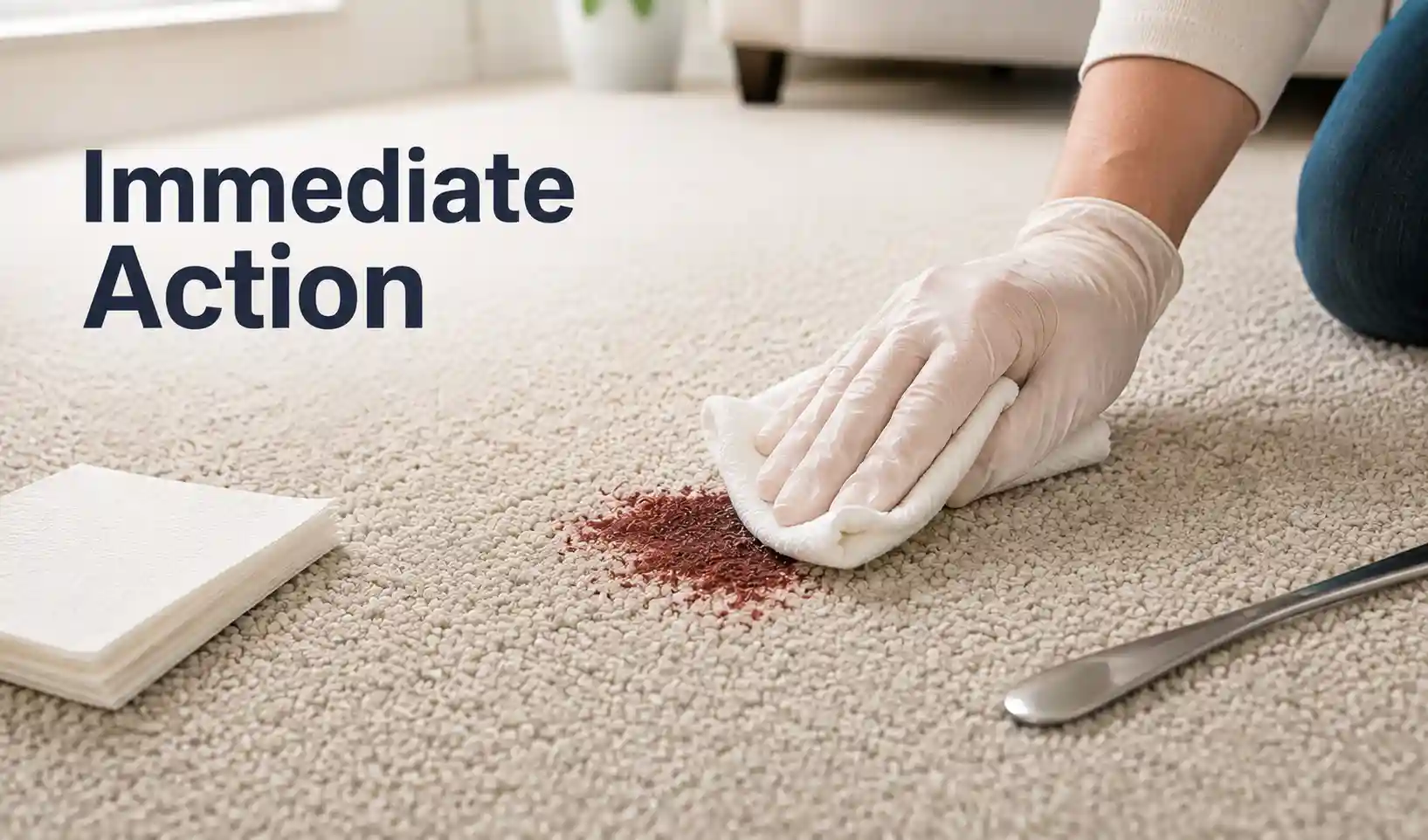
Then lift the liquid before it spreads over high-quality carpet. Press a dry white cloth or folded paper towel straight down onto the spot, then lift. Repeat with a clean section of cloth each time. White or undyed cloth only, because a colored towel can transfer its own dye into damp carpet.
Do not pour water on it yet. A wet spill spreads sideways and downward, and adding liquid before you have absorbed the bulk of it pushes blood into the backing where you cannot reach it.
If the spill is thick or partly clotted, lift the solids off with the edge of a spoon or a blunt knife before you introduce any moisture.
How to Get Blood Out of Carpet Fast? Core Method
For fresh blood, start with dry blotting and cold water before reaching for a cleaning product. The same process is a useful starting point for older stains, although dried blood may need additional treatment. Always work from the outer edge toward the center to keep the stain from spreading.
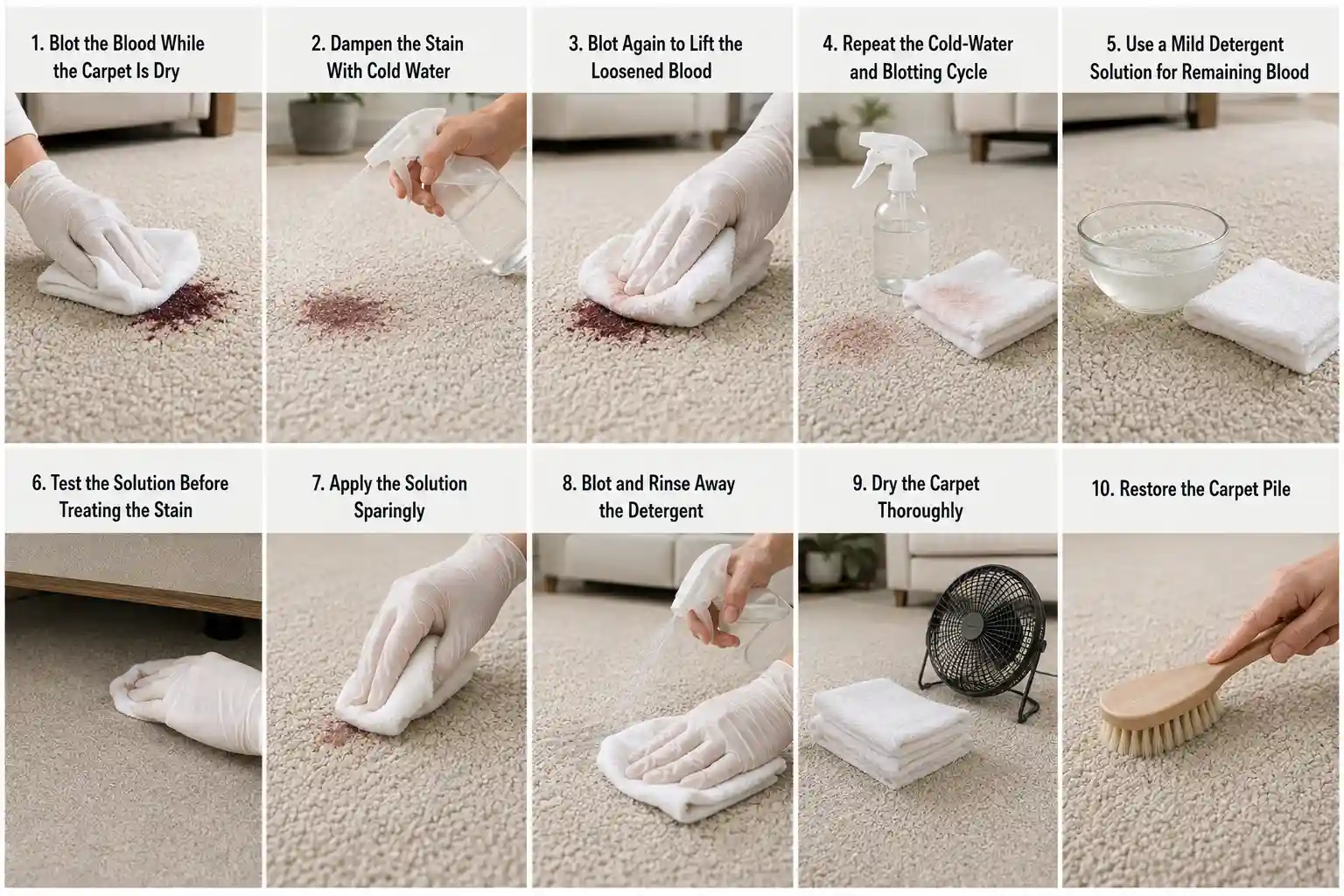
1. Blot the Blood While the Carpet Is Dry
Start with a clean, absorbent white cloth or paper towel. Press it firmly onto the blood without rubbing. Keep moving to a clean section of the cloth as it picks up the stain. Continue blotting until very little blood transfers to the cloth. Removing as much blood as possible before adding water makes the next steps more effective.
2. Dampen the Stain With Cold Water
Fill a clean spray bottle with cold water and lightly mist the stained wall-to-wall carpet area. Avoid pouring water directly onto the carpet. Too much moisture can push the blood deeper into the backing and make the affected area larger. The goal is to dampen the carpet fibers without soaking them.
3. Blot Again to Lift the Loosened Blood
Place a clean cloth over the dampened area and press down firmly. Hold it for a few seconds, then lift it straight up. Do not scrub or drag the cloth across the sisal carpet. You should see pink or reddish color transferring onto the cloth. This indicates that the loosened blood is being lifted from the fibers.
4. Repeat the Cold-Water and Blotting Cycle
Mist the area lightly with cold water and blot again. Repeat this process three or four times, using a clean part of the cloth each time. Fresh blood often responds well to this simple treatment. If the stain continues to lighten but doesn’t disappear completely, switch to a mild detergent solution instead of repeatedly soaking the carpet.
5. Use a Mild Detergent Solution for Remaining Blood
If a visible mark remains, mix ¼ teaspoon of clear, dye-free dish soap with 1 cup of cold water. You only need a small amount of detergent. More soap does not mean better cleaning. Excess detergent can remain in the carpet fibers and attract soil later.
6. Test the Solution Before Treating the Stain
Before applying the detergent solution to the visible stain, test it on an inconspicuous area of the same carpet. A suitable test spot could be inside a closet, underneath furniture, or on a leftover carpet offcut. Apply a small amount, blot it, and check for color transfer or any change in the carpet. If the carpet reacts normally, proceed with the stain.
7. Apply the Solution Sparingly
Dampen a clean cloth with the detergent solution rather than spraying the solution directly onto the carpet. Dab the stained area and allow the solution to work for about five minutes. Keep the application controlled. The carpet should not become saturated.
Continue working from the outside of the stain toward the center to avoid spreading the blood into clean fibers.
8. Blot and Rinse Away the Detergent
After five minutes, blot the treated area with a clean cloth. Once most of the stain has lifted, lightly mist the area with plain cold water. Blot again to remove the remaining detergent. Repeat the rinse-and-blot step at least twice. Do not skip this step. Detergent residue can remain in the carpet and attract dirt, leaving a darker or sticky-looking patch after the area is used again.
9. Dry the Carpet Thoroughly
Place several clean, dry towels over the damp area. Press down firmly or stand on the towels for about a minute to draw out as much moisture as possible. Remove the towels and direct a fan toward the area until the carpet is completely dry, including the base of the pile. Avoid walking over the area while it is still damp.
10. Restore the Carpet Pile
Once the carpet is completely dry, gently run your fingers through the pile or use a soft carpet brush to lift the fibers. This helps restore the texture of the carpet and prevents the cleaned area from looking noticeably flattened compared with the surrounding fibers.
Why Cold Water and Not Warm?
Blood carries proteins that change structure when they get warm, roughly the way an egg white turns solid in a pan. Once that happens in carpet or Carpet Tiles, the protein grips the fiber, and the stain stops responding to water. Warm water also encourages clotting, which is the same problem by a different route. Cold water keeps the protein soluble and lets it float out of the pile.
This is why the advice to use hot water on a blood stain is worth ignoring. There is no stage of blood removal where heat helps.
How to Remove Dried Blood From Carpet
Dried blood is a different job. The protein has bonded to the fiber and hardened, so the stain will not simply rinse away. The fix is patience and moisture, not scrubbing.
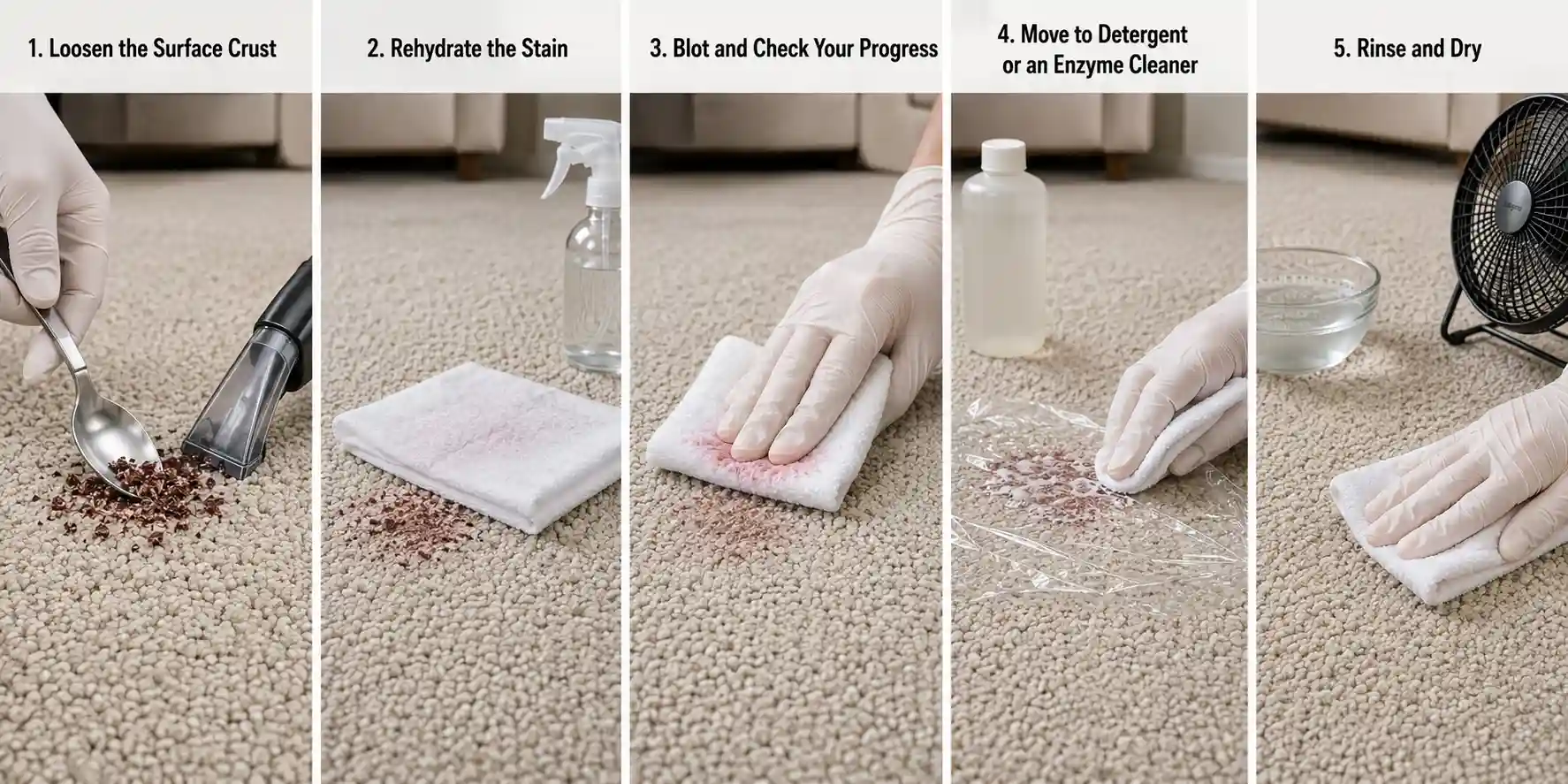
- Loosen the surface crust. Gently scrape with a spoon edge or the back of a butter knife, then vacuum the flakes away. Go easy on loop pile carpet such as Berber, where a stiff brush or a sharp edge can snag a loop and start a run that no cleaning will fix.
- Rehydrate the stain. Lay a cloth dampened with cold water over the spot and leave it for 15 to 30 minutes. Add a light mist if it starts drying out. You are softening the dried protein so it can release.
- Blot and check your progress. Press a dry cloth down hard. If it comes up pink, the stain is loosening, and you should repeat step 2.
- Move to detergent or an enzyme cleaner. For a stain that has dried for days, an enzyme spot remover is the better tool. Enzyme cleaners contain proteases, which digest protein rather than trying to dissolve it. Spot test it, apply it, and follow the label for dwell time. Most need the area to stay damp for a while, so cover it with a piece of plastic wrap to slow evaporation.
- Rinse and dry exactly as described in the fresh blood method.
Expect to run this cycle two or three times over an evening. Each pass should pull out visibly less color. If two full passes produce no change, the stain is either bonded permanently or no longer blood; it is a dye stain left behind in the fiber, and more of the same treatment will not shift it.
Old stains sometimes leave a faint brown shadow after the blood itself is gone. That is oxidized residue, and it responds to oxidizing treatments rather than protein treatments. See the hydrogen peroxide section below.
How to Get Blood Out of Carpet Without Peroxide
Plenty of people want to skip hydrogen peroxide, usually because the carpet is a light shade they cannot risk lightening unevenly, or because it is wool. These are the options that work without it.
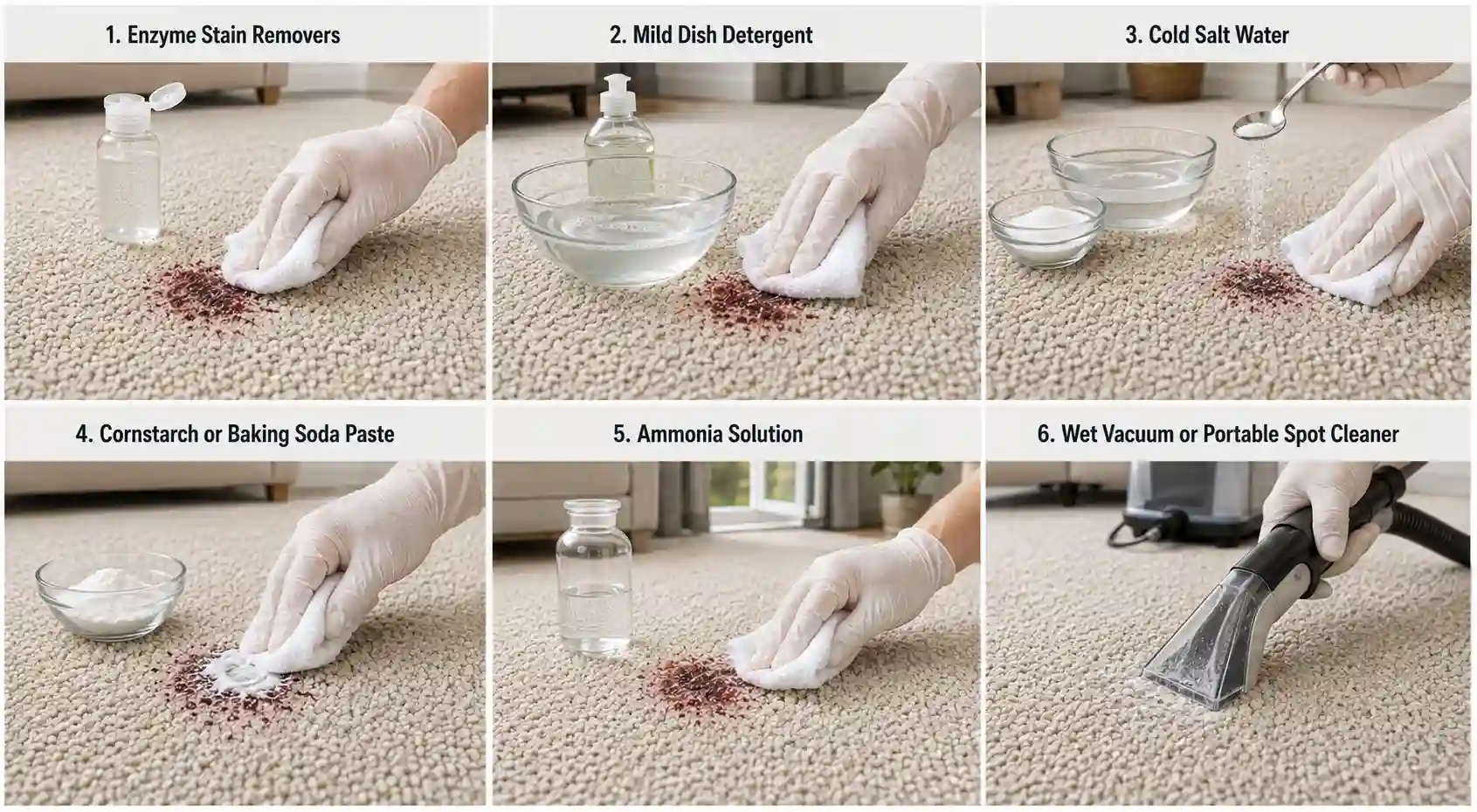
- Enzyme stain removers. The strongest non-bleaching approach for dried blood. They attack the protein directly instead of relying on dilution. Rinse thoroughly afterward, particularly on wool.
- Mild dish detergent in cold water. Underrated, and it handles a surprising share of fresh and lightly set stains. Keep the concentration low and rinse it out.
- Cold salt water. Two teaspoons of salt stirred into a cup of cold water, dabbed on and blotted off repeatedly. Salt water helps keep blood proteins in solution, which makes them easier to blot out. It is a mild assist, not a heavy hitter.
- Cornstarch or baking soda paste. Useful on a wet spill for pulling moisture and diluted blood upward as it dries.
- Ammonia solution, with real caution. One tablespoon of clear household ammonia in a cup of cold water will break down protein that detergent cannot. It is also alkaline enough to affect some carpet dyes, and repeated alkaline exposure is hard on wool, so keep it away from wool and wool blends. Never mix ammonia with any bleach or bleach-containing cleaner, because that combination releases toxic gas. Ventilate the room, spot test, use it once, and rinse it out completely.
- A wet vacuum or portable spot cleaner. These do not add cleaning power, but they extract far more liquid than a towel does, which means less residue left behind and less risk of the stain wicking back up.
Use Baking Soda and Salt for Removing Blood Out of Carpet
Both get recommended constantly for blood, and both are useful in a narrow way that is worth understanding before you rely on them.
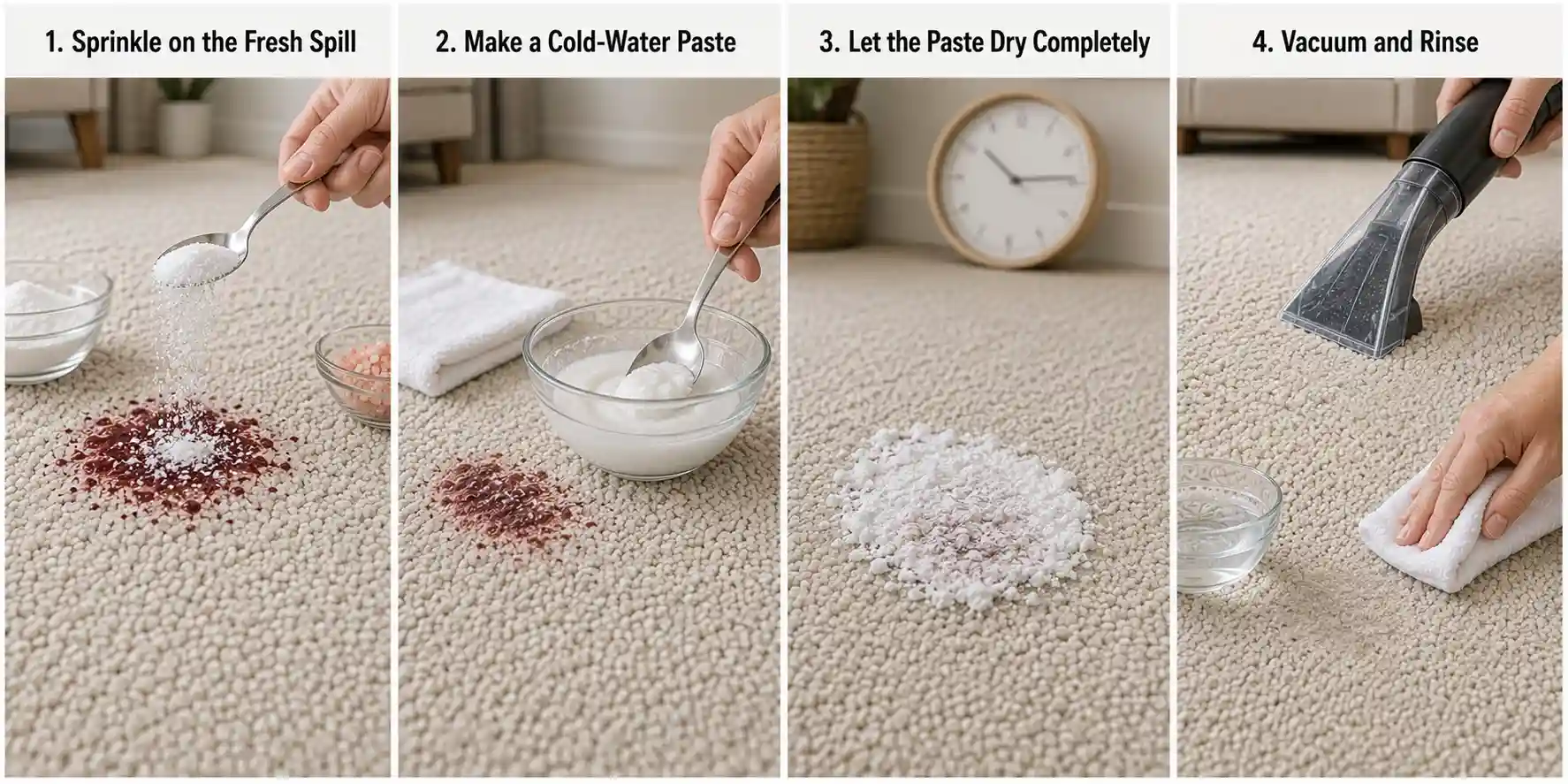
Salt and baking soda are absorbents. Sprinkled on a fresh, wet spill, or mixed with cold water into a paste and spread over it, they draw moisture out of the pile as they dry. Some of the diluted blood comes up with that moisture. Baking soda is also mildly alkaline, which helps a little with protein, and it deals with odor from a large spill.
What neither one does is bleach a stain or dissolve set protein. Searching for how to get dried blood out of carpet with baking soda turns up a lot of confident claims, and the honest answer is that a baking soda paste on fully dried blood mostly just adds moisture. The moisture is doing the work, not the powder. If you are treating a stain that dried days ago, a cold, damp cloth followed by an enzyme cleaner will do far more.
Two practical notes. Let any paste dry completely before you vacuum, which usually takes several hours. And vacuum thoroughly, because leftover grit in the pile feels rough underfoot and abrades the fibers over time. Salt in particular should be rinsed after vacuuming, since salt residue holds humidity.
How to Use Hydrogen Peroxide For Removing Blood From Carpets?
Hydrogen peroxide does remove blood, and it works differently from everything above. It oxidizes the pigment that gives the stain its color rather than lifting the material out. You will often see it foam when it touches blood, because an enzyme in blood breaks peroxide down rapidly. That reaction is a reasonable sign it is working on residue that is still present.
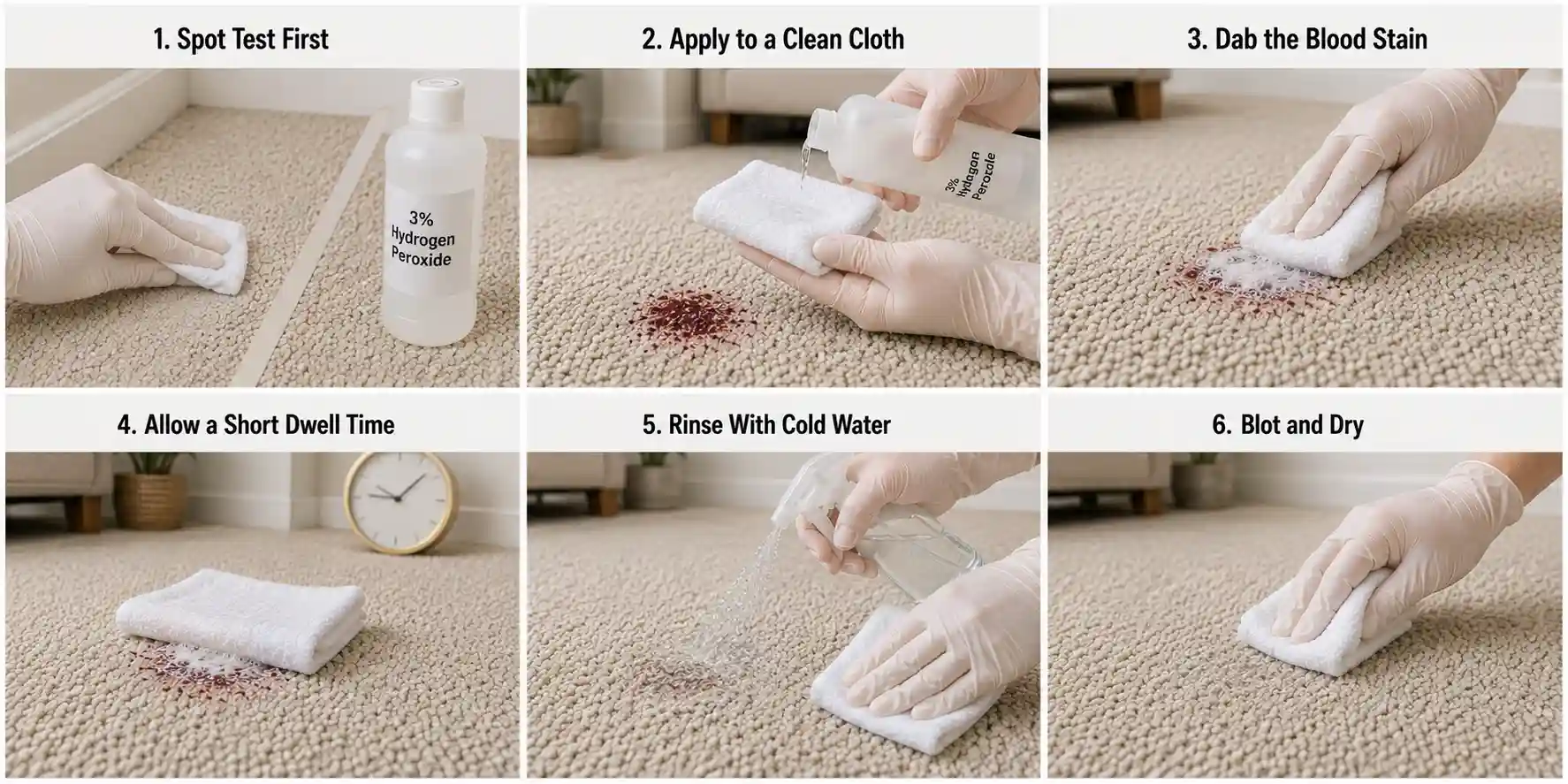
The risk is straightforward. Peroxide is a mild bleach, and it does not distinguish between the stain and your carpet dye. On solution-dyed olefin or polyester, where color is locked into the fiber, the risk is low. On nylon, which is dyed after the fiber is made, and on anything wool or wool blend, peroxide can lighten the area permanently. There is no way to put that color back.
If you use it:
- Use standard 3 percent hydrogen peroxide from a pharmacy, not a stronger salon or industrial-grade.
- Spot test in a hidden spot and give it a full 10 minutes plus drying time before you judge the result. Color loss is not always immediate.
- Apply it to a cloth and dab it onto the stain rather than pouring it on.
- Give it 10 to 15 minutes, not an hour, and check underneath as you go.
- Rinse with cold water and blot dry.
Save it for the shadow that remains after protein removal has done its job. Using peroxide first, on top of undissolved blood, wastes it and risks setting the oxidized residue into the fiber.
Oxygen bleach powders sold as laundry boosters work on the same principle in a gentler, slower form and are a sensible middle option on synthetic carpet. Their labels almost always exclude wool and silk, and that exclusion is real.
How to Remove Period Blood on Carpet?
The approach is the same, with two key adjustments. Period blood is often noticed late, so you are usually dealing with a partly or fully dried stain rather than a fresh one. Start with the rehydration step, not the peroxide.
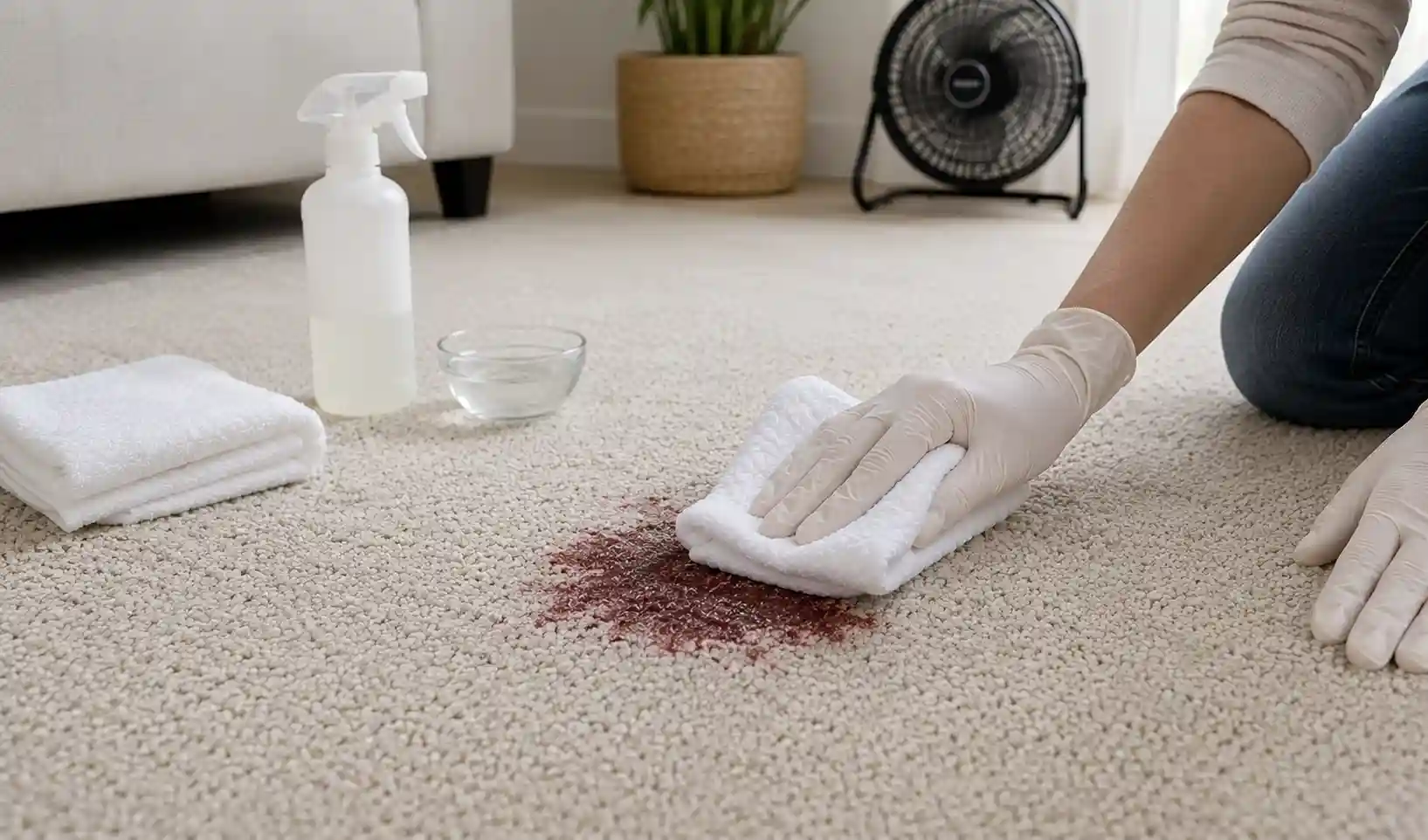
It also tends to come with more volume than a nick or a nosebleed, which means it has likely soaked through into the underlay. Surface cleaning a stain whose real body sits in the padding produces the classic result where the carpet looks clean on Saturday, and the mark is back on Monday. For anything larger than a coin, extract as much liquid as you can with towels and body weight before you start cleaning, and dry the area aggressively with a fan afterward.
An enzyme cleaner is the right choice here. It handles the protein and the odor from other fluids in the same pass.
What to Do When the Blood Stain Is Still There?
Work through this in order rather than reaching for the strongest product first.
- Confirm it is actually dry before you judge it. Damp carpet always looks darker. Let it dry fully, then look again in daylight.
- Check whether it has a wicked back. If the stain faded and then reappeared over a day or two, liquid deep in the backing traveled up the fibers as the carpet dried and brought residue with it. The fix is more extraction and faster drying, not more cleaning solution. Re-dampen lightly, press towels down hard with your weight, and run a fan on the spot for several hours.
- Repeat the protein step once more. Enzyme cleaner, full dwell time, kept damp.
- Then, and only then, consider oxidizing it. Spot test first.
- Stop after three or four serious attempts. Repeated wetting swells the backing, can loosen adhesives, and creates conditions for mildew. At some point you are damaging the carpet to chase a mark that a professional could handle in one visit.
A stain that survives all of that is usually one of three things. The dye has bonded permanently to the fiber. The blood mixed with something else and needs a different chemistry. Or the color you are looking at is bleaching damage from an earlier attempt rather than a stain at all.
Remove the Blood From Different Types of Carpet
Before you apply anything beyond cold water, find out what your carpet is made of. The manufacturer’s care instructions will tell you, and many carpet warranties are void if you use a product the maker excludes.
- Nylon is the most common residential carpet fiber and takes cleaning well, but its dyes can be stripped by strong oxidizers. Spot test peroxide carefully.
- Polyester and solution-dyed olefin hold color in the fiber itself, so they tolerate oxidizing treatments better than most. Olefin is sensitive to heat and to oily residue, so keep detergent light.
- Wool is more robust than its reputation, and it handles water-based cleaning fine. What it does not like is sustained high alkalinity, which can cause the fibers to feel and mat, or oxidizing bleaches, which can yellow it and dull the color. Keep to mild detergent and cold water, rinse well, and avoid ammonia and peroxide. Look for products labeled as approved for wool.
- Loop pile, including Berber, snags easily. Blot and dab only. Never take a stiff brush to it.
- Light-colored carpet shows the difference between a stain and a bleach mark clearly, so the spot test matters more here than anywhere. Dark carpet hides both, which means it is worth checking your test patch in strong light before you commit.
Two rules apply to every fiber type. Use as little liquid as the job allows, because everything that gets past the backing is harder to remove than the stain was. Rinse whatever you apply, because residue is why a cleaned spot often turns into a permanently dirty one.
Mistakes That Make Blood Stains Worse
Like every other carpet stain, you need to be careful when removing blood stains; otherwise, they can get worse.
- Rubbing or scrubbing. It forces blood deeper and frays the fiber tips, which leaves a dull patch even after the stain goes.
- Using warm or hot water at any stage.
- Soaking the area, which moves the stain into the padding and invites wicking and mildew.
- Skipping the rinse and leaving detergent in the pile.
- Reaching for peroxide or bleach as a first move instead of a last one.
- Applying several different products in sequence without rinsing between them.
- Using a colored cloth or a paper towel with printing on it.
- Steam cleaning a blood stain. Heat is exactly what you are trying to avoid.
Final Words
Blood stains are easier to manage when you work in the right order: blot first, use cold water, apply mild detergent or an enzyme cleaner when needed, rinse the residue out, and dry the carpet completely. Most mistakes happen when people scrub, soak the area, or reach for bleach and peroxide too early.
For dried or recurring stains, give the treatment time to work rather than repeatedly wetting the carpet. If the stain has survived several careful attempts, especially when the padding is affected, or the carpet has started showing color damage, professional extraction is the safer option.
Frequently Asked Questions
Often, yes. Rehydrate the spot with a cold, damp cloth for 15 to 30 minutes, then use an enzyme cleaner. Dried blood takes several cycles and will not always come out completely, but it is worth working through two or three passes before giving up.
Use friction. A rubber squeegee, a rubber glove, or a carpet rake pulls embedded hair upward into clumps you can pick up by hand. Work in short strokes toward yourself and gather the hair every few passes. A lint roller handles surface hair but will not reach anything trodden in.
Not on its own. Baking soda absorbs moisture and helps with odor, and a damp paste can lift some diluted blood from a fresh spill. On fully dried blood, the water in the paste does most of the work. An enzyme cleaner is a better choice.
Cold salt water helps keep blood proteins in solution so they blot out more easily, so it is a reasonable early treatment on fresh stains. A dry salt paste mainly absorbs. Vacuum and rinse the residue out afterward, since salt left in the pile holds humidity and feels gritty.
No. Heat sets the protein in blood into the carpet fiber and makes the stain much harder to remove. Use cold water at every stage, and keep steam cleaners off the spot until the blood is gone.