
How to Get Candle Wax Out of Carpet: 5 Proven Methods for Every Fiber and Spill
To remove candle wax from carpet, let it harden completely, or speed it up with an ice pack. Break and lift the hard pieces with a dull spoon and vacuum them up. Melt the leftover wax into a plain brown paper bag with a warm iron. Then clean the greasy mark with a dry cleaning solvent and finish with a mild dish soap solution.
A tipped candle can turn a calm evening into a quick cleaning job. The good news is that wax rarely ruins a carpet. The bad news is that the wrong fix often does. Too much heat can melt synthetic fibers. Hard scraping can fray the pile. A random spray from under the sink can leave a ring that looks worse than the original spill.
This guide from Floor Land shows you how to match the method to your wax and your carpet. You will learn how to lift the solid wax and clear the greasy film it leaves behind. You will also learn how to treat the color stain from tinted candles. Each method below uses tools you probably already own.
Why Candle Wax Can Be Hard to Remove
Most guides treat candle wax as a single mess. In reality, you’re dealing with three separate problems. Solving them in the right order is the secret to a clean result.
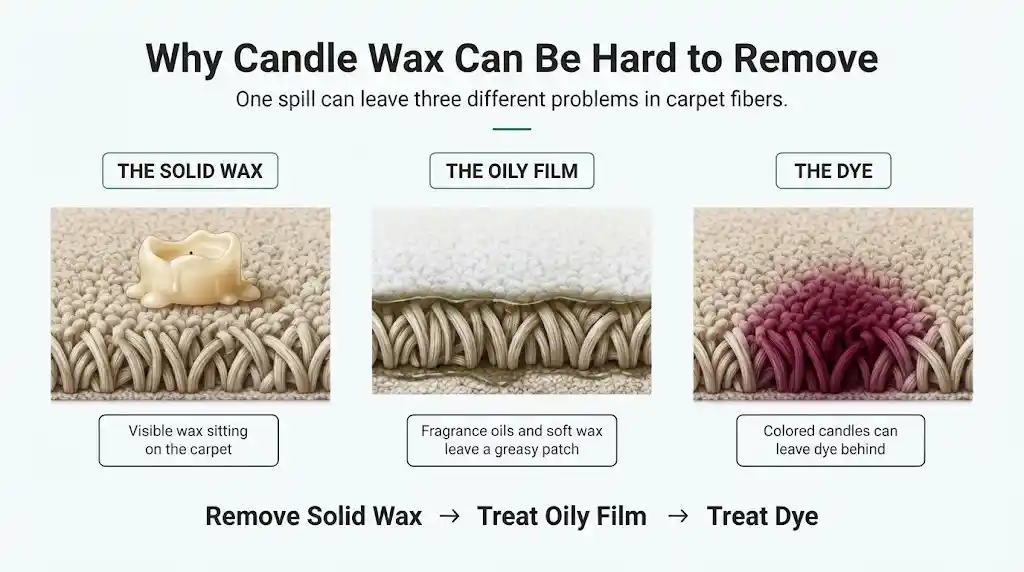
- The solid wax. This is the visible lump sitting on top of the custom carpet fibers. Remove it with cold water or gentle heat.
- The oily film. Most candles contain fragrance oils and soft wax blends. These seep into the fibers and leave a dark, greasy patch even after the lump is gone. Water alone will not touch it.
- The dye. Red and purple candles contain colorants that bond to carpet fibers. This part behaves like a dye stain and needs its own treatment.
If you skip the second or third stage, the spot often looks clean while wet. Then it reappears a day later as a dull shadow that attracts dirt. Working through all three stages prevents that frustrating comeback.
Check These Three Things Before You Start
Two minutes of checking will save your wall-to-wall carpet from heat damage and chemical marks. Look at the wax first. Then identify your fiber. Finally, look at how the pile is built.
1. What Kind of Wax Spilled?
Different waxes melt at different temperatures and respond differently to cold. Check the candle label or jar if you still have it.
| Wax type | How it behaves | Best first move |
| Paraffin | Hardens fast and turns brittle when chilled | Freeze and scrape |
| Soy or coconut blend | Softer and greasier with more oily residue | Freeze, then heat transfer |
| Beeswax | Tacky and sticky with a higher melt point | Heat transfer with patience |
| Gel candle | Rubbery mineral oil gel that never gets truly hard | Lift by hand, then use solvent |
| Scented or dyed | Leaves extra oil or color behind | Plan for a residue and dye step |
2. What Is Your Carpet Made Of?
Fiber type decides how much heat you can safely use. Check the label on the back of a rug or your purchase paperwork. If you cannot find it, then treat the carpet as heat sensitive.
| Fiber | Heat tolerance | What to watch for |
| Nylon | Good | Handles a low iron setting well |
| Polyester | Moderate | Can glaze or flatten with too much heat |
| Olefin (polypropylene) | Low | Common in Berber and budget carpet. Melts at much lower temperatures than nylon. Avoid the iron and use cold or a hair dryer. |
| Wool | Moderate but delicate | Scorches and yellows easily. Dislikes alkaline cleaners and bleach. |
| Silk or viscose rugs | Very low | Water marks and loses its sheen. Call a rug specialist. |
3. How Is the Pile Built?
Cut pile carpet has upright tufts that tolerate gentle scraping. Loop piles such as Berber have closed loops that snag easily. Scraping can pull a loop and start a run across the room. On a loop pile, you should press and lift rather than drag a tool. Shag and high pile hide wax deep near the backing. You will need to part the fibers with your fingers and work in layers.
Tools and Materials Required for Cleaning Candle Wax From Carpet
Gather these tools before you begin so the wax does not soften while you search.
- An ice pack or ice cubes sealed inside a zip bag
- A dull spoon or butter knife and a stiff plastic card
- A vacuum with a hose attachment
- Plain brown paper bags or unprinted kraft paper
- A household iron with the steam setting off
- Clean white cotton cloths or plain white paper towels
- Dry cleaning solvent or a solvent-based spot remover
- Clear dish soap and a spray bottle of warm water
- Isopropyl rubbing alcohol for dye stains
Method 1: Freeze and Scrape the Wax
Cold is the safest place to start on any full coverage or carpet tiles. Frozen wax turns brittle and lets go of the fibers without any risk of melting them.
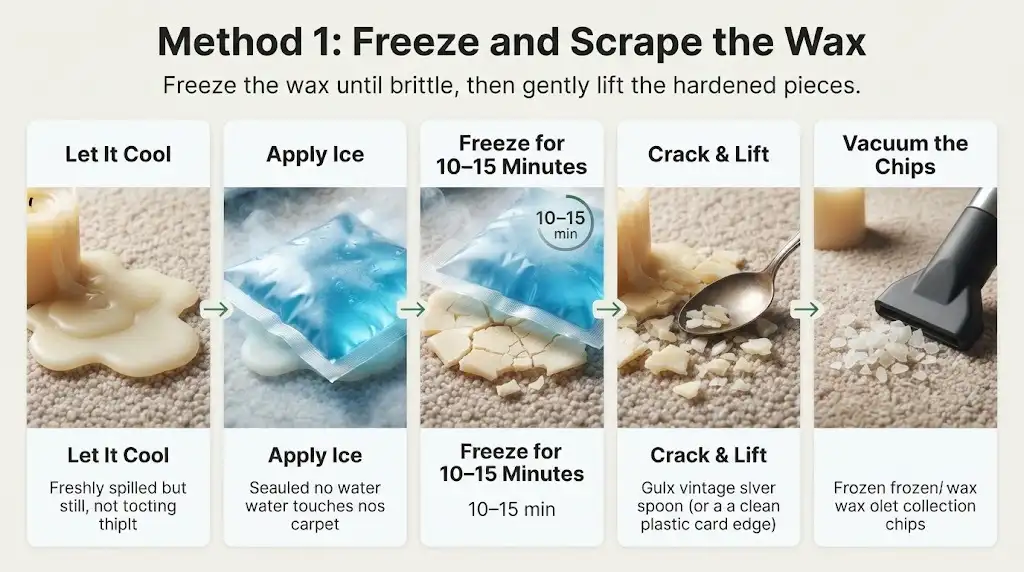
- Leave hot wax alone until it stops being liquid. Blotting molten wax pushes it deeper into the pile.
- Place an ice pack or a sealed bag of ice on the wax. Keep the bag sealed because meltwater makes the job harder.
- Wait 10 to 15 minutes until the wax feels rock hard and cold.
- Tap the wax with the back of a spoon to crack it into small pieces.
- Lift the pieces with the edge of a dull spoon or plastic card. Work in one direction with the grain of the pile.
- Vacuum the chips right away before they warm up and stick again.
Freezing alone often clears 80 to 90 percent of the wax. A thin waxy layer usually stays at the base of the fibers. The next method handles that leftover layer.
Method 2: Iron and Brown Paper Transfer
This method uses low heat to melt the wax, so absorbent paper can wick it up. It is the most effective way to pull wax from deep in the pile. It also carries the most risk if you rush it.
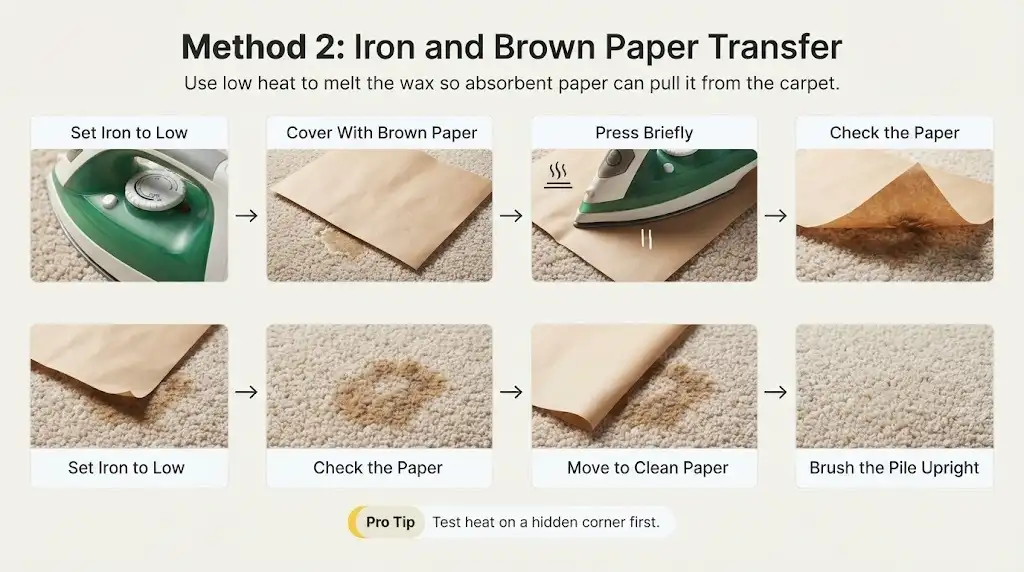
- Set your iron to its lowest setting with steam turned off. The synthetic or silk setting works for most carpets.
- Lay a flat piece of brown paper bag over the spot. Make sure it covers the whole area with room to spare.
- Press the iron onto the paper for a few seconds at a time. Keep it moving and never let it touch the carpet directly.
- Lift the paper and check it. You will see dark wax spots soaking into it.
- Move to a clean section of paper and repeat. Stop when the paper comes away clean.
- Let the area cool and brush the pile upright with your fingers.
Pro Tip: Test the iron on a hidden corner first. If the fibers feel stiff or look shiny after a few seconds, then the heat is too high for your carpet. Switch to a hair dryer instead.
Method 3: Solvent Lift for the Greasy Film
Wax and fragrance oil do not dissolve in water. That is why a plain wet cloth simply spreads them around. A dry cleaning solvent breaks down the oil so a cloth can absorb it.
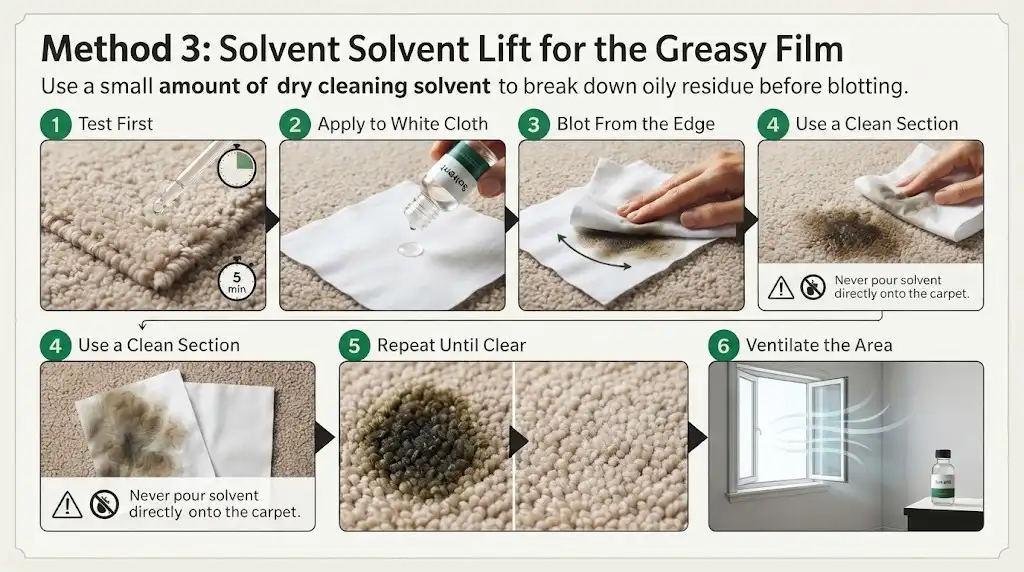
- Test the solvent in a hidden area and wait five minutes. Look for color loss or a change in texture.
- Apply a small amount to a white cloth. Do not pour solvent onto the carpet because it can soften the glue that holds the backing together.
- Blot the stain from the outside edge toward the center. This keeps the mark from spreading.
- Switch to a clean part of the cloth as the oil transfers.
- Repeat until no more residue lifts out.
- Open a window and keep flames and sparks away while you work. Most dry solvents are flammable.
Method 4: Dish Soap Finishing Clean
This method is practical for removing solvent traces and any remaining oil on every fiber type. Solvents leave a residue of their own. A gentle soap wash clears it and stops the spot from attracting dirt later.
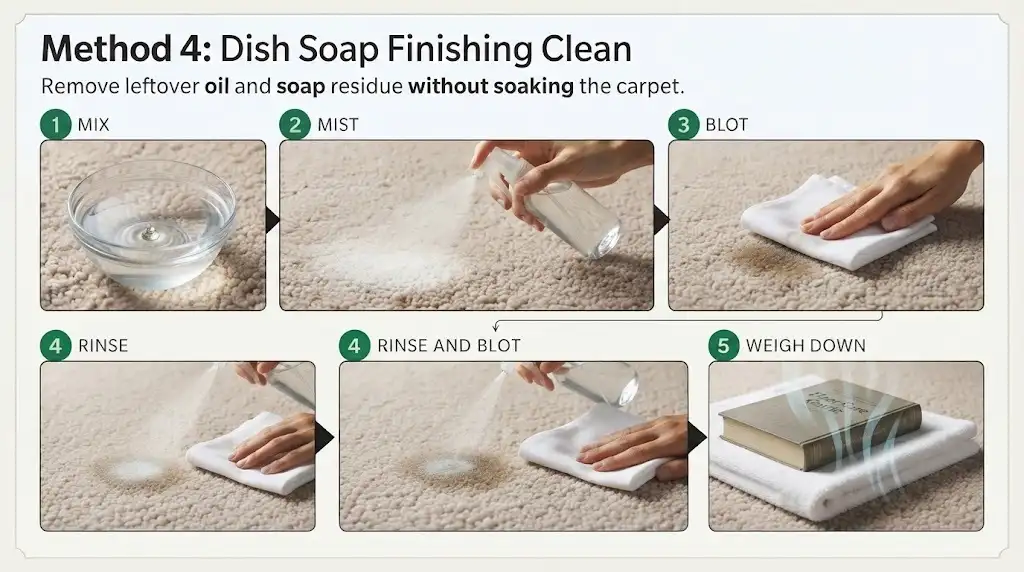
- Mix a quarter teaspoon of clear dish soap into one cup of warm water.
- Mist the area lightly. Do not soak it because excess water can reach the pad and cause odor.
- Blot with a white cloth until the mark stops transferring.
- Rinse with a light spray of plain water and blot again. Soap left in the carpet turns sticky and grabs dirt.
- Lay a folded dry towel over the spot and place a heavy book on top. Leave it for a few hours to pull moisture up and out.
That final weighted towel step is easy to skip, but it matters. As carpet dries, the moisture moves upward and carries hidden residue to the tips. This process is called wicking. The towel catches that residue before it dries into a new shadow.
Method 5: Spot Cleaner Extraction for Large Spills
A portable carpet spot cleaner sprays warm water and solution into the pile and then sucks it back out. That suction reaches residue that hand blotting cannot. Remove every visible piece of wax first, though. Solid wax can clog the machine, and the warm water will only smear it.
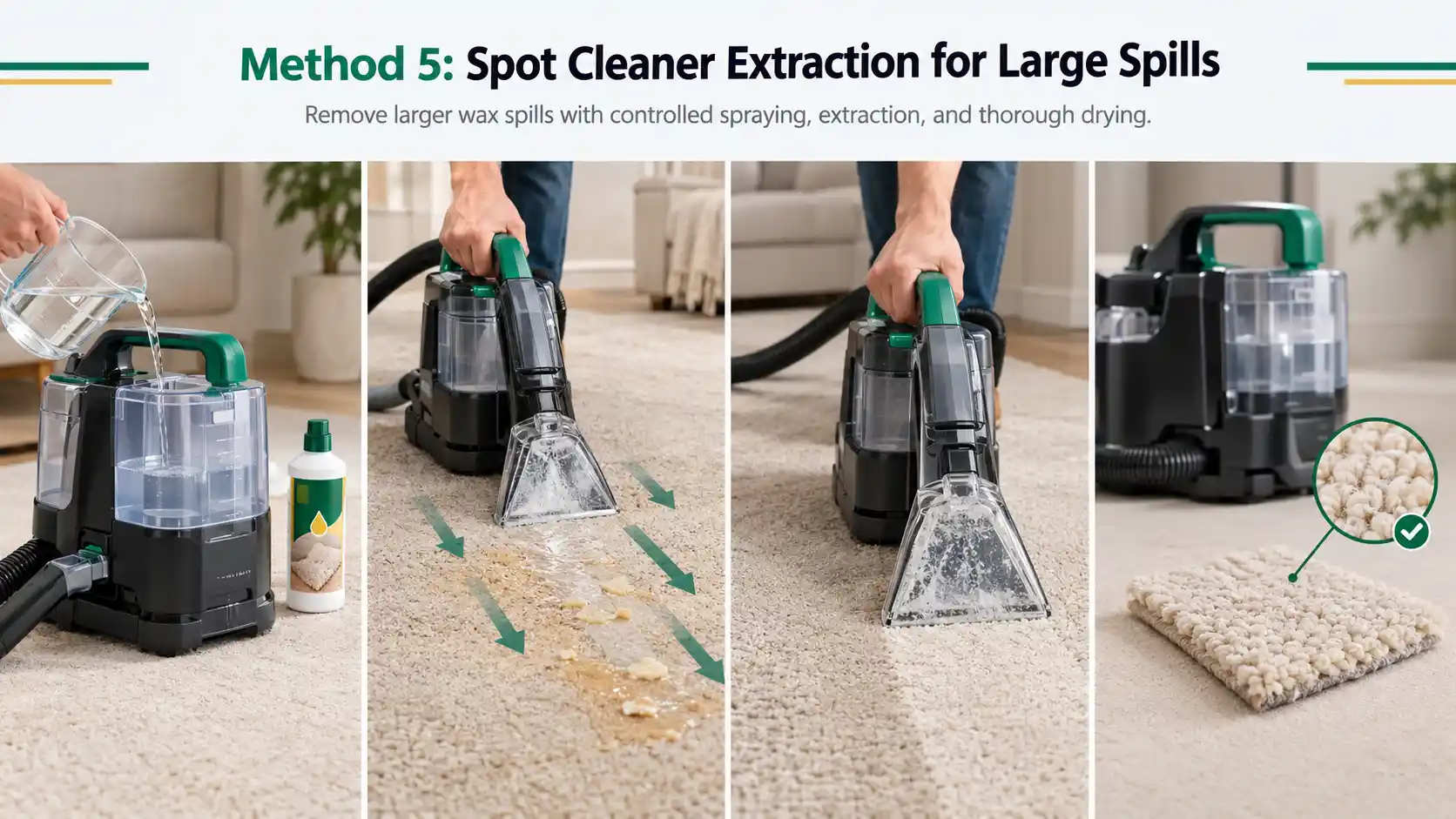
- Fill the tank with warm tap water and a carpet formula made for oily stains.
- Make two or three slow passes over the area.
- Finish with a few dry passes using suction only to pull out extra moisture.
- Avoid this method on wool unless the machine and solution are approved for wool.
Special Case: Gel Candles and Container Spills
Gel candles are made mostly of mineral oil held in a polymer. They never freeze as hard as paraffin. Ice still helps by firming the gel so you can pinch and lift most of it out by hand. The iron method works poorly because the gel turns into thin oil and spreads.
After lifting the bulk, go straight to Method 3 and Method 4. Expect to repeat the solvent step two or three times. Container candles that spill a full pool of melted wax need the same patience. Work in layers from the top down rather than trying to clear it all at once.
Which Method Should You Choose?
| Situation | Recommended approach |
| Small fresh drip on nylon carpet | Freeze and scrape, then iron transfer |
| Olefin or Berber carpet | Freeze, then press and lift. Use a hair dryer for leftovers. |
| Wool carpet or rug | Freeze and scrape. Use the iron on a very low setting with care. |
| Dark greasy shadow left behind | Solvent lift, then dish soap finish |
| Large spill across a wide area | Freeze and scrape, then spot cleaner extraction |
| Gel candle spill | Ice and hand lift, then solvent |
| Colored wax stain remains | See the colored wax answer in the FAQ below |
| Silk or antique rug | Professional rug cleaner |
Common Mistakes That Make Wax Stains Worse
There are certain mistakes that ruin the look of luxury carpets.
- Wiping hot wax. Liquid wax travels with the cloth and coats more fibers.
- Using steam. Water and wax do not mix. Steam drives the melted wax deeper toward the backing.
- Scraping loop pile. One snagged loop can unravel a long line of carpet.
- Using printed paper. Newspaper ink and printed bags transfer color when heated.
- Over-wetting. Excess liquid soaks the pad and can cause mildew and odors.
- Reaching for chlorine bleach. Bleach removes color from the carpet itself and leaves a permanent pale patch.
When to Call a Professional
Some situations are worth handing over. Call a certified carpet or rug cleaner if the spill sits on an antique rug or one made of silk or viscose. Do the same if the wax covers a large area or the dye has spread after your first attempt. Check your carpet warranty too. Some stain-resistant warranties require you to contact the manufacturer before you treat a stain. Using the wrong product can void that cover.
How to Prevent Wax Spills in the Future
If you follow the tips mentioned below, you can keep your carpet in pristine condition for a longer duration.
- Trim wicks to about a quarter inch before each burn. Long wicks create a large flame that melts wax faster than the candle can hold it.
- Keep candles away from fans and open windows. Drafts cause uneven burning and dripping.
- Set candles on a wide tray or plate rather than directly on furniture near carpet.
- Use a snuffer instead of blowing out the flame. A hard breath can spray hot wax across the room.
- Choose flameless candles in homes with pets or small children.
Final Thoughts
Candle wax looks alarming, but it is one of the more forgiving carpet spills. The key is to work in order. Remove the solid wax with cold. Lift the leftover layer with controlled heat. Clear the greasy film with solvent and soap. Treat any dye last. Match your heat level to your fiber, and you can make the spot disappear without leaving a trace.
Frequently Asked Questions
How to remove wax from carpet without an iron?
Start with the freeze-and-scrape method to remove the bulk. Then use a hair dryer or a metal spoon warmed in hot water to soften the remaining thin layer. Press a folded paper towel against the warm spot to absorb the wax. A dry-cleaning solvent will then dissolve any remaining traces. This approach works well on olefin and Berber carpets that cannot handle an iron.
How to get candle wax out of carpet with a hair dryer?
Remove as much hard wax as you can first. Set the dryer to a low or medium heat and hold it about six inches above the spot. Warm the wax for 20 to 30 seconds until it looks glossy and soft. Press a white paper towel firmly onto it and lift straight up. Repeat with a fresh towel each time. A hair dryer delivers gentler heat than an iron, so it takes longer. That gentle heat also makes it the safer choice for heat-sensitive fibers.
Can I use WD-40 to remove candle wax from carpet?
You can, but it is not the best choice. WD-40 contains petroleum-based solvents that soften wax residue. The problem is that it leaves behind its own oily film. That film darkens the spot and attracts dirt over time. It is also flammable and can affect some carpet backings. If you use it, apply a tiny amount to a cloth and test a hidden area first. Follow up with the dish soap wash to remove the oil. A purpose-made dry cleaning solvent does the same job more cleanly.
How to remove candle wax from carpet with vinegar?
Vinegar cannot dissolve wax because wax repels water-based liquids. Its real value comes at the end of the process. After you remove the wax and wash the area with dish soap, mix one part white vinegar with two parts warm water. Blot this onto the spot to break down soap residue and brighten the fibers. Vinegar is mild and acidic, so it is safe for wool. Always rinse with plain water, then blot dry.
How to get candle wax out of a wall?
Let the wax harden or hold a bag of ice against it for a few minutes. Ease the edge up with a plastic card rather than a metal blade that could gouge the paint. For the thin layer left behind, warm it gently with a hair dryer and wipe with a soft paper towel in one direction. Clean any greasy marks with a drop of dish soap in warm water. Matte and flat paints mark easily, so test a hidden spot and avoid scrubbing. Rubbing alcohol on a cotton swab can lift light dye from gloss or semi-gloss finishes.
How to get candle wax out of the floor?
The fix depends on the surface. On sealed hardwood, chill the wax with ice and lift it with a plastic scraper. Warm any film with a hair dryer on low and buff it off with a soft cloth. Then clean the area with a wood-safe floor cleaner. On tile and porcelain, you can scrape with a plastic card and wipe with hot soapy water. On vinyl and laminate, avoid high heat because it can warp or dull the surface. On marble and other natural stones, skip vinegar since acid etches the finish.
How to get coloured wax out of carpet?
First remove the solid wax and the oily film using the methods above. Dye bonds better to fibers once the wax is gone, so treat it right away. Dampen a white cloth with isopropyl rubbing alcohol and blot the stain. Change to a clean area of the cloth as color transfers. For light colored synthetic carpet, a 3 percent hydrogen peroxide solution can lift stubborn red or purple tints. Test it first because it can lighten some dyes. Never use peroxide or any bleach on wool. Rinse with water and blot dry when you finish.