
How to Get Nail Polish Off Carpet: Fresh & Dried Stains
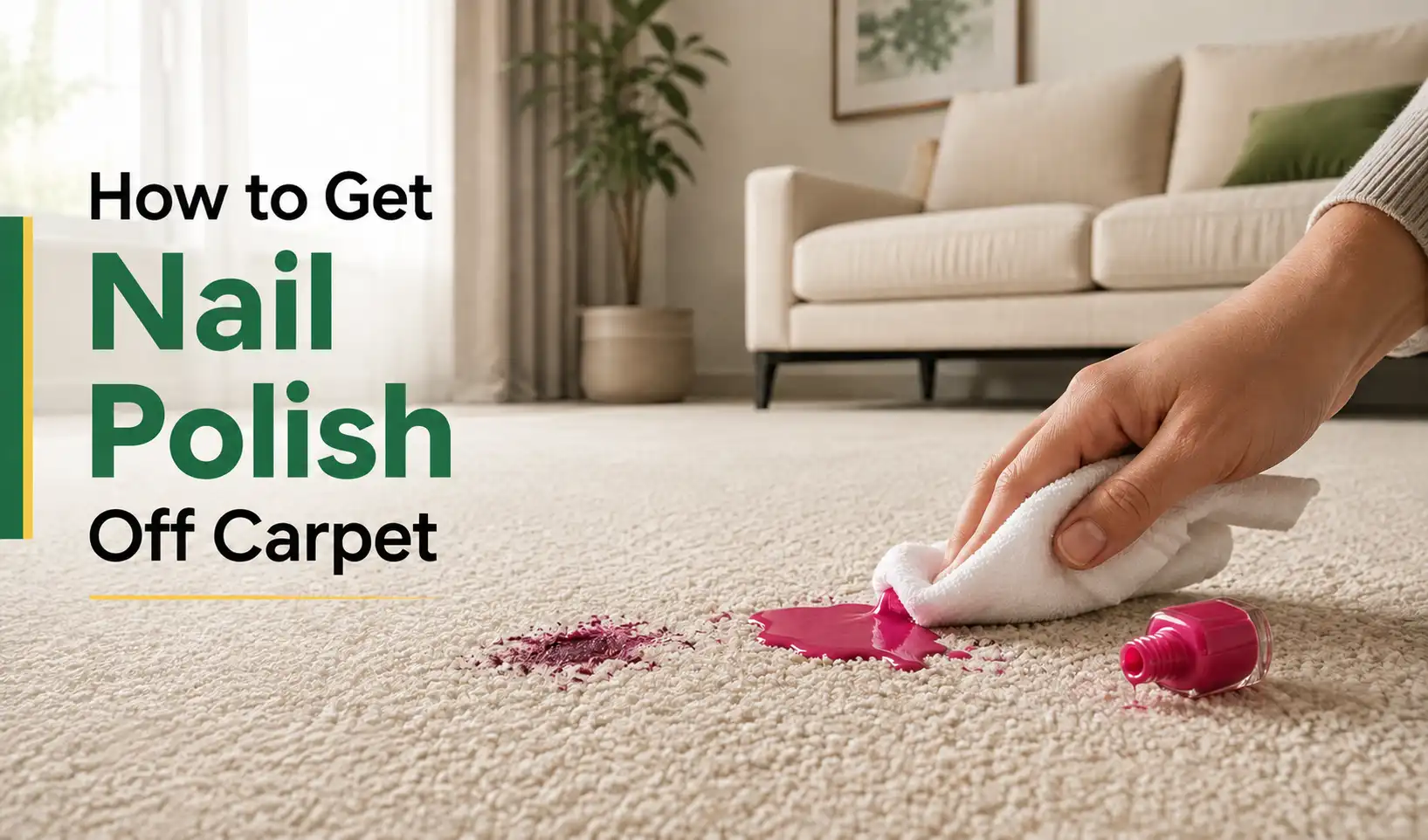
To get nail polish off carpet, blot the spill as much as possible with a paper towel and lift the solid material. Then apply the cleaning solution over the stains with a cloth, rather than pouring it onto the fibers. The right method depends on whether the polish is fresh or dried. Fresh polish is still liquid and travels fast, so your first job is containment. Dried polish has hardened into a film and needs careful chipping before any cleaning solution touches it.
Make sure to work from the outside edge of the stain toward the middle, and blot straight down. Rubbing the stain drives pigment deeper into the carpet fibers and widens it into a smear. Test every cleaning solution on a hidden patch first, because carpet fibers, dyes, and backings react to solvents in very different ways. This blog post by Floor Land Experts explains the most practical way to remove the nail polish from carpet.
Select the Best Cleaning Approach For Nail Polish Stains
| Situation | Recommended approach | Main caution |
| Fresh, still wet | Scoop the excess with a spoon edge, blot with white paper towels, then dab with rubbing alcohol or non-acetone remover on a cloth | Never wipe or rub. One sideways swipe can triple the stained area |
| Dried and hardened | Chip the film loose with a dull edge, vacuum the flakes, then soften what remains with small amounts of solvent | Loop pile snags easily. Do not gouge or pick at the loops |
| No nail polish remover in the house | Isopropyl (rubbing) alcohol is the closest realistic substitute, followed by a dry cleaning solvent spotter | Alcohol is weaker than remover. Expect several cycles, not one |
| Nail polish remover spilled on carpet | Blot fast, flush lightly with cool water, then clean with a drop of dish soap in water and dry thoroughly | Acetone can reach the backing and loosen the latex adhesive. Speed matters more than technique |
| Wool, silk, or unknown fiber | Blot and lift the solids, then stop and call a professional | Solvents and high pH cleaners can strip dye or damage protein fibers permanently |
| Antique, patterned, or print-dyed carpet | Blot only, then call a professional | Dye bleeding is not reversible at home |
Check Your Carpet Before Choosing the Cleaning Solution
No cleaning method is safe on every custom carpet. The same acetone that lifts polish cleanly from nylon berber can dissolve an acetate accent fiber outright and soften the adhesive under any carpet if enough soaks through.
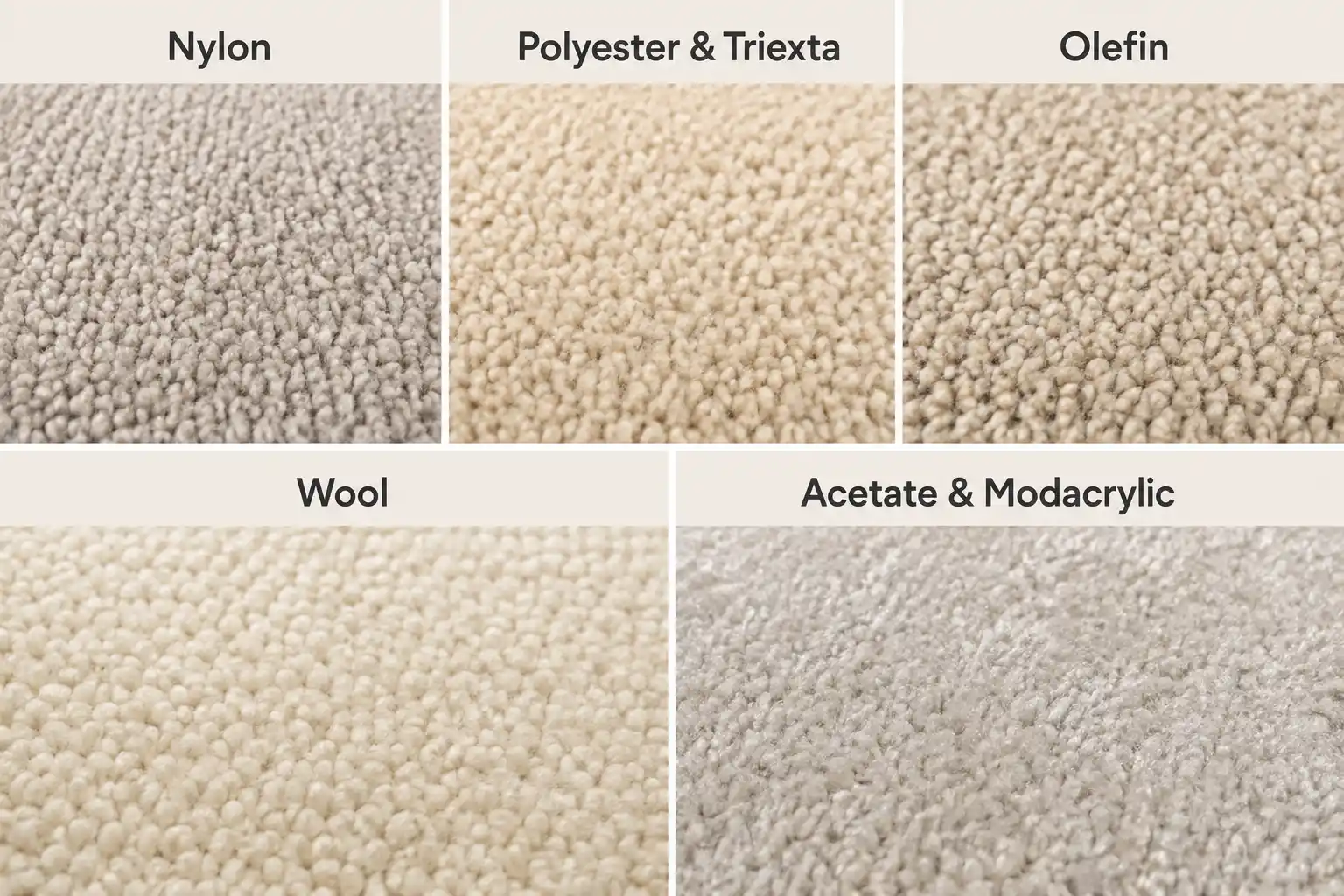
Here is how different fibers generally respond:
- Nylon. The most common residential fiber and usually the most forgiving. It handles solvents reasonably well, but keeps cleaners in a neutral pH range. Strongly alkaline products can strip factory stain-resist treatments and, on some carpets, void the warranty.
- Polyester and triexta. These are oil-loving fibers. Solvents are usually tolerated, but oily residues cling, so a proper rinse matters more here than anywhere else.
- Olefin (polypropylene). Chemically tough and very water-resistant, but it scorches from friction. Aggressive scrubbing can literally melt the tips of the pile and leave a permanent shiny patch.
- Wool. A protein fiber with a narrow safe pH range, roughly 4.5 to 8.5. Chlorine bleach destroys it. Hydrogen peroxide can lighten it. Solvents can pull dye. Wool is the fiber most worth handing to a professional.
- Acetate, triacetate and modacrylic. Uncommon as main carpet fibers, but they do appear in area rugs and decorative blends. Acetone dissolves them. If you cannot rule these out, do not use acetone.
If you do not know your fiber, check the label on the back of an area rug, look for the original invoice or warranty card, or feel the pile. Wool feels warm and slightly springy and often has a faint lanolin smell when damp. Synthetics feel cooler and slicker. When in doubt, assume the carpet is delicate and treat it accordingly.
How to Get Fresh Nail Polish Out of Carpet?
This is the fastest way to remove nail polish from wall-to-wall carpet and carpet tiles because most of the polish never has to be dissolved at all. You physically remove it while it is still liquid.
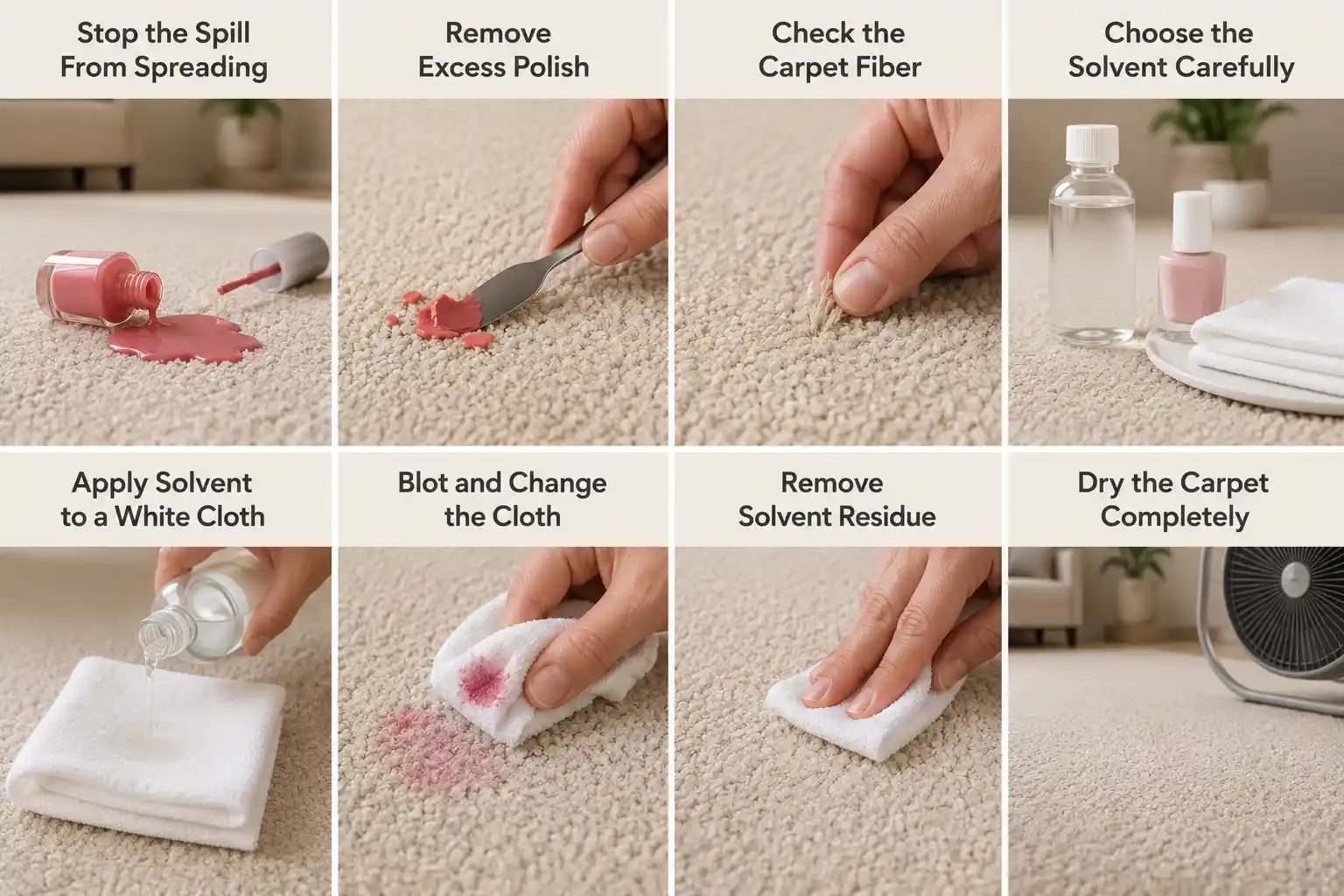
1. Stop The Spill From Spreading
Do not wipe across the stain. Wiping pushes liquid polish into surrounding fibers and can turn a small spot into a much larger one. If the spill is still wet, keep people and pets away from the area while you work. Do not step on the polish, because pressure can drive it deeper into the pile and toward the carpet backing.
2. Remove the Excess Polish
Use a spoon, plastic scraper, old gift card, or another dull-edged tool to lift the wet polish from the carpet. Start at the outside edge of the spill and work toward the center. After each pass, wipe the tool clean before returning it to the carpet. The goal is to lift the polish away rather than spread it across unaffected fibers.
If there is a large puddle, use folded white paper towels to carefully absorb the liquid from above. Press lightly, lift, and replace the towel as soon as it picks up polish. Do not drag the towel sideways across the carpet.
3. Chill the Remaining Polish to Lift It Solid (Optional but Highly Effective)
If a thin, sticky film remains after scooping and blotting, place a sealed plastic bag filled with ice cubes directly on top of the stain for two to three minutes. The cold hardens the remaining polish into a brittle layer that you can often lift cleanly with the edge of a spoon or a dull knife, much like peeling dried wax off a tablecloth.
Work quickly; you want the polish cold, not the carpet soaked. As soon as the film turns firm, lift it before body heat or room temperature softens it again. If the polish is deeply embedded in the pile, this step may only remove the surface layer, but every solid fragment you lift now is one less fragment you have to dissolve with solvent later. This is especially useful for thick or glitter polishes that resist simple blotting.
4. Choose the Solvent Carefully
For nail polish, the remaining stain may require a solvent. The polish contains film-forming resins and pigments that water alone will not dissolve effectively. Do not automatically reach for acetone. Acetone is a powerful solvent and can damage or discolor some carpet fibers, dyes, latex-containing backings, or synthetic materials. Some carpet manufacturers specifically prohibit its use.
If the carpet manufacturer recommends a particular solvent, follow those instructions. If no manufacturer guidance is available, use the least aggressive product appropriate for the specific carpet that has passed a hidden-area test.
5. Apply the Solvent to a White Cloth
Do not pour or spray solvent directly onto the carpet. Dampen a small section of a clean, white, absorbent cloth with the tested solvent.
Press the dampened section against the stained fibers rather than flooding the area. Work from the outside of the remaining stain toward the center to avoid creating a larger solvent-wet area.
The solvent should loosen the polish so it can transfer from the carpet into the cloth. You are not trying to saturate the carpet.
6. Blot and Keep Changing the Cloth
Lift the cloth straight up after each application and inspect it. If nail-polish color is transferring to the cloth, move to a clean section before making another pass. Continue with small applications and repeated blotting. Do not scrub back and forth. Scrubbing can spread dissolved polish into previously clean fibers and can damage the carpet pile.
As the carpet stain releases, the amount of color transferred to the cloth should decrease. Stop adding solvent once you no longer see meaningful transfer, rather than repeatedly soaking the carpet.
7. Remove The Solvent Residue
Once the polish has been removed, lightly blot the area with a clean white cloth dampened with cool water. Also read the carpet’s care instructions to ensure they allow water-based cleaning.
Use only enough water to pick up residual solvent; do not saturate the carpet. Follow with a dry white towel and press down gently to remove as much moisture as possible.
8. Dry the Carpet Completely
Place a dry white towel over the treated area and press gently to absorb remaining moisture. Then allow the carpet to air-dry completely. Keep foot traffic off the area until it is dry. Do not use high heat to accelerate drying unless the carpet manufacturer specifically permits it.
If a colored shadow remains after the carpet is completely dry, do not keep adding solvent indefinitely. Persistent discoloration can mean the polish has penetrated the carpet backing, the dye has been affected, or the carpet fiber itself has been chemically damaged. At that point, professional carpet cleaning or spot-repair may be safer than repeated home treatment.
How to Get Dried Nail Polish Out of Carpet
Dried polish is not impossible to remove, but it takes patience. The film has cured around the fibers, so the work becomes mechanical first, then chemical.
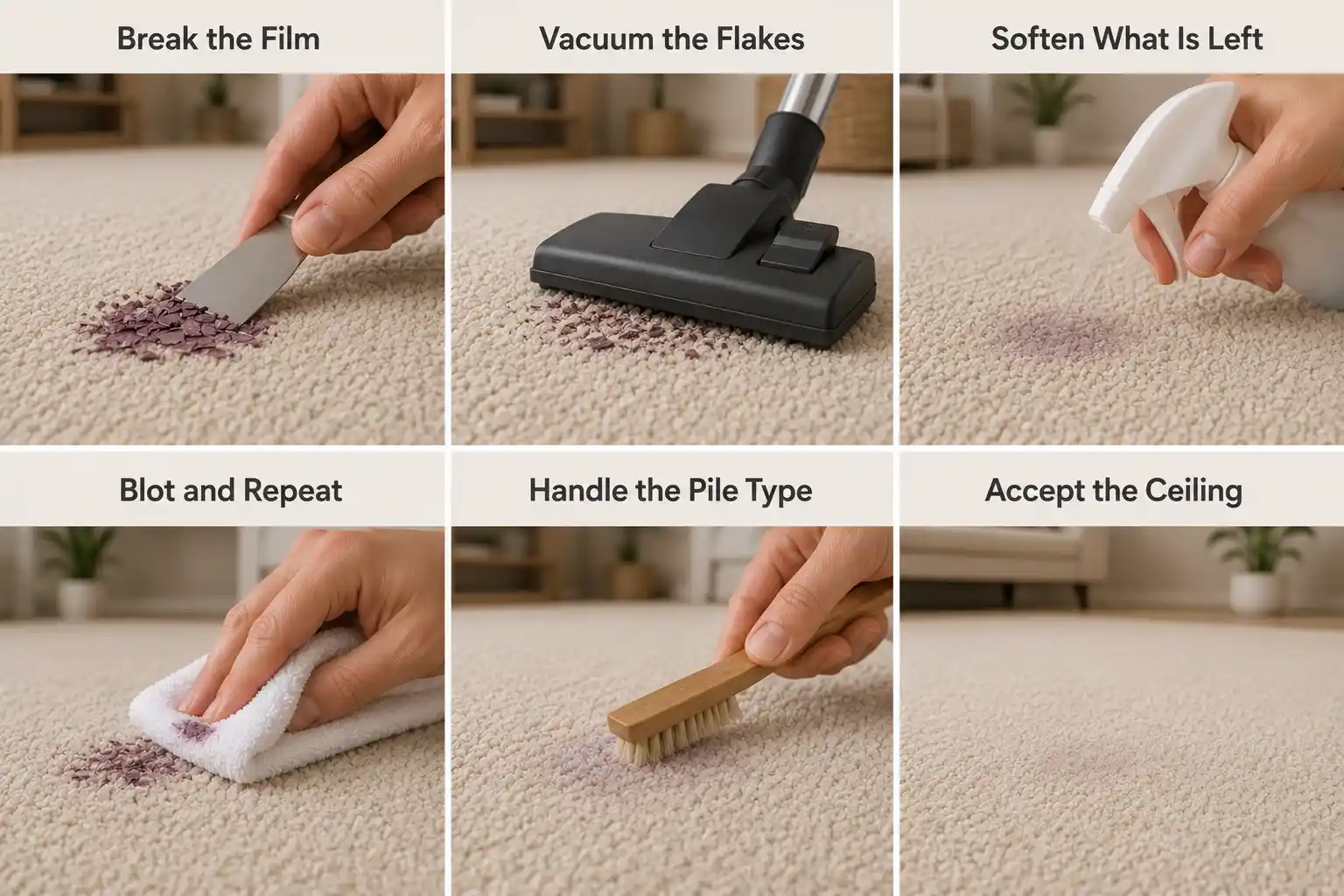
- First of all, break the film. Run a dull knife edge or a spoon across the hardened polish to crack it. Chip from the outer edge toward the center. On a cut pile, you can also work a stiff-bristled brush gently across the tips to flake the polish loose.
- Vacuum the flakes immediately. Loose fragments will re-embed if you leave them. Vacuum after each round of chipping.
- Soften what is left. Dampen a white cloth with your patch-tested solvent and hold it against the remaining polish for a full minute without moving it. This gives the solvent time to re-soften the resin rather than scrubbing it away.
- Blot and repeat in cycles. Chip, soften, blot, vacuum. Four or five short cycles will do more than one long soak.
- Handle the pile type correctly. Loop piles, including berber, snagged badly. Never pick at loops with tweezers or a knife point, because a pulled loop can run like a ladder in a stocking. On a cut pile only, and only as a last resort, you can trim the very tips of a few stained fibers with small sharp scissors. Cut high and cut few. Trimming too low leaves a visible divot.
- Accept the ceiling. Polish that has been on the carpet for weeks may have permanently dyed the fiber. Getting it to a faint shadow is often the realistic best outcome at home.
How to Get Nail Polish Out of Carpet Without Nail Polish Remover
You can clean nail polish out of carpet without nail polish remover. Nail polish remover works because acetone or ethyl acetate genuinely dissolves the resin. Everything else on the household shelf is weaker, so it needs more passes and more patience.
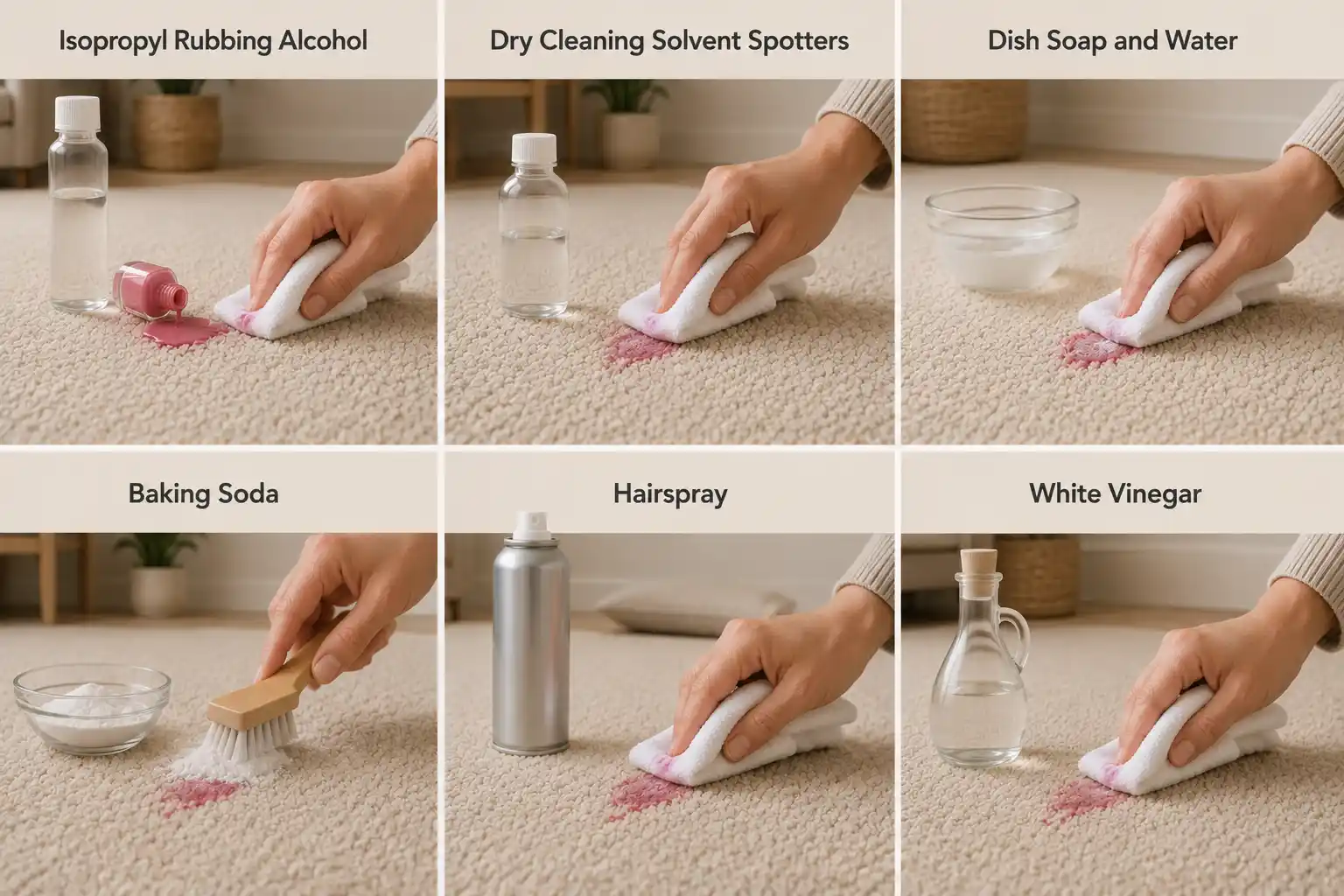
1. Isopropyl Rubbing Alcohol
This is the strongest practical option for removing nail polish without remover. Alcohol at 70 percent or higher softens the polish film enough to lift pigment gradually. It is far gentler on most carpet dyes than acetone, and it evaporates cleanly.
Apply it to a cloth, press, hold, blot, and repeat. Expect six or eight passes on a moderate stain. Alcohol also carries the same basic cautions as any solvent, so patch test first and keep the room ventilated.
2. Dry Cleaning Solvent Spotters
A carpet spotter sold specifically for oil-based and solvent-based stains is often the best middle ground. These products are formulated to work on carpet rather than on nails, which means the manufacturer has already balanced solvent strength against fiber safety. Follow the label instead of improvising, and choose one that names your fiber type.
3. Dish Soap and Water
A drop of clear dish soap in a cup of cool water will not dissolve polish, but it does an important job at the end. It lifts loosened pigment and solvent residue out of the fiber so the area does not re-soil. Treat it as the rinse step, not the removal step.
4. How to Get Nail Polish Out of Carpet With Baking Soda
Baking soda has a real but narrow role here, and most articles oversell it. It is a mild alkaline abrasive and a deodorizer. It does not dissolve nitrocellulose resin, so it cannot break down nail polish on its own. Sprinkling it on a wet polish spill and waiting will not lift the color.
Where it genuinely helps is absorption and light abrasion. If you have already softened the polish with a solvent, you can work in a paste of baking soda and a little water very gently with a soft brush to help scuff loosened film off the fiber tips and absorb residual moisture. Vacuum it out completely once dry.
Baking soda is alkaline, which puts it outside the safe range for wool. And the popular baking soda-and-soda-pop trick adds sugar and food dye to a carpet stain, creating a sticky patch that attracts dirt. Skip it.
5. How to Get Nail Polish Out of Carpet With Hairspray
Hairspray is one of the most repeated pieces of carpet advice online and one of the least reliable. The trick originated when hairsprays were largely alcohol based. The alcohol, not the hairspray, was doing the work. Air quality regulations have pushed manufacturers to cut volatile organic compounds, so many current formulas contain far less alcohol and considerably more water, polymers, and conditioning agents.
That leaves you spraying styling resin onto carpet fibers. The polish may soften a little. The sticky film left behind holds soil and can be harder to rinse out than the original stain.
If rubbing alcohol is available, use rubbing alcohol. It is the active ingredient without the residue. If you do try hairspray because it is all you have, use a cheap high-alcohol formula, apply it to a cloth rather than spraying the carpet, and rinse the area with dish soap solution afterward.
6. White Vinegar
Vinegar is a useful mild acid for many household stains, but nail polish is not one of them. It will not dissolve the resin. On wool, it is safe within reason and can help with dye stability, and it is fine as part of a final rinse, but do not expect it to remove polish.
Nail Polish Remover Vs. Acetone
Acetone is the most effective solvent for this stain. It is also the one most likely to cause damage, so it deserves specific rules rather than a blanket recommendation.
| Acetone | Nail Polish Remover |
| Stronger solvent that dissolves nail polish quickly. | May contain acetone or use other solvents such as ethyl acetate. |
| More aggressive on dyes, finishes, and some carpet backings. | Usually less aggressive when it is acetone-free, but still requires testing. |
| Consider only after confirming the carpet fiber and patch-testing. | A better starting option when the carpet’s solvent tolerance is uncertain. |
| Apply sparingly to a white cloth; never pour directly onto carpet. | Apply sparingly to a white cloth and blot rather than scrub. |
| Best for: small, stubborn stains on a solvent-compatible carpet. | Best for: situations where a milder solvent is preferred. |
| Avoid: unknown fibers, large areas, and carpets that fail the patch test. | Avoid: assuming “non-acetone” means completely safe for every carpet. |
Never use acetone on wool, silk, acetate, triacetate, modacrylic, or any antique or hand-knotted rug.
Common Mistakes That You Must Avoid While Removing Nail Polish From Carpet
Trying to clean nail polish yourself can easily make the stain worse or ruin carpet fibers. Avoiding these common mistakes will help you safely remove the spill without causing expensive, permanent damage to your carpet.
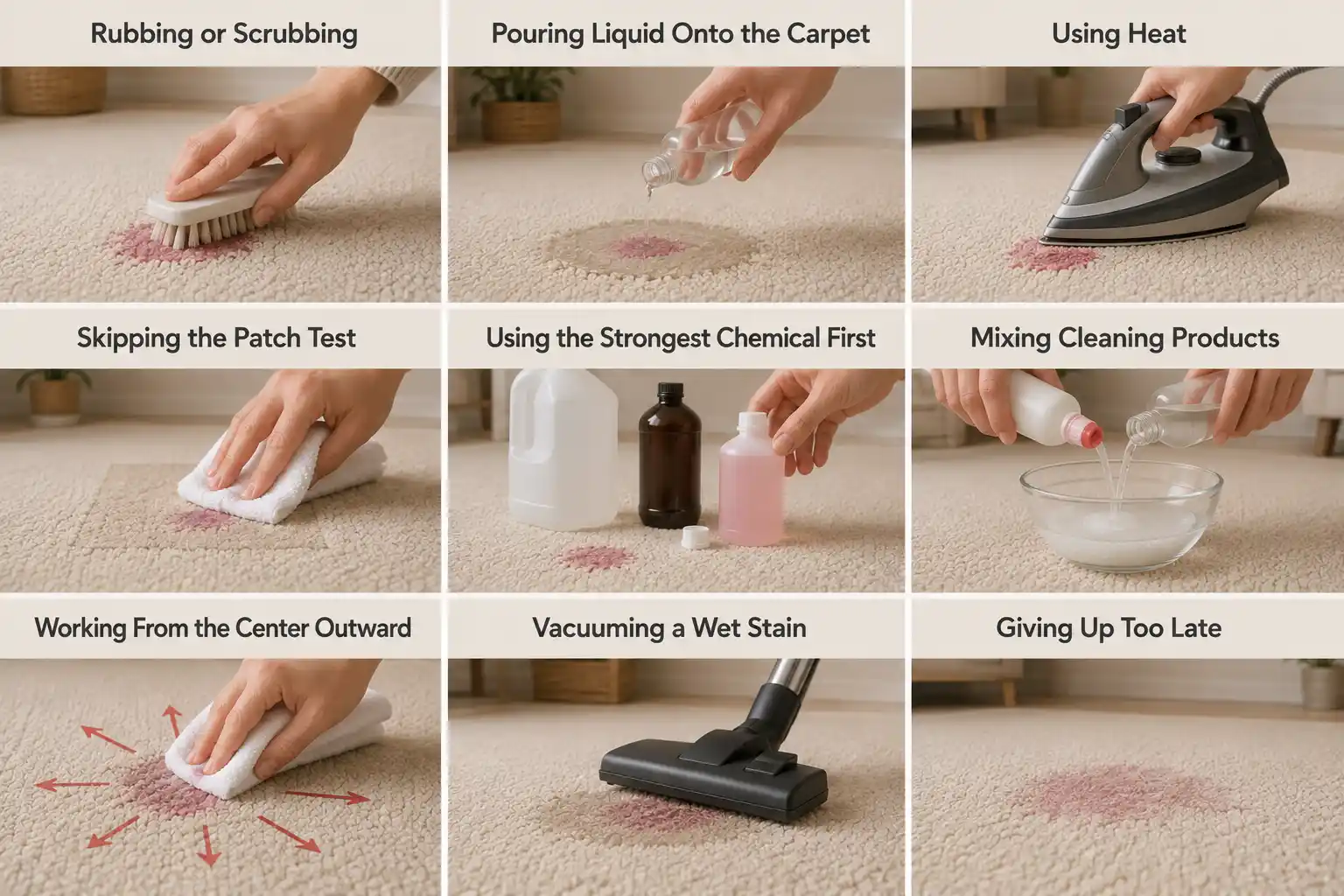
1. Rubbing or Scrubbing
This is the mistake that ruins the most carpets. Rubbing spreads pigment sideways across the pile and forces it down toward the backing. It also abrades and untwists the fiber tips, which leaves a permanently fuzzy dull patch that shows even after the color is gone.
2. Pouring Liquid Onto the Carpet
Anything you pour goes straight through the face fiber into the padding underneath. Now you have a stain you cannot reach, a solvent attacking the adhesive, and moisture that will wick the stain back to the surface as it dries. Solvent goes on the cloth.
3. Using Heat
Hot water, steam, and hair dryers set nail polish rather than removing it. Save the fan and the warm air for the drying stage, after the color is gone.
4. Skipping The Patch Test
Dye damage and fiber damage are permanent. Two minutes of testing protects the whole room
5. Reaching For The Strongest Chemical First
Work up the ladder. Mechanical removal, then alcohol, then non-acetone remover, then acetone only if the fiber allows it.
6. Mixing Cleaning Products
Combining solvents, ammonia-based cleaners, and bleach products creates unpredictable reactions and, in some combinations, dangerous fumes. Use one product, rinse, then try another if needed.
7. Work From The Center Outward
This pushes the stain into clean carpet. Always work inward from the edge.
8. Vacuuming a Wet Stain
A household vacuum is not a wet extractor. You will damage the machine and spread the polish.
9. Giving Up Too Late
Each aggressive pass costs you fiber. If three well-executed rounds have not changed anything, more force will not help.
Why Red Nail Polish Stains Are Harder to Remove
Red nail polish is the most searched color variant for carpet removal, and for good reason. The pigments in red polish are more heavily concentrated than in lighter shades, often combining iron oxide or organic red dyes with a denser resin load. That extra pigment means the stain penetrates faster and bonds more stubbornly to carpet fibers.
The removal process is the same: scoop, chill, blot, solvent, dry, but red polish typically demands more patience and more cycles. A faint pink or orange shadow often remains even after thorough cleaning, especially on light-colored or porous carpets. Do not let frustration push you toward stronger chemicals, longer soaks, or aggressive scrubbing. Those tactics damage fibers and backing without improving the color.
If you are dealing with red polish on a light carpet, expect to run through the full protocol twice. If a shadow persists after two careful rounds and the carpet is fully dry, the dye has likely bonded to the fiber itself. At that point, professional color repair or a patch replacement is safer than continued home treatment.
How to Dry the Carpet Correctly After Removing Nail Polish
Drying is not an afterthought. Poor drying causes wicking, where residual stain travels back up the fiber as moisture evaporates and reappears as a ring.
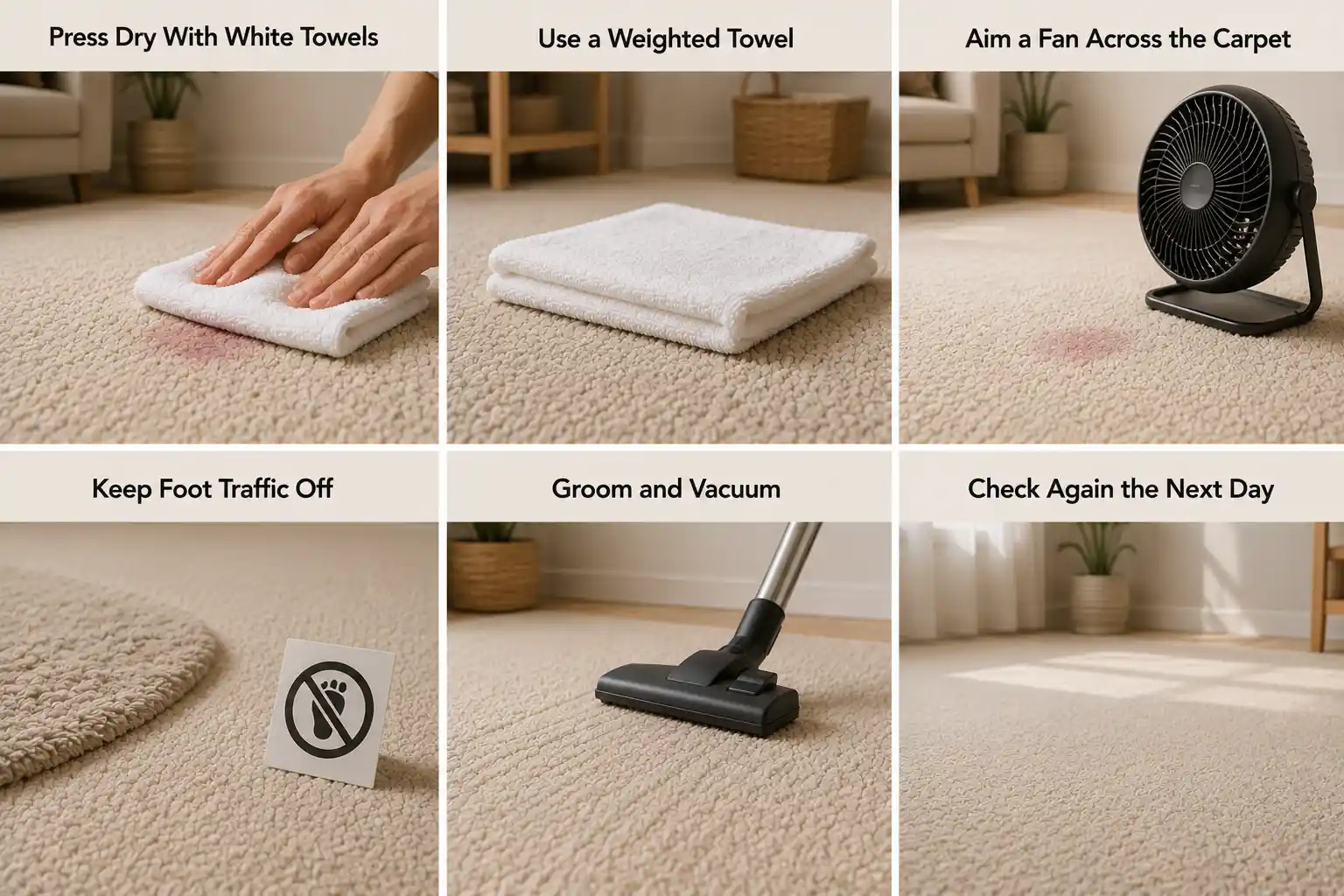
- Press dry white towels firmly into the area to absorb as much moisture as possible.
- Lay a thick folded towel over the spot, place a weight on it, and leave it for several hours to draw out deep moisture.
- Aim a fan across the area at room temperature. Airflow matters more than heat.
- Keep foot traffic off the spot until it is completely dry, since walking on a damp pile crushes it.
- Once dry, groom the pile back into direction with your fingers or a soft brush, then vacuum.
- Check the next day again. If a faint ring has appeared, blot it with a barely damp cloth and re-dry. Do not start over with solvent.
Final Words
Getting nail polish off carpet is mainly about removing the polish without spreading it or damaging the fibers underneath. Fresh spills give you the best chance of complete removal because most of the polish can be lifted before it bonds to the pile. Once it dries, the process slows, and the risk of a permanent shadow increases.
For a small household spill, careful scraping, controlled solvent application, repeated blotting, and proper drying are usually enough when the carpet is solvent-compatible. If the polish has stained the backing, the carpet has started losing color, or you can’t identify the fiber, stop before the treatment causes permanent damage. At that stage, professional stain treatment is the better option.
Frequently Asked Questions
Act while it is wet. Scoop the excess with the edge of a spoon, working from the outside in; chill the remainder with a bag of ice so it lifts as a solid, then blot the rest with rubbing alcohol on a white cloth. Physically removing polish before it cures is always faster than dissolving it afterward.
Often yes, though it takes longer and results vary. Crack and chip the hardened film with a dull edge, vacuum the flakes, then soften what remains with a solvent held against the stain on a cloth. Polish that has been in the fiber for weeks may leave a faint permanent tint.
Yes. Isopropyl rubbing alcohol at 70 percent or higher is the most effective household substitute, and a dry cleaning solvent spotter made for carpet works well too. Both are weaker than acetone, so plan on multiple gentle passes rather than one strong application.
Not on its own. Baking soda does not dissolve the resin that holds the pigment. It helps as a mild abrasive and absorbent after a solvent has already softened the polish. Avoid it on wool, and skip the baking soda and soda pop version, which leaves sugar in the carpet.
Sometimes, and mostly by accident. The alcohol in hairspray does the work, and many modern formulas contain much less alcohol than older ones because of air quality regulations. What is left behind is styling resin that attracts soil. Rubbing alcohol does the same job without the residue.
Yes. Acetone dissolves acetate, triacetate and modacrylic fibers outright, can pull dye from many carpets, and can soften the latex adhesive in the backing if enough soaks through, which causes buckling and delamination. It is reasonably safe on nylon, polyester and olefin when applied sparingly to a cloth after a successful patch test. It is never safe to pour.
Blot immediately with dry towels and keep replacing them, then weigh fresh towels down on the spot to pull solvent out of the backing. Flush lightly with cool water, clean with a few drops of dish soap in water, blot dry, and run a fan on the area for several hours. Dry the used towels outdoors, since they remain flammable until the solvent evaporates.
Stop after two or three careful attempts. Additional force damages fiber without improving the color. Let the area dry completely, since wet carpet always looks darker and stains often look worse than they are. Then have a certified carpet cleaner assess it. If the stain is permanent, options include professional color repair, a patch cut from a closet or a carpet remnant, or covering the area with furniture or a rug.