
How to Get Slime Out of Carpet: Dried, Sticky & Colored Slime

To get the slime out of carpet, start by lifting off as much slime as you can with a spoon or a dull knife. Then harden whatever is left with ice before you scrape again. That order matters a lot. Soft slime spreads and works deeper into the pile every time you touch it, while chilled slime turns brittle and lifts away in pieces. Once the bulk is gone, treat the remaining film with a few drops of clear dish soap in warm water and blot from the outside of the spot inward.
Vinegar or rubbing alcohol can help with stubborn residue, but neither one suits every carpet, and wool needs gentler handling than synthetics. Keep the area barely damp rather than wet, rinse with clean water, dry it fully, then vacuum to lift the pile back up. This comprehensive blog by Floor Land helps you rescue the luxury carpet from the slime.
Which Method Fits Your Situation
| Situation | Recommended method | Best for |
| Fresh, soft slime | Spoon it off, then blot with dish soap solution | Slime still on top of the pile |
| Slime worked into the fibers | Chill with bagged ice, then scrape | Slime pressed between the tufts |
| Dried, crusty slime | Break it up dry, vacuum, then treat what remains | Hardened slime on synthetics |
| Sticky film left behind | Mild detergent in light, repeated passes | Residue after the bulk is gone |
| Colored mark, normal texture | Spot treatment after a hidden test | Food coloring left in the fibers |
What You Need Before You Start
Below is a list of some tools and techniques that will help you remove the slime from carpet.
- A spoon, plastic scraper, or dull butter knife
- Ice cubes in a sealed plastic bag
- Several white cloths or plain paper towels
- A bowl of warm water and clear, dye-free dish soap
- Optional: white vinegar or 70% isopropyl alcohol
- A vacuum with good suction
Use white cloths only. Colored ones can transfer their own dye into damp carpet, and white shows you how much color is lifting.
Before any liquid touches the visible area, check the carpet manufacturer’s care instructions and test your solution on a hidden patch such as a closet corner.
Step-by-Step Guide to Remove the Slime Out Of Carpet
Removing the slime from the carpet becomes easy when you know the right steps. Follow the steps mentioned below to the letter to make your carpet look fresh again.
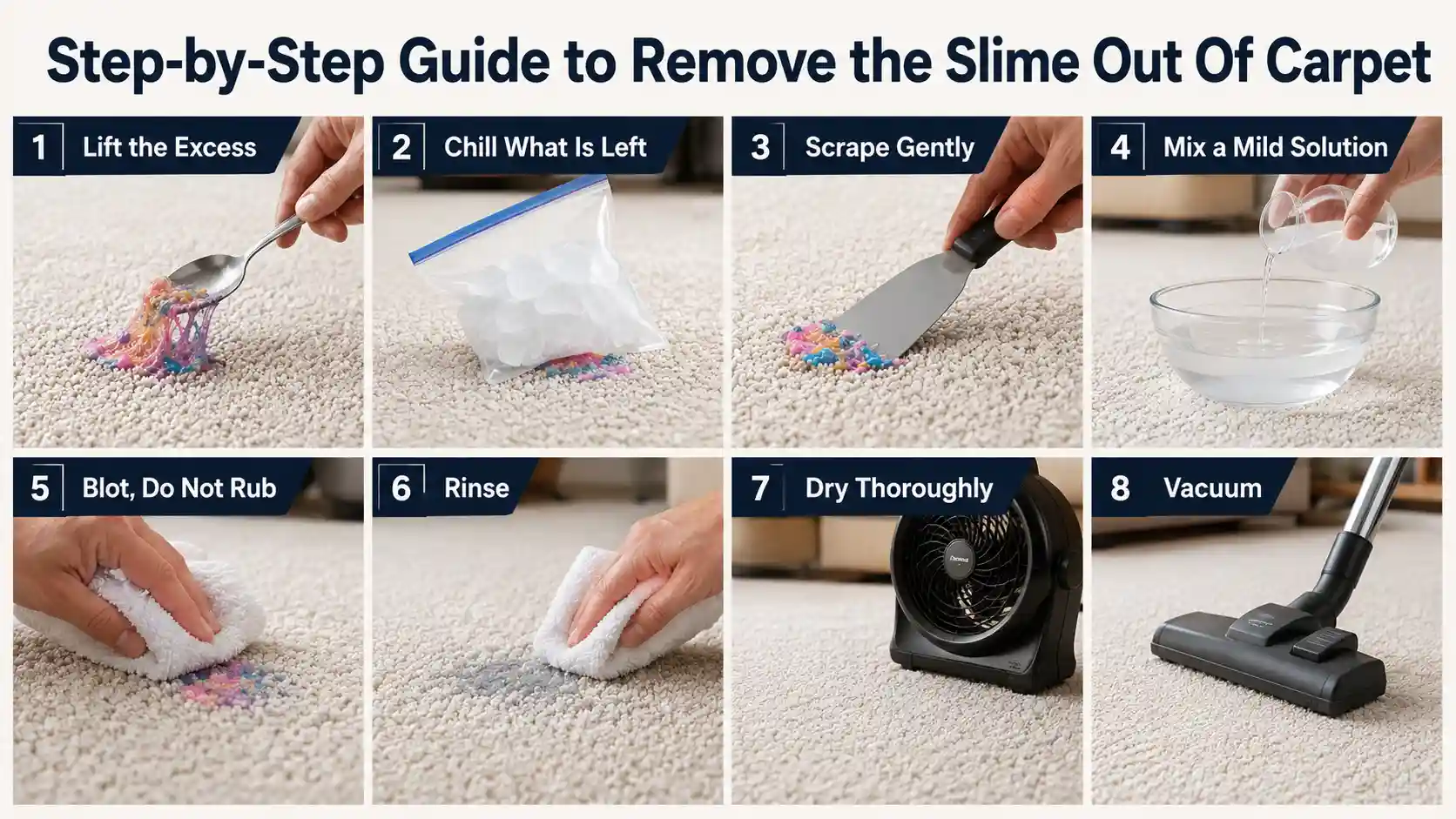
- Lift the excess. Scoop from the edges of the blob toward the center. Pulling slime straight up stretches it and drags fibers with it, which frays the tufts. Short, shallow scoops get more of it and disturb the pile less.
- Chill what is left. Seal a handful of ice cubes in a plastic bag and rest it on the spot for 10 to 15 minutes. The slime firms up and loses its grip. Never put bare ice on carpet, since meltwater soaks straight through to the backing.
- Scrape gently. Hold the scraper at a low angle and move it in the direction the pile leans. Brittle slime cracks and flakes off. Vacuum the flakes right away so nobody treads them back in.
- Mix a mild solution. Half a teaspoon of clear dish soap in a cup of warm water is enough. Stronger is not better. Detergent left in carpet attracts soil, and the spot goes gray again within weeks.
- Blot, do not rub. Dampen a cloth, wring it out well, and press it into the spot. Work from the outside edge inward so the mark does not spread. Rubbing drives slime toward the base of the pile and roughens the fiber tips, which later shows as a dull patch that catches the light differently.
- Rinse. Blot with a cloth dampened in plain water to lift out the soap. Skipping this is the most common reason a cleaned spot resoils faster than the carpet around it.
- Dry thoroughly. Press a dry towel down hard, then stand on it to pull moisture out of the pile. Point a fan at the area for a few hours. Slow drying causes wicking, where soil near the backing rises to the surface, and the mark quietly reappears.
- Vacuum. Once the area is fully dry, vacuum in two directions to lift the crushed pile and blend the spot with the surrounding carpet.
How to Get Dried Slime Out of Carpet?
Dried slime behaves differently. As the water evaporates, the polymer shrinks and grips the fibers it wrapped around, so it will not scoop up in one piece. It also loses most of its stickiness, which works in your favor.
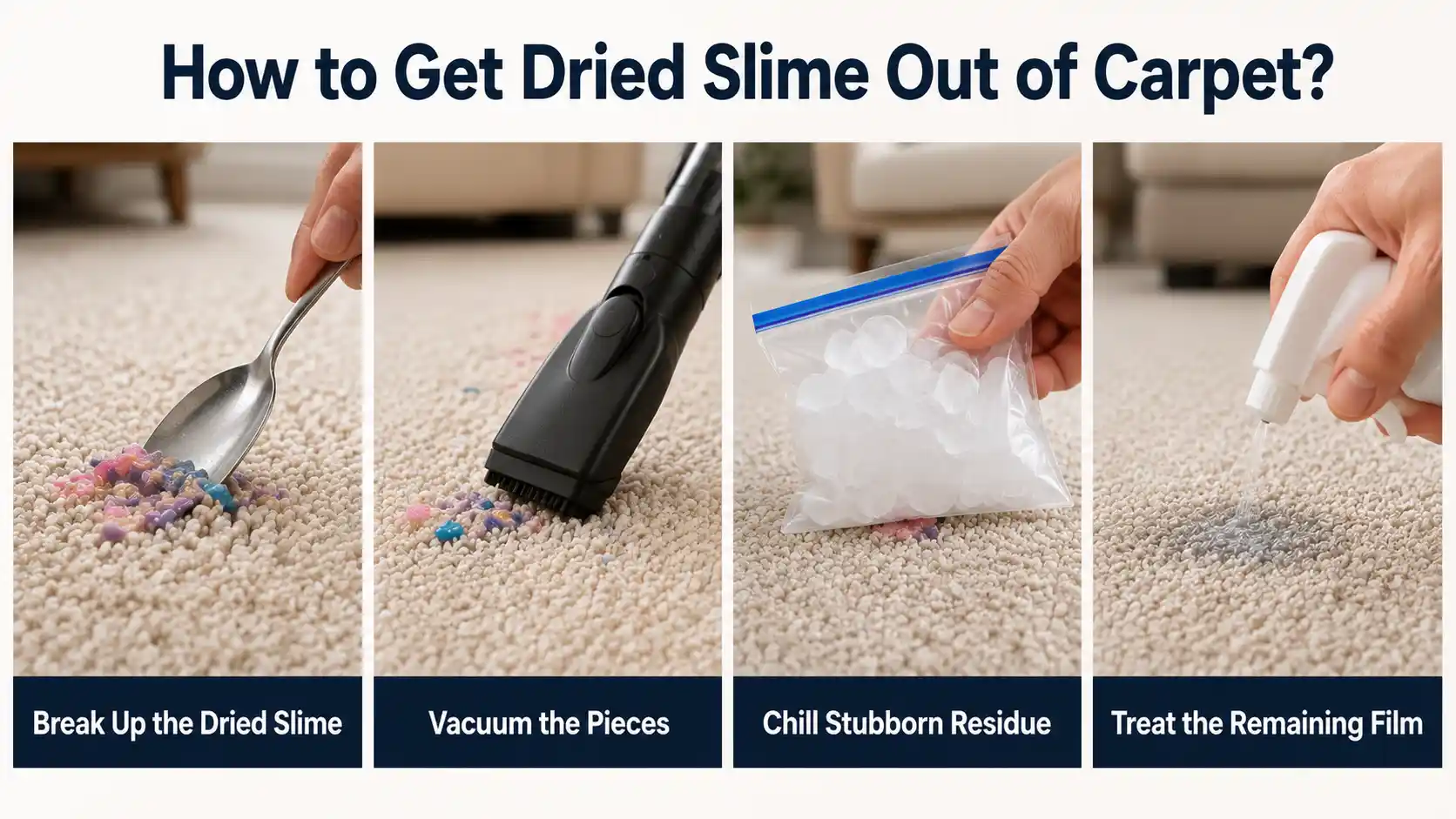
Start dry. Work the crust with your fingertips or the edge of a spoon and break it into small pieces. Much of it lifts out with no liquid at all. Vacuum after every pass.
If pieces stay locked around individual fibers, chill them with the ice bag for 10 to 15 minutes. Cold makes the remainder brittle enough to crack rather than stretch.
What is left is usually a thin film plus any dye the slime carried. Treat that with the dish soap solution above, in several light passes rather than one wet one. Dried slime rarely comes out in a single round.
How to Get Slime Out of Carpet Without Vinegar or Rubbing Alcohol
Plenty of slime comes out without any acid or solvent. The answer to how to get slime out of carpet without vinegar or rubbing alcohol is mechanical removal plus a mild detergent.

- Ice and scraping handle the bulk of the job. Most of the slime is physically lifted, not dissolved.
- Clear dish soap and warm water break up the greasy or lotion-based ingredients many homemade slimes contain.
- A soft brush, used lightly and only on synthetic carpet, loosens material caught between tufts. Stop as soon as fibers splay.
- A carpet spot cleaner rated for your fiber is the next step if detergent stalls. Follow the label and rinse afterward.
This is the better default on wool and on any carpet whose care instructions you have not checked. It is slower, but it leaves almost nothing on the fibers that has to be rinsed back out.
Can You Use Vinegar to Remove Slime From Carpet?
Vinegar can help, and there is a reason behind it. Most craft slime is PVA glue cross-linked with borate ions, and acid disrupts those cross-links, so the slime loosens and lifts more easily.
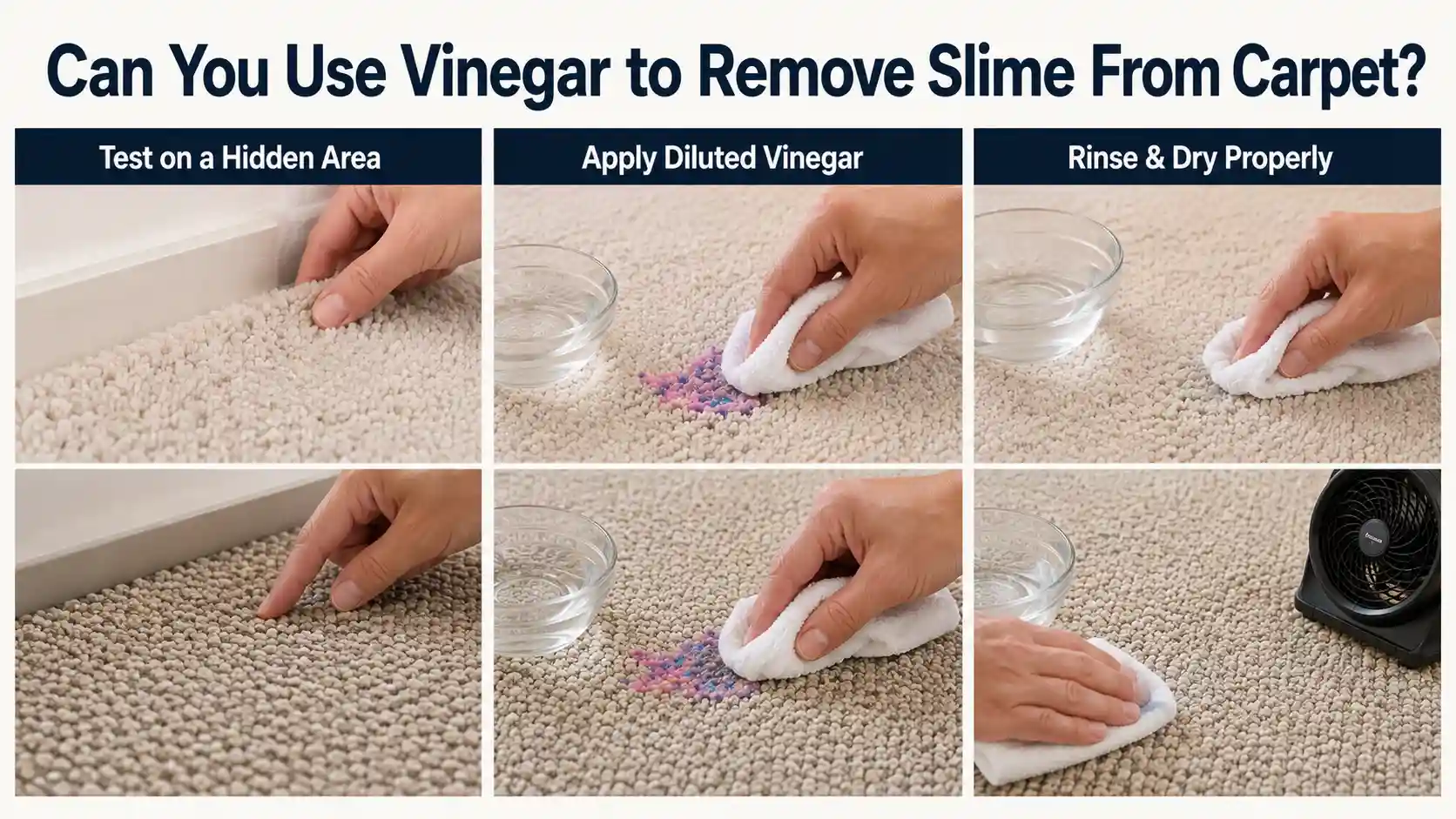
It is not the right answer everywhere. Vinegar is acidic, and wool wants solutions close to neutral, roughly pH 6 to 8. Repeated acidic treatment can dull and damage wool. Some warranties also specify which cleaning agents are acceptable.
On synthetic carpet, after a hidden test, a fair option is one part white vinegar to two parts warm water, applied sparingly. Dab it on with a cloth rather than spraying, rinse with plain water, and dry the spot properly. Vinegar residue can linger for days.
How to Get Slime Out of Carpet With Baking Soda
Baking soda deserves an honest answer. It does not dissolve slime. It works as a mild abrasive and a deodorizer, and neither breaks the polymer bonds holding slime together.
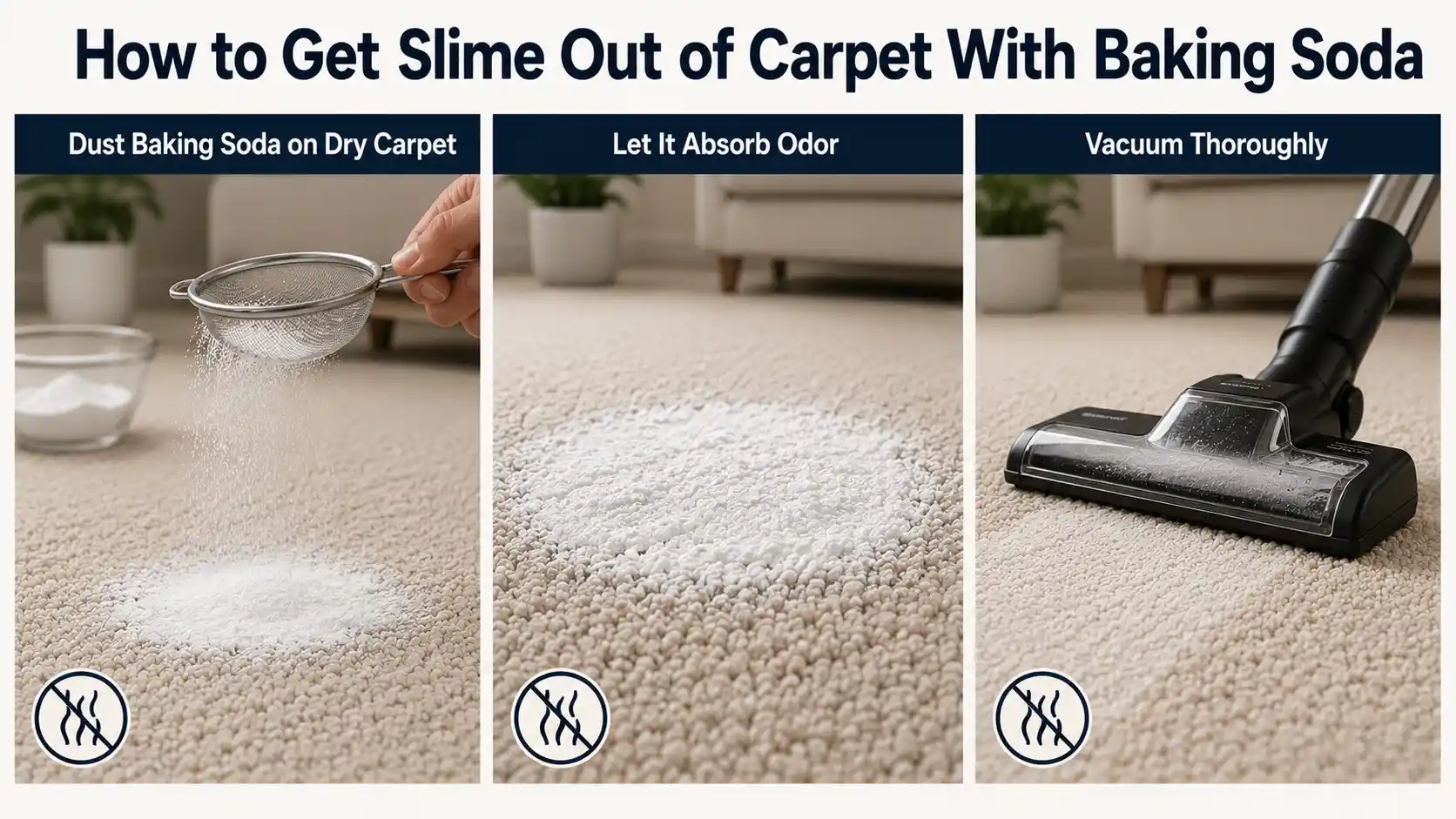
It earns its place at the end. Once the spot is clean and completely dry, a light dusting left for a few hours absorbs lingering odor from a scented slime, then vacuums out cleanly.
Skip the popular baking soda and vinegar combination. The two neutralize each other on contact and leave salty water and a fizz that looks productive but does little. Use vinegar on its own for the acid, or dry baking soda on its own for the smell.
How to Get Slime Out of Carpet With Ice
Ice is the most useful trick here, but it is a preparation step rather than a cleaning method. It changes the slime’s texture so that scraping works.
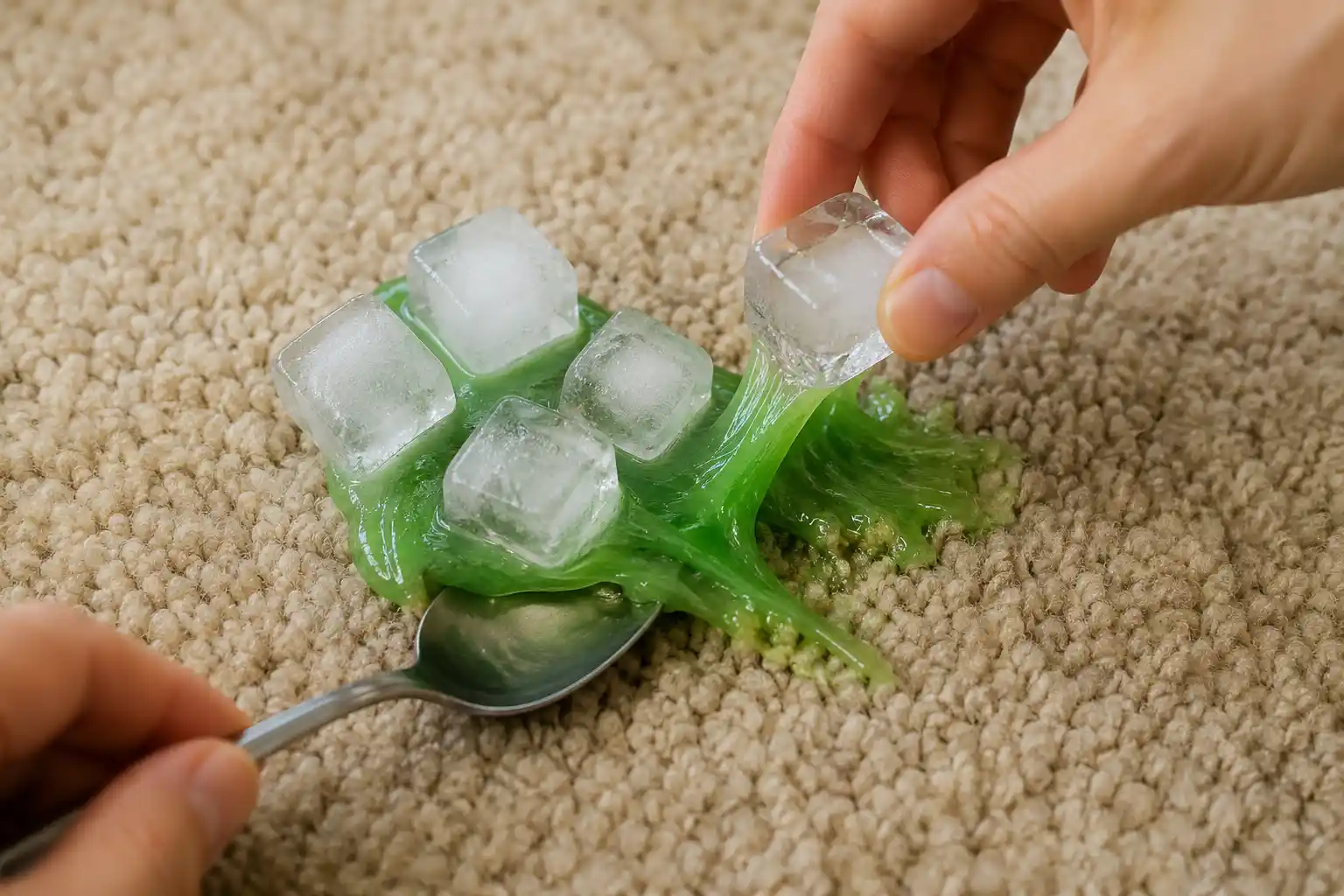
Seal the ice in a bag, rest it on the slime, and give it 10 to 15 minutes. Press a fingernail into the edge to check. If the slime dents and cracks, it is ready to scrape. If it still pulls into a string, wait another five minutes.
Two cautions. Keep the ice bagged, since free meltwater in the pile is the fastest route to a wet backing. And wipe the surface dry before scraping, because a wet scrape smears what you just hardened.
Should You Use an Iron on Slime in Carpet?
The iron method circulates widely, usually with a towel laid over the spot. It is a poor fit for carpet, and the reasons are worth knowing.
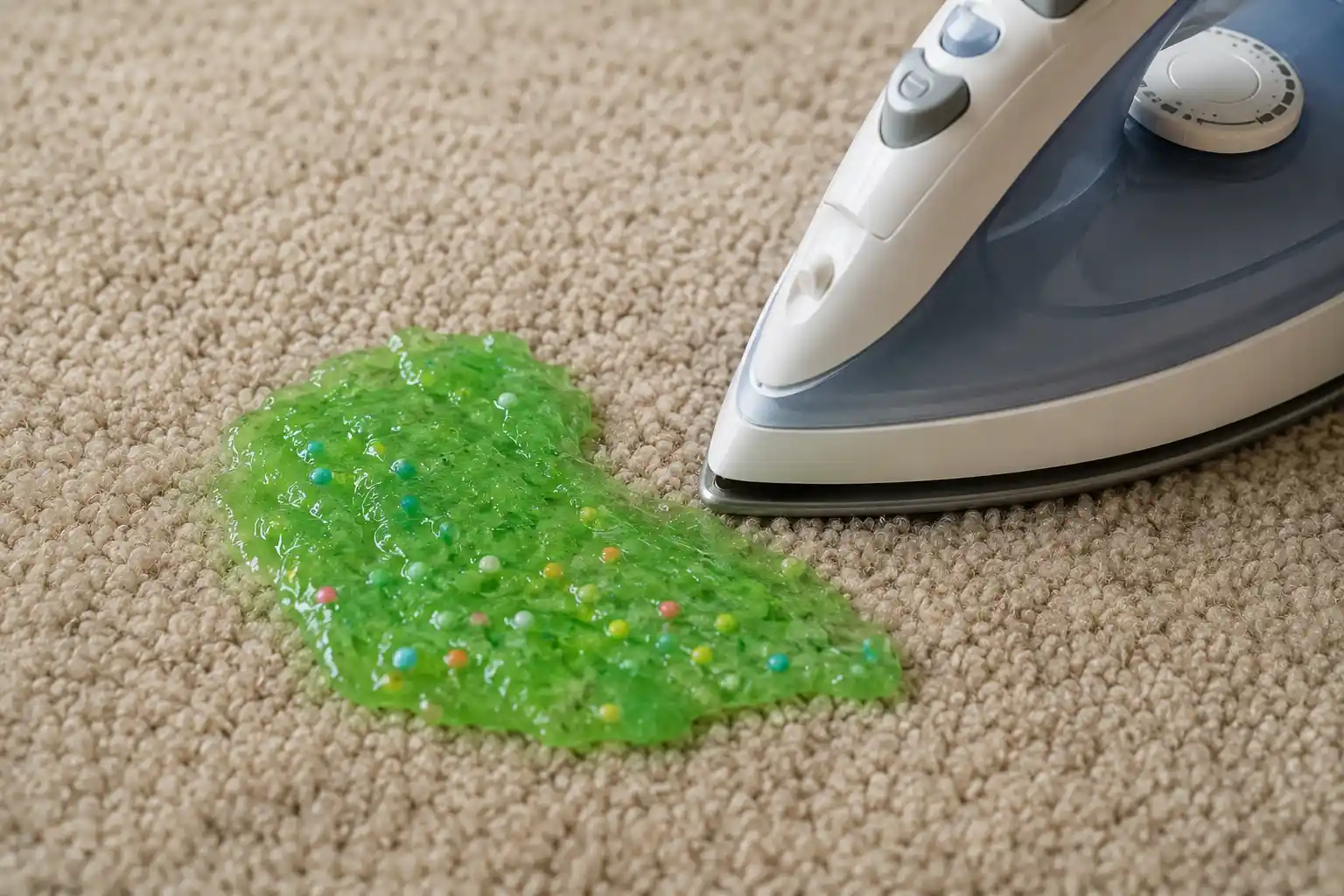
Polypropylene, sold as olefin, melts at low temperatures. Friction from dragging furniture alone can leave a permanent glossy mark, so a hot iron is a real risk. Nylon and polyester take more heat but still glaze or flatten under direct contact, and that damage does not brush out. The latex adhesive holding the backing layers together also weakens with heat. Heat sets dye too, so ironing a spot that held colored slime can lock the color in.
Use ice instead. Cold makes slime easier to remove and risks nothing. If you know your fiber is heat tolerant and still want to try steam, keep the head moving, never rest it on the pile, and test a hidden area first.
How to Remove Slime Stains and Color From Carpet
Different carpet stains require different approaches. Once the slime is gone, look closely at what is left. Three problems look similar from standing height and need different handling.
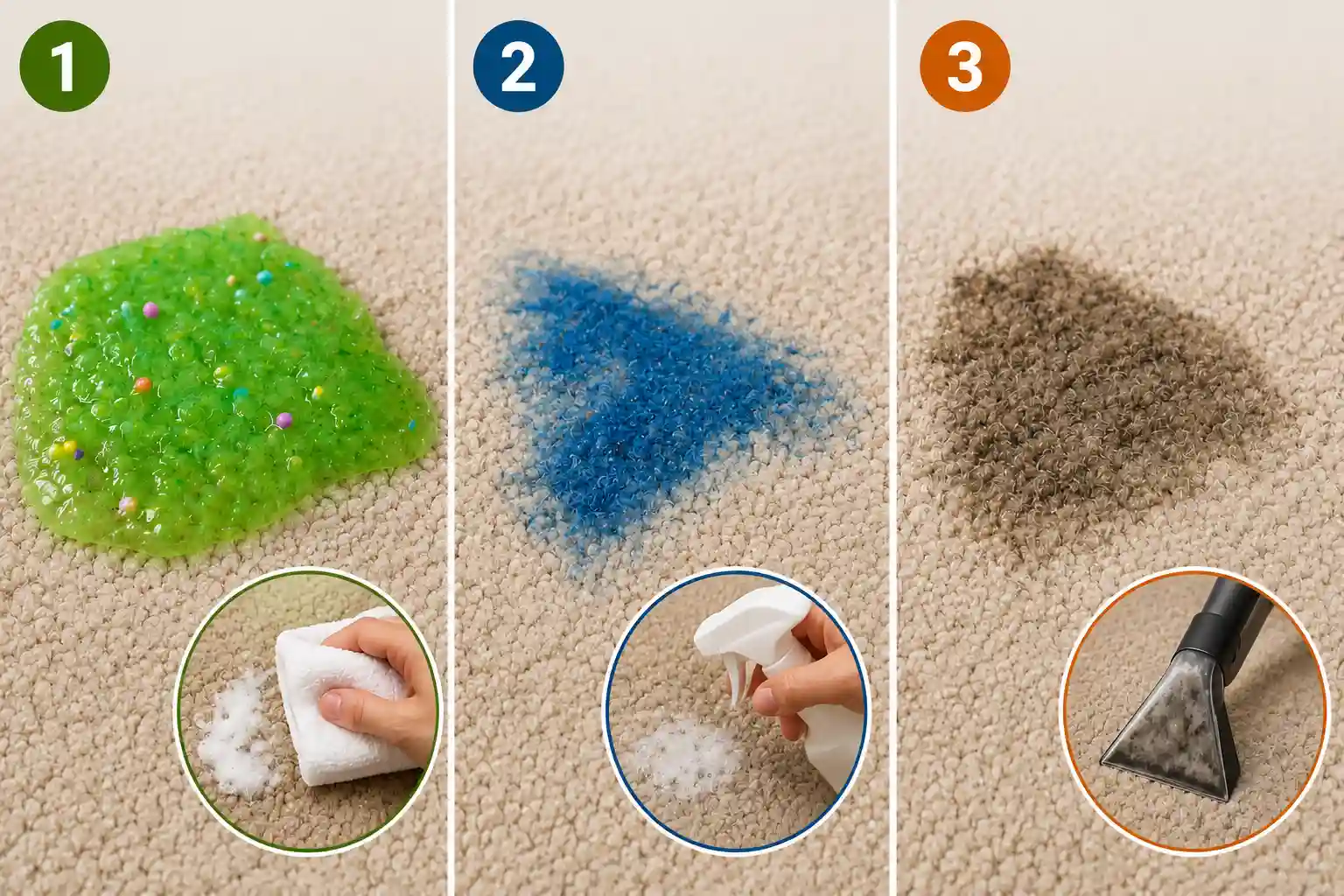
- Slime residue feels slightly tacky or stiff and changes how the fibers move. More detergent and blotting is the answer, applied in light passes.
- Dye from food coloring has no texture. The fibers feel normal, and the color sits inside them. This is the hardest of the three, since blue and red food coloring bond readily to nylon. Gentle repeated treatment with a spot cleaner made for your fiber gives the best odds, and some of these marks never come out.
- Transferred dirt appears when foot traffic grinds soil into a spot that stayed damp. It looks gray or brown rather than colored, and a detergent clean followed by proper drying usually handles it.
If a mark returns a day or two later, that is wicking. Redampen lightly, blot hard, weigh a dry towel down on the spot overnight, and run a fan.
How to Remove Slime From Different Carpet Types
You need to follow different cleaning methods for removing the slime from different carpet fibers:
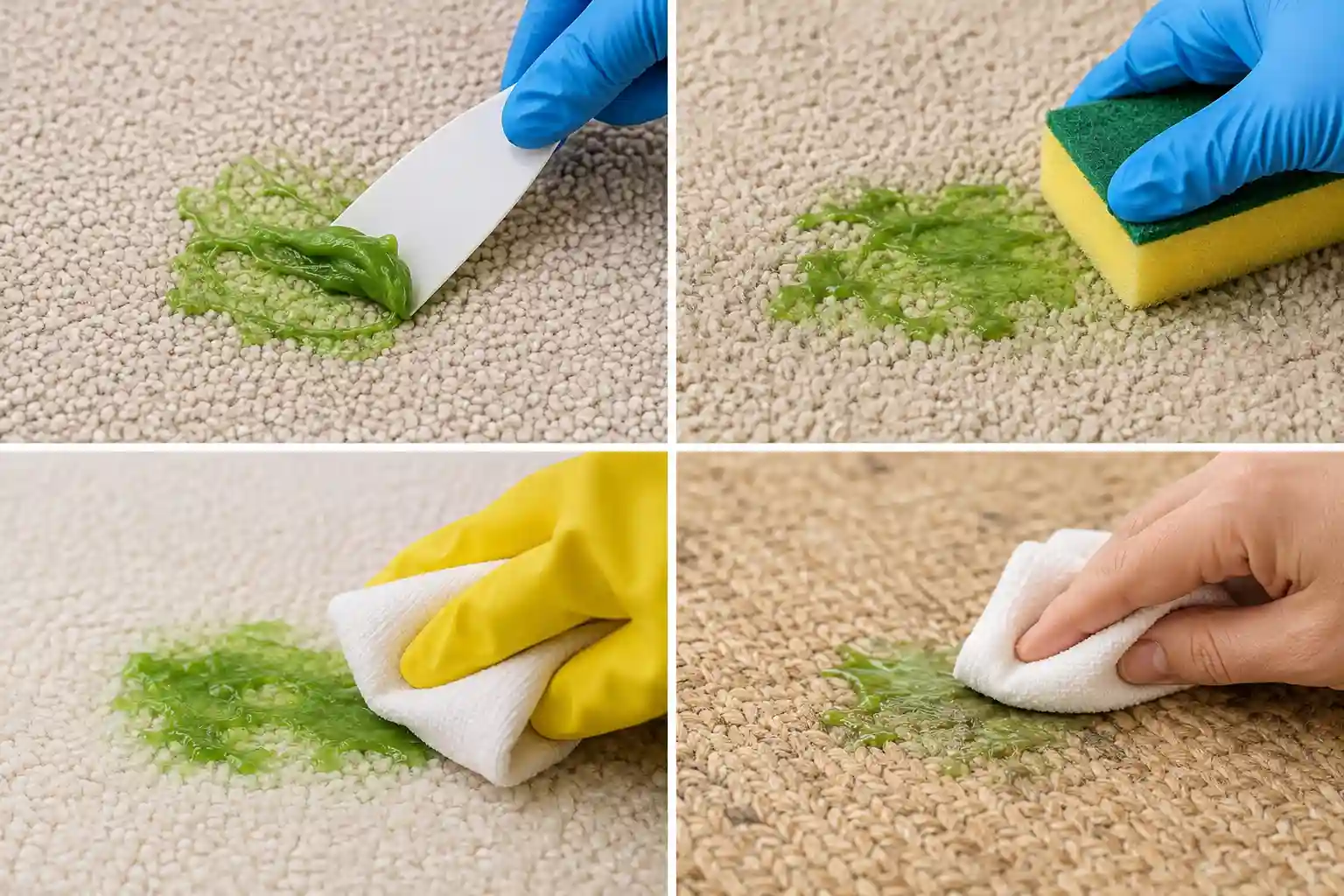
- Nylon is resilient and handles most detergents well, so it recovers its shape after scraping. Its weakness is dye absorption, which makes colored slime the real concern.
- Polyester resists water-based stains but holds onto oils, so lotion or baby oil slimes leave a greasy film. Dish soap suits that well.
- Polypropylene or olefin cleans easily with water-based solutions but is the most heat-sensitive of the group, and it absorbs oils. No iron, no steam, no hot water.
- Wool or sisal carpet needs the most care. Keep solutions close to neutral, use as little moisture as possible, and never scrub, since wool felts when agitated wet. For anything larger than a small patch, a professional is the cheaper decision.
If you do not know your fiber, treat the carpet as the most delicate option and start with plain water and blotting.
How to Get Slime Out of Carpet in a Car
Car carpet takes the same sequence, but two things make it harder. Airflow is poor, and the carpet sits on a molded backing over insulation that holds water for a long time.
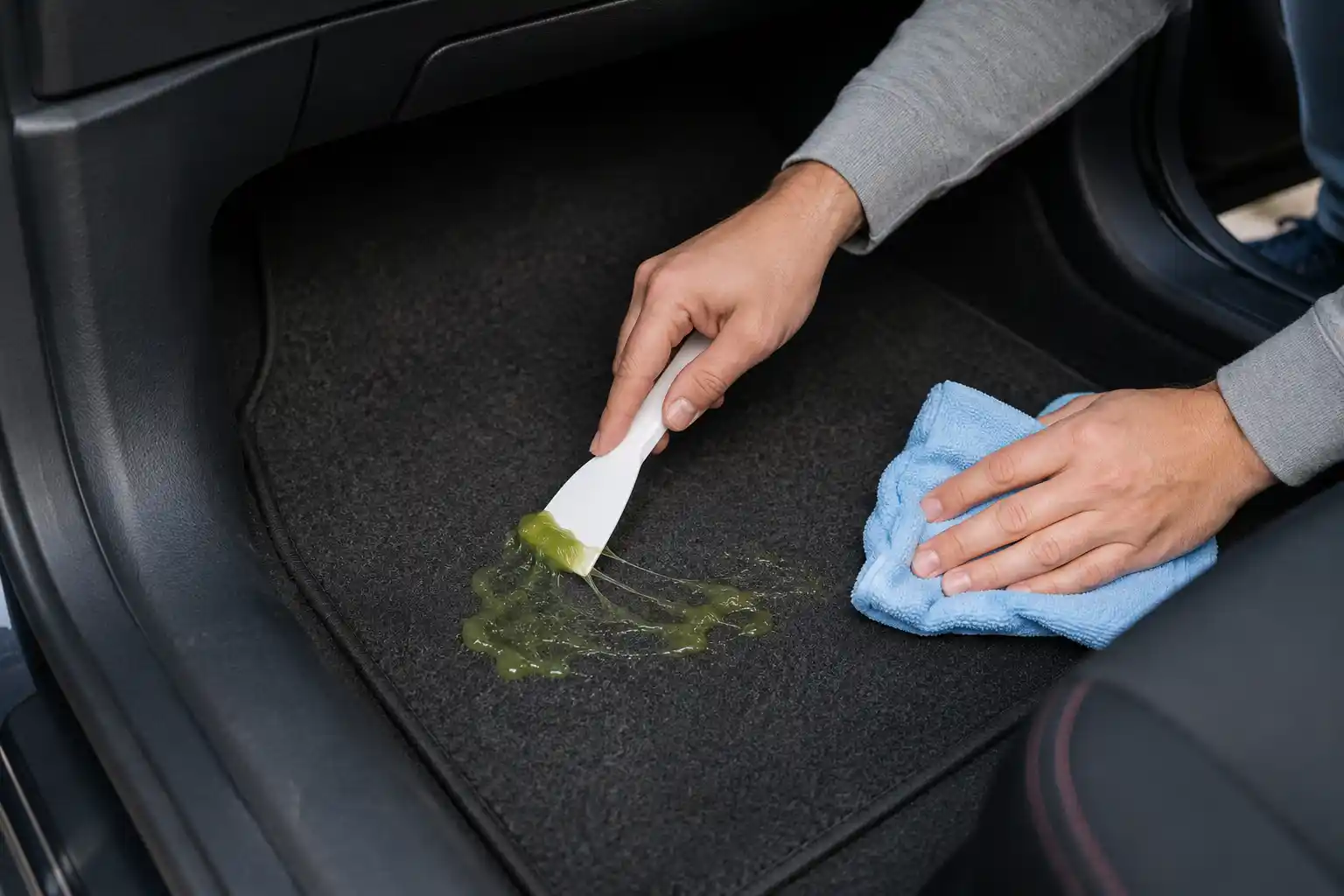
Lean on ice and scraping, since they add no moisture. When you use a solution, dampen the cloth and press it to the carpet rather than pouring anything into the footwell. Blot often and use less liquid than you would indoors.
Drying is the step people skip. Press with dry towels, then leave the doors open in dry weather or run the fan on high aimed at the floor. Moisture trapped under car carpet turns musty fast and is hard to reverse.
What Not to Do When Removing Slime From Carpet
There are certain mistakes that you must avoid while removing the slime from carpet:
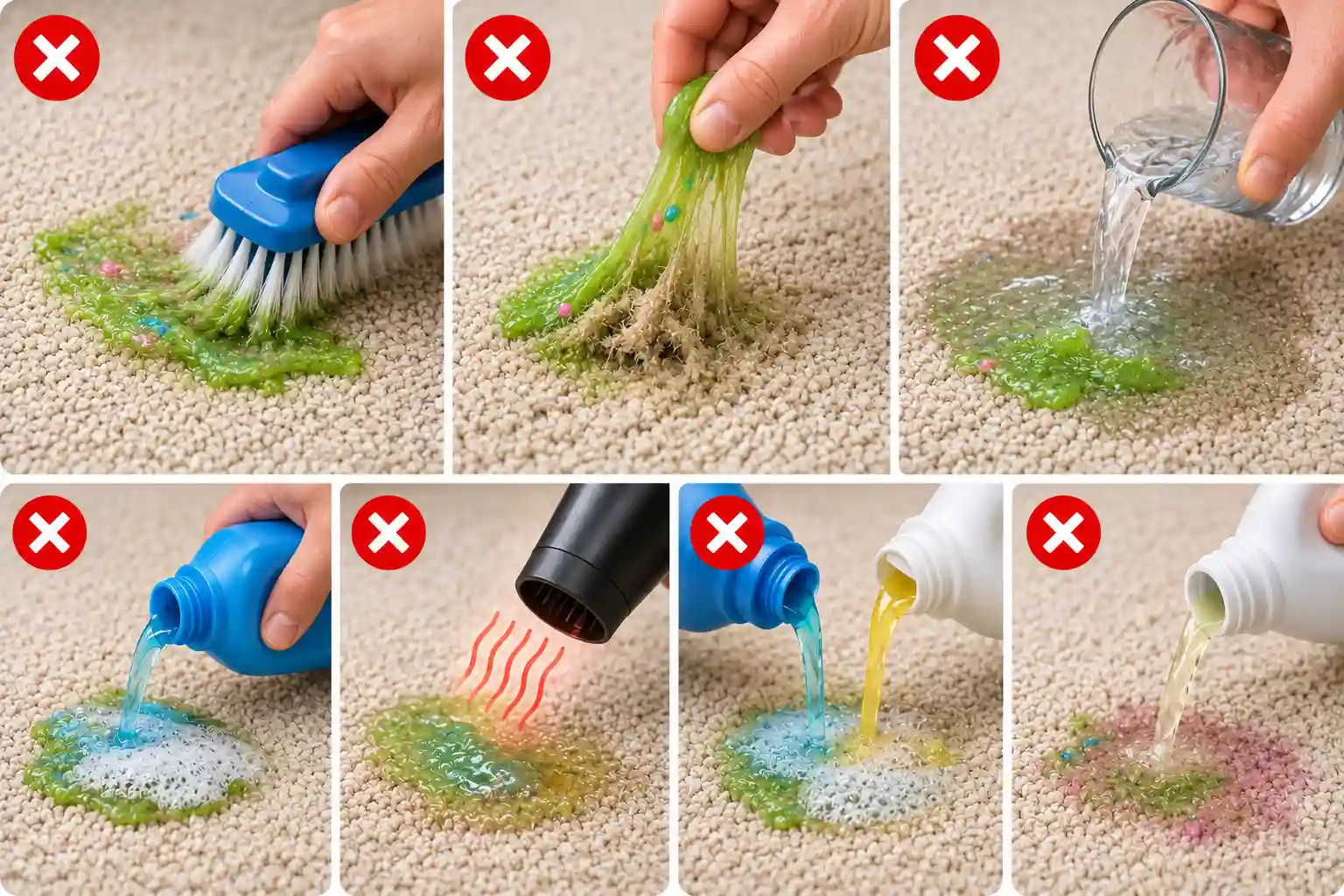
- Do not scrub. It pushes slime toward the backing and roughens the fiber tips permanently.
- Do not pull slime up in one piece. You lift fibers with it and leave a fuzzy patch.
- Do not soak the area. Water in the backing causes wicking, odor, and sometimes mildew.
- Do not add extra product for speed. Detergent residue attracts soil and the spot darkens again.
- Do not apply heat before you know the fiber. Melting and glazing cannot be undone.
- Do not mix cleaning products. Combinations can damage fibers or produce fumes.
- Do not use bleach or oxygen boosters on colored carpet without a hidden test.
When Should You Call a Professional Carpet Cleaner?
Home treatment covers most slime spills. A few situations are worth handing over.
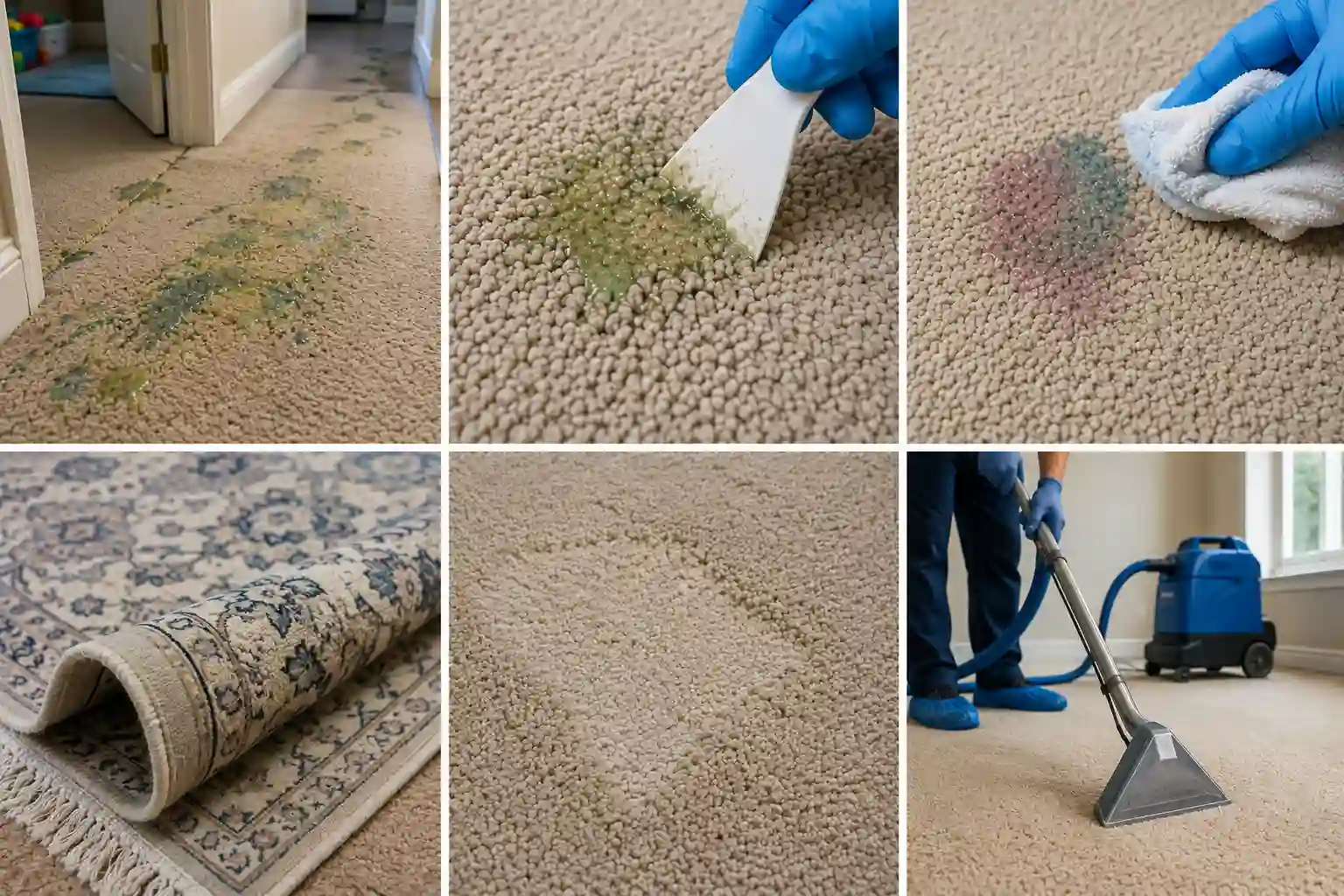
- The spill is large, or slime was walked through several rooms
- Slime is pressed into the base of the pile and scraping is not reaching it
- A dye mark has survived several careful treatments
- The carpet is wool, silk, or a rug you would be unhappy to damage
- Cleaning has left a patch that no longer matches the carpet around it
- Liquid reached the backing or underlay, or the area smells musty
Professionals use hot water extraction that pulls moisture back out rather than leaving it in, plus fiber-specific solutions and dye removal methods not sold for home use.
Final Words
Removing slime from carpet does not have to mean replacing the carpet or reaching for harsh chemicals. In most cases, the safest approach is to work in stages: lift the excess, harden what remains with bagged ice, scrape gently, and clean the leftover film with a mild detergent solution. Keeping moisture under control is just as important as removing the slime itself.
Colored slime, delicate fibers, and slime that has reached the backing require extra caution. If repeated spot treatment has not restored the carpet or you are dealing with wool, sisal, or a large spill, professional cleaning is the safer option. With the right method and a little patience, you can remove the mess while protecting the carpet underneath.
Frequently Asked Questions
Chill the garment to firm the slime, pick off what you can, then work liquid detergent into the spot before washing. Check the care label first, and air dry the item so you can confirm the mark is gone. A dryer sets anything you missed
Yes. Most of the work is mechanical. Scoop the excess, chill the rest with ice, scrape it out, then treat the film with dish soap in warm water.
It helps loosen it because acid breaks the bonds that hold slime together. On synthetic carpet, after a hidden test, dilute it, apply it with a cloth, rinse with plain water, and dry the area.
Most synthetics tolerate diluted isopropyl alcohol used sparingly, but it can affect some dyes and finishes. Test a hidden spot, apply it to a cloth rather than pouring it, and keep it off wool.
Yes, and it is usually the best first move. Ten to fifteen minutes with a bagged ice pack makes hardened slime brittle, so it cracks off instead of stretching.
Not on its own. It absorbs odor but does not break slime down. Use it dry at the end, after the area is clean and fully dry.
Treat it dry first. Crumble the crust, vacuum the pieces, then chill and scrape anything still gripping the fibers. Clean the remaining film with detergent in light passes.
It is not recommended. Olefin melts easily, other fibers can glaze or flatten, the latex backing weakens, and heat sets dye permanently. Ice does the same job with none of that risk.
Follow the same steps with much less liquid. Apply any solution to a cloth, blot often, and dry with the doors open or a fan aimed at the footwell.
Feel the fibers. Tacky means residue, so keep blotting with detergent. Normal texture means dye, which needs a spot cleaner suited to your fiber and several patient attempts.
Stop adding liquid. Blot hard with dry towels, weight a fresh towel on the spot, and run a fan. If the mark keeps returning or the area smells musty, call a professional.