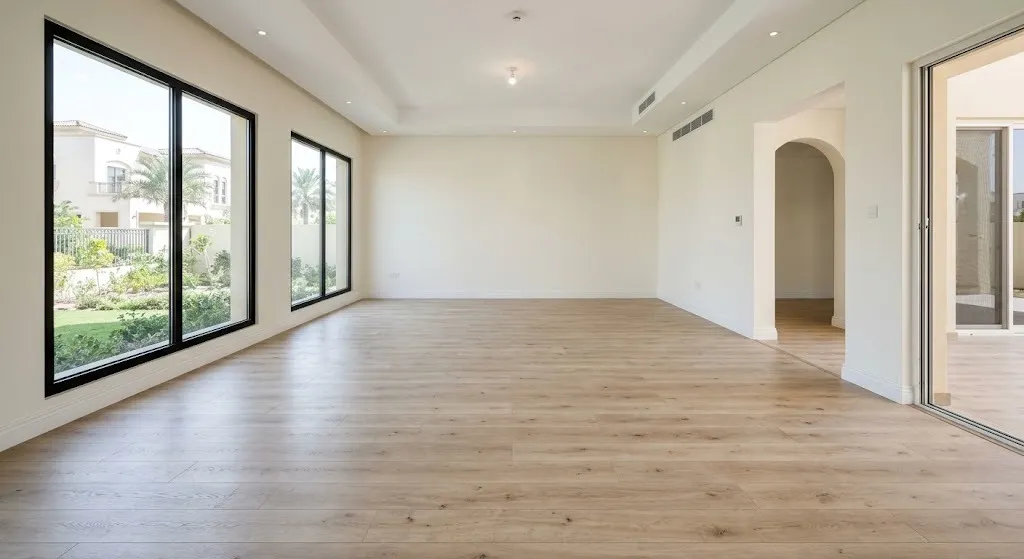
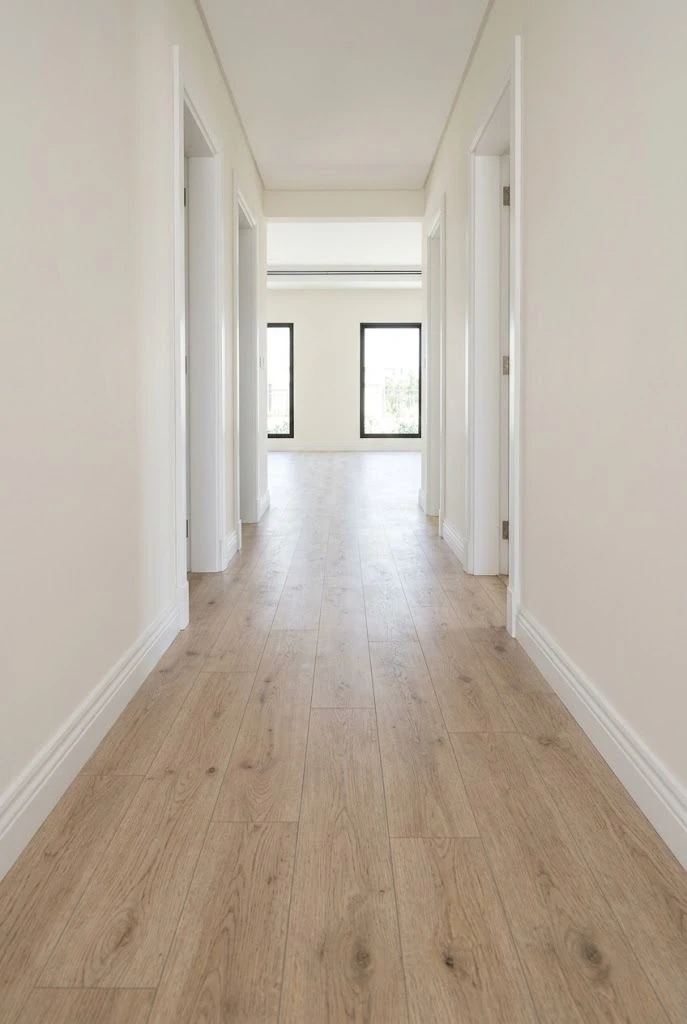
Our SPC Flooring Installation Project at Arabian Ranches 3 began with a call on 4 November 2026. The customer was renovating his villa in Dubai and wanted to replace his tired floors with something modern and practical. We visited the property, listened to his plans, and took charge of the work from the first measurement to the final clean.
The owner had a clear picture of what he wanted. The old floors were making the rooms feel dated, and he wanted a fresh look that would suit the rest of his renovation. He also wanted to avoid the noise, dust, and delays of breaking out the existing surface.
Everyday living mattered just as much as appearance. He asked for a floor that was easy to clean, comfortable underfoot, and tough enough for daily use. It also had to cope with Dubai’s climate, where air conditioning runs for much of the year, and fine sand often finds its way indoors.
After inspecting the villa, we recommended SPC flooring. SPC stands for stone plastic composite, and its rigid core is made mainly from limestone powder and PVC. This core stays stable through moisture and temperature changes, so spills won’t make the planks swell as they can with laminate or solid wood.
We also brought samples to the villa instead of asking the owner to decide from a catalog. Colors often look different at home than they do in a showroom. He compared each option against his walls, furniture, and natural light, then chose a natural oak design that suited his bright interiors.
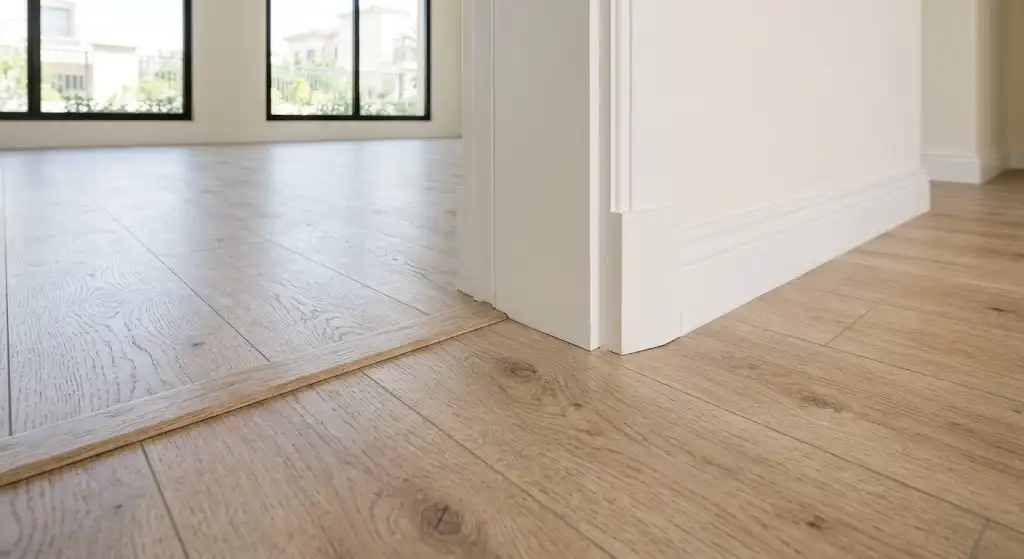
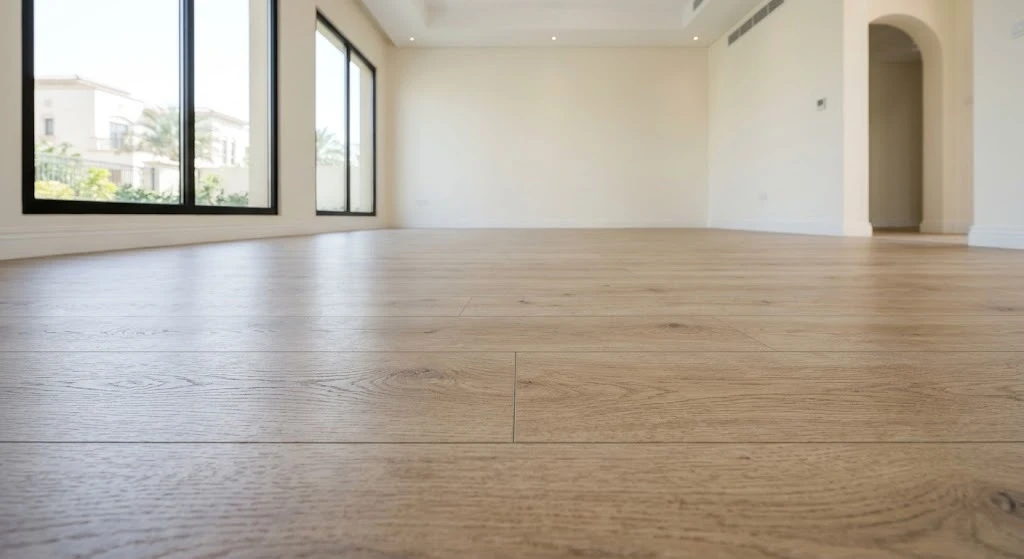
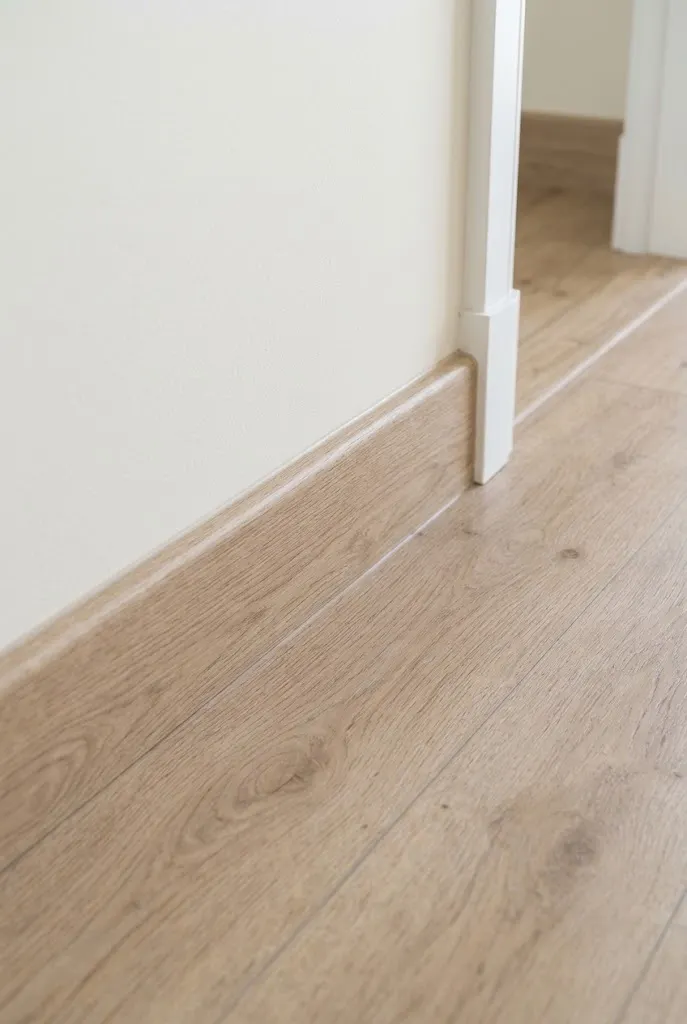
We installed 6 mm SPC planks in a natural oak design with a matte, lightly textured finish. Each plank has a waterproof core and click-lock joints, which let us install the flooring as a floating floor. We finished the installation with matching skirting and door profiles.
The planks also come with an attached 1.5 mm IXPE foam underlay, which softens footsteps and makes the floor more comfortable to walk on. The 0.5 mm wear layer gives the surface solid protection against the scratches and scuffs of a busy home.
We planned the work in clear stages so that each one set up the next.
- Site inspection: We measured each room, checked the subfloor for level and moisture, and noted every door height.
- Surface preparation: We cleaned the base thoroughly and leveled the low spots. A floating floor only performs as well as the surface beneath it.
- Acclimatization: The boxes rested inside the villa for 48 hours with the air conditioning running normally. This let the planks settle to room conditions.
- Layout planning: We ran the planks in line with the main source of natural light. This keeps the joints discreet and makes the rooms feel longer.
- Plank fitting: Our installers clicked each row into place and staggered the end joints for strength and a natural look. We left an expansion gap around walls and fixed objects so the floor could move freely.
- Finishing: We fitted the skirting and door profiles, cleaned the floor, and walked through every room with the owner.
Every villa brings a few surprises, and this one was no different. The new floor raised the finished level slightly, so we adjusted some doors to swing freely. We trimmed them neatly and rechecked each one before moving on.
Cutting around the door frames also took patience. Our team undercut the frames so the planks could slide beneath them, which gave a clean edge without bulky filler. Small details like these are what make a floor look properly finished.
The finished floor gives the villa a calm, connected look from room to room. The oak tone brightens the space, and the surface feels solid and quiet underfoot. The owner got the fresh look he wanted, without the disruption of tearing out his old floor.
Before leaving, we showed him how to care for the new surface. Regular vacuuming and a damp mop will keep it looking good, and spills only need a quick wipe.
This project is a good example of how we like to work. We listen first, recommend what suits the home, and pay close attention to every stage of the installation.