
Should Curtains Touch The Floor? Curtain Length & Measuring Tips
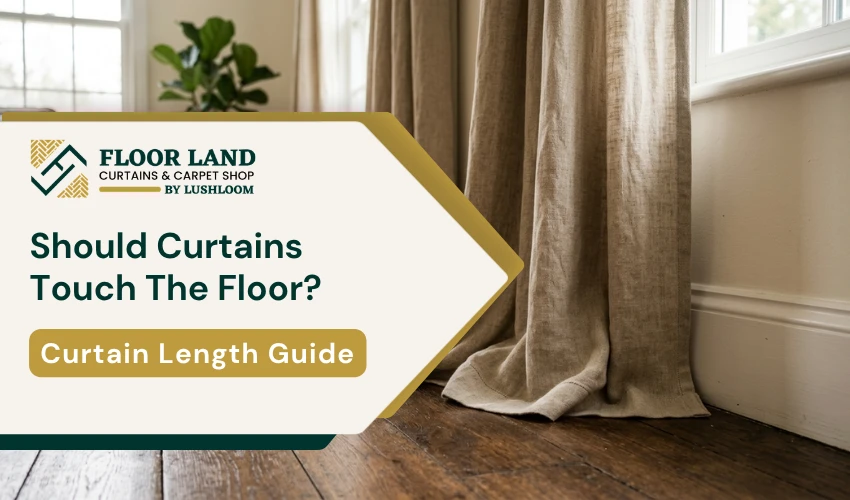
Yes, in general, curtains in bedrooms and living rooms should touch or skim the floor. Full-length drapes can give privacy, insulation, light control, and formal elegance to these spaces.
But floor-length curtains aren’t a one-size-fits-all solution. Shorter curtains work better on low windows, above radiators and heavy furniture, or in rooms with high moisture levels such as kitchens and bathrooms. This guide by Floor Land helps you in selecting the right drape length, measuring accurately, and knowing when to keep your curtains off the ground.
Where Should the Curtains Fall? Learn The Designer Rule
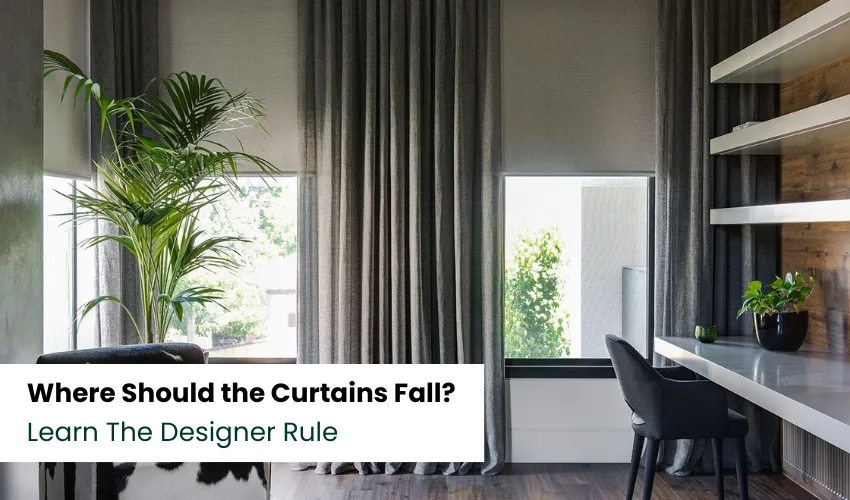
Typically, interior designers suggest curtains that just touch the floor, stopping about 1/4 inch above the ground. This gives a custom, high-end look to your curtains, especially blackout drapes, without the fabric dragging and collecting dust. Ultimately, though, things like room function, humidity, and furniture placement will determine whether a floating, floor-kiss, or sill-length drop is best for your space.
Why Curtain Length Matters The Most?
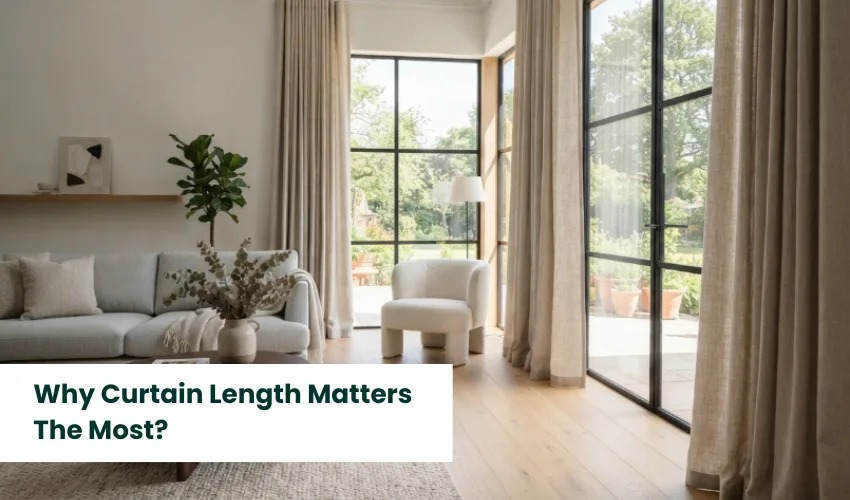
Curtain length matters a lot to determine its functionality and overall look. Let’s understand this with an example. Suppose you have selected the sheer drapes that are too small as compared to the window. As a result, you will be irritated by sunrays, your privacy will be compromised. Alternatively, you bought the very long thick curtains; now you will face difficulty in opening and closing. So, it is crucial to buy the right-length curtains for your spaces.
Full-length curtain styles include hovering, skimming, and pooling. These drapes create the illusion of height even in compact spaces. Curtains that touch the floor are usually installed in houses, formal spaces, and apartments. The major cons of these drapes are that they collect more dust as their fabric grazes over the floor. So, you will require more time to clean them.
Short length curtains usually end 1-2 inches above or below the windowsill. These drapes offer cottage-like vibes and are very easy to clean. You have to compromise on privacy and light control when choosing the small window drapes.
Curtain length affects the following:
- Visual Height: Floor-length curtains draw the viewer’s eye upward. So, the ceiling will appear taller, and the room will look more spacious. Meanwhile, short curtain length does not provide visual height.
- Room Proportion: The curtain of the right size (length) creates a more balanced proportion. They visually connect the window and floors.
- Insulation: The perfectly sized curtains minimize the draft and heat loss by covering the window areas.
How To Select The Perfect Curtain Length?
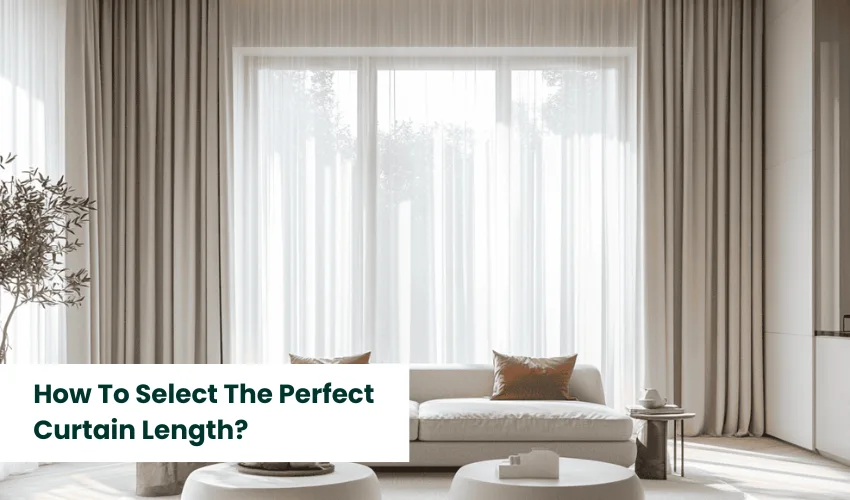
Choosing the right curtain length is not as complicated as most people think. You must keep the following factors in mind when choosing the curtain length for your space.
1. Curtain Fabrics
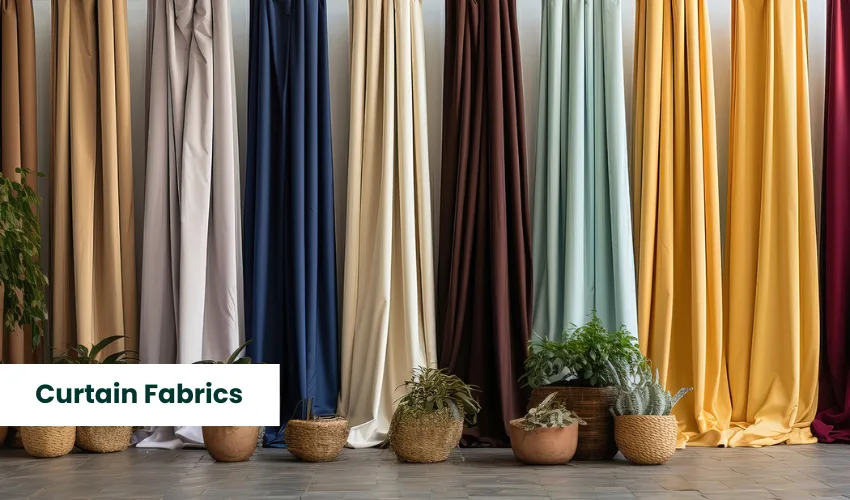
Curtains are made from heavyweight and lightweight fabrics. So, you must check which curtain fabric before buying. For thick fabrics like velvet, lined cotton, polyester, or jacquard, select floor-length motorized curtains. These drapes hang perfectly with minimal creases and offer better privacy. You can protect your interior from the harsh UV rays with heavy-fabric full-length curtains.
For lightweight, unlined fabrics like organza and chiffon, you can go with short curtains. The best curtain styles for thin fabrics are apron, sill, and valance. Always keep this in mind: curtains made of delicate fabrics cannot provide complete privacy, light control, or insulation.
Important note:
Sometimes fabrics can shrink or stretch after washing, so make sure to take measurements accordingly.
2. Functional Impact
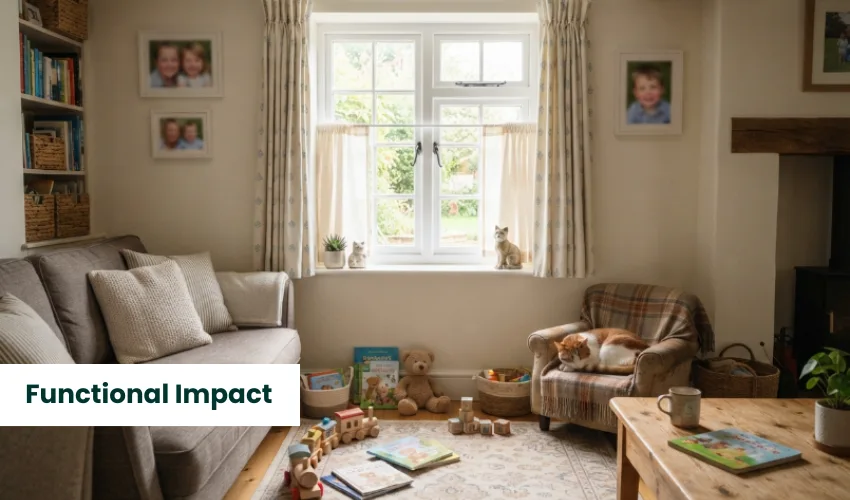
Always consider the curtain’s everyday use before deciding its length. If you are installing the curtains for light blockage or privacy, then they must touch the floor. The floor-length eyelet curtains can completely cover the window without leaving gaps. Should curtains touch the floor or be above in the high-traffic spaces? Then, in this situation, the ideal length is slightly above the floor. The curtains of this length are easier to open, close, and maintain.
For homes with kids and pets, choose short-length curtains. The curtains above the floor do not collect dust and reduce the risk of slips and falls.
3. Heading Style
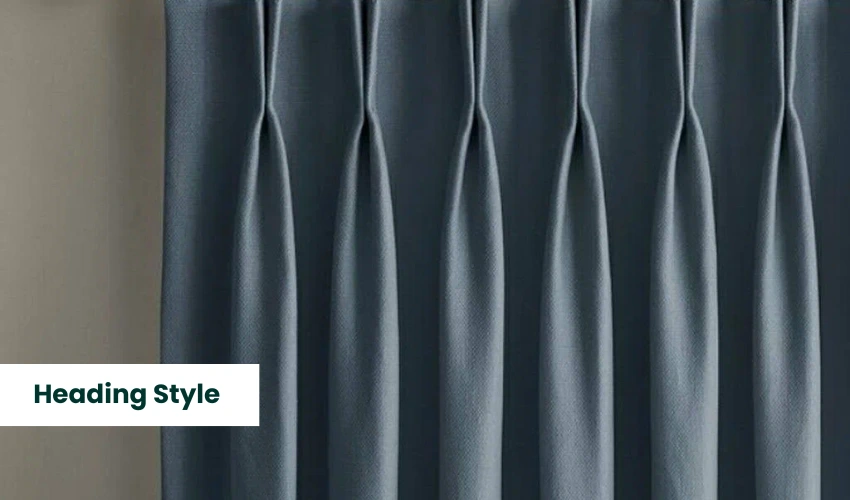
Considering the curtain heading style is as important as the material while selecting the right length. The header style of the drapes directly determines how it will hang and create folds. For the floating length, the ideal pick is pleated curtains, such as pencil pleats and pinch pleats. Select the hover length for the curtains with eyelet headers. For the floor-to-ceiling curtains, choose goblet or wave curtain headers as they work exceptionally well. Header style basically determines where the curtains start. So make sure to take the curtain length after determining the heading styles. This way you will definitely buy the right curtains that finish at your intended height.
4. Your Space
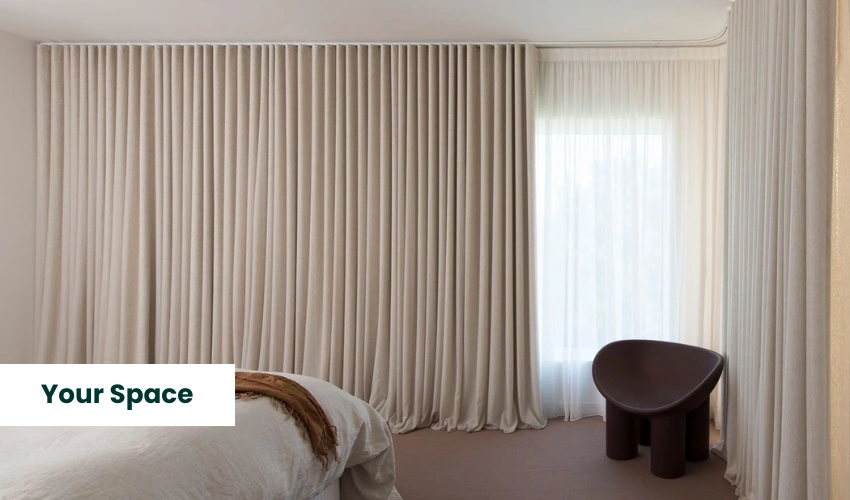
Always keep in mind the space where you are going to install the drapes before deciding whether curtains touch the floor or not. If you need the curtains for master bedrooms and living areas, then choose floor-length soundproof curtains. Moreover, their width should be 2x the actual window size for proper coverage.
For the dining spaces, floor-kiss or puddle curtain styles are the ideal pick. Never make the mistake of using full-length curtains for the laundry rooms, kitchen, and bathrooms. The curtains that touch the floor will collect more dust and moisture and need more maintenance in damp spaces.
5. Personal Style And Desired Look

You should keep in mind the style and desired look you want to achieve from the curtains before determining their length. If the goal is to get a clean & balanced look, go with floor-kiss drapes. For the formal vibes, install puddle-length curtains. You can make your bedrooms more luxurious by installing floor-touching window curtains in heavy fabrics. Keep these considerations in mind before choosing the curtains for your home or workplace.
The Curtain Length Rules
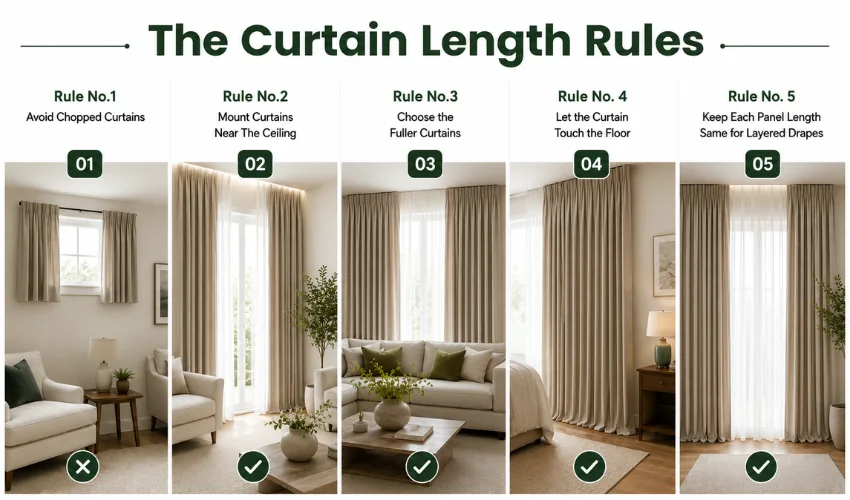
To clarify the common concern should curtains touch the floor or windowsill, here we are providing the ideal curtain length rule.
Rule No.1: Avoid Chopped Curtains
Choosing short or chopped curtains for residential spaces is a big blunder, as per experts. They look awkward and make your space uninviting. Another drawback of such drapes is that they make any window look shorter, and the ceiling appear lower. Make sure the curtain pools or grazes the floor. Follow the same rule for office curtains.
Rule No.2: Mount Curtains Near The Ceiling
Curtain experts throughout the world recommend installing the curtains near the ceiling. The curtains that are hung at this position create the illusion of a spacious and taller room. Must follow this rule for congested spaces. Another benefit of hanging the curtains near the ceiling is that there will be no light gaps. To achieve this look, install the curtain rod 5 to 6 inches above the window frame.
Rule No.3: Choose the Fuller Curtains
Must choose a curtain that is wider than the actual window size. The recommended curtain width is 2 to 3 times the window size. This rule will help provide insulation, light control and privacy. You can take help from any curtain experts to choose the most suitable fullness.
Rule No. 4: Let the Curtain Touch the Floor
The curtain drop should vary for each room. For the bedrooms and living rooms, experts recommend that the drapes be skimmed or lightly touch the floor. You can adjust the curtain height once you understand the use and space needs.
Rule No. 5: Keep Each Panel Length Same for Layered Drapes
Do you have layered curtains in your space? Then make sure to keep the length the same for each panel. Having curtains with different lengths looks awkward and does not perform as they are intended.
The Most Popular Curtain 2026 (Based on Length)
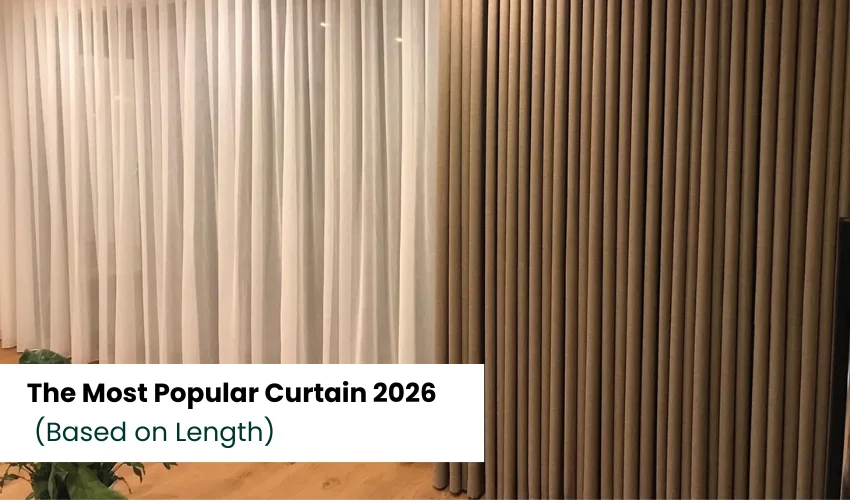
Take a look at the curtains that are trendy in 2026. After reading their features, you can easily find the most suitable curtain for your space by length.
1. Floating Curtains
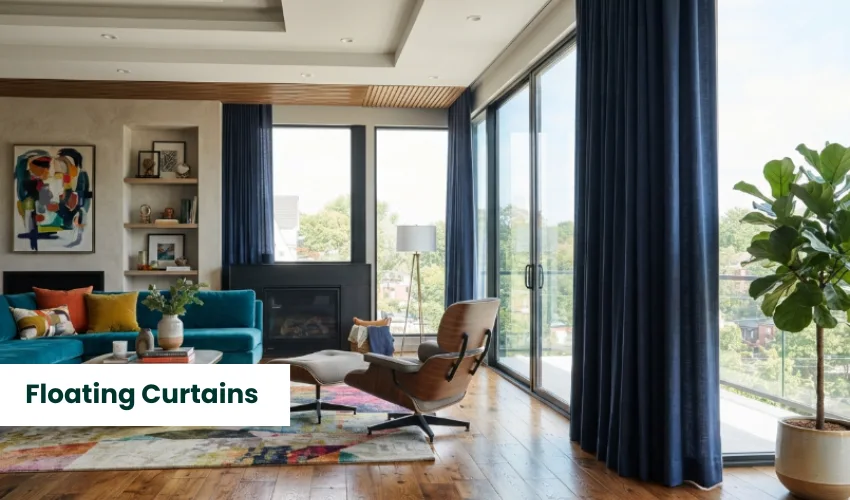
Curtains with floating length are most commonly used throughout the world. These drapes end just above the floor and are known for offering a modern look. The most helpful feature of these drapes is that they do not collect much dirt in the hems and are very easy to clean. If you want to measure these drapes precisely, follow the steps below:
- For precise measurements, use a measuring tape.
- Start measuring the distance from the curtain rod to the ground.
- Take this measurement three times for a more precise output
- Now subtract almost ½ to 1 inch from the total measurement to get the float length
Calculate the curtain width with this formula: Rod Length x fullness factor
Ideal Places to Install Floating Curtains:
Living Room
Homes with Kids and Pets
Hallways
High-traffic residential and Commercial Places
| Pros | Cons |
|---|---|
|
|
Best for: Creating a clean & contemporary appearance
2. Floor-to-Kiss Curtains
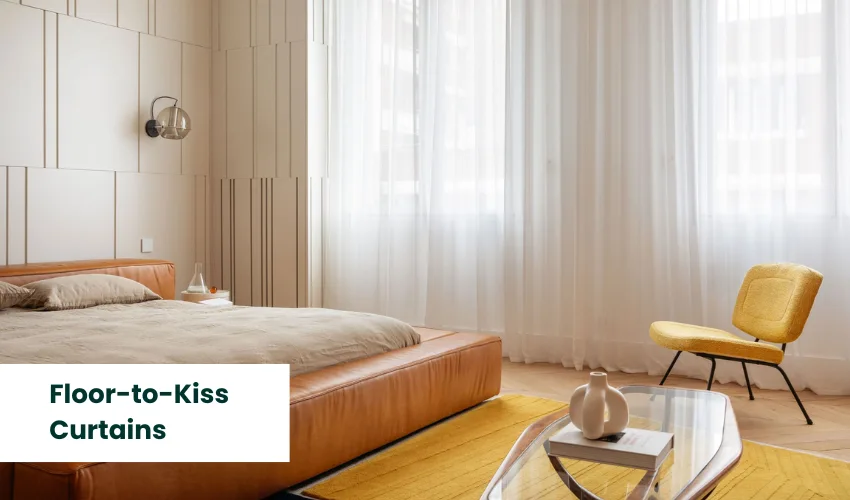
Floor-to-kiss curtains are among the elegant and luxurious window treatment options. These drapes lightly touch the floor a few millimeters above it. They are known for offering a crisp and tailored look to any space. Floor-kiss window curtains are very easy to open and close and give any space an updated look. For measuring these drapes precisely, follow the steps mentioned below:
- Use the measuring tape to take measurements for the curtains.
- The ideal rule is to place the drape pole or rod 5 inches above the window frame
- Measure vertically from the curtain rod to the floor.
- Once you have taken this measurement, now subtract almost 0.25–0.5 inches from the length. This way, the curtain will graze the floor.
Most Suitable Places to Use the Floor Kiss Curtains
- Modern and traditional interiors
- Bedrooms
- Home Offices
- Dining Room
- Living Room
| Pros | Cons |
|---|---|
|
|
3. Puddle Length Curtains

Puddle-length curtains are well-known for offering the most luxurious look. A few inches of the curtain fabric gather at the floor to give the puddle effect. Avoid using these drapes at the window that needs to be open and closed frequently. The ideal fabric choices for these curtains are linen, velvet, and cotton blended fabrics. Check the steps to measure these drapes very accurately:
- Using a measuring tape, take measurements from the curtain rods to the floor.
- If you need minimal puddle, then add 3 to 3.5 inches to the actual length
- Want a moderate puddle for the curtains? Add 6 inches to the exact measurement
- An 8-inch addition to the curtain fabric is most suitable for achieving the maximum puddle effect.
Where to Install Puddle Length Curtains?
- Formal Living Rooms
- Decorative Sitting Areas
- Master Bedrooms
- Luxury Hotels
- Formal Dining Areas
| Pros | Cons |
|---|---|
|
|
4. Apron-length Curtains
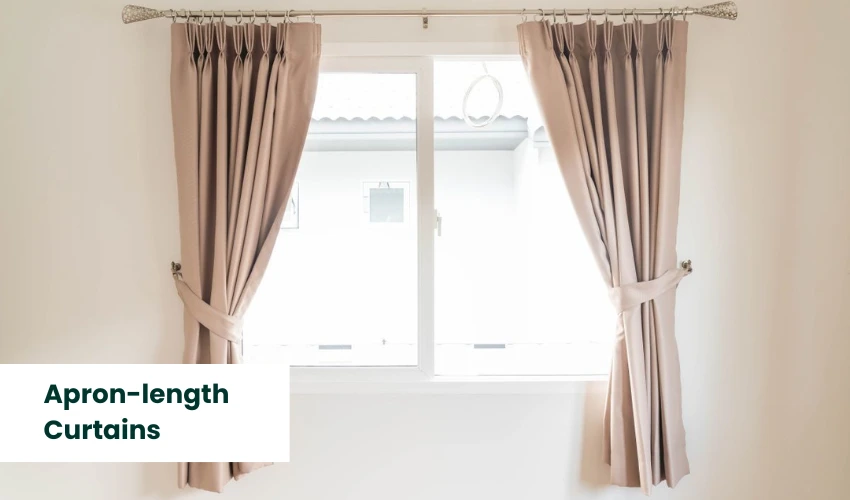
The apron-length curtains are 4-6 inches below the window sills. These drapes cover the window trim without touching the floors. If your space has high furniture, radiators, or built-in features below the window, then this length is most ideal for the curtains. The apron curtain length is mostly seen in utility-focused rooms. But they look very awkward in modern spaces. Measure these curtains with the steps mentioned below:
- Use a measuring tape or meter ruler.
- Start the measurement from the curtain rod.
- Measure 4-6 inches below the window sills.
- If you are using two drapes on the same rod, ensure that they end at the same height for a uniform appearance.
Ideal Places to Use the Apron Length Curtains
- Kids bedrooms and play areas
- Home offices
- Lounges
- Dining Areas
| Pros | Cons |
|---|---|
|
|
5. Sill Length Curtains
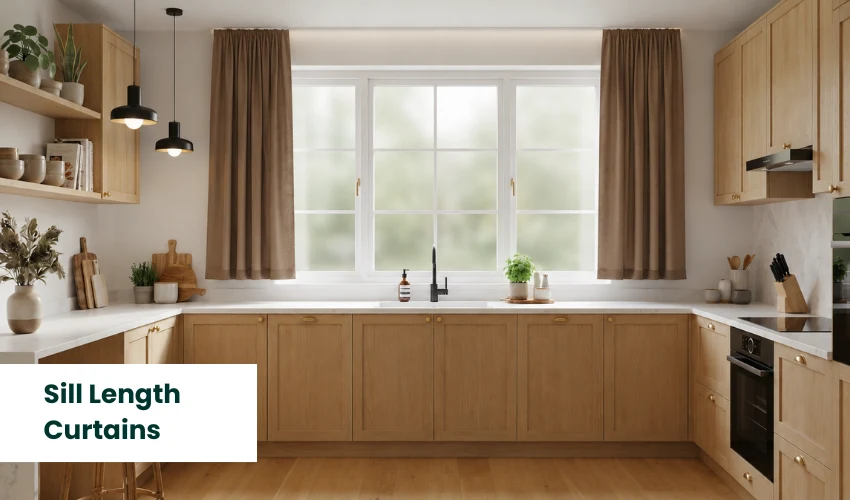
Sill-length curtains end at the window sills. This style is ideal for compact spaces. You can use the sill-length window drapes for windows having sinks, countertops, and furniture just below them. The best fabric option for sill-length drapes is cotton, linen, and voile. Taking measurements for these drapes is very quick and easy.
- Take the measurement vertically from the top of the curtain rod to the bottom of the windowsill.
- Want your curtains to hover over the sill? Add ½ inch to the exact window measurement
- To ensure the windowsill is at the same level, take measurements from three different spots.
Use Sill Length Curtains At
- Kitchens
- Bathrooms
- Laundry Rooms
- Breakfast Nooks
- Basement Windows
| Pros | Cons |
|---|---|
|
|
When Curtains Should Not Touch The Floor

Floor-to-ceiling curtains are not always the best choice. Using them in the wrong space can become a nightmare for you.
1. If They Cover The Radiator
Do you have a radiator just below the windowsill? Then never use floor-length curtains there. Curtains trap warm air between the window and the fabric, reducing heat circulation into the room, putting extra load on them. So, it is best to go with shorter-length curtains for improved safety and hygiene without compromising functionality.
2. In Moisture-Prone Areas
Using curtains that touch the floor in moisture-prone areas like kitchens, bathrooms, laundry rooms, and basements is the worst decision you could ever make. These drapes can absorb moisture, increasing the risk of mold and mildew. This risks your health. Moreover, removing mold and mildew stains is very tricky and tiring. So make sure to hem the curtains above the floor; this way, your privacy will not be compromised, and the fabric will stay dry.
3. If You Have Pets Or Children
Do not use floor-length curtains in a place with kids and pets. There is a high chance that a kid or pet can trip on the curtain fabric. Besides, kids’ dirty hands and pets’ hair collected in curtain fabrics can negatively impact the home aesthetics and hygiene. The most suitable curtain length for such spaces is just above the floor.
4. When the Furniture is Placed Just Below the Window
If you have placed furniture such as a sofa, desk, bed, storage cabinet, or chair just beneath the window, avoid using floor-length window curtains. These window drapes can bunch very awkwardly in such a situation. You can select curtains with a sill or apron length for a cleaner, more stylish look.
5. In High-Traffic and Commercial Spaces
Installing floor-length curtains in high-traffic or commercial spaces is not a good choice. These places experience high movement and dust accumulation. In these situations, full-length curtains collect dust and look very bad. Curtains that float over the floor are the most suitable option in these areas.
Final Thoughts
So should curtains touch the floor? It depends on the use, space traffic, and desired aesthetics. Usually, floor-kiss curtains are the best choice for homes and other residential spaces. Floating curtains are preferable for practical spaces. If you need curtains for formal places, puddle length is the best option. Always remember that choosing the right curtain is not enough; you must properly install the drapes for better functionality
Frequently Asked Questions
Should Blackout Curtains Touch the Floor?
Yes, the blackout curtains must touch the floor to offer privacy and better light control. These floor-length drapes do not leave gaps for light leakage, offering sound sleep even during the day.
Can Curtains Be 2 Inches Off The Floor?
It depends on the situation; if you need the curtains for privacy and light control, you must pick floor-length curtains. For a room with moisture and water splashes, you can choose curtains that hang 2 inches above the floor. Generally, the curtains that are 0.5 to 1 inch above the floor also work best.
Do Standard-Sized Curtains Touch The Floor?
84-inch curtains may reach the floor in rooms with standard 8-foot ceilings and properly positioned curtain rods. Sometimes, if the curtain rod is installed too high, these curtains cannot touch the floor. So the best approach is to measure your window before buying any window drapes.
Are Apron-Length Curtains Outdated?
No, apron-length curtains are still in style. These are the best choice if there is furniture beneath the window or your space has radiators. Longer-length curtains are a preferable choice for better privacy, insulation, and light control.
Is It Better To Have Longer Or Shorter Drapes?
Curtain experts usually recommend using longer drapes for improved privacy and to make the space look spacious. The shorter-length curtains work best for high-traffic areas with kids and pets.