
20 Home Renovation Ideas From the Pros – Stylish & Budget-Friendly

Home renovation does not always require a major budget. The biggest improvements often come from better lighting, more usable space, added storage, updated worn surfaces, and targeted exterior upgrades. In some cases, improving the front door or exterior can add more resale value than spending the same amount on an expensive interior upgrade.
This guide by Floor Land covers 20 practical home renovation ideas divided into four categories: low-cost updates, small-home improvements, older-house repairs, and interior upgrades. For each idea, you’ll learn what to change, why it can improve your home, and what to consider before starting. You’ll also find practical advice on setting a renovation budget, deciding when to hire a professional, comparing quotes, and asking the right questions before signing a contract.
Things to Fix First Before You Start
The order of your renovation work matters as much as the work itself. Professionals fix hidden problems first and pretty things last. If you do it the other way round, you may have to tear out new work to fix an old problem.
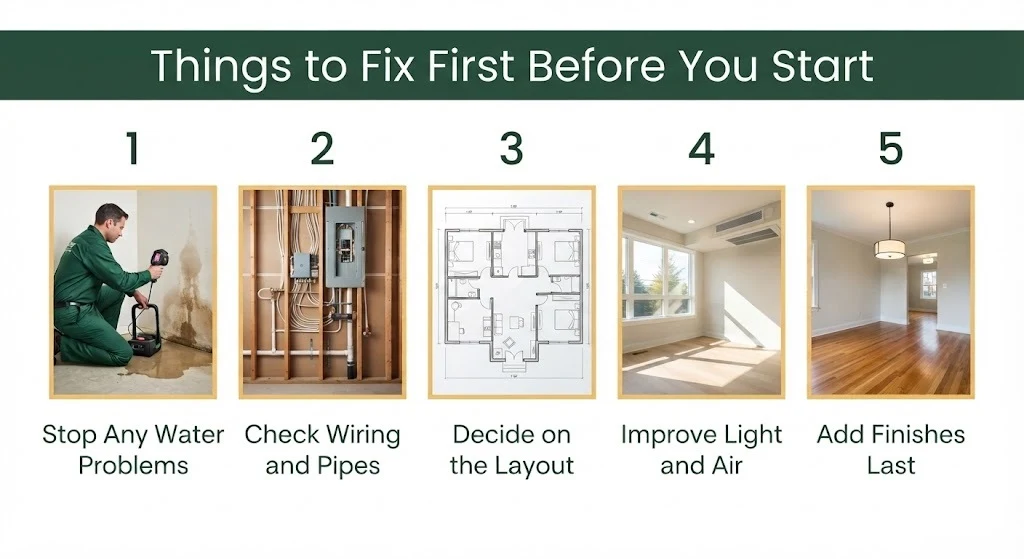
Follow this simple order:
- Stop any water problems. Leaks and damp walls ruin paint, wood and tiles.
- Check wiring and pipes. Fix them while walls are still open.
- Decide on the layout. Choose where doors, walls and fixtures will go before you buy anything.
- Improve light and air. Windows, lights and fans change how every room feels.
- Add finishes last. Paint, flooring, tiles and handles come at the end.
A quick way to remember it: if a job will be hidden later, do it now. If you can change it in a weekend, it can wait.
Home Renovation Ideas on a Budget
You don’t need a large budget to make your home look better. These five ideas focus on the things people notice first. None of them require knocking down walls during apartment or villa renovation.
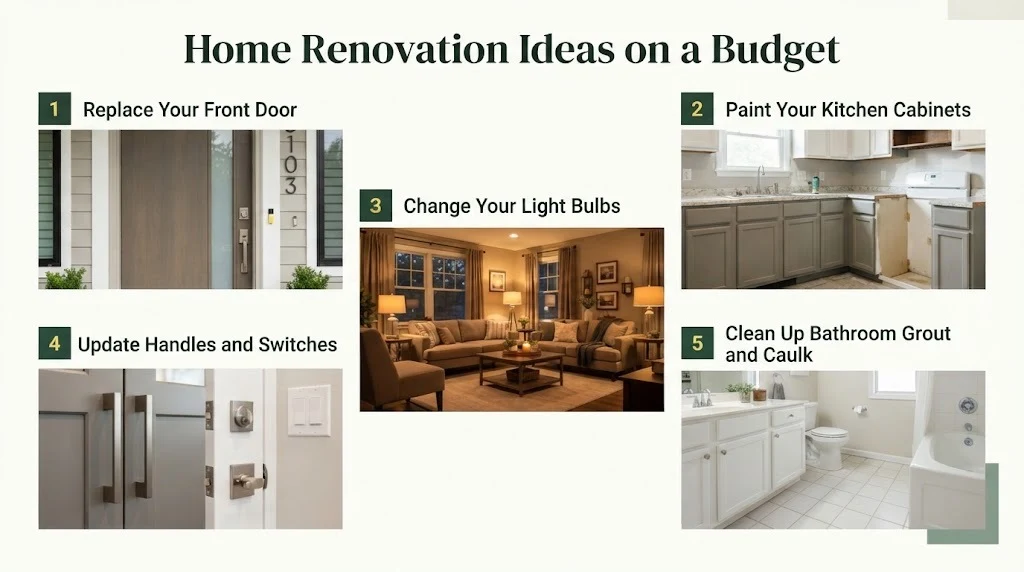
1. Replace Your Front Door
Most people think the kitchen is the best place to spend money. The numbers say otherwise. In 2025, a new steel front door cost about $2,435 on average and added about $5,270 to a home’s value. Pick a color that stands out from your walls. Then add a new handle and house numbers in the same finish. Your front door is the first thing guests and buyers see, so a small change here goes a long way.
2. Paint Your Kitchen Cabinets
New cabinets can use up half your kitchen budget. But if the cabinet boxes are strong, you only need to fix the surface. Good preparation is the secret. Clean off all grease, sand lightly, and use a primer designed to stick to shiny surfaces. Then apply two thin coats of cabinet paint. Avoid the cheapest paint, as it often needs extra coats and chips quickly.
3. Change Your Light Bulbs
Does a room still feel dull after you’ve painted it? The light bulbs may be the problem. Use warm white bulbs (around 2700K) in bedrooms and living rooms. Use slightly brighter, cooler bulbs (3000K–3500K) in kitchens and bathrooms. Then add a lamp or wall light at eye level. Rooms lit only from the ceiling tend to look flat.
4. Update Handles and Switches
Small details make a home feel finished. Think cabinet handles, door knobs, light switches, and taps. Choose one finish, such as matte black or brushed gold, and change everything in the room together. Mixing old and new styles looks unplanned. This is also one of the cheapest upgrades on this list.
5. Clean Up Bathroom Grout and Caulk
Contractors rarely suggest this because it’s a small job. Yet dirty grout and yellow sealant make clean tiles look old. Scrape out the old sealant around the bath and sink. Clean dark grout lines with a grout pen or fresh grout. Finish with new mold-resistant sealant. Your bathroom can look years newer in one afternoon.
Small Home Renovation Ideas
In a small home or apartment, every corner counts. The goal isn’t to fake extra space. It’s to stop wasting the space you already have. These ideas help a compact house feel open and organized.
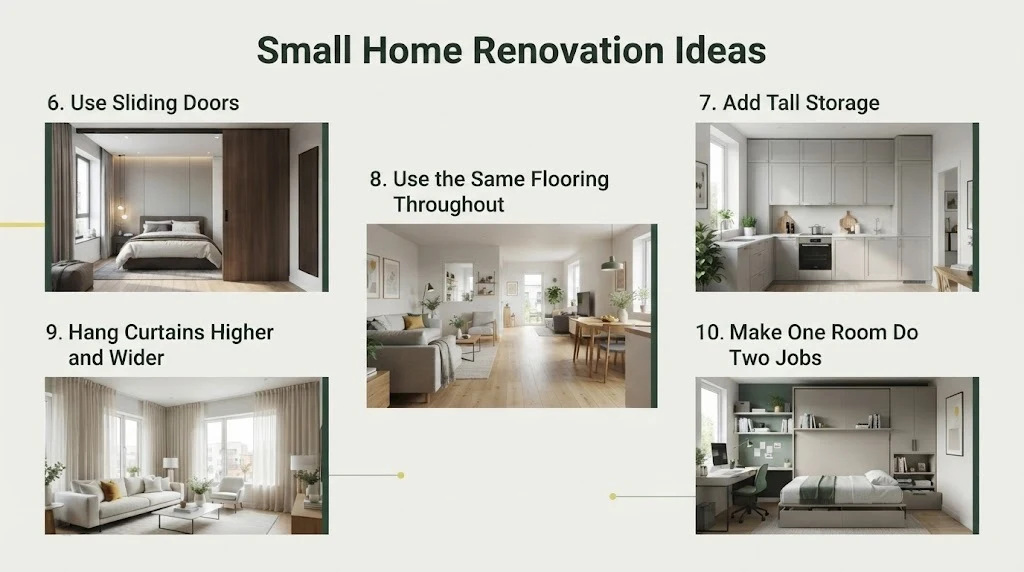
6. Use Sliding Doors
A normal door needs room to swing open. In a small bathroom or bedroom, that swing can block a cupboard or a whole wall. Barn-style sliding doors hang outside the wall and are easy to fit. Pocket doors slide into the wall and disappear completely, but they require opening up the wall. Save pocket doors for a bigger project.
- Works best in: bathrooms, laundry rooms, and walk-in closets.
- Skip it if: the wall next to the door has pipes or wires inside.
7. Add Tall Storage
Most cupboards stop short of the ceiling. That gap gathers dust and makes rooms look shorter. Build wardrobes and kitchen cabinets all the way up. You’ll gain extra space for things like holiday decorations or spare bedding. Tall units also draw the eye upward, which makes the room feel taller.
8. Use the Same Flooring Throughout
Each time the flooring changes, it creates a visible line. In a small home, these lines cut the space into tiny sections. Use one type of flooring across your living room, hallway, and kitchen. The rooms will feel like one connected space. Vinyl plank and porcelain tile work well because they handle both wet and dry areas.
9. Hang Curtains Higher and Wider
This trick costs almost nothing. Fix the custom curtain rod close to the ceiling. Let it extend 15–25 cm past each side of the window. When the curtains are open, they sit on the wall instead of covering the glass. The window looks bigger, and more daylight comes in.
10. Make One Room Do Two Jobs
A guest room used a few nights a year is wasted space most of the time. Give it a second purpose, such as:
- A home office with a fold-away bed
- A study or hobby room with fold-down tables
- A dining corner with bench seats that have drawers underneath
Hidden storage makes this work. If the room looks cluttered, it won’t work well for either use.
Renovation Ideas for Old Homes
Older houses often have charm and solid materials that new homes lack. Their problems are usually hidden behind walls and under floors. The smart approach is simple: keep what makes the house special and fix what is worn out.
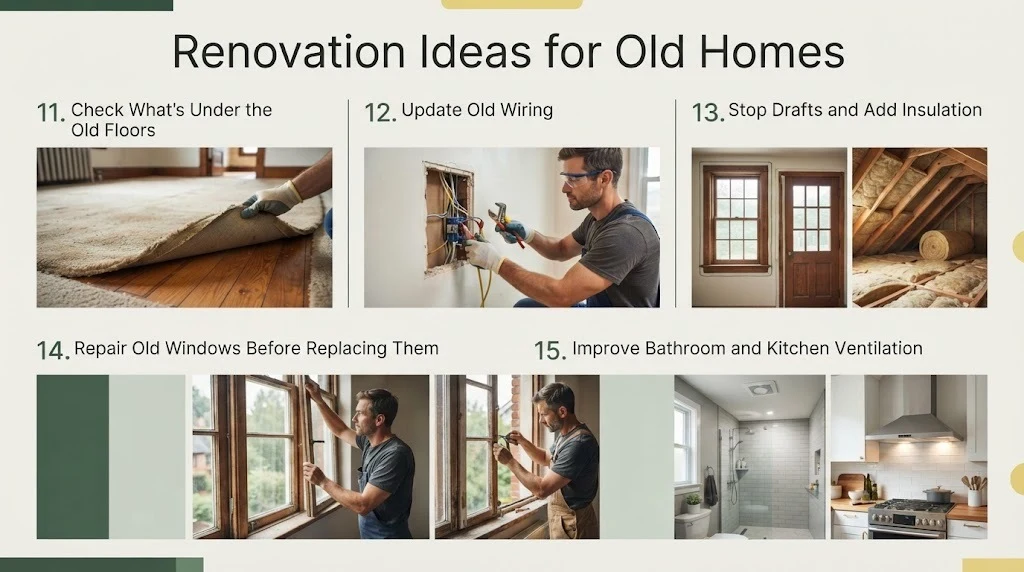
11. Check What’s Under the Old Floors
Before you buy new flooring, lift a corner of the installed carpet. Many older homes have wooden floors or original tiles hidden underneath. Sanding and sealing an old wood floor usually costs much less than putting in a new one. The same goes for old shelves, fireplaces, and ceiling details. A little repair and fresh paint can bring them back to life.
12. Update Old Wiring
Old wiring wasn’t built for today’s appliances, chargers, and air conditioners. Watch for these warning signs:
- Breakers or fuses that trip often
- Switches or sockets that feel warm
- Too few sockets, leading to extension cords everywhere
Ask a licensed electrician to check your system before any decorating begins. Adding new sockets is much easier while the walls are open.
13. Stop Drafts and Add Insulation
Old houses can feel cold even with the heating on. Air leaks in through gaps around windows, doors, floors, and the attic hatch. Sealing these gaps with weatherstripping and filler is cheap and quick. Adding attic insulation goes further. Both can lower your energy bills and make your home more comfortable year-round.
14. Repair Old Windows Before Replacing Them
New windows are heavily advertised, but they don’t always pay off. In 2026, new vinyl windows earned back about 76% of their cost. If your wooden frames are still solid, repair them instead. Replace cracked glass, fix sticky frames, and add new seals. Only replace the windows if the wood is rotten or badly bent.
15. Improve Bathroom and Kitchen Ventilation
Peeling paint above a shower isn’t a paint problem. It’s a moisture problem. Many older bathrooms and kitchens have weak fans, or none at all. Fit an extractor fan that is the right size for the room. Make sure it sends damp air outside, not into the attic. Good airflow protects every other upgrade you make.
Safety first: Homes built before 1978 in the US may have lead paint. Older homes in many countries may have asbestos in ceilings, floor tiles, or pipe covers. Get these tested before you sand or break anything, and use certified experts if needed.
House Renovation Ideas for the Interior
Trends change fast, but good design lasts. These interior ideas focus on texture, comfort, and smart space use. They will still look good years from now.
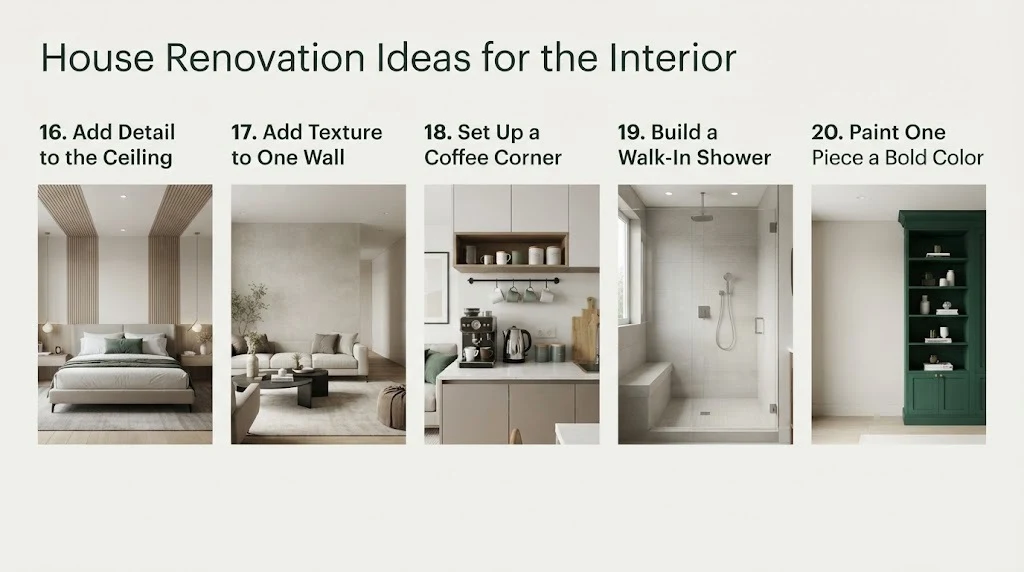
16. Add Detail to the Ceiling
The ceiling is the biggest empty surface in most rooms. Yet it’s almost always plain white. Add wooden strips, painted beams, or a soft color. It works especially well in bedrooms and dining rooms, where people often look up.
17. Add Texture to One Wall
Plain painted walls can feel cold. Texture adds warmth without adding bright color.
Try one of these:
- Limewash paint for a soft, cloudy look
- Wood panels for depth and a cozy feel
- Board and batten (flat boards with thin strips over the joins) to hide small wall damage
Pick the wall you see first when you walk in. Keep the other walls simple.
18. Set Up a Coffee Corner
Kitchens get crowded because everyone goes there for a drink. A small coffee or drinks corner keeps people out of the cooking area. Put the kettle, coffee maker, mugs and a small fridge together in one spot. It can sit in a spare corner, a cupboard or the end of a counter. It’s a small project you’ll enjoy every single day.
19. Build a Walk-In Shower
A walk-in shower with no step looks modern and clean. It’s also safer as you get older, with nothing to trip over. Add a built-in seat and a handheld shower head. Ask your builder to add support inside the walls so grab bars can be fitted later. Planning ahead now can save you from a second renovation later.
20. Paint One Piece a Bold Color
Painting a whole room dark green is a big step. Painting one piece is much easier to try. Choose a rich color for a bathroom vanity, a kitchen island, or a set of built-in shelves. Keep the surrounding walls light and neutral. The result looks planned and stylish, as if a designer chose it.
How to Plan Your Renovation Budget
A clear budget keeps a renovation from growing out of control. Most projects go over budget because people plan for what they want, not for what they might find.
Use these simple rules when you plan:
- List your must-haves and nice-to-haves. Fund the must-haves first. Add extras only if you have money left.
- Get at least three quotes. Compare what each one includes, not just the final price.
- Keep 10–20% aside for surprises. Old homes may need the higher end of this range.
- Spend more on things you touch every day. Taps, handles, flooring, and lighting are used daily. Decor can be cheaper and changed later.
- Think about how long you’ll stay. If you plan to sell soon, choose upgrades buyers value. If you’re staying for years, choose what makes your life easier.
Should You DIY or Hire a Pro?
Doing the work yourself can save money, but only on the right jobs. Some tasks are easy to learn. Others can be dangerous or break local building rules if done wrong.
| Job | DIY or pro? | Why |
| Painting walls and cabinets | DIY | Easy to learn and easy to redo |
| Changing handles and light bulbs | DIY | Simple tools, low risk |
| Regrouting and resealing | DIY | Takes patience, not special skills |
| Hanging shelves and curtain rods | DIY | Just check for pipes and wires first |
| Laying vinyl plank flooring | DIY or pro | Possible for beginners, but a pro finishes faster |
| Tiling a shower | Pro | Poor waterproofing leads to leaks |
| Electrical work | Pro | Safety risk, and often needs a permit |
| Moving pipes or gas lines | Pro | Mistakes can be costly and dangerous |
| Removing walls | Pro | The wall may hold up the house |
A good rule: if a mistake could cause a fire, a flood, or a collapse, hire a licensed professional.
Questions to Ask Before You Hire a Contractor
A good contractor will happily answer these questions. If someone avoids them, treat it as a warning sign. Ask these before you sign anything:
- Are you licensed and insured? Ask to see proof, not just a yes.
- Can I see photos of similar jobs and talk to past clients? Recent work tells you more than reviews alone.
- What is included in this price, and what isn’t? Get a written list of materials and labor.
- Who will be working on my home? Find out if they use their own team or hire subcontractors.
- What happens if you find a hidden problem? Agree on how extra costs will be approved before work starts.
- What is the payment schedule? Avoid paying most of the money up front. Pay as each stage is finished.
- Is there a warranty on your work? Ask how long it lasts and what it covers.
- Who handles permits? Make sure the required permits are in place before work begins.
Common Renovation Mistakes to Avoid
Even a well-planned project can go wrong because of small, avoidable errors. Here are five mistakes contractors see again and again, and how to avoid them.
- Buying materials before measuring properly. Tiles and flooring from different batches can vary in color. Measure twice and order about 10% extra at the same time.
- Choosing colors from tiny samples. Paint and tiles look different on a full wall. Test large samples and look at them in daylight and at night.
- Starting without a written plan. Unclear quotes lead to surprise charges. Ask for a detailed, itemized quote.
- Spending the whole budget. Opening walls often reveals problems. Keep 10–20% aside for surprises.
- Copying online photos exactly. Many pictures are taken by professionals with perfect lighting. Make sure an idea suits your own space and daily life.
How to Use Home Renovation Ideas Pictures the Right Way
Photos are a great way to find your style, but they can also mislead you. Use them as a guide, not a shopping list.
- Save pictures into one folder per room. After a week, look for patterns. You’ll notice the colors and styles you keep choosing.
- Look for real homes, not showrooms. Before-and-after photos from homeowners show what’s actually possible.
- Check the lighting in the photo. A room with big windows will look very different from yours if you have little daylight.
- Share your pictures with your contractor. Showing an image is clearer than describing it in words, and it reduces misunderstandings.
Final Thoughts
A great renovation isn’t about spending the most money. It’s about spending it in the right order and on the right things. Fix the hidden problems first, then improve light and space. Finish with the details you see and touch every day.
You don’t need to do all 20 ideas. Start by walking through your home and noting what bothers you most. Is it a dark room, a cramped hallway, or a bathroom that never feels clean? Pick two or three ideas from this list that solve those real problems. If you’re planning to sell, focus on upgrades buyers notice first, like the front door and kitchen. If you’re staying, choose changes that make daily life easier.
Before you hire anyone, use the questions in this guide to compare contractors. Ask for written quotes, and set aside money for surprises. With a clear plan, even a modest budget can make your home look fresh, feel better to live in, and hold its value for years.
Frequently Asked Questions
What should I renovate first in my house?
Start with anything that protects the house itself, such as leaks, damp, the roof, wiring and pipes. Next, decide on any layout changes. Then improve the lighting. Leave paint and decor until the end so new finishes don’t get damaged.
Which home renovation ideas add the most value?
In 2025-2026 data, new garage doors and steel front doors earned back more than twice their cost. A small kitchen update also earned back slightly more than it cost. Big additions and high-end remodels earned back the least.
How can I make a small home feel bigger?
Use the same flooring across connected rooms. Build storage up to the ceiling, and use sliding doors where space is tight. Light colors and lights at different heights also help small rooms feel open.
Is it cheaper to renovate an old house or buy a new one?
It depends on the condition of the house. Cosmetic updates are usually cheaper than moving. But major work on the foundation, roof, or wiring can change that quickly. Always get a professional inspection first.
Can I renovate on a small budget without a contractor?
Yes, for jobs like painting, changing handles, swapping light fittings, and regrouting. Leave electrical, gas, structural, and major plumbing work to licensed professionals.
How long does a home renovation take?
Small updates like painting or new handles can take a weekend. A bathroom remodel often takes a few weeks. A full house renovation can take several months, depending on its size and any hidden problems found along the way.