
Flooring Materials Guide: Types, Features, and How to Choose the Right One?
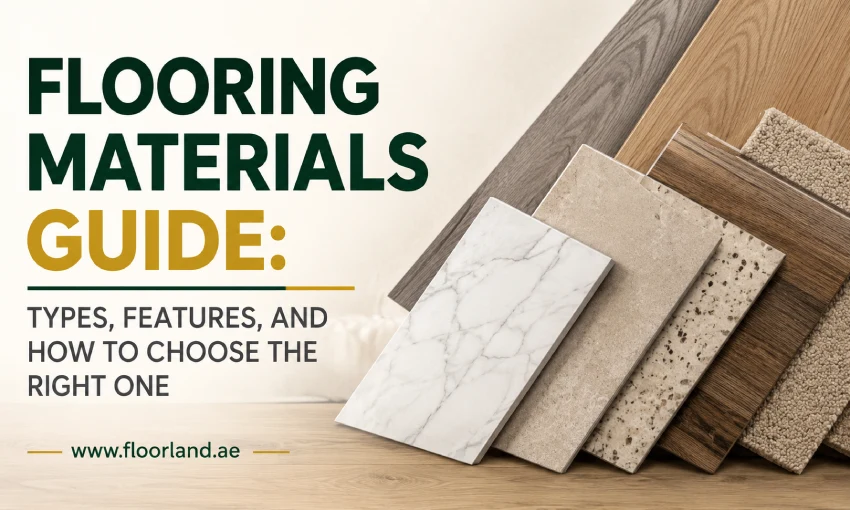
If you are planning a new floor, choosing the right flooring material is one of the most important decisions you’ll make. The best option depends on where it will be installed, how much foot traffic it will handle, your budget, and the look you want to achieve. Popular flooring materials include hardwood, laminate, vinyl, tile, carpet, natural stone, bamboo, cork, and concrete. Each comes with its own advantages, maintenance needs, durability level, and cost.
This guide explains the most common types of flooring materials, their key features, where they work best, and the factors to consider before making a decision. Whether you are renovating a single room or building a new home, you’ll find practical advice to compare flooring materials.
Top Flooring Materials Comparison Table
The table below summarizes the ten most common flooring materials side by side. Use it as a starting filter, then read the detailed breakdown in the next section for the material types that fit your situation.
Types of Flooring Materials Explained
Here is a closer look at each material, including where it performs well, where it falls short, and what it actually costs once installation is factored in.
1. Solid Hardwood
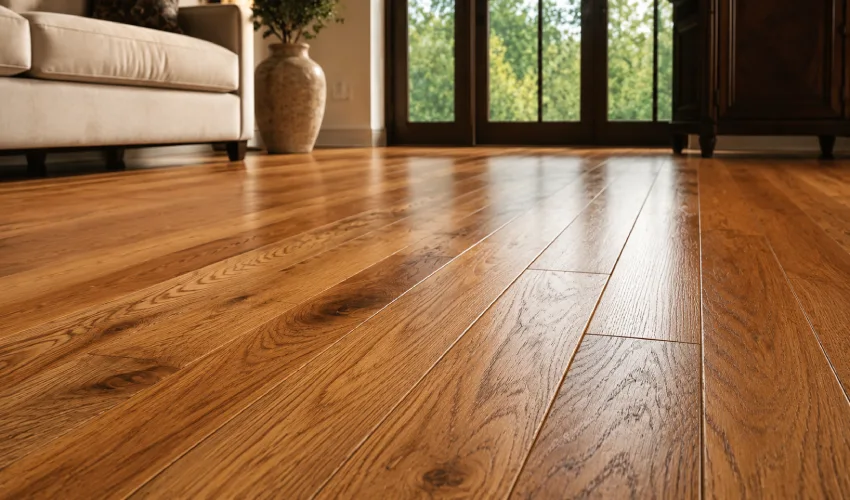
Solid Hardwood Floor is a single piece of wood milled into planks, typically oak, maple, walnut, or hickory. It is the traditional benchmark for warmth and long-term value, and it is the only flooring type here that homeowners commonly refinish multiple times over its life rather than replace.
Pros, Cons, and Best-fit Rooms
The upside is real: solid hardwood can be sanded and refinished several times, which means a floor installed today can realistically outlast the homeowner. The downside is that it scratches and dents more easily than harder surfaces.
It is sensitive to humidity swings, and it should not be installed in bathrooms, basements, or directly over concrete slabs. It performs best in living rooms, dining rooms, and bedrooms, where foot traffic is moderate, and moisture is not a factor.
Cost Per Square Foot
Expect $8 to $17 per square foot installed, depending on species and finish. Exotic or wide-plank species push the higher end. Site-finished floors, sanded and sealed after installation, cost more than prefinished planks but produce a smoother, more seamless look.
Lifespan and Refinishing Potential
A well-maintained solid hardwood floor can last 30 to 100 years. Each refinishing removes a thin layer of wood, and most 3/4-inch solid boards can handle four to six refinishing cycles over their lifetime, which is the main reason hardwood remains popular despite its higher upfront cost.
2. Engineered Hardwood
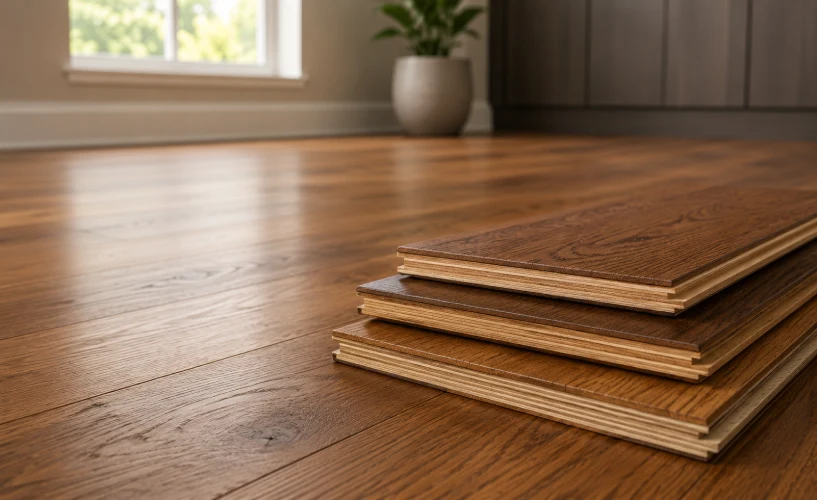
Engineered hardwood pairs a real wood veneer on top with a plywood or high-density fiberboard core underneath. It looks nearly identical to solid hardwood on the surface but behaves very differently underfoot and beneath the surface.
How It Differs From Solid Hardwood
The layered core makes engineered wood more dimensionally stable, meaning it resists the expansion and contraction that plagues solid wood in humid or fluctuating conditions. It can be refinished only once or twice, since the wood veneer on top is thinner than a solid plank.
Where It Outperforms Solid Wood
Engineered wood is the better choice over concrete slabs, in basements with stable humidity, and in homes with radiant floor heating, since solid wood does not tolerate the heat cycling well. Its installed cost typically runs $6 to $14 per square foot, making it a reasonable middle ground between solid hardwood and laminate.
3. Laminate Flooring
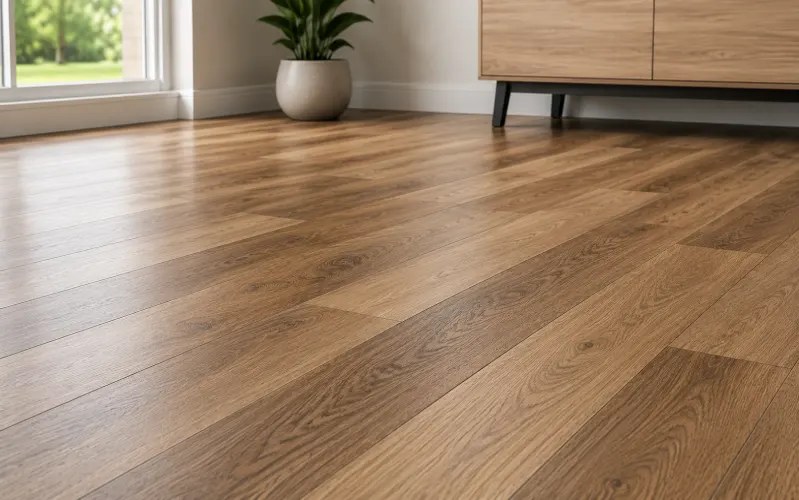
Laminate is a synthetic product built from a high-density fiberboard core topped with a printed image layer and a clear wear layer. It is designed to mimic wood, stone, or tile at a fraction of the cost.
Composition and Wear-Layer Ratings
The wear layer thickness of Laminate Flooring, measured in mils, determines how well the floor resists scratches and fading. Residential-grade laminate typically has a wear layer in the range of 6 to 12 mils, and thicker is generally better for busier households. Ask for the AC rating (Abrasion Class) when comparing products; AC3 suits general residential use, while AC4 and AC5 are built for heavier traffic.
Best Uses and Limitations
Laminate performs well in living rooms, bedrooms, and home offices. Standard laminate is not fully waterproof, since moisture can seep into the fiberboard core at the seams, though some newer water-resistant laminate lines have narrowed this gap. It installs quickly as a floating floor, which makes it one of the more DIY-friendly options on this list.
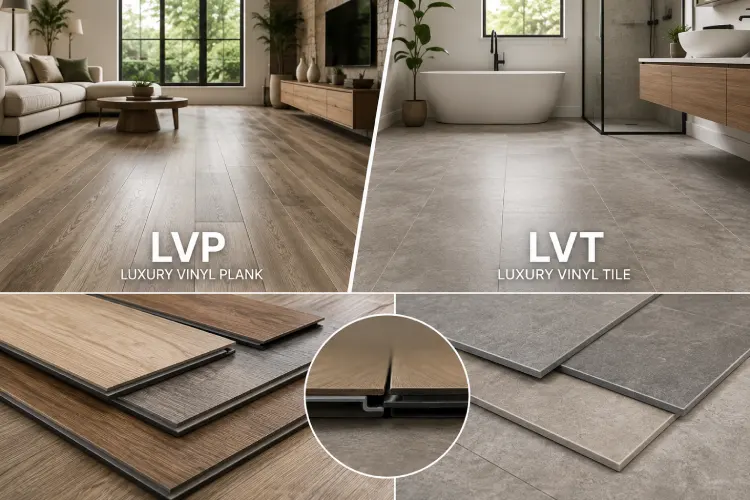
4. Luxury Vinyl Plank (LVP) and Luxury Vinyl Tile (LVT)
Luxury vinyl has become the fastest-growing flooring category over the last decade, and for good reason. It combines a realistic wood or stone look with genuine waterproof performance, something laminate and engineered wood cannot fully match.
Why It Is the Fastest-Growing Category
LVP and LVT Floors use a multi-layer construction: a rigid or flexible core, a printed design layer, and a protective wear layer on top. The rigid-core versions, often called SPC (stone plastic composite) or WPC (wood plastic composite), are dimensionally stable and can be installed over slightly uneven subfloors without the cushioned underlayment some other floors require.
Waterproof vs. Water-Resistant
Waterproof means the core material itself will not swell, warp, or break down when exposed to standing water, which describes true luxury vinyl with an SPC or WPC core. Water-resistant means the surface repels water for a limited time, but the material can still be damaged if water sits or seeps into seams for an extended period. Read the product specification sheet rather than relying on marketing language on the box, since the two terms are often used loosely in stores.
5. Sheet Vinyl
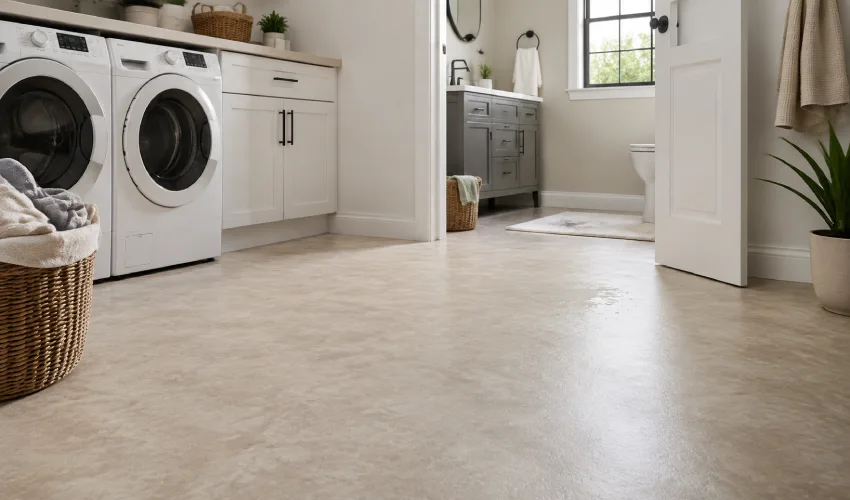
Sheet vinyl flooring comes in large rolls rather than individual planks or tiles, which means fewer seams and better protection against water reaching the subfloor. It is the least expensive vinyl option, typically $2 to $6 per square foot installed, and it works well in bathrooms, laundry rooms, and utility spaces where a seamless waterproof surface matters more than a premium look.
6. Ceramic and Porcelain Tile
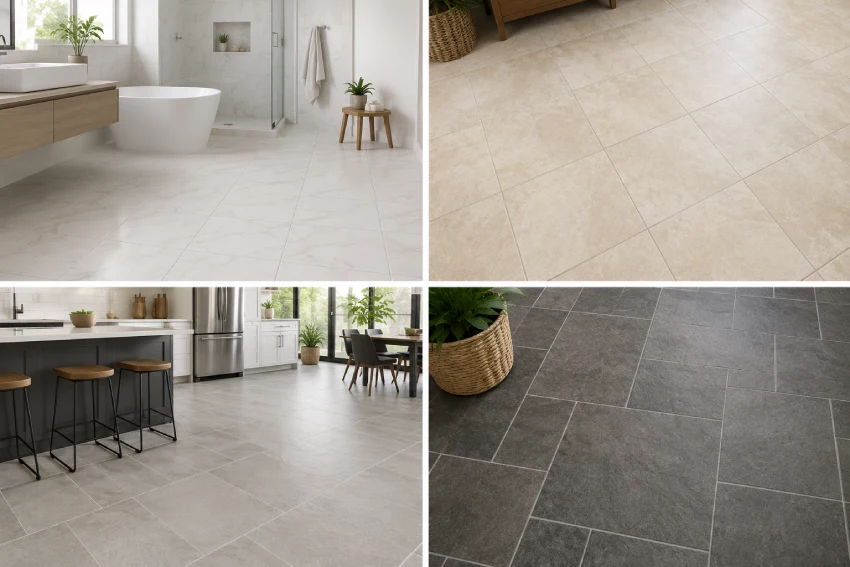
Tile is a kiln-fired material that ranks among the most durable and water-resistant flooring available. It handles heat, moisture, and heavy traffic better than almost any other residential material.
Ceramic vs. porcelain: key differences
7. Natural Stone
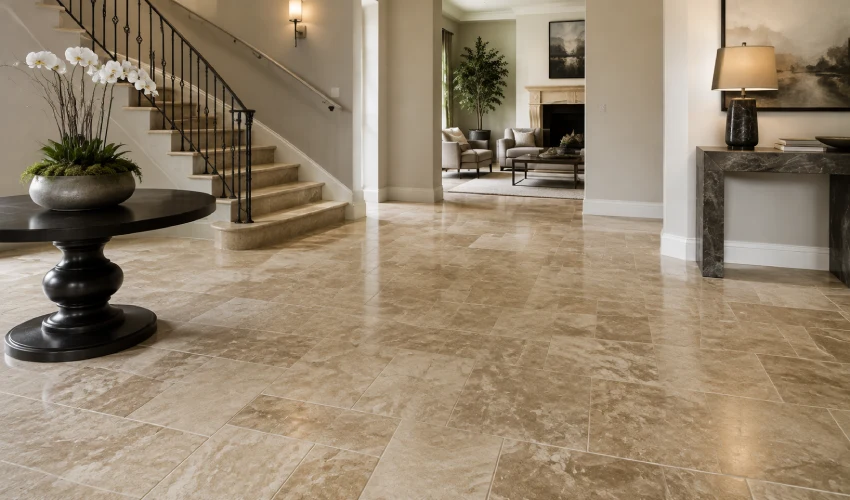
Natural stone, including marble, granite, travertine, slate, and limestone, offers a look no manufactured product fully replicates. It is also the most expensive category on this list, running $12 to $30 per square foot installed, and it requires periodic sealing to resist staining and moisture absorption. Stone works best in entryways, formal living spaces, and bathrooms where the homeowner is willing to maintain it properly.
8. Carpet
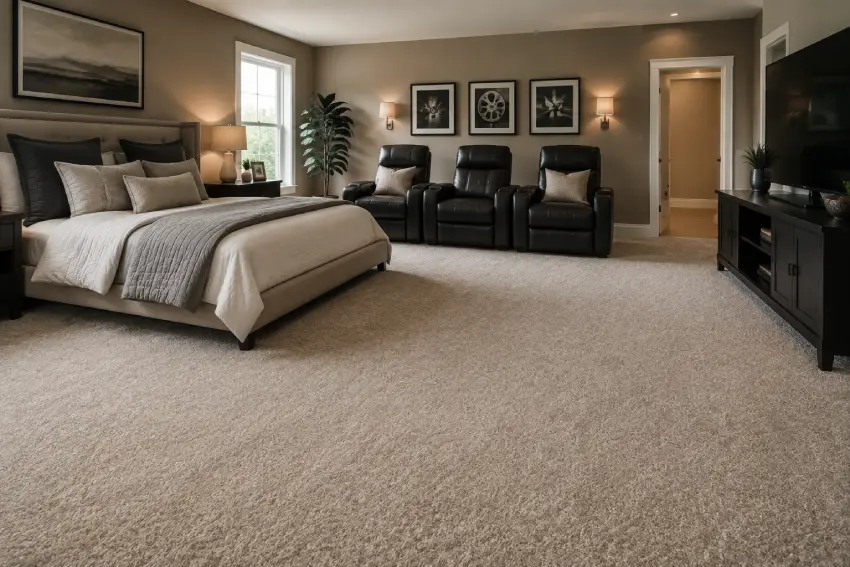
Luxury Carpet remains popular in bedrooms and media rooms for its softness, warmth, and sound dampening. It performs poorly against moisture and stains, and it has the shortest realistic lifespan of the materials covered here, typically 5 to 15 years depending on fiber type and traffic. Stain-resistant fiber treatments have improved, but carpet is still not a good fit for kitchens, bathrooms, or entryways.
9. Polished Concrete
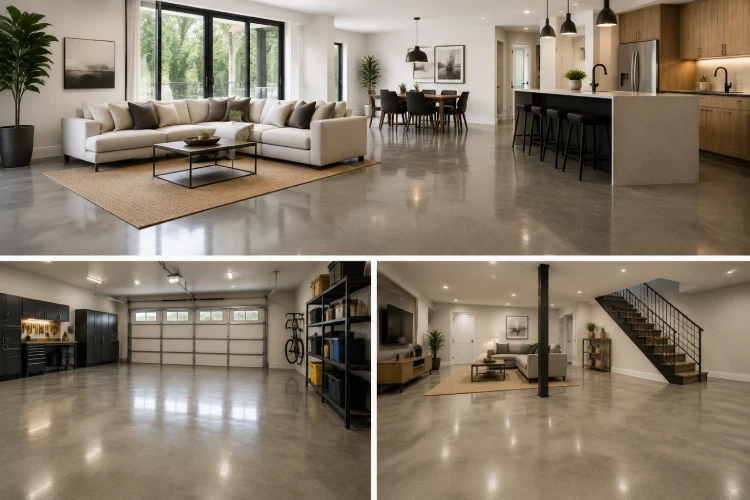
Polished concrete floor works especially well in basements, garages, and modern-style living spaces. It pairs naturally with radiant heating systems and offers excellent durability and moisture resistance once properly sealed. The tradeoff is comfort: concrete is hard and cold underfoot, so many homeowners pair it with area rugs in living spaces.
10. Sustainable Options: Cork, Bamboo, and Linoleum
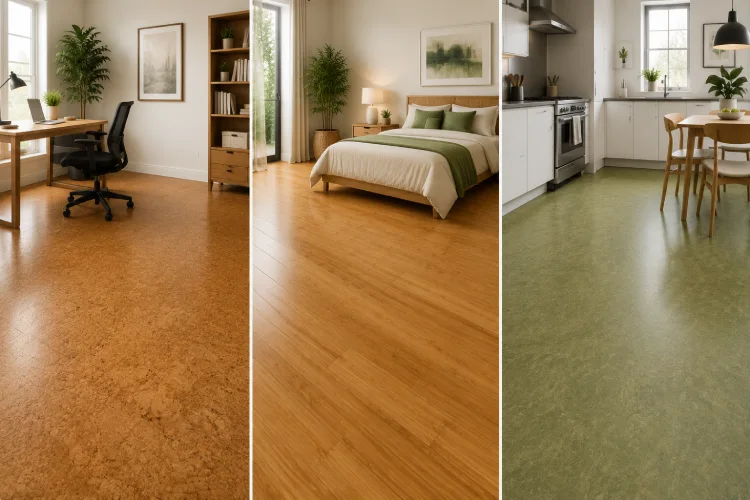
Cork, bamboo, and linoleum appeal to buyers prioritizing renewable materials and lower environmental impact. Cork offers a soft, cushioned feel and natural sound insulation, making it a good fit for home offices and bedrooms. Bamboo performs similarly to hardwood in appearance and hardness, though quality varies significantly by manufacturing process. Linoleum, made from linseed oil, cork dust, and natural resins, is more water-resistant than people expect and works reasonably well in kitchens. All three fall in the $5 to $12 per square foot installed range.
Durability and Health Considerations
These materials generally have lower VOC (volatile organic compound) emissions than some synthetic flooring, which matters for households prioritizing indoor air quality. Durability varies more by manufacturer and finish quality than by material type, so check product-specific warranties rather than assuming all bamboo or cork performs the same.
How to Choose Flooring Material by Room
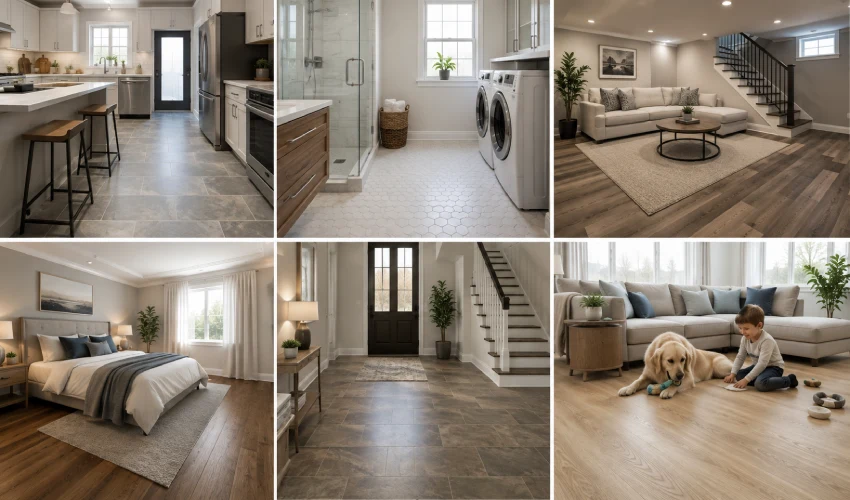
The right flooring material changes room by room, since moisture exposure, traffic level, and comfort needs are rarely the same throughout a house.
1. Kitchens and Mudrooms
These rooms need impact resistance for dropped cookware and grit resistance from tracked-in dirt. Porcelain tile and luxury vinyl plank are the strongest choices, since both resist scratching, staining, and moisture without special sealing.
2. Bathrooms and Laundry Rooms
Standing water and humidity make waterproof materials essential here. Porcelain tile, sheet vinyl, and true waterproof LVP with SPC cores are the safest options. Solid hardwood and standard laminate should be avoided entirely in these spaces.
3. Basements
Below-grade rooms deal with slab moisture that rises from the ground even when there is no visible leak. Luxury vinyl, engineered wood with a moisture barrier, and polished concrete handle this well. Solid hardwood and carpet without a proper vapor barrier are the two riskiest choices for a basement.
4. Bedrooms and Living Rooms
Comfort, warmth, and sound matter more than water resistance here. Solid or engineered hardwood, carpet, and cork all perform well, since traffic is lighter and spills are less frequent than in kitchens or entries.
5. High-Traffic Hallways and Entryways
These areas absorb the most daily wear in a home. Porcelain tile and luxury vinyl plank hold up best against constant foot traffic, dragged furniture, and grit, while solid hardwood tends to show scratches here faster than anywhere else in the house.
6. Homes with Pets or Young Children
Scratch resistance and waterproofing both matter. Luxury vinyl plank is generally the most forgiving all-around choice for households with dogs and toddlers, since it resists scratches, claw marks, and spills better than hardwood or laminate while remaining comfortable underfoot.
Durability and Lifespan Compared of Different Flooring Materials
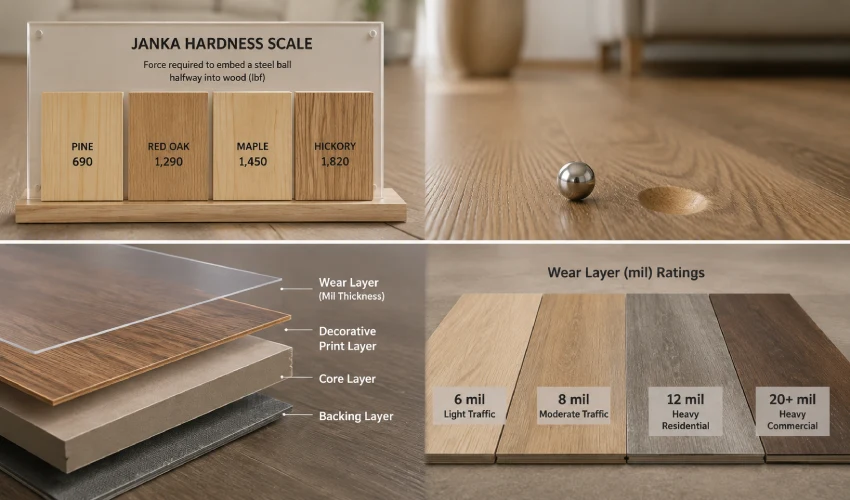
Durability claims on packaging are not always comparable across materials, so it helps to understand the actual rating systems behind them.
Understanding the Janka Hardness Scale for Wood
The Janka scale measures the force required to embed a steel ball halfway into a wood sample, giving a numeric hardness rating. Red oak, rated at 1,290, is the industry benchmark most other species are compared against. Hickory (about 1,820) and maple (about 1,450) rank harder and more dent-resistant, while softer woods like pine (about 690) show wear more easily.
A higher Janka rating generally means better resistance to dents from dropped objects and pet claws, though it does not affect scratch resistance from grit and sand nearly as much as the surface finish does.
Wear Layer (mil) Ratings for Vinyl and Laminate
For vinyl and laminate, the wear layer thickness, measured in mils, is the better durability indicator. Residential vinyl typically ranges from 6 to 20 mils, and products intended for heavy household traffic should have at least 12 mils. Commercial-grade luxury vinyl often exceeds 20 mils, which is worth considering for a very active household even in a residential setting.
Subfloor, Moisture, and Climate
Many flooring failures trace back not to a bad product but to a mismatch between the flooring and what is underneath it. This step gets skipped more often than any other in the buying process.
Installing Over Concrete Slabs
Concrete slabs hold ground moisture and release it slowly over time, even in homes with no visible leak history. Solid hardwood installed directly over a slab is at high risk of cupping or buckling as it absorbs that moisture. Engineered wood, laminate, and luxury vinyl are far more tolerant of slab installations, particularly when paired with a proper vapor barrier.
Humidity and Seasonal Expansion and Contraction
Wood-based flooring expands and contracts with seasonal humidity changes, which is why installers leave an expansion gap around the perimeter of a room. Homes in consistently humid climates, or regions with large seasonal swings, should lean toward engineered wood, laminate, or vinyl over solid hardwood, since these materials are more dimensionally stable.
When You Need a Moisture Barrier or Specific Underlayment
If you are installing over concrete, in a basement, or in a historically damp area of the house, ask your installer specifically about a moisture barrier rated for that flooring type. Skipping this step to save money is one of the most common causes of early flooring failure, and it is far cheaper to add a barrier during installation than to replace a warped floor two years later.
Installation Methods For Different Flooring Materials
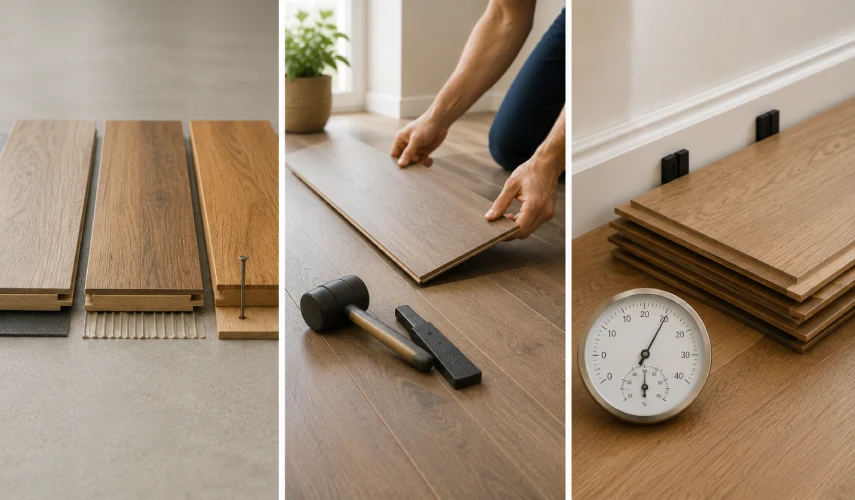
How a floor is installed affects both the upfront cost and how difficult it will be to repair or replace later.
Floating (click-lock) vs. Glue-Down vs. Nail-Down
Floating floors, common with laminate and many luxury vinyl products, snap together and rest on top of the subfloor without being permanently attached to it. Glue-down installation bonds the flooring directly to the subfloor, which is common with sheet vinyl and some engineered wood, and it generally produces a more stable, quieter floor. Nail-down installation, used mainly for solid hardwood, is the most labor-intensive method but produces the most secure, long-lasting result.
DIY-Friendly Options vs. Professional-Only Installs
Floating floors like laminate and click-lock LVP are the most realistic DIY projects for a homeowner with basic tools and patience. Tile, natural stone, glue-down vinyl, and solid or nail-down hardwood generally require professional installation to get a durable, properly sealed result, particularly in wet rooms where installation mistakes lead directly to water damage.
Acclimation Time and Expansion Gaps
Wood and laminate products should sit in the room where they will be installed for 48 to 72 hours before installation, allowing the material to adjust to the room’s temperature and humidity. Skipping acclimation is a common cause of gapping or buckling within the first year, particularly with solid hardwood.
Maintenance and Long-Term Care by Material
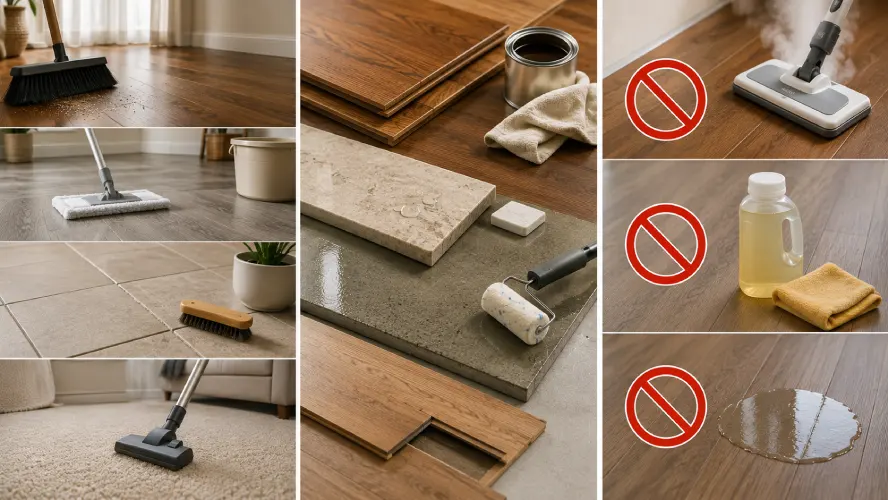
Ongoing maintenance requirements vary more than most buyers expect, and they should factor into the decision as much as upfront cost.
Daily and Weekly Cleaning Requirements
- Hardwood and engineered wood: sweep or dry-mop regularly, use a damp (not wet) mop, avoid standing water.
- Laminate and luxury vinyl: sweep and damp mop with a manufacturer-approved cleaner; avoid steam mops on laminate.
- Tile and stone: regular sweeping and mopping; grout lines need periodic scrubbing to prevent staining.
- Carpet: vacuum weekly, professional deep cleaning every 12 to 18 months to prevent allergen buildup.
Refinishing, Resealing, and Repair Options
Solid hardwood can be sanded and refinished, natural stone and grout need periodic resealing to maintain water resistance, and polished concrete may need reapplication of sealer every few years depending on traffic. Laminate and vinyl generally cannot be refinished; damaged sections are typically replaced plank by plank instead.
What Voids Warranties
- Using oil-based or wax cleaners on laminate and vinyl
- Using steam mops on engineered wood or laminate
- Allowing standing water to sit on any wood-based product
Always check the manufacturer’s approved cleaning products before using anything beyond plain water on a new floor.
Common Flooring Materials Buying Mistakes to Avoid
These are the mistakes that come up most often after installation, once it is too late to change course cheaply.
- Choosing solid hardwood for a below-grade or slab room, which almost guarantees moisture-related warping within a few years.
- Underestimating total installed cost and waste factor, since most projects require ordering 10 percent more material than the measured square footage to account for cuts and defects.
- Ignoring the wear-layer or mil rating when comparing vinyl products, which leads to a floor that looks similar in the showroom but wears out far faster at home.
- Skipping acclimation before installation, particularly with solid hardwood, which often results in gaps or buckling within the first year.
- Matching flooring across rooms without checking transition heights, which can create tripping hazards or awkward transition strips between rooms of different thicknesses.
Sustainability and Indoor Air Quality Considerations
There are many flooring materials that are sustainable and eco-friendly. These floors do not release VOCs indoors.
Low-VOC and Formaldehyde-Free Options
Some laminate and engineered wood products use adhesives that off-gas volatile organic compounds for a period after installation. Look for products certified low-VOC or formaldehyde-free, particularly if anyone in the household has respiratory sensitivities, and ventilate the space well during and after installation.
Recycled and Renewable Materials
Cork and bamboo are rapidly renewable, since both regenerate faster than hardwood trees. Some luxury vinyl and carpet lines now use recycled content in their backing or core layers. If sustainability is a priority, ask suppliers directly about certifications such as FloorScore or GREENGUARD, which independently verify low chemical emissions.
Final Thoughts
There is no single best flooring material, only the material that best fits a specific room, budget, and lifestyle. Start by evaluating moisture exposure and traffic level in the room you are working on, then set a realistic total budget that includes installation and subfloor prep, not just the material price. Check what is beneath the existing floor before falling in love with a look that will not hold up there, and weigh your household’s specific demands, whether that is pets, kids, allergies, or simply how much time you want to spend on maintenance.
If durability and water resistance matter most, porcelain tile and luxury vinyl plank are hard to beat. If warmth, resale value, and long-term character matter most, hardwood remains the strongest choice for the rooms where it belongs. Most homes end up using two or three different materials across different rooms, and that is not a compromise. It is simply matching each space to the flooring that actually performs well there.
Frequently Asked Questions
Porcelain tile and luxury vinyl plank offer the strongest combination of durability and reasonable cost for most homeowners. Porcelain resists scratching, staining, and water almost completely, while luxury vinyl offers similar water resistance at a lower material cost and easier installation.
LVP is generally the better choice for rooms with any moisture exposure, since true luxury vinyl with an SPC or WPC core is genuinely waterproof, while standard laminate is only water-resistant at best. Laminate can be a reasonable choice in dry living areas where its slightly harder surface and lower cost make sense.
Solid hardwood is one piece of wood through its full thickness and can be refinished multiple times, while engineered hardwood has a thin wood veneer over a plywood or fiberboard core, making it more stable in humidity and suitable for installation over concrete, but limited to one or two refinishing cycles.
Luxury vinyl plank is typically the best all-around choice for pet owners, since it resists scratches from claws, handles accidents without water damage, and provides more traction than polished materials like tile or stone.
In many cases, yes, particularly with floating floors like laminate or click-lock LVP installed over existing tile or vinyl, as long as the existing floor is flat, stable, and not showing signs of moisture damage. Solid hardwood and tile generally require the old flooring to be removed first.
Solid hardwood and standard carpet without a moisture barrier are the two materials to avoid in both spaces, since both are vulnerable to warping, mold, and water damage from humidity and occasional standing water.
Total installed costs generally range from $3 to $18 per square foot depending on material, with laminate and sheet vinyl at the lower end and natural stone and site-finished hardwood at the higher end. Get itemized quotes from at least two local installers, since labor rates vary significantly by region.
Hardwood flooring in main living areas most consistently adds resale value, followed closely by well-installed tile in kitchens and bathrooms and quality luxury vinyl plank throughout the main level.