
How to Clean Concrete Floors: Simple, Effective Maintenance Tips

Concrete flooring is very tough and can withstand high use and pressure without showing signs of wear and tear. But here, mostly, people make things intermix; the toughness of the floors does not mean they do not require cleaning or maintenance. Like every other floor, concrete also accumulates dust and looks untidy.
To keep your commercial-grade concrete flooring looking new and tidy, you need to clean and maintain it properly. You might be thinking about the complex methods and expensive materials required to clean concrete floors. But this is not correct. You can easily keep these floors clean by understanding the type of floor you have and choosing the products that are safe for it.
Tools & Supplies Required for Cleaning the Concrete Floors
You will need some basic tools and supplies for cleaning the concrete flooring. Take a look at them.
| Tools | Supplies |
|---|---|
| Soft-bristle broom or vacuum | pH-neutral floor cleaner |
| Microfiber mop | Warm water |
| Bucket | Mild dish soap |
| Soft scrub brush | Baking soda or cornstarch (for grease stains) |
| Microfiber cloth | Concrete degreaser (optional) |
| Gloves | Concrete sealer (for maintenance) |
Optional: Second mop for rinsing and entry mats to reduce dust and sand buildup.
6-Step Process to Clean Concrete Flooring
As with cleaning vinyl flooring, you also need to follow a streamlined process to keep concrete floors tidy and clean.
Step 1: Know Your Concrete Floor Type
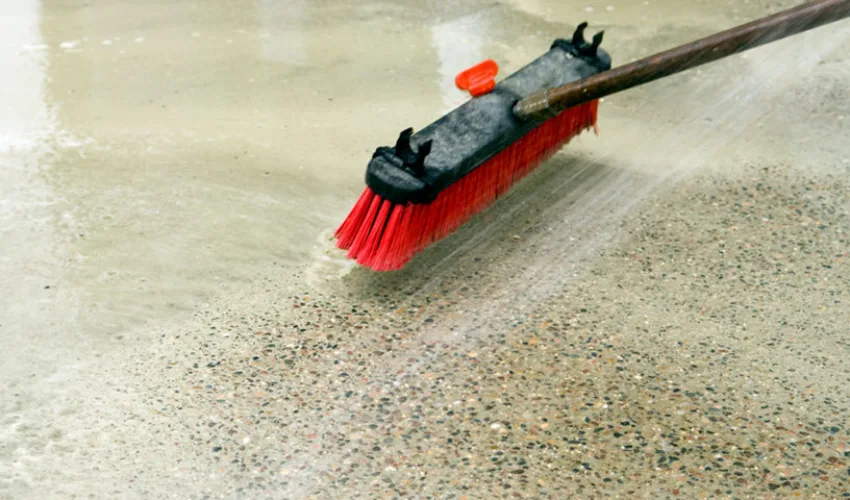
This is the step most people skip. It’s also the most important. The wrong cleaner can dull a polished floor or eat through a sealer. So before you clean anything, work out which of these you have.
- Polished concrete. Shiny and smooth, almost like glass. It’s sealed by the polishing process itself. Very low maintenance, but it hates acids.
- Sealed concrete. A clear coat sits on top to block stains and water. Common in modern homes. Needs gentle, pH-neutral care.
- Stained or decorative concrete. Coloured or patterned for looks. The colour can fade if you use harsh chemicals.
- Epoxy-coated concrete. A thick, glossy resin layer, often in garages and showrooms. Tough, but strong solvents can damage it.
- Unsealed or raw concrete. Bare, slightly rough, and porous. It soaks up spills fast, so stains set quickly. It can handle stronger cleaning.
Not sure which you have? Drop a little water on the surface. If it beads up, your floor is sealed. If it soaks in and darkens the concrete, it’s unsealed.
Step 2: Gather Your Tools
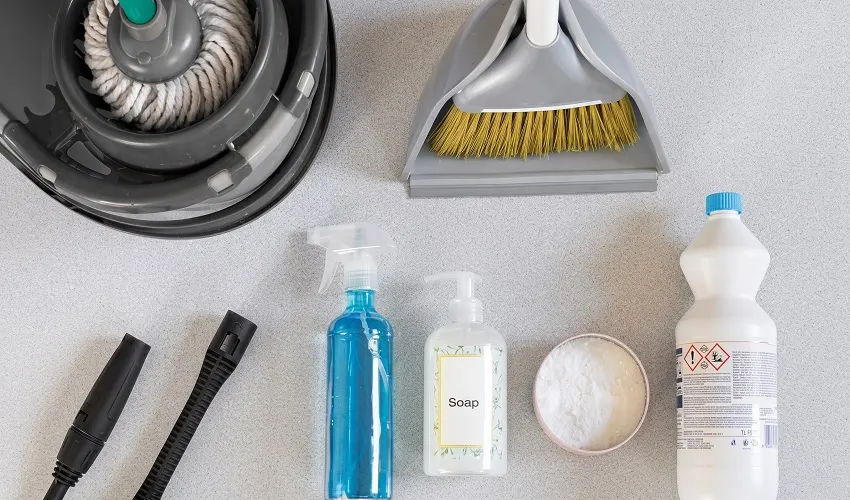
You don’t need much. Most of this is already in your home.
- Soft-bristle broom or a vacuum
- A mop (microfibre is best) and a bucket
- A pH-neutral floor cleaner, or mild dish soap for sealed floors
- A soft scrub brush for stains
- Warm water
- Gloves
- An optional second mop or cloth for rinsing
Skip the steel wool, wire brushes, and anything labelled acidic unless your floor is raw and unsealed. Those tools scratch and etch finished surfaces.
Step 3: Clear the Dust First
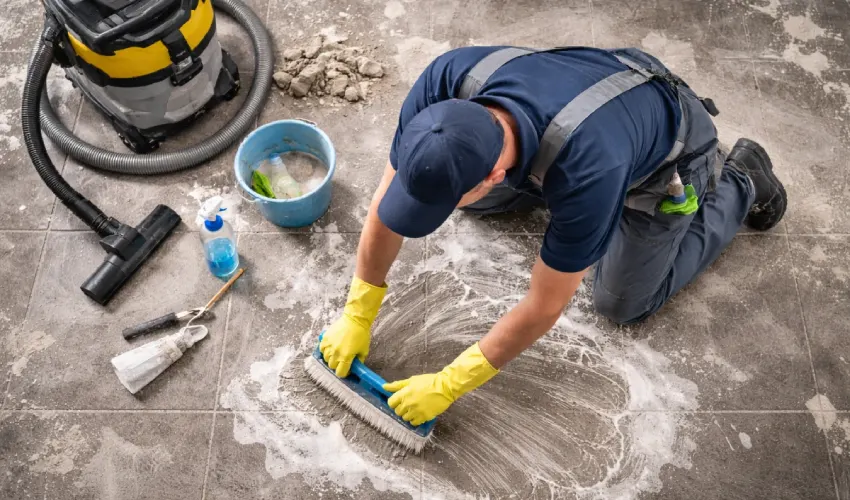
Never mop a dusty floor. The dust turns to mud, and your mop just smears it around. Start dry. Sweep with a soft broom or run a vacuum over the whole area. Pay attention to corners and edges, where grit likes to gather. This step matters even more in the dusty areas, where fine sand settles fast.
Step 4: Mop With the Right Mix
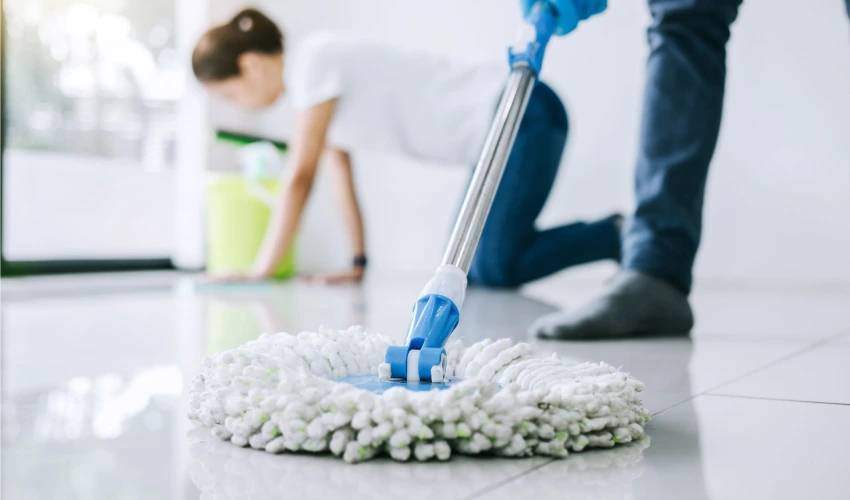
Now for the main cleaning, fill your bucket with warm water. Add a pH-neutral cleaner, following the label directions. For most sealed and polished floors, a few drops of mild dish soap in water works just as well.
Then:
- Dip your mop and wring it out well. The mop should be damp, not dripping. Too much water can seep into seams and joints.
- Mop in sections, working in gentle strokes.
- Rinse the mop often in clean water so you’re not spreading dirt.
- For a streak-free finish on glossy floors, go over it once more with plain water.
Work from the far side of the room toward the door. That way, you don’t walk across your clean, wet floor.
Step 5: Tackle the Stains
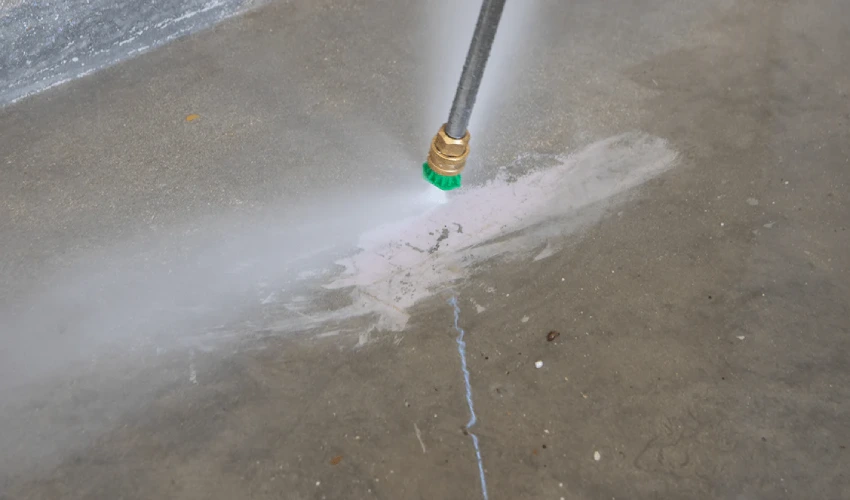
Some marks need a little extra attention. Here’s how to treat the common ones.
- Oil and grease. Cover the stain with baking soda or cornstarch and leave it for 15 to 20 minutes to draw out the oil. Sweep it up, then scrub with warm water and a few drops of dish soap. For older stains on unsealed floors, a dedicated concrete degreaser does the job.
- Rust. Rust marks are stubborn. On unsealed concrete, a rust remover made for masonry works best. On sealed or polished floors, test a gentle cleaner in a hidden corner first; harsh rust removers can damage the finish.
- Mould and mildew. Common in damp or shaded spots. Mix a little dish soap with warm water, scrub the area, and dry it well. Good airflow stops it coming back.
- Efflorescence. Those white, chalky patches are mineral salts rising to the surface. A dry brush often lifts them. For sealed floors, plain water and a soft cloth usually clear it.
A simple rule: Always test any strong product on a small, hidden patch before you use it on the whole floor.
Step 6: Rinse and Dry
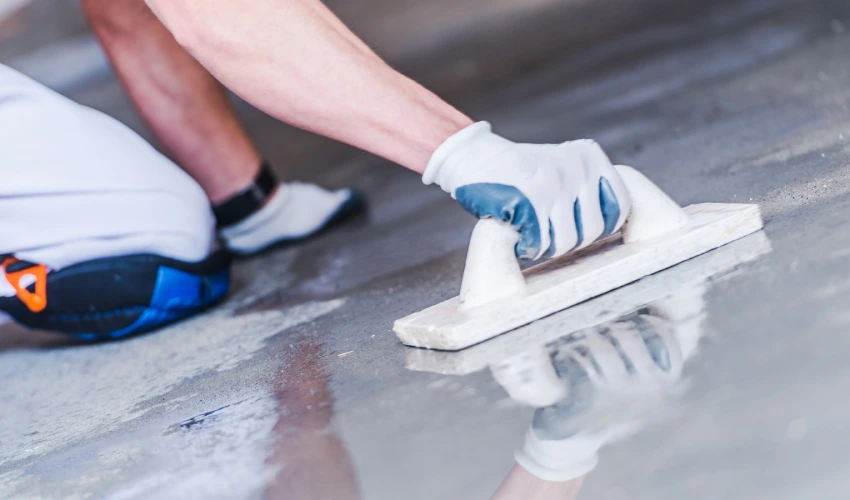
Once the floor is clean, rinse away any leftover cleaner with fresh water. Residue left behind can attract more dirt or leave a dull film.
Let the floor dry fully before walking on it. A dry microfibre cloth speeds this up on glossy surfaces. For a deep clean, give it a few hours before heavy use.
Caring for Concrete Floors in the USA Climate
This is where local conditions make a difference. The United States experiences a wide range of climates, from humid coastal regions to dry desert areas and cold northern states. Each environment affects concrete floors differently, but a few simple habits help keep them in great shape year-round.
Here’s what we recommend for homes and businesses across the USA:
- Sweep or dust regularly. Dirt, grit, and outdoor debris can scratch the surface over time, especially in high-traffic areas.
- Use entry mats. Place mats at entrances to catch mud, sand, road salt, and small stones before they reach your floors.
- Control moisture levels. In humid regions, clean up spills promptly and ensure good ventilation to help prevent mould and mildew.
- Protect against winter salt. In colder states, road salt tracked indoors can leave residue and gradually wear down floor finishes. Clean affected areas regularly during winter.
- Reduce sun exposure. Strong sunlight can fade stained or decorative concrete over time. Blinds, curtains, or UV-protective window films can help.
Consistent maintenance is the key. A little routine care throughout the year keeps concrete floors looking clean, durable, and attractive for decades.
Mistakes That Ruin Concrete Floors
We have been called in to fix plenty of floors that were damaged by cleaning, not wear. Avoid these:
- Using vinegar or acidic cleaners on sealed floors. Acid eats the sealer and dulls the shine. Once it’s etched, it’s hard to undo.
- Too much water. Soaking the floor pushes moisture into joints and under coatings. Damp mop only.
- Harsh scrubbing tools. Wire brushes and steel wool leave scratches that trap dirt.
- Letting spills sit. On unsealed concrete, a spill becomes a stain fast. Wipe it up right away.
- Skipping the sweep. Mopping over grit just drags it across the surface.
How Often Should You Seal a Concrete Floor?
Sealing is your floor’s armour. It blocks stains, repels water, and makes everyday cleaning far easier.
For most indoor floors, reseal every two to five years. High-traffic areas, like a busy hallway or a shop floor, may need it sooner. Polished concrete usually doesn’t need a separate sealer, since the polishing already protects it.
A quick test: splash a little water on the floor. If it no longer beads up and instead soaks in, your sealer has worn off, and it’s time to reapply.
When to Call a Professional
You can handle routine cleaning yourself. But some jobs are worth handing over.
Call a pro when:
- A deep stain won’t lift no matter what you try.
- The floor needs resealing, polishing, or a fresh coat.
- You see cracks, pitting, or crumbling that go beyond surface dirt.
- It’s a large area, like a warehouse or showroom, where the right equipment saves hours.
A proper professional clean and reseal can make an old floor look new again and protect it for years.
Final Thoughts
A clean concrete floor is not about scrubbing harder. It’s about knowing your floor and being gentle with it. Sweeping often. Mop with a pH-neutral cleaner. Treat stains early. Reseal when the time comes. Do that, and your concrete floor will stay smooth, bright, and beautiful for years.
Need help sealing, polishing, or refinishing your concrete floors? The team at Floor land works with concrete floors every day. Get in touch, and we will help you keep yours looking its best.
Frequently Asked Questions
Can I use vinegar to clean concrete floors?
Only on unsealed, raw concrete, and even then with care. On sealed, polished, or stained floors, vinegar’s acid strips the finish. Stick to a pH-neutral cleaner instead.
What is the best cleaner for polished concrete floors?
A pH-neutral floor cleaner. It lifts dirt without dulling the shine. Mild dish soap in warm water is a safe everyday option.
How do I make my concrete floor shiny again?
For sealed floors, a clean mop and a plain water rinse restore shine. If the gloss is gone for good, the floor likely needs buffing, resealing, or repolishing, a job best left to a professional.
Can I use a steam mop on concrete?
On sealed and polished floors, occasional steam mopping is usually fine. Avoid it on waxed or unsealed concrete, as the heat and moisture can cause damage.
How often should I mop a concrete floor?
Once a week for most homes. Sweep or dust daily, especially in sandy areas, and spot-clean spills as they happen.