
How to Choose Right Flooring Paint & Finish?
Flooring paint is a durable coating designed to protect and refresh surfaces such as concrete, garage and wood floors while improving their appearance. The right paint depends on the flooring material, the amount of foot traffic, moisture exposure, and the finish you prefer. Matte finishes help hide imperfections, satin offers a balanced look with easy maintenance, and gloss creates a smooth, reflective surface that is simple to clean but highlights flaws. Choosing the right combination of paint type and finish helps your floor last longer and perform better in everyday use.
In this guide, you will learn how flooring paint works, the different paint types and finishes available, and where each option performs best. You will also find practical tips for choosing the right finish for every room and avoiding common mistakes. In addition to that, You’ll also get insights on preparing the surface correctly and maintaining painted floors so they stay attractive and durable for years.
Types of Floor Paint by Formula
Finish is only half the decision. The paint’s chemistry determines how it bonds, how long it lasts, and what it can withstand.
1. Epoxy Floor Paint
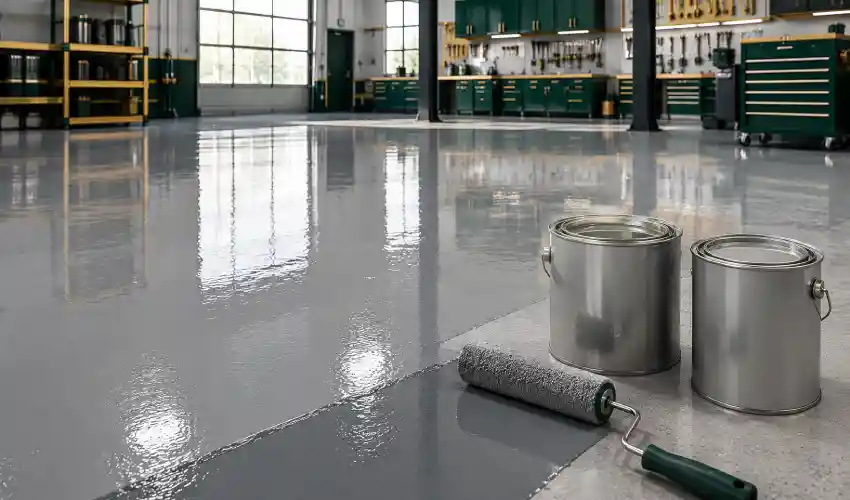
Epoxy floor paint is a two-part system. One is resin, and the second is hardener. Both are mixed just before application. The mix cures into an extremely hard, chemical- and abrasion-resistant surface. It’s the standard choice for garages, workshops, and warehouses that deal with oil, solvents, and heavy foot or vehicle traffic.
Because it cures rigid rather than flexible, it’s best suited to concrete rather than timber. Exopy paint needs decent ventilation plus an accurate mixing ratio to perform as expected. New or previously sealed concrete should be moisture-tested and mechanically or chemically etched first. The reason is epoxy bonds poorly to a smooth, sealed, or damp surface.
2. Acrylic Floor Paint
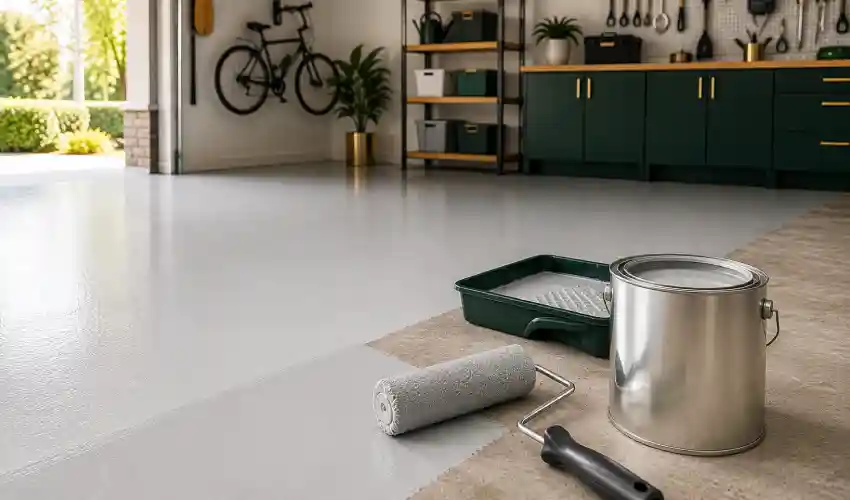
Acrylic (water-based) floor paint is the most DIY-friendly option. It’s low odor, dries quickly, cleans up with water, and holds up well in light-to-moderate traffic areas. It won’t match epoxy’s chemical resistance, but for a basement floor, porch, or garage that mainly needs a fresh, protective coat rather than industrial-grade toughness. It’s usually the more practical and affordable route.
3. Solvent-Based Enamel Floor Paint
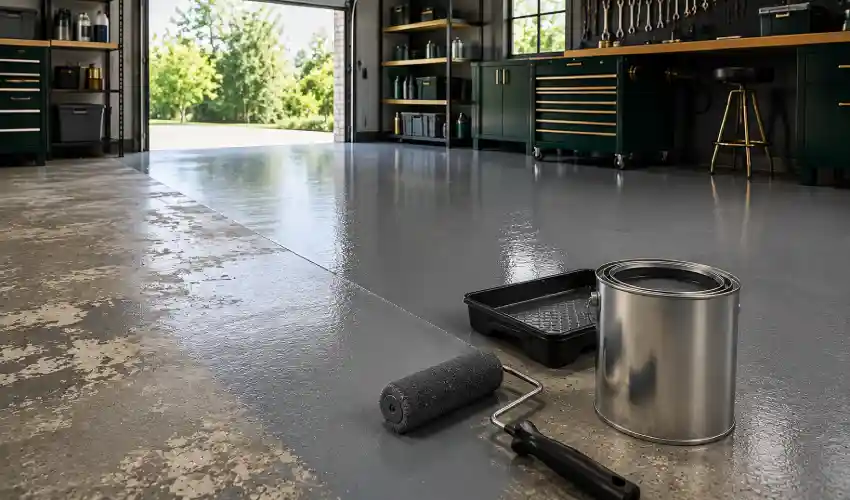
Solvent-based enamel dries to a durable, typically semi-gloss finish and adheres well over existing paint. This makes it a common choice for touching up or recoating older garage and workshop floors. It takes longer to dry and needs mineral spirits for cleanup. The fumes are stronger than a water-based product, so ventilation matters here too.
4. Polyurethane Floor Paint
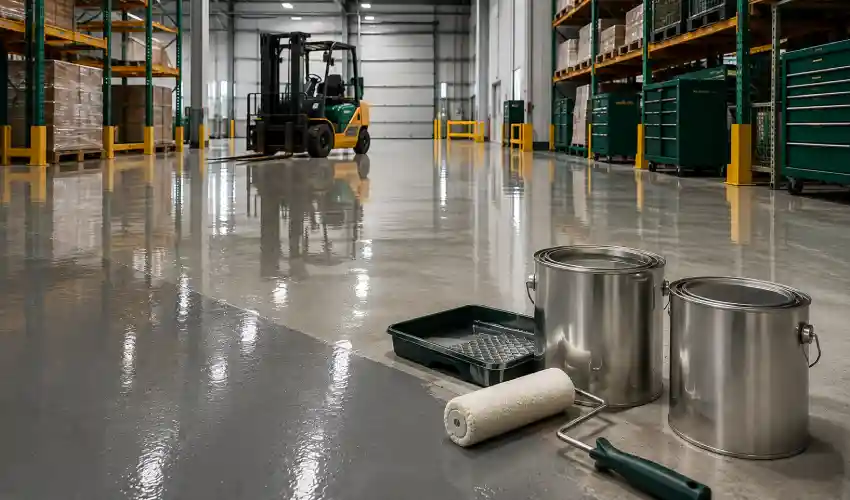
Polyurethane offers excellent UV stability and chemical resistance. It’s often used as a clear or pigmented topcoat over epoxy to add extra durability and lasting gloss. You will see it specified in warehouses, car parks, and facilities with heavy forklift traffic. It’s typically pricier and more often applied by professionals. The correct mixing and application windows are less forgiving than a straightforward acrylic paint.
5. Concrete and Masonry Floor Paint
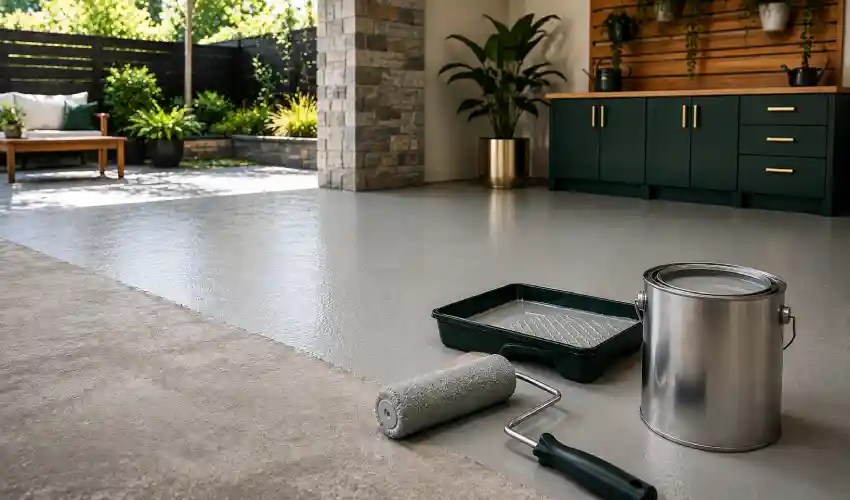
This category is formulated specifically for porous masonry surfaces. These surfaces include garage floors, patios, and basement slabs. A good concrete floor paint is breathable enough to let residual moisture escape rather than trapping it under the film. This reduces the risk of blistering. It’s generally less abrasion-resistant than epoxy but far simpler to apply. These paints are a solid middle-ground option for lighter-use areas.
Floor Paint Finishes Explained
Picking the best floor finish means balancing how you want the room to look with how hard the floor needs to work. Different sheen levels change not only how shiny the floor appears, but also how easily marks show and how slippery it feels. Here is what you need to know about each finish before you start painting.
1. Matte (Flat) Finish
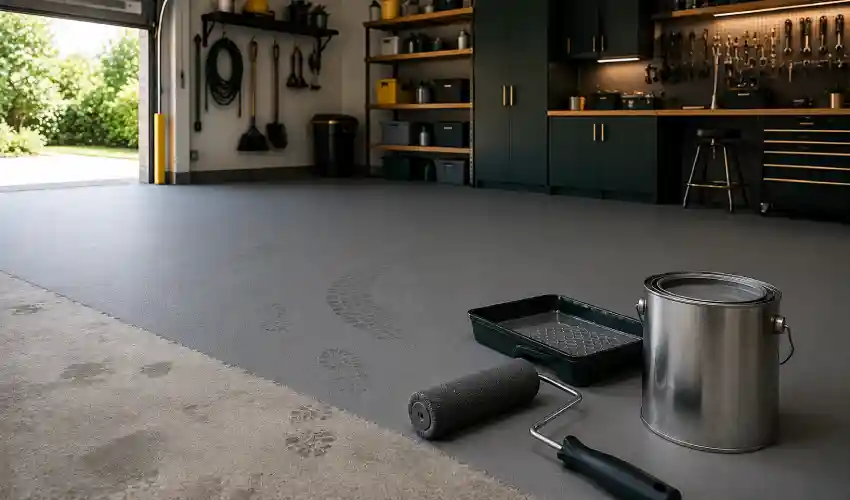
Matte floor paint reflects almost no light, which does a good job of hiding trowel marks, patch repairs, and other surface imperfections in older concrete. It also offers the best underfoot grip of the standard sheen. This feature makes it a sensible pick for garages and workshops where oil or water might land on the floor.
The trade-off is that tyre marks, dust, and scuffing show up more obviously, and spot-cleaning a matte floor can leave a slightly different sheen where you’ve wiped.
2. Satin Finish
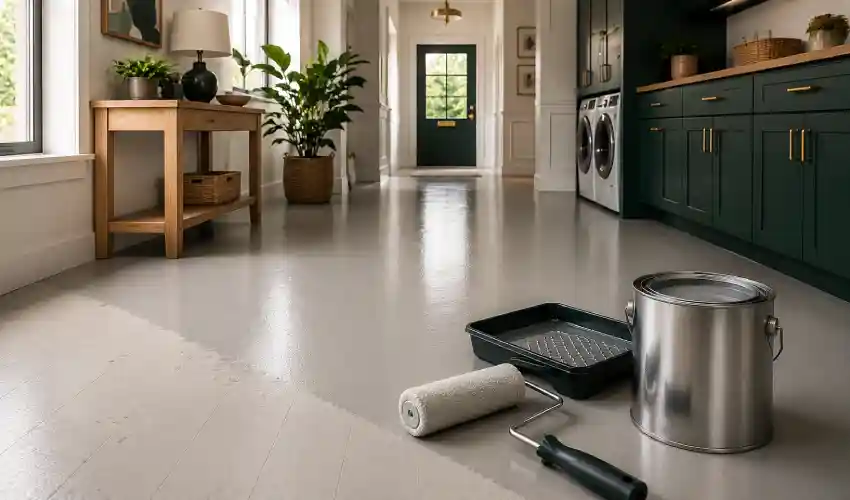
Satin sits in the middle. It has just enough sheen to look intentional without being reflective, and it wipes clean far more easily than matte. This makes it a strong all-rounder for hallways, utility rooms, and painted wood floors. This finish is the right pick if you want durability without turning the space into a mirror.
3. Semi-Gloss Finish
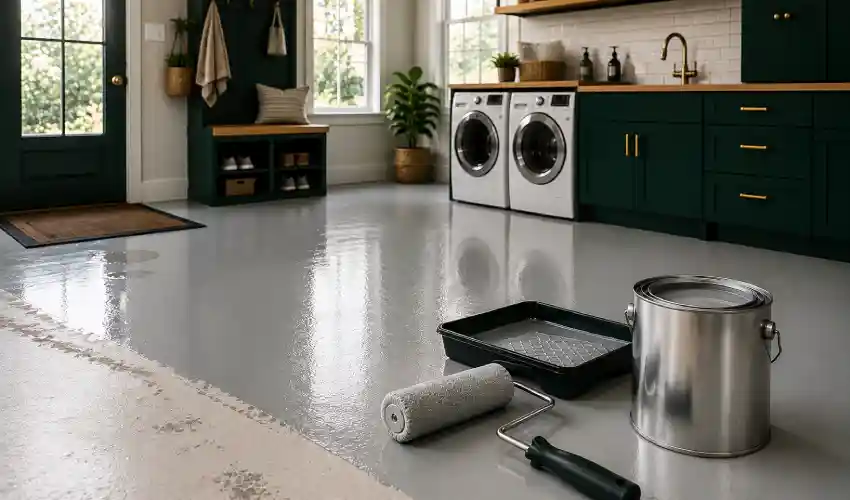
Semi-gloss builds a tougher, more stain-resistant film. It is a popular choice for kitchens, laundry rooms, and mudrooms that see frequent spills and mopping. The catch is grip: a semi-gloss floor can feel noticeably slicker underfoot once it’s wet. Must pair it with high-quality mats or an anti-slip additive in higher-risk spots.
4. Gloss Finish
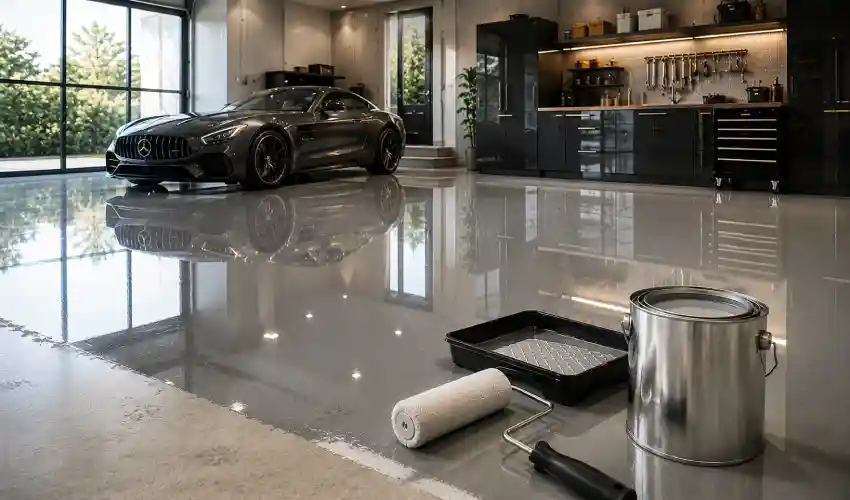
Gloss and high-gloss finishes give the hardest, most reflective film of the group. They are genuinely the easiest to keep clean. That’s why they show up on showroom-style garage floors and decorative concrete where appearance is a priority. These finishes are also the most slippery when wet and the quickest to reveal dust and footprints. Ultimately, these are rarely the right call for bathrooms, entryways, or anywhere exposed to rain or spills.
5. Textured Anti-Slip Finish
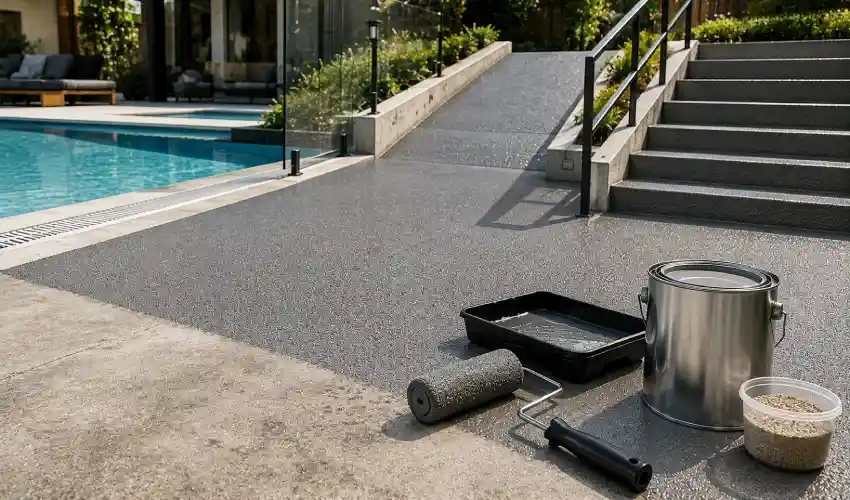
This is not really a sheen level so much as a functional finish; grit or aggregate is either mixed into the paint or broadcast onto the wet film before it cures. It sacrifices some shine for offering traction, which is exactly what you want on ramps, steps, pool surrounds, and loading bays.
How to Choose the Right Paint Finish for Each Floor
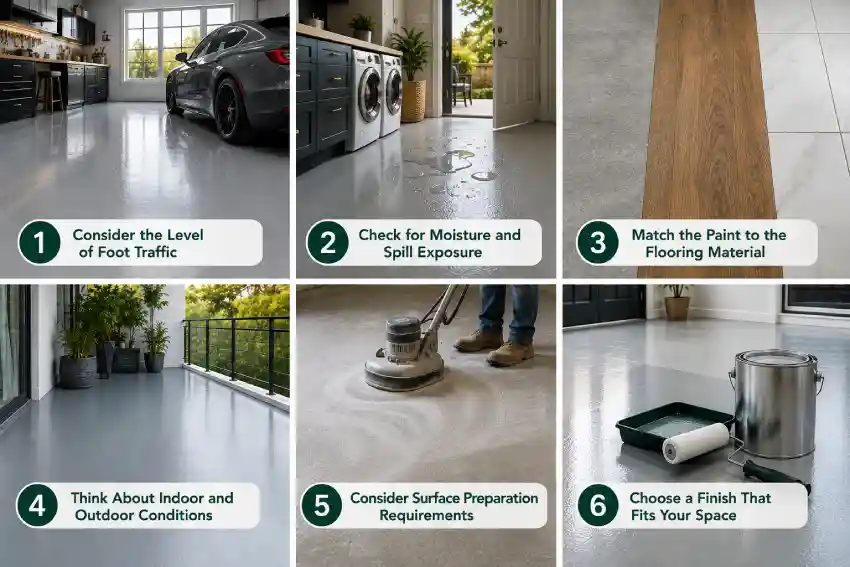
There are some factors that help you to determine the best paint finish for your flooring.
1. Consider the Level of Foot Traffic
The amount of daily traffic directly affects how long a painted floor will last. Areas such as garages, hallways, workshops, and commercial spaces need a finish that resists abrasion and scuffing. Epoxy and polyurethane coatings are better suited for these environments because they form a harder, more durable surface. For spare rooms or decorative spaces with light traffic, acrylic floor paint is often sufficient.
2. Check for Moisture and Spill Exposure
Floors in bathrooms, kitchens, laundry rooms, and garages regularly come into contact with water, oil, or cleaning products. In these areas, choose a finish that offers good moisture and chemical resistance. If the floor can become slippery when wet, a matte or textured finish is usually a safer option than a high-gloss coating.
3. Match the Paint to the Flooring Material
Not every paint works on every surface. Concrete requires paints that penetrate and bond with porous substrates. Wood floors need coatings that can expand and contract with seasonal movement. If you want to paint a tiled floor, select a product specifically designed to bond with glazed surfaces after proper preparation.
4. Think About Indoor and Outdoor Conditions
Sunlight, temperature changes, and weather exposure can shorten the life of some outdoor floor paints. For patios, balconies, and other outdoor areas, use a UV-resistant coating such as polyurethane or an exterior-grade acrylic. Indoor floors generally have more flexibility because they are protected from direct sunlight and harsh weather.
5. Consider Surface Preparation Requirements
The durability of floor paint depends as much on preparation as the coating itself. Epoxy floor paint requires thorough cleaning, degreasing, and often acid etching or grinding before application. Acrylic floor paints are generally easier to apply and need less preparation, making them a practical choice for smaller DIY projects.
6. Choose a Finish That Fits Your Space
The finish affects both appearance and maintenance. Matte finishes hide scratches, dust, and surface imperfections, making them suitable for utility rooms and workshops. Satin finishes offer a balance between durability and appearance. Gloss finishes create a brighter, more reflective surface but reveal scratches, dirt, and uneven floors more easily.
Best Floor Paint Finish by Room
| Room / Area | Recommended Finish | Why It Works |
| Garage or workshop | Satin or textured epoxy | Balances grip with resistance to oil, tyres, and tools |
| Basement | Matte or satin masonry paint | Hides imperfections and tolerates residual dampness better than gloss |
| Kitchen or utility room | Semi-gloss or satin epoxy | Stands up to spills, grease, and frequent mopping |
| Hallway or entryway | Satin | Handles steady foot traffic without a slippery surface |
| Bathroom | Satin/semi-gloss + anti-slip additive | Resists moisture while adding grip where the floor gets wet |
| Patio or outdoor concrete | Textured anti-slip acrylic | UV stable and safer underfoot in rain |
| Living room/bedroom (wood) | Satin or eggshell floor enamel | Attractive sheen suited to lighter, decorative use |
Concrete & Garage Floor Paint: What to Know
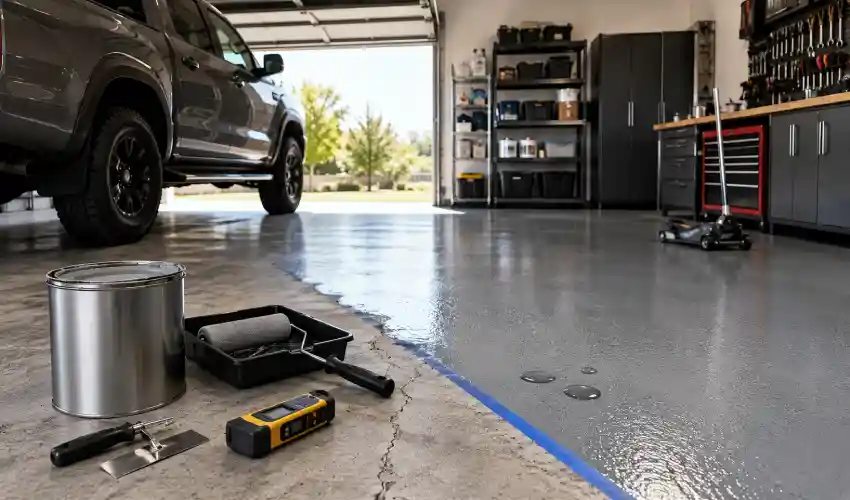
Garages and concrete floors place far greater demands on paint than most indoor surfaces. They regularly face vehicle traffic, heavy equipment, oil spills, moisture, and constant abrasion.
- Choose epoxy for maximum durability. Epoxy coatings resist heavy foot traffic, vehicle weight, oil stains, chemicals, and abrasion, making them ideal for garages, workshops, and industrial spaces.
- Choose acrylic for light-duty use. Acrylic floor paint is easier to apply, dries faster, and costs less. It works well in garages used mainly for storage or occasional parking.
- Be aware of hot tyre pickup. Warm vehicle tyres can soften some epoxy coatings and cause them to lift from the concrete. High-quality full-solids epoxy systems and following the recommended curing time help minimize this risk.
- Test the concrete for moisture first. Excess moisture trapped in a concrete slab is one of the leading causes of peeling floor paint. Perform a simple moisture test before painting to ensure the surface is dry enough for proper adhesion.
- Surface preparation determines performance. Remove dust, grease, old coatings, and repair cracks before applying paint. Even the best floor coating can fail if it is applied to a poorly prepared surface.
- Allow the coating to cure completely. Dry to the touch does not mean fully cured. Wait for the manufacturer’s recommended curing period before parking vehicles or placing heavy equipment on the floor to achieve maximum durability.
Durability and Maintenance of Different Floor Paints
No floor paint lasts forever, but choosing the right product can significantly extend its service life. Each paint type is designed for different conditions, which is why their durability and maintenance requirements vary. Here’s a quick comparison to help you choose the best option.
| Paint Type | Typical Lifespan* | Maintenance Requirements |
| Epoxy Floor Paint | 5 to 10 years | Low maintenance. Sweep regularly and clean spills promptly to preserve the coating. |
| Acrylic Floor Paint | 2 to 4 years | Easy to maintain but may require touch-ups sooner in areas with frequent foot traffic. |
| Solvent-Based Enamel Floor Paint | 3 to 5 years | Clean with mild detergents and inspect periodically for chips or worn areas that may need recoating. |
| Polyurethane Floor Paint | 5 to 8 years | Highly resistant to scratches and UV rays. Regular sweeping and occasional mopping help maintain its finish. |
| Concrete and Masonry Floor Paint | 3 to 7 years | Keep the surface clean and reseal or recoat when signs of wear or moisture penetration appear. |
Actual lifespan depends on surface preparation, product quality, traffic levels, moisture exposure, and maintenance. Following the manufacturer’s preparation and curing instructions can significantly improve the durability of any floor paint.
Do You Actually Need Floor Paint?
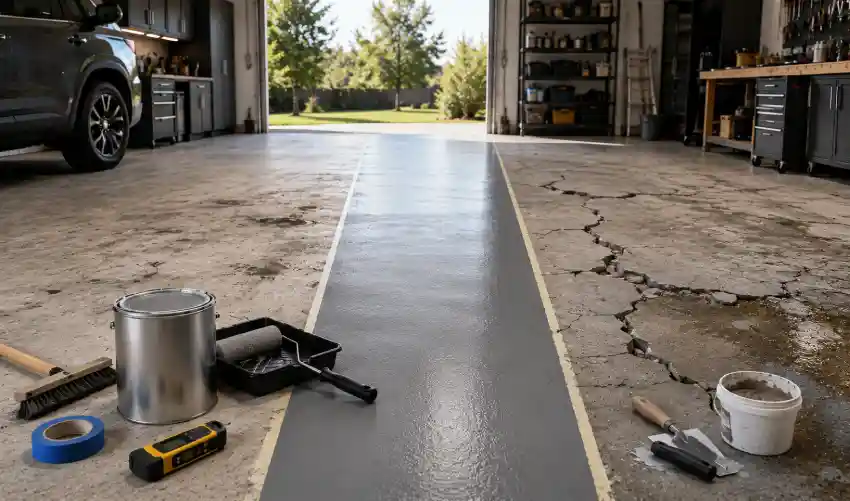
Floor paint earns its place when a surface is structurally sound but looking tired, dusty, or stained. Common reasons people reach for it include sealing dusty concrete, refreshing a faded garage or basement floor, color-coding zones in a workshop, or covering old paint and oil stains without the cost of new flooring.
It’s not a fix for every problem, though. Floor paint won’t correct settling cracks, address a failing subfloor, or hold up long-term over a slab with an active moisture problem unless that moisture issue is treated first. If your floor has more going on than surface wear, it’s worth reading the section on paint versus replacement further down before you buy a single tin.
How to Apply Floor Paint the Right Way
Below is the step-by-step guide to apply the paint the right way. Have a look at these steps:
- Clear and deep-clean the floor. Remove furniture, sweep thoroughly, and degrease with a proper concrete cleaner if oil stains are present.
- Repair cracks and holes. Patch with a suitable filler and let it cure fully before painting over it.
- Etch or degloss the surface. Bare concrete usually needs acid etching or mechanical grinding; previously painted or glossy surfaces need sanding so the new coat has something to grip.
- Test for moisture. Tape a square of plastic sheeting to the floor overnight; condensation underneath means the slab isn’t dry enough to paint yet.
- Prime if the product calls for it. Not every floor paint is self-priming, and skipping a required primer is a common cause of early peeling.
- Cut in the edges, then roll the main area. Work in manageable sections so the wet edge doesn’t dry before you can blend into it.
- Apply a second coat within the recoat window. Most floor paints need two coats for full durability and even color.
- Respect the cure time before heavy use. Touch-dry isn’t the same as fully cured. Walking too soon is fine, but parking a car or rolling in machinery too early can leave permanent marks.
How Much Floor Paint Do You Need?
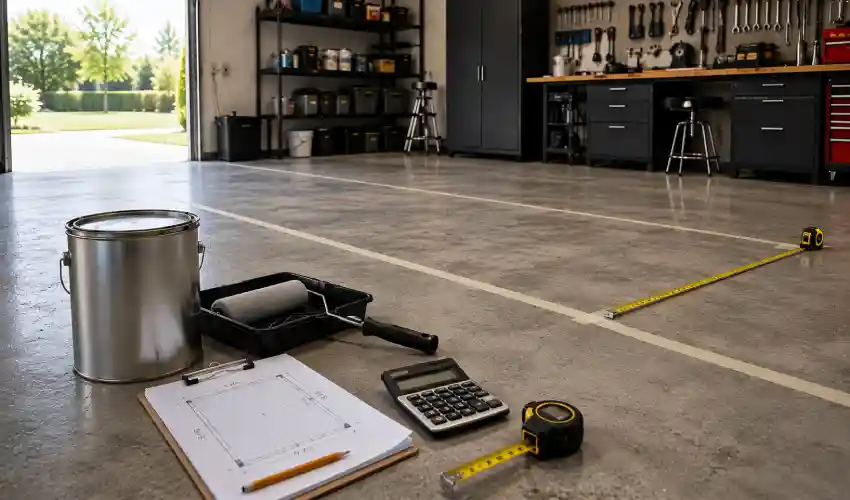
Coverage depends on the porosity of the surface and the specific product. As a rough guide, smooth sealed concrete typically covers 8–10 square meters per liter per coat, while rough or porous concrete drinks up more paint at around 4–6 square meters per liter per coat. Most jobs need two coats for full opacity and durability. To estimate your total, measure the floor’s length and width, multiply for the area, then divide by the coverage rate. Always check the manufacturer’s figure on the tin, since it varies between water-based and solvent-based products.
Common Floor Paint Mistakes That Ruin a Finish
Take a look at the floor paint mistakes that ruin the overall finish.
- Skipping surface prep. Poor adhesion is the single biggest reason floor paint fails early.
- Painting over a damp slab. Trapped moisture causes bubbling, blistering, and peeling months later.
- Applying coats too thick. A heavy coat looks better going on but cures unevenly and is far more likely to crack or peel.
- Ignoring recoat and cure windows. Recoating too soon can lift the first coat; using the floor too soon can leave permanent impressions.
- Using the wrong paint for the substrate. A rigid epoxy on flexible timber, or a wood-rated enamel on bare concrete, rarely ends well.
- Choosing shine over safety. A high-gloss finish in a wet-prone area is asking for a slip hazard.
- Painting in poor conditions. Cold, damp, or overly hot weather all interfere with proper curing.
When Paint Beats Replacing Your Floor
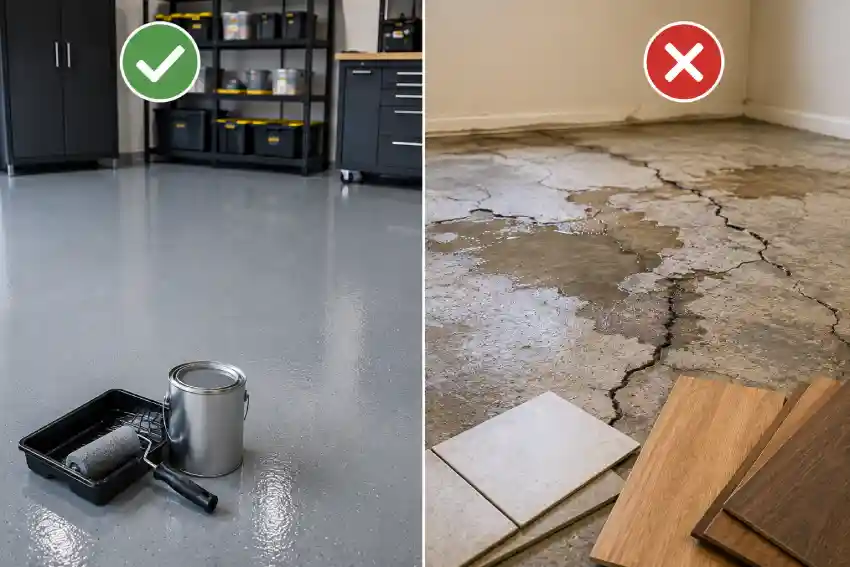
Painting makes the most sense when the floor is structurally sound but simply looks dated, dusty, or stained. It’s considerably cheaper than new flooring. It can be done over a weekend rather than a full renovation. It’s a smart way to protect a concrete slab before you eventually install permanent flooring on top. Landlords and anyone working with a tight budget often lean on floor paint for exactly this reason.
Replacement becomes the better call when the floor has structural cracking, extensive water damage, or an uneven subfloor. You should go for the new flooring installation when you actually want the warmth, texture, or resale appeal of a new material like tile or engineered wood. Paint refreshes what’s already there; it can’t fix a floor that’s fundamentally failing underneath.
Final Thoughts
Choosing flooring paint really comes down to matching three things: the paint type to your substrate, the finish to your traffic and moisture levels, and your prep effort to the durability you actually need. A matte or textured finish earns its keep anywhere grip matters, while satin and semi-gloss suit the busier, more frequently cleaned spaces in a home. Get the surface prep right, respect the cure times, and pick a formula suited to the floor underneath it. A painted floor can genuinely rival the durability of a full replacement for a fraction of the cost. This is helpful as long as the floor was sound enough to paint in the first place.
Frequently Asked Questions
In most cases, yes, as long as the existing coating is sound and not flaking. Sand it lightly to give the new paint something to grip, and make sure the old and new products are compatible. Check with the manufacturer if you’re switching from, say, an oil-based enamel to a water-based acrylic.
Most floor paints are touch-dry within a few hours and safe for light foot traffic within a day. But full cure happens when the film has reached its maximum hardness. It can take anywhere from three days to a week. Avoid parking vehicles or placing heavy furniture until the product’s full cure time has passed.
Epoxy generally wins for durability and chemical resistance, which suits garages used for vehicles or workshop tasks. Acrylic is easier to apply and more budget-friendly, and it’s a reasonable choice for garages used mainly for storage rather than heavy use.
It can, particularly higher-gloss finishes when wet. Matte finishes offer more natural grip, and adding an anti-slip aggregate is the most reliable way to improve traction in areas prone to moisture or spills.
Yes, but tile is glazed and smooth, so it needs a bonding primer designed for slick surfaces before the topcoat goes on. Skipping the primer is the most common reason paint peels off tile within months.
It depends on the paint type and how much traffic the floor gets. Epoxy garage floors often last five to ten years, while lighter acrylic coatings on low-traffic areas typically need refreshing every two to four years.
Some concrete floor paints are self-priming, but new, very porous, or previously sealed concrete usually benefits from a dedicated primer to improve adhesion and even out absorption. Check the product label, since this varies by brand and formulation.
Here’s a preview of what your website’s text will look like by default. You can also adjust the typography of most elements separately. Note that the Font Size setting affects all the sizes defined in “rem” units, that is, almost all areas of your site.
Remove fresh paint with a damp cloth. For dried paint, gently scrape with a plastic putty knife and use a hardwood-safe cleaner or rubbing alcohol. Avoid harsh chemicals and excessive moisture.
Yes, you can paint floor tiles using a high-quality tile primer and durable floor paint, such as epoxy or tile-specific coatings. Proper cleaning, sanding, and sealing help achieve long-lasting results.