
What Is Good Material for a Bathroom Floor? A Practical Guide
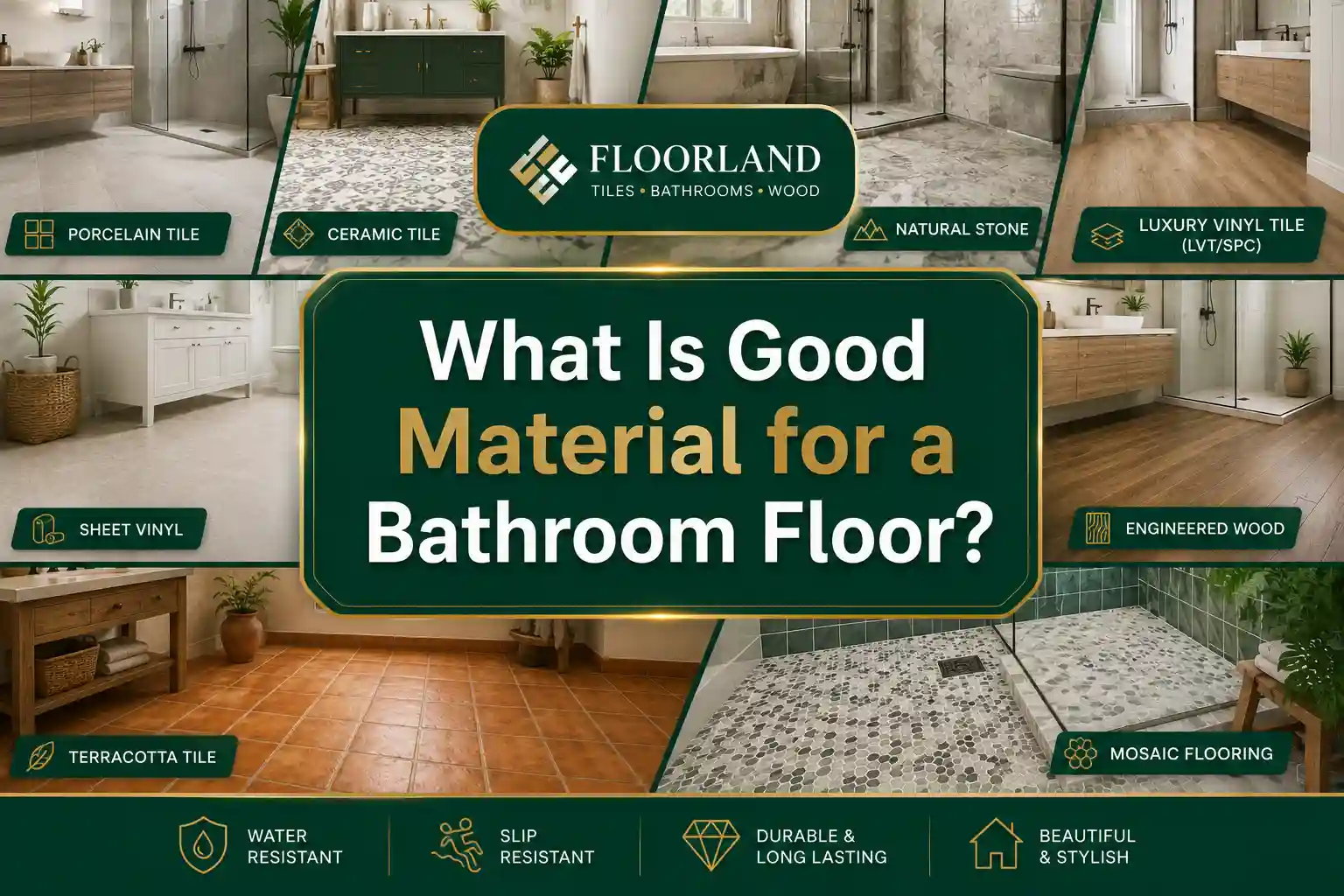
Your bathroom floor works harder than almost any other surface in your home. It deals with water every single day. It faces steam, soap, dropped bottles, and bare wet feet. Most floors would not survive this. A good bathroom floor handles it without complaint for years. So which material is the right one?
The honest answer is that there is no single “best” floor for every bathroom. But there is the best floor for your bathroom. It depends on your budget, your style, and how the room is used. A busy family bathroom has very different needs from a quiet guest powder room.
This blog by Floor Land walks you through it step by step. We will cover what makes a floor suitable in the first place. Then we will compare every common material, with clear pros and cons. By the end, you will know exactly what to look for and what to avoid.
List & Comparison of Bathroom Flooring Materials
| Material | Average Price (USD/m²)* | Lifespan | Slip Resistance | Maintenance | Installation Difficulty |
|---|---|---|---|---|---|
| Porcelain Tile | $22–70 | 30–50+ years | High (R10–R11 finishes available) | Low | High (Professional recommended) |
| Ceramic Tile | $14–50 | 20–30 years | Medium to High (depends on finish) | Low | Medium |
| Natural Stone (Marble, Slate, Granite) | $50–165+ | 50+ years | Medium to High (Slate offers the best grip) | High | High |
| Luxury Vinyl Tile (LVT/SPC) | $25–70 | 15–25 years | High | Very Low | Easy to Medium |
| Sheet Vinyl | $11–33 | 10–20 years | Medium | Very Low | Easy |
| Engineered Wood | $50–110 | 20–30 years | Medium | Medium | High |
| Terracotta Tile | $28–70 | 30+ years | High | High | High |
| Mosaic Tile | $33–95 | 30–50 years | Very High | Medium (Requires grout cleaning) | High |
Before you fall for a color or pattern, judge a floor on six practical points. A strong choice scores well on all of them.
- Water resistance. This is the most important factor. Bathrooms are wet. The right floor blocks moisture instead of soaking it up. Water that sits in seams or under the surface causes swelling, stains, and mould.
- Slip resistance. Wet floors are slippery floors. A good bathroom surface gives your feet grip, even when soaked. Texture and finish matter here far more than they do in a living room.
- Durability. A bathroom floor takes daily traffic and the occasional dropped object. It should resist scratches, chips, and dents while keeping its looks.
- Easy maintenance. You want a floor you can wipe clean in minutes. Surfaces that hide dirt or trap soap scum become a chore over time.
- Comfort underfoot. You stand on this floor with bare feet, often first thing in the morning. Warmth and a pleasant feel are worth considering.
- Style and budget. The floor should match the look you want and the money you have. The good news is that almost every style is now available across several price points.
Keep these six points in mind as you read on. They make every comparison below much easier to judge.
The Best Bathroom Floor Materials
Below are the materials worth your attention, each with an honest view of where it shines and where it falls short.
1. Porcelain Tile
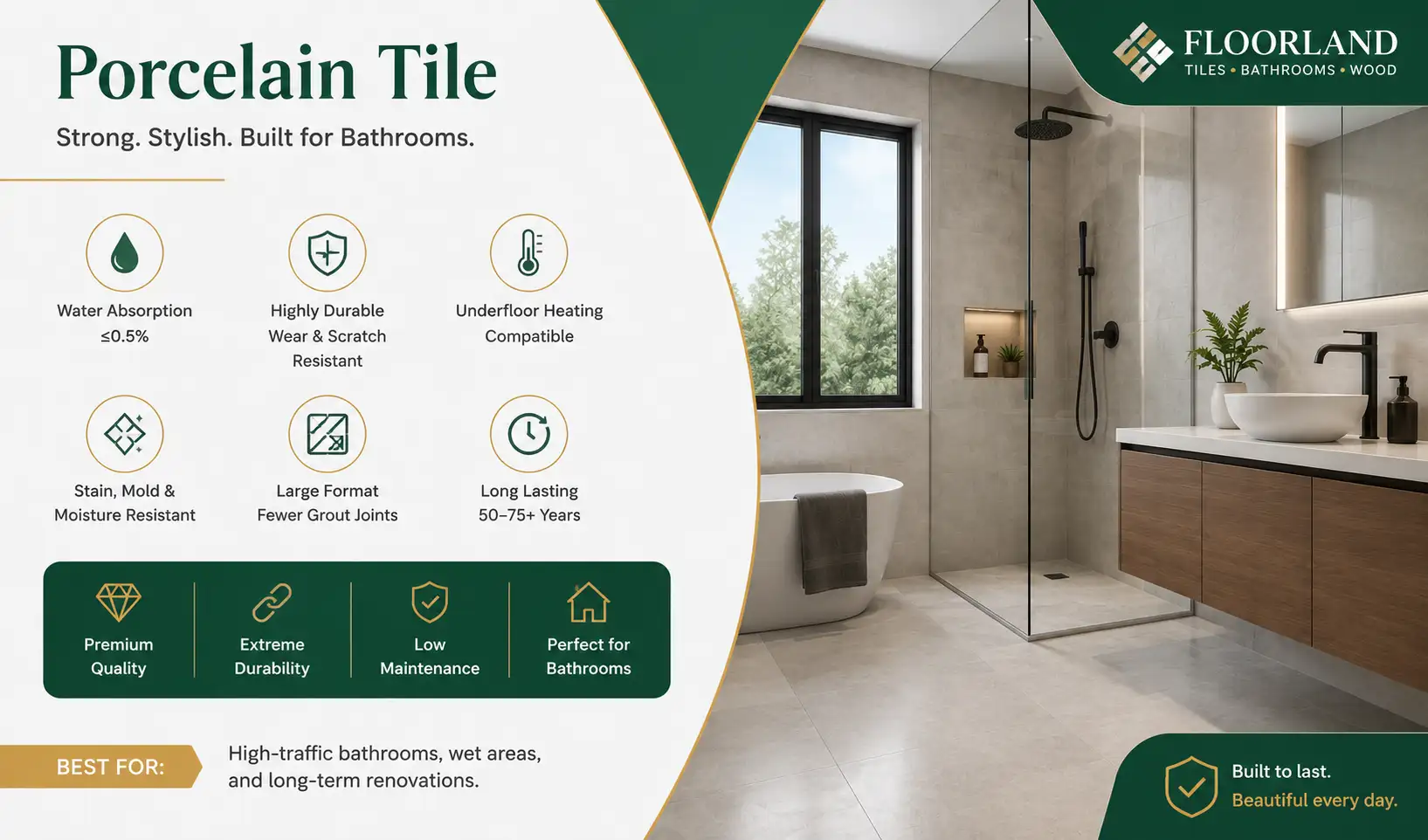
Porcelain tile is manufactured from highly refined clay and fired at temperatures between 1,200°C and 1,400°C (2,190°F-2,550°F). This process creates an extremely dense material with a water absorption rate of 0.5% or less, meeting the international standard for true porcelain. Because it absorbs almost no moisture, it performs exceptionally well in bathrooms with daily exposure to water and steam.
Specifications
| Feature | Value |
|---|---|
| Water Absorption | ≤0.5% |
| PEI Wear Rating | PEI IV-V |
| Mohs Hardness | 7–8 |
| Lifespan | 50–75+ years |
| Price | $4–$15/sq ft |
| Underfloor Heating | Excellent Compatibility |
Advantages
- Absorbs up to 14 times less water than standard ceramic tile.
- Can withstand compressive strengths exceeding 35,000 psi, making it one of the strongest residential flooring materials.
- Resistant to scratches, stains, mold, mildew, and household chemicals.
- Available in large-format slabs up to 48 × 48 inches, reducing grout joints.
- Modern digital printing closely replicates marble, concrete, and hardwood.
- Suitable for radiant heating systems due to excellent thermal conductivity.
Limitations
- Heavier than ceramic, often weighing 4-6 lbs per sq ft, requiring a strong subfloor.
- Hard surface may feel cold without underfloor heating.
- Professional installation is recommended because cutting porcelain requires diamond tools.
- Grout joints should be sealed periodically to minimize staining.
Best For: High-traffic family bathrooms, luxury bathrooms, wet rooms, and long-term renovations where durability is the priority.
2. Ceramic Tile
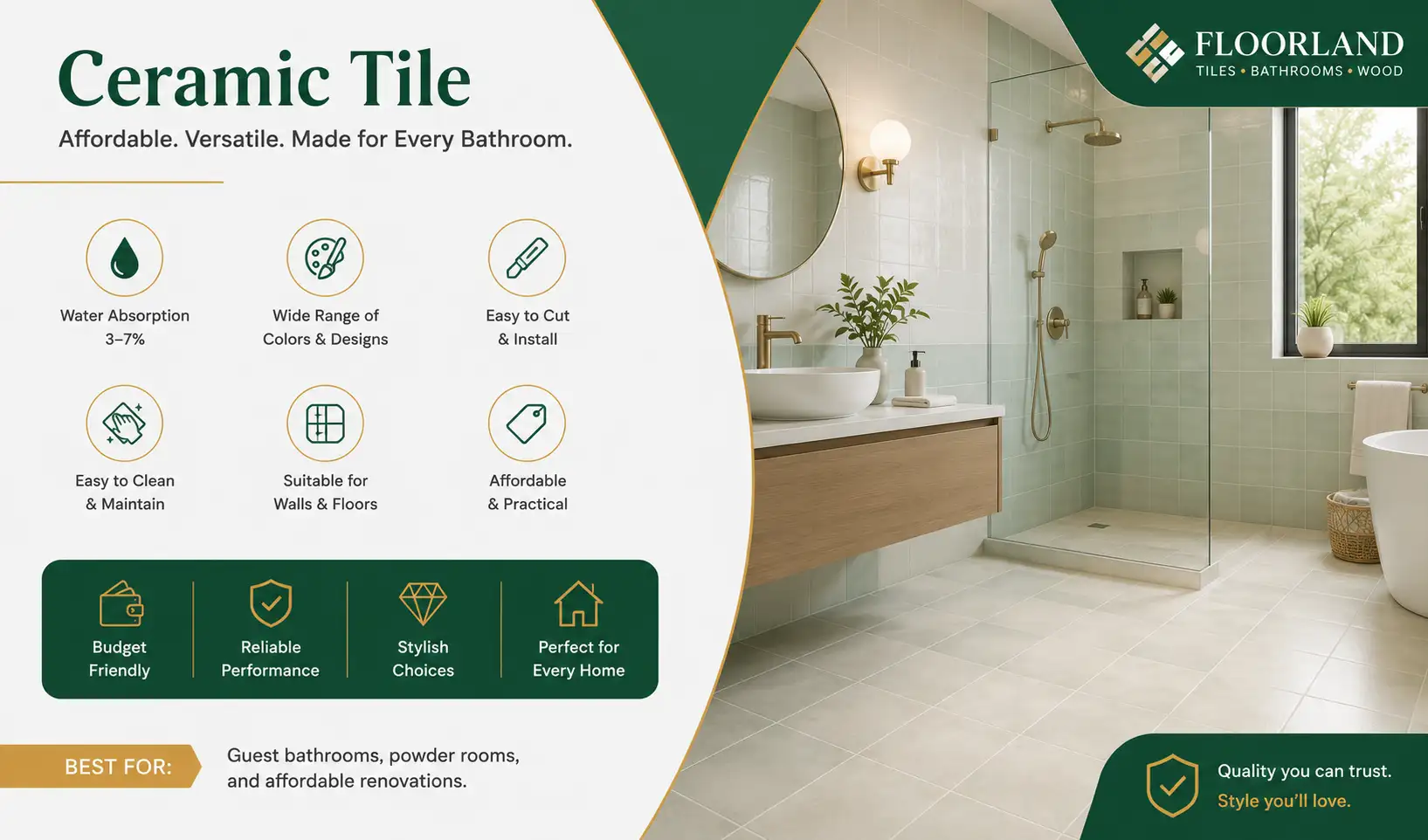
Ceramic tiles are also made from clay but fired at lower temperatures, typically around 1,000°C to 1,150°C. They remain durable while being easier to cut and install. Water absorption generally ranges from 3% to 7%, making them suitable for most bathrooms when properly installed.
Specifications
| Feature | Value |
|---|---|
| Water Absorption | ≤0.5% |
| PEI Wear Rating | PEI IV-V |
| Mohs Hardness | 7–8 |
| Lifespan | 50–75+ years |
| Price | $4–$15/sq ft |
| Underfloor Heating | Excellent Compatibility |
Advantages
- Costs 30-50% less than porcelain in many markets.
- Available in thousands of colors, textures, and decorative patterns.
- Easier to drill and cut, reducing installation costs.
- Simple routine cleaning with mild detergent.
- Suitable for both floors and walls.
Limitations
- More porous than porcelain, making it slightly less resistant to moisture.
- Glazed finishes may become slippery when wet unless they carry an appropriate slip rating.
- More susceptible to chipping if heavy objects are dropped.
- Lower impact resistance than porcelain.
Best For: Guest bathrooms, powder rooms, and homeowners looking for a balance between affordability and durability.
3. Natural Stone
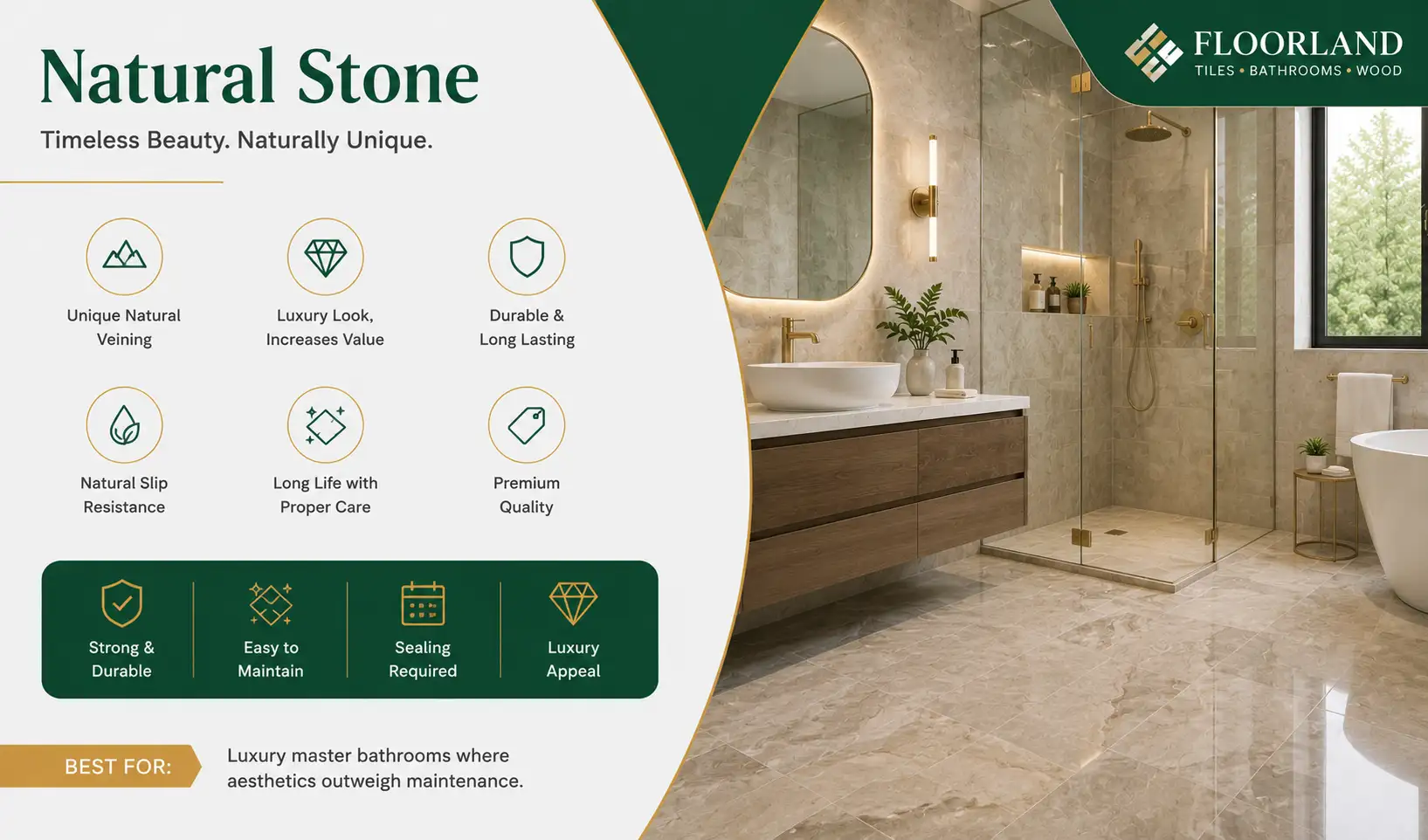
Natural stone flooring includes marble, granite, slate, limestone, and travertine. Each slab is unique, giving bathrooms a distinctive appearance. However, stone performance varies considerably depending on the material.
Specifications
| Feature | Value |
|---|---|
| Water Absorption | 0.1–12% |
| Mohs Hardness | 3–7 |
| Lifespan | 50–100+ years |
| Price | $8–$30+/sq ft |
| Sealing Required | Every 1–3 years |
Advantages
- Every tile has unique natural veining.
- Can increase resale value in luxury homes.
- Granite offers excellent scratch resistance with a Mohs rating around 6-7.
- Slate naturally provides high slip resistance because of its textured surface.
- Can last more than 100 years with proper maintenance.
Limitations
- Marble and limestone are susceptible to acidic cleaners and staining.
- Most stones require sealing every 12-36 months.
- Higher installation costs due to weight and cutting requirements.
- Certain polished stones become slippery when wet.
Best For: Luxury master bathrooms where aesthetics outweigh maintenance requirements.
4. Luxury Vinyl (LVT / SPC)
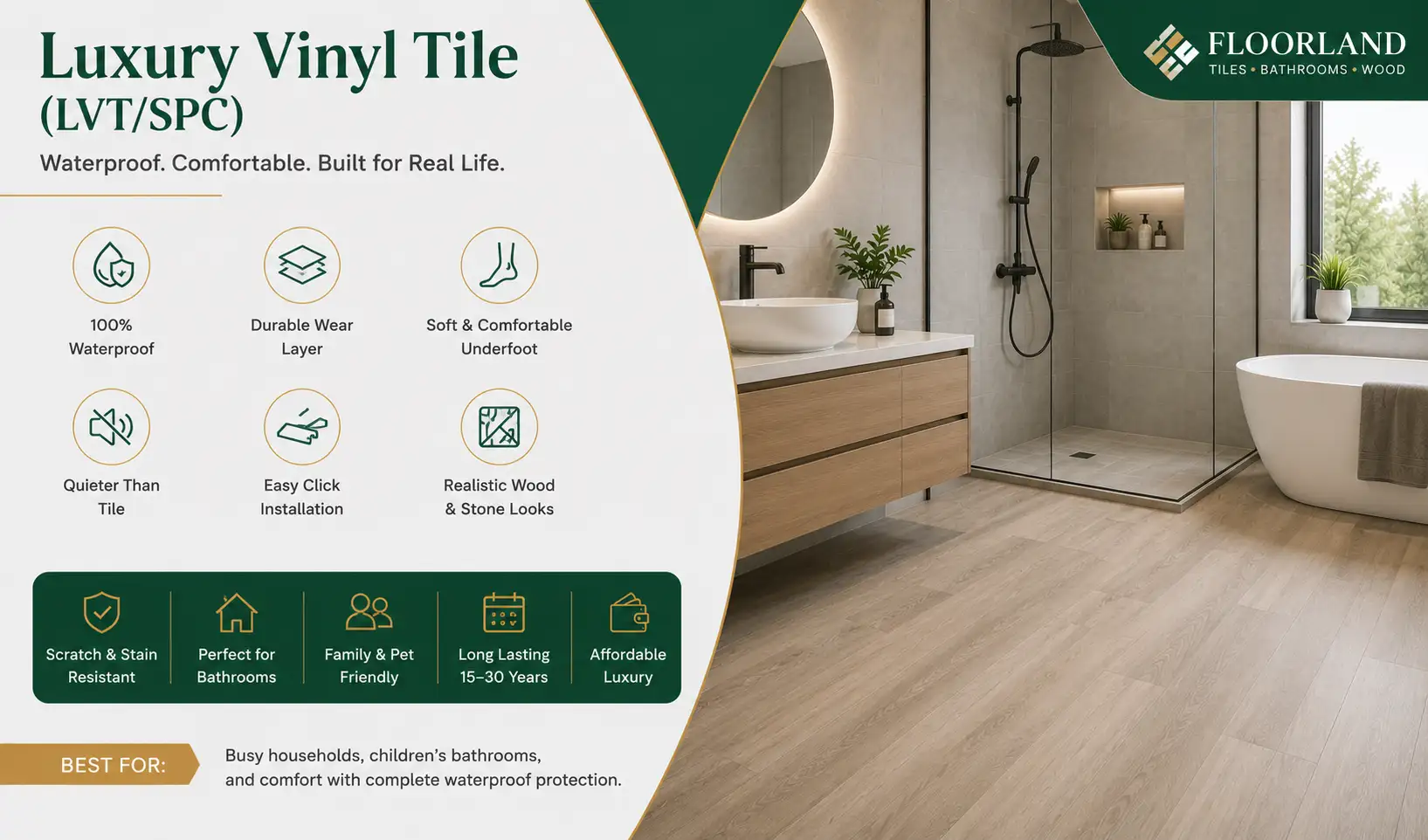
Modern luxury vinyl flooring uses multiple engineered layers. SPC (Stone Plastic Composite) flooring features a rigid mineral core that resists expansion from moisture and temperature changes.
Specifications
| Feature | Value |
|---|---|
| Water Resistance | 100% Waterproof |
| Wear Layer | 12–30 mil |
| Thickness | 4–8 mm |
| Lifespan | 15–30 years |
| Price | $3–$10/sq ft |
Advantages
- Completely waterproof, making it suitable for bathrooms.
- Softer underfoot than tile, reducing fatigue.
- Lower noise levels compared to ceramic or porcelain.
- Wear layers of 20 mil or more are suitable for heavy residential traffic.
- Click-lock systems simplify installation.
- Mimics hardwood and stone with realistic textures.
Limitations
- Sharp furniture legs or pet claws may scratch lower-quality products.
- Cannot be refinished once damaged.
- Quality varies greatly depending on wear-layer thickness and core construction.
- Prolonged direct sunlight may cause fading.
Best For: Busy households, children’s bathrooms, and homeowners seeking comfort with complete waterproof protection.
5. Sheet Vinyl
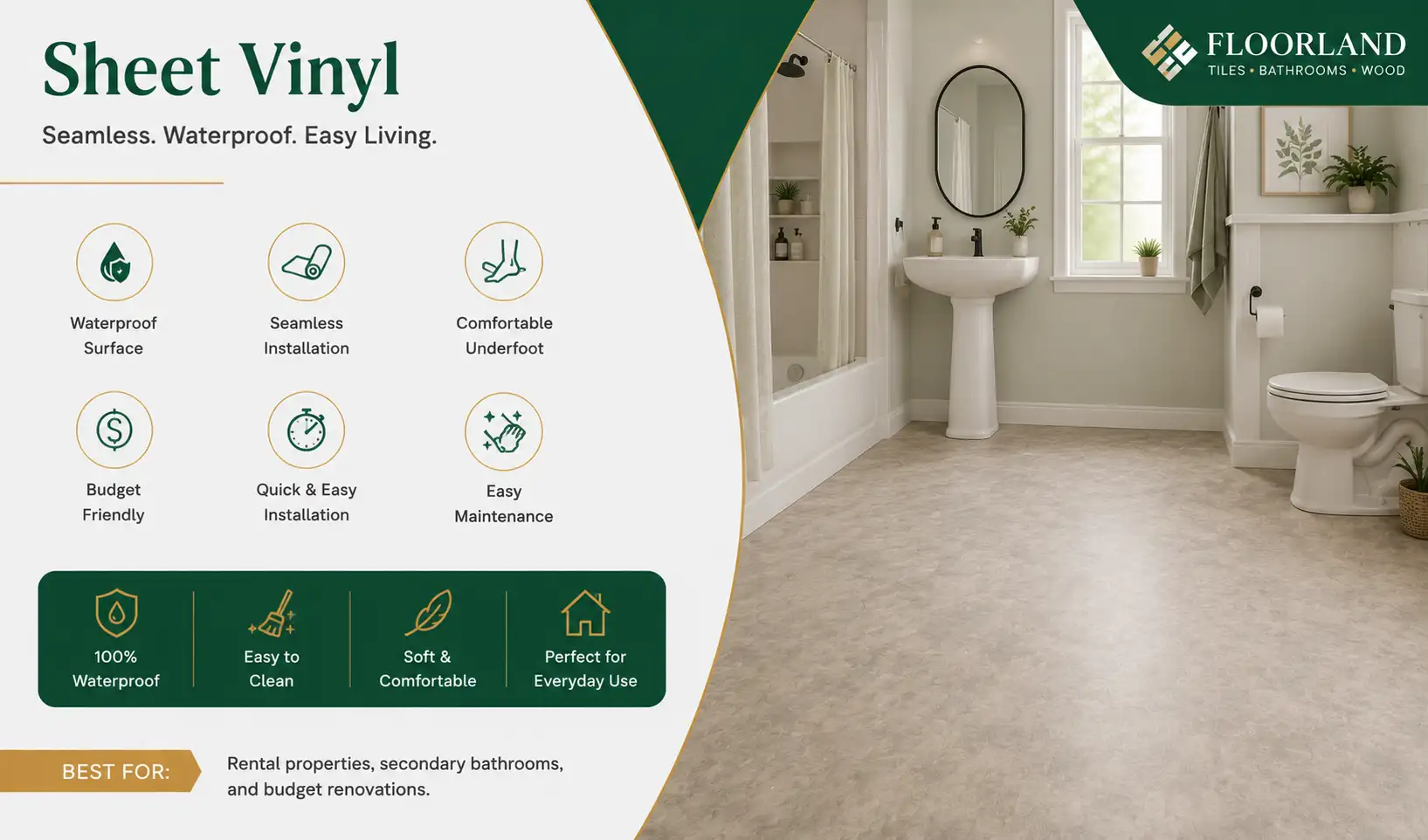
Sheet vinyl is manufactured in rolls up to 12 feet wide, allowing many bathrooms to be covered with few or no seams.
Specifications
| Feature | Value |
|---|---|
| Water Resistance | Waterproof Surface |
| Thickness | 1.5–4 mm |
| Lifespan | 10–20 years |
| Price | $1–$5/sq ft |
Advantages
- Seamless installation minimizes water penetration.
- One of the lowest-cost waterproof flooring options.
- Comfortable underfoot.
- Quick installation in small bathrooms.
- Easy daily maintenance.
Limitations
- Can be punctured by sharp objects.
- Heavy furniture may leave permanent dents.
- Damaged sections often require replacing the entire sheet.
- Fewer premium design options compared to LVT.
Best For: Rental properties, secondary bathrooms, and budget renovations.
6. Engineered Wood
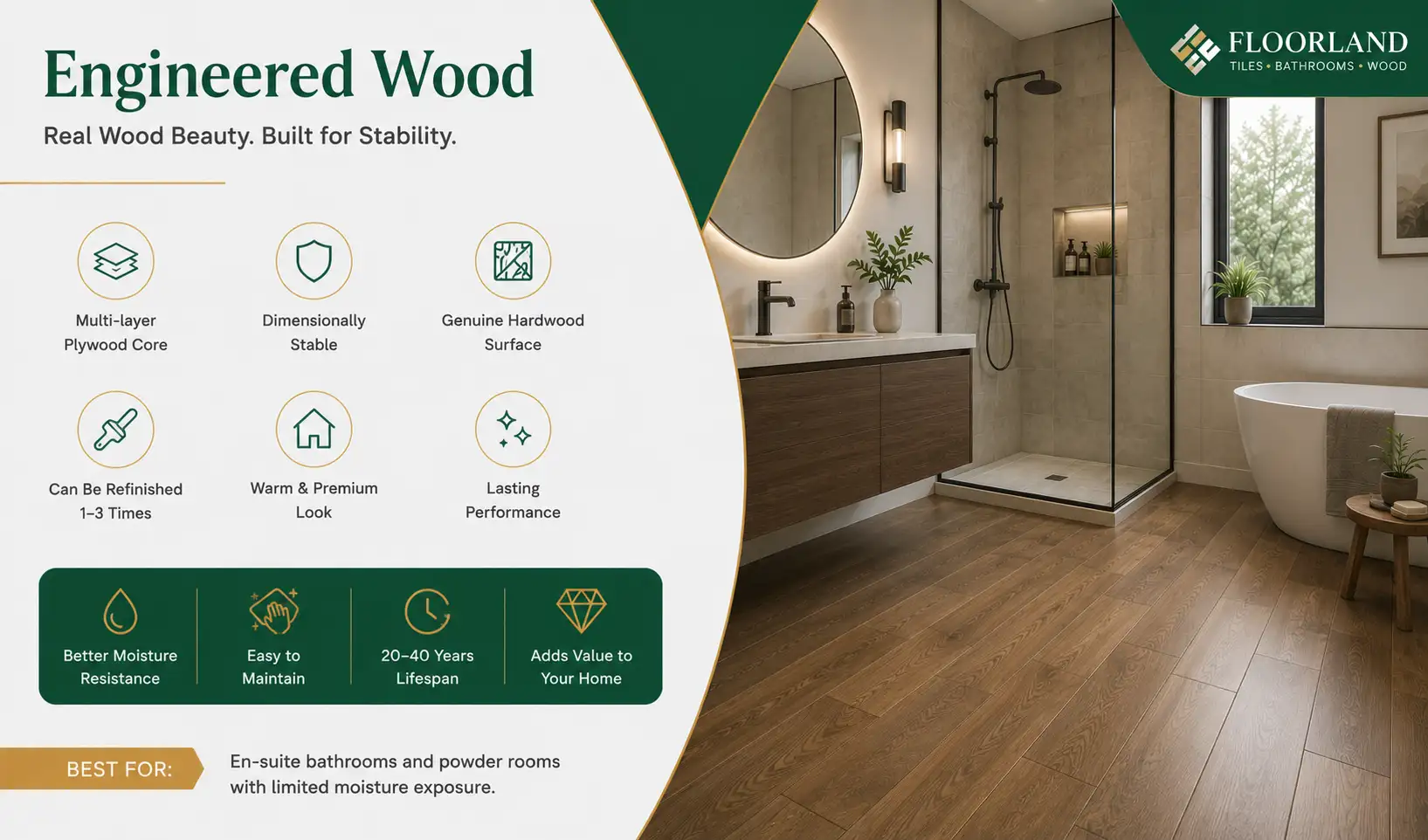
Engineered wood consists of a hardwood veneer bonded to multiple plywood layers. This cross-layer construction improves dimensional stability compared to solid hardwood.
Specifications
| Feature | Value |
|---|---|
| Construction | Multi-layer plywood core |
| Thickness | 10–20 mm |
| Lifespan | 20–40 years |
| Price | $6–$15/sq ft |
Advantages
- Genuine hardwood surface.
- Up to 70% more dimensionally stable than solid hardwood in changing humidity.
- Can often be refinished 1-3 times, depending on veneer thickness.
- Adds warmth and premium appearance.
Limitations
- Standing water can still damage the wood veneer.
- Not suitable for continuously wet environments.
- Requires prompt cleanup of spills.
- Higher maintenance than tile or vinyl.
Best For: En-suite bathrooms and powder rooms with limited moisture exposure.
7. Terracotta Tile
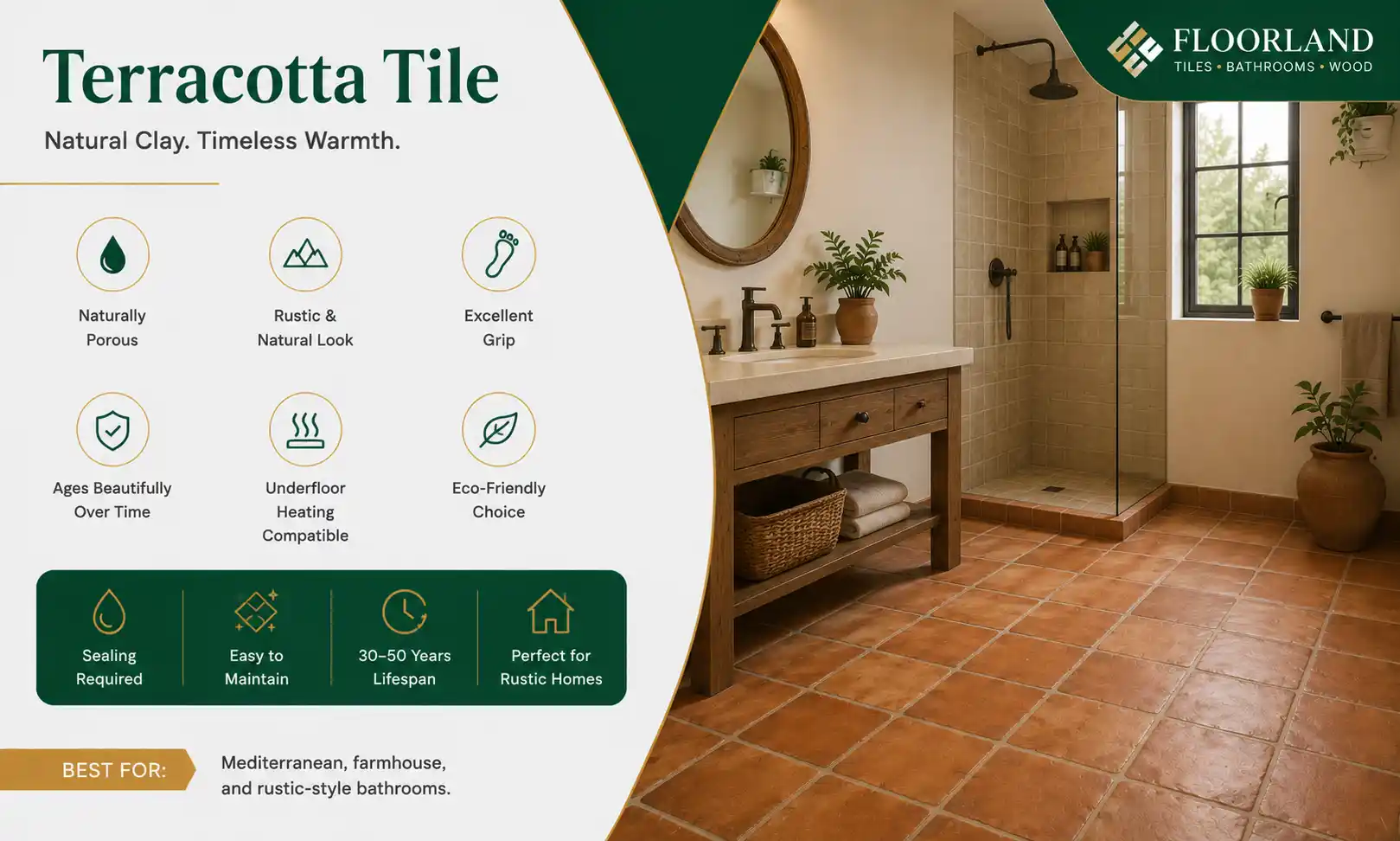
Terracotta is made from natural clay fired at relatively low temperatures, giving it its warm reddish appearance and porous structure.
Specifications
| Feature | Value |
|---|---|
| Water Absorption | 8–15% (Unsealed) |
| Mohs Hardness | 6–7 |
| Lifespan | 30–50 years |
| Price | $5–$15/sq ft |
Advantages
- Natural rustic appearance.
- Excellent grip due to textured surface.
- Compatible with underfloor heating.
- Ages beautifully over time.
Limitations
- Highly porous without sealing.
- Requires sealing every 1-2 years.
- Can stain easily from soaps and cosmetics.
- Limited modern design choices.
Best For: Mediterranean, farmhouse, and rustic-style bathrooms.
8. Mosaic Tile
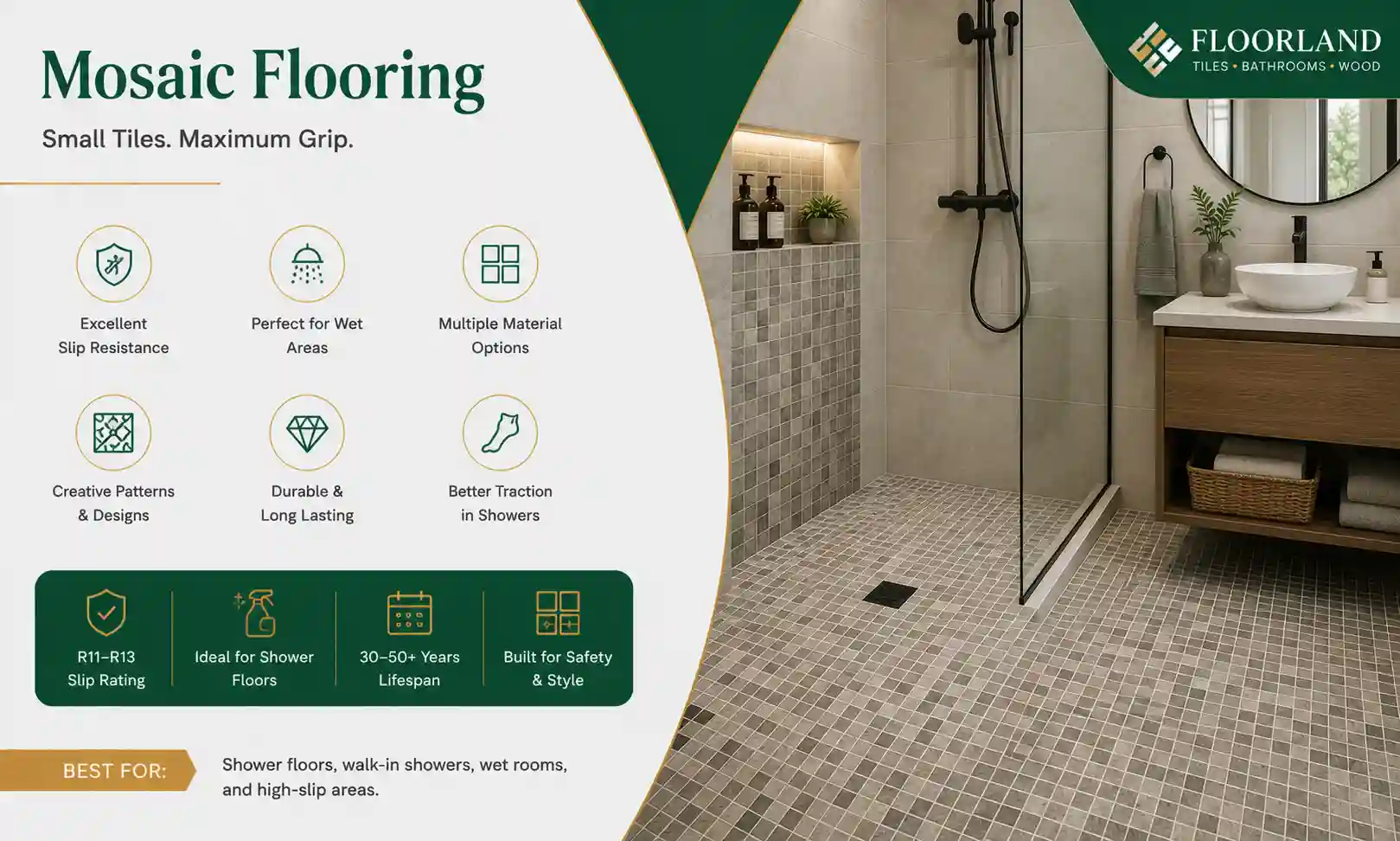
Mosaic flooring consists of small tiles, usually measuring 1×1 inch or 2×2 inches, mounted on mesh sheets. The numerous grout joints improve traction significantly.
Specifications
| Feature | Value |
|---|---|
| Water Absorption | 8–15% (Unsealed) |
| Mohs Hardness | 6–7 |
| Lifespan | 30–50 years |
| Price | $5–$15/sq ft |
Advantages
- Numerous grout joints provide excellent grip in wet areas.
- Ideal for curved shower floors and wet rooms.
- Available in porcelain, ceramic, glass, and natural stone.
- Easy to create decorative patterns and borders.
Limitations
- More grout means more cleaning and maintenance.
- Installation is labor-intensive.
- Grout discoloration is more noticeable over time.
- Higher installation costs due to increased labor.
Best For: Shower floors, walk-in showers, wet rooms, and bathrooms where slip resistance is the highest priority.
A Quick Word on Slip Ratings (R-Values)
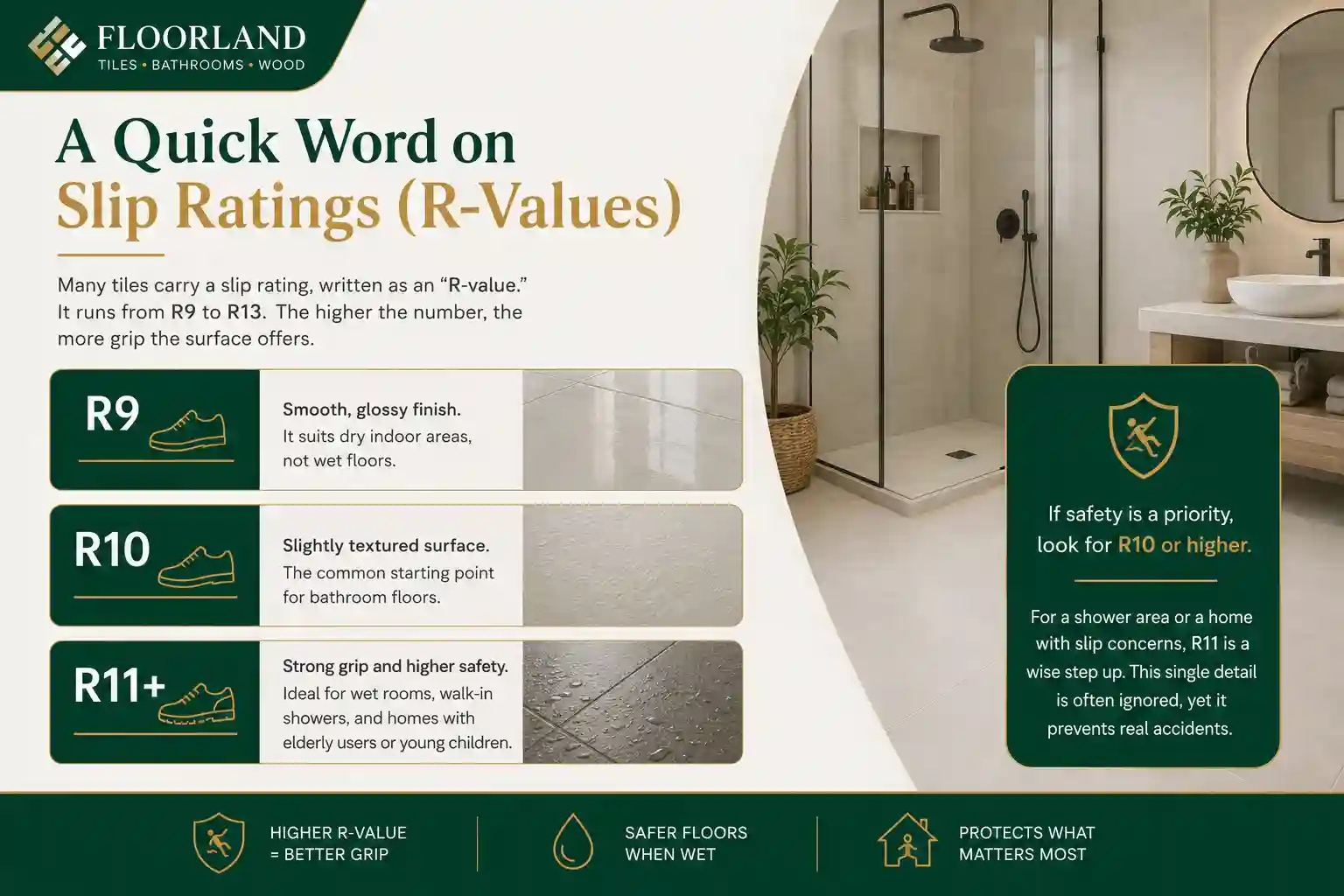
Many tiles carry a slip rating, written as an “R-value.” It runs from R9 to R13. The higher the number, the more grip the surface offers.
- R9 has a smooth, glossy finish. It suits dry indoor areas, not wet floors.
- R10 offers a slightly textured surface and is the common starting point for bathroom floors.
- R11 and above give a strong grip and suit wet rooms, walk-in showers, and homes with elderly users or young children.
If safety is a priority, look for R10 or higher. For a shower area or a home with slip concerns, R11 is a wise step up. This single detail is often ignored, yet it prevents real accidents.
Materials to Approach With Caution
Some floors look tempting, but struggle in a bathroom. Know the risks before you commit.
- Solid Hardwood: Real timber expands and contracts with moisture. In a wet room, wooden floors can warp, cup, or rot. It is best kept out of full bathrooms.
- Standard laminate: Most laminates have a wood-based core. When water reaches the edges, it swells. Only specialist waterproof laminate belongs in a bathroom, and even then with care.
- Carpet. Carpet holds water and dries slowly. This invites mould, mildew, and a musty smell. It is not a hygienic choice for a bathroom.
What Makes a Bathroom Floor “Good”?
Before you fall for a color or pattern, judge a floor on six practical points. A strong choice scores well on all of them.
- Water resistance. This is the most important factor. Bathrooms are wet. The right floor blocks moisture instead of soaking it up. Water that sits in seams or under the surface causes swelling, stains, and mould.
- Slip resistance. Wet floors are slippery floors. A good bathroom surface gives your feet grip, even when soaked. Texture and finish matter here far more than they do in a living room.
- Durability. A bathroom floor takes daily traffic and the occasional dropped object. It should resist scratches, chips, and dents while keeping its looks.
- Easy maintenance. You want a floor you can wipe clean in minutes. Surfaces that hide dirt or trap soap scum become a chore over time.
- Comfort underfoot. You stand on this floor with bare feet, often first thing in the morning. Warmth and a pleasant feel are worth considering.
- Style and budget. The floor should match the look you want and the money you have. The good news is that almost every style is now available across several price points.
Keep these six points in mind as you read on. They make every comparison below much easier to judge.
How to Choose the Best Materials for Bathroom Floors
Feeling unsure about choosing the best bathroom flooring materials? Work through these four questions in order.
- How wet does the room get? A full wet room demands a waterproof floor. A small powder room has more flexibility.
- Who uses it? Children and older adults benefit from higher slip ratings and softer, warmer surfaces.
- What is your budget? Ceramic and sheet vinyl stretch a tight budget. Porcelain, luxury vinyl, and stone suit larger ones.
- What look do you want? Decide on wood, stone, or pattern first. Then pick the material that delivers that look safely.
Answer these, and your shortlist almost writes itself.
Waterproof vs. Water-Resistant Materials
These two words sound similar. They are not the same. The gap between them matters a great deal in a bathroom.
| Feature | Water-Resistant Flooring | Waterproof Flooring |
|---|---|---|
| Protection Level | Resists water for a limited time | Blocks water completely |
| Response to Spills | Handles minor splashes if cleaned quickly | Can withstand standing water for hours |
| Moisture Penetration | Water may seep into seams and edges over time | Prevents water from penetrating the flooring material |
| Risk of Damage | Higher risk of swelling, warping, or deterioration | Minimal risk of water-related damage |
| Best Application | Lightly used powder rooms and guest bathrooms | Full bathrooms, wet rooms, and areas with showers or tubs |
| Long-Term Durability | Less suitable for frequent moisture exposure | Designed for continuous exposure to humid and wet conditions |
| Recommended Choice | Good for low-moisture environments | The safest option for most bathrooms |
Quick Recommendations by Scenario
After the expert consultation, we have shortlisted some of the best materials based on the usage:
- Busy family bathroom: Porcelain tile or luxury vinyl. Both are tough, waterproof, and easy to clean.
- Small powder room: Sheet vinyl or ceramic tile. Affordable and simple to fit.
- Luxury ensuite: Natural stone or large-format porcelain. Pair with underfloor heating for comfort.
- Tight budget: Ceramic tile or sheet vinyl. Strong value with no fuss.
- Safety and accessibility: Textured porcelain or mosaic with an R11 rating for reliable grip.
Final Thoughts
The right bathroom floor balances safety, durability, and style. Start with water resistance and grip. Then weigh comfort, upkeep, and budget. Match those needs to the material, not the other way round. Get this balance right, and your floor will look good and perform well for many years. That is what a good bathroom floor really means.
Frequently Asked Questions
For most homes, porcelain tile is the strongest all-around choice. It is waterproof, hard-wearing, and low-maintenance. Luxury vinyl is the best pick if comfort and warmth matter most.
Yes. Quality luxury vinyl and SPC products are fully waterproof and made for wet areas. Check that the product is rated waterproof, not just water-resistant.
You can, but choose the right base. Wood-effect porcelain or waterproof luxury vinyl gives a safe look. Solid hardwood is best avoided.
Choose a textured surface with an R10 rating or higher. For showers, R11 and mosaic tiles offer extra grip thanks to their many grout lines.
Sheet vinyl and ceramic tile offer the best value. Both are water-resistant, easy to clean, and simple to install.