
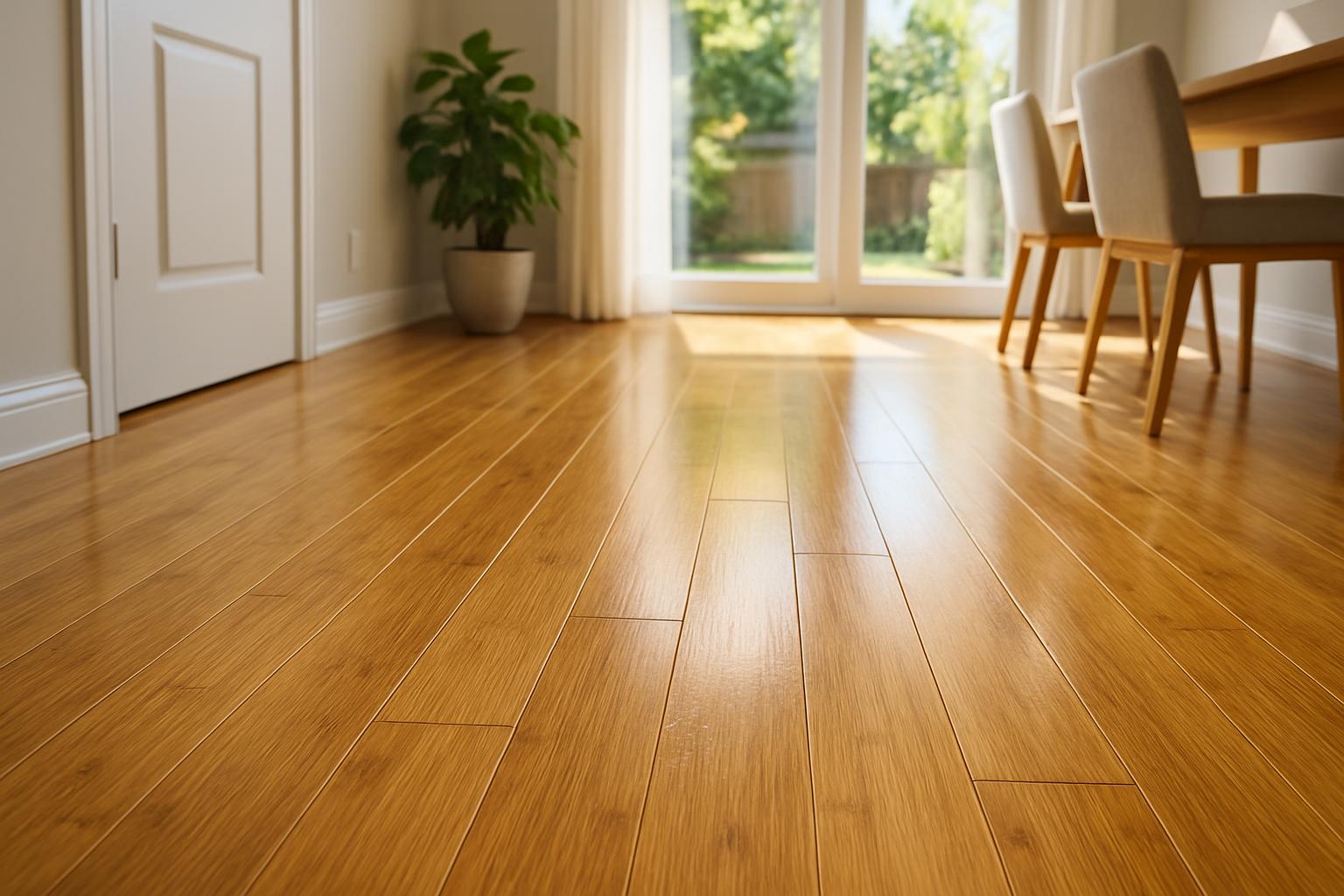
How to Clean Bamboo Flooring: The Ultimate Guide for Homeowners
Bamboo flooring has become increasingly popular due to its combination of beauty and durability. Did you know that bamboo flooring is about 30% harder than oak and other traditional wooden flooring? This impressive hardness can result in long-lasting floors if they are cared for properly. To maintain their longevity and aesthetic appeal, it’s essential to understand the different types and finishes of bamboo flooring.
Different Types of Bamboo Flooring
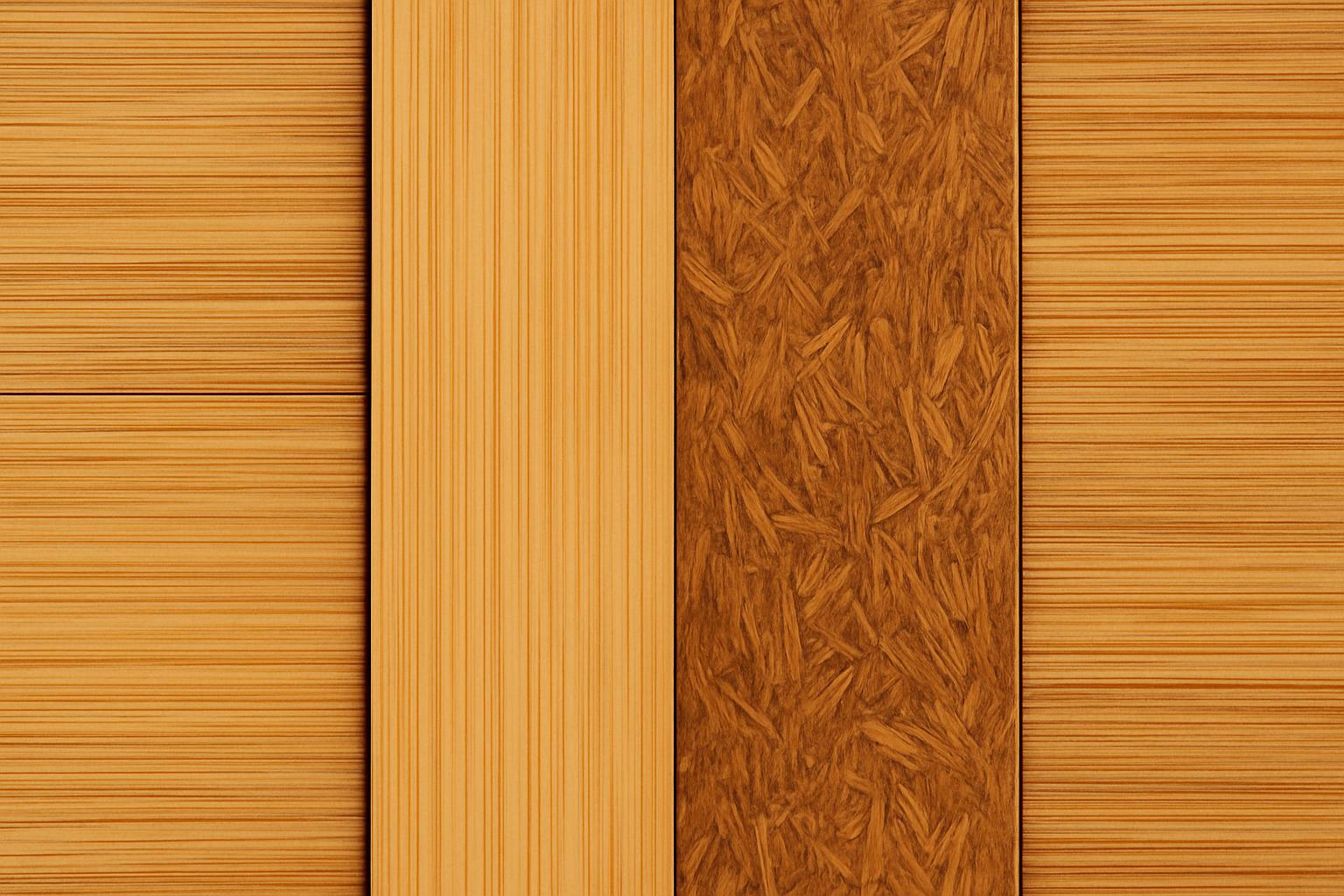
Bamboo flooring is available in three main types: strand-woven, horizontal, and vertical. Each type has unique features and is suited for different environments.
- Strand-Woven Bamboo Flooring: This type is made by compressing bamboo fibers under high pressure, creating a highly durable and dense product. It is perfect for high-traffic areas due to its strength.
- Horizontal Bamboo Flooring: This flooring consists of bamboo strips placed side by side, highlighting the natural grain and nodes. It offers a traditional appearance and is less dense than strand-woven options.
- Vertical Bamboo Flooring: Similar to horizontal flooring, this type features vertically aligned bamboo strips. It has a sleek look and is often used in contemporary home designs.
Understanding Finishes
The finish of bamboo flooring greatly affects its look and ease of maintenance. Common finishes include:
- Matte Finish: This option provides a natural appearance, making scratches and scuffs less noticeable. However, it may need more frequent cleaning.
- Satin Finish: With a slight sheen, satin finishes are easier to clean compared to matte options. They strike a good balance between beauty and maintenance.
- Gloss Finish: While gloss finishes offer a shiny look, they can show scratches more prominently and might require special cleaning products.
Selecting the right finish can help preserve the floor’s beauty and minimize cleaning efforts.
Hardness and Durability
As mentioned earlier, bamboo flooring is around 30% harder than oak, according to the national flooring authority report. This hardness makes bamboo a great choice for areas with heavy foot traffic. However, it also means you should be cautious with your cleaning methods.
Using inappropriate cleaning solutions can damage the finish and lead to costly repairs or refinishing later on. Bamboo is a sustainable flooring option, as it grows quickly, making it an eco-friendly choice for homeowners.
Essential Cleaning Supplies for Bamboo Floors
To keep bamboo flooring in good shape, having the right cleaning supplies is vital. This section will cover recommended cleaners, cleaning tools, and eco-friendly options.
Recommended Cleaners
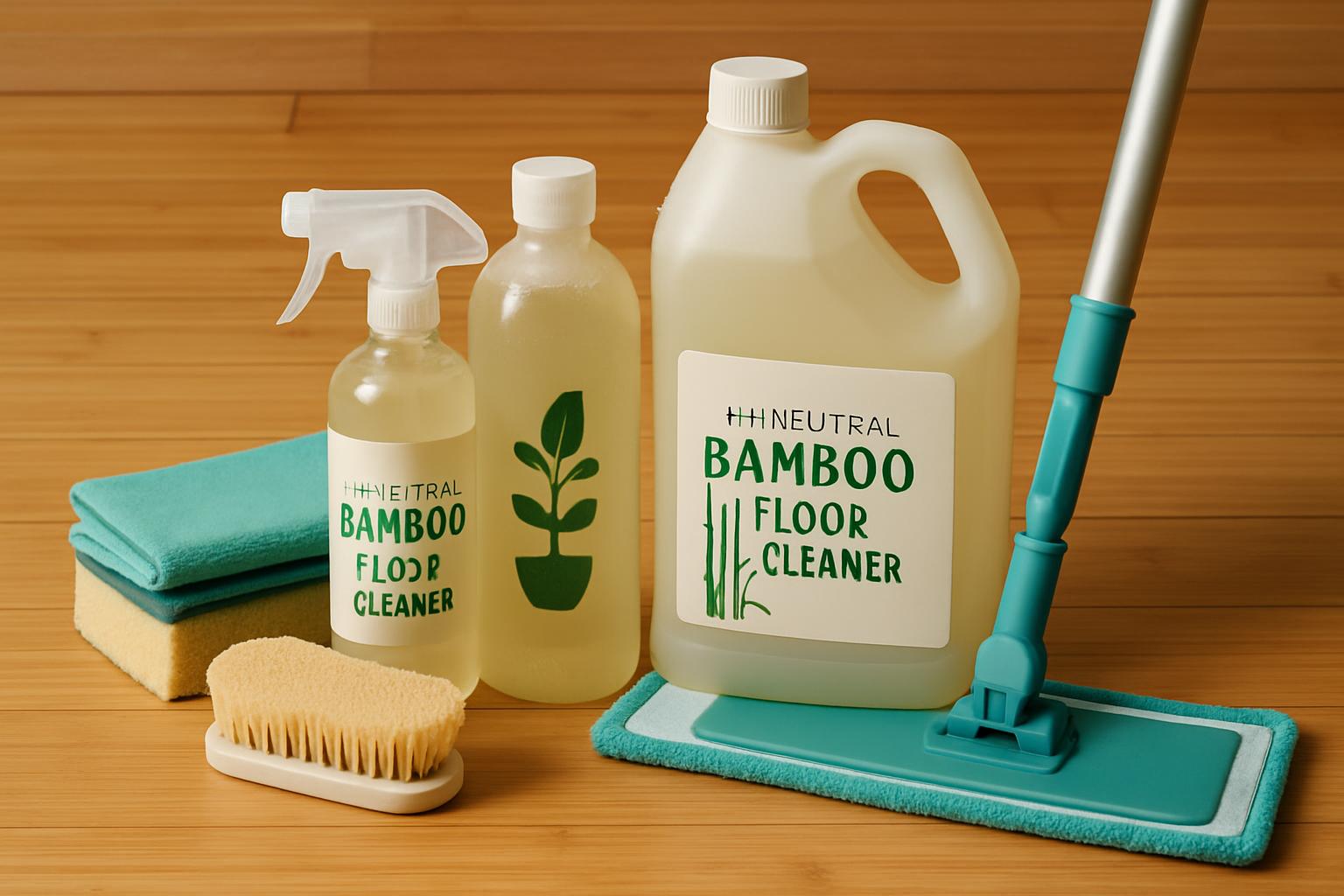
When cleaning bamboo floors, pH-neutral cleaners are crucial. These products are gentle on the bamboo finish while effectively removing dirt and grime. Some recommended cleaners include:
- Bona Hardwood Floor Cleaner: Designed specifically for hardwood and bamboo floors, this cleaner is safe and effective.
- Method Squirt + Mop Wood Floor Cleaner: An environmentally friendly choice that cleans well without harsh chemicals.
- Simple Green All-Purpose Cleaner: A versatile cleaner that can work well on bamboo when properly diluted.
Cleaning Tools
Using the right cleaning tools can greatly improve the cleaning process. Here are some essential tools:
- Microfiber Mop: Perfect for bamboo flooring, as it captures dirt without scratching the surface.
- Soft Broom: A soft-bristled broom is ideal for daily sweeping to prevent dirt buildup.
- Damp Cloth: A simple damp cloth can effectively tackle spills and spots without harming the finish.
Eco-Friendly Options
For those interested in natural cleaning solutions, consider these eco-friendly choices:
- Vinegar Solution: A mixture of equal parts vinegar and water can create a gentle cleaning solution. However, avoid using it too often, as vinegar can be acidic.
- Essential Oils: Adding a few drops of essential oils, like tea tree or lavender, to your cleaning solution can help mask odors and provide a pleasant scent.
- Water: Sometimes, a damp mop with just water is sufficient for regular cleaning without chemicals.
Over 25% of homeowners report uncertainty about how to clean their bamboo flooring properly. With the right supplies and knowledge, maintaining your floors becomes a manageable task.
Step-by-Step Guide to Cleaning Bamboo Flooring
To keep bamboo floors looking their best, a regular cleaning routine is essential. This section will outline daily and weekly cleaning tasks, deep cleaning techniques, and tips for dealing with stains and spills.
Daily and Weekly Cleaning Routine
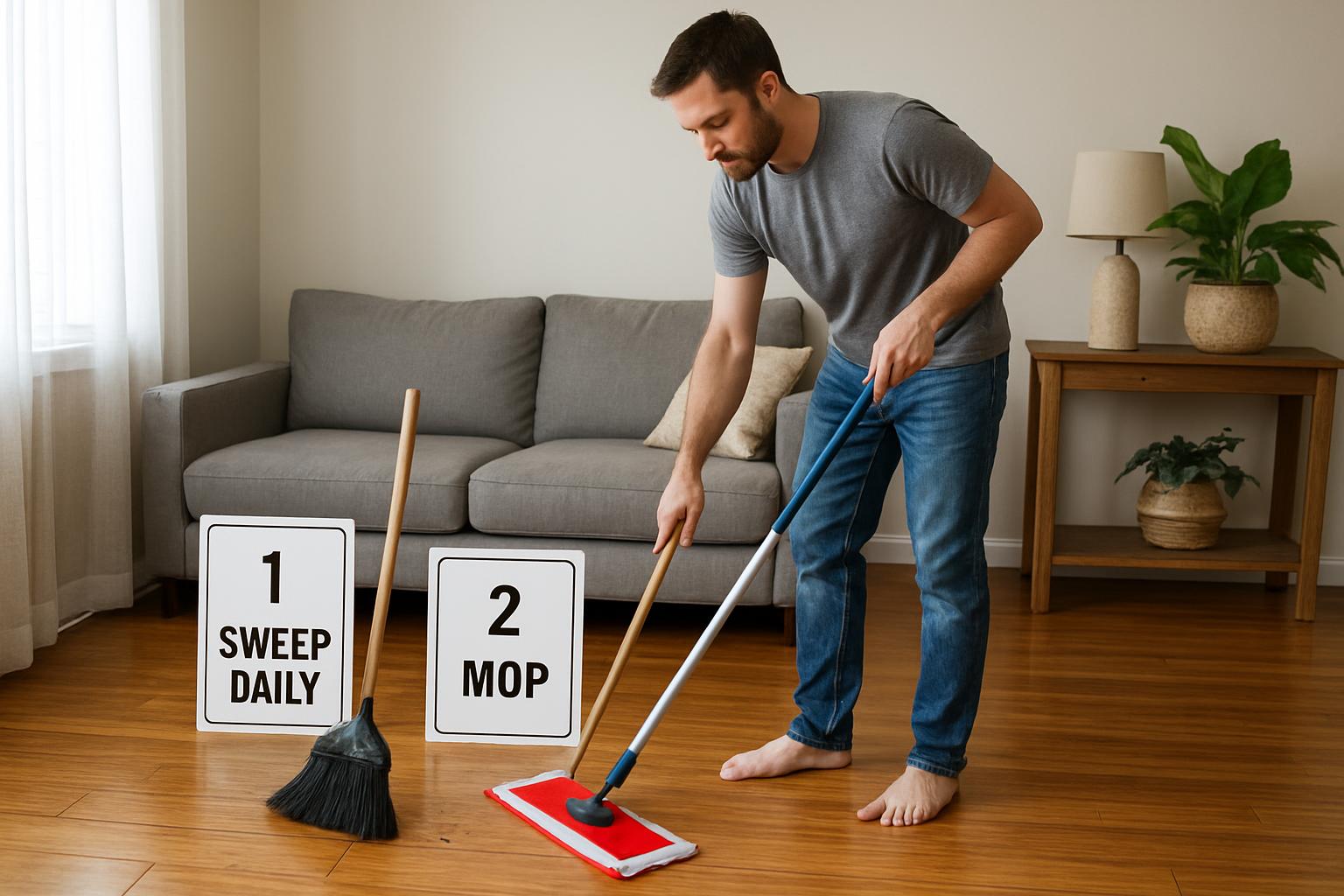
Establishing a consistent cleaning routine is key to maintaining bamboo flooring. Here’s a simple guide:
- Daily:
- Sweep or vacuum the floor to remove dirt and debris.
- Use a microfiber mop to pick up dust.
- Weekly:
- Clean the floor with a pH-neutral cleaner and a damp mop.
- Check for any spills or stains that need immediate attention.
Deep Cleaning Techniques
Deep cleaning should be performed monthly or as needed. Follow these steps for an effective deep clean:
- Remove Furniture: Clear the area of any furniture and rugs.
- Sweep/Vacuum: Get rid of all loose dirt and debris.
- Mop with Cleaner: Use a pH-neutral cleaner mixed with water. Mop the floor, ensuring that the mop is damp, not soaking wet.
- Dry the Floor: Use a dry microfiber mop to soak up any excess moisture.
This method ensures a thorough clean without harming the finish.
Dealing with Stains and Spills
Accidents happen, and knowing how to handle them is important. For common stains and spills:
- Food and Drink Spills: Blot the area immediately with a damp cloth and a pH-neutral cleaner. Avoid scrubbing, as this can damage the finish.
- Pet Messes: Clean the area promptly with a damp cloth and pH-neutral cleaner, ensuring no residue remains.
- Scuff Marks: For scuff marks, use a small amount of baking soda on a damp cloth to gently lift the mark.
Adjust the cleaning frequency based on foot traffic. High-traffic areas will require more attention.
Long-Term Maintenance Tips for Bamboo Flooring
Proper maintenance can significantly extend the life of your bamboo flooring. This section will cover how to protect against scratches, control humidity, and know when to seek professional help.
Protecting Against Scratches
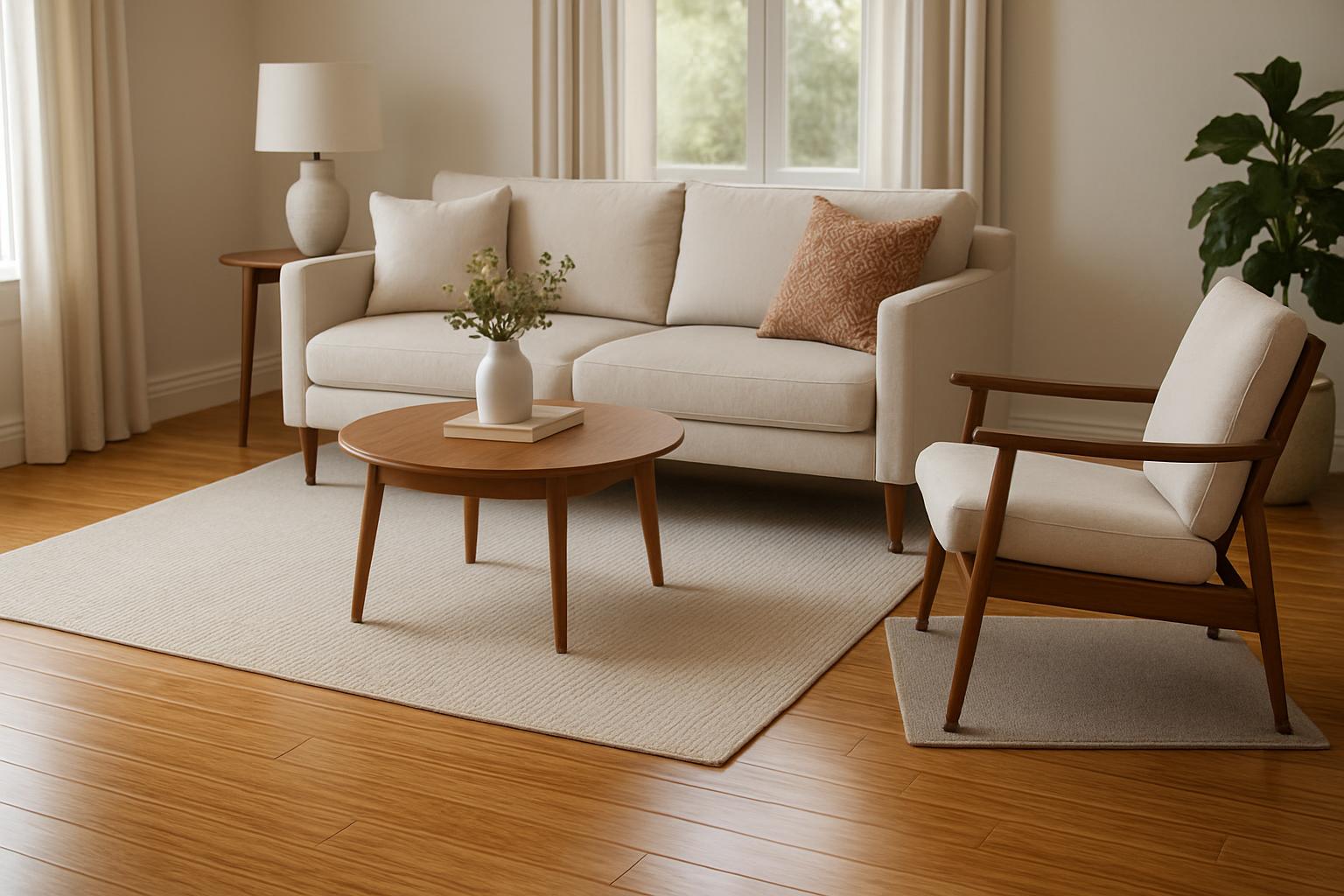
Scratches can detract from the beauty of bamboo flooring. To prevent them, consider these measures:
- Area Rugs: Place area rugs in high-traffic spaces to protect the floor from wear.
- Furniture Pads: Use felt pads under furniture legs to minimize scratches when moving items.
- Shoe Policy: Encourage guests to remove shoes or wear house slippers to prevent dirt and debris from scratching the floor.
Humidity Control
Bamboo flooring can be sensitive to humidity levels. Here are some tips for maintaining the right environment:
- Use a Humidifier: In dry seasons, a humidifier can help maintain moisture levels.
- Monitor Humidity: Ideally, humidity should be kept between 30-50%. A hygrometer can help you keep track.
- Avoid Excess Moisture: Clean up spills quickly and avoid soaking the floor when cleaning.
Professional Maintenance
While regular cleaning is vital, consider professional maintenance every few years. This can include:
- Refinishing: If the finish is worn, refinishing can restore the floor’s look and durability.
- Deep Cleaning: Professionals can use specialized equipment to thoroughly clean and sanitize the flooring.
Proper maintenance can extend the life of bamboo flooring by up to 15 years, ensuring it remains a beautiful part of your home.
Comparing Bamboo Flooring Cleaning Products
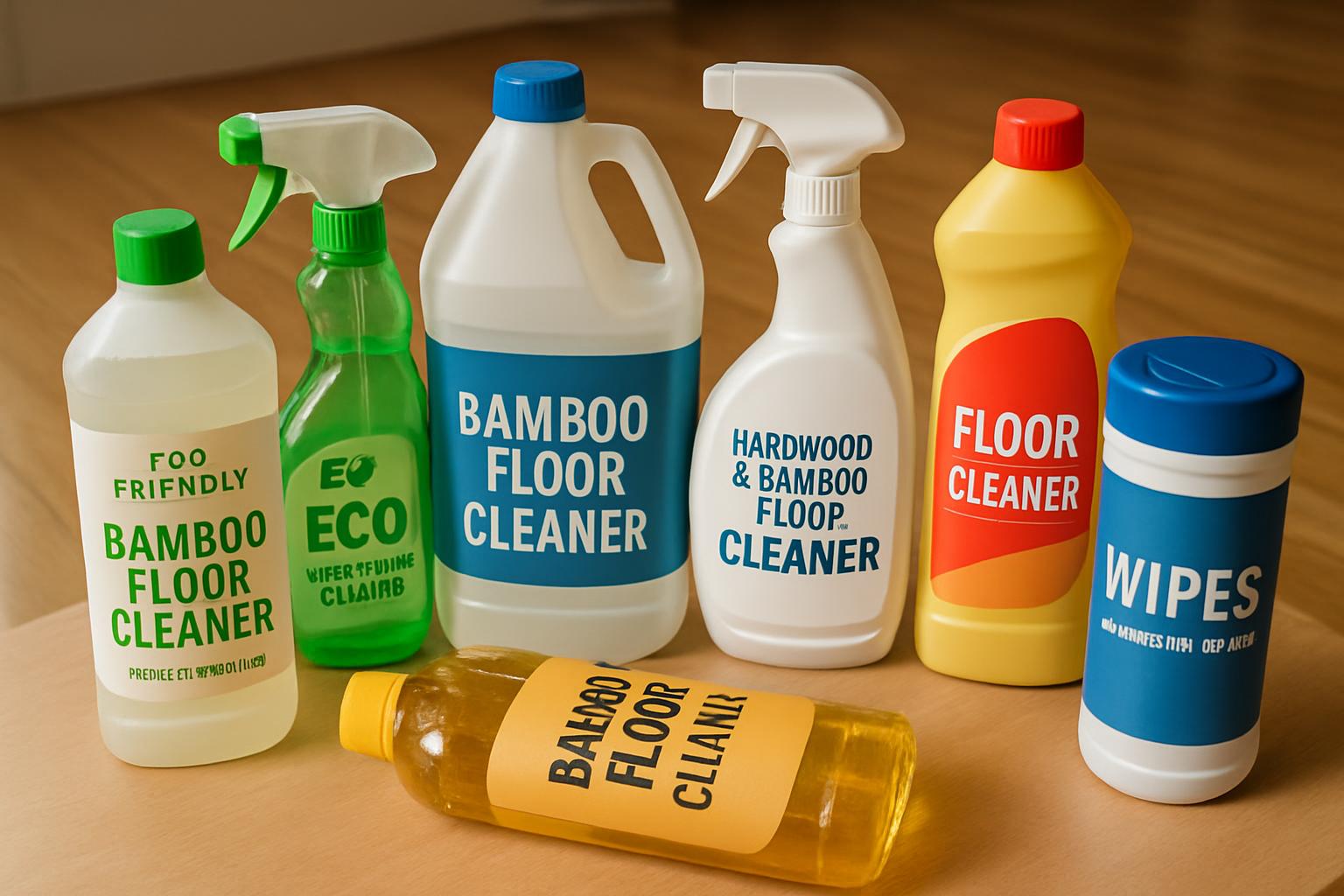
With so many cleaning products on the market, comparing options can help you find the best fit for your bamboo flooring. This section will feature a comparison table of eco-friendly versus conventional cleaners, highlighting their pros and cons.
Eco-Friendly vs. Conventional Cleaners
| Product Name | Type | Pros | Cons |
|---|---|---|---|
| Bona Hardwood Floor Cleaner | Conventional | Safe for bamboo, effective cleaning | Somewhat pricier than others |
| Method Squirt + Mop Wood Cleaner | Eco-Friendly | Non-toxic, pleasant scent | Requires more frequent application |
| Simple Green All-Purpose Cleaner | Eco-Friendly | Versatile, biodegradable | Must be diluted for best results |
| EcoClean All-Natural Floor Cleaner | Eco-Friendly | Made from plant-derived ingredients | Limited availability |
| Swiffer WetJet Wood Starter Kit | Conventional | Convenient, easy to use | Can leave residue if too wet |
This table illustrates the differences between eco-friendly and conventional cleaners. Choose based on your cleaning preferences and environmental priorities.
Cost Comparison
The cost of cleaning products can vary greatly. Typically, conventional cleaners range from $5 to $15 per bottle, while eco-friendly options may cost between $10 and $20. Investing in quality cleaners can save money in the long run by protecting your floors.
Effectiveness Ratings
Effectiveness ratings can differ based on user reviews. Products like Bona and Method consistently receive high ratings for their ability to clean without harming finishes. Many users find that natural cleaners can be just as effective when used correctly.
Common Mistakes to Avoid When Cleaning Bamboo Floors
Cleaning bamboo floors is straightforward, but many homeowners make mistakes that can lead to damage. In this section, Floorland will highlight common pitfalls and how to avoid them.
Using Wrong Cleaners
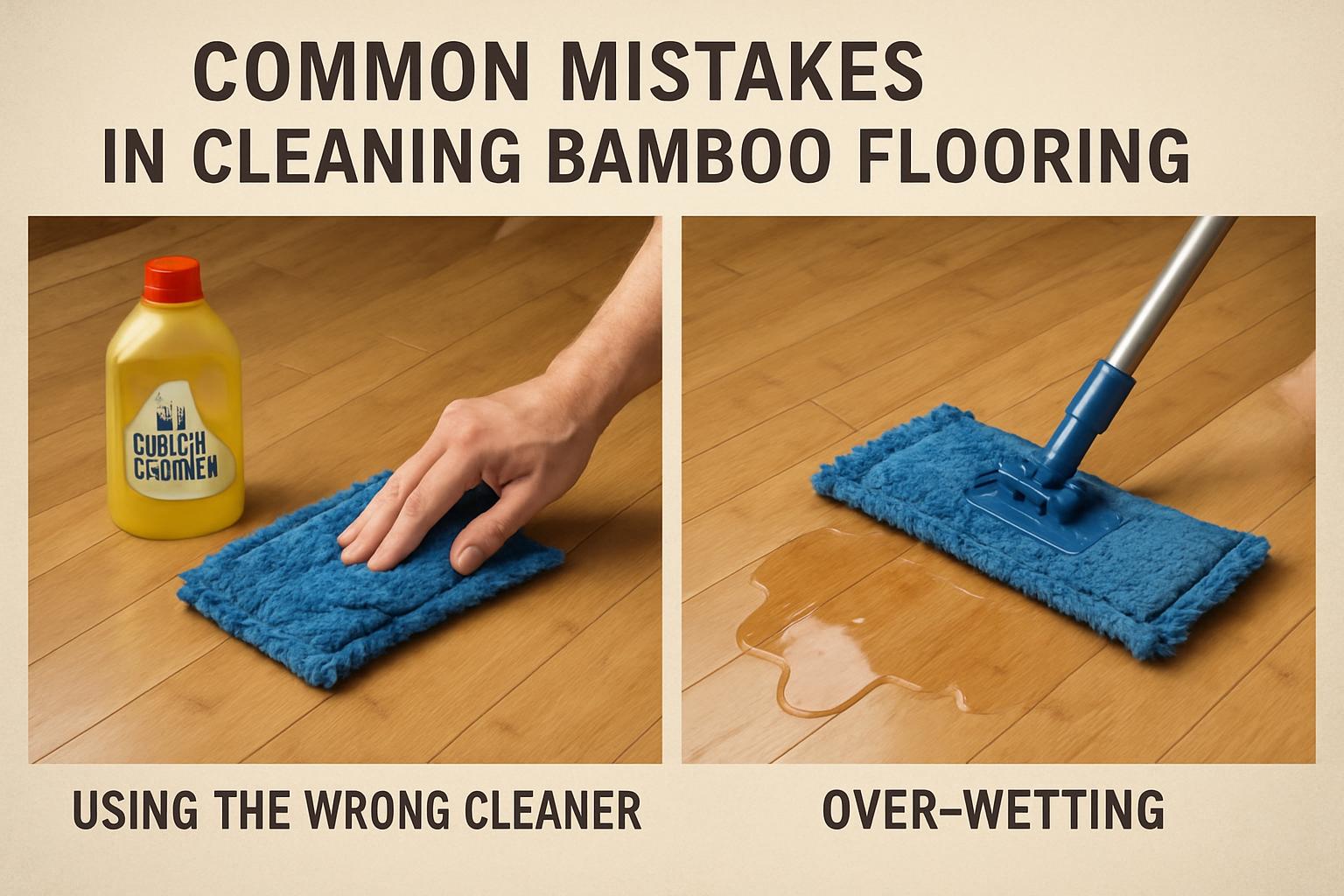
A frequent mistake is using harsh or acidic cleaners. Avoid:
- Ammonia-Based Cleaners: These can strip the finish from bamboo floors.
- Vinegar Solution: While natural, it should be diluted and used sparingly.
Instead, stick to pH-neutral cleaners specifically designed for bamboo.
Over-Wetting the Floor
Another common error is over-wetting the floor. Excess moisture can seep into joints, causing warping. To prevent this:
- Damp Mop: Always use a damp mop, not a soaking wet one.
- Dry Immediately: Quickly wipe up spills to avoid damage.
Skipping Regular Maintenance
Neglecting regular cleaning and maintenance can lead to long-term damage. To prevent this, establish a cleaning schedule that includes:
- Weekly Sweeping: To remove dirt and debris.
- Monthly Deep Cleaning: To maintain appearance and prevent buildup.
Here’s a quick checklist of dos and don’ts for cleaning bamboo floors:
Dos
- Use a microfiber mop for cleaning.
- Clean spills immediately with a damp cloth.
- Follow a regular cleaning schedule.
Don’ts
- Don’t use abrasive cleaners or tools.
- Don’t allow standing water on the floor.
- Don’t skip regular maintenance.
The Benefits of Bamboo Flooring and Sustainability
Bamboo flooring is more than just a stylish option; it offers numerous environmental and aesthetic benefits. This section will explore its sustainability, health advantages, and visual appeal.
Environmental Impact
Bamboo is one of the fastest-growing plants on the planet, with some species growing up to 3 feet per day. This rapid growth makes bamboo a sustainable resource for flooring. Unlike hardwood trees, which can take decades to mature, bamboo can be harvested every few years without harming the plant.
Health Benefits
Bamboo flooring can contribute to improved indoor air quality. Unlike carpets that trap dust, allergens, and pollutants, bamboo floors are easier to clean, which can help reduce asthma and allergy symptoms.
Aesthetic Appeal
Bamboo flooring gives a unique and modern look that complements a variety of interior designs. Its natural grains and tones offer versatility, making it a popular choice among eco-conscious homeowners.
In summary, bamboo flooring enhances the visual appeal of your home while supporting sustainable practices.
Key Takeaways for Cleaning and Maintaining Bamboo Flooring
Maintaining bamboo flooring requires an understanding of the right cleaning techniques and regular upkeep. Here’s a summary of the key points discussed in this guide.
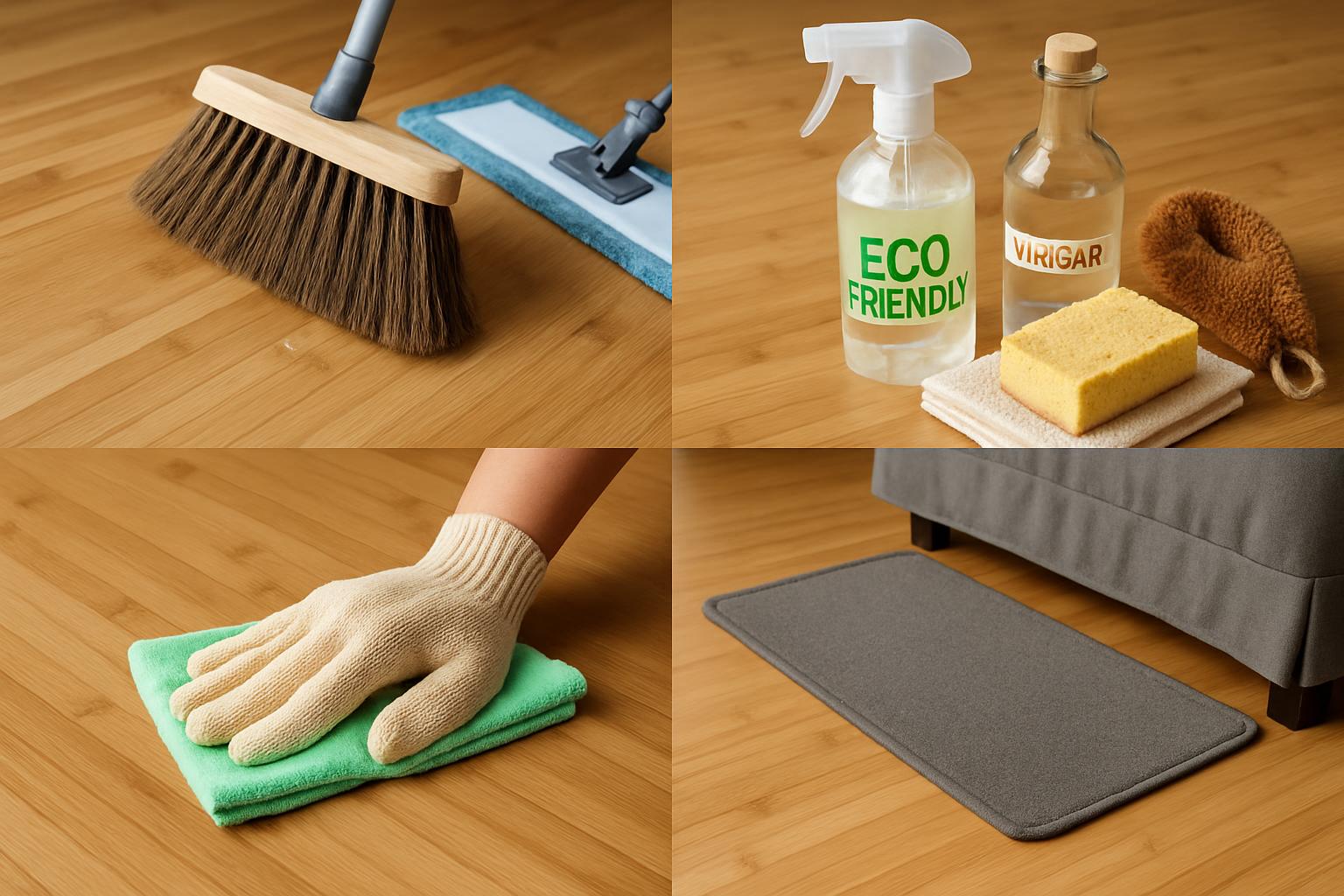
Summary of Cleaning Techniques
- Sweep daily and mop weekly using a pH-neutral cleaner.
- Deep clean monthly to prevent buildup.
- Address spills and stains promptly.
Importance of Maintenance
Establishing a regular cleaning routine can extend the life of your bamboo flooring. Protect against scratches and moisture damage to maintain its beauty.
Final Thoughts
Investing in quality cleaning products and following a maintenance schedule will help ensure your bamboo flooring remains beautiful for years. Feel free to share your cleaning experiences or ask any questions in the comments below.
FAQ
Q: How often should I clean my bamboo flooring?
A: It is generally recommended to clean bamboo flooring at least once a week, with a deeper clean every month, depending on foot traffic.
Q: Can I use vinegar to clean bamboo floors?
A: While vinegar is a natural cleaner, it should be diluted and used sparingly, as its acidity can damage bamboo finishes over time.
Q: What is the best way to remove stains from bamboo flooring?
A: For most stains, a damp cloth and a pH-neutral cleaner should suffice. For tougher stains, consider using a specialized bamboo floor cleaner.
Q: Is bamboo flooring waterproof?
A: Bamboo flooring is water-resistant but not waterproof. It’s crucial to clean spills quickly to avoid damage.
Q: How do I prevent scratches on my bamboo flooring?
A: Using area rugs, felt pads under furniture, and managing humidity levels can help prevent scratches.
Q: Can bamboo flooring be refinished?
A: Yes, bamboo flooring can be refinished, but it’s best to have this done by a professional due to the hardness of the material.
Q: What are the benefits of eco-friendly cleaners for bamboo floors?
A: Eco-friendly cleaners are generally safer for both your health and the environment, and they can be just as effective as conventional cleaners.
Q: How long can bamboo flooring last with proper care?
A: With proper cleaning and maintenance, bamboo flooring can last up to 25 years or more.
Key Takeaways
- Understand the types and finishes of bamboo flooring for better maintenance.
- Use the right cleaning supplies, focusing on pH-neutral products.
- Follow a consistent cleaning routine and address spills immediately.
- Protect your floors from scratches and manage humidity levels to extend their life.
With this guide, you should feel empowered to keep your bamboo flooring clean and well-maintained. Remember that proper care can keep your floors looking beautiful for many years to come.