
How to Decorate a Small Apartment: 45 Smart Ideas for Every Layout
To decorate a small apartment, declutter and measure your space before you buy anything. Create clear zones for sleeping, relaxing, and working. Choose a light color palette and furniture that serves multiple purposes. Make rooms feel larger with mirrors and layered lighting. Use tall shelves and hidden storage to keep the floor clear and the space calm. Living in a small apartment does not mean you have to settle for a cramped or boring home. You might rent a tiny studio in a busy city or own a compact two-bedroom flat in the suburbs. In both cases, the right decorating choices can make your space feel bigger and far more comfortable.
In this blog post by Floor Land, you will find 45 practical ideas that work in studios as well as one- and two-bedroom apartments. Each tip focuses on real everyday living rather than showroom looks. That means you can start applying them to your own home right away.
Plan Your Small Apartment Like a Designer Before Decorating
While decorating and renovating the Apartment, jumping straight into shopping is the fastest way to end up with furniture that does not fit. A little planning now saves you money and stress later. Follow these steps in order for the best results.
- Declutter first. Remove anything you do not use or truly love before you plan anything else. It is hard to judge how much space you have while it is full of extra things.
- Measure and sketch. Measure every wall along with the windows and doors. Note where outlets and heaters sit because they affect where furniture can go.
- Think about how you live. Ask yourself if you work from home or host friends often. Let your daily habits decide which zones get the most space.
- Check your lease. If you rent, then read the rules on painting and drilling before making changes. Some landlords will approve small updates if you ask politely.
- Map furniture with painter’s tape. Mark the outline of new furniture on the floor before you buy it. Walk around the taped shapes for a day to see if the layout feels right.
- Set a budget and priorities. Spend more on the pieces you use every day and save on the rest. A good mattress and a comfortable sofa are usually worth the investment.
45 Small Apartment Decorating Ideas That Really Work
We have grouped these ideas by category so you can jump to the part you need most. Feel free to mix and match them to suit your space and personal style.
Part 1: Layout and Zoning Ideas
Smart layout planning transforms a cramped apartment into distinct, functional living spaces.
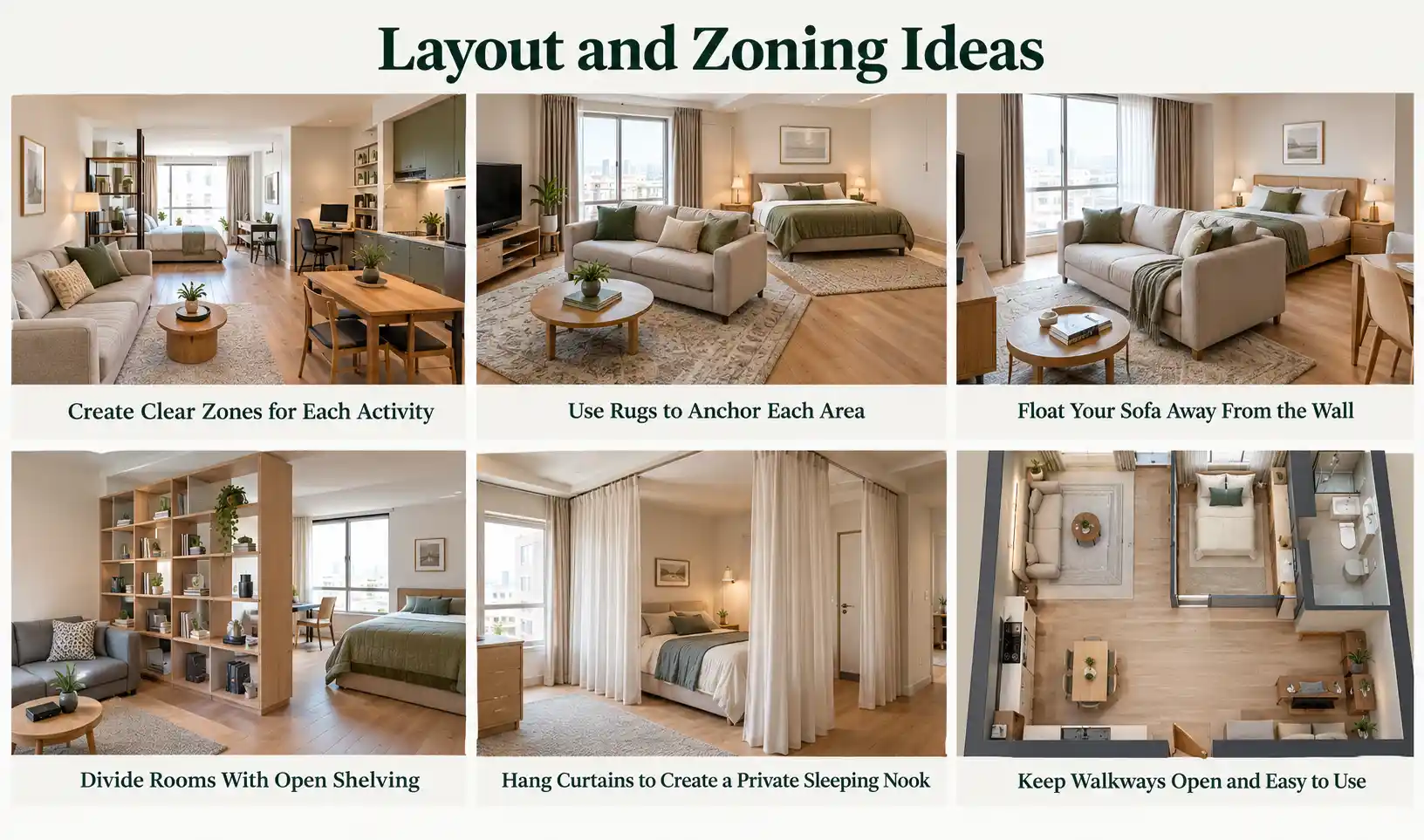
1. Create Clear Zones for Each Activity
A small apartment works best when every area has a clear job. Start by listing what you do at home each day. Most people need a place to sleep and a place to relax. Many also need a spot to eat and a quiet corner to work. Give each activity its own zone even if there are no walls between them.
Pro Tip: Stand at your front door and look into the room. You should be able to tell where each zone starts and ends within a few seconds.
2. Use Rugs to Anchor Each Area
Rugs are one of the easiest ways to define space without building anything. Place one rug under your sofa and coffee table to mark the living area. A second rug beside or under the bed can quietly frame the sleeping zone. Choose rugs large enough for at least the front legs of your furniture to rest on them. Tiny rugs floating in the middle of the floor make a room look smaller.
3. Float Your Sofa Away From the Wall
Pushing every piece against the walls seems like a smart way to save space. In reality, it often leaves an empty and awkward gap in the middle. Try placing the custom sofa with its back facing the bed or kitchen instead. The back of the sofa then acts like a low wall between two zones. Leave a walkway of about 75 cm (30 inches) behind it so movement still feels easy.
4. Divide Rooms With Open Shelving
An open bookcase makes a clever room divider because it separates space without blocking light. You also gain handy storage for books and plants. Pick a unit that is open on both sides so it looks good from every angle. Keep heavier items on the lower shelves and lighter pieces up top. Choose a sturdy unit with a wide base and use anti-tip hardware wherever possible.
5. Hang Curtains to Create a Private Sleeping Nook
Custom Curtains give you privacy when you need it and open space when you do not. Mount a ceiling track around the bed area and hang light fabric panels from it. Linen or cotton in a pale shade will soften the room without making it feel heavy. A ceiling track needs only a few small screws, so it is easy to patch later. Tension rods fixed between two walls can also work if you can’t drill.
6. Keep Walkways Open and Easy to Use
A room feels bigger when you can move through it without turning sideways. Plan clear paths from the door to the window and from the bed to the bathroom. Aim for walkways that are about 75 to 90 cm (30 to 36 inches) wide where you can. Main routes should never cut through the middle of a seating area. If you keep bumping into a piece of furniture, then it is probably in the wrong spot.
Part 2: Color and Wall Ideas
Paint and wall treatments do more than look pretty; they shape how big or bright your apartment feels. With a few thoughtful color choices, you can open up tight spaces and create a sense of depth.
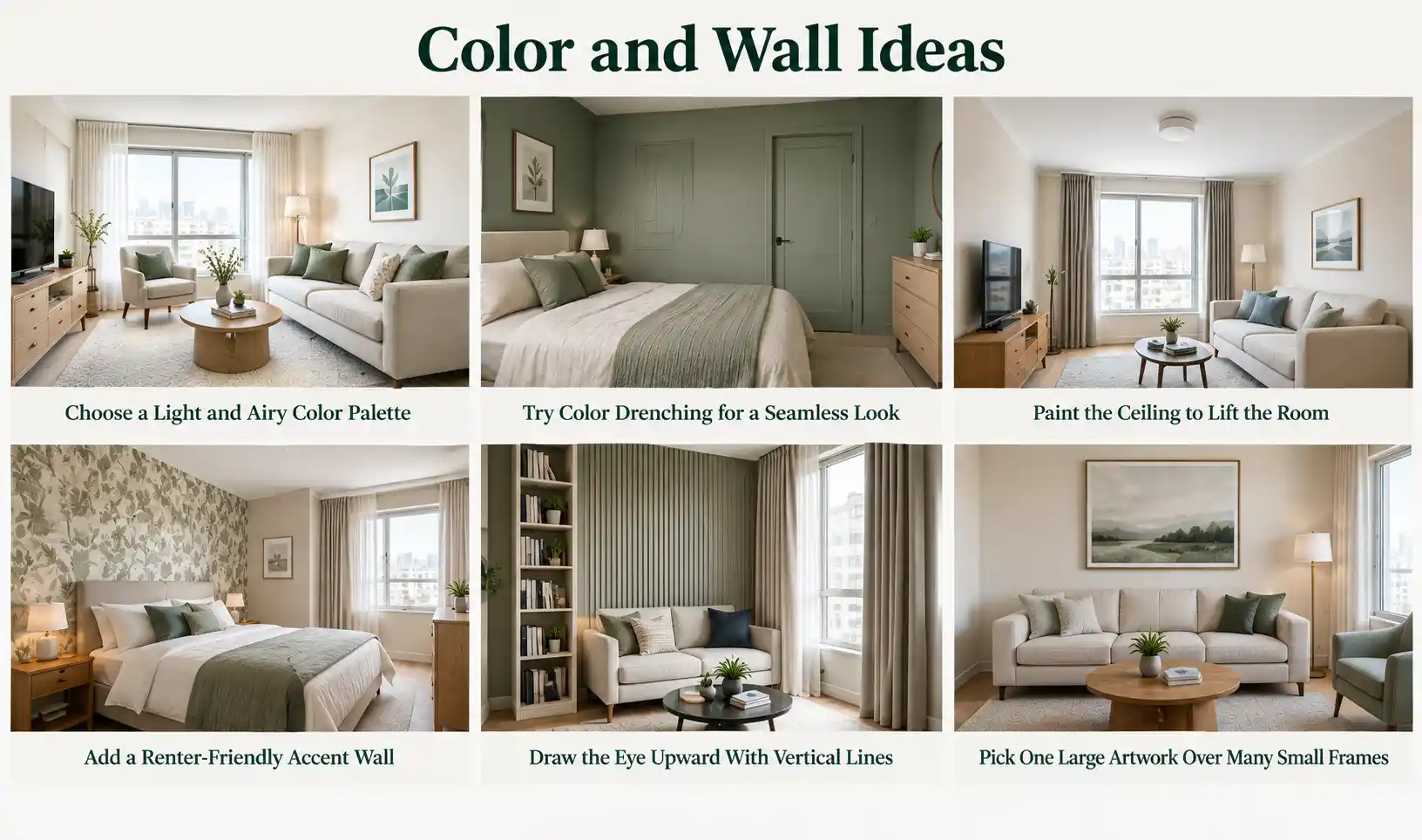
7. Choose a Light and Airy Color Palette
Light colors bounce daylight around a room and help walls feel farther away. Soft whites and warm creams work well in most small apartments. Pale grays and gentle sage greens are also easy to live with. You do not need to give up color completely. Add personality through cushions and artwork rather than bold walls in every room.
8. Try Color Drenching for a Seamless Look
Color drenching means painting the walls and trim in one single shade. Some people carry the same color onto the doors and ceiling as well. When the eye does not stop at sharp color changes, the room feels larger and calmer. This works with light shades and also with deeper tones like olive or navy. A deeper drenched color can make a small bedroom feel cozy rather than cramped.
9. Paint the Ceiling to Lift the Room
Most people forget the ceiling even though it acts as the fifth wall of any room. Painting it a shade lighter than the walls can make the room feel higher. You can also paint it the same color as the walls to blur the room’s edges. In spaces with low ceilings, avoid dark colors overhead. They tend to visually press down on the room and make it feel smaller.
10. Add a Renter-Friendly Accent Wall
Peel-and-stick wallpaper lets you add pattern and texture without risking your deposit. Use it behind the bed or behind the sofa to create a strong focal point. Choose small-scale or vertical patterns if the room is narrow or has a low ceiling. Always test a small piece in a hidden corner before covering a whole wall. Some paint finishes can lift when you remove the paper.
11. Draw the Eye Upward With Vertical Lines
Vertical elements trick the eye into seeing more height than there really is. Tall bookcases and floor-length curtains both do this very well. Striped wallpaper and upward-running paneling can help too. You can also hang artwork slightly higher or stack two frames. Every upward line makes a low ceiling feel less noticeable.
12. Pick One Large Artwork Over Many Small Frames
A crowded gallery wall can look busy and messy in a small space. One large piece of art often feels calmer and more intentional. It also makes the wall appear bigger because there are fewer visual breaks. If you love gallery walls, use matching frames with tight, even spacing. A narrow picture ledge lets you swap art whenever you like without making new holes.
Part 3: Lighting and Mirror Ideas
Without good lighting and mirrors, even the best layout can feel boxed in. Mirrors trick the eye into seeing extra depth, while layered lighting lifts harsh shadows, turning a dark, flat room into a cozy, spacious sanctuary.
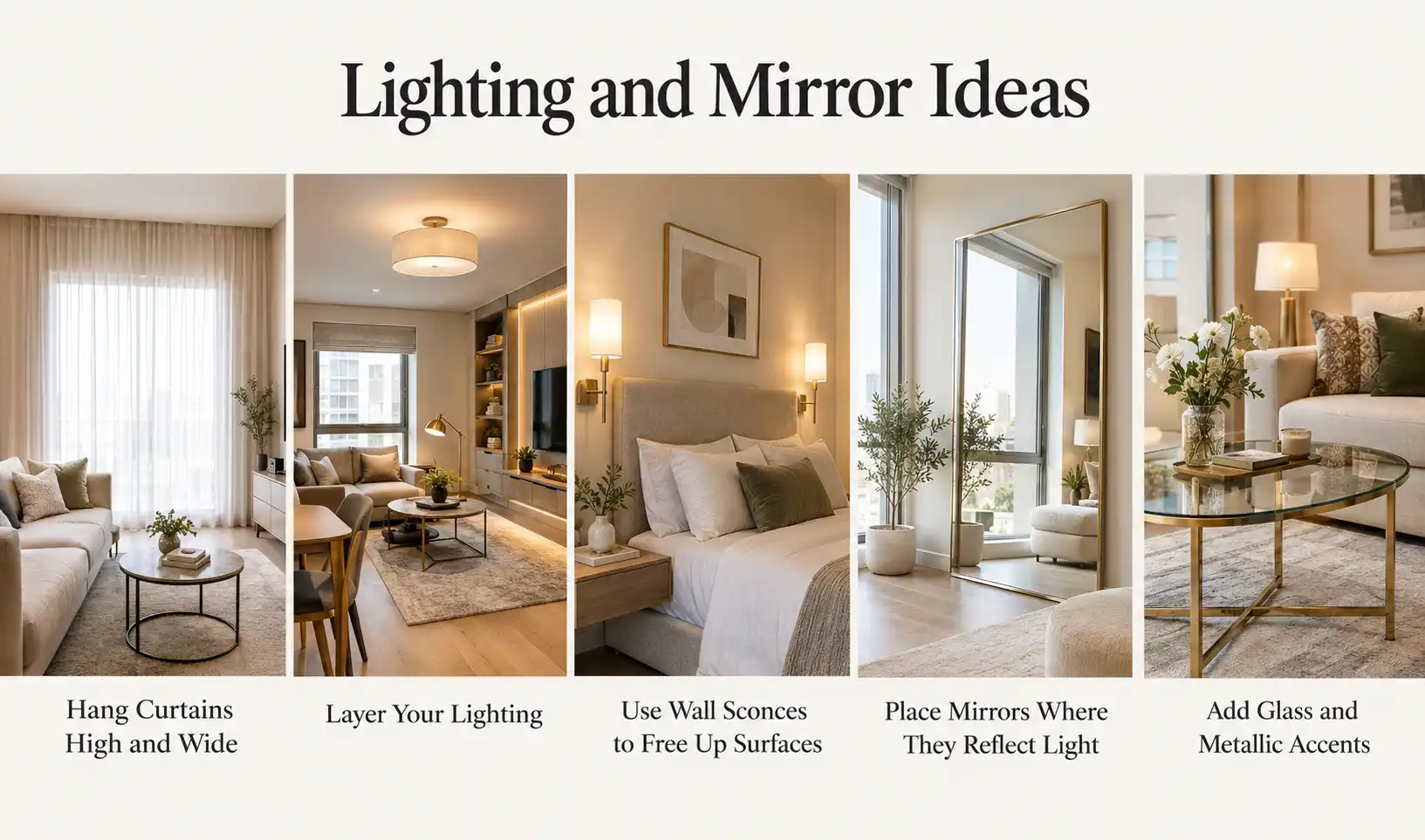
13. Hang Curtains High and Wide
Mount your curtain rod close to the ceiling, not right above the window frame. Let the rod extend about 15 to 25 cm (6 to 10 inches) past each side of the window. When the curtains are open, they will rest on the wall instead of covering the glass. This lets in more daylight and makes your windows look taller and wider. Sheer Curtains work best in small rooms.
14. Layer Your Lighting
A single ceiling light creates flat shadows that make a room look smaller. Good lighting uses three layers that work together. Ambient light fills the whole room while task light helps you read or cook. Accent light adds warmth by highlighting your art or plants. Spread light sources across different corners so no part of the room feels dark.
Quick tip: Warm white bulbs rated around 2700 to 3000 Kelvin create a relaxing evening mood. Save cooler bulbs for kitchens and work areas.
15. Use Wall Sconces to Free Up Surfaces
Floor lamps and table lamps take up space that you may not have to spare. Wall sconces give you light without using a single inch of floor or tabletop. Plug-in sconces are a great option for renters because they don’t require an electrician. Hide the cord with a paintable cord cover that blends into the wall. Beside the bed, a pair of sconces can replace bedside lamps entirely.
16. Place Mirrors Where They Reflect Light
Mirrors are a classic small-space trick for a good reason. A large mirror placed near a window bounces daylight deeper into the room. It also creates a sense of depth that makes walls feel farther apart. Floor mirrors leaned against a wall are easy to move and need no drilling. Secure heavy mirrors properly so they cannot slide or fall.
17. Add Glass and Metallic Accents
Transparent and reflective pieces take up less visual space than solid wood or fabric. A glass coffee table or an acrylic chair lets you see the floor beneath it. Brass or chrome details catch the light and add a little sparkle to the room. Use these finishes in moderation so the space still feels warm and inviting. One or two reflective pieces in each zone is usually plenty.
Part 4: Furniture Ideas for Small Spaces
Big, bulky custom furniture can quickly overwhelm a compact room. Focus on smart scaling, hidden storage, and multifunctional designs to fit everything you need while keeping your home light, comfortable, and easy to navigate.
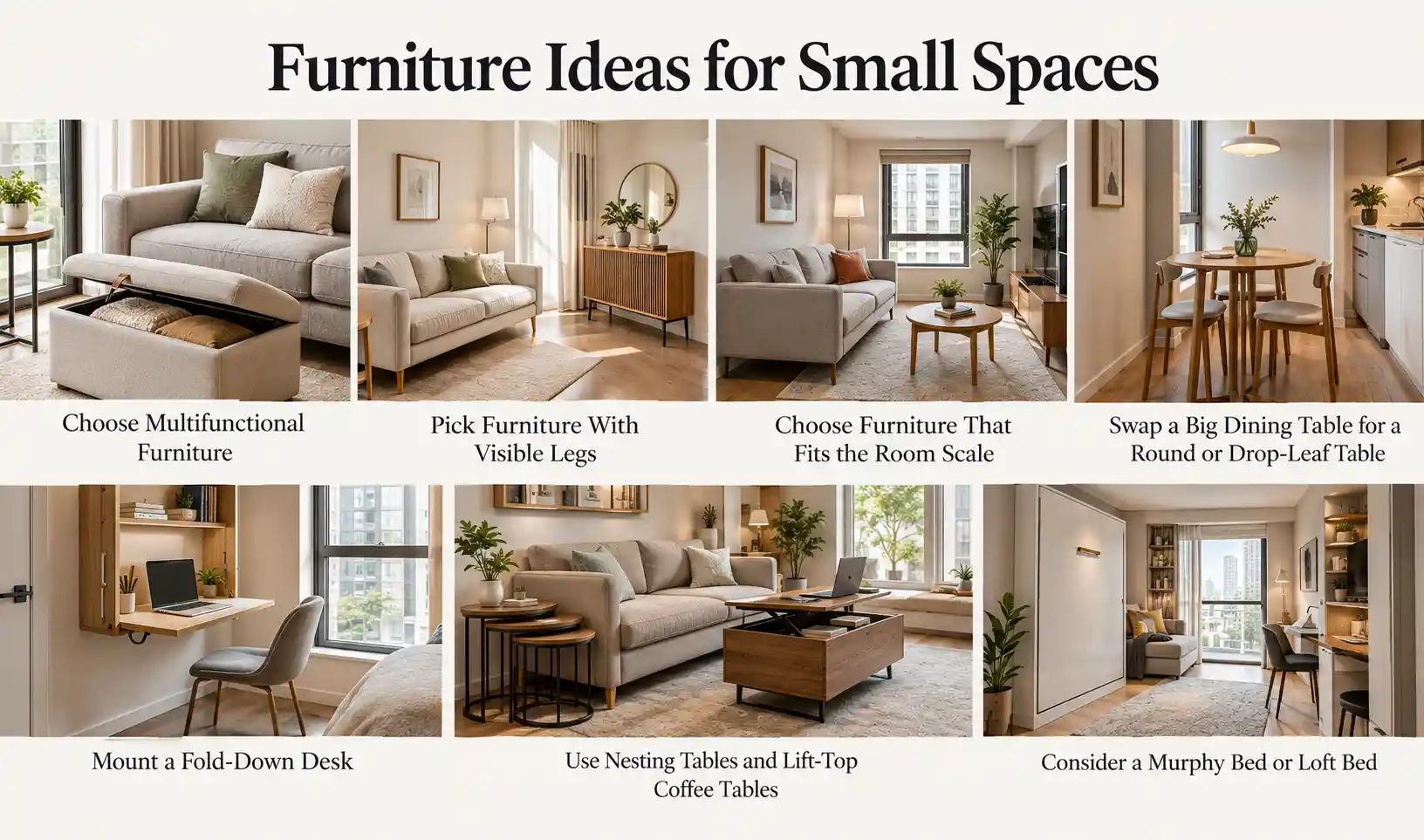
18. Choose Multifunctional Furniture
Every large piece in a small apartment should earn its place by doing two jobs. A storage ottoman works as extra seating and hides blankets inside. A sofa bed gives overnight guests a comfortable place to sleep. An extendable dining table can seat two people on a normal day and six when friends visit. Before buying anything, ask yourself what second job it can do.
19. Pick Furniture With Visible Legs
Furniture raised on slim legs lets you see more of the floor. When more floor is visible, your brain reads the whole room as larger. Look for sofas and sideboards with open bases rather than solid ones. Bulky pieces that sit flat on the ground can make a space feel heavy. Leggy furniture also makes cleaning underneath much easier.
20. Choose Furniture That Fits the Room Scale
Oversized furniture is one of the biggest mistakes people make in small homes. A deep sectional may feel lovely in a showroom, but it can swallow a compact living room. Look for apartment-size sofas about 80 to 90 cm (31 to 35 inches) deep. Slim arms also save space without reducing the seat width. Always measure doorways and stairways before you buy so delivery day goes smoothly.
21. Swap a Big Dining Table for a Round or Drop-Leaf Table
Round tables have no sharp corners, so people can move around them more easily. They also fit neatly into corners and narrow spaces. A drop-leaf table is even more flexible because its sides fold down when you do not need them. Pair either option with stools or folding chairs that tuck away completely. This keeps your dining area open and useful throughout the day.
22. Mount a Fold-Down Desk
Working from home is much easier with a proper workspace. A wall-mounted fold-down desk opens when you need it and closes flat when you are done. Some designs include small shelves for a laptop and a few notebooks. Closing the desk at the end of the day also helps you mentally switch off from work. It is a great solution for studios where every inch counts.
23. Use Nesting Tables and Lift-Top Coffee Tables
Nesting tables give you extra surfaces for guests and then stack together when the party ends. A lift-top coffee table rises to a comfortable height for eating or working on a laptop. Many lift-top designs also include hidden storage for remotes and chargers. Both options add flexibility without adding more pieces to the room.
24. Consider a Murphy Bed or Loft Bed
In a studio apartment, the bed can take up a large share of the floor. A Murphy bed folds into a wall cabinet during the day and turns your bedroom back into a living room. If your ceiling is high enough, then a loft bed lifts your sleeping space upward. You can use the space underneath for a desk or a small sofa. Loft beds generally need a ceiling of at least 2.4 meters (about 8 feet) and sturdy guardrails for safety.
Part 5: Storage Ideas That Keep Clutter Away
Small apartments fill up fast, but smart storage keeps mess from taking over. By blending hidden compartments with smart vertical shelves, you can keep what you need close by without feeling crowded.
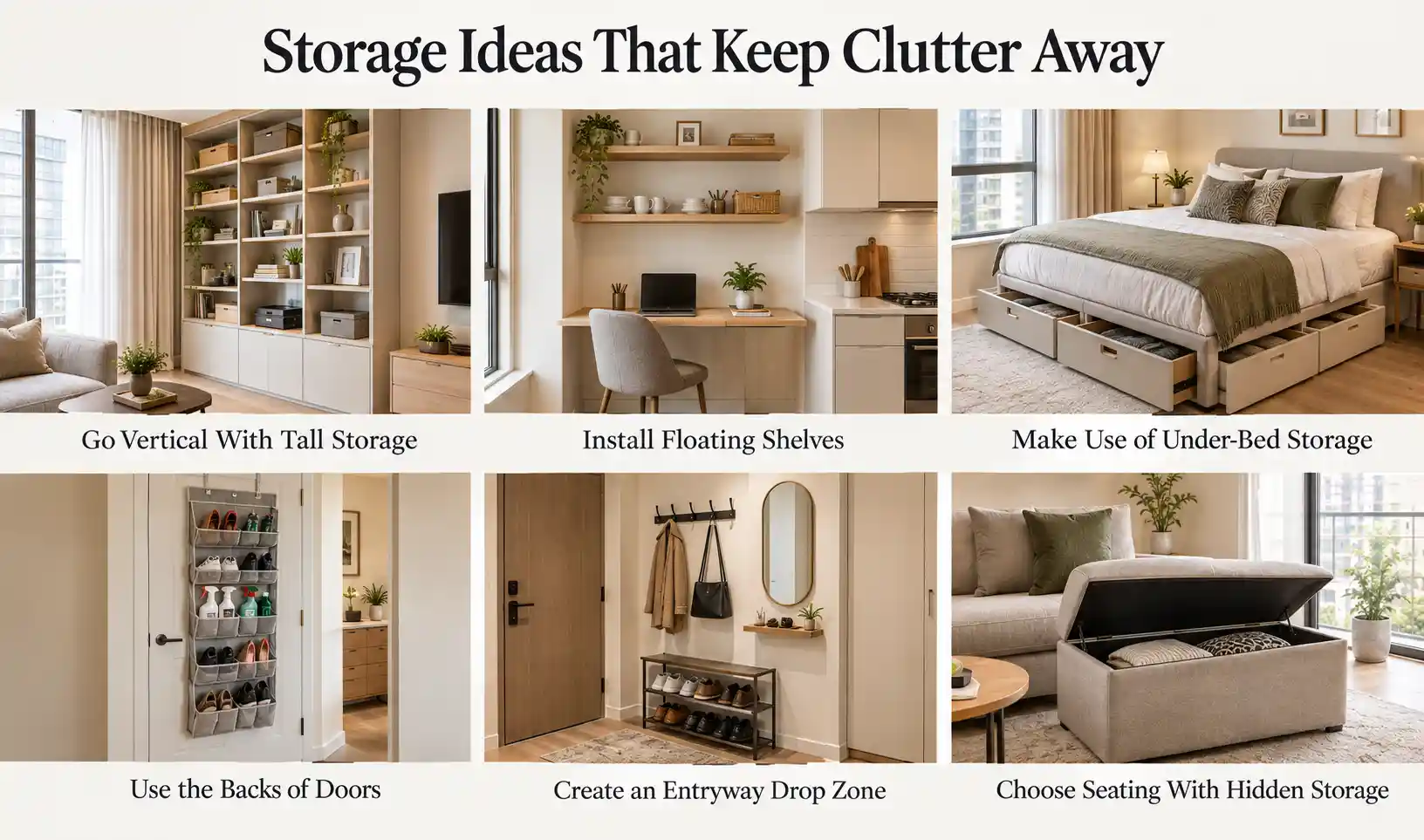
25. Go Vertical With Tall Storage
When floor space runs out, the walls become your best friend. Floor-to-ceiling shelves hold far more than low units of the same width. Use the top shelves for items you rarely need, such as seasonal decor or spare bedding. Keep everyday items at eye level so the system stays easy to use. Always anchor tall units to the wall to prevent tipping.
26. Install Floating Shelves
Floating shelves add storage without the bulk of a full cabinet. Put them above a desk or kitchen counter where wall space often goes unused. Style them with a mix of useful items and a few favorite decor pieces. Leaving a little empty space on each shelf keeps the look light and tidy.
27. Make Use of Under-Bed Storage
The space under your bed is one of the largest hidden storage areas in your home. A bed frame with built-in drawers is the simplest solution. Rolling bins and vacuum storage bags work well under regular frames too. Bed risers can add extra height if your current frame sits too low. Store off-season clothes and spare linens here to free up your wardrobe.
28. Use the Backs of Doors
Doors are often ignored even though they offer useful vertical storage. Over-the-door organizers can hold shoes in the bedroom and cleaning supplies in the bathroom. Simple hooks on the back of a door work well for robes and towels. Choose designs that hang over the top edge so you do not need to drill any holes.
29. Create an Entryway Drop Zone
Even a studio with no real hallway needs a spot for keys and coats. Add a row of wall hooks and a slim shoe rack right beside the door. A small tray or wall pocket keeps mail and keys together. This simple setup stops clutter from spreading into the rest of your home. A narrow mirror near the door makes a nice finishing touch for a last-minute outfit check.
30. Choose Seating With Hidden Storage
Benches and ottomans with lift-up lids can hide a surprising amount of stuff. A storage bench at the foot of the bed is perfect for extra blankets. In a dining nook, a built-in bench can store kitchen items you use less often. Hidden storage keeps surfaces clear, and that is the key to a calm small space.
Part 6: Bedroom Decorating Ideas in a Small Apartment
The bedroom is often the smallest room in an apartment. It also needs to feel calm enough for good sleep. These ideas will help you make a compact bedroom feel restful and organized.
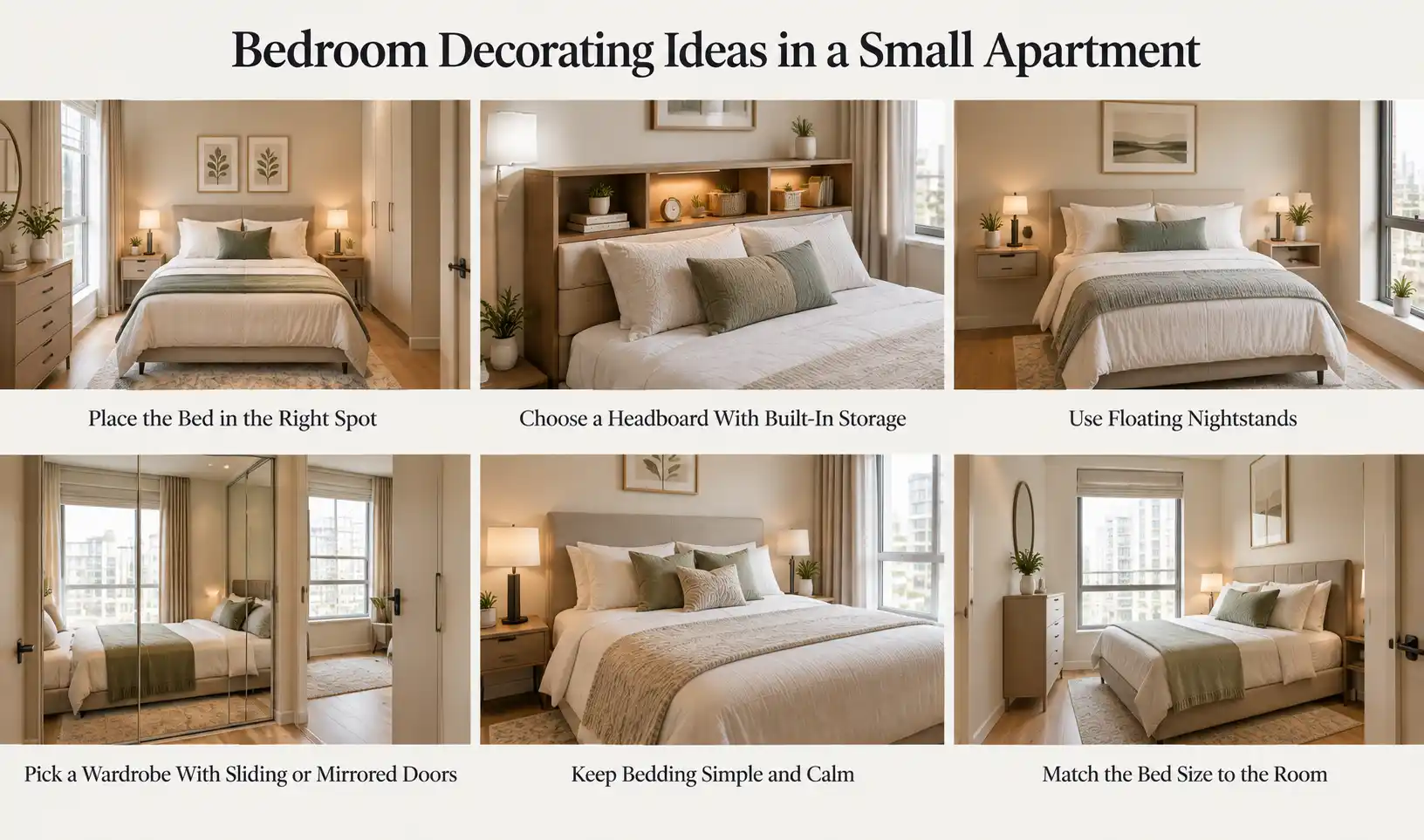
31. Place the Bed in the Right Spot
In a compact bedroom, the bed’s position shapes everything else. Centering the bed on the main wall usually looks best if you have room on both sides. Try to leave at least 60 cm (about 24 inches) on each side for easy access. If the room is very narrow, you can push one side of the bed against a wall. This frees up space for a wardrobe or dresser but makes changing sheets a little harder.
32. Choose a Headboard With Built-In Storage
A storage headboard gives you shelves right where you need them at night. It can hold your book and phone without a separate bedside table. Some designs also include hidden cubbies or small reading lights. This is a great choice for bedrooms with no room for nightstands.
33. Use Floating Nightstands
Wall-mounted nightstands keep the floor clear. That open space makes the whole bedroom feel less crowded. A single floating shelf can also work as a simple bedside table. Pair it with a wall light so the surface stays free for a book or a glass of water.
34. Pick a Wardrobe With Sliding or Mirrored Doors
Wardrobe doors that swing open need extra clearance in front of them. Sliding doors glide along a track so you can place the wardrobe closer to the bed. Mirrored sliding doors do even more by reflecting light and making the room look deeper. Renters can get the same benefits from a freestanding wardrobe with sliding doors.
35. Keep Bedding Simple and Calm
Busy bedding patterns can make a small bedroom feel restless. Choose soft solid colors or subtle textures instead. Layer a quilt with a light throw and two or three pillows for a relaxed hotel-style look. Matching the bedding tone to your wall color creates a smooth flow that visually enlarges the room.
36. Match the Bed Size to the Room
The right bed size can make or break a compact bedroom. A king bed may feel luxurious, but it can leave you with no space to move around. Bed sizes also differ between countries, so always check the exact measurements before buying. Use the table below as a rough guide.
| Bed Size | Approximate Mattress Size | Comfortable Room Size | Best For |
| Single (Twin in the US) | About 90 x 190 cm (36 x 75 in) | About 2.1 x 3 m (7 x 10 ft) | Kids or one adult or tiny guest rooms |
| Double (Full in the US) | About 135 to 140 x 190 to 200 cm (54 x 75 in) | About 3 x 3 m (10 x 10 ft) | One adult who likes extra space |
| Queen (King in the UK) | About 150 to 160 x 200 cm (60 x 80 in) | About 3 x 3.3 m (10 x 11 ft) | Couples in a compact bedroom |
| King (Super King in the UK) | About 180 to 193 x 200 to 203 cm (72 to 76 x 80 in) | About 3.6 x 3.6 m (12 x 12 ft) | Larger bedrooms only |
Part 7: Kitchen, Bathroom and Balcony Ideas
Kitchens, bathrooms, and balconies often suffer most from limited space in the compact apartment. Check out the ways to decorate these areas as well.
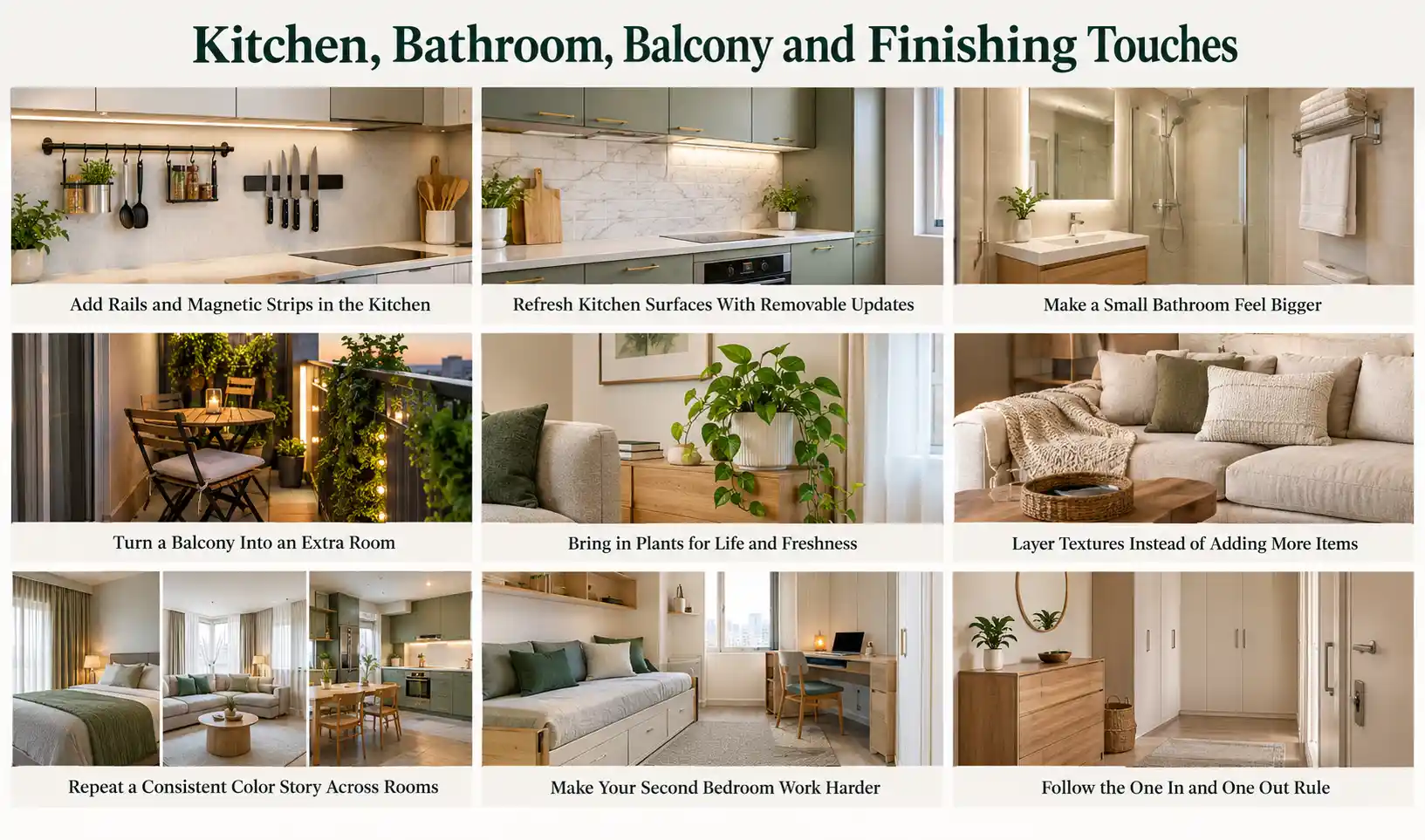
37. Add Rails and Magnetic Strips in the Kitchen
Small kitchens run out of drawer space very quickly. A wall rail with hooks can hold utensils and small pans within easy reach. A magnetic knife strip frees up drawer and counter space. Keep only the tools you use every week on display. Store everything else in a higher cupboard.
38. Refresh Kitchen Surfaces With Removable Updates
Rental kitchens often come with dated tiles or worn cabinet fronts. Peel-and-stick backsplash tiles can cover old tiles in a single afternoon. Swapping cabinet handles is another quick change that makes a big difference. Keep the original handles in a labeled bag so you can put them back when you move out.
39. Make a Small Bathroom Feel Bigger
A large mirror cabinet over the sink adds storage and reflects light. Homeowners can replace a shower curtain with a clear glass screen to open up the room. Renters can choose a light, sheer curtain instead of a dark, heavy one. Store towels on a ladder rack or wall hooks to keep the floor clear. Sticking to two or three colors helps the room feel clean and unified.
40. Turn a Balcony Into an Extra Room
Even a tiny balcony can become part of your living space. A folding bistro set gives you a pleasant place for morning coffee. Railing planters and vertical gardens add greenery without taking up floor space. Outdoor string lights make the area inviting in the evening. Check your building rules before hanging anything from the railing.
Part 8: Finishing Touches and Smart Habits
Decorating an apartment is more than just choosing large furniture; it’s about the small details that make a space feel like yours. Simple habits, soft textures, and a touch of greenery keep your apartment feeling fresh, cozy, and personal.
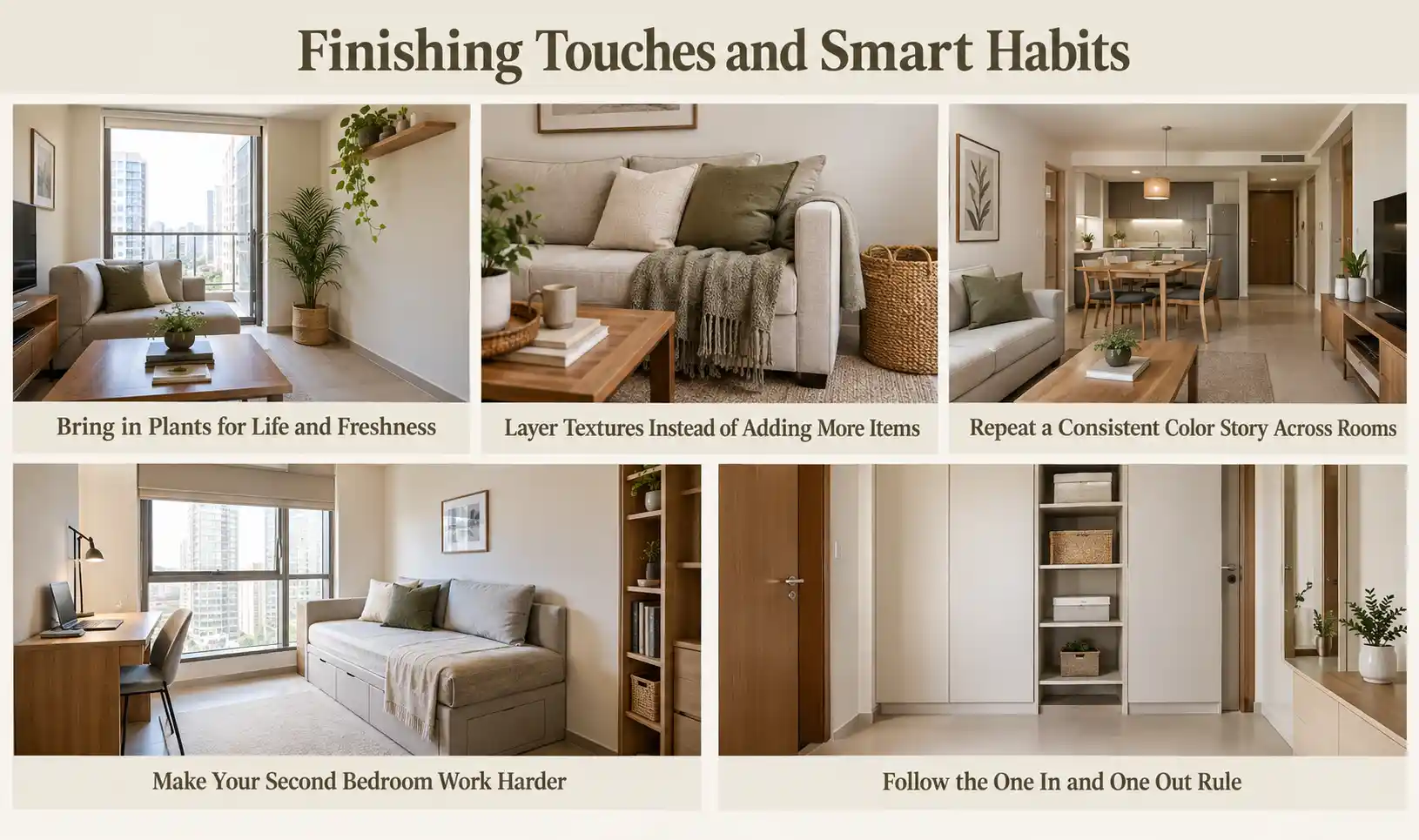
41. Bring in Plants for Life and Freshness
Plants soften hard edges and make any room feel more welcoming. Trailing plants on high shelves draw the eye upward. A tall plant in an empty corner fills space without adding bulk. Pothos and snake plants are popular choices for darker apartments because they handle low light well. If you have pets, check that each plant is safe for animals, because both can harm cats and dogs.
42. Layer Textures Instead of Adding More Items
A small room can feel flat when everything is smooth and plain. Mix soft textures like linen and wool with natural wood and woven baskets. Texture adds warmth and depth without taking up any extra space. It is one of the smartest ways to make a minimalist apartment feel cozy.
43. Repeat a Consistent Color Story Across Rooms
When rooms connect or share sightlines, a consistent palette makes the whole apartment feel larger. Pick three to five main colors and repeat them in every room. The bedroom can lean a little deeper while the kitchen stays a little brighter. Repeating the same wood tone or metal finish also ties the spaces together nicely.
44. Make Your Second Bedroom Work Harder
In a two-bedroom apartment, the second room often sits empty for much of the year. Turn it into a home office that can also host guests. A daybed or sleeper sofa gives visitors a comfortable place to sleep. A desk and good storage make the room useful on most days.
45. Follow the One In and One Out Rule
Clutter builds up faster in a small home because there is nowhere to hide it. A simple fix is the one-in, one-out rule. Every time you bring a new item home, you donate or recycle something similar. Set a reminder to do a quick declutter at the start of every season. A tidy apartment will always look bigger than a crowded one.
How to Decorate a Small Apartment on Any Budget
Furniture and decor prices for apartment upgrades vary widely around the world. For that reason, we use budget levels instead of exact amounts. Pick the level that matches your situation and start with the ideas that give the biggest impact.
| Budget Level | Where to Focus | High-Impact Ideas |
| Low budget | Rearrange and declutter before buying anything | Zoning with existing furniture plus warm bulbs and one large mirror |
| Medium budget | Replace one or two key pieces | A leggy sofa or a storage bed or plug-in wall lights |
| Higher budget | Invest in custom and built-in solutions | A Murphy bed or fitted wardrobes or floor-to-ceiling shelving |
Online second-hand marketplaces and local thrift stores often sell solid furniture at much lower prices. Look for pieces made from real wood that you can repaint or refinish. Spend more on items you use every day and save money on decor that you may change later.
Best Interior Design Styles for Small Apartments
Some design styles naturally suit small spaces better than others. They tend to use lighter colors and simpler shapes with less visual clutter. Here are the styles that work especially well in compact homes.
| Style | Why It Works in Small Spaces | Key Features |
| Scandinavian | Light colors and simple forms keep rooms airy | White walls and light wood with cozy textiles |
| Japandi | Calm and uncluttered with a strong focus on function | Low furniture with natural materials in muted tones |
| Minimalist | Fewer items leave more open floor space | Clean lines with plenty of hidden storage |
| Mid-Century Modern | Furniture on slim tapered legs looks light | Warm wood tones with simple shapes and pops of color |
| Modern Coastal | Pale blues and sandy tones feel fresh and open | Linen fabrics with light wood and woven accents |
| Soft Industrial | Open shelving and slim metal frames look lightweight | Black metal with warm wood and plenty of plants |
Final Words
Decorating a small apartment is about making smart choices that suit how you live. You do not need more space to enjoy a beautiful home. You just need to use the space you have with a clear plan.
Start with the basics like decluttering, measuring, and creating zones. Then add light colors, multifunctional furniture, and clever storage. Finish with plants and textures that make the space feel like yours. Pick three or four ideas from this list and try them this week. Small changes add up quickly, and your apartment will soon feel bigger and brighter and much more like home.
Frequently Asked Questions
What colors make a small apartment look bigger?
Soft whites and pale grays are the safest choices for most homes. Light sage green and dusty blue also work very well. Painting the walls and trim in the same shade removes visual breaks and helps the room feel larger.
How do I decorate a small bedroom with a big bed?
Let the bed be the focal point and keep everything else simple. Use floating nightstands or a storage headboard instead of bulky bedside tables. Choose a wardrobe with sliding doors and keep your bedding in calm colors that match the walls.
How can I decorate a rented apartment without damaging the walls?
Peel-and-stick wallpaper and adhesive hooks are great places to start. Plug-in wall lights and leaning mirrors add style without any drilling. Large rugs and new curtains can also change the whole feel of a room. Always check your lease and test adhesive products in a hidden spot first.
Should furniture be placed against the walls in a small apartment?
It depends on your layout, but pushing everything against the walls is not always the best choice. Floating a sofa away from the wall can create a natural divider between zones. It can also make the room feel more balanced and inviting.
How can I add storage to an apartment with no closet?
A freestanding wardrobe or an open clothing rail can easily replace a closet. Add under-bed drawers and over-the-door organizers for shoes and accessories. A curtain hung in front of a clothing rail keeps the look neat and tidy.
How do I make a small apartment feel cozy and not cramped?
Focus on warm lighting and soft textures rather than more furniture. Use warm white bulbs and layer throws and cushions made from natural fabrics. Keep decor to a few meaningful pieces so the room feels personal while staying open.
Where should I put a desk in a studio apartment?
Place your desk near a window if possible so you get natural light while you work. A corner away from the bed helps separate work time from rest time. If space is very tight then a fold-down wall desk or a slim console behind the sofa can work well.