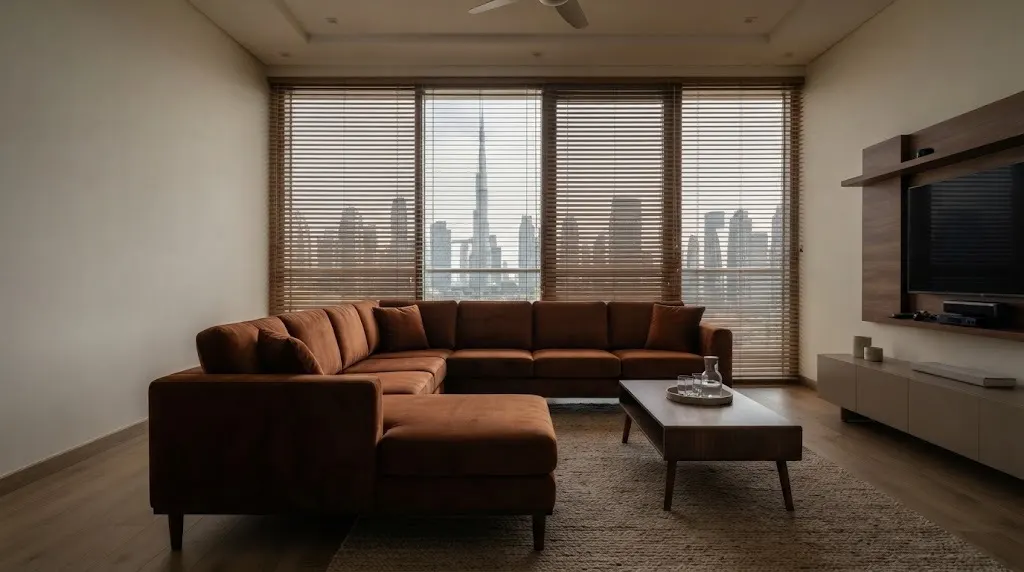
We recently completed a furniture upholstery and wooden blind installation project at a Downtown Dubai apartment. This apartment already had good bones. The 7-seater sofa in the living room had a solid frame and a layout that suited the space, and the bedroom headboard was well built. Neither needed replacing. They needed a new fabric and a reason to feel connected to the rest of the home.
The owner wanted warmth. Downtown apartments get a lot of light and glass, which can make a room feel cool and a little anonymous. The goal was to bring in color and texture that would hold their own against the views, and to tie the living room and bedroom together without making them look identical.
We brought several upholstery fabric swatches to the apartment and looked at them in the actual rooms at different times of day. That step matters more than people expect. A color that looks rich in a showroom can turn flat or orange once afternoon sun hits it through a full-height window.
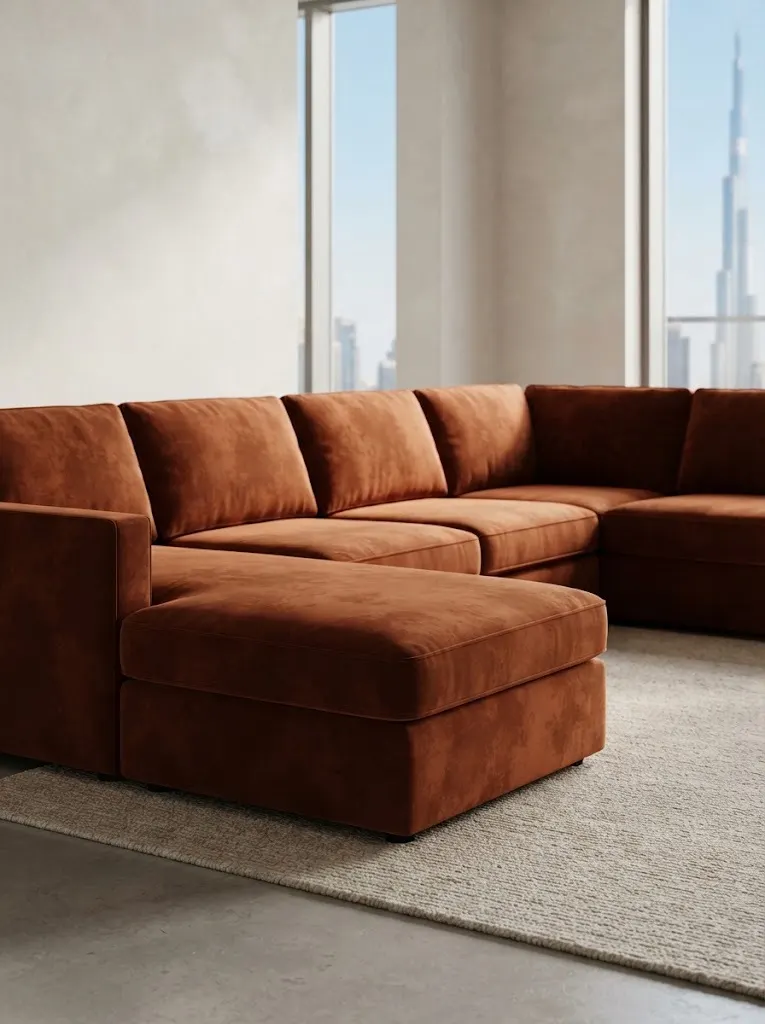
Burnt copper held up. In daylight, it reads as a deep, earthy orange-brown. In the evening, under warm lamps, it moves closer to rust and bronze. Velvet adds to this because the pile catches light differently depending on the angle, so the sofa never looks like one flat block of color.
Velvet also brings practical considerations. It shows pile direction, it marks easily during handling, and it doesn’t hide mistakes. We knew that going in and planned the work around it.
A sofa this size is a long run of fabric, and the biggest risk with velvet is inconsistency. If one panel is cut with the pile running up and the next with it running down, they look like two different shades sitting side by side. So before any cutting, we marked the nap direction on the entire roll and laid out every panel to run the same way across the seats, backs, arms, and cushions.
We stripped the old heaborad and sofa upholstery back to the frame and checked every joint, spring, and support. We tightened or reinforced anything loose before adding new padding. There’s no point putting new fabric over a frame that will start creaking in six months.
We reshaped the seat and back cushions so they sit firm and even across all seven positions. On a long sofa, one tired cushion is obvious, and velvet makes any sag more visible because of how it reflects light.
The covering itself was slow, careful work. Velvet doesn’t like being pulled hard or handled roughly, so we tensioned it gradually and kept seams tight and straight, especially along the front rail and the arm faces, where the eye goes first. Once finished, the sofa was steamed to lift any pressure marks from handling.
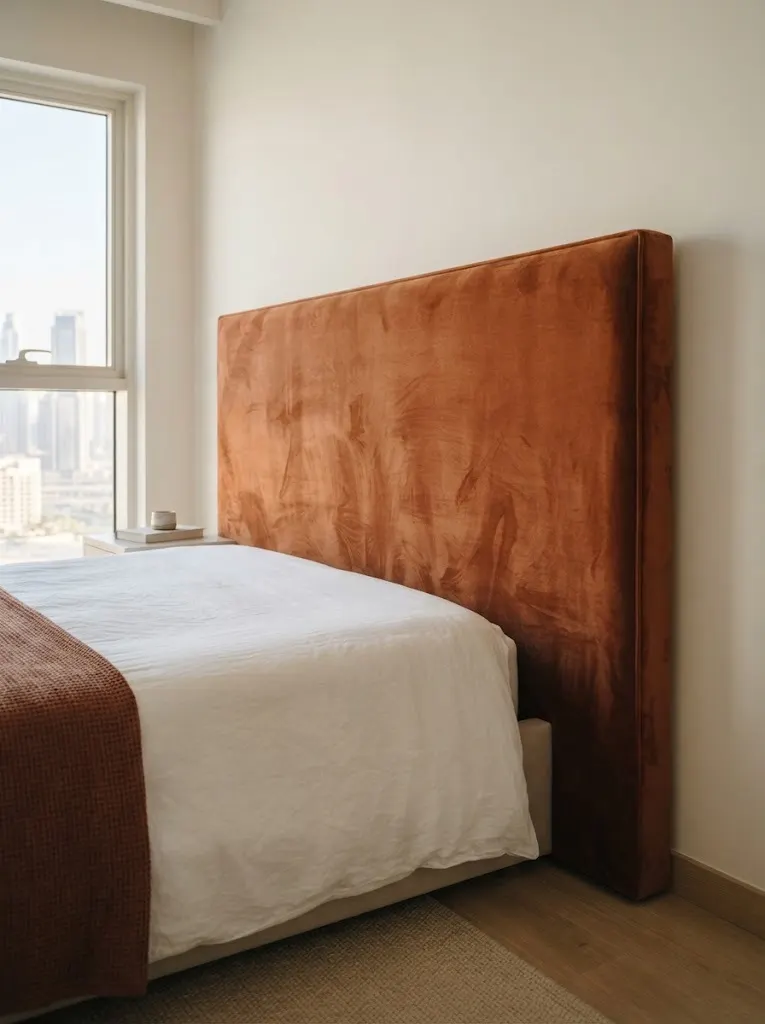
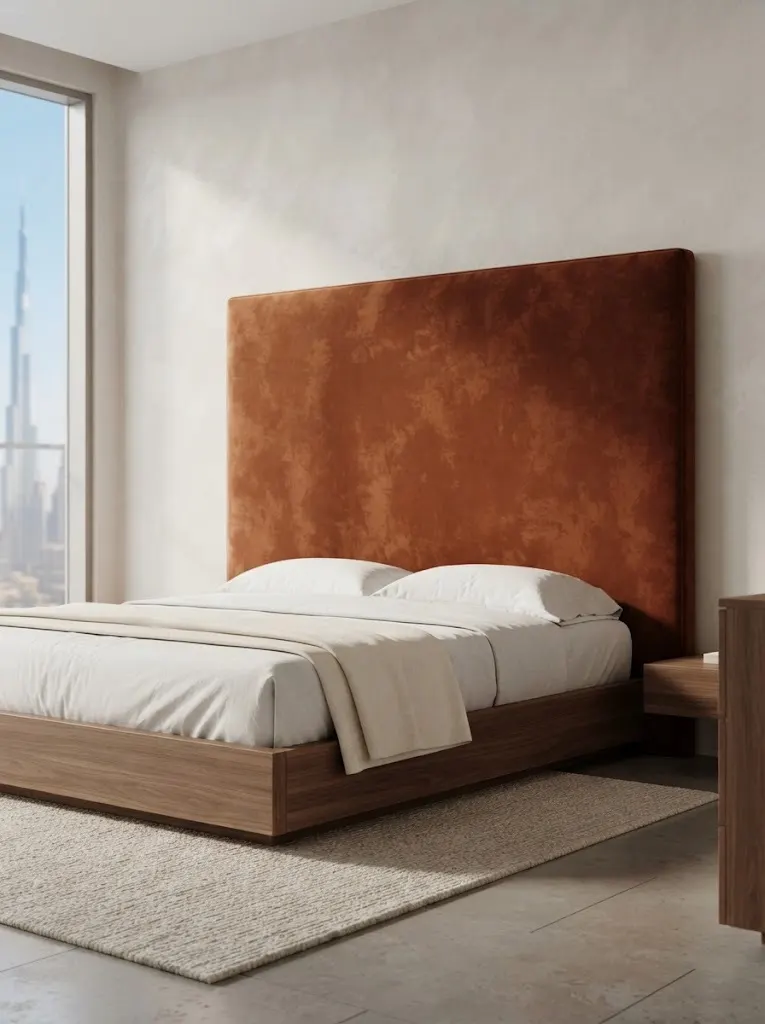
The headboard was a chance to carry the same color into the bedroom in a quieter way. We removed the old covering, checked the padding, and rebuilt it where it had compressed so the surface would sit smooth and full under the velvet.
We used the same fabric in both rooms, but the headboard reads differently because of its scale and position. Against the bedroom wall, it becomes the main feature rather than one piece among many. We wrapped the edges cleanly with no visible fixings, and we made sure the pile direction ran top to bottom so the color stays consistent whether you’re looking at it from the bed or the doorway.
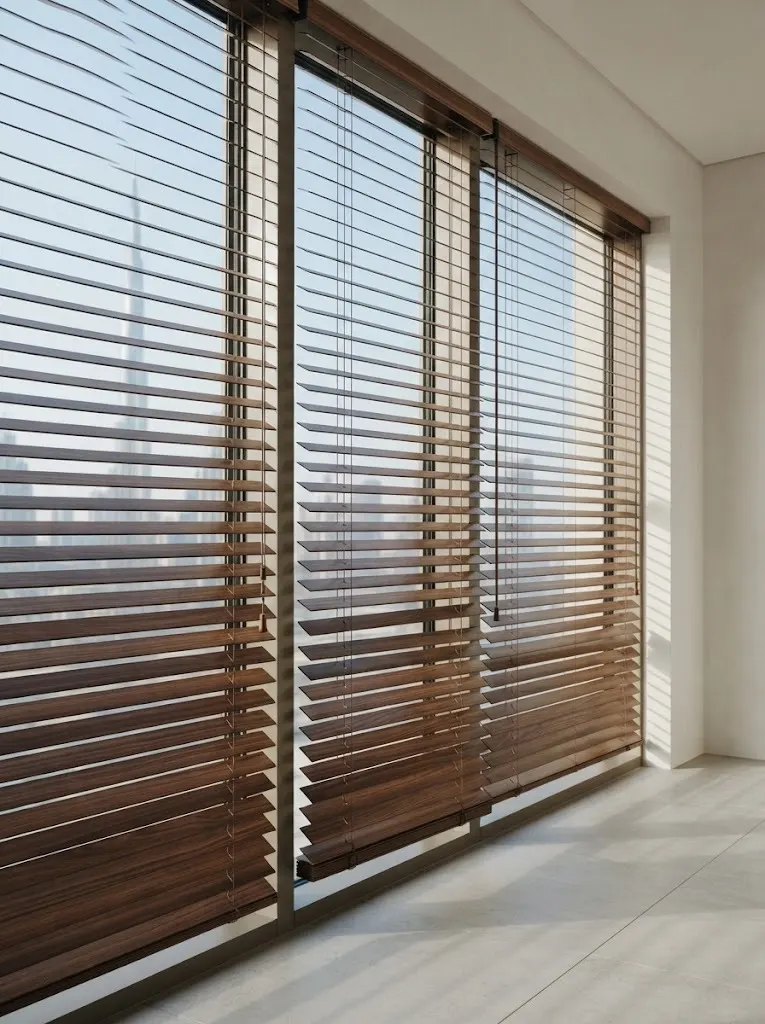
The owner was clear that they wanted real wood, not faux wood or PVC. We agreed. Real timber has grain and depth that imitation slats don’t, and it sits naturally beside velvet.
The glossy finish of wooden blinds was a deliberate choice. Against the soft, light-absorbing surface of the velvet, the gloss on the slats adds contrast. One material soaks up light; the other reflects it. Together they keep the space from feeling heavy.
Each window was measured individually rather than assuming they matched. In high-rise apartments, frames that look the same are often a few millimeters apart, and with wooden blinds, a few millimeters is the difference between a clean fit and a gap of light down one side.
We checked the slats for level along the full width during installation and tested the tilt and lift mechanisms on every blind before we left. Wood is heavier than aluminum or PVC, so the brackets were fixed securely to carry the weight through years of daily use.
The living room now has a centerpiece sofa that pulls the eye without overwhelming the space. The bedroom has a headboard that feels like it belongs to the same home. And the blinds frame the windows with natural wood, giving the owner full control of the Dubai light, from fully open to soft and filtered.
None of the original furniture went to waste. It was rebuilt, re-covered, and given a second life that suits the way the owner actually lives.