
Shower Wall Panels: A Designer’s Guide to Grout-Free Bathroom Walls
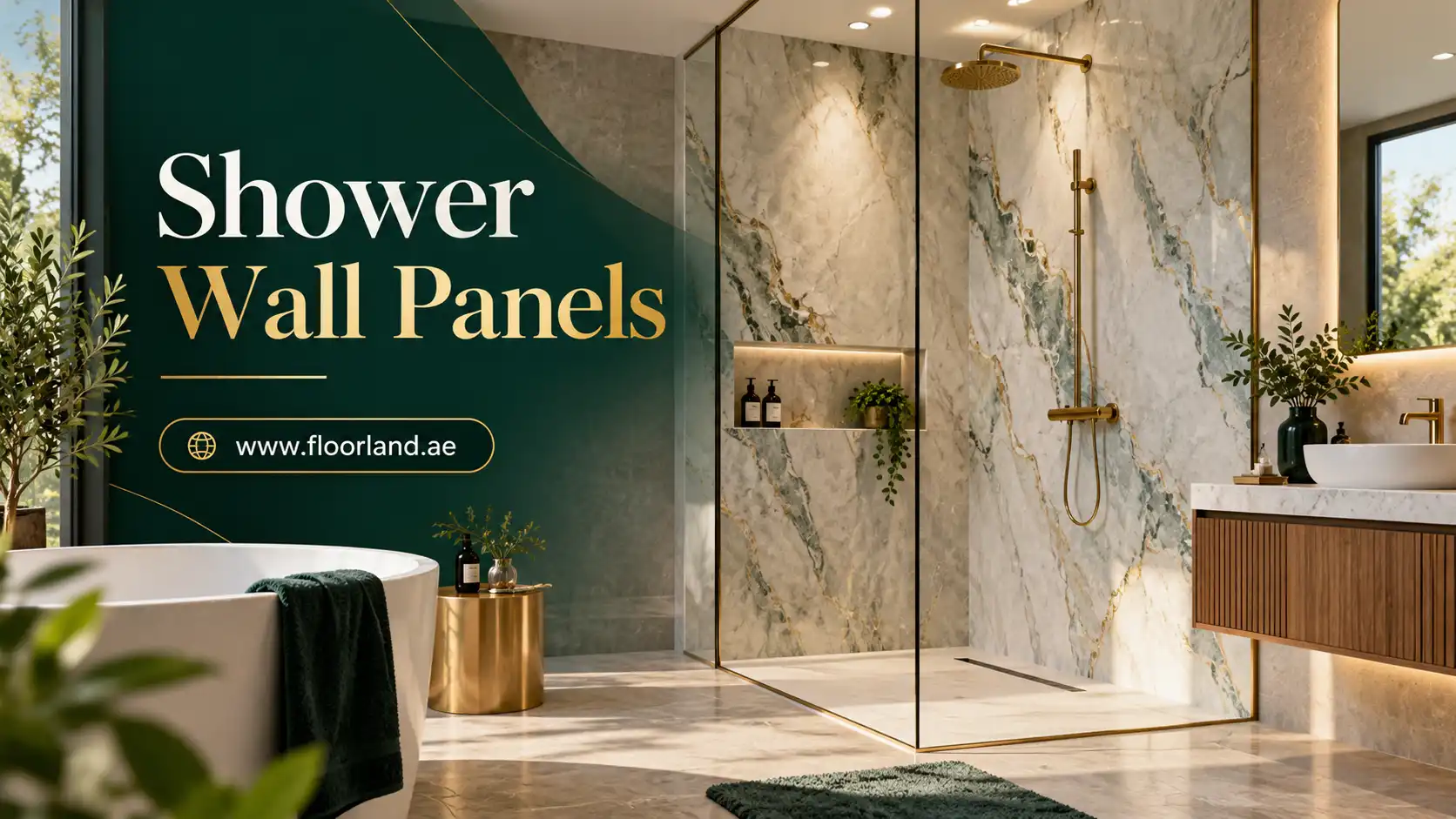
Shower wall panels are large, waterproof sheets fixed to bathroom walls instead of tiles. Each panel covers a large area in one piece, and trims or interlocking edges seal the joints. That means there are no grout lines to clean, stain, crack, or grow mold.
Panels come in materials like PVC, acrylic, laminate, SPC, and solid surface. They usually install in a day or two, cost less to fit than tiles, and last around 10 to 25 years depending on quality.
For a designer, though, the real appeal goes beyond easy cleaning. Panels let you create big, calm surfaces: a single sweep of marble, a soft concrete wall, or a warm wood-look finish, without a busy grid of lines breaking it up.
This guide by Floor Land covers how panels work, which materials suit which bathrooms, how to choose colors, finishes, and layouts, and how panels compare with tiles. It also covers costs, installation, design mistakes to avoid, and how to keep panels looking new.
What Are Shower Wall Panels, and How Do They Work?
A shower wall panel is a rigid, waterproof board that is bonded or clicked onto the wall around your shower or bath. Most panels are between 4 mm and 12 mm thick. Full-size boards are typically about 1 meter wide and 2.4 to 2.7 meters tall, so one panel can cover an entire wall section from tray to ceiling.
They keep water out in three ways:
- A waterproof surface. The face of the panel doesn’t absorb water the way grout and some tiles do.
- Sealed joints. Panels connect with tongue-and-groove edges, click systems, or aluminum trims, then get sealed with silicone.
- A sealed base. The bottom edge sits on the shower tray or bath with a continuous bead of sealant, which stops water from getting behind the panel.
You may also see them called wet wall panels, bathroom cladding, or shower boards. They’re a specialist version of the decorative wall panels used in living rooms and bedrooms. The difference is that shower panels are built to handle direct water, steam, and daily cleaning.
The Real Benefits of Wall Panels for Your Bathroom
Grout is the weakest part of a tiled shower. It’s porous, so it soaks up water, soap, and body oils. Over time, it discolors, develops black mold in the corners, and can crack, letting water reach the wall behind. Panels remove most of that grout, which changes how a bathroom looks and how you live with it.

- Cleaner and calmer walls. Fewer lines make a small bathroom feel bigger and more open. Large-format finishes like marble or stone look closer to a real slab than a wall of tiles.
- Much less cleaning. A quick wipe with a soft cloth or squeegee is usually enough. There’s no scrubbing grout with a toothbrush or regrouting every few years.
- Fewer hiding places for mold. With smooth surfaces and only a few sealed joints, there’s far less space for mould to settle.
- Faster renovation. A shower surround can often be paneled in a day, compared with several days for tiling, grouting, and curing. This is a big plus in an apartment renovation where the bathroom can’t be out of action for long.
- Lighter work. In many cases, panels can go straight over old, sound tiles, so there’s less demolition, dust, and waste.
- One honest point: grout-free doesn’t mean maintenance-free. The weak spots move from the grout lines to the silicone joints and corners. If you seal those well and check them now and then, the system stays watertight. If they’re rushed, water can still get in. More on that in the installation and care sections.
Common Material Options for Shower Wall Panels
The material affects how a panel looks, feels, lasts, and costs. Here’s how the main options compare.
1. PVC Shower Panels
PVC is the most affordable and easiest panel to work with. It’s light, fully waterproof, and can be cut with basic tools. Quality varies a lot, though. Thin, hollow panels may dent if you drop a shampoo bottle, and their prints often look flat up close. Thicker, solid-core PVC panels perform much better. PVC is a smart pick for rentals, guest bathrooms, and utility rooms.
2. Laminate (HPL) Shower Panels
Laminate panels have a high-pressure laminate surface bonded to a moisture-resistant core. They usually have the most convincing marble and stone prints, and they feel solid and substantial on the wall. Most use tongue-and-groove joints with built-in seals. The main rule with laminate is to seal every cut edge, because an exposed core can swell if water gets into it.
3. Acrylic Shower Panels
Acrylic gives a deep, glossy, almost glass-like finish that bounces light around the room. It’s warm to the touch and very easy to wipe clean. It does scratch more easily than other options, so avoid abrasive pads. It also costs more and is often fitted by professionals.
4. SPC Shower Panels
SPC stands for stone plastic composite. It’s a mix of limestone powder and PVC pressed into a dense, rigid board. It uses the same core asSPC flooring, which is why it handles water and knocks so well. SPC wall panels often click together without trims. They come as large boards or tile-format pieces, and they look and feel more like stone than lightweight PVC.
5. WPC Shower Panels
WPC (wood-plastic composite) is lighter than SPC and has a slightly warmer feel. It’s popular for fluted and slatted designs. Not every WPC panel is made for direct shower spray, so always check that the product is rated for wet zones, not just humid rooms.
6. Solid Surface and Composite Stone Panels
These are the premium end. They’re made from mineral and resin blends, and they look like seamless stone slabs. Many can be lightly sanded if they get scratched. They’re heavy, cost the most, and require professional installation. For a luxury bathroom or wet room, they give the closest thing to a real stone finish without the grout.
How to Choose Finishes and Styles for Shower Wall Panels?
This is where panels really shine. Because each panel is so large, the finish becomes the room’s star.

Marble effect. The most popular choice, and for good reason. Pick a pattern with soft, natural veining that flows across the panel. Very busy, high-contrast veins can look artificial when they repeat on every panel. Calacatta-style white with warm gold or grey veins suits almost any bathroom.
Stone and concrete effect. Matte grey, beige, and sandy finishes create a calm, spa-like or industrial feel. They’re forgiving too, since they hide water marks and soap splashes better than solid gloss colors.
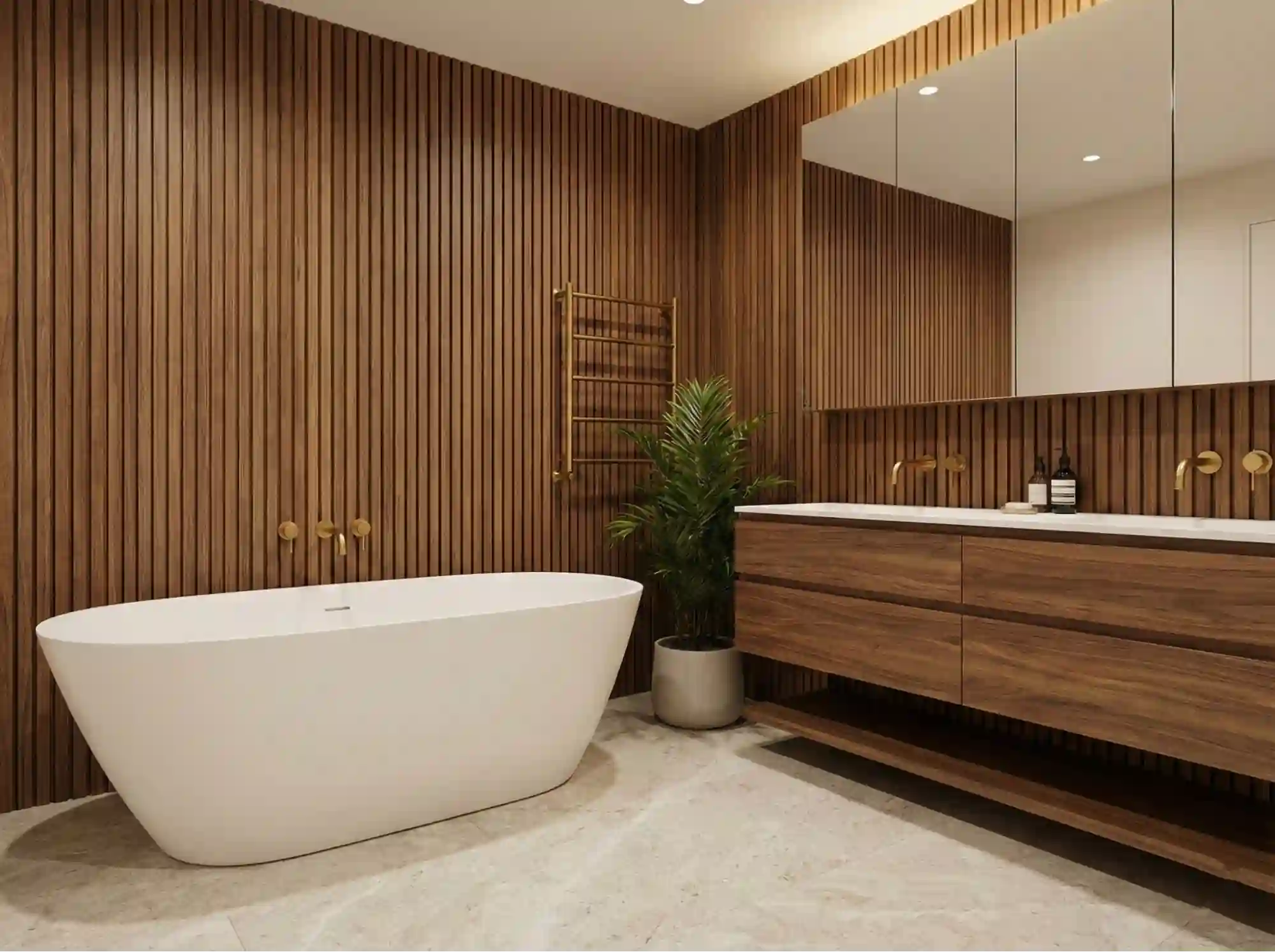
Wood grain. Wood-look panels bring warmth that’s hard to get in a wet room. They work beautifully in Japandi, Scandinavian, and natural-style bathrooms. Use them on one feature wall and keep the rest light so the room doesn’t feel heavy.
Fluted and ribbed. Vertical grooves add texture and shadow, and they make the ceiling feel higher. They make a great accent behind a bath or vanity. The grooves do collect water and soap, so in the direct spray zone, a flat panel is easier to keep clean. If you like this look, you can use the same texture in other rooms with more affordable wall paneling ideas.
Tile effect. Some panels are printed or embossed to look like subway or square tiles. Choose these carefully. Panels with realistic embossed joints can look great. Flat prints with painted-on grout lines often look fake up close. If you want the tile look, go for the best quality you can afford.
Solid colors. Plain colors like sage green, terracotta, navy, or soft white create a clean, modern backdrop. They suit minimalist bathrooms and let fixtures take center stage.
Gloss or matte? Gloss reflects light and makes small rooms feel brighter, but it shows water spots and streaks, especially in hard-water areas. Matte looks softer and more natural, and it hides marks better. Many designers use matte for stone and concrete looks and gloss for marble and solid colors.
Color Ideas for Small, Large, and Windowless Bathrooms
The same panel can look completely different depending on the room’s size and light. Here’s how to choose for each.
Small Bathrooms
Light colors make a small room feel bigger. Go for warm white, soft cream, light greige, or white marble with gentle veining. Vertical veins or patterns draw the eye upward and make the ceiling feel taller. Using the same panel on every wall, with no strong contrast, also helps the room feel wider.
Large Bathrooms
Bigger rooms can handle deeper, bolder choices. Forest green, charcoal, dark marble with gold veins, and rich wood tones all look dramatic in a large space. You can also mix two finishes. For example, use dark marble inside the shower and a lighter stone-look panel on the other walls.
Windowless Bathrooms
Without daylight, color depends on your lighting. Cool greys often look flat and dull under artificial light. Warm whites, beige, and soft stone tones stay inviting. A bit of gloss helps bounce light around.
Lighting matters just as much as the panel itself. Warm-white bulbs (around 2700K to 3000K) keep panels looking natural. Recessed lights built intofalse ceiling designs spread light evenly across the walls without harsh shadows.
Homes With Hard Water
If your water leaves white spots on glass, avoid black or dark gloss panels in the shower zone, because every drop will show. Mid-tone stone, concrete, and patterned marble hide limescale much better.
Layout Choices: Feature Wall, Full Surround, or Full Bathroom

Before you pick a finish, decide how much of the room you want to panel. This shapes both the budget and the final look.
One feature wall. Panel only the main shower wall and paint or tile the rest. It’s the most budget-friendly option and makes a strong focal point, especially with a bold marble or wood finish.
Full shower surround. Panel all two or three walls of the shower area. This is the most common choice because it gives a fully waterproof, grout-free enclosure.
Bath surround. Panel the walls around the bath, up to the ceiling or just above the showerhead. If you use a curtain rather than a glass screen, a tall paneled wall pairs well with an extra-long shower curtain that falls cleanly to the floor.
Half-height paneling. Panel the lower part of the walls outside the shower, like a modern wainscot, and paint the top half. It protects walls from splashes and adds a tailored look.
Floor-to-ceiling, whole bathroom. Paneling every wall gives the most seamless, high-end result. It works especially well with large-format marble or stone looks, where the whole room feels carved from one material. If you’re redesigning the entire bathroom, plan your bathroom sink and vanity designs at the same time so the vanity wall and panels feel like one design.
Vertical or horizontal? Most panels run vertically, which makes the room feel taller. Some tile-format and wood-look panels can run horizontally, which makes a narrow bathroom feel wider. Pick one direction and keep it consistent.
Plan your joints. Lay out the panels so joints fall in balanced spots, like centered on the wall or lined up with the shower valve. Avoid ending with a thin sliver of panel in a corner, because it looks unplanned.
How to Pair Panels With Other Elements?
Panels are big, so they set the room’s tone. A few pairing rules keep the design cohesive.
Floors
Choose either contrast or continuity, but not competition. A busy marble wall looks best with a quiet, plain floor. A plain wall can handle a patterned floor. Light walls with a mid-tone floor make the room feel grounded. For a fully water-resistant finish underfoot, waterproof vinyl flooring pairs well with paneled walls because it’s warm, quiet, and quick to install.
Taps and Fixtures
- Brushed brass and gold suit warm marble and wood-look panels.
- Matte black suits concrete, grey stone, and white panels for a crisp, modern look.
- Chrome and polished nickel suit bright white and gloss finishes.
Trims and Silicone
Trims are where cheap-looking installs often give themselves away. Choose trims that match the panel color, or use trimless click systems where possible. Match the silicone color to the panel or trim, since a bright white bead against a grey stone panel stands out.
Shower Screens
Frameless or minimal-frame glass lets the panels show fully and keeps the room open. Heavy frames chop up the look you paid for.
Lighting
Wall washers, LED strips in niches, or downlights angled near the wall bring out veining and texture. Just make sure any lighting in the shower zone is rated for wet areas.
Shower Wall Panels vs Tiles
Panels aren’t the right answer for every bathroom. Here’s how they compare with tiles.
| Factor | Shower wall panels | Tiles |
| Installation time | Usually 1 to 2 days | Several days, including grout and curing time |
| Cleaning | Simple wipe-down, few joints | Regular grout scrubbing and resealing |
| Mold risk | Low, mostly at silicone joints | Higher, mostly in grout lines |
| Look | Seamless, large-scale finishes | Endless shapes, patterns, and textures |
| Feel | Smooth, slightly warmer | Hard, cool, solid |
| Repairs | Damaged panel often needs full replacement | Single cracked tile can be swapped |
| Lifespan | Around 10 to 25 years | 30 years or more with good upkeep |
| Upfront cost | Usually lower, especially labor | Usually higher, especially for skilled tiling |
- Choose panels if you want a fast refresh, easy cleaning, a seamless look, or a budget-friendly renovation. They’re also ideal when you’re fitting over old tiles, updating a rental, or need a bathroom back in use quickly.
- Choose tiles if you want intricate patterns, mosaics, real natural stone, recessed niches, or the longest possible lifespan. Tiles are still a great choice in luxury builds where budget isn’t the main concern.
- Many designers mix both. Panels go inside the shower for easy cleaning, and decorative tiles go on the floor or a feature wall.
How Much Do Shower Wall Panels Cost and How Long Do They Last?
Prices vary by country, brand, and installer. The figures below are rough global guide ranges in US dollars, so check local prices before you budget.
| Material | Typical material cost (per sq ft) | Typical lifespan |
| Budget PVC | $2 to $5 | 8 to 15 years |
| Quality PVC | $4 to $8 | 15 to 20 years |
| Laminate (HPL) | $5 to $12 | 15 to 20 years |
| SPC / WPC | $4 to $12 | 15 to 25 years |
| Acrylic | $6 to $15 | 15 to 25 years |
| Solid surface / composite stone | $15 and up | 20 years or more |
Common Design Mistakes to Avoid With Shower Wall Panels
To get the best wall panels for your shower area, avoid the mistakes below:
- Choosing flat tile prints. Panels printed with fake grout lines often look cheap up close. If you want a tile look, choose embossed or textured panels.
- Ignoring joint placement. Random joints and thin slivers in corners make even expensive panels look amateur. Plan the layout before you cut.
- Mismatched silicone and trims. Bright white sealant on a grey or wood panel draws attention to every joint. Match it.
- Too many patterns. Busy marble walls, a patterned floor, and a bold vanity all compete with each other. Let one surface lead.
- Dark gloss in hard-water areas. Every drop and limescale spot shows. Choose mid-tones or matte instead.
- Using the cheapest PVC in a main bathroom. It may dent, fade, or look dated quickly. Budget panels suit guest rooms and rentals, while the family bathroom deserves something sturdier.
- Forgetting the top edge. Panels that stop at an odd height, without a finishing trim, look unfinished. Run them to the ceiling or finish with a clean capping trim.
- Not ordering a spare panel. Designs get discontinued. One spare panel makes future repairs much easier.
How to Clean and Care for Shower Wall Panels
Panels are easy to keep clean, but a simple routine helps them last.
- Daily. Squeegee or wipe the panels after showering. This takes seconds and stops water spots and soap film from building up.
- Weekly. Wipe with warm water and a mild, non-abrasive cleaner using a soft cloth or sponge. Rinse and dry.
- For limescale. A diluted vinegar solution works for most panels. Check your maker’s care guide first, especially for acrylic and gloss finishes.
Avoid these:
- Scouring pads, wire wool, and abrasive creams.
- Strong solvents, acetone, and undiluted bleach.
- Steam cleaners, unless the maker approves them.
- Check silicone twice a year. Look for gaps, peeling, or black mould in the sealant. Replacing silicone is cheap and quick, and it protects everything behind the panels.
- Keep the room ventilated. Run an extractor fan during and after showers, or open a window. Less steam means less mould and longer-lasting seals.
Final Words
Shower wall panels are a smart choice if you want a modern, low-maintenance bathroom without the time, mess, and cost of tiling. They deliver big, seamless finishes that look calm and high-end, and they make daily cleaning much easier.
The key is to choose the right material for how you use the bathroom, plan the layout carefully, and pick finishes that work with your light, floors, and fixtures. With good installation and a little care, a paneled shower can look fresh for many years.
Frequently Asked Questions
Are shower wall panels completely waterproof?
The panels themselves are waterproof. The whole system stays watertight only if you seal the joints, corners, and base properly. Most leaks happen at poorly sealed edges, not through the panels.
Can you install shower wall panels over existing tiles?
Yes, in most cases. The tiles must be firmly fixed, flat, and clean. First, remove any loose or hollow-sounding tiles and fill the gaps.
How long do shower wall panels last?
Budget PVC panels usually last around 8 to 15 years. Good-quality laminate, SPC, and acrylic panels often last 15 to 25 years, and premium solid surface panels can last longer with good care.
Do shower wall panels look cheap?
They can if you choose very thin PVC or flat tile prints. Quality laminate, acrylic, SPC, and solid surface panels with realistic finishes often look as premium as stone, especially in large formats.
Can shower wall panels be used on the ceiling?
Many PVC panels are designed for ceilings as well as walls. Heavier panels like SPC and solid surface usually aren’t suitable overhead, so check the maker’s guidance.
Are shower wall panels suitable for steam showers?
Most standard panels aren’t designed for the constant heat and moisture of a steam room. If you’re building a steam shower, use materials made specifically for that purpose.
Can a damaged shower panel be repaired?
Small scratches on acrylic and solid surface panels can often be polished out. Deep dents or cracks usually mean replacing the whole panel, which is why keeping a spare is a good idea.
Are shower wall panels good for rental properties?
Yes. They’re quick to install, easy for tenants to clean, and often go over old tiles, which keeps downtime and cost low between tenancies.