
How to Clean Engineered Hardwood Floors?
Like every flooring type, dirt, grime, and excess moisture can wear down engineered wood floors. To clean the engineered hardwood flooring, sweep and vacuum with the hard-floor setting daily. For weekly cleaning, damp mopping is a suitable option with a pH-neutral water-based cleaner. Avoid using a soaking wet mop or steam mop, as excess moisture and heat can seep into the wood veneer and cause layer separation, warping, or swelling.
This detailed guide by Floor Land explains the best cleaning practices for engineered wood floors, recommended cleaners, and maintenance tips. Read it carefully to keep your flooring in the best condition.
Why Engineered Wood Floors Need Special Care
Engineered hardwood is not solid wood. It is smarter than that.
Each plank has a real hardwood veneer on top. Underneath sit several layers of plywood or high-density fibreboard, cross-stacked for strength. This build makes the floor more stable than a solid wood floor. It handles changes in heat and humidity far better.

But here is the catch. That top layer of real wood is thin. It is still genuine hardwood and reacts to water and harsh chemicals exactly as solid wood does.
Because engineered hardwood has a real wood veneer, many of the same maintenance principles also apply to solid wood. If you own traditional hardwood, read our guide on how to clean hardwood floors for surface-specific care.
Tools & Materials Required
| Tool / Material | Purpose |
|---|---|
| Microfiber Dust Mop | Traps dust, grit, and pet hair without scratching the floor. |
| Soft-Bristle Broom | Sweeps away loose dirt safely from daily foot traffic. |
| Vacuum (Hard Floor Setting) | Removes debris from joints and edges without damaging the finish. |
| Microfiber Spray Mop | Cleans the floor with minimal moisture during weekly maintenance. |
| pH-Neutral Hardwood Floor Cleaner | Removes dirt and residue without harming the wood finish. |
| Clean Microfiber Cloth | Blots spills and dries the floor to prevent moisture damage. |
Daily Cleaning Practice of Engineered Wood Floors
The best way to protect the finish on a hardwood floor and extend its life is through daily maintenance. Flooring manufacturers say that most surface scratches are caused by the fine grit, sand, and dirt that gets tracked indoors. Regular cleaning removes these abrasive particles before they can damage the protective coating.
1. Remove Dust and Grit with a Microfiber Dust Mop
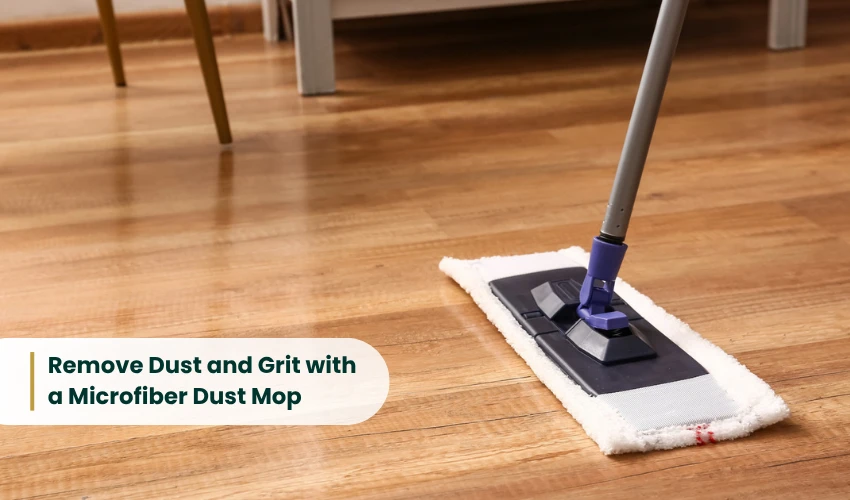
In busy households, dust mop the floor every day or every one to two days with a microfiber dust mop or soft-bristle broom. Microfiber lifts and traps fine dust, sand, and pet hair instead of moving them around on the surface, which makes it safer for hardwood floors. Pay special attention to entryways, hallways, kitchens, and other high-traffic areas where abrasive debris builds up the quickest.
2. Vacuum Safely Using the Hard Floor Setting
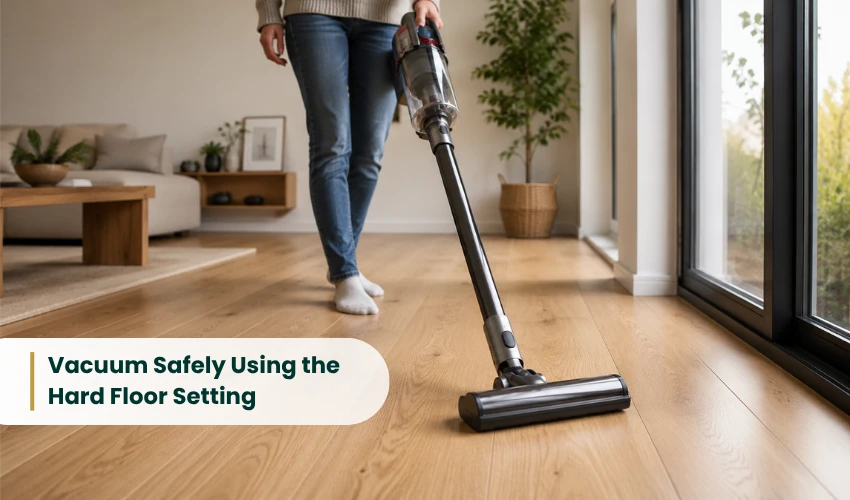
A vacuum cleaner is also used for cleaning hard flooring. Before cleaning, select the hard-floor mode and switch off the rotating brush roll or beater bar. These parts are intended for durable carpets and can cause fine scratches or premature wear on hardwood finishes. When removing dust from board joints and edges, a vacuum with a hardwood floor attachment or soft wheels will offer better protection.
3. Wipe Up Spills Without Delay
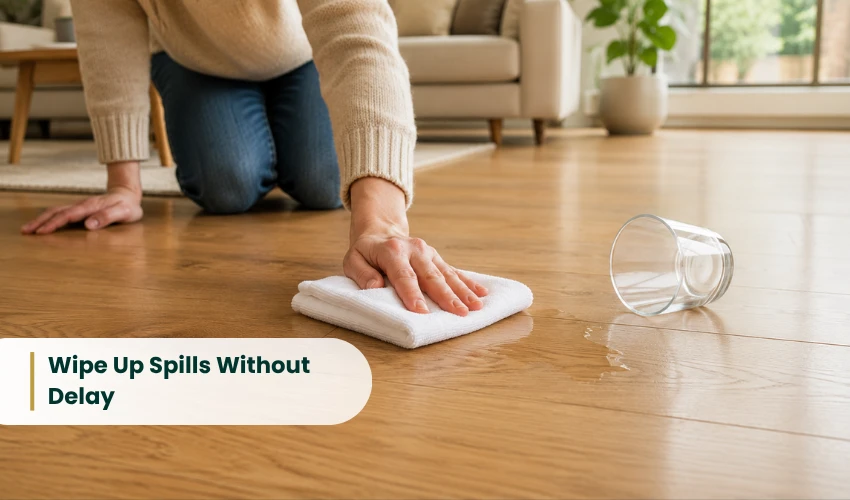
Wood floor will tolerate normal indoor humidity, but not standing moisture. Immediately blot spills with a clean, dry microfiber cloth; do not rub the spills across the surface. Once the liquid is absorbed, dry the area thoroughly. Spills should be wiped up immediately to avoid staining, damage to the finish, and moisture seeping between boards, which can cause swelling or warping over time.
The Weekly Damp-Mop
Over time, even with regular cleaning, a thin layer of oils, footprints, and household residue can build up on hardwood floors. This film will be removed by weekly maintenance with minimal moisture exposure. Make sure you use only cleaning products designed specifically for finished hardwood surfaces.
1. Damp Mop Using a pH-Neutral Hardwood Floor Cleaner
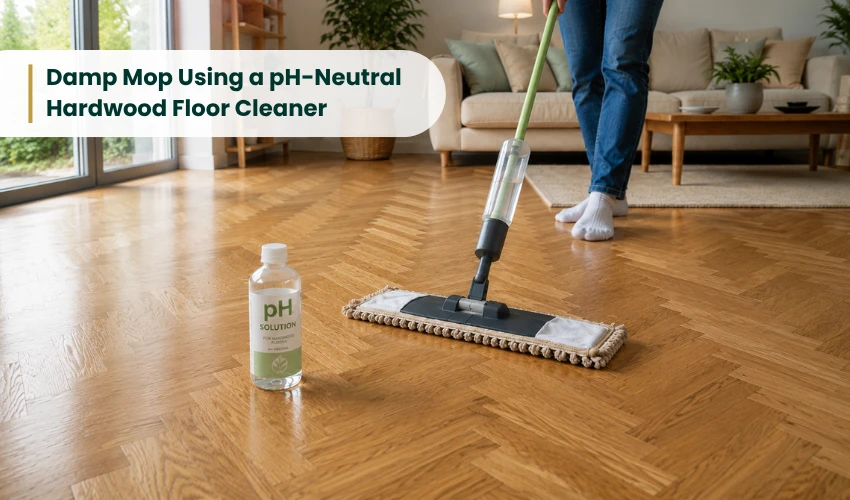
Damp mop the floor weekly with a microfiber spray mop or a well-wrung-out microfiber mop. Use it with a pH-neutral, water-based cleaner that is approved for use on hardwood flooring. The mop should be damp, not wet, as too much water can get into joints and damage both the finish and the wood below.
2. Clean in the Direction of the Wood Grain
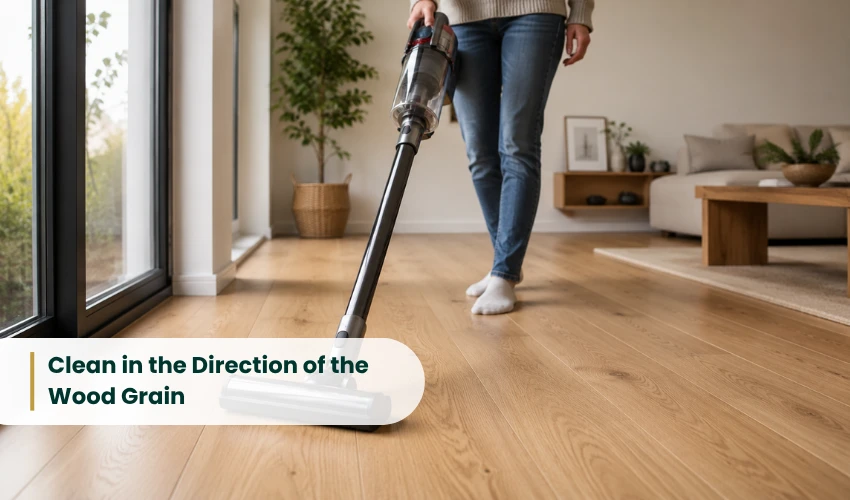
Work in the direction of the wood grain, rather than against it. This cleaning technique helps remove dirt from natural seams, reduces streaking, and provides more even coverage of the cleaning solution. It also reduces unnecessary friction on the protective finish of the floor.
3. Leave the Floor Completely Dry
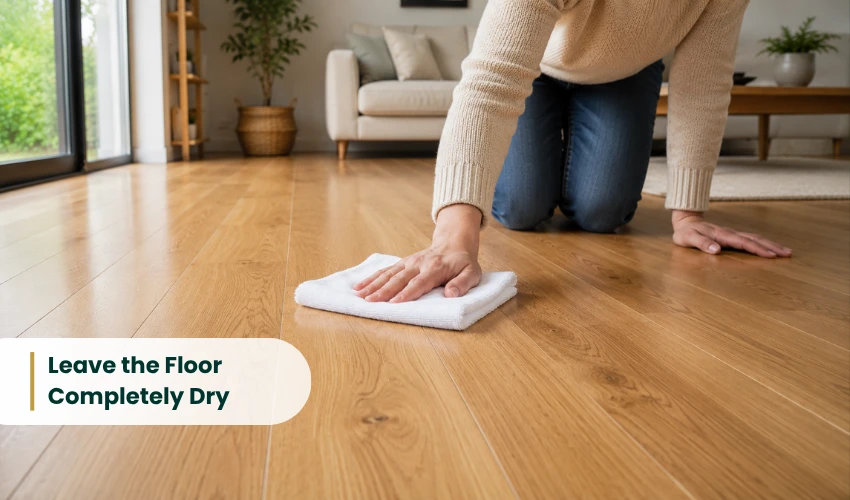
After mopping, check the surface and use a clean, dry microfiber cloth to wipe away any residual moisture. Do not allow puddles or a film of water to remain on hardwood floors. If moisture is left on the surface, the finish is more likely to deteriorate and may lead to cupping, swelling, or other moisture-related damage over a period of time.
How to Clean Engineered Wood Floors With Vinegar
This is the question everyone asks, and the internet gives messy answers. So let us be straight with you.
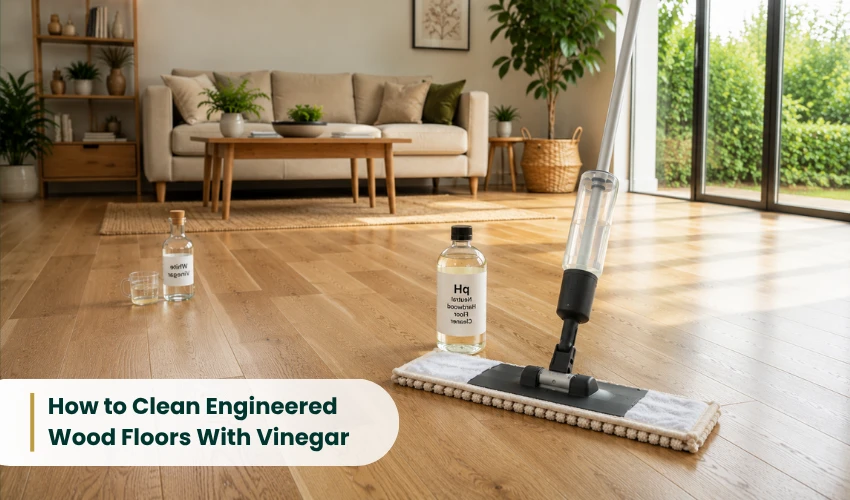
Vinegar is an acid. Engineered hardwood has a finish that prefers a neutral pH. Over time, acid and finish do not get along. Repeated vinegar cleaning can slowly dull the surface, weaken the protective coat, and leave the floor looking cloudy.
So my honest recommendation is this: for everyday cleaning, skip the vinegar. A proper pH-neutral wood cleaner is safer and just as effective.
A heavily diluted mix, around half a cup of white vinegar to a gallon of warm water, can cut through grime in a pinch. If you ever go this route, two rules are non-negotiable. Dilute it heavily, and test it first on a hidden patch, like inside a closet. Watch that spot for any dullness before you touch the open floor.
But for the long life of your floor, a dedicated wood cleaner wins every time. Treat vinegar as a rare backup, not a routine.
Cleaning Without Chemicals
Prefer to keep things simple and low-chemical? You have good options.The most natural way to clean engineered hardwood floors is also the gentlest. Plain warm water on a well-wrung microfibre mop handles most light, everyday dirt with no chemicals at all. For many homes, that alone keeps floors looking great between deeper cleans.
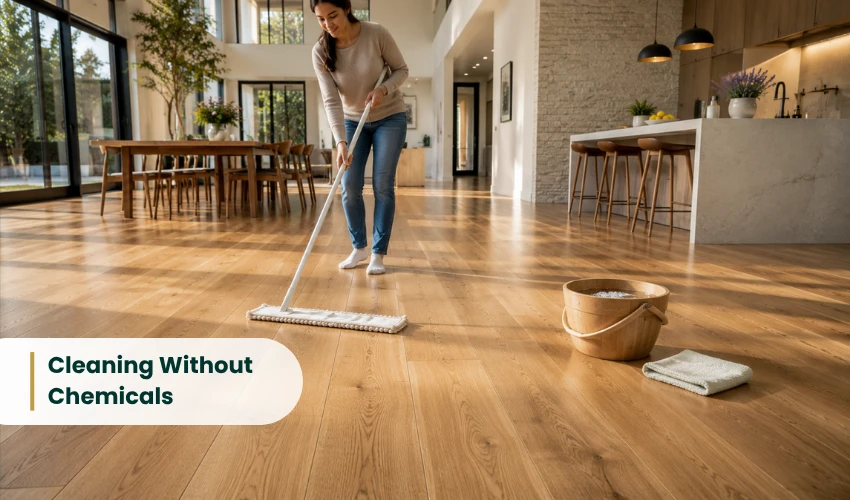
If you want a little more cleaning power, a few drops of mild, pH-neutral dish soap in a bucket of warm water can help. Use it sparingly. Too much soap leaves a residue that dulls the floor.
For a fresh scent, a drop or two of oil like lemon or lavender does the trick without harsh fumes. The principle stays the same no matter which route you choose. Keep it gentle, keep it damp, not wet, and dry the floor afterward.
The Best Cleaner for Engineered Wood Floors
Walk down any cleaning aisle and the choice feels overwhelming. It does not need to be.
The best cleaner for engineered wood floors shares three traits. It is pH-neutral. It is water-based. It leaves no residue.
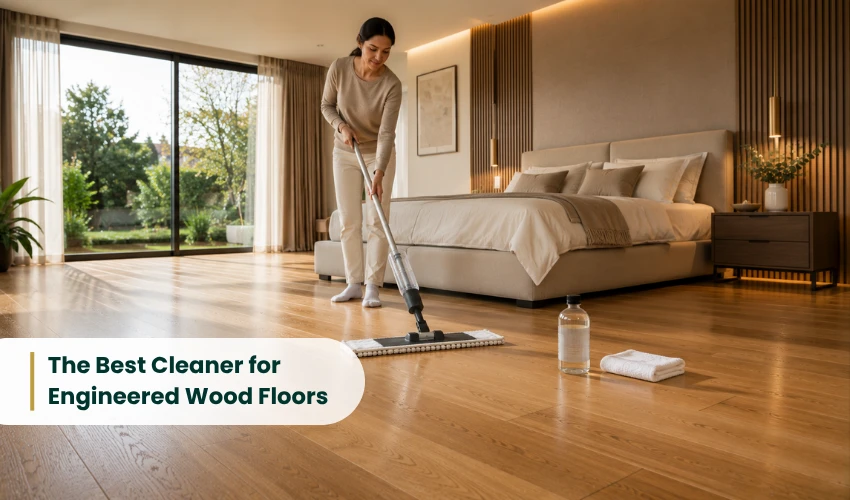
Ready-made wood cleaners are the safest bet for most people. Bona Hardwood Floor Cleaner is a long-trusted, pH-neutral spray that dries fast and does not leave streaks or buildup. It is popular with professionals for good reason. Other reputable wood-floor formulas work well, too. The key is that the label clearly says it is made for hardwood.
What to avoid is just as important:
- Ammonia and bleach. These strip and dull the finish.
- Oil soaps and wax-based cleaners. They leave a sticky film that builds up, attracts dirt, and causes problems if you ever refinish.
- All-purpose sprays. Many are too harsh for wood, even when they promise a “streak-free shine.”
- Cleaners designed for vinyl or laminate floors use different formulations and are not suitable for engineered hardwood. If your home has laminate instead, see our guide on how to clean laminate flooring for the correct cleaning methods.
When in doubt, check your floor’s manufacturer’s guide. Using the wrong product can sometimes void a warranty, so it pays to look.
How to Clean Engineered Hardwood Floor Stains
Even careful homes get the occasional stain. Here is how to handle the common ones without damaging the wood.
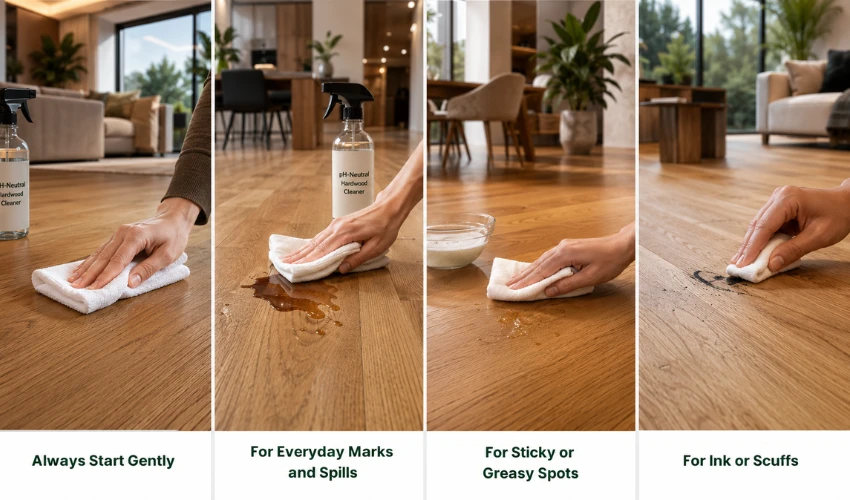
Always start gently. Try the mildest method first and only step up if needed. And test any new approach on a hidden area before you tackle the visible spot.
For everyday marks and spills: A cloth dampened with your pH-neutral wood cleaner usually lifts them. Wipe with the grain, then dry.
For sticky or greasy spots: A little mild dish soap in warm water on a soft cloth can break them down. Rinse the cloth, wipe it again with clean water, and dry it.
For ink or scuffs: Dab a small amount of rubbing alcohol onto a cloth, not the floor, and gently work the mark. Go slowly.
If a stain has soaked deep into the wood, no surface trick will fully remove it. At that point, a flooring professional is your safest call. They can assess whether the area needs spot repair or refinishing.
The golden rule with every stain: act fast. A fresh spill is easy. A stain left for a week is a project.
5 Mistakes That Permanently Damage the Finish
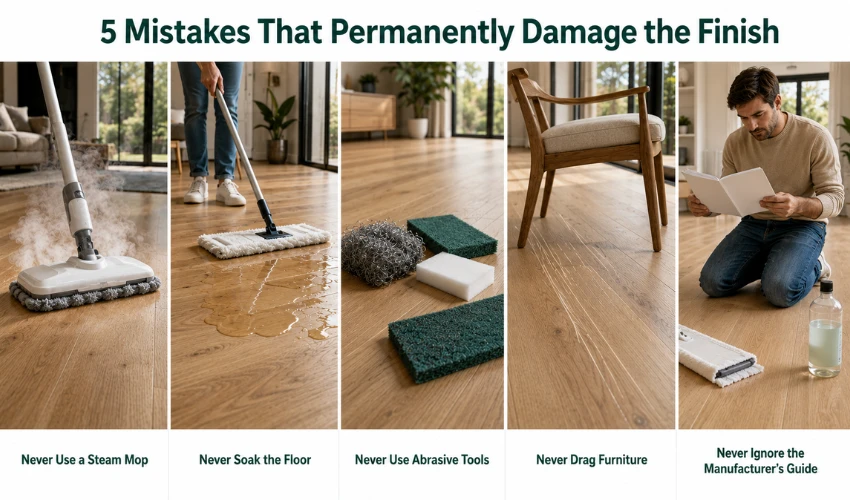
A few habits cause most of the serious damage. Avoid these, and you avoid the worst outcomes.
- Never use a steam mop. This is the big one. Steam forces heat and moisture into the wood. It can warp the planks and weaken the adhesive holding the layers together. The damage is often permanent.
- Never soak the floor. Puddles and dripping mops lead to swelling, cupping, and stains.
- Never use abrasive tools. Steel wool, scouring pads, and melamine “magic” sponges scratch the finish.
- Never drag furniture. Lift it. Dragging leaves deep marks that are hard to undo.
- Never ignore the manufacturer’s guide. Your floor’s warranty may depend on it.
Simple Habits That Protect Your Floor for Years
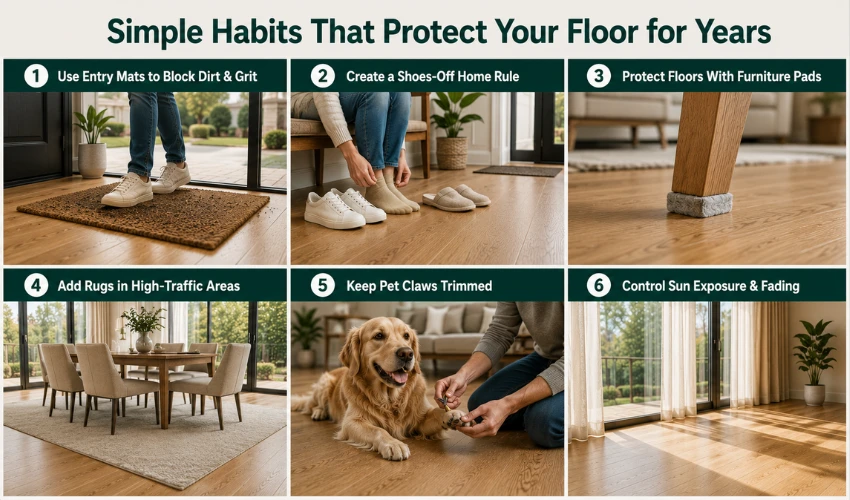
Cleaning keeps the floor looking good. Prevention keeps it that way for decades.
- Place mats at every entrance. Most dirt and grit arrive on shoes. Stop them at the door.
- Try a shoes-off rule. Even a partial one helps. Hard heels and sports cleats are rough on wood.
- Use felt pads under furniture legs. They prevent scratches and let chairs glide.
- Add rugs in busy zones. Hallways and under dining tables wear the fastest. A rug shares the load.
- Trim pet claws. It makes a real difference for scratch-prone surfaces.
- Manage sunlight. Strong, direct sun can fade wood over time. Blinds or sheer curtains help even out the color.
None of this takes effort once it becomes routine. And the payoff is a floor that still looks like new years from now.
A Simple Cleaning Schedule to Follow
| Frequency | Cleaning Task |
|---|---|
| Daily / Every 1–2 Days | Sweep or dust mop high-traffic areas and wipe up spills immediately. |
| Weekly | Damp mop with a microfiber mop and a pH-neutral hardwood floor cleaner. |
| Every 2–3 Months | Deep clean the floor, moving rugs and furniture to clean hidden areas. |
| As Needed | Remove stains promptly and replace worn felt pads and doormats. |
The Bottom Line
Cleaning engineered hardwood is not complicated. It just rewards a gentle, consistent touch. Sweep up grit before it scratches. Mop with a damp microfibre mop and a pH-neutral cleaner. Skip the steam, the vinegar, and the harsh chemicals. Wipe spills the second they land.
Do those few things, and your floor will stay smooth, warm, and beautiful for many years. That is the whole secret. Care for it well, and it cares for your home right back.
Frequently Asked Questions
Can you use a steam mop on engineered hardwood floors?
No. Steam mops push heat and moisture into the wood, which can cause warping, swelling, and damage to the adhesive between layers. Stick to a damp microfibre mop instead.
What is the best cleaner for engineered wood floors?
A pH-neutral, water-based cleaner made specifically for hardwood. Bona Hardwood Floor Cleaner is a widely trusted, residue-free option, though any reputable wood-floor formula will do the job.
How often should I mop engineered wood floors?
For most homes, a light damp-mop once a week is enough. Sweep or dust-mop more often in busy areas, and always wipe spills the moment they happen.
Is vinegar safe for engineered hardwood floors?
Not for regular use. Vinegar is acidic and can dull the finish over time. A pH-neutral wood cleaner is the safer choice. If you ever use vinegar, dilute it heavily and test a hidden spot first.
Can engineered hardwood floors get wet?
They resist moisture better than solid wood, but they are not waterproof. Keep mops damp, never soaking, and dry up spills and puddles quickly.