
How To Plan a Home Renovation?

To plan a home renovation, define your goal and budget, plan a timeline, secure permits, and hire a professional for large-scale projects. Renovating your home is exciting, but it can be frustrating when you are stuck at this point. I want to renovate my house, but where do I start?
After managing hundreds of home renovation projects, I am providing insights from my real-time experience in this blog. You will learn about the detailed process for renovating the home, what you should do, and what things you must avoid. So, let’s get started.
Complete Home Renovation Checklist
| Renovation Stage | Tasks to Complete |
|---|---|
| 1. Pre-Planning |
|
| 2. Budget & Financing |
|
| 3. Planning & Design |
|
| 4. Permits & Approvals |
|
| 5. Hire the Right Team |
|
| 6. Order Materials |
|
| 7. Prepare Your Home |
|
| 8. Construction Phase |
|
| 9. Final Inspection |
|
| 10. Project Completion |
|
1. Define Your Goals & Assess Your Home

Before renovating your home, you must know why you are doing this. Whether you want to live in it or sell it. If you are renovating your forever home, the best option is to prioritize its functionality and give it a personalized touch. Invest in high-quality products such as luxurywooden flooring, natural-fibre carpets, or trendy wall treatments.
The second-best approach to avoid overspending is to make a list of must-haves and nice-to-haves. To make this list, I prefer to walk through each room of the home and list what things actually do not work. After that come the things designed for aesthetic purposes only. The smart move when defining the goal of the renovation is to hire a professional to inspect your home. This way, you will get an idea of faulty wiring, hidden damp, asbestos, or structural issues
Pro Tip: Save the visuals or build the mood board of your desired renovation. It will help the renovation contractor to understand your ideas clearly.
2. Set a Realistic Budget
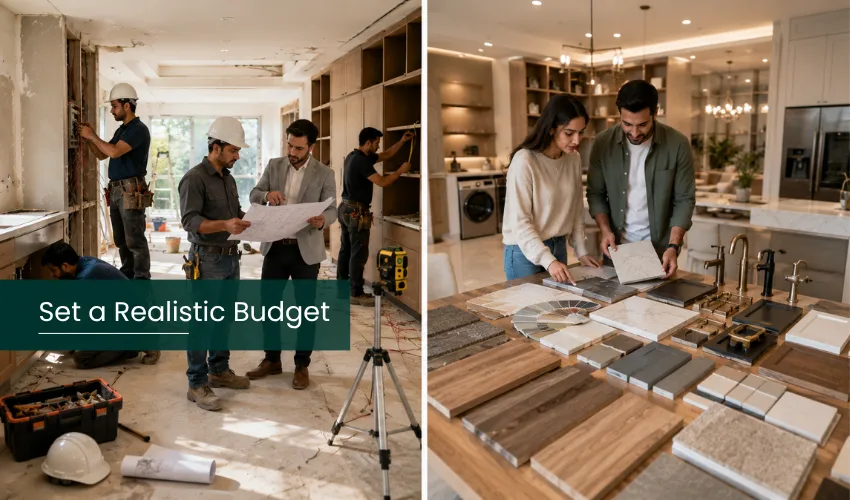
Setting a realistic budget for the home renovation is the most crucial step. The most practical way is to divide your whole budget into two main brackets:
- For Professional Services: Allocate the budget for the contractors, designers, electricians, plumbers, and some other trades. Keep this in mind: labour costs are always higher than the materials used for the renovation.
- For Purchased Items: Define the budget brackets for the materials, appliances, and finishes used for the renovation.
Around 5% to 10% of the renovation budget is spent on permit fees, waste removal, tool rentals, and other small items like these.
Remember to budget for a non-negotiable contingency fund. I usually keep 10% to 20% of the total budget as contingency funds. This way you will have enough capital to deal with surprise expenses like water damage behind tiles and wiring issues.
Take a look at the table to get an idea of how much money you need to renovate different areas of the home these days.
| Project | Typical 2026 Cost Range | Cost per sq ft |
|---|---|---|
| Small bathroom refresh | $4,500–$10,000 | $80–$120 |
| Full bathroom remodel | $8,000–$30,000 | $150–$280 |
| Primary/Master bathroom | $18,000–$50,000+ | $250–$400 |
| Small kitchen makeover | $15,000–$25,000 | $75–$150 |
| Mid-range kitchen remodel | $30,000–$50,000 | $100–$200 |
| High-end kitchen remodel | $60,000–$100,000+ | $200+ |
| Full home makeover (1,500–2,500 sq ft) | $75,000–$250,000+ | $50–$150+ |
3. Decide the Right Order of Work
There is a golden rule for renovating a home. You must start from the structure inwards. Once it’s done, you can go on to decorate the home. Take a look at the best working order for renovating the home:
- Structural Work & Demolition: The right point to start renovation is with structural work. Check the foundations, walls, extensions and major repairs. Finalize all these things before moving to the next steps.
- Weatherproofing: Then comes the roof, windows and exterior waterproofing of the home. Your goal must be to make your space watertight.
- First-Fix / Rough-Ins: Complete the plumbing pipes, electrical wiring, and HVAC system installation while the walls are open.
- Plastering & Drywall: After completing the wiring and plumbing work, move to plastering and drywalls.
- Second-Fix / Fixtures: The next step is the installation of sockets, switches, sinks, lighting, and radiators.
- Flooring: Install the best flooring as per your space needs and traffic requirements.
- Decorating & Finishing Touches: Lastly, you can go for wall painting work, installation of wallpapers and adding finishing touches.
4. Whole-House Renovation or Room-by-Room Renovation?

You might be thinking: should you go for a whole renovation at once? Or prefer a room-by-room renovation? Check the comparison table below for your understanding:
| Factor | Whole-House Renovation | Room-by-Room Renovation |
|---|---|---|
| Upfront Cost | Higher initial investment | Lower initial investment, spread over time |
| Overall Cost | Generally lower per unit of work due to bulk purchasing and fewer contractor mobilizations. | Usually higher overall because labor and setup costs are repeated. |
| Living in the Home | Often requires temporary relocation. | You can usually remain in the home during most of the work. |
| Contractor Efficiency | Trades complete all work in one schedule, improving efficiency. | Contractors may need to return multiple times, reducing efficiency. |
| Material Purchasing | Easier to buy materials in bulk, often reducing costs. | Materials are purchased in stages, limiting bulk discounts. |
| Best For | Homeowners with a complete renovation budget who want faster completion. | Homeowners with limited budgets or those who prefer renovating gradually. |
| Main Drawback | Requires significant upfront funding and may involve moving out. | Higher total costs and a longer renovation process. |
5. Check Permits, Codes, and Regulations

You need to obtain permits from local authorities and check the building codes and regulations while renovating your home.
Projects that require a permit to proceed are:
- Structural changes and addition
- New or relocated windows
- Major electrical work
- Plumbing installation
- HVAC replacements
Projects that do not require a permit to proceed are:
- Painting work
- Installation of new carpet and flooring
- Replacement of countertops and cupboards.
If you want to run renovation projects smoothly without fines or serious complications, make sure to obtain the necessary approvals and permits.
6. DIY vs Hiring Professionals

Here comes the main concern: should you hire a professional for home renovation or do it yourself? In my opinion, it totally depends on the nature of your project. For instance, painting the walls, replacing the hardware and removing the old wallpaper can easily be done as a DIY. Many beginners can also perform minor non-structural demolition or decorate their homes themselves.
For large-scale and complex projects, you must hire a professional home or villa renovation company with an architect, interior designer and a general contractor. These projects include structural changes, gas work, plumbing work, roofing and electrical work.
Checklist for hiring the right renovation team:
- Check and verify the licenses and insurance
- Review the latest work done & portfolio
- Ask for a written itemized quote, and ask to add a timeline for completing the project
7. Create Renovation Project Plan & Timelines

When you have finalized whether to hire a professional or DIY your home renovation, the next step is to plan and create timelines.
Start by creating the project timeline document. This document helps to keep everyone on track, including you, hired contractors and trades. It includes the scope of the work, budget breakdown, material and finish selection, timelines, milestones, payment schedules, and decision deadlines.
Here are the realistic timeline benchmarks
| Renovation Project | Average Timeline |
|---|---|
| Bathroom Remodel | 6–12 weeks |
| Kitchen Remodel | 8–16 weeks |
| Whole-Home Renovation | 3–12 months |
| Home Addition | 4–9 months |
8. Prepare for Life During the Renovation

Whether you are renovating the whole house or prefer a room-by-room renovation, you must make arrangements for your day-to-day tasks. The most essential step is to set up a temporary kitchen. It should contain a hot plate, microwave, mini fridge and basic plates and cutlery. If the renovation project requires the structure to be demolished, ask your contractor to seal off the work area with plastic sheeting. To keep your temporary living space clean, run the air purifier and keep separate shoes for construction work.
If you have kids or pets, you can just create off-limits zones where noise won’t disturb them. For the single-room renovation, you can stay at home by sealing off a specific area. For the large-scale renovation projects, stay at some rental places.
Common Home Renovation Mistakes To Avoid

There are a few common mistakes that I have observed most people make while renovating their homes.
1. No Clear Plan or Vision
Renovating the home without a proper plan or vision can lead to delays and waste of money. For instance, you have installed the countertop in a specific area of the kitchen without any cohesive design; now it looks awkward. This way, an unplanned renovation may require changes mid-project.
To avoid this problem, you must make a draft of the scope of work. This way, everyone stays on track and already knows where to start and what the outcomes will be.
2. Underestimating Cost and Time
Many people take the contractors’ advice and treat it as fixed spending for the home renovation. This way, any unexpected expenses can create panic and frustration. Thinking the timeline given by contractors is 100% correct is a totally wrong approach. Delays are normal during the renovation work.
Keep at least 10% to 20% more than the provided budget for a contingency fund. Keep in mind that if contractors have given you the timeline of 5 weeks, you must arrange your temporary living arrangements for at least 8 weeks.
3. Skipping the Permits
Skipping the permit is the most critical mistake that you must avoid. If you skip this step to save time and money, then you may face heavy fines and have the work shut down. In some cases, if work is done without a permit, it can be grounds for voiding homeowners’ insurance. It will become very difficult for you to sell the home. Before starting the home renovation, make sure you have all the necessary permits for your project.
4. Hiring on Price Alone & Poor Measurement Check
Hiring a contractor only for their low prices can be a major pitfall while renovating homes. Such contractors may use very low-quality materials and finishes. Sometimes they are not experts in their work. Another major drawback is buying high-quality materials and finishes based on rough measurements. This may lead to installation errors.
Always get detailed quotations from at least 3 insured, licensed contractors. Ask them to create a detailed itemized proposal and compare them. This way you will have an idea of the market and quality of materials being used. Seek help from a professional to take exact measurements of all the major elements, such as countertops and cabinets.
5. Prioritizing Trend Over Functionality.
Preferring trends over the functionality of a space is a major drawback when renovating your home. Trends change quickly, but the functionality of the space is the most important aspect.
You can balance the trends and functionality of the space by allocating the budget for each. Use 70% of the home renovation budget on timeless, durable elements such as wall panels and hardwood floors. Spend 30% of the budget on trendy items like wallpaper, accent paints and lighting fixtures.
Final Thoughts
Planning the home renovation is not a complex task if you know how to do it effectively. Before starting, define the renovation vision, set a realistic budget, and hire licensed contractors for major projects. Collect quotes from different contractors and choose accordingly. Create a balance between functionality, trends and aesthetic appeal while renovating the home.
Frequently Asked Questions
What is the correct order to renovate a house?
The correct order for renovating a home is always work outside-in and top-down patterns. By following this rule, you first complete the structural changes, then move to the finishes and aesthetic upgrades.
How much should I budget for unexpected costs?
You must set aside at least 10% to 20% extra of the total renovation budget for unexpected expenses.
Can I renovate a house with no experience?
Yes, you can easily handle basic renovation work like painting and installing carpet and backsplashes. For the structural upgrade, you must hire a professional to avoid costly mistakes
How do I renovate with little or no money?
It is impossible to do the structural or major cosmetic changes with very little to no money. But you can give your space a new look by rearranging the furniture, deep cleaning, decluttering, or simply repainting the walls.
Do I need permits for my renovation?
It depends on the nature of the project. For minor cosmetic changes such as painting, flooring installation, and wallpapering, you do not need permits. For projects involving structural changes and demolition, you obtain the necessary permits before starting work.