
What Are the Benefits of Epoxy Flooring for Your Garage?
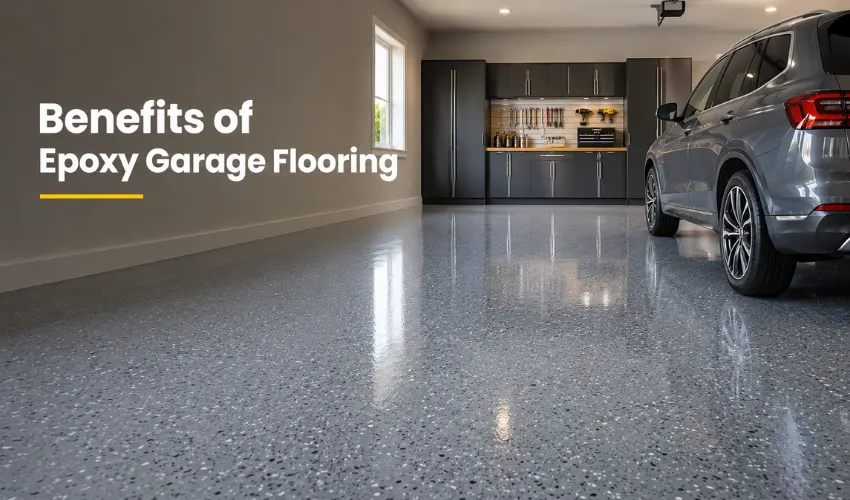
Epoxy flooring gives your garage a hard, sealed, and glossy surface that outperforms bare concrete in almost every way. It has high resistance to oil stains and chemical spills, as well as effective resistance to moisture and heavy impacts. Epoxy can be easily wiped with mild soap and can last for 10 to 20 years if installed properly. It transforms a dingy, stained slab into a bright, complete room that truly contributes to your home.
The use of epoxy in garage flooring has remained one of the most popular upgrades. It addresses many common issues in bare concrete garages. It makes the surface more durable, easier to maintain, cleaner, and more appealing. This guide by Floor Land will explain what epoxy flooring is, how it works, its major advantages, its true disadvantages, and why it is better than other garage flooring options So at the end of the day, you’ll be able to tell for sure if epoxy will work for your garage.
1. Exceptional Durability
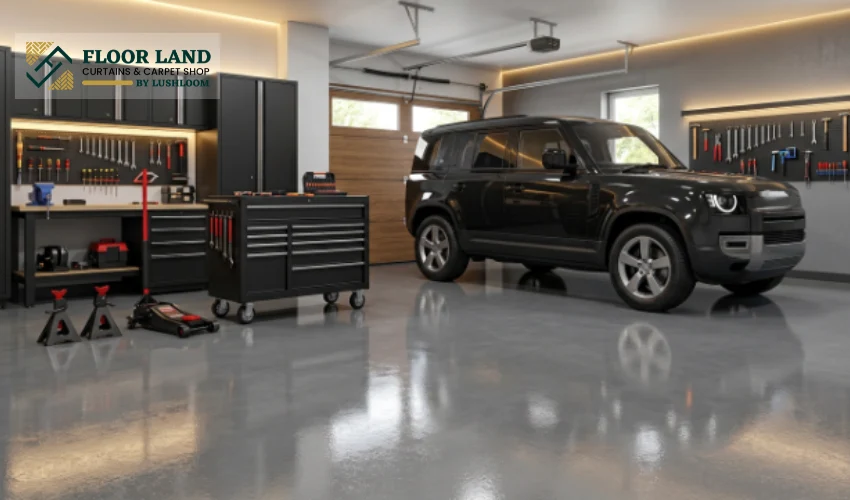
Epoxy is the top choice for garage flooring because of its durability. A cured epoxy coating can withstand compressive loads much greater than those provided by a home garage. It is strong enough to support loads on trucks and SUVs. It will resist the rolling tool chests, floor jacks, jack stands, and workshop machinery.
By contrast, bare concrete dusts, cracks, and spalls when used. That daily abuse is absorbed by the epoxy, and the slab below remains protected. Experts have found that this is the most important form of protection, saving homeowners money in the long run. The cost of concrete repair is high. Prevention is cheap.
2. Chemical and Stain Resistance
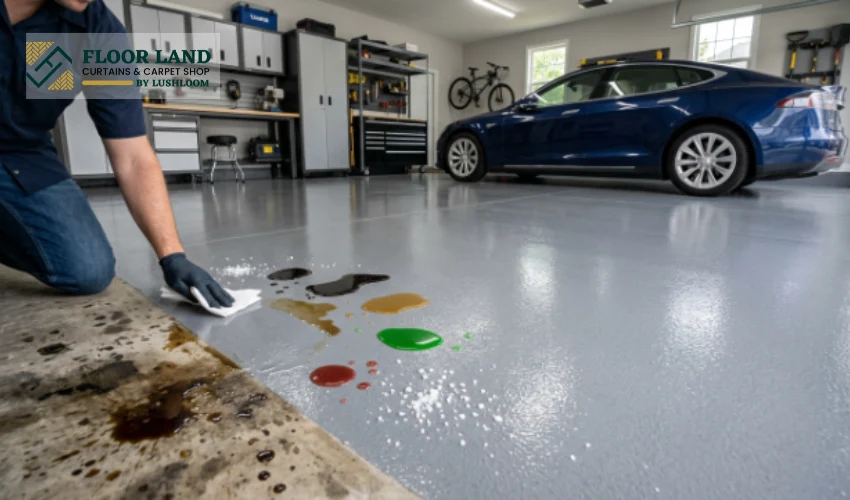
The most extreme spills that happen in the home are often collected in garages. Motor oil. Gasoline. Brake fluid. Antifreeze. Battery acid. In winter climates, salt is used on the roads. They all penetrate bare concrete and leave a permanent dark stain.
Each of them is blocked by epoxy. The surface is non-porous, causing spills to bead on its surface. Overnight fluids will dry off with a paper towel and mild cleaner. That chemical resistance is why epoxy has been the material of choice in auto shops, hangars, and factories for decades. Your garage is equally protected like an industrial garage.
3. Resistance to Moisture and Humidity
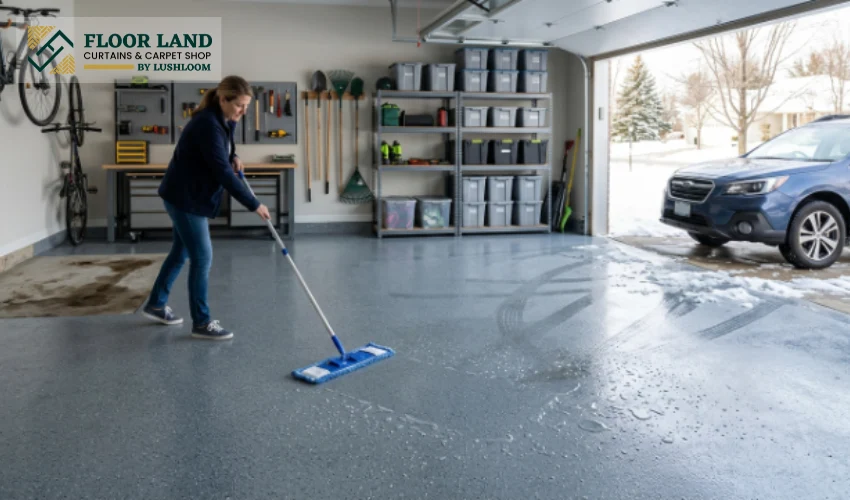
Water penetrates concrete like a sponge. This trapped moisture promotes mold and mildew growth, musty smells, and freeze-thaw cracking in cold climates. It can also be exposed to snowmelt and road salt each winter.
A coat of epoxy prevents it from coming into contact with all of it. The water stagnates on the surface and either slowly evaporates or is mopped with rags. This moisture barrier helps keep stored items dry, prevents mildew odors, and prevents salt damage from occurring. This alone is worth the coating for anyone who stores their car with snow or rain inside of it.
4. Impact and Abrasion Resistance
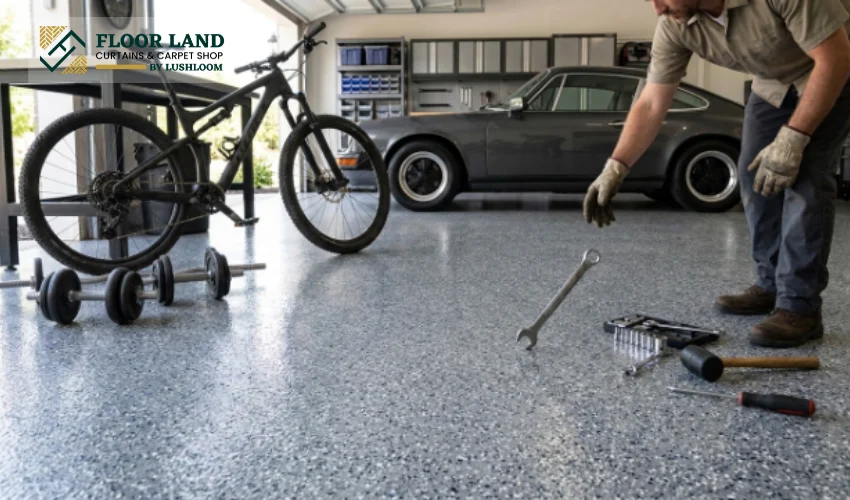
Slab chipping occurs if a wrench is dropped on bare concrete. Place it on a good epoxy floor, and it’s generally retrieved and work continues. Cured epoxy is very impact resistant, like rubber flooring, and is not likely to be marred by dropped gym weights, tipped bikes, or falling tools.
The coating is also abrasion resistant. It doesn’t gouge into metal casters, dollies, and dragged equipment. Over time, grit and sand in tires erode concrete. That same grit is able to sweep away on epoxy, yet not rub the surface.
5. Easy Maintenance and Cleaning
An epoxy garage floor is among the lowest maintenance floors you can have. Seamless finish with no grout lines, seams, or pores to collect dirt. Minutes are spent on routine care.
Let’s look at how this cleaning process compares to other popular garage floor cleaners.
| Task | Epoxy | Bare Concrete | Garage Tiles |
|---|---|---|---|
| Daily dust | Quick dust mop | Constant concrete dust | Sweep; dirt settles in seams |
| Spills | Wipe with a towel | Scrub, often stains anyway | Can seep between tiles |
| Deep clean | Wet mop with mild soap | Degreaser and stiff brush | Lift tiles to clean beneath |
| Sealing | Never needed | Reseal every 1 to 3 years | Not needed |
One piece of advice from the field. Avoid using soap-based cleaners that leave a film. A little clear ammonia in warm water helps to keep the gloss streak-free.
6. Improved Safety and Slip Resistance
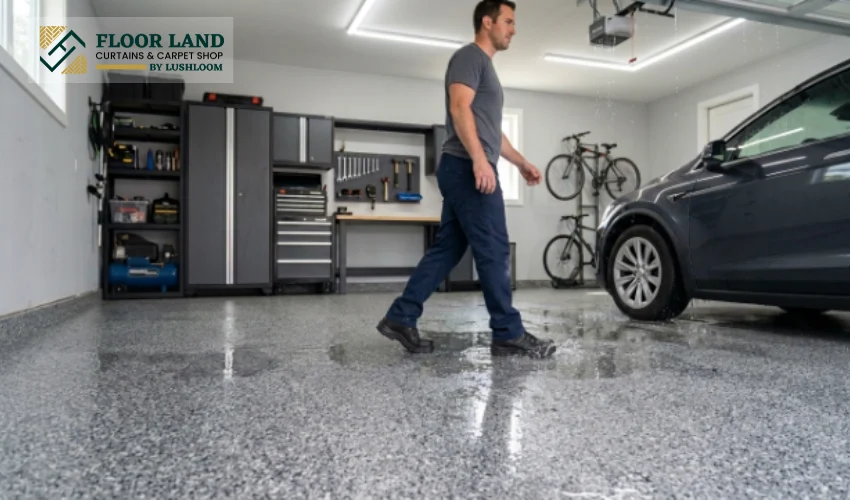
Although it may look slippery, epoxy flooring is safer than it seems. These anti-slip additives are added to the topcoat, usually in the form of polymer grit or aluminum oxide, by the installers. Decorative flake systems add texture as well, as the broadcast flakes make it a slightly raised, orange-peel surface.
This ensures good grip, even when wet. Epoxy is also non-combustible and has no dust. Reduced concrete dust means improved air quality and reduced risk from dust accumulation in areas where people slip on concrete.
7. A Brighter, More Usable Space
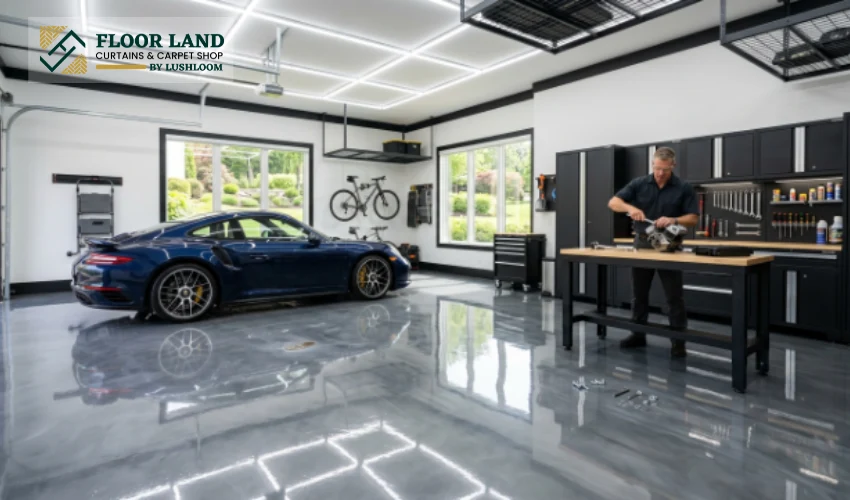
Most of my clients are surprised at this benefit. A high-gloss epoxy floor can reflect a significant amount of the light that falls on it. The garage will feel brighter and larger, all without adding a single light bulb.
The practical value of improved light reflectivity. Small parts and dropped screws are visible. Fluid leaks under the car can be identified early. Work zones are more relaxed and welcoming. The increase in brightness is cited by many homeowners as the first thing people notice when they visit.
8. Appearance and Customization Options
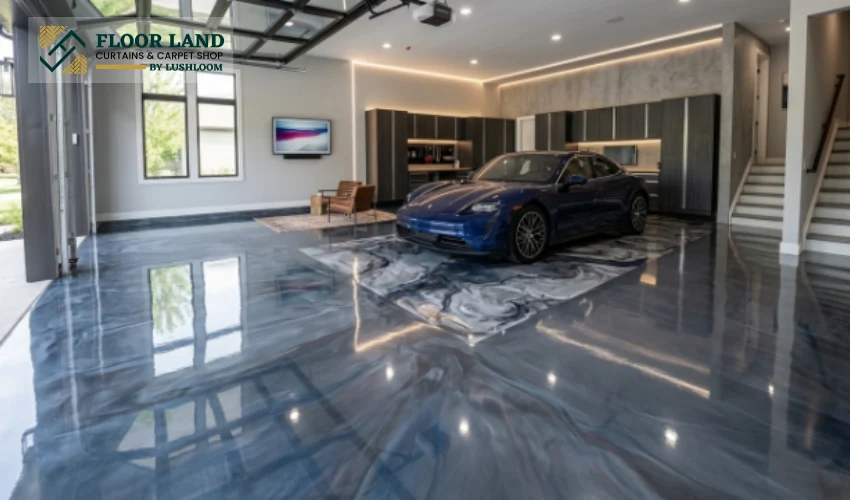
Epoxy transforms a garage into a completed room. A large design spectrum.
- Solid colors in gloss, satin, or matte.
- Blended decorative flakes, which look like granite or terrazzo and are good at concealing dirt.
- Metal-based pigments for high-end-looking marbled surfaces in the showroom.
- For maximum texture and grip, quartz broadcast systems are used.
The coating also hides past sins. Old stains, hairline cracks, and surface blemishes disappear under the new seamless finish. Sizes, colors, and flake densities can match your home’s style or your favorite team’s colors.
9. Strong Long-Term Value
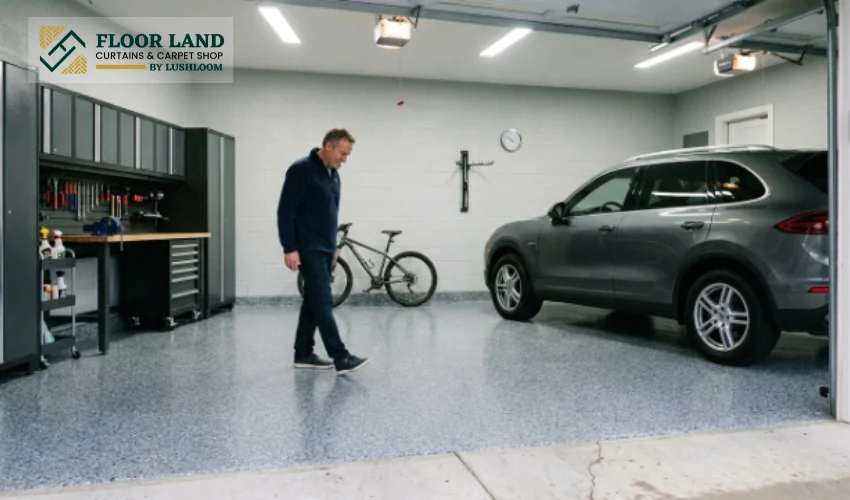
Epoxy is a more expensive solution than either paint or sealer. It gets you that difference many times over. This coating will keep the slab away from repairs that are much more expensive than it is.
No replacement parts or waxing required; requires no resealing. A clean, completed garage floor is a good selling point and an obvious boost to resale value when potential buyers walk through the house.
According to industry cost guides, the total cost of a coating job in a U.S. garage is about $2,400. When distributed over 10-20 years, this represents an extremely low annual cost for a surface that sees everyday use.
Types of Epoxy Garage Flooring
The epoxy is not all of the same quality. The choice of type will impact durability, look and cost.
| Type | Description | Best For |
|---|---|---|
| Water-based epoxy | Thin, DIY-friendly, lowest solids content | Tight budgets, light use, 2 to 5 year lifespan |
| Solvent-based epoxy | Mid-thickness, strong adhesion, stronger fumes | Balanced performance where regulations allow |
| 100% Solids Epoxy | Thickest and hardest, professional application | Maximum durability, 10 to 20 year lifespan |
| Flake (Chip) System | Base coat with decorative vinyl flakes and clear topcoat | Hiding dirt, adding slip resistance and style |
| Metallic Epoxy | Pigments swirled into clear resin | Showroom looks and premium finishes |
| Quartz Epoxy | Colored quartz sand broadcast into resin | Heavy traffic and maximum grip |
There’s a warning for big-box “epoxy paint” kits. Numerous are made with a small amount of epoxy resin blended into the latex paint. They are not a true 2-part, high solids system. If a kit is less expensive than your weekly food cost, then don’t buy it as a kit; get a discount at the grocery store.
Cost vs. Long-Term Value
Below are some common installed costs as per industry price guides. The price is different from one region to another, from one slab to another and from one system to another.
| Option | Installed Cost (per sq ft) | Expected Lifespan | Relative Lifetime Cost |
|---|---|---|---|
| Concrete Paint | $1 to $3 | 1 to 3 years | High, due to constant recoating |
| DIY Epoxy Kit | $2 to $3 | 2 to 5 years | Moderate, plus redo labor |
| Professional Epoxy | $3 to $7 | 10 to 20 years | Low |
| Polyaspartic | $5 to $12 | 15 to 20+ years | Low |
| Interlocking Tiles | $3 to $8 | 10 to 25 years | Low to Moderate |
There were two lessons to be learned from the cost. Labor costs are usually 50-70% of a professional quote, and every single cent is worth it because preparation is the key to a long lifespan. Second, if a slab is damaged, the math is affected. Prep work costs of $1,000 to $2,000 can be added for heavy cracking, oil saturation, or an old failed coating. Have the slab inspected before looking at estimates.
You can’t get honest advice without the risks. Epoxy has a few
- Hot tire pickup. Low-quality or thin coatings will melt under high tire temperatures and fall off as the car is driven out of the lot. This is rarely a problem with good preparation of 100% solid systems.
- UV yellowing. Typical epoxy ambers will fade over time in direct sunlight. A topcoat of UV-stable polyurethane or polyaspartic eliminates that for garages with large windows or frequently opened doors.
- Slow cure time. Between coats, most systems require 12-16 hours, and 3-7 days prior to vehicle traffic. Be prepared for the downtime.
- Moisture sensitivity during installation. Epoxy that is applied to a moist slab has the potential to delaminate. This failure can be avoided by a simple moisture test prior to installation.
- Hard underfoot. Epoxy is rigid. Add an anti-fatigue mat to your workbench if you stand there for a lot of time.
- Difficult removal. A bonded coating is designed to last forever. If it is removed later, it will need to be ground out.
All of these are considerations, but none of these are deal-breakers. All of them can be avoided by using the right product, preparing it correctly, or with a minor adjustment.
How Does Epoxy Garage Flooring Work?
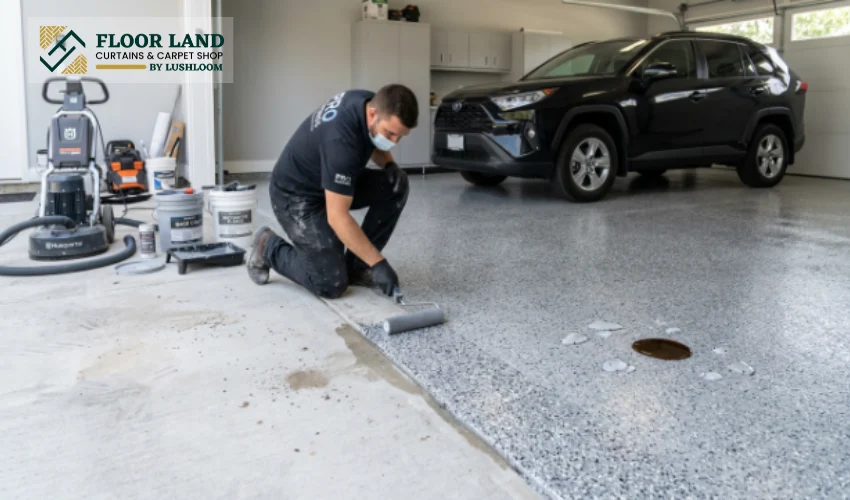
It’s all about quality and performance when it comes to an epoxy floor. Chemistry and preparation.
Chemically, the cured epoxy produces a non-porous membrane. These tiny pores in bare concrete absorb oil, water, and road salt. Epoxy fills those pores up entirely. Liquid is on top of the surface, not absorbed into it. Most of the following benefits are attributed to this one quality.
The preparation side is that the concrete needs to be ground or shot blasted prior to coating. This exposes the surface to the primer to hold. The slab is also tested for moisture and is patched for cracks. These are the top reasons for epoxy failure. A well-prepared floor will retain its coating for many years. If the floor is not properly prepped, it can peel up in one year.
Curing takes time. Typically, epoxy systems can be walked on in 24 hours. After 3-7 days, the coating will be fully hardened, and the vehicles will be able to return to the floor.
Common Mistakes to Avoid
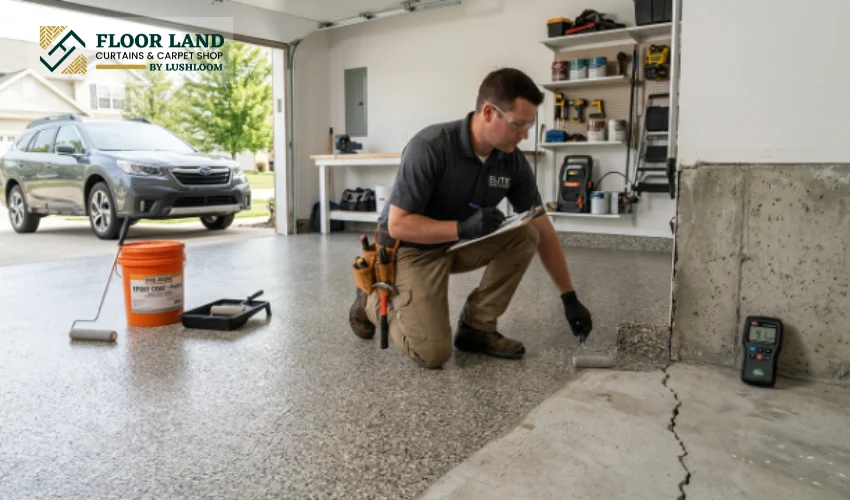
Experts have observed the common mistakes among people while installing epoxy floors:
- Not using surface grinding, only acid etching. Etching does not open the slab sufficiently for a strong bond to form.
- Coating over moisture. Test the slab before working on it. Peeling is the leading cause, as trapped vapor.
- Buying paint-grade “epoxy” kits and expecting the work to work out like a professional.
- Applying coats outside of the recommended temperature. Cold slows curing. Shortening working time and the creation of bubbles due to heat.
- Too early to drive on the floor. Soft coatings are impacted and worn by early tire traffic.
- Ignoring the topcoat. The UV, scratch, and slip protection is included in the clear coat. Never skip it.
- Leaving cracks unrepaired. Coatings bridge nothing. Straight through telegraphs cracks.
You avoid almost all the epoxy horror stories on the web if you don’t make these seven mistakes.
Final Thoughts
Epoxy flooring is a popular choice for garage floors, and for good reason. It ensures oil, water, salt, and stains are prevented from entering porous concrete. Takes cars, tools, and years of traffic. It mops up, widens the area, and mimics a showroom rather than a storage bay.
The disadvantages really exist and are manageable. Use a quality system, require proper preparation of the surface, and apply a UV-stable topcoat if sunlight is involved. Those three steps will provide your epoxy garage floor with the protection you will need to last for 10 to 20 years of low-maintenance, high-performance service. There is not much more value for the dollar that can be achieved in the home.
Frequently Asked Questions
The gloss epoxy can be slippery when wet. Anti-slip grit in the topcoat or decorative flake texture is used by installers to remedy this situation. If water, snow, or regular washing occurs in a garage, request a slip-resistant additive.
You can, but don’t have unreasonable expectations. DIY kits are slimmer and have a lifespan of 2-5 years. Rental grinders help, but most of the failures of kits are due to moisture problems and prep shortcuts. For 15+ years of service, professional installation will be the safer investment.
The typical epoxy floor can be walked on after 24 hours. Do not park vehicles for 3 to 7 days to allow the coating to achieve maximum hardness. Polyaspartic systems cut this to a day or less.
The coating is very cold-tolerant. Cracks occur only if the concrete slab beneath it moves or heaves. In freeze-thaw areas, this risk is minimized by proper crack repair before coating, and a flexible polyaspartic topcoat.
Having a clean and done garage will be a great deal in selling. Clean garages with upgraded finishes are a consistent feature real estate agents mention as improving the appearance of homes. Although the return will depend on the circumstances, a coated floor indicates a well-maintained house for buyers.
Typically, the thickness of quality household systems is 20-30 mils thick in each layer. That’s about 10 times the thickness of a garage floor paint. Thickness is a good quick guide to compare quotes, so request the complete system build from all installers.
Yes, in most cases. Grinding will remove surface contamination, while primers will hold down old stains. If the surface is very oily, additional degreasing or spot treatment may be necessary. Severely damaged or slabs actively wet, only then resurfaced.